Unleash Your Literary Potential: Kindle Book Publication Full Support for Just $99!

body {
font-family: Arial, sans-serif;
line-height: 1.6;
margin: 20px;
}

    h1 {
        color: #333;
    }

    img {
        max-width: 100%;
        height: auto;
        margin-bottom: 15px;
    }

    .rating {
        display: inline-block;
        unicode-bidi: bidi-override;
        color: #888;
        font-size: 24px;
        height: 1em;
        position: relative;
    }

    .rating span {
        display: inline-block;
        position: absolute;
        overflow: hidden;
        color: #FFD700;
    }

    .rating input {
        display: none;
    }

    .rating label {
        cursor: pointer;
        width: 1em;
        font-size: 24px;
        text-align: center;
        line-height: 1.6;
    }

    .rating label:before {
        content: '★';
    }

    .rating input:checked ~ label,
    .rating input:checked ~ label ~ label {
        color: #FFD700;
    }


<h1>Embarking on a journey as an author is a thrilling experience, and with the rise of digital platforms, publishing your work has become more accessible than ever. If you have a manuscript ready and dreams of seeing your book on Kindle, then look no further! Edupedia Publications Pvt Ltd is here to provide you with comprehensive Kindle book publication support for just $99.</p><div class="separator" style="clear: both;text-align: center"><a href="https://blogger.googleusercontent.com/img/b/R29vZ2xl/AVvXsEjBgajnPF-saDTJY4YRTGmdB8JiD2Yhpoppn7kYXStgx0bVj8aP9nRBzDfrEqDL4TCzo0tj1Nfns85cpmKHBjpy9yVAi6H9TputH_eN_6BgghrXqMHk7tQB2p187tE9Yz5pKSaUMMhZq_10PF5Mek_16F2DsyACAn4Ch6tiMyFC-SkvJ11UWHfZzXyJMT4/s2000/format-and-publish-your-book-for-amazon-kdp-or-kindle-direct-publishing-services.jpeg" style="margin-left: 1em;margin-right: 1em"><img border="0" height="480" src="https://blogger.googleusercontent.com/img/b/R29vZ2xl/AVvXsEjBgajnPF-saDTJY4YRTGmdB8JiD2Yhpoppn7kYXStgx0bVj8aP9nRBzDfrEqDL4TCzo0tj1Nfns85cpmKHBjpy9yVAi6H9TputH_eN_6BgghrXqMHk7tQB2p187tE9Yz5pKSaUMMhZq_10PF5Mek_16F2DsyACAn4Ch6tiMyFC-SkvJ11UWHfZzXyJMT4/w640-h480/format-and-publish-your-book-for-amazon-kdp-or-kindle-direct-publishing-services.jpeg" width="640" /></a></div><br /><p>

Why Choose Edupedia Publications Pvt Ltd?

  1. Free ISBN from Edupedia Publications:
    We understand the importance of having a unique identifier for your book. That’s why, when you choose our Kindle book publication support, you will receive a free ISBN from Edupedia Publications Pvt Ltd. This ensures that your work is properly cataloged and easily searchable.

  2. Free Ebook Publication and Distribution on Kindle:
    We believe in making your publishing journey seamless. With our support, your ebook will not only be published on Kindle but will also be distributed through their extensive network. This means your book will reach a global audience, giving you the exposure you deserve.

  3. Kindle Account Creation and Publication Support:
    If you’re new to Kindle publishing, don’t worry. We’ve got you covered. Our team will assist you in creating your Kindle account and guide you through the publication process. We make it easy for you to navigate the technicalities, ensuring a stress-free experience.

  4. Basic Cover Design and Formatting:
    A visually appealing book cover and well-formatted content are crucial for grabbing readers’ attention. Our team of experts at EduPub will provide you with a basic cover design and ensure that your book is professionally formatted, making it a polished and attractive product.

Call to Action:

Ready to see your words come to life on Kindle? Here’s how you can take the next step:

  1. Send an Email to editor@pen2print.org (we can offer you discount if your are from any African country)
    Drop us an email expressing your interest in our Kindle book publication support. Our dedicated team will get in touch with you to guide you through the process.

  2. Visit Our Websites for More Information:
    Explore www.pen2print.org and www.edupub.org for detailed information about our services, testimonials, and success stories. We’re committed to transparency and want you to feel confident in choosing us as your publishing partner.

  3. Join Our Reviewers Boards:
    Become a part of our community by joining our reviewers’ boards. Share your insights and be involved in the literary world. Fill out the form at https://forms.edupub.org/scholar.php to express your interest.

Conclusion:

Don’t let your manuscript gather dust on the shelf. Take the leap into the world of Kindle publishing with Edupedia Publications Pvt Ltd’s full support for just $99. From free ISBNs to ebook distribution, account creation, cover design, and formatting – we’ve got it all covered. Make your author dreams a reality, and let your words reach readers worldwide. Contact us today and start your journey as a published author!


EduPub – Educational Publishing

 “EduPub” refer to an educational publishing company or platform. Educational publishing involves the creation, development, and distribution of educational materials, including textbooks, academic journals, e-books, and other educational resources. Many educational publishers operate with the goal of providing quality content to support learning and education at various levels, from primary school to higher education.

Here are some aspects that an organization named “EduPub” focus on:

  1. Educational Content Creation:
    EduPub engage in the creation of educational content, which may include textbooks, reference materials, and digital resources. The organization might collaborate with authors, subject matter experts, and educators to develop content that aligns with educational standards and curricula.
  2. Digital Platforms and E-Learning:
    In the modern era, educational publishing often extends to digital platforms and e-learning solutions. EduPub might offer online resources, interactive learning modules, or e-books to facilitate digital learning experiences for students and educators.

  3. Open Access Journals:
    Edupub publishing focus on open-access academic journals, allowing researchers and academics to access scholarly articles and research findings without financial barriers. EduPub could potentially be involved in the publication of open-access journals in various academic disciplines.

  4. Conference Proceedings:
    Educational publishers often publish conference proceedings, compiling research papers and presentations from academic conferences. This dissemination of knowledge contributes to the sharing of research findings within specific academic communities.

  5. Custom Publishing Solutions:
    EduPub might offer custom publishing solutions for educational institutions, allowing them to create tailored educational materials that suit their specific curriculum and teaching requirements.

  6. International Collaboration:
    Educational publishing entities often engage in international collaboration, working with authors, researchers, and educators from around the world. This global perspective can enrich the content and contribute to a diverse range of educational resources.

EduPub has the mission and focus of the providing affordable publication services to scholars. EduPub is a specific entity, you may want to visit its official website or contact the organization directly for the most accurate and up-to-date information about its activities and offerings.

Keep visiting https://www.edupub.org/

Write a mail to editor@edupub.org


.container {
position: relative;
width: 100%;
overflow: hidden;
padding-top: 56.25%; /* 16:9 Aspect Ratio */
}

.responsive-iframe {
position: absolute;
top: 0;
left: 0;
bottom: 0;
right: 0;
width: 100%;
height: 100%;
border: none;
}

Submit Your Manuscript for Publication with Edupedia Publications Pvt. Ltd

Dear Scholar,

Are you a passionate writer eager to share your knowledge and insights with a broader audience? Edupedia Publications Pvt. Ltd, a renowned publishing house committed to fostering educational and informative content, invites you to submit your manuscript for consideration and potential publication.

At Edupedia Publications Pvt. Ltd, we prioritize quality, relevance, and impact when selecting manuscripts for publication. We believe in providing a platform for authors like you to showcase their expertise and contribute to the academic and educational realms. Your work could be the next insightful addition to our collection of esteemed publications.

If you have a completed manuscript or a work in progress that aligns with our mission of promoting educational excellence and enhancing knowledge dissemination, we encourage you to take the next step. Submit your manuscript for our team of dedicated editors and experts to review and evaluate its potential for publication.

To submit your manuscript, please follow these steps:

  1. Send your manuscript to editor@pen2print.org
  2. Create an author account or log in if you already have one.
  3. Fill out the required information and provide a brief synopsis of your manuscript.
  4. Upload your manuscript and any accompanying materials.

Our team will carefully review your submission and provide timely feedback. We appreciate your interest in Edupedia Publications Pvt. Ltd and eagerly await the opportunity to collaborate with you in bringing your literary work to the world.

If you have any questions or need further assistance, feel free to reach out to us at [contact email/phone]. Let’s work together to make a meaningful impact through your words.

Best regards,

John Morgan

Acquisitions Editor

Edupedia Publications Pvt. Ltd

editor@pen2print.org

What is EduPub

EduPub is a trademark of Edupedia Publications Pvt Ltd.
Edupub is a term that refers to educational publishing in digital formats, such as e-books and online educational content. It aims to make learning materials more accessible, interactive, and engaging by using technology to create dynamic and flexible educational resources.
Edupub is a collaborative effort between the publishing industry, education experts, and technology providers. It is based on the principles of interoperability, accessibility, and usability, which means that educational content should be able to work seamlessly across different platforms and devices, be accessible to all learners, regardless of disabilities, and be easy to use and navigate.
One of the key benefits of edupub is that it allows for more personalized and adaptive learning experiences. With digital formats, learners can interact with content in different ways, such as by highlighting, taking notes, and answering quizzes. They can also access additional resources and multimedia content, such as videos and simulations, to enhance their understanding of the subject matter.
Edupub also enables the creation of modular and flexible learning materials, which can be customized to meet the specific needs of different learners. For example, learners can choose to study at their own pace, skip over sections they already know, or revisit topics that they find difficult.
In addition, edupub can help to reduce the cost of educational materials by eliminating the need for physical textbooks and reducing distribution costs. This makes education more affordable and accessible, particularly for learners from low-income backgrounds.
However, there are also some challenges associated with edupub. One of the main challenges is ensuring that educational content is of high quality and accuracy. With the ease of digital publishing, there is a risk of low-quality and misleading content being circulated, which can have negative effects on the learning outcomes of students.
Another challenge is ensuring that edupub content is accessible to all learners, including those with disabilities. This requires careful attention to design and development, such as ensuring that content is compatible with screen readers and other assistive technologies.
Despite these challenges, edupub has the potential to revolutionize the way we learn and teach. By using digital formats, it can make education more engaging, interactive, and accessible to learners of all ages and backgrounds.
One of the key aspects of edupub is its use of open standards, such as HTML5, EPUB, and DAISY. These standards ensure that educational content is interoperable and can be accessed across different platforms and devices. They also enable the creation of interactive and multimedia-rich content that can enhance the learning experience.
Another important feature of edupub is its focus on accessibility. With the use of standards such as DAISY, edupub content can be made accessible to learners with disabilities, such as those who are blind or have low vision. This ensures that all learners can access educational materials on an equal basis.
Edupub also enables the creation of modular and flexible educational content. With digital formats, content can be broken down into smaller modules, which can be combined and customized to meet the specific needs of different learners. This allows for more personalized and adaptive learning experiences, where learners can progress at their own pace and focus on topics that are most relevant to them.
Another benefit of edupub is its potential to reduce the cost of educational materials. With the use of digital formats, publishers can eliminate the need for physical textbooks and reduce distribution costs. This can make education more affordable and accessible, particularly for learners from low-income backgrounds.
Overall, edupub has the potential to transform the way we learn and teach. By leveraging technology and open standards, it can make education more engaging, interactive, and accessible to learners of all ages and backgrounds. However, it is important to address the challenges associated with edupub, such as ensuring the quality and accuracy of educational content and making it accessible to all learners.

ICMR2023 Conference

International Conference on Multidisciplinary Research (ICMR) 2023 – ICMR 2023 aims to improve its ability to bring together worldwide researchers and professionals, encourage intellectual development of scholars and provide network opportunities for conference attendees for making long lasting academic cooperation. To reach its goal, ICMR2023 benefits from its advisory board members consist of well-known academicians all around world and provide publication opportunities.


Any scholar or professional interested in engineering, science and education around the world is welcome to attend ICMR2023 conferences, which are held couple of times a year.

List of Topics

  • Engineering Topics 
  • Industrial Engineering
  • Textile Engineering
  • Civil and Architecture Engineering
  • Mining Engineering
  • Mechanical Engineering
  • Renewable Energy
  • Chemical Engineering
  • Electrical-Electronics Engineering
  • Metallurgical and Materials Engineering
  • Environmental Engineering
  • Computer and Informatics Engineering
  • Food Engineering
  • Geological Engineering
  • Science Topics 
  • Social Sciences
  • Theology
  • International Relations
  • Communucation Studies
  • Political Science and Public Administration
  • Linguistics
  • Medical Sciences
  • Applied Sciences
  • Law
  • Agriculture
  • Education Topics 
  • Vocational and Technical Education
  • Early Childhood Education
  • Science Education
  • E-learning
  • Secondary Science Education
  • Elementary Education
  • Primary Education
  • Professional Development & Teacher Training
  • Foreign Language Training
  • Educational Sciences
  • Mathematics Education

Venue

The conference will be held in Zoom meeting

Contact

All questions about submissions should be emailed to icmr2023@edupub.org or editor@edupub.org

Important Things to Note

Important Dates

Date for Submission of Papers

20 March 2023 (without Late fee)

30 March 2023 (with late fee)

Acceptance Mail for Papers

10 April 2023

Date of Online Conference

20-22 April 2023

Email id for Submission of Papers

Email: icmr2023@edupub.org

Special Issue for Conference Papers

Visit conference Official Site at https://icmr.edupub.org/

ISBN for Conference Proceedings 

Story of Edupub

Once upon a time, there was a small publishing company called Edupub. The company specialized in creating educational books and materials for students of all ages. However, the company struggled to keep up with the ever-evolving technology in the education industry.

One day, the founder of Edupub, a young and innovative entrepreneur named Sarah, attended a conference on the future of education technology. At the conference, she met several developers who were working on interactive and immersive educational tools.

Sarah was inspired by the possibilities that these tools could bring to the educational publishing industry. She immediately set out to collaborate with these developers to create the next generation of educational materials.

After months of hard work, Edupub launched its first interactive book. The book combined text, images, videos, and interactive quizzes, all in one digital platform. Students could read, watch, and interact with the material, making learning a more engaging and immersive experience.

The interactive book was an instant hit, and soon, schools and universities all over the world began to adopt the technology. Edupub became known for its innovative and cutting-edge educational materials, and its popularity soared.

As the company grew, Sarah continued to push the boundaries of what was possible in educational publishing. She worked with developers to create virtual reality simulations, augmented reality textbooks, and even personalized learning platforms that adapted to each student’s unique learning style.

Edupub’s success caught the attention of investors, and the company received funding to expand its offerings even further. They began to partner with schools and universities to create customized learning experiences, tailoring the materials to fit each institution’s unique needs.

Years later, Edupub had become the go-to company for innovative and immersive educational materials. The company had changed the way students learned and provided new opportunities for educators to engage with their students. Sarah was proud of what she had accomplished, and her dedication to innovation had paved the way for a new era in educational publishing.

Do we have to sacrifice good economy for healthy environment?

Be the change you wish to see in the world. Take a pledge to protect Mother Earth this World Environment day

Past decade has handed over much benefit to human kind and the one to suffer is environment exposing environmental degradation that costs…….. per year worldwide.

“While the overall policy focus should be on meeting basic needs and expanding opportunities for growth, they should not be on the expense of unsustainable environmental degradation.”-muthukmara mani(senior environmental economist).

Using natural resources as fuel to the economic development many have curbed themselves over the poverty, it providing employability and many new opportunities to individuals. With excess greed and overuse of all these resources there has been excruciating effects on environment overall degrading forests, scarring natural resources these are overall affecting the economy in return.

Tony Abbott said his govt. won't "put the environment ahead of the economy". RT if you think he's got his it wrong.

Poverty remains cause of either of both consequence and cause of environmental degradation. Needless mining and overuse of resources that are on first hand limited to us which is quiet evident over degrading agriculture yields per hectare as livestock is overgrazed grassland and forest deplete for human settlements.

            The question that arises is our economic benefit so crucial that it costs us worsened environmental quality, depleted resources, extinct habitats and other impacts?

Something that emerges out is environmental stability, low emission resource efficient greening of the economy should be possible at costs of terms less to that of GDP of each country, valuing the available natural resources and taking policy decision accordingly.

To avail this issue the natural environmental growth be necessary, affordable, desirable, and measurable.

  • If not now it’s going to be a challenge to turn the pages around to covert the damages done to nature with hefty economical costs in future and also proving deadly not only to the flora-fauna but eventually to humans too, hence it’s necessary to avail it at the very moment.
  • Policies such as environmental taxes can positively help minimize the cost and pressure over governments hence making it affordable to all.
  • With so many diversifies ecologies and habitat all over the globe the policies and laws needs to be designed such that it preserves and nourishes these natural gems.
We think cutting edge technology is essential in delivering environmental and economic gains.

What can be done?

Particulate emission reduction can effectively help decrease GDP modestly even reducing 10%.

Making more tractable efficient commitments and following them religiously, look through the environments vision and then make other end decision regarding the communities, societies, business and governments. Science can be at its most use when it’s accessible to every person who wishes to use it. Every person taking this as a personal responsibility the awareness would make it up to history pages. We need to turn around the current situation and consider it as a need of an hour if we wish out economy our trades our families to thrive in peace without draining our economies.

Bloom’s Taxonomy

A group of cognitive psychologists, curriculum theorists and instructional researchers, and testing and assessment specialists published in 2001 a revision of Bloom’s Taxonomy with the title A Taxonomy for Teaching, Learning, and Assessment. This title draws attention away from the somewhat static notion of “educational objectives” (in Bloom’s original title) and points to a more dynamic conception of classification.

The authors of the revised taxonomy underscore this dynamism, using verbs and gerunds to label their categories and subcategories (rather than the nouns of the original taxonomy). These “action words” describe the cognitive processes by which thinkers encounter and work with knowledge.

A statement of a learning objective contains a verb (an action) and an object (usually a noun).

Using Bloom's taxonomy to help write lesson plans is the best way to start to differentiate your lessons. It can be tricky for new teachers and trainee teachers to plan lessons and differentiate effectively but I found using Bloom's taxonomy is a great help. This infographic shows exactly the differentiation possible.  #teacherofsci  #adviceforteachers #teacheradvice #teachertips #teachingtips #teacher #teachers #teaching #education #writinglessonplans #lessonplan #bloomstaxonomy #blooms
  • The verb generally refers to [actions associated with] the intended cognitive process.
  • The object generally describes the knowledge students are expected to acquire or construct. (Anderson and Krathwohl, 2001, pp. 4–5)

The cognitive process dimension represents a continuum of increasing cognitive complexity—from remember to create. Anderson and Krathwohl identify 19 specific cognitive processes that further clarify the bounds of the six categories. 

The Cognitive Process Dimension – categories, cognitive processes (and alternative names)

..

Remember

recognizing(identifying)

recalling (retrieving)

Understand

interpreting(clarifying, paraphrasing, representing, translating)

exemplifying(illustrating, instantiating)

classifying(categorizing, subsuming)

summarizing(abstracting, generalizing)

inferring (concluding, extrapolating, interpolating, predicting)

comparing(contrasting, mapping, matching)

explaining(constructing models)

Apply

executing (carrying out)

implementing (using)

Analyze

differentiating(discriminating, distinguishing, focusing, selecting)

organizing (finding, coherence, integrating, outlining, parsing, structuring)

attributing(deconstructing)

Evaluate

checking (coordinating, detecting, monitoring, testing)

critiquing (judging)

Create

generating(hypothesizing)

planning (designing)

producing (construct)

The knowledge dimension represents a range from concrete (factual) to abstract (metacognitive) (Table 2). Representation of the knowledge dimension as a number of discrete steps can be a bit misleading. For example, all procedural knowledge may not be more abstract than all conceptual knowledge. And metacognitive knowledge is a special case. In this model, “metacognitive knowledge is knowledge of [one’s own] cognition and about oneself in relation to various subject matters . . . ” (Anderson and Krathwohl)

 The Knowledge Dimension

Factual

  • knowledge of terminology
  • knowledge of specific details and elements

Conceptual

  • knowledge of classifications and categories
  • knowledge of principles and generalizations
  • knowledge of theories, models, and structures

Procedural

  • knowledge of subject-specific skills and algorithms
  • knowledge of subject-specific techniques and methods
  • knowledge of criteria for determining when to use appropriate procedures

Metacognitive

  • strategic knowledge
  • knowledge about cognitive tasks, including appropriate contextual and conditional knowledge
  • self-knowledge

Bloom’s Revised Taxonomy Model

Note: These are learning objectives – not learning activities. It may be useful to think of preceding each objective with something like, “students will be able to…:

The Knowledge Dimension

Factual

The basic elements a student must know to be acquainted with a discipline or solve problems in it.

The Knowledge Dimension

Conceptual

The interrelationships among the basic elements within a larger structure that enable them to function together.

The Knowledge Dimension

Procedural

How to do something, methods of inquiry, and criteria for using skills, algorithms, techniques, and methods.

The Knowledge Dimension

Metacognitive

Knowledge of cognition in general as well as awareness and knowledge of one’s own cognition

The Cognitive Process Dimension

Remember

Retrieve relevant knowledge from long-term memory.

Remember + Factual

List primary and secondary colors.

Remember + Conceptual

Recognize symptoms of exhaustion.

Remember + Procedural

Recall how to perform CPR.

Remember + Metacognitive

Identify strategies for retaining information.

The Cognitive Process Dimension

Understand

Construct meaning from instructional messages, including oral, written and graphic communication.

Understand + Factual

Summarize features of a new product.

Understand + Conceptual

Classify adhesives by toxicity.

Understand + Procedural

Clarify assembly instructions.

Understand + Metacognitive

Predict one’s response to culture shock.

The Cognitive Process Dimension

Apply

Carry out or use a procedure in a given situation.

Apply + Factual

Respond to frequently asked questions.

Apply + Conceptual

Provide advice to novices.

Apply + Procedural

Carry out pH tests of water samples.

Apply + Metacognitive

Use techniques that match one’s strengths.

The Cognitive Process Dimension

Analyze

Carry out or use a procedure in a given situation.

Analyze + Factual

Select the most complete list of activities.

Analyze + Conceptual

Differentiate high and low culture.

Analyze + Procedural

Integrate compliance with regulations.

Analyze + Metacognitive

Deconstruct one’s biases.

The Cognitive Process Dimension

Evaluate

Make judgments based on criteria and standards.

Evaluate + Factual

Select the most complete list of activities.

Evaluate + Conceptual

Determine relevance of results.

Evaluate + Procedural

Judge efficiency of sampling techniques.

Evaluate + Metacognitive

Reflect on one’s progress.

The Cognitive Process Dimension

Create

Put elements together to form a coherent whole; reorganize into a new pattern or structure.

Create + Factual

Generate a log of daily activities.

Create + Conceptual

Assemble a team of experts.

Create + Procedural

Design efficient project workflow.

Create + Metacognitive

Create a learning portfolio.

Power of your Subconscious Mind

The Power Of Your Subconscious Mind is a spiritual self-help book, which teaches you how to use visualization and other suggestion techniques to adapt your unconscious behavior in positive ways.

Understanding your subconscious mind as a photographic mechanism removes the emotion and struggle from changing your life, because if it is simply a matter of replacing existing mental images with new ones, you begin to see the ease with which you may change.

‘The law of your mind is the law of belief itself,’ Murphy says. What we believe makes us who we are. William James observed that whatever people expect to be true, will be so, irrespective of whether the object of their belief exists in fact. In the West we have made ‘the truth’ our highest value; this motivation, while important, is weak next to the actual power of belief in shaping our lives.

1. You Receive Answers To Prayer Because Of Mental Acceptance About What You Pray

Murphy proposes that your religious affiliation is not what makes prayer effective. Rather, it is based on your ability and willingness to accept what you pray.

It makes sense that whatever you can and do accept on a conscious level has to be accepted by your subconscious as well.

Another statement that expands on this idea is this one: “the subconscious mind is subject to the conscious mind.” What Murphy is saying is that you can train your subconscious mind to believe what you can accept on a conscious level.

2. Your Subconscious Mind Has The Answer To All Your Problems

This statement makes perfect sense if you don’t have any problems with the idea that your subconscious mind = God.

Even if not for that, though, it speaks to the power of the subconscious mind. You don’t need to go looking outside for the answers you seek – Murphy is saying – you can look inside, and pose questions to your subconscious.

The answers may not come immediately, but your mind is always working on problems you submit to it even when you’re doing other things, and it will eventually present to you a workable solution.

3. Faith Is The Only Universal Healing Principle Operating Through Everybody

I believe the implication here is that faith is created by accessing and harnessing the power of our subconscious minds. Illness, physical ailments, and even traumatic experiences can be healed by repeatedly submitting thoughts of healing to our subconscious minds.

Can we be healed by any other means? According to Murphy, no. Faith is the universal healing principle. Of course, I don’t think he would discount the importance of medicine and other orthodox cures, but I have to guess that in this case he is referring to instances of healing that have occurred in so-called “healing services”, churches, or religious gatherings.

4. If A Prayer Is Answered, It Is Answered Scientifically

What Murphy is suggesting is that there is a formula to prayers that are answered. He explains that “science” means knowledge that is coordinated, arranged and systematized, so the idea here is that we can cooperate with our subconscious minds to see more of our prayers answered.

If anything, the entire book sheds light on how little attention and thought we give to our subconscious minds, and what fantastic tools they are in helping us achieve ends that we desire to see in our lives.

5. Don’t Compel Your Subconscious Mind To Accept Your Idea By Willpower

Although Murphy does talk about presenting positive thoughts and images to our subconscious minds, he is also quick to caution us that we can’t force things. Our willpower is limited, and it continues to decrease and diminish throughout the day. Can you imagine how tiring it would be to force yourself to think the same things and visualize the same images all day long?

I think the idea is that we can plant seeds and nurture them, but we shouldn’t be constantly uncovering the soil to see how our seeds are doing. We must keep pulling the weeds and watering the seed, and while that may require a daily investment, it shouldn’t take more than a couple of minutes.

6. The World You Live In Is Determined By What Goes In Your Mind

Regardless of whether you subscribe to Murphy’s theology, I think this is something we can all agree on. What goes into your mind is hugely important. If you choose poorly, you’ll assimilate bad attitudes, behaviors, and thoughts. If you choose well, you’ll begin to see positive changes within yourself.

What world do you want to live in? Have you thought about it? If you aren’t sure what you want to achieve in your lifetime, it makes it much harder to select input that will assist you on your journey. If you are fully in alignment with your objectives, choosing the right input becomes much easier.

7. Man Punishes Himself With His False Concepts Of God

We create our own misery. No one else does it for us. I think I know exactly what Murphy was saying here. I can attest to the fact that my false concepts of God led me down a path of misery.

In 2014, I went through a period of depression. Up until that point, I had felt that there was a clear path laid out ahead of me. Suddenly, that path disappeared and I could no longer see what was ahead. I cried out to God, but to no avail. My prayers kept hitting the ceiling. And, in retrospect, I feel it was my false ideas of the divine that were responsible for my bouts of depression.

Mysticism is the belief that something outside you controls your life. Recognizing that you are in control and you can rely upon your subconscious mind for the answers you seek is empowering. Right or wrong is not something you can check against a book. Right or wrong is embedded deep within you already, and to try to fit yourself into someone else’s ideas is to try to put a square peg in a round hole.

  1. Be willing to see the unchangeable change.
  2. Give yourself permission to be successful.
  3. Don’t allow other people’s fears to cast shadows of doubt.
  4. Surround yourself with positive reinforcement.
  5. Speak your success as a present fact, not a future plan.

Agriculture of the New Age

Using smart techniques like vertical farming, censors, potential land requirements,etc.

Agriculture of today is faced with many problems. The lack of availability of farm lands, limited access to water, climate change, and overpopulation all jeopardize the overall sustainability of farm production. In aiming to produce enough food for the growing population, farmers are forced to increase crop productivity per field unit. So here is the big question that every struggling farmer is faced with: How this can be achieved? Luckily, there is one possible and quite simple solution: the introduction and use of modern technologies in modern farming. New modern technologies not only bring revolutionary changes into farming but also revolutionize the way in which farmers work.

web-650-1

Modern farm management relies on many different factors, including sensing methodologies, farm equipment, enhanced seeds, and farm software which facilitates the tracking of a complete farm production from one central location. Modern technology helps farmers obtain accurate information of crop, soil, climate, and environmental conditions.

Sensors are important tools in modern agriculture management. They are used either to control variable rate application in real-time or to generate field maps of particular soil properties, in conjunction with GPS.

According to variation in soil characteristics that influence the yield, sensors can measure:

  • Soil texture
  • Soil moisture
  • Soil organic matter
  • Soil pH
  • Soil nutrient level (nitrogen, phosphorus, potassium)
  • Cation exchange capacity (CAC)
  • Soil compaction
  • Pest detection
  • Depth of plant roots
  • Soil structure and bulk density.

There are two main types of sensors available to farmers for measuring of various soil characteristics. These are:

1. On-the-go sensors

On-the go sensors are sensors attached to a tractor or to its implement which measure various soil characteristics with or without entering the soil. As a tractor with GPS receiver moves across the field, measured data is generated on a soil map. This map can serve as an information for application rate of fertilizers, pesticides or enhancement of soil properties.  

web-650-1

2. Real-time sensors

Real-time sensors are sensors attached to a tractor or to its implement which record the real-time changes in the soil, such as nitrogen amount or weed presence. The changes are automatically registered by a central computer which coordinates the application of a fertilizer or herbicide. In this case, a product is applied only where it is needed.

Real-time sensors are generally used for variable-rate application where pesticides, fertilizers, and seeds are applied according to measured soil’s or crop’s characteristics.

web-650-1

Sensors for soil mapping are mainly vehicle-based but can also be made by drones. Soil data is captured on-the-go and instantaneously converted into distribution maps. Based on analyzed data, farmers know which part of the field lacks a certain crop nutrient or need to manage its characteristic. This helps minimize the need for farm inputs use and lower financial cost while increasing crop yield.

Technology is increasingly taking over the agriculture sector. Farmers are not dummy village people anymore, they are becoming technologically educated and proud to participate in eradication of world hunger. Be one of them and reduce the hunger by using modern farm technology.

Indicators of Women’s Status in India


There are different forms of violence on women, which act as threats to women’s independent identity and
dignity. Forms of violence are:
1) Female foeticide & infanticide- According to a survey by British medical journal, Lancet, nearly 10
million female abortions have taken place in India in the last 20 years, which is rampant amongst the
educated Indian middle class as well.
There are organizations like Swanchetan, which are working towards educating & bringing awareness in
people against the ghastly act.

Women at a rally in support of the Equal Rights Amendment in Detroit’s Kennedy Square, June 30, 1981.


2) Rape, sexual harassment & abuse- It acts as a deterrent to women’s freedom & perpetuates the notion
that women are the weaker sex. Every 2 hours, a rape occurs somewhere in India!
The recent Dec. 16 Delhi Gang rape case, shook the entire country and led to protests all across the
country, setting up of Justice Verma panel & helped in the fast track judgment of the case. However
rampant cases of rape of Dalit women, acid attacks, eve teasing go unnoticed.
3) Domestic violence and dowry deaths- Violence on women in the family were considered family
problems and were never acknowledged as “crimes against women” until recently. It is prevalent in all
classes of society.
4) Prostitution- A large number of women destitute or victims of rape who are disowned by family fall prey
to prostitution forcibly. There are no governmental programs to alleviate the problem of prostitution.
5) Objectification of women- Indecent Representation of Women(Prohibition) Act, 1986 prohibits indecent
representation of women through advertisements or in publications, writings, paintings etc. However a
whole lot of indecent representation of women is done through literature, media, paintings etc
upholding the “right to freedom of expression”.

As per World economic forum survey, India’s Global Gender Gap Index 2011 ranking is 113 out of 134 countries
with neighbors like Bangladesh at 69 & China at 60.
1) Sex Ratio –Sex ratio is used to describe the number of females per 1000 of males. As per census 2011
sex ratio for India is 940 females per 1000 of males, i.e. females form a meager 47% of the total
population. The State of Haryana has the lowest sex ratio in India and the figure shows a number of 877
of females to that of 1000 males while Kerala has the highest of 1084 females per 1000 males
2) Health – Studies on hospital admissions and records have shown that males get more medical care
compared to girls. 2% of the female population is absolute anaemic. 12% of the female population of the
country suffers from repeated pregnancy (80% of their productive life is spent in pregnancy) & lack of
nutrition.

3) Literacy – The female literacy levels according to the Literacy Rate 2011 census are 65.46% where the
male literacy rate is over 80%. While Kerala has the highest female literacy rate of 100% , Bihar is at the
lowest with only 46.40%
4) Employment – Of the total female population 21.9% are a part of Indian workforce.
Majority of women are employed in the rural areas and in agriculture. Amongst rural women workers
87% are employed in agriculture as laborers, cultivators, self employed like hawkers etc i.e in the
unorganized sector which almost always remains invisible.
Despite the equal remuneration Act 1976, women are paid lower wages, occupy lower skilled jobs, have
less access to skill training and promotion.
5) Political status – Though India had a women Prime Minister Late Ms Indira Gandhi, women are not fairly
represented in the Parliament & other State & Local bodies. With only around 9 per cent women in
upper house and around 11 per cent in the lower house of parliament, India ranks 99th in the world in
terms of female representation among MPs.
However 73rd & 74th amendments to the constitution have ensured the participation of women in
PRIs with a reservation of 1/3rd for women. Today more than 30 million women are actively participating
in the political decision making process at the grass root.

This contains an image of: {{ pinTitle }}

“Without economic freedom other aspects of women equality would not be realized”
-Jawaharlal Nehru
Women’s work participation rate in general has been declining over the decades. The decline has occurred due
to several factors:
1) Absence of comprehensive and rational policy for women’s emancipation through education, training
and access to resources such as land, credit and technology etc.
2) The perception of male as the breadwinner of the family despite the fact that in low income households
women’s income is crucial for sustenance. This perception adversely affects women’s education &
training. Employers also visualize women workers as supplementary workers & also cash in on this
perception to achieve their capitalistic motives by keeping the wage low for women.
3) Structural changes in the economy e.g decline in traditional rural industries or industrialization.
4) Lack of assets (land, house) in their own name in order to have access to credit and self employment
opportunities
5) Huge demand

This contains an image of: {{ pinTitle }}

of time and energy of women for various tasks at home like child bearing and rearing etc
in addition to participation in labour force leave them with little time for education, training and self
development
6) Division of labour based on the gender between men and women & technological advancements work
against women. They are the last to be hired and first to be sacked.
7) Govt. programs to increase employment and productivity are focused more on men & women are seen
as beneficiaries rather than active participants

Terrorism, Extremism, Radicalization

When a decision is made that fear, terror and violence are justified to achieve ideological, political
or social change, radicalization to violent extremism occurs’
Terrorism, radicalization and extremism are subjective concepts that have different meanings for
different people. Furthermore, their meanings are constantly evolving as they manifest
themselves in different ways in different parts of the world, exploiting new vulnerabilities,
technologies and approaches.
1.1. Terrorism
‘Terrorism is a complex and contested issue, as are the associated labels of extremism, violent
extremism and radicalization’
There is no single universally accepted definition for terrorism because the concept is invariably
political and cannot be framed in a manner that excludes the state. Most acceptable words to
understand terrorism are ‘acts committed with the objective of seriously intimidating a
population, destabilizing or destroying structures of a country or international organization or
making a government abstain from performing actions’.
1.2. Extremism
‘Violent extremist ideologies have found fertile ground in fragile communities characterized by
little access to development’
Extremism is generally understood as constituting views that are far from those of the majority
of the population. Accordingly, one definition describes extremism as ‘activities (beliefs,
attitudes, feelings, actions, strategies) of a character far removed from the ordinary’. Though this
is clearly a relative term which invites disagreement regarding benchmarks, it is broadly agreed
that extremist views are not necessarily illegal and do not automatically lead to violence or harm.
Indeed those with extremist views, who may also choose to observe extreme practices with no
impact on the civil liberties of fellow citizens, are rightly protected under fundamental freedoms
and human rights norms.
Extremism becomes a concern when those views threaten democratic and tolerant societal ideas,
or promote the use of violence to coerce their followers or to achieve their objectives. This form
of extremism is described as violent extremism, a term which remains contested, but which
generally refers to the creation of ideologically motivated or justified violence, as well as support
for such acts.
1.3. Radicalization
‘Radicalizer’s work by pointing to social, political and economic injustice around their followers.’
Like terrorism and violent extremism, radicalization is a contested term with various definitions.
It is commonly understood, however, as the social and psychological process of incrementally
experienced commitment to extremist political and religious ideologies. It does not necessarily
mean that those affected will become violent. However, when a decision is made that fear, terror
and violence are justified to achieve ideological, political or social change, radicalization to violent
extremism occurs.

ROLE OF MEDIA IN INTERNAL SECURITY CHALLENGES

This contains an image of: {{ pinTitle }}

Any communication channel through which any kind of information, news, entertainment,
education, data, promotional messages etc. can be disseminated is called media.
Mass media refers to communication devices, which can be used to communicate and interact
with a large number of audiences in different languages. Be it the pictorial messages of the
early ages, or the high-technology media that are available today, mass media has become an
inseparable part of our lives. Media can be broadly classified as:
• Print Media (newspapers, magazines, books and Brochures, Billboards, etc.)
• Electronic Media (news websites, social networking sites, mass SMS schemes, television,
internet, radio, cinema etc.)
• New Age Media (Mobile Phones, Computers, Internet, Electronic Books)

This contains an image of: {{ pinTitle }}

Where Media is Misleading? – Threat to Internal Security
• Indian media does not have a wider perspective of India’s national security issues.
• Indian media is in no mood to apply brakes or observe self-restraint on its wayward and
insensitive treatment of national security issues.
• Indian media’s (especially electronic media) analysis and over-analysis of national security
issues by groups of former diplomats, generals and academia’s arm chair strategists distort
national security perspectives. All these gentlemen can only draw on their outdated
experience and none of them are privy to latest inputs. Also in many cases, reticence is
their first casualty after retirement.
• Indian TV anchors discussing national security issues do not have the political and strategic
maturity to discuss national security issues as their Western counter-parts do.
• Indian TV debates on national security issues tend to cut out development of contrary
views and perspectives by imposing commercial breaks, or go hectoring themselves.

For a country like India, the backbone of its democracy and the propagator of its national
interests remains the access to information and expression. It helps citizens to make
responsible and objective choices, to promote accountability by its officials, to provide solutions
to conflict resolution, and also to encourage diverse views of its diverse people. This access of
information has allowed the Indian media to play the role of watchdog that holds the
Government accountable in all its activities, and also functions as the only mode of expression
for its people.

This contains an image of: {{ pinTitle }}


The role of media in a democracy like India, therefore, can be summed up as to:
• Inform and educate people objectively, impartially and in an unbiased manner about
security threats and challenges
• Unbiased reporting with the restraints of self regulations
• Promotion of the principles of healthy democracy
• Respect for the Constitutional Provisions
• To build a bridge between people and governments at the national level
• Uphold fairness, justice, national unity and international cooperation
• Inform, educate, entertain, publicize and most importantly correct the excesses in any
society.
• Highlight the trouble spots in the society and press the government and public to devise
suitable mechanisms to eliminate them
• Shape the perceptions of government, influence public opinion, promote democracy, good
governance as well as influence peoples’ behavior and support people- oriented policies
Following the globalization, the responsibilities of media have also widened. It has to play a role
for preserving and pursuing the national interests of the state and highlighting its perspective
along with the global issues. It has to examine the conduct of international relations and again
to highlight the trouble spot at global level in lieu of global security.

“The internet is the largest experiment involving anarchy in history. (…) It is a source for
tremendous good and potentially dreadful evil, and we are only just beginning to witness its
impact on the world stage.”

  • Eric Schmidt, Executive Chairman, Google and Jared Cohen,
    Director, Google Ideas

Safeguard yourself knowing Cyber security!

As per Information Technology Act, 2000, “Cyber security means protecting information,
equipment, devices computer, computer resource, communication device and information
stored therein from unauthorized access, use, disclosure, disruption, modification or
destruction.”

This contains an image of: {{ pinTitle }}


1.1. Cyberspace
India’s Cyber Security Policy 2013 defines cyberspace as a complex environment comprising
interaction between people, software and services, supported by worldwide distribution of
information and communication technology devices and networks.

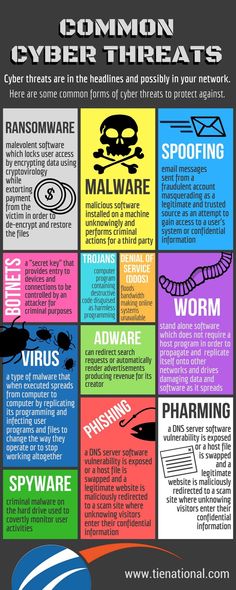
Common Cyber Threats


1.2. Cyber threats
Cyber threats can be disaggregated into four baskets based on the perpetrators and their
motives – Cyber Espionage, Cyber Crime, Cyber Terrorism, Cyber Warfare.
1.2.1. Cyber Crime/ Cyber Attacks
Cyber-attack is “any type of offensive maneuver employed by individuals or whole organizations
that targets computer information systems, infrastructures, computer networks with an
intention to damage or destroy targeted computer network or system.”
These attacks can be labeled either as Cyber-campaign, Cyber-warfare or Cyber-terrorism
depending upon the context, scale and severity of attacks. Cyber-attacks can range from
installing spyware on a PC to attempts to destroy the critical infrastructure of entire nations.
1.2.2. Cyber terrorism
Acts of Terrorism related to cyber space or act of terrorism executed using Cyber technologies is
popularly known as ‘cyber terrorism’.
“Cyber terrorism is the convergence of terrorism and cyber space. It is generally
understood to mean unlawful attacks and threats of attacks against computers,
networks, and information stored therein when done to intimidate or coerce a
government or its people in furtherance of political or social objectives, Further, to
qualify as cyber terrorism, an attack should result in violence against persons or
property or at least cause enough harm to generate fear, Serious attacks against critical
infrastructures could be acts of cyber terrorism depending upon their impact.”
It should be noted here that if they create panic by attacking critical systems/infrastructure,
there is no need for it to lead to violence. In fact such attacks can be more dangerous.
Besides, terrorists also use cyberspace for purposes like planning terrorist attacks, recruiting
sympathizers, communication purposes, command and control, spreading propaganda in form
of malicious content online to brain wash, funding purposes etc. It is also used as a new arena
for attacks in pursuit of the terrorists’ political and social objectives.

This contains an image of: {{ pinTitle }}

Cyber Security has assumed strategic and critical importance because of following reasons:
• Cyberspace has become key component in the formulation and execution of public policies.
• It is used by government to process and store sensitive and critical data which if
compromised can have devastating impact.
• Taking down cyberspace will result into disruption of many critical public services like railways,
defense systems, communication system, banking and other financial system etc.
• Several states are developing the capabilities in the area of cyber attacks which can alter
outcomes in the battlefield.
• Individuals are using internet based services at a growing pace making them vulnerable to
cybercrimes, such as- online bank frauds, surveillance, profiling, violation of privacy etc.

Government has taken a number of steps to acquire and increase capacity in the field of
cyber security. Some of which are discussed below.

National Cybersecurity Policy 2013

Information Technology Act 2000 (As Amended in 2008)

National Telecom Policy 2012,etc.