What is sustainable development?

With the advancements in technology and the rapid development of our
goals, our natural systems are unable to provide resources at scale and as a
result, our resources are depleting faster than they can be replenished. Finding
the right balance to ensure growth that is sustainable for years to come is the
basis of sustainable development. Some steps can be taken today that would have
a huge impact on society’s well-being and environment. Sustainable Development
is defined as the practice of setting goals and guidelines to use natural and
non-renewable resources responsibly and save energy to create new development
projects and maintain old projects.

Importance of sustainable development

1. Provides Essential Human Needs

People will have to compete for scarce resources including food,
shelter, and water due to the population growth. A long-lasting infrastructure
is nearly totally necessary for the adequate provision of these fundamental
needs.

2. Agricultural Requirement

Agriculture must keep up with an increasing population. It can be really
difficult to find solutions to feed more than 3 billion people. The focus of
sustainable development is on agricultural practices that increase yields while
preserving the health of the soil, which provides food for a big population,
such as efficient seeding methods and crop rotation.


3. Manage Climate Change


Sustainable development methods can
reduce climate change. The goal of sustainable development techniques is to
consume fewer fossil fuels, such as coal, natural gas, and oil. Fossil fuel
energy sources are unsustainable since they will run out in the future and
cause greenhouse gas emissions.


4. Financial Stability

Global economies can become more
financially sustainable by implementing sustainable development strategies.
Renewable energy sources can be used by developing nations without access to
fossil resources to power their economy.

5. Sustain Biodiversity

Overconsumption and unsustainable
development have a significant negative influence on biodiversity. The ecology
of life is set up so that species are dependent on one another to survive. For
example, plants create the oxygen that is necessary for human respiration.

Using organic farming methods and
renewable energy sources that don’t release greenhouse gases into the
atmosphere are encouraged by sustainable development techniques.


Goals of sustainable development


1. Eradication of poverty across the
world

These organizations typically target the poorest and least developed
nations in the world.

By extending social protection programs like school meals, cash
transfers, targeted food aid, etc., they want to abolish poverty on a global
scale.


2. The promotion of wellbeing and
health

At every stage of life, this sustainable development objective aims to
promote everyone’s health and well-being. The objective takes into account all
of the top health goals, including reproductive, maternal, and child health.

Additionally, it promotes better health financing, and more research and
development, and enhances each nation’s capacity for health risk management and
prevention.

3. Provision of Quality Education for
All

These organizations are aware that the number of children dropping out
of school is at an all-time high. Even as worldwide communities struggle to
assure quality and equity in the education sector, this gap must be overcome to
ensure sustainable future development.

4. Provision of Clean Water and
Sanitation

Regarding sustainable development, water and sanitation are at the top
of the list. They are essential for the planet’s and humanity’s survival. The
quality and sustainability of water resources around the world, as well as
issues with sanitation, hygiene, and drinking water, are all addressed in this
goal.

5. Building up Strong Infrastructure, Supporting
Inclusive and Sustainable Industrialization, and Incubating Innovation

Industrialization, infrastructure, and innovation are three components
of sustainable development that are considered in this objective.
Infrastructure is important because it provides the fundamental framework
required to facilitate the seamless operation of business and society as a
whole.

Industrialization promotes economic growth and creates employment
possibilities, which lowers poverty rates. Industrial sectors’ technological
capabilities are improved by innovation, which also sparks the growth of
innovative skills.

6. Making Affordable and Clean Energy
More Accessible


For most sustainable development objectives, energy is the most
important resource. Through improvements in industrialization, education, water
supply, health, and combating climate change, energy plays a crucial role in
reducing poverty.

The growth and expansion of renewable energy sources like solar, wind,
hydropower, liquid and solid biofuels, biogas, and geothermal are the main
objectives of this sustainable development aim.

These clean, renewable energy sources are best for the environment and
people’s health because they don’t release greenhouse gases into the
atmosphere.


Challenges faced in achieving
sustainable development


Two significant problems stand in the way of sustainable growth.

The first is that employing sustainable techniques and materials can be
costly in many development-related areas. Although sustainability does prove to
be less expensive in the long run than conventional development, developing a
sustainable project may be much more expensive in the beginning.

The lack of a universally acknowledged need for sustainable development
is the second significant problem. The solution to this problem in schooling
could take many years.

When projects are more expensive to start, contractors and investors
cannot see the value in them. It can be quite challenging to create a long-term
vision necessary to comprehend the significance of sustainability when the goal
is to make money in the near term.

To achieve this goal, new governmental rules and incentive
schemes have been implemented to make sustainable development a more alluring
choice for program and project managers.
China’s 5 Year Plan (2021-2025): Proposed Dam on River Brahmaputra

The five-year plans are a sequence of economic and social development initiatives furnished by the CCP (Chinese Communist Party) since 1949. The five-year plans were inspired by the five-year plans from the USSR and the focus was on launching new schemes, reforms and setting new growth targets.

Since the 11th five-year plan (2006-2010), the Chinese government has mentioned it as ‘Guidelines’ instead of plans. Currently China is on its 14th five-year plan/ guidelines. Unlike the previous five year plans, there is no specific GDP growth target and instead, the government announced that growth would be kept in “reasonable range” and an annual target would be set based on the specific conditions each year. The focus of the current plan is on self-sufficiency as the country had to endure difficulty after the United States had restricted China’s major chip makers from using American technology. Other areas of focus will be on the above 7 percent growth in the research and development spending. The government will also try to raise the urban residents to 65 percent of the population while maintaining green development and increasing the life expectancy by 1 year. Infrastructure will also be an area of priority with a focus on high-quality development of the belt and road initiative.

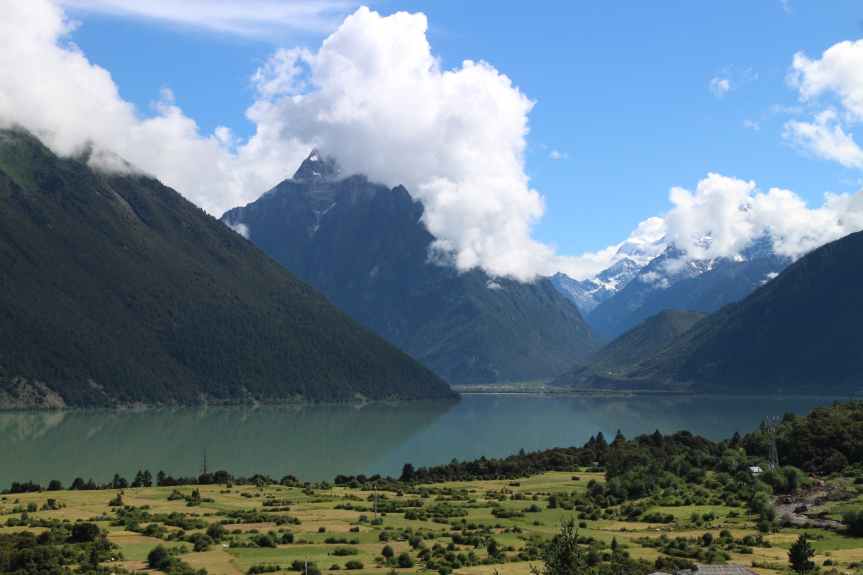
One of the biggest infrastructure projects of the 14th The five-year plan (2021-2025) has been officially approved to build a series of dams in the lower reaches of the Yarlung Zangbo River, as the Brahmaputra is known in Tibet before it flows into India.

The proposed dam would be in Medog, Tibet region will have a maximum possible capacity of 60 gigawatts and could potentially produce 300 billion kWh annually. The location is an area called ‘the great bend’ also known as ‘Yarlung Tsangpo Grand Canyon’ where the river goes through a very drastic U-turn and then the river descents from an elevation of 3000 meters to around 800 meters. Due to the drastic elevation change, the river flow is quite strong and is also an ideal location to build the dam.

The location of the dam could be a strategically risky move by china as it is very close to the Indian border but the other issue is that this proposed dam can undermine the water security of India. India relies heavily on the Brahmaputra River for agriculture and various other purposes.  Due to this, the proposed Dibang Dam by India in downstream (Arunachal Pradesh) might be the solution to offset the effect of the Chinese proposed dam. Although the majority of the catchment area of Brahmaputra is on the Indian side there is still the issue of water flow from the upstream as Assam usually suffers from floods in the rainy season and any additional water flow from the Chinese dam would make the situation worse. The problem will not only affect India but also Bangladesh due to its low-lying land and flood-prone region. Problem is that the region is ecologically diverse and sensitive and any kind of development in this region will negatively affect the ecology of this region. Due to turbulent tectonic plates, there are high chances of landslides and earthquakes as well. India will have to be vigilant and develop its strategy according to the developments on the Chinese side.

References:

Madagascar Droughts: Climate Change

Madagascar is the fourth biggest island in the world, situated in the Indian Ocean. The island country is deemed as ‘Megadiverse’ by Conservation International with more than 250,000 species of plants and animals most of which do not exist anywhere else. Almost 90% of the species found on the island are endemic. The island of 28 million people is one of the poorest countries in the world and has been ravaged by many natural and human-induced hazards.

So we can confidently say that the country is extremely rich and unique biodiversity. On the eastern coast of Madagascar the Rainforests of Atsinanana comprising of six national parks with an endemic rate of species touching almost 80%. This area has also been added to the World Heritage List since 2007. The area is considered important to both ecological and biological processes and it also supports the rare species of Lemurs and many other primates.

Deforestation has been a major issue in Madagascar and this has also threatened the Lemurs and them and many endemic species of the island heavily rely on these forests. Madagascar witnessed rapid deforestation for long a time and this only accelerated by the end of the 19th century due to French Colonization. The forested areas were gradually converted into coffee fields and the country lost its original forest cover by almost 80%. As of today, the primary forest cover stands a little over 10 percent.

Deforestation has not only affected the ecology of the country but has also affected the soil quality and increased soil degradation. Subsistence agriculture is quite common among the inhabitants of the islands. Slash and burn is another method that has affected the forest cover of the island as these methods are not beneficial after a certain population cluster. Another big reason for the rapid deforestation is illegal logging and this benefits private entities and large corporations. The country has also seen a rapid growth in its population which currently is estimated at 26 million, up from 2.2 million in 1900. This has increased the requirement for more land for cultivation.

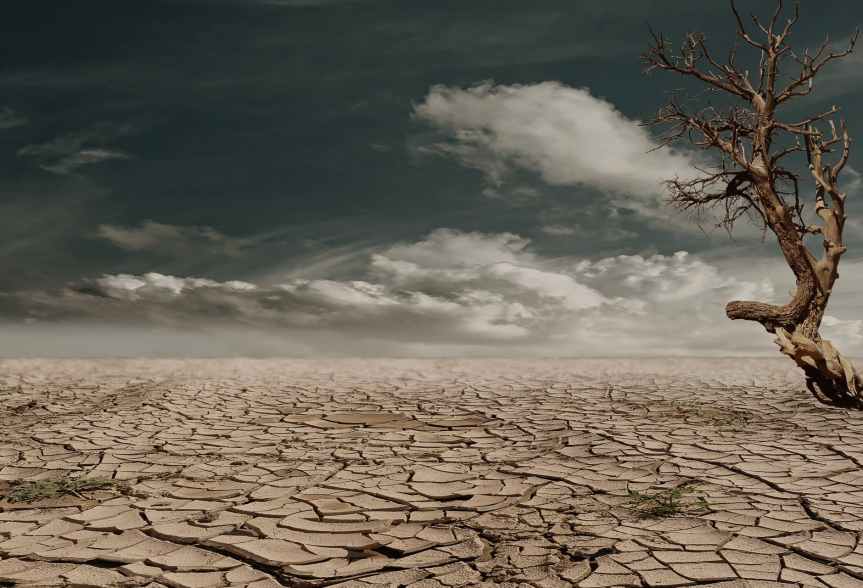
Currently, Madagascar is going through a very severe drought and deforestation can partly be a reason for this phenomenon. But there are other issues of cause too. Due to climate change, Madagascar has also suffered the consequence of the increased frequency of extreme weather events. It’s the worst drought in 40 years and has taken grip of the Southern part of the island. Due to low rainfall various streams, rivers and small dams built for irrigation dried up last year. The majority of the people in the south of the country rely on rain-fed, small-scale agriculture to survive.  With no rainfall and non-existent agriculture output, there has been an emergency in the country with severe food scarcity. Many people in the region have resorted to eating insects, wild roots.

According to experts’ deforestation, drier soils and higher temperatures due to climate change are the likely cause of droughts.

Climate experts

The island is already suffering from the covid-19 virus combined with the pressure of droughts and famines have caused strain to the poor country. Food and other aids are being provided to the affected areas of the country but supply is still not aligning with the current demand. A long-term solution will be required to tackle this situation as this problem is only going to get more serious in the future.

References:

The issue of Electric Vehicles and their sustainability

Tesla launched the Model-S in 2012, the luxury car was one of the more mainstream vehicles that accelerated the growth of electric vehicles. Some traditional cars manufacturers also followed the suit to compete with Tesla. Fast forward to a decade later, electric cars have become even more relevant and every major internal combustion engine manufacturer has an electric car model in their portfolio.

The rise of electric cars has been commendable with 75% growth rate and current sales north of 3 million units. But we have to look at the sustainability of electric vehicles realistically. Internal Combustion Engines cars have come a long way from 20 years back. Conventional cars are significantly more fuel-efficient and release less harmful gases to the environment. But still, they are incomparable to electric vehicle zero fuel emissions.

When we talk about electric vehicles, we also have to consider the whole infrastructure that is required to sustain that. The elephant in the room is the batteries. Battery technology has progressed a lot in the past decade but still, there are lots of limitations that have hindered the adaptability of EVs. One of the biggest issues that EVs face is the limited lifespan of batteries. The average lifespan of a typical EV battery is approximately 10 years depending upon the usage. In many EVs, the replacement of batteries is very difficult or almost impossible. Another problem is the case of recycling batteries. It’s not easy to recycle batteries and currently, electric vehicles have a very small percentage of market share. But as more and more people adopt EVs, there will be more EVs that will have to be scrapped and the proper disposal of batteries will be required. This can be a cause of environmental concerns as batteries will accumulate with no proper arrangement for its recycling.

Issues that will have to be addressed

The problem is much more than just battery technology. The power delivery and infrastructure also need to be developed to support the EVs. It’s going to be easier in urbanized areas with a small population, for instance Norway has been moderately successful in adopting EVs as a standard with plans to totally cease the sales of internal combustion engine vehicles by 2025. This target is going to be much more difficult in large countries with large populations and rural populations where distances between cities are larger. It also requires a considerable amount of capital resources to make the transition possible. Currently, traditional gas vehicles are still more viable, practical, and cheaper than EVs. This tells us that EV manufacturers and the government will require much more than subsidies to convince people to convert. EV manufacturers will also need to control the amount of energy that is required to produce a single EV, which is much more than a gas vehicle.

The extraction of lithium is also a contested issue and just as fossil fuels, the elements that are required to make batteries are non-renewable. Lithium can be extracted in a limited capacity and with more demand, it will become even more challenging to supply the raw materials required to build a battery. Building new battery production factories will also require a considerable amount of time and money. Until battery production facilities are not increased, supplying batteries will be a challenge and mass adoption will not be as fast as we would like it to be.

In conclusion, EVs are certainly the future, they are cheaper to operate and have zero emissions. But there are many other issues like infrastructure, battery supply, and proper disposal that would have to be addressed.

References: