
Bioenzymes : Feed Your Soil

Bioenzymes are organic soil growth supplements which has natural and essential nutrients to replenish the soil. Also known as “Jeevamrit“, does exactly what the name says!
It contains growth stimulants like potassium humate, amino acids, vitamin B complex, probiotics as well as blends of various enzymes like proteases, lipases, amylase, etc. Proteases breaks down bigger proteins into smaller amio acid units. Lipases acts on fats molecules and Amylase breaks down carbohydrates like starch.

Benefits of using bioenzymes:
Talking about the benefits, it works miracles. The enzymatic activity increases the concentration of good bacteria thereby, increasing the overall biological activity of the soil. It also increases the NPK levels, boosting plant growth and the difference is quite visible. Plants appear greener and fresher. Flowers are more fluffy n bright. Fruits, bigger and better resulting in good yield. Its a good natural herbicide, insecticide and pesticide which repels pests, enriching the soil of your home garden and orchards, helping plants to grow well in full potential.
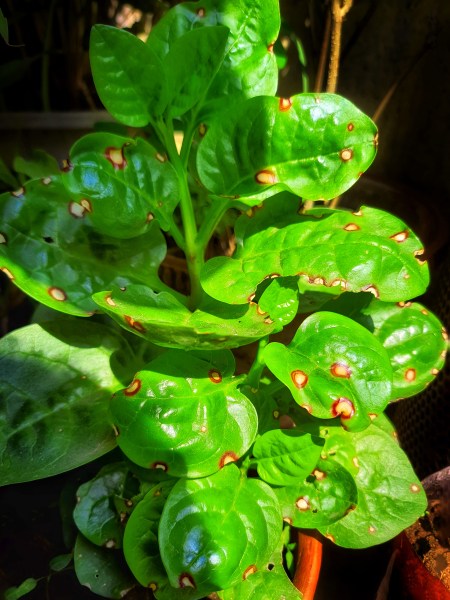
Bioenzyme : works miracles

Bioenzymes : DIY
Making bioenzymes at home is extremely easy and simple. All you need is water, fruit peels and jaggery in 10 : 3 : 1 ratio. The peels could be dried or fresh, whatever is available. Even rotten fruits could be put to use. Do not replace jaggery with sugar. Chop the fruit peels into small pieces and mix them all together in an air tight container. Smaller the fragments, better the results. And that’s all! To speed up the process, a pinch of yeast is added. It would be ready to use in a month. If you don’t want to add yeast, have patience and wait for 3 months. Make sure that you don’t fill the container completely. Leave some space, about 1/4th, for the gases to evolve during fermentation. Don’t forget to open the container and stir once in a day or two for at least a few weeks. This is because the gases evolved should be released time to time or the container may explode.

Strain the liquid in a separate bottle for convenience. The fruit peels could be used to make next batch or it could be decomposed to add to the fertility of soil. As long as you maintain the proper ratio, results would be the best!

Vegetable peels can also be utilized but fruit peels, preferably citrus peels are used as they are full of antioxidants and the final product has a very pleasant fruity smell. Even flowers like dahalia are used to make bioenzymes. They have a mild fragrance which gives an aesthetic touch to your house and garden.

How to use bioenzymes?
Bioenzymes could be used in multiple ways. It acts as an excellent cleaner and could be replaced with floor and bathroom chemical cleaners which are extremely polluting & lead to fat bergs in the sewer system. They are also used in rest rooms as surface cleanerns, odour eliminators and even more!
Bioenzymes can be added to the plant roots as liquid fertilizer, mixed with water in the ratio 1:50. Its good to always start with a more diluted solution.
Or it can be applied as foliar spray. Just add a teaspoon of it to 1 litre of water and there you go! Spray it all over the plants. It could be added once or twice a week depending on the vegetation.

Happy Gardening!

FOOD SPOILAGE

Food is considered contaminated when unwanted microorganisms are present. Most of the time, the contamination is natural, but sometimes it can be artificial too.
NATURAL CONTAMINATION occurs when microorganisms attach themselves to foods while the foods are in growing stages.
ARTIFICIAL CONTAMINATION occurs when the food is handled or processed such as when fecal bacteria enter food through improper handling procedures.
CAUSES OF FOOD SPOILAGE:

  1. Growth and Activity of microorganisms – Bacteria, yeasts and molds are microorganisms that cause food spoilage. They produce various enzymes that decompose various constituents of food.
  2. Enzyme activity – Action of enzymes start the decomposition of various food components after death of plants and animals.
  3. Chemical reactions – These are the reactions that are not catalyzed by any enzyme. E.g. Oxidation of fats
  4. Vermin – It includes weevils, ants, rats, mice, birds, larval stage of some insects. Vermin are important due to asthetic aspect of their presence, possible transmission of pathogenic agents and consumption of food.
  5. Physical changes – These include changes caused by freezing, burning, drying, pressure etc.
    SOURCES OF FOOD CONTAMINATION. PHYSICAL SPOILAGE is due to physical damage to food during harvesting, processing or distribution. The damage increases the chance of chemical or microbial spoilage and contamination because the protective outer layer of food is broken and microorganisms can enter through it. CHEMICAL SPOILAGE in food are responsible for changes in the color and flavor of foods during processing and storage. After harvesting, chemical changes begin automatically within foods and lead to deterioration. Every living organism uses specialized proteins called enzymes to drive the chemical reactions in its cell. After death, enzymes play an important role in the decomposition of living tissues in a process called as autolysis (self-destruction) or ENZYMATIC SPOILAGE. MICROBIAL SPOILAGE is due to bacteria, yeasts or molds. They produce various enzymes that decompose various constituents of food. • Besides natural microorganisms, foods can be contaminated with different types of microbes coming from outside sources such as air, soil, sewage water, humans, food ingredients, equipments, packages, insects, etc.

The primary sources of microorganisms in food may include –

  1. Soil and Water – Soil grows agricultural produce and raise animals and birds which might contain several microorganisms. Also, these microbes can multiply in soil and their numbers can be even very high as expected. Fecal materials may also contaminate soils which can act as a source of microorganisms. Sewage water can also contaminate crops with variety of microorganisms when sewage water is used as a fertilizer. So, Sewage must be always treated before using as a fertilizer.
  2. Plants and plant products – The inside tissue of food from plant sources are essentially sterile except for few porous vegetables such as radish, onion and cabbage. Also it has been observed that some plants produce natural metabolites that can limit the presence of microorganisms in those particular foods. Fruits and vegetables contain a variety of microorganisms on their surface and their presence and number depends on various factors such as disease of the plant, storage, etc.
  3. Food utensils – Many different microorganisms can contaminate food utensils from which they can transmit to human body and make them ill if pathogenic. Proper cleansing and sanitization of food utensils is required before serving food in them.
  4. Food handlers – Food handler is a person who touches or handles food. The microorganism may be transmitted from his hand to the food and may be harmful for the person consuming that particular food. The microbes can come from animals or from the environment.
  5. Animal hides and skins – Food animals and birds normally carry various indigenous microorganisms some of which are pathogens and are responsible for food-borne diseases in humans. The number of these microorganisms is less than10/g.
  6. Air and dust – Microorganisms may be present in dust and moisture droplets in the air. The microorganisms which are present in air may be transient or variable depending on the environment. Some pathogenic microorganisms may cause air-borne diseases.