USB type – C will be available in all laptops and smartphones

Electronic devices are back in demand. They can get huge profits from various companies. Consumers are now trying to utilize the various benefits of technological advancements. As a result, many companies are trying to find out ways that can reduce electronic waste.

The waste that is getting generated due to rapid technological change is creating problems for the environment. Electronic devices are getting older and obsolete very quickly. This is creating problems for people also. They need to buy new devices now and then. The worst situation is in the case of the accessories. Things like chargers are the worst hit. There are various types of chargers for different types of electronic devices. This creates a lot of problems for the environment and the public.

But to reduce this issue, the government is discussing following the footsteps of the European Union. The European Union EU decided earlier this year that there will be a USB type – C charging feature for all consumer electronic devices like laptops and mobile phones. It will reduce electronic waste and will also enable people to charge any device using the same cable. 

Now, this step has been directed to all consumer electronic device manufacturers. They have been given a deadline of December 28, 2024. The Indian government is also planning to set the same deadline for the companies in India. It will give some relaxation to the companies to reset the systems for the manufacturing of their devices. Other than that, there will also require some planning in terms of the devices that will be exported to other countries.

https://unsplash.com/photos/4xMAiJZPQXI

Now, the biggest problem, in this case, will be Apple. It is because Apple is the only company which has not been able to provide the USB type – C charging option in its iPhones, which is the major seller. It says that if it does so, then there will be a huge amount of waste because people will then throw away their lightning cables, which will be bad for the environment.

On the other hand, all the Android manufacturers are almost transitioned to USB type – C charging features. It also enables their device to have a faster-charging speed which is not possible in micro-USB cable after a certain extent. Another advantage of USB type – C cable is the ease of use. 

Now, these changes will make sure that there will also be further fewer accessories in the electronic packaging. Just like the phase we are facing right now, in which companies are slowly removing the chargers from their package. But there will be phased implementation of this plan in India. It will enable the users to transition to the new norms smoothly. 

These changes will pave the way for a universal experience for the users. The new rules will also enable that the devices in the future like smartphones and laptops will become more compatible with the advancement that is being implemented in charging technology. These changes will slowly reduce some pressure from the environment also.  
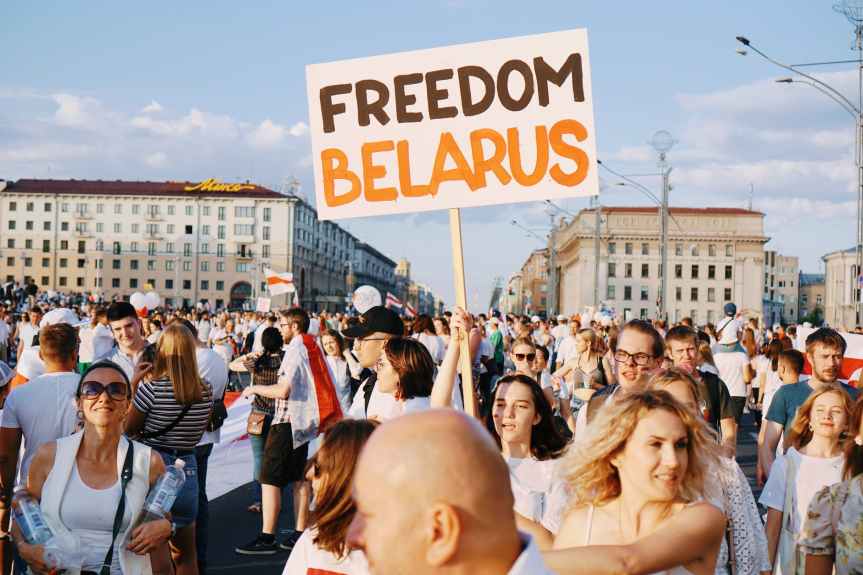
Belarus: Escalating political tension and sanctions

Belarus is an overlooked country that is located east of Poland and south of Lithuania and Latvia. It is bordered by Russia in the East and also bordered by Ukraine in the South. The landlocked country has an area of 207,600 square kilometers (80,200 square mi) and a population of little over 9 million people. Belarus was one of the newest countries that were formed after the disintegration of the USSR in 1991.

Alexander Lukashenko was elected Belarus’s first president of Belarus in 1994. Since then he has held the position and has been governing the country for more than 25 years. Lukashenko’s style of governance has been deemed as authoritative as there have been no free elections since he got elected. He has maintained many of the Pre-Soviet policies and Belarus’s Democracy Index rating is the lowest in Europe. In the 2020 Belarusian elections, Lukashenko was declared the winner against the opposition leader Sviatlana Tsikhanouskaya. The election was marred by allegations of widespread electoral fraud. Many western countries had demanded a re-run but that never happened. This also triggered mass protests across the major cities in Belarus. But to control the critics and protesters, the government reacted with brute force, arresting demonstrators and sending numerous protestors behind the bars.

In May 2021 the kidnapping of opposition journalist Roman Protasevich and his girlfriend, Sofia Sapega was another sign of the Belarusian government’s woes against any kind of critics. This was basically a state-sponsored hijacking of air piracy. This incident occurred on Ryanair Flight 4978 en route to Vilnius on May 23 when the plane was diverted to Minsk with a fake bomb threat from Belarusian air traffic control. After this violation of international aviation rules, both were arrested on questionable charges of organizing mass unrest.

Belarus has always swayed between Russia and the EU but recently European Union has imposed one of the toughest restrictions against Belarus. EU has blocked the sale or supply of major technology to Belarus, as well as restricted access to capital markets and trade in oil and potash. EU has also imposed airspace restrictions against Belarus. But any sanctions against Belarus must not target ordinary people. Because the land borders are already sealed off with Poland and Lithuania. The only viable option for Belarusian people was air travel. So this restriction will also affect the citizens of the country. To counter the problem of Potash sanctions, Lukashenko has struck a deal with his Russian business friend to create a new Potash mining and processing plant. But this will come at a cost of increased taxes for the individual citizens of Belarus amid the Covid-19 crisis and economic downturn. The United States has also imposed visa bans and other sanctions on 62 individuals who were identified as contributing to the Belarus crackdown.  

The citizens of Belarus deserve free Elections and a leader who can think about the citizens of the country instead of holding onto the power. With a progressive leader, Belarus could have been on par with the Baltic countries. The recent sanction might or might not work but in the end, the common citizens of the country suffer the most. 

References:

Baltic Countries and their economic transformation

Baltics, also known as the Baltic States is comprised of three countries including Latvia, Lithuania, and Estonia. The three countries are situated on the eastern shores of the Baltic Sea. In 1991 the regional governments of Lithuania, Latvia, and Estonia declared independence from the Union of Soviet Socialists Republics (USSR). Three countries have a collective population of just over 6 million. The three have been one of the better examples which have been progressing well after the breakup of the USSR. Many other former Soviet republics have been suffering the disarray of corruption and political instability.

In 2002 Baltic countries applied for membership in the European Union (EU) and by May 2004 all the three countries joined the EU. They also gained membership in NATO by March 2004.

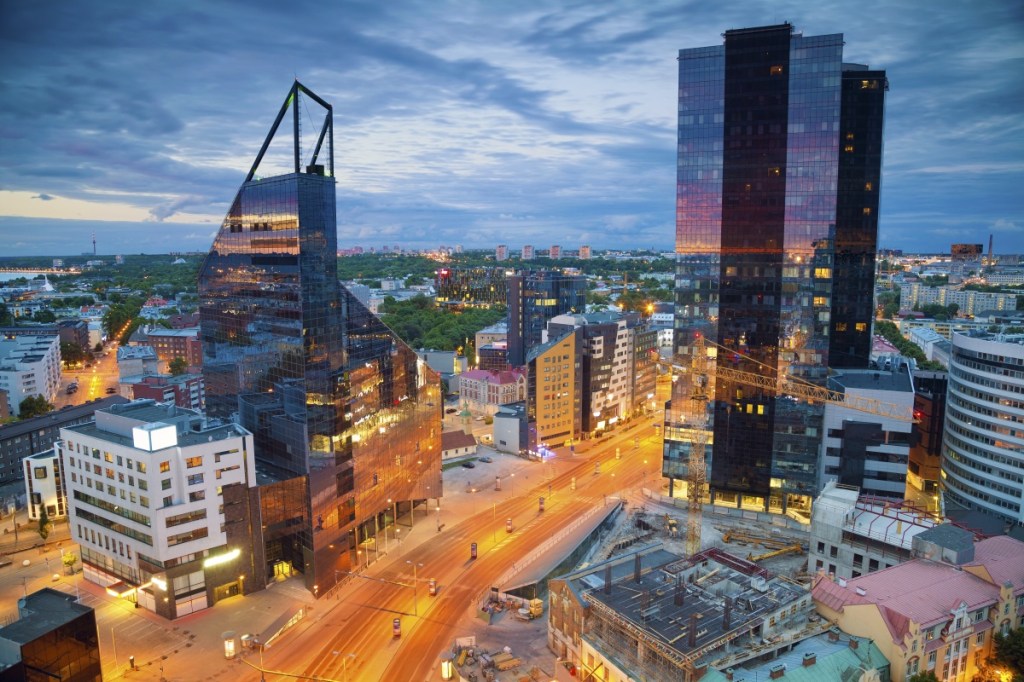
Downtown Tallinn

Baltic independence in 1991

It’s truly astounding how the three countries have developed since 1991. None of them were independent since 1940. The three countries had large Russian minorities and many Soviet soldiers were still stationed there. There were no major national institutions and banking infrastructure with a crumbling economy. There was a growing homegrown national moment against the ruling government since the 1980s. The homegrown fronts won the republican parliamentary election against the ruling party in early 1990 and were allowed to govern but with limited power. The Russian president at that time, Boris Yeltsin had not contested their newly declared independence in 1991. The Baltic also witnessed no violence when the three governments had declared their independence.

The three nations also had almost no natural resources, unlike USSR which was resource-rich. They were still in a very vulnerable situation with a small population and no military of their own. Even though the countries were linguistically distinct with different languages, but people in all three countries had a united drive to strive for a better future. The three had implemented reforms with a shared vision. The governments of the three shared many policies, ideas, and experiences. The Baltic States also valued their new independence with a lot of enthusiasm and didn’t take it for granted. The other ex- USSR countries often had to ask for assistance from Russian Federation and also formed new alliances with the Russian government. Baltic countries on the other hand tried to stay away from joining the post-Soviet Commonwealth of Independent States. In the subsequent years, all the three countries adopted radical economic policies and Estonia was the first mover and Latvia and Lithuania would follow suit. In 1994 Estonia introduced a flat income tax at just 24 percent and the other two also implemented the policies. Currently, Lithuania has a tax rate of just 15 percent which is one of the lowest. With early and fast deregulation and privatization, the Baltic countries were able to capture a large amount of foreign direct investment. Estonia also radically transformed its public sector with various digitalization implementations and less reliance on paperwork. Latvian and Lithuania’s transformation in this area was not as drastic but after some time both of them followed Estonia’s footsteps.  Transparency International ranks Estonia No. 17, Lithuania 37, and Latvia 42 out of 175 countries on its Corruption Perception Index for 2020. This is a commendable ranking considering they all the three are a relatively new entrant to the EU and many other EU countries have lower ranks than the three.

Success attributions

The success can also be attributed to the generous support that the three countries received from the international community and funds granted by the EU, World Bank, and the IMF. In 2008 Baltic suffered from the global economic crisis. The three soon adopted the Euro as their currency to avoid any future liquidity freeze issues that they experienced at that time. The economies al the Baltic rebounded quickly and due to good monetary measures, the three have a very low public debt. Baltic governments have also made swift progress in the Education sector and the three have attained commendable rankings in the Program for International Student Assessment (PISA) of the Organization for Economic Cooperation and Development (OECD). Estonia has done a very commendable task in this area with top 10 rankings in many assessments.  But the Baltics also face many challenges with population loss due to low birth rate and emigration. Proximity and hostility with Russia still is a challenge that the tiny nations have to endure.