

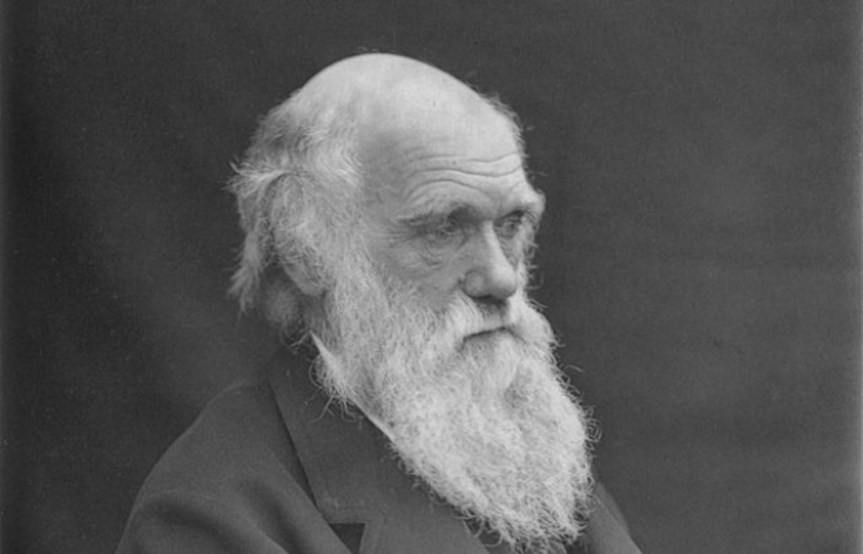
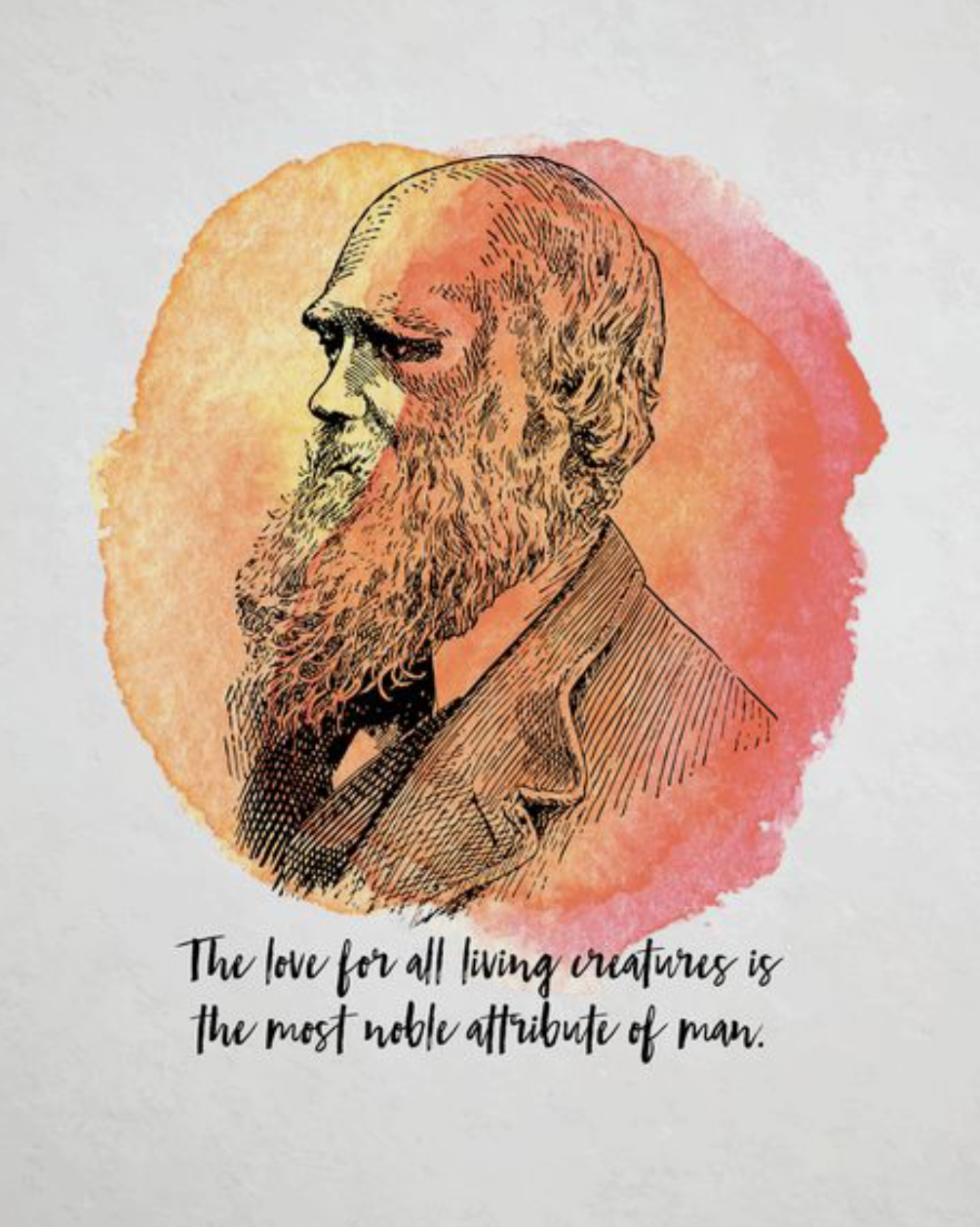
Charles Robert Darwin (1809-1882) was a British biologist, born on 12th February 1809 in Shrewberg, England.
He presented his theory of evolution in the book On the Origin of Species by means of natural selection in 1859. Darwin argued that new species had evolved from older species, and he described the mechanism behind the transformation process. Darwin’s theory of evolution is based on the following five principles:
- Organisms produce more offspring than can possibly survive.
- Organisms face a constant struggle to survive.
- Organisms within a species vary.
- Organisms best suited to their environment survive.
- Those organisms which survive will reproduce and pass on their genes to the next generation.
- Over-production: All species have a tendency to produce more and more offspring in order to increase the population. For example, a salmon produces 28,000,000 eggs in a single season; a single spawning of an Oyster may yield as many as 114,000,000 eggs; a common roundworm lays about 70,000,000 eggs in a day. This huge production is to ensure the survival of the species. Even though species are produced in larger numbers, the population of a particular organism remains more or less constant.
- Struggle for Existence: Darwin claimed that there was a continual ‘struggle for existence in nature, in which only the fittest would survive. As a result of overproduction, there is a struggle for existence among organisms. Since the number of is persons is large, there is competition for food, shelter, mates etc.
struggle for existence may be of different types as follows:
a. Intra-specific (Intra-species) struggle: The members of the same species struggle among themselves for food, shelter and mates.
b. Inter-specific (Inter-species) struggle: The members of different species may go on fighting for survival. A member from one species may hunt other members of other species for food.
c. Environmental struggle: Organisms of different species struggle against the environmental hazards like earthquake, flood, drought etc. Only those species with better adjustment with the environment will survive.
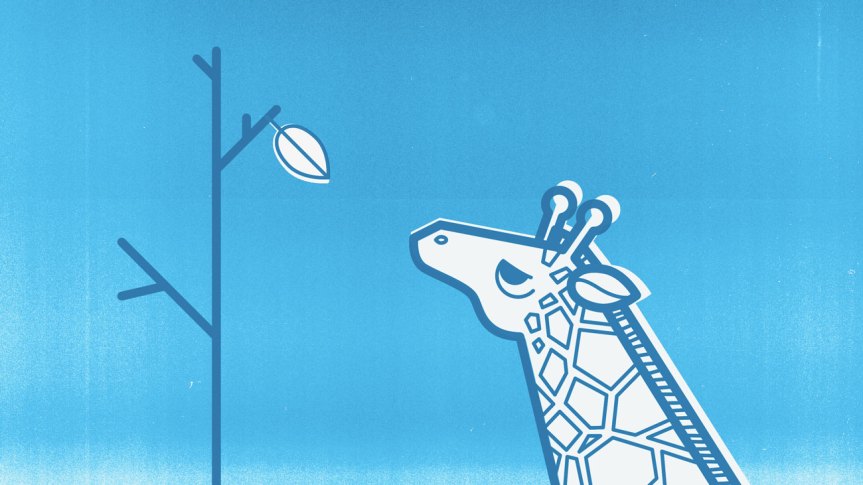
- Variations: Variation is the tendency of an organism to deviate from the parental generation. These variations play a very important role for adaptations in the environment. Some variations are considered as favourable and others are unfavourable. Organisms with unfavourable variations easily get defeated in the struggle for survival. Variations that are useful to adapt to the pressures of the environment survive long. The new trait of advantageous characteristics is passed on to the future generations.
- Survival of the Fittest: The struggle for existence leads to the survival of the fittest. When there are too many of an organism in an area, they compete for resources such as food and perhaps shelter, for example trees and caves.The surviving species will reproduce more offspring than those who are less adaptive.
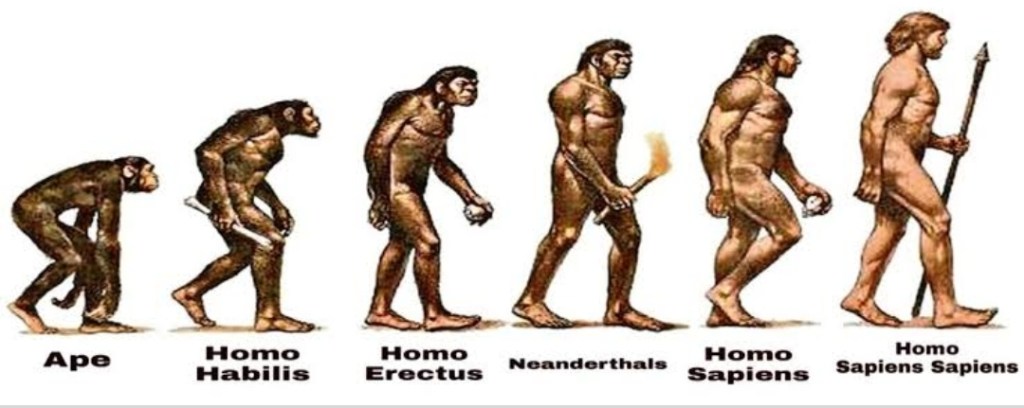
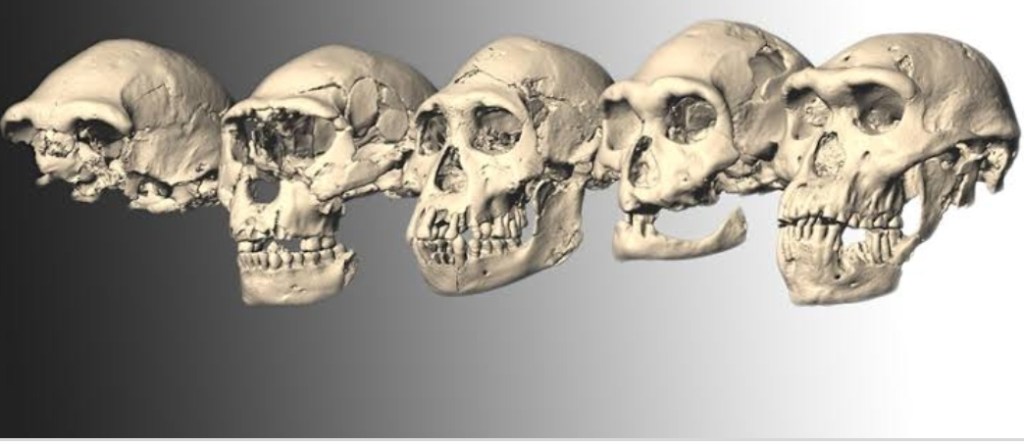
- Natural Selection: The surviving individuals will give rise to the next generation. The successful variations are transmitted to the succeeding generations. The accumulation of advantageous traits in future generations gradually brings changes in species. Successive generations in this way tend to become better adapted to their environment. Eventually, a new species may evolve.
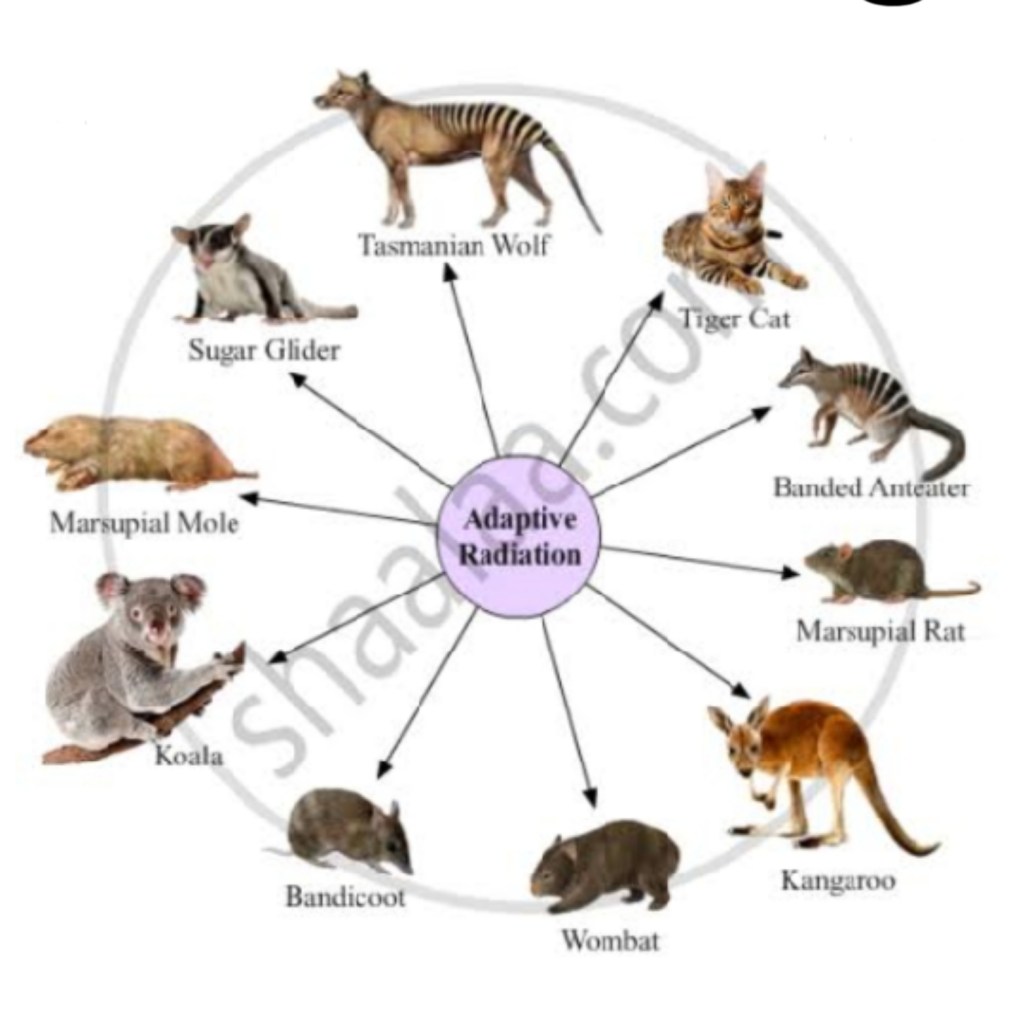
Furthermore, certain members of a population with one group of variations may become adapted to the environment in one way, while others, with a different set of variations, become adapted in a different way or become adapted to different environments. In this way, two or more species may arise from a single ancestral stock.
Examples of Natural Selection
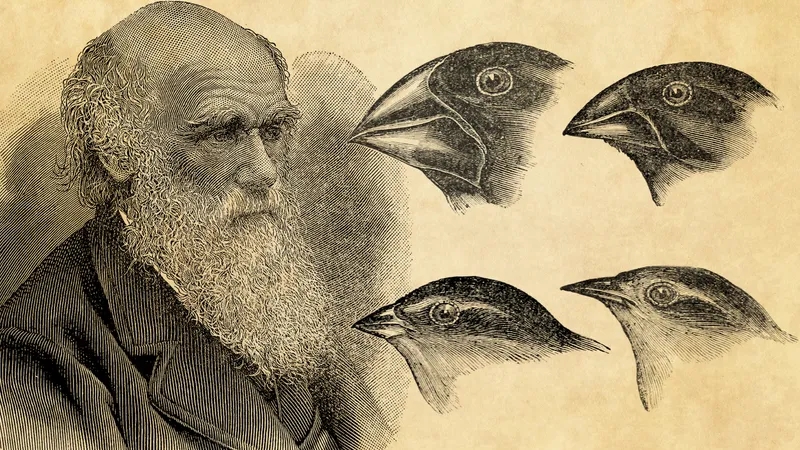
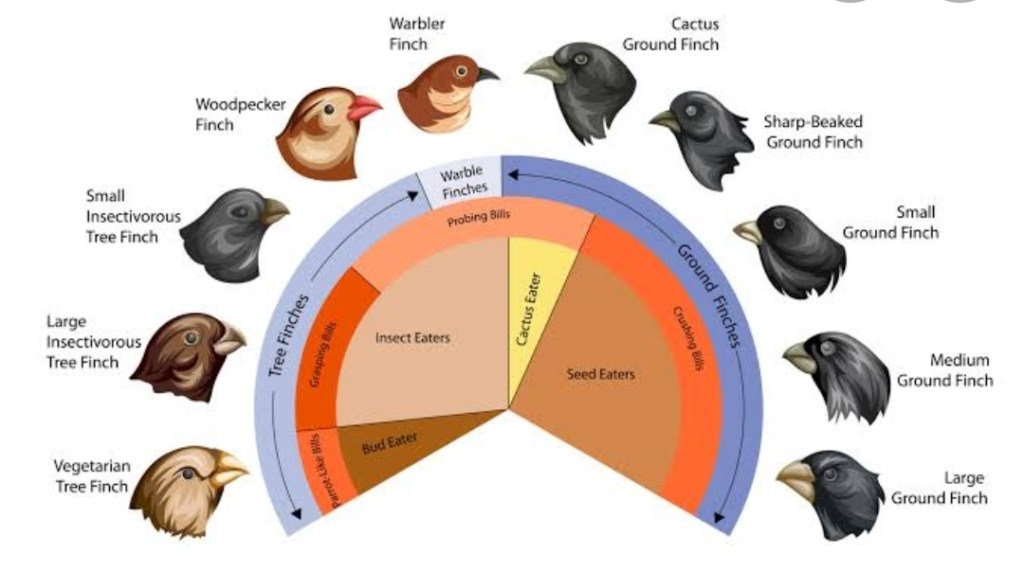
1. The finches of Galapagos : Some species of finches have short thick beaks. They are used to eating seeds, fruits and buds. Some others have long straight beaks. They subsist primarily on nectar from flowers. If environmental condition suddenly changes some characteristics may be more favoured than others.
2. Industrial melanism in moth : Before Industrialisation, the tree trunks were lighter and light coloured moths were predominant. Dark coloured moths were also present but they were limited in number. As a result of industrialisation, the pollution resulted in the darkening of tree trunks. So the light coloured moths become more visible to birds and were therefore eaten by their predators. As a result of this at the end of 19th century the common light coloured moths were almost completely replaced by the black variety.

The theory of origin of species by natural selection is regarded as a major advancement in evolutionary thought. Darwin contributed to the modern understanding of biological evolution by documenting the variation of living forms and identifying the key process of natural selection.
Like most 19th century scientists, however, he did not understand heredity or how specific traits are passed from one generation to the next. His theory lacked the knowledge of modern genetics. However, mutation theory explained the causes of variations among organisms.




 Eduindex
You must be logged in to post a comment.