
Electric two-wheelers are getting the push for support

The electric two-wheeler market is one of the fastest-growing markets in our country. This segment is also gaining popularity among the public in a rapid manner. The large number of companies that are currently providing options in this segment are trying their level best to attract more customers to his segment.

But due to some glitches, the segment has been under the scanner for some time now. There have been cases recently that involved some two-wheelers burning up right after coming out of the showroom. So, to make the segment better in terms of quality, the government has released some new rules which need to be followed by the manufacturers. The new features can improve the user experience and can also ensure that the vehicles are safer for general users.

There have been rising concerns regarding the environmental damage that general vehicles are causing. This has caused the general public to steer away from fossil fuels. As a result, electric vehicles are getting more attention. The other reason has been the fewer emissions that electric two-wheelers have. They do not pollute the environment with smoke and keep the environment clean. 

As a plus point, there has been also an increase in the number of charging stations all over the country. There were 1000 charging stations all over the country. Currently, there are around 2000 charging stations. There have also been incentives from the government for EVs and all the other equipment related to it. The equipment includes chargers/ charging stations and the parts that are used in the manufacturing of an electric two-wheeler. 

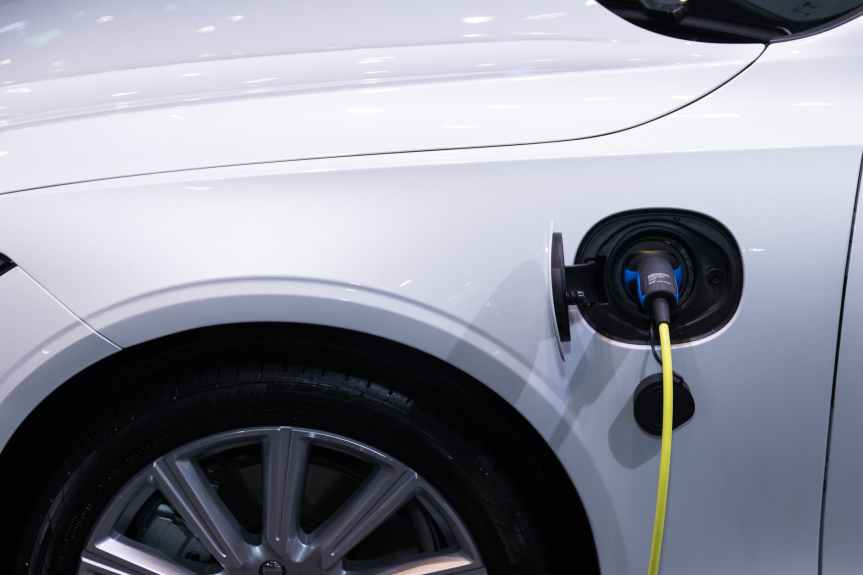
https://unsplash.com/photos/LN8IwrFW_Ow

But some hurdles need some treatment. The hurdles are like involving the real-estate tycoons to enable the charging options in their skyscrapers. There is also a requirement for charging stations in the residential complexes as well as in the commercial complexes in the parking areas. This will enable more people to adopt electric vehicles in the future.

Now, after looking at all of the above points it is evident that electric vehicles are the future. But the hurdles are still there. There still needs to be some changes in the system that is controlling the entire electric vehicle field. For example, we will be able to see electric two-wheelers that will be fireproof.

There are also some recent efforts from the governments in different states and even the central government. The efforts have resulted in more use of electric public transport vehicles in different cities. The vehicles like electric buses and even the Indian Railways are now trying to promote more use of electric vehicles for transport. This will in turn help in improving the quality f the air that we breathe in. 

In the end, there are several other campaigns like Switch Delhi that are trying to attract people towards electric vehicles. This will ensure that the capital of our country remains clean and safe for living in the future.  So, the various efforts will surely help in reducing global warming which is creating several problems like untimely natural calamities and even the disruption of the natural season cycle in nature. Also, people need to support such initiatives and help the government in making more such efforts to allow electric vehicles to rule our roads. 
The issue of Electric Vehicles and their sustainability

Tesla launched the Model-S in 2012, the luxury car was one of the more mainstream vehicles that accelerated the growth of electric vehicles. Some traditional cars manufacturers also followed the suit to compete with Tesla. Fast forward to a decade later, electric cars have become even more relevant and every major internal combustion engine manufacturer has an electric car model in their portfolio.

The rise of electric cars has been commendable with 75% growth rate and current sales north of 3 million units. But we have to look at the sustainability of electric vehicles realistically. Internal Combustion Engines cars have come a long way from 20 years back. Conventional cars are significantly more fuel-efficient and release less harmful gases to the environment. But still, they are incomparable to electric vehicle zero fuel emissions.

When we talk about electric vehicles, we also have to consider the whole infrastructure that is required to sustain that. The elephant in the room is the batteries. Battery technology has progressed a lot in the past decade but still, there are lots of limitations that have hindered the adaptability of EVs. One of the biggest issues that EVs face is the limited lifespan of batteries. The average lifespan of a typical EV battery is approximately 10 years depending upon the usage. In many EVs, the replacement of batteries is very difficult or almost impossible. Another problem is the case of recycling batteries. It’s not easy to recycle batteries and currently, electric vehicles have a very small percentage of market share. But as more and more people adopt EVs, there will be more EVs that will have to be scrapped and the proper disposal of batteries will be required. This can be a cause of environmental concerns as batteries will accumulate with no proper arrangement for its recycling.

Issues that will have to be addressed

The problem is much more than just battery technology. The power delivery and infrastructure also need to be developed to support the EVs. It’s going to be easier in urbanized areas with a small population, for instance Norway has been moderately successful in adopting EVs as a standard with plans to totally cease the sales of internal combustion engine vehicles by 2025. This target is going to be much more difficult in large countries with large populations and rural populations where distances between cities are larger. It also requires a considerable amount of capital resources to make the transition possible. Currently, traditional gas vehicles are still more viable, practical, and cheaper than EVs. This tells us that EV manufacturers and the government will require much more than subsidies to convince people to convert. EV manufacturers will also need to control the amount of energy that is required to produce a single EV, which is much more than a gas vehicle.

The extraction of lithium is also a contested issue and just as fossil fuels, the elements that are required to make batteries are non-renewable. Lithium can be extracted in a limited capacity and with more demand, it will become even more challenging to supply the raw materials required to build a battery. Building new battery production factories will also require a considerable amount of time and money. Until battery production facilities are not increased, supplying batteries will be a challenge and mass adoption will not be as fast as we would like it to be.

In conclusion, EVs are certainly the future, they are cheaper to operate and have zero emissions. But there are many other issues like infrastructure, battery supply, and proper disposal that would have to be addressed.

References: