
Preparation for Board Exam

Preparing for Board Exams: A Comprehensive Guide
Board exams are a significant milestone in a student’s academic journey. The pressure to perform well can be overwhelming, but with proper preparation and a strategic approach, you can ace your exams. Here’s a comprehensive guide to help you prepare effectively:

  1. Understand the Syllabus and Exam Pattern:
  • Thorough Analysis: Break down the syllabus into smaller, manageable topics.
  • Identify Weak Areas: Pinpoint the areas where you need extra focus.
  • Practice Previous Year Papers: Understand the exam pattern, question types, and time management strategies.
  1. Create a Realistic Study Schedule:
  • Time Management: Allocate specific time slots for each subject.
  • Prioritize Topics: Focus on important and challenging topics first.
  • Consistent Study Habits: Develop a regular study routine and stick to it.
  1. Effective Study Techniques:
  • Active Learning: Engage with the material through techniques like summarizing, questioning, and explaining.
  • Mind Mapping: Visualize concepts and relationships between ideas.
  • Regular Revision: Reinforce your understanding by reviewing regularly.
  • Practice Tests: Simulate exam conditions to build confidence and identify knowledge gaps.
  1. Healthy Lifestyle and Stress Management:
  • Balanced Diet: Fuel your body with nutritious food to enhance concentration and energy levels.
  • Adequate Sleep: Prioritize sleep to ensure optimal cognitive function.
  • Regular Exercise: Physical activity reduces stress and improves focus.
  • Stress Management Techniques: Practice relaxation techniques like meditation and yoga.
  1. Tips for Exam Day:
  • Stay Calm: Manage anxiety through deep breathing and positive affirmations.
  • Read Instructions Carefully: Understand the question paper and time allotted for each section.
  • Time Management: Allocate time wisely to each question.
  • Write Neat and Legible: Present your answers clearly and concisely.
  • Review Your Answers: If time permits, check your work for errors.
    Additional Tips:
  • Join Study Groups: Collaborate with peers to discuss concepts and solve problems.
  • Seek Help When Needed: Don’t hesitate to ask teachers or tutors for clarification.
  • Stay Positive and Motivated: Believe in yourself and your abilities.
    Remember, consistent effort and smart study habits are key to success. By following these guidelines, you can approach your board exams with confidence and achieve your desired results.
    Would you like to delve deeper into a specific aspect of exam preparation, such as time management, stress relief, or study techniques?
CPA Exam Changes You Should Know About

 Certified Public Accountants (CPAs) are highly skilled professionals who provide critical financial services to businesses and individuals. They are state licensed and must meet rigorous education and experience requirements. You need to clear the exam to become a certified public accountant. 

Like any other exam, there have been CPA exam changes per the needs of the changing economic laws and scenarios. You must make these changes to clear the exam with flying colors, 

What Are the Exam Changes Everyone Should Know?

The first change is that starting in January 2019, the exam will be offered in a new computer-based testing format. It means you cannot take the exam on paper. Instead, the new format will allow you to take the exam on your schedule, and you will have more flexibility when scheduling your exams.

Another change that has been made is that the passing score for the exam has been raised from 75% to 80%. This change was made to align the exam with international standards.

Finally, the content of the exam has also been updated. The new content will focus on more advanced topics and will be more challenging than the previous versions.

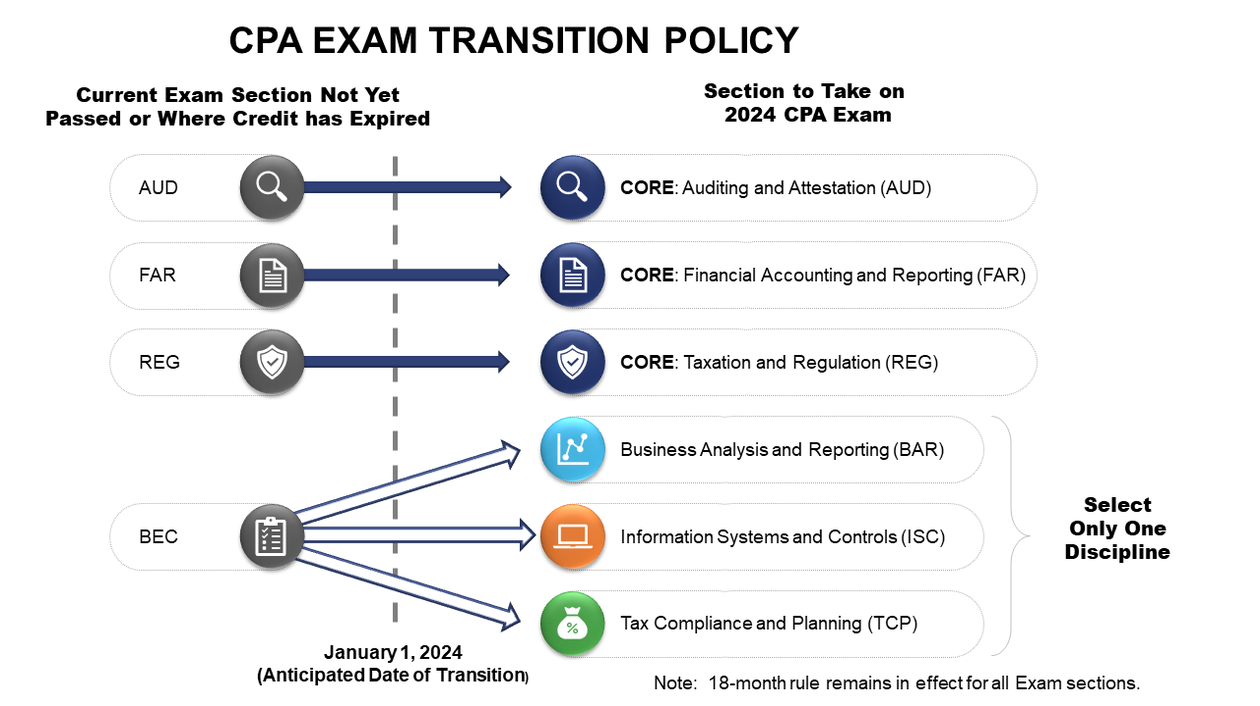
Understanding Core-Plus-Discipline Model 

The Core-Plus-Discipline Model is a new approach to the CPA Exam that emphasizes a greater focus on core knowledge, plus selected Depth and Breadth Disciplines. The model addresses the needs of all candidates by providing a more flexible and comprehensive testing experience. The Core-Plus-Discipline Model aims to ensure that all candidates have the opportunity to demonstrate their knowledge of core concepts and their ability to apply that knowledge to real-world situations. Under the new model, candidates can select Depth and Breadth Disciplines most relevant to their professional goals. The Core-Plus-Discipline Model will provide a more efficient and effective testing experience for all candidates.

Now that you know what CPA exam changes let’s know whether the exam has become difficult and what the role of a CPA is. 

Is CPA Exam Difficult?

It is considered one of the most difficult professional exams. The overall pass rate for the certified public auditor exam is 50%. The Uniform CPA Examination is a computer-based test that consists of four sections: Auditing and Attestation (AUD), Business Environment and Concepts (BEC), Financial Accounting and Reporting (FAR), and Regulation (REG). The AUD, FAR, and REG sections are divided into two parts, while the BEC section is divided into three. To become a licensed analyst, candidates must pass all four sections within 18 months. 

The exam is challenging because it tests students’ theoretical knowledge and ability to apply concepts in practical scenarios. In addition, the exam covers a broad range of topics, from financial reporting to taxation. 

While the exam is certainly challenging, it is not impossible to pass. Any candidate can overcome obstacles and earn their license with hard work and dedication.

Role of Certified Public Accountants 

CPAs play a crucial role in our economy by helping businesses to operate effectively and efficiently. They also provide critical guidance to individuals on matters related to personal finances. In addition, they also play a crucial role in Detecting and preventing fraud. As a result, they also play a critical role in safeguarding the financial interests of businesses and individuals.

In addition, this professional must adhere to strict ethical standards and complete continuing education on a regular basis. As a result,  they are uniquely qualified to provide a wide range of financial services, such as tax preparation, auditing, and financial planning.

<

p class=”MsoNormal” style=”font-family: Calibri, sans-serif;font-size: 11pt;line-height: 16.866666793823242px;margin: 0cm 0cm 10pt;text-align: justify”>Now that you have adequate information about the Certified Public Accountants exam and the recent changes in the exam structure, you can start preparing.