INDIAN ARMY CONDUCTS A SEMINAR CUM EXHIBITION ON THEME “YEAR OF TECH ABSORPTION, EMPOWERING THE SOLDIER”

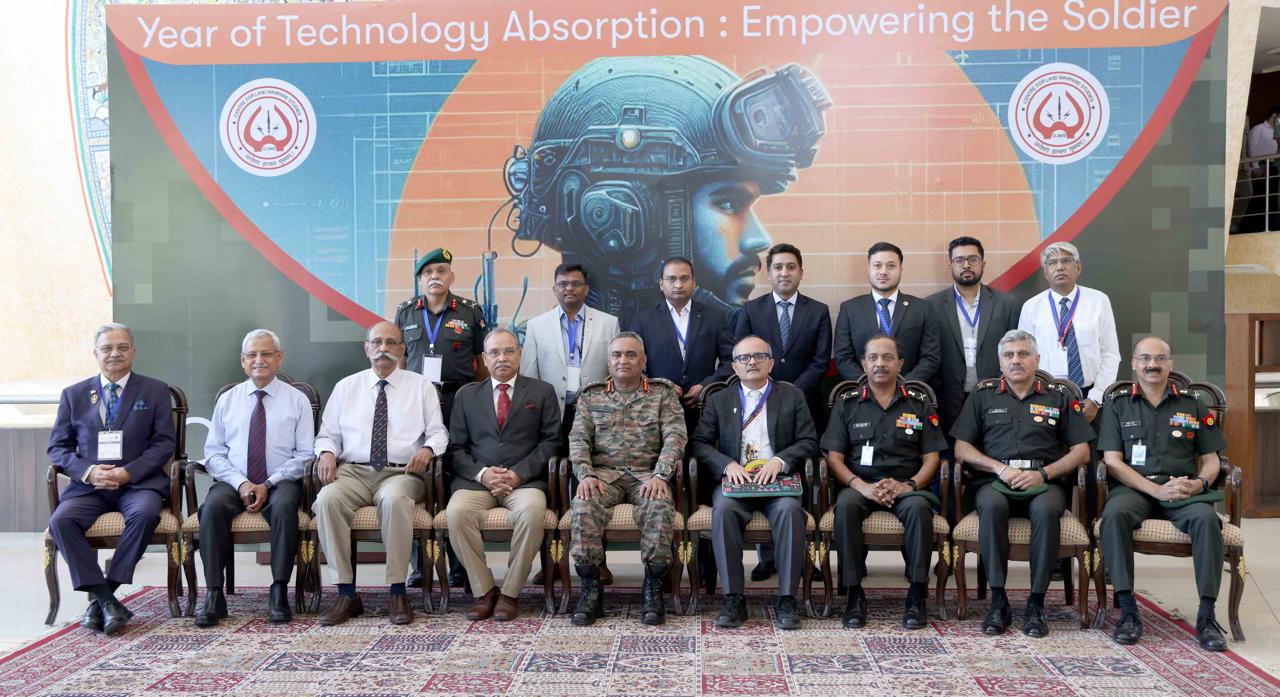
 A seminar cum exhibition was conducted today by the Indian Army on the theme “Year of Technology Absorption – Empowering the Soldier”. The event was conducted by the Centre for Land Warfare Studies (CLAWS), on behalf of the Indian Army in Manekshaw Centre.

The seminar brought together technology experts and industry professionals to deliberate on the adoption of modern technologies like Artificial Intelligence and advanced hardware in the military domain. It aimed at fostering a collaborative environment for academia and the defence industry to fast-pace the ongoing initiatives for technological absorption in the military.

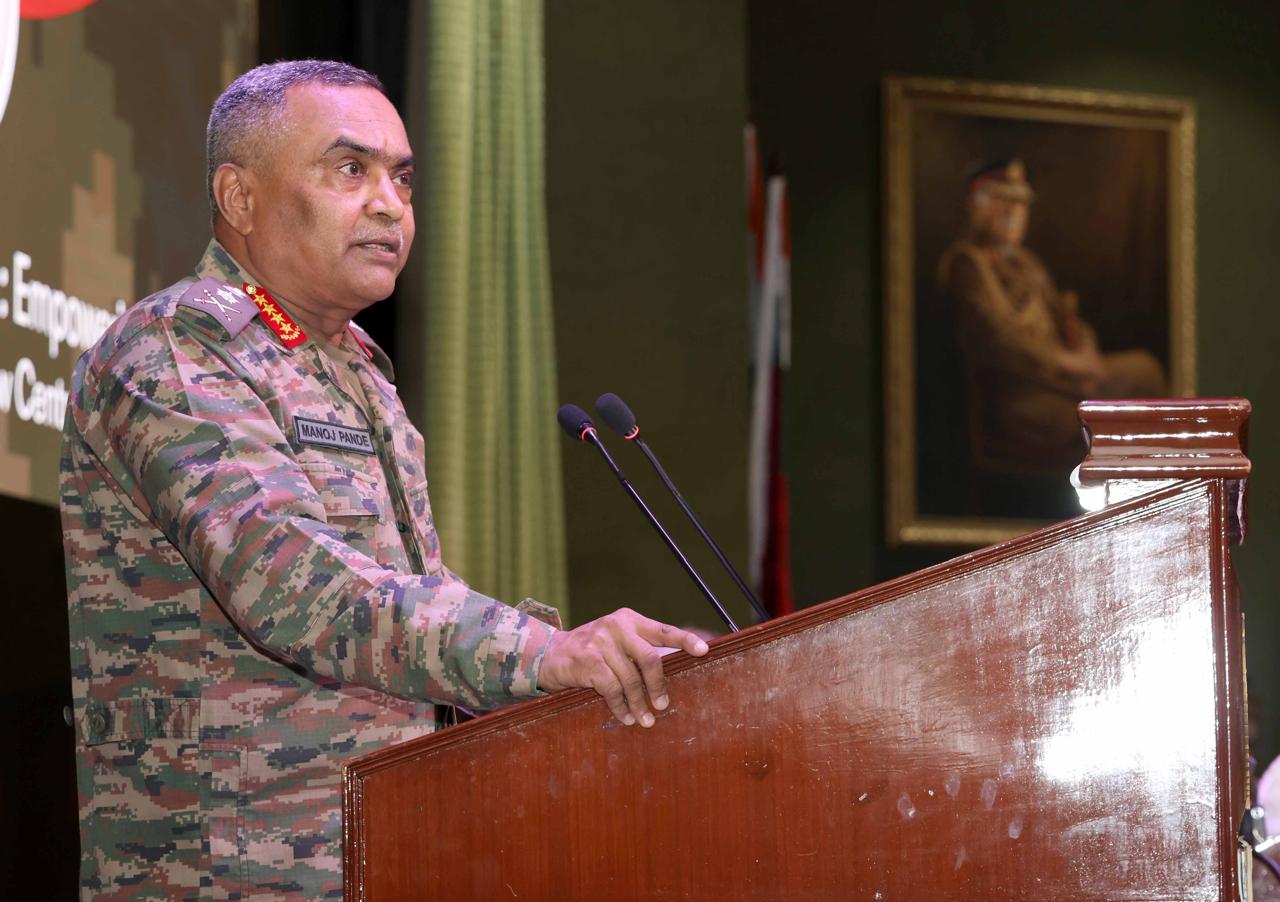
The event commenced with an inaugural address by General Manoj Pande, Chief of the Army Staff (COAS). Keynote Address was delivered by Dr Chintan Vaishnav, Mission Director, Atal Innovation Mission (AIM, NITI AAYOG). This was followed by an exhibition, demonstrating the progress and capabilities of India’s Defence Sector.

The COAS underscored the vital need of being self-reliant in warfighting platforms and systems besides achieving self-sufficiency in critical technologies through indigenous Research & Development. He emphasised that the Technology has emerged as the new strategic arena of competition which drives geo-political powerplay. He also said that technology is being leveraged for weaponisation of varied domains, ranging from Information to Supply Chains. Citing examples from recent conflicts, he mentioned that disruptive and dual use technologies are proliferating at unprecedented scale and transforming the Character of Modern Wars.  He mentioned that a suite of digital technologies encompassing Electronic Warfare, Micro-electronics, Drones, Precision Attack Systems, Loiter Munitions and Star-link Terminals are challenging traditional force multipliers.

The COAS reiterated the commitment of Indian Army to continue its pursuit towards transitioning into a modern, agile, adaptive and technology enabled future ready force. He urged all stakeholders, the Services, Industry Partners, Start-Ups, Research & Development institutions, Academia and Policy Makers to synergise their efforts and develop a vibrant national defence eco-system.           

The seminar was conducted in three sessions, with first session focussed on “Contemporary Technology and Industry Capabilities”. The session was moderated by Lieutenant General Vineet Gaur, Director General Capability Development and the speakers were eminent personalities from academia and industry such as Prof Mayank Vatsa (IIT Jodhpur), Dr Mandira Majumder, Shri Rajiv Mehrotra, Shri Vaibhav Gupta, and Colonel Karandeep Singh (Retired). This session analysed the emerging role of the Indian Defence Industry in strengthening of overall defence architecture. The speakers also deliberated upon the technology developed so far and future roadmap to build cutting-edge technologies for military usages.

The second session was moderated by Lieutenant General Subrata Saha (Retired) and focussed on “Empowering Soldiers: Amplifying Impact Through Modern Technologies”.  Major General Sunil Mehrotra from Signals Directorate and Shri SB Taneja from DRDO examined options to leverage present and next-generation technologies to enhance the capabilities of Indian Army. Looking beyond the domain of land, this session analysed the role of space and cyber domains in the present context and future scenarios.

The final session on “Maximising Technology Effectiveness & Soldier Preparedness” was moderated by Lieutenant General PR Shankar (Retired). The speakers were Lieutenant General Rajesh Pant (Retired), Mr Geo George Philip, Dr K Mohanavelu, and Major General Ajay Sharma. The participants brainstormed wide-ranging options ranging from military applications of cyberspace, impact of drones and satellites on the modern battlefield, besides delving upon hardware and software options to empower soldiers.

The seminar culminated with closing remarks by Lieutenant General Tarun Kumar Aich, Deputy Chief of the Army Staff (Strategy). Reflecting positive thoughts on impressive trajectory of Indian Army’s transformation, he reiterated that adoption of niche technology in tandem with agile doctrinal reforms is extremely crucial. He also stated that Indian Army will continue to foster a spirit of collaboration with the industry and academia to empower the soldiers.       

The proceedings underscored the importance of technology absorption in empowering soldiers besides providing a snapshot of available solutions and highlighted the contributions of the Indian Defence Industry, delineating their strengths, future trajectories, and their pivotal role in ensuring future ready armed forces. 
****
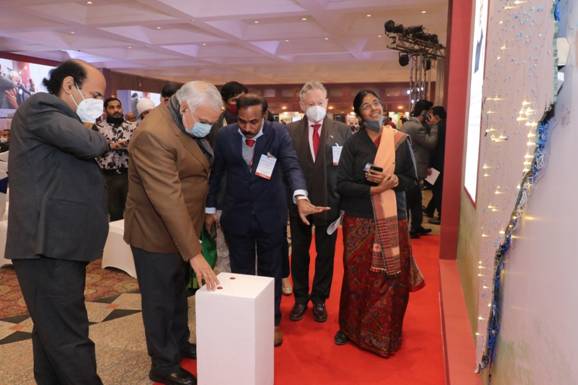
Technical Conference cum Exhibition on 24×7 Water Supply Systems

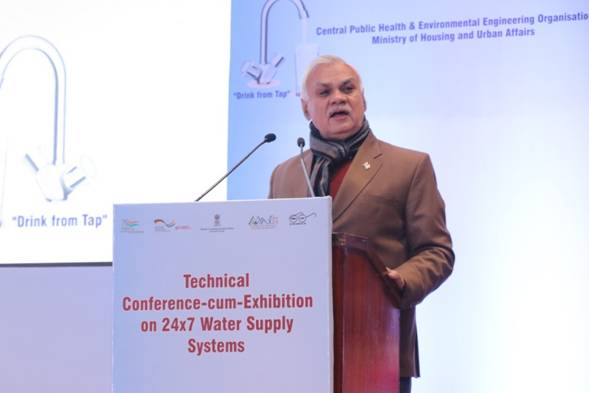
 In order to disseminate knowledge on the planning, design, implementation,Operation and Maintenance of 24x7water supply systems, a “Technical Conference cum Exhibition on 24×7 Water Supply Systems”was organized by held today in New Delhi. The event was organized by the Central Public Health and Environmental Engineering Organisation (CPHEEO), Ministry of Housing and Urban affairs. ThePrime Minister, Shri Narendra Modi launched on October 1st, 2021 AMRUT 2.0,with a vision to make all cities water secure and provide universal coverage of water supply services in all the urban areas of the country.Cities are mandated to undertake reforms such as water conservation, reducing non-revenue water to below 20%, recycle of treated used water to meet at least 20% of total city water demand & 40% for industrial water demand, PPP projects, community involvement etc.

The Inaugural session was chaired by Shri Durga Shanker Mishra, Secretary, MoHUA. While addressing the session, he emphasized the need for integrated water resource management with water conservation through recycling of used water, control of NRW and rejuvenation of water bodies and also to take up 24×7 water supply projects at least in one ward/DMA in 500 AMRUT cities under AMRUT 2.0.

Shri Mishra said that 24×7 water supply projects will ensure prevention of water contamination, control of NRW, equitable water supply and bring efficiency in terms of financial sustainability by attracting PPP funding and institutional financing.

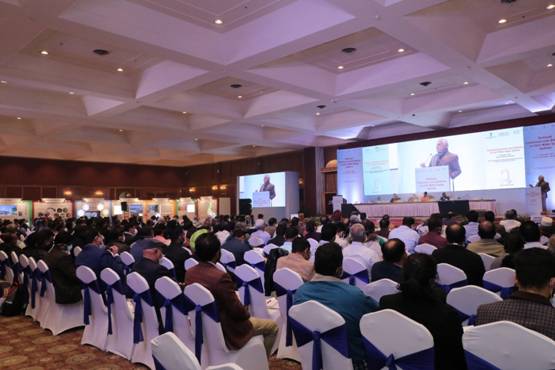
 The cities that are implementing 24×7 water supply projects showcased their best practices and technological solutions such as water meters, valves, GIS mapping, hydraulic modelling, Operational Zones (OZ), District metered Areas (DMA’s),SCADA, SMART water management solutions for monitoring & sustainability etc. in the exhibition. About 600 participants participated in the conference.


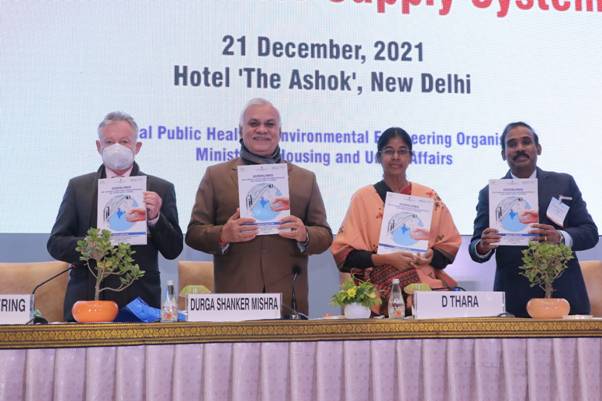
The Guidelines for Planning, Design and Implementation of 24×7 Water Supply Systems were released in the Conference. The present status of the Manual on Water Supply & Treatment which is under revision incorporating the latest technological developments was briefed. Thedraft National Urban Water Supply and Management Policy 2020-30 wasalso presented in the conference.A case-study of 24×7 Water Supply in Puri city, “Drink from Tap Mission” and case studies ofPune and Coimbatore 24×7 water supply projects and other draft Advisories were presented for better understanding among the Engineering community.

Detailed discussions & deliberations among experts, engineers, technology providers and other relevant stakeholders on 24×7 water supply systemsfor better understanding of the meritsand to bridge the existing knowledge gap were held in the conference.


The conference was attended by Technical Heads, Chief Engineers, City Engineers& senior engineers dealing with water supply in all the 500 AMRUT cities, PHEDs/Corporations/Boards/Jal Nigams, Experts, PPP partners, manufacturing firms, consultants.

*****

Exhibition Industry

For many of us the word ‘Exhibition’ is merely limited to visiting a modern art gallery, raving at a collection of paintings by a renowned artist or getting awed by the international auto expo held every year. Surprisingly for some people it is the exhibition at school or college that restricts their thinking to idea of an ‘Exhibition.’

It may be startling to know that the exhibition industry is one of the most booming industries in India and has been contributing significantly to the GDP of the country for the past four years. In the globalised world of the 21st century which has been shrinked by communication, exhibitions and trade fairs underline the importance of face-to-face interaction among the different countries on a common platform.

Fairs and melas in every nook and corner of the country have been prevalent since the ancient times and even now. India being the second largest country in terms of population with 1.5 billion people and fourth largest GDP in terms of purchasing power parity (PPP) has emerged as the favourite regional market for exhibition and trade show organizers. It has behind it a rich heritage of Trade fairs – the Pushkar and the Kumbh Mela respectively for just not being trade fairs, but business generation too.
 
Main sectors like handicrafts, food, electrical, automation etc. are growing tremendously and thereby needs focused attention. Due to this business growth requires a platform where interactions can happen and growth prospects can multiply. Trade shows and exhibitions are apt for this and play a vital role in today’s business world.

Every year over 2,000 exhibitions are held in India with on an average, 100 exhibitors each. Of these between 10 to 15 percent are from overseas, bringing with them on an average 5 personnel per exhibitor. This makes between 100,000 to 150,000 international visitors coming to India every year through the exhibitions which results in huge spending on hotels, airlines, restaurants, entertainment, ground transportation, sightseeing etc. impacting the economy of the region in a very significant way.

In the list of countries offering indoor exhibition space, India ranks 16th offering a total of 2,60,000 sqm with USA and Germany topping the list. In the Asian scenario India is being surpassed by China which gives 66 percent of exhibition space.

Our country reflects buoyant growth and this in turn has driven demand for international trade shows as well. But the limited convention space and lack of infrastructure facilities are some of the bottlenecks we need to tackle to make this sector a booming industry. Growth in this sector depends upon new and modern venues. There is a need to find a quick-fix solution as exhibitions and trade shows highlight the social and economic prospects of the industry. Thus, the exhibition industry needs to promote the key role it can play in the development of city, region or industry far better.

India has ventured into the arena of exhibition industry very late. In 2006 the India Exhibition Industry Association (IEIA) was formed that represents the entire country and all segments related to the exhibition industry. It brings together all the exhibition organizers, managers, designers and stand contractors, freight forwarders, services and facilities providers, venue owners etc., so that there is a common platform available to the entire industry to consider ways and means for the sound and scientific development of various facets of the industry.

Thus, IEIA acts a one stop window where all the information pertaining to various exhibitions, trade shows, industry news, various agencies, private and public organizations operating in the exhibition industry can be accumulated.

For an exhibition to be successfully executed the 5P’s that come to fore are : Purpose, planning, passion, patience and persistence-but it is the passion that helps Indian exhibition organizers and service providers to open shows successfully.

The top 10 of B2B Fairs organized in India are : Aahar, ACETECH, Automation, bc India, Elecrama, IIJS, International Horti Expo, IITF, Kisan and Plast.

With growth prospects immense the exhibitions and trade shows in India have a huge potential which needs to be tapped in the right way, and helped to grow with best global practices. There needs to be a harmonious blend of global practices which is in sync with local business interests. Festivals like Diwali serve as the perfect launch pad to introduce ones product and build the brand in the market. As a result the marketing and the sales department benefit a lot.
 
Having said so it is important to know the importance of Trade fairs and Exhibitions :

  • Trade fairs and exhibitions contribute to intensification of competition as well as to an increase in growth and employment. They are the intermediary between producers and buyers
  • It improves the company’s image and increase brand awareness as well as the introduction of new products
  • They attract new customers and cultivate contacts with regular customers
  • Trade fairs serve the development and cultivation of customer relations, the search for partners and personnel as well as the positioning of the entire company
  • They work as test markets for new products and also market research instruments
  • They help to increase the level of awareness of the own company, to analyze the competitive situation and to prepare the sale of product and services.
  • For young companies in particular, exhibitions play a vital role to have an opportunity to gain an overview of the competition, their presentation and their products
  • Exhibitions are proven to generate more sales prospects than almost any other form of marketing or promotional activity.
  • They create a value proposition in a conducive business environment where customers are able to do generate business leads and network – under single roof
  • The knowledge shared and the people interacted with over 3-4days of an exhibition is immeasurable in its value as compared to other marketing tools.

To make India as an attractive destination with a promising market its high time that the exhibition sector should get the much needed industry recognition. The government needs to incentivize the sector the way it is done in China or Germany. Also the exhibition industry needs to be more of a government-funded model with the authorities providing finance for construction of trade fair venues as contrast to infrastructure in India which is being solely done by the private sector. The need of a public-private partnership model, where the government acts as a facilitator and is more actively involved in infrastructure development is the much required agenda.

But there are few bottlenecks and challenges that the Indian exhibition industry has to overcome to become a full-fledged emerging sector :

  • Problem of paucity of space and venue
  • Abysmal quality and high prices
  • Mind boggling array of NOCs and permissions
  • Application of multiplicity of taxes as there is no exemption from taxation and fees and subsidies for trade shows and venue creation
  • Non-uniform policies of the state governments
  • Unfair competition from state-owned venue owners
  • Narrow vision of the private sector

Despite the challenges, the Indian exhibition industry is one of the most exciting in the region. According to research the Indian exhibition industry now generates over 700,000 square meters in net space sales each year- making it the fifth largest in the Asia and clearly one with the potential for substantially more growth. Even in the new age of technology led communication, social media and the mobile internet, face to face interactions are still key to fostering profitable business relationships and that comes with exhibitions and trade fairs.

Thus, we need to grow at a faster rate and post higher returns. It has to be a consistent growth as regards the top-line and also the bottom-line. However, the question is not to realize the potential but how soon we can do it.