Ease of Living for the Pensioners through Digital Empowerment: DLC (Digital Life Certificate) Campaign 3.0

Daily writing prompt
Name your top three pet peeves.

Jeevan Pramaan is the vision of the Prime Minister, Shri Narendra Modi for Digital Empowerment of Pensioners. All key stakeholders – Pension disbursing banks, Department of Pensions and Pensioners Welfare, Controller General of Defence Accounts, Ministry of Railways, Department of Telecom, Department of Posts, IIPB, UIDAI and Pensioners Welfare Associations are working with whole of government approach to realise the vision of Digital Empowerment of Pensioners.

Department of Pensions and Pensioners Welfare launched the Nation-wide Digital Life Certificate Campaign 3.0 for Digital Empowerment of Pensioners at National Media Center, New Delhi on 6th November 2024. The DLC Campaign 3.0 is being held in 800 cities/ towns of India from November 1-30, 2024. 1575 camps have been held from November 1-17, 2024 in 800 cities/districts, 1.8 lac postmen deployed across the country.

In this campaign, the Department of Pension & Pensioners’ Welfare is putting all efforts to create awareness amongst all pensioners regarding DLC-Face Authentication technique by way of banners / posters placed strategically in offices and all Bank Branches / ATMs. All Banks have created a team of dedicated staff at their branches having downloaded the desired apps in their smart phones who are using this technology extensively for submission of Life Certificates by the pensioners. In case, the pensioners are not able to visit the Branches due to old age/illness/weakness, the Bank officials are also visiting their homes/hospitals for the above purpose.

The Pensioners’ Welfare Associations are extending their full support to the Campaign. Their representatives are motivating the pensioners to visit the nearby Camp locations and submit their DLCs. The officials from Department of Pension & Pensioners’ Welfare are also visited major locations through-out the Country to assist pensioners in use of various digital modes to submit their Life Certificates and monitoring the progress very closely.

As a result, Digital Life Certificate (DLC) Campaign 3.0 has made remarkable progress by the end of 2nd second week, achieving significant milestones in its mission to bring convenience and accessibility to pensioners across the nation. The campaign has successfully generated over 77 lacs Digital Life Certificates by the end of 2nd week of launch of the 3.0 Campaign, out of which about 1,77,153 pensioners above 90 years old and 17,212 pensioners between 80 – 90 years category could submit their DLCs from the comfort of their home/locations/offices/branches. This incredible momentum underscores the commitment of our pensioners, banking institutions, and government agencies towards a digitally empowered India. A lot of excitement has been observed amongst all the stakeholders, particularly sick / very old pensioners at all the locations.

Key highlights of the campaign include:

  • Mega Camps: As part of the Campaign, 4 Mega camps have been organized, 2 in Delhi (4-5 November), 1 in Bengaluru (8 November) and 1 in Hyderabad (12 November) involving all stakeholders. Secretary PPW participated in all these camps and encouraged pensioners to adopt digital modes of submission of LCs.
  • Bank-wise Achievements: SBI and PNB are leading the Campaign by generating more than 9 lacs DLCs by the end of 2nd week of the month-long Campaign, while Canara Bank and Central Bank of India registered impressive performances by generating 1 lacs and 57,000 DLCs respectively.
  • State-Wise Progress: Maharashtra led the way with over 10 lacs certificates generated, followed by Tamilnadu and West Bengal 6 lacs each. Uttar Pradesh has also done well with more than 5 lacs DLCs.
  • Departmental Contributions: The Defence Department stood out with a 21 lacs DLCs, while the Telecom Department generated an impressive 3.1 lacs DLCs. Civil Departments also contributed significantly with over 3.4 lacs certificates generated.
  • IPPBs Performance: IPPB generated 4.4 lacs DLCs by the end of 2nd week of the campaign. IPPB has played key role in delivering doorstep delivery of services.
  • Face Authentication: Advanced authentication methods such as Face Recognition contributed to 24 lacs certificates, making up 34% of the total DLCs generated. There is 204 times increase in DLCs submitted through Face Authentication under DLC Campaign 3.0.

This campaign is a testament to DoPPW’s unwavering commitment to harnessing digital tools for the benefit of every pensioner. All stakeholders extended their full support to this campaign. This momentum shall continue to make DLC Campaign 3.0 a historic success.

***

Periodic Labour Force Survey (PLFS) – Quarterly Bulletin [July – September 2024]

Daily writing prompt
Name your top three pet peeves.

Key findings

  • Labour Force Participation Rate (LFPR) in urban areas among persons of age 15 years and above has increased from 49.3% during July – September, 2023 to 50.4% in July – September, 2024.
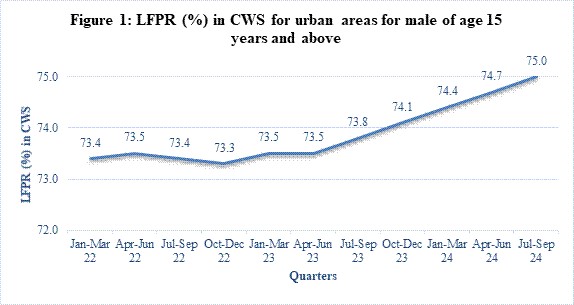
  • LFPR for male of age 15 years and above in urban areas increased from 73.8% during July – September, 2023 to 75.0% during July – September, 2024 reflecting overall increasing trend in male LFPR.
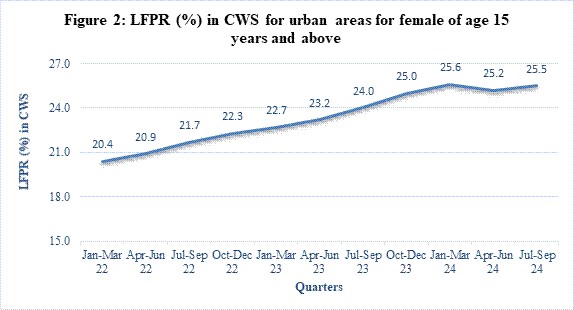
  • LFPR among female of age 15 years and above for urban areas increased from 24.0% during July – September, 2023 to 25.5% during July – September, 2024.
  • Worker Population Ratio (WPR) in urban areas among persons of age 15 years and above has increased from 46.0% during July – September, 2023 to 47.2% in July – September, 2024.
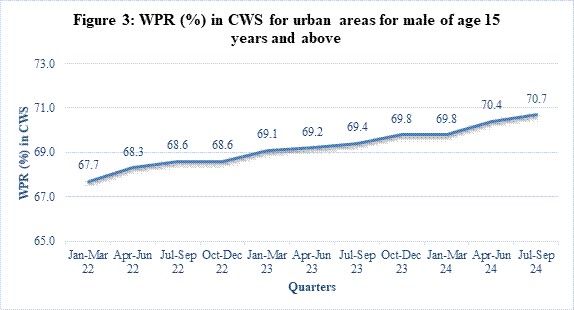
  • WPR for male of age 15 years and above for urban areas increased from 69.4% in July – September, 2023 to 70.7% during July – September, 2024 reflecting overall increasing trend in male WPR.
  • Unemployment Rate (UR) in urban areas among persons of age 15 years and above decreased from 6.6% during July – September, 2023 to 6.4% during July – September, 2024.
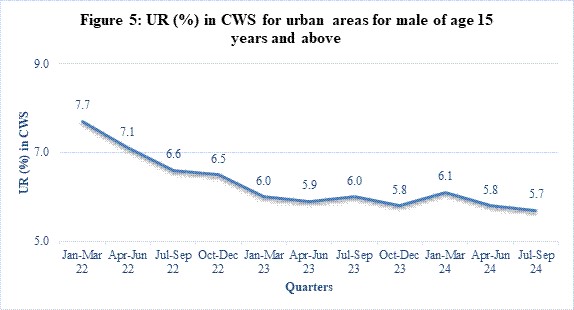
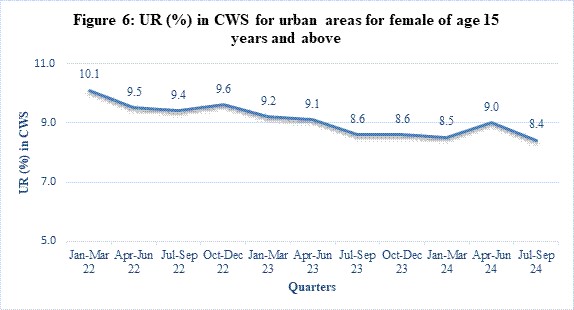
  • UR among males of age 15 years and above decreased from 6.0% during July – September, 2023 to 5.7% in July – September, 2024. UR among female of age 15 years and above decreased from 8.6% in July – September, 2023 to 8.4% in July – September, 2024.

A.         Introduction

Considering the importance of availability of labour force data at more frequent time intervals, National Statistics Office (NSO) launched Periodic Labour Force Survey (PLFS) in April 2017.

The objective of PLFS is primarily twofold:

  • to estimate the key employment and unemployment indicators (viz. Worker Population Ratio, Labour Force Participation Rate, Unemployment Rate) in the short time interval of three months for the urban areas only in the ‘Current Weekly Status’ (CWS).
  • to estimate employment and unemployment indicators in both ‘Usual Status’ (ps+ss) and CWS in both rural and urban areas annually.

Twenty-three Quarterly Bulletins of PLFS corresponding to the quarter ending December 2018 to quarter ending June 2024 have already been released. In these quarterly bulletins estimates of labour force indicators, viz., Labour Force Participation Rate (LFPR), Worker Population Ratio (WPR), Unemployment Rate (UR), distribution of workers by broad status in employment and industry of work in the Current Weekly Status (CWS) for urban areas have been presented.

The present Quarterly Bulletin is the twenty-fourth in the series for the quarter July – September, 2024.

PLFS fieldwork during the quarter July – September 2024

The fieldwork for collection of information in respect of all the samples allotted for the period July-September, 2024, were completed timely for the first visit as well as revisit samples, except for 15 first visit FSU[1]s (4 in Maharashtra, 3 each in Manipur and Madhya Pradesh, 2 in Kerala, 1 each in Odisha, Assam and Andaman and Nicobar Islands) and 5 revisit FSUs (2 in Maharashtra and 1 each in Gujarat, Meghalaya and Uttar Pradesh) which were treated as casualty.

These aspects may be kept in mind while using the estimates of PLFS for the concerned quarter.

B.         Sample Design of PLFS

A rotational panel sampling design has been used in urban areas. In this rotational panel scheme, each selected household in urban areas is visited four times, in the beginning with ‘First Visit Schedule’ and thrice periodically later with a ‘Revisit Schedule’. The scheme of rotation ensures that 75% of the first-stage sampling units (FSUs) are matched between two consecutive visits.

C.         Sample Size

At the all-India level, in the urban areas, a total number of 5,739 FSUs (urban sampling unit curved out from Urban Frame Survey) have been surveyed during the quarter July – September 2024. The number of urban households surveyed was 45,005 and number of persons surveyed was 1,70,598 in urban areas.

  1. Conceptual Framework of Key Employment and Unemployment Indicators for the Quarterly Bulletin: The Periodic Labour Force Survey (PLFS) gives estimates of key employment and unemployment Indicators like the Labour Force Participation Rate (LFPR), Worker Population Ratio (WPR), Unemployment Rate (UR), etc. These indicators, and ‘Current Weekly Status’ are defined as follows:
  1. Labour Force Participation Rate (LFPR): LFPR is defined as the percentage of persons in labour force (i.e. working or seeking or available for work) in the population.
  1. Worker Population Ratio (WPR): WPR is defined as the percentage of employed persons in the population.
  1. Unemployment Rate (UR): UR is defined as the percentage of persons unemployed among the persons in the labour force.
  1. Current Weekly Status (CWS): The activity status determined on the basis of a reference period of last 7 days preceding the date of survey is known as the current weekly status (CWS) of the person.
  1. The Quarterly Bulletin for the quarter July – September 2024 is available at the website of the Ministry (https://mospi.gov.in). The key results are given in the statements annexed.

Annexure

Key Findings of PLFS, Quarterly Bulletin (July – September 2024)

  1. Labour Force Participation Rate (LFPR) for persons of age 15 years and above

LFPR in urban areas was 50.4% in July – September 2024 for persons of age 15 years in above. While for male LFPR was 75.0% in July – September 2024, for female, LFPR was 25.5% during this period.

Statement 1:  LFPR (in per cent) in CWS in urban areas for persons of age 15 years and aboveall‑India
survey periodMaleFemalePerson
(1)(2)(3)(4)
July – September 202373.824.049.3
October – December 202374.125.049.9
January – March 202474.425.650.2
April – June 202474.725.250.1
July – September 202475.025.550.4
  1. Worker Population Ratio (WPR) for persons of age 15 years and above

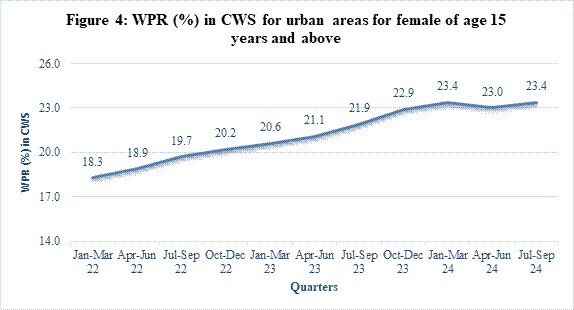
WPR in urban areas was 47.2% in July – September 2024 for persons of age 15 years in above. For male, it was 70.7% in July – September 2024, for female, it was 23.4% during this period.

Statement 2:  WPR (in per cent) in CWS in urban areas for persons of age 15 years and aboveall‑India
survey periodMaleFemalePerson
(1)(2)(3)(4)
July – September 202369.421.946.0
October – December 202369.822.946.6
January – March 202469.823.446.9
April – June 202470.423.046.8
July – September 202470.723.447.2
  1. Unemployment Rate (UR) for persons of age 15 years and above

Unemployment Rate in urban areas was 6.4% in July – September 2024 for persons of age 15 years in above. For male, Unemployment Rate was 5.7% in July – September 2024 and for female, UR was 8.4% during the same period.

Statement 3:  UR (in per cent) in CWS in urban areas for persons of age 15 years and aboveall‑India
survey periodMaleFemalePerson
(1)(2)(3)(4)
July – September 20236.08.66.6
October – December 20235.88.66.5
January – March 20246.18.56.7
April – June 20245.89.06.6
July – September 20245.78.46.4

E. Highlights of the Quarterly estimates of key Labour Market indicators

  1. Trend in Labour Force Participation Rate (LFPR) for persons of age 15 years and above since 2022

The trend in LFPR in urban areas since the quarter January – March, 2022 for male and female are presented in figure 1 and 2.

  1. Trend in Worker Population Ratio (WPR) for persons of age 15 years and above since 2022

The trend in WPR in urban areas since the quarter January – March, 2022 for male and female are presented in figure 3 and 4.

  1. Trend in Unemployment Rate (UR) for persons of age 15 years and above since 2022

The trend in UR in urban areas since the quarter January – March, 2022 for male and female are presented in figure 5 and 6.

*****

Demographic dividend and labour reforms will drive future growth

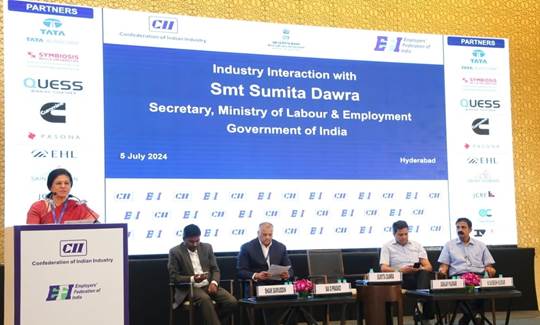
 Smt. Sumita Dawra, Secretary, Ministry of Labour & Employment, Government of India participated in an industry interaction organised by Confederation of Indian Industry (CII) and the Employers’ Federation of India (EFI) on 5th July 2024 at Hyderabad.

In her inaugural address, Smt. Sumita Dawra, Secretary, Ministry of Labour and Employment, highlighted India’s fast growth rates, and emphasized that India’s demographic dividend and labour reforms are pivotal to driving future growth, alongside other growth engines of manufacturing, expansion of service sector, infrastructure, etc.

Citing the RBI’s KLEMS data, she conveyed that about 8 crore new employment opportunities were created in India during past five years [ending 2021-22], largely driven by various government initiatives aimed at incentivising and promoting manufacturing ( such as PLI, Make in India), expansion of services sector, access to micro credit, investments, emergence of new areas such as Gig and Platform workers, Global Capability Centres (GCCs) and Startups, etc. She further highlighted the growing gig economy, which is estimated to employ about 2.3 crore people by 2030.

Smt. Dawra discussed the consolidation of 29 labour laws into four comprehensive codes aimed at simplifying regulations and administrative processes, including the decriminalization of labour laws, thereby enhancing ease of doing business and reduction in compliance burden. This will in turn be attractive for enhanced domestic and foreign investment flows, and in bringing supply chains and global value chains to India, she added. She further said that the reforms will stimulate the economy, enhancing employment opportunities, increasing female workforce participation, and improvements in social security and labour welfare, all of which are expected to drive inclusive growth in India. Currently, India’s GDP is more than USD 3 trillion and is expected to reach USD 33 trillion by 2047 riding on various initiatives, including labour reforms, she added.

Smt Dawra underscored the importance of expanding social security coverage for the unorganized and informal sectors while recognizing the need for governance reforms in the Employees’ State Insurance Corporation (ESIC) and the Employees’ Provident Fund Organisation (EPFO). She also highlighted various systemic reforms initiated in ESIC and EPFO such as auto settlement of claims, reduction in rejections, and improving the pace of claims settlement in EPFO, as well as enhancing the coverage and quality of services in ESIC.

During the interaction, presentations on various systemic reforms in ESIC and EPFO were made, outlining topics such as digitization, e-governance, and compliance simplification, with discussions aimed at gathering suggestions from participants to further improve these systems.

The National Career Service (NCS) portal of Ministry of Labour and Employment was also showcased as a comprehensive solution for career counselling and employment networking. It was highlighted that more than 1 crore vacancies were mobilised on NCS portal during 2023-24. The portal is also integrating SIDH database from the Ministry of Skill Development and Entrepreneurship to ensure availability of rich pool of skilled jobseekers on the portal to reduce skill gap in labour market. The ongoing integration of databases of the two Ministries will effectively link the youth to both skills and employment, resulting in aligning the demand-supply gap in the labour market, it was informed.

The session highlighted the collaborative efforts between the government and industry to create a positive environment for economic development and employment growth. Such interactions are crucial for creating awareness and implementing effective reforms, besides getting feedback from industry and other stakeholders.

The session witnessed participation from over 300 industry representatives keen to engage in discussions on critical labour and employment reforms shaping India’s economic landscape. Senior officials from the Ministry of Labour and Employment, EPFO, ESIC and State Government of Telangana also attended the session.

The event aimed to foster dialogue between government officials and industry stakeholders, focusing on employment generation, labour reforms, and ease of doing business in India.

****

Impact of Financial Literacy on Retirement Planning of Women Employees in Public Electricity Companies in Telangana

By S. Kavitha Devi & M. Priyanka

Abstract:

The purpose of this research is to investigate the Impact of financial literacy on retirement planning of women employees in public Electricity companies in Telangana. The current research study is an investigative and exploratory research. It uses primary data. The study examined partial least square-structural equation modelling (PLS-SEM) obtained by sampling data from 406 women employees of Public Electricity Companies in Telangana. The findings of this study have important inferences for both researchers and practitioners in the field of personal finance. They highlight the significance of FL in influencing individuals’ Retirement Planning. Moreover, the role of psychological factors emphasizes the need to consider these factors when examining the relationship between FL and Retirement Planning. These findings suggest that interventions aimed at improving FL should also focus on enhancing individuals’ Psychological Factors and cultivating positive Retirement Planning Behavior.


Keywords:  financial literacy; financial risk tolerance; retirement planning; herding behavior.

Introduction

Financial education or financial literacy has gained relevance in recent years as a result of the rising complexity of the financial products and services available, as well as information asymmetry between financial service providers and consumers. Financial education is the process of obtaining the information and abilities needed to handle and use money in an educated and efficient manner. It is a lifelong process that assists people and households in becoming more knowledgeable about the financial goods and services offered in the market in order to make wise decisions regarding their use. Financial education is broadly defined as the understanding of financial market products, particularly rewards and risk, in order to make educated decisions. Organisation for Economic Co-operation and Development (OECD, 2013) has defined financial education as “the process by which financial consumers/ investors improve their understanding of financial products, concepts and risks through information, instruction and/or objective advice, develop the skills and confidence to become more aware of financial risks and opportunities, to make informed choices, to know where to go for help, and to take other effective actions to improve their financial well-being”. According to Standard & Poor’s Ratings Services Global Financial Literacy Survey, 2014 “76% of Indian adults do not understand key financial concepts like inflation, compounded interest rate, and risk diversification adequately. This finding says that financial literacy is lower than the worldwide average”. Authors Lusardi and Mitchell, 2011, Bucher-Koenen and Lusardi, 2011, Grohmann et al. have revealed in their papers that there is a positive impact of financial literacy on retirement planning.

The development and expansion of any country is heavily influenced by its economic condition. Proper capital formation is necessary to stimulate the process of economic growth. The financial market is crucial in accelerating capital development by encouraging savings and using investment alternatives, which contributes to speeding up the process of wealth creation.

Being a developing country, India needs rapid capital generation. This could only be accomplished by encouraging smart planning and guiding people’s financial habits. The Indian economy has expanded at a quicker rate from the previous decade, however in order to achieve the goal, economic growth alone is not enough must improve citizen living standards. According to Singh (2008) “development cannot be measured only in terms of growth, instead the objective must be to achieve the improvement in the standard living of people.”

According to Ahuwalia (2008) “Indians are poor investors but smart savers. They do not prepare for the long term and do not invest in long-term investment products. Furthermore, it was stated that Indians like to save their money into their houses instead of saving in banks or other investments. This will be a major issue in India, where social security is non-existent”.

Indian Population Context:


(Source: IMPORTANCE OF SAVINGS FOR RETIREMENT AND EARLY DECISION

MAKING IN HUMAN LIFE, N Sheikh & S Karnati – 2021)

India is young demographically with 90% of population under the age of 60 years but ageing gradually, it is estimated that persons above the age of 60 would increase from ~8.9% of the population now to ~15% by 2050. Those above 80 are likely to increase from ~0.9% to ~2.8%. According to United Nations World Population Prospects, India’s 60-plus population is expected to reach 323 million by 2050 – a number greater than US Population of 2012.

Figure above shows historical data and future forecasts on the Indian population’s dependency from 1980 to 2050. It can be seen that the percentage of dependent people gradually increased between1980 to 2015. However, the share of the dependent population is predicted to rise faster between 2015 and 2050. In 2050, 15% of India’s elderly population would be dependent on the working population.

Despite the fact that the transition from a young to an older age structure indicates a successful and satisfying outcome of health improvement, the rate of old and the size of the Older population with diverse requirements and resources creates various obstacles for health care providers and Government officials. The percentage of old age people has increased and is expected to increase further, while the percentage of the young age group is decreasing, resulting in a slow but continuous shift to an older population structure in the country. Furthermore, the transition from a young age structure is not uniform across the country. A rising old population requires increased quantity and quality of elder services, income security, and overall improved quality of life. The necessity for social pension payments and the resulting financial outlays to meet expanding old-age dependency and a decreasing support base is more demanding for policy consideration now and in the future.

Research Gap

According to the review of the literature, even though women’s literacy rates have improved significantly in recent years, there are still significant gender gaps in financial education in

India. More research is needed on the factors that contribute to these gaps and an apparent gap is observed in understanding the retirement financial planning of women in India. Previous research on financial literacy usually focuses on its potential effects on financial decision-making; however, little research is done on its effects on retirement planning. Therefore, the present study having spotlight on Financial Literacy and Retirement planning aimed and focused on women employees in electricity companies in Telangana. Majorly it considers respondents awareness levels towards financial literacy and retirement planning decisions of respondents using three components to calculate the financial literacy (financial knowledge, financial attitude and financial behaviour) of women employees to assess the holistic impact on retirement planning decisions. We examine the potential effects of financial literacy on retirement planning of women employees in Public electricity companies in Telangana. This study will fill in this research gap. 

Objectives of Research

1)         To find the relationship between financial literacy levels and retirement financial planning.

2)         To study the impact of psychological constructs variables on the retirement planning of women employees in public electricity companies of Telangana and analyses the financial literacy levels.

Hypotheses

Hypotheses are considered to be the most significant tool in a research study. It makes a difference in representing new tests and their views. Hypotheses are based on fundamental assumptions in every research study. Following a thorough analysis of the relevant literature, an attempt was made to create the conditional assumption in constructing the test and its reasonable consequences. The following hypotheses have been developed for the aim of the research.

H01: There is no significant relationship between financial literacy levels and retirement financial planning.

H02: There is no significant influence of psychological constructs on retirement financial planning.

H02a: There is no significant influence of Future time prospective on retirement financial planning.

H02b: There is no significant influence of Attitude towards Retirement on retirement financial planning.

H02c: There is no significant influence of Risk tolerance on retirement financial planning.

H02d: There is no significant influence of Retirement Goal Clarity on retirement financial planning.

Methodology

Primary Data

Primary Data collected through a Survey Questionnaire from the respondents of women employees in Public Electricity Companies in Telangana

For current study both convenience and snowball sampling methods (non-probability) sampling techniques were used to recruit potential samples for the achievement of the research objectives. Convenience sampling refers to the collection of data from immediately available representative respondents of the population of the study. Convenience sampling would help a researcher when he could not have access to the entire population of the study and/or when a researcher had difficulty identifying the representative sample of the study.

Snowball sampling refers to the researcher initially recruiting participants, and these initial participants help to recruit future respondents for the study. This technique helps the researcher when he is facing challenges or difficulties to collect data from the target potential population of the study. The researcher may be face difficulty due to unknown to the respondents and hesitate to give important personal information to strangers.

This study involved the collection of personal and financial information of the respondents. Some respondents may be unwilling to provide their personal and financial information.

Therefore, convenience and snowball sampling techniques were employed in this study to gather the data to evaluate the research hypothesis. The blend of convenience and snowball sampling methods helps to achieve reliable results for the research investigation.

Secondary Data:

Secondary data collected from various Publications, Journals, Articles, Newspapers and official websites Viz. RBI, SEBI, IRDAI, PFRDA, NCFE, etc.,

Period of the study is between July 2022 and November 2022.

Calculation of Sample Size

The present research study is an investigative in nature, the study is done based on four public electricity companies in Telangana selected on the basis of population as criteria. In order to study the perception of women employee’s financial retirement planning from each company, sample variables are selected proportionately. Hence the total sample size is 406.

Sl.

No.

Name of the        company

Population (women

employees)

1

TSSPDCL

1320

2

TSNPDCL

1182

3

TSGENCO

2429

4

TSTRANSCO

2125

TOTAL

7056

                          (Source: collected from respective HR Department by Researcher)


The total women employees of Public Electricity Companies in Telangana is 7056, out of that population the sample is detrained and drawn according to Krejcie Morgan table, at Confidence Level of 95%, Confidence Interval is 4%, Proportion is 5% and if Population is below 8000,

Sample size determined is 367 respondents. In present study 430 respondents sample size was taken, among them 406 were found to be relevant for study.

Proportionately the sample is determined from each company as follows:


Sl.


No.

Name        of        the company

Population

(womenemployees)

Proportionatesample

1

TSSPDCL

1320

80

2

TSNPDCL

1182

72

3

TSGENCO

2429

131

4

TSTRANSCO

2125

123

TOTAL

7056

406


Measurement of Reliability

Cronbach’s Alpha

No of Items

0.867

45

The degree of consistency between multiple measurements of variables was measured by the reliability test. Reliability calculates the accuracy and precision of a measurement procedure. Cronbach’s Alpha is widely used to measure thereliability of data. The coefficient of Cronbach’s Alpha value for financial literacy and retirement planning of womenemployees in public electricity companies of Telangana for 45 variables was 0.867 as presented in the above table.

Analytical Tools and Software

The current research study is an investigative and exploratory research. It uses primary data. Thus data would be analyzed through descriptive statistics, structural equation modeling, factor analysis and frequency tables etc, The software package like SmartPLS is used to analyze the data.

Data Analysis and Results:

Correlation Between Latent Constructs

Correlation refers to the extent to which two variables move together in a systematic way. It quantifies the strength and direction of the relationship between variables. Correlation coefficients, often represented as path coefficients in SEM, indicate the extent to which the latent constructs are related.

 Correlation between latent constructs

Constructs

Financial Literacy

FUTURE TIMEPERSPECTIVE

ATTITUDETOWARDSRETIREMENT

RISKTOLERANCE

RETIREMENTGOALCLARITY

SOCIALGROUPSUPPORT

PLANNINGACTIVITY

SAVINGS

Financial Literacy

1.000

0.320

0.303

0.417

0.272

0.449

0.443

0.268

FUTURE TIMEPERSPECTIVE

0.320

1.000

0.326

0.299

0.293

0.322

0.318

0.288

ATTITUDETOWARDSRETIREMENT

0.303

0.326

1.000

0.284

0.277

0.305

0.301

0.274

RISKTOLERANCE

0.417

0.299

0.284

1.000

0.255

0.420

0.414

0.251

RETIREMENTGOALCLARITY

0.272

0.293

0.277

0.255

1.000

0.274

0.270

0.245

SOCIALGROUPSUPPORT

0.449

0.322

0.305

0.420

0.274

1.000

0.445

0.270

PLANNINGACTIVITY

0.443

0.318

0.301

0.414

0.270

0.445

1.000

0.266

SAVINGS

0.268

0.288

0.274

0.251

0.245

0.270

0.266

1.000


These correlations provide insights into the relationships between the latent constructs. For example, Retirement Planning is positively associated with Financial Literacy. As well as, FTP, ATR, RT, RGC, SGS, PA and Savings shows positive associations with Financial Literacy. However, it’s important to note that correlation does not imply causation, and further analysis is needed to understand the underlying factors influencing these relationships.

Common Method Bais (CMB)

The Common method bias can be caused by different groups responding differently to the same questions or scales, leading to inaccurate results(Podsakoff & Organ, 1986). Another source of bias is the researcher’s own expectations or preconceptions about the data. This could lead to a researcher interpreting the data in a way inconsistent with the actual results. (MacKenzie & Podsakoff, 2012)  (Spector, 2006).

Inner Model VIF Values using Random Variable method

Constructs

Random Variable

Financial Literacy

1.720

Future Time perspective

1.303

Attitude Towards Retirement

1.507

Risk Tolerance 

1.635

Retirement Goal Clarity

1.121

Social Group Support

1.565

Planning Activity

1.626

Savings

1.747


To mitigate the CMB, used different anchors of constructs while collecting the data from respondents, different scales were also adopted, research instrument was pre-tested with two academicians in the field and six respondents. and report a full collinearity measure by reporting that all inner and Outer VIF values are less than 3.3(Kock & Lynn, 2012) (Kock, 2015). 

Hence the model is free from CMB.

Factor Loading and AVE ( From author collected data)


These results indicate that the indicators generally have strong to moderate relationships with their respective constructs, and the constructs explain a substantial amount of variance in their indicators.

Model Assessment Procedure:

The Model Assessment Procedure introduced by Hair et al. in 2017a is a methodology used to evaluate the performance and validity of a statistical model. This procedure involves several steps to ensure the accuracy and reliability of the model’s results. The Model Assessment Procedure by Hair et al. provides a systematic framework for developing and evaluating statistical models, ensuring that they are robust, reliable, and appropriate for the research objectives at hand.

1.     Evaluation of the Measurement Model:

1.1.Internal Consistency & Reliability: Internal consistency and reliability are important concepts in the field of measurement and psychometrics. They refer to the extent to which a measurement instrument, such as a questionnaire or a test, consistently and reliably measures a particular construct or attribute.


Reliability Thresholds

Constructs

Cronbach’s alpha

Composite reliability (rho_a)

Composite reliability (rho_c)

Future Time Prospective

0.702

0.783

0.812

Attitude Towards Retirement

0.700

0.711

0.752

Risk Tolerance

0.720

0.743

0.753

Retirement Goal Clarity

0.909

0.923

0.931

Social Group Support

0.702

0.719

0.749

Planning Activity

0.726

0.730

0.731

Savings

0.715

0.721

0.765

Cronbach’s alpha values greater than 0.60 for the early stages of the research, values of at least 0.70 required, values higher than 0.95 are not desirable(Nunnally,1978)

Cronbach’s alpha can be considered the lower bound and composite reliability(rho_c) the upper bound of the exact internal consistency and reliability.                               

1.2.Discriminant validityDiscriminant validity is a concept in measurement and psychometrics that assesses the extent to which different measures or indicators of distinct constructs are distinct or discriminate from each other. It examines whether measures designed to capture different constructs are truly measuring separate concepts and not converging or overlapping.

                                                Heterotrait-Monotrait Ratio (HTMT)

Constructs

Attitude Towards Retirement

F L

F T P

P A

R G C

R P

R T

Savings

Financial Literacy

0.61


Future Time Prospective

0.60

0.84


Planning Activity

0.57

0.83

0.86


Retirement Goal Clarity

0.52

0.76

0.41

0.80


Retirement Planning

0.51

0.65

0.54

0.72

0.74


Risk Tolerance

0.49

0.97

0.69

0.53

0.63

0.66


Savings

0.45

0.66

0.57

0.85

0.55

0.59

0.68


Social Group Support

0.44

0.71

0.60

0.65

0.54

0.62

0.61

0.78


Based on the HTMT values and their confidence intervals, it can be concluded that all the constructs (Financial Literacy, Future Time Prospective, Planning Activity, Retirement Goal Clarity, Retirement Planning, Risk Tolerance, Savings, Social Group support) exhibit discriminant validity. This suggests that these constructs are distinct from each other and do not overlap significantly in measurement.


2.     Evaluation of the Structural model:

Evaluation of the Structural Model involves assessing collinearity among constructs, significance and relevance of path coefficients, predictive accuracy (R-squared, F-squared, Q-squared, PLS predict), predictive model selection, and goodness-of-fit.

2.1. Collinearity among constructs:

The Variance Inflation Factor (VIF) is a measure of the degree of multicollinearity between predictor variables in a linear regression model. A VIF of 1 indicates no correlation between the predictor variable and other predictor variables in the model, while a VIF more significant than 1 indicates some degree of multicollinearity. Typically, a VIF value of 5 or greater indicates high multicollinearity and may require corrective action. The VIF values were, listed in Table 5.6, below 5 confirm there was non-existence of multi-collinearity between constructs in this study. . For this, we report a full collinearity measure by reporting that all inner VIF values are less than 3.3 (Kock & Lynn, 2012)(Kock, 2015).

Inner Model VIF Values

Constructs

Attitude Towards Retirement

F L

FTP

PA

RGC

RP

RT

Savings

SGS

Financial Literacy


1.458


Retirement Planning

1.659


1.885

1.215

1.632


1.145

1.745

1.656

Source: Calculated by Author

In summary, based on the VIF values provided, there is no substantial collinearity issue among the constructs in the model. The VIF values are all relatively low, indicating that the variables are not highly correlated, and the model is not affected by multicollinearity.

2.2.  Hypotheses Testing:


After confirmation of the reliability and validity of the outer model, the significance of research model (hypothesized) relationships was examined with standardized path coefficient (b) and critical value (T-Value) at the significant level of 5 % (P-Values) by using the PLS bootstrapping. 

The first hypothesis (H1) is supported by (β=0.626, P<0.05) Financial Literacy positively effects Retirement Planning.The second hypothesis (H2) is supported by (β=0.932, P<0.05) Retirement Planning positively effects Future Time Prospective.The third hypothesis(H3) is supported by (β=0.905, P<0.05)  Retirement Planning positively effects Savings. The fourth hypothesis(H4) is also supported (β=0.817, P<0.05) as Retirement Planning has a positive significant effect on ATR. The fifth hypothesis (H5) is also supported (β=0.874, P<0.05) as Retirement Planning has a positive significant effect on Planning Activity.

The sixth hypothesis (H6) is also supported (β=0.839, P<0.05) as Retirement Planning has a positive significant effect on Risk Tolerance. 

The seventh hypothesis (H7) is supported by (β=0.921, P<0.05), as Retirement Planning has a positive significant effect on Retirement Goal Clarity. 

The eighth hypothesis(H8) is supported by (β=0.892, P<0.05), as Retirement Planning has a positive significant effect on Social Group Support.

Hypothesis Results

Hypothesis

Relationship

Path Coefficients  (b)

Standard Deviation (STDEV)

T Value (|b/STDEV|)

P Values

Decision

H1

Financial Literacy – Retirement Planning

0.626

0.057

10.982

0.000

supported

H2

Retirement Planning Future Time Prospective

0.932

0.043

21.674

0.000

supported

H3

Retirement Planning –Savings

0.905

0.039

23.205

0.000

Supported

H4

Retirement Planning-> Attitude Towards Retirement

0.817

0.046

17.760

0.001

supported

H5

Retirement Planning-> Planning Activity

0.874

0.048

18.208

0.000

supported

H6

Retirement Planning- Risk Tolerance

0.839

0.071

11.816

0.012

supported

H7 

Retirement planning-Retirement Goal Clarity

0.921

0.083

11.096

0.000

supported

H8 

Retirement planning- Social Group Support

0.892

0.049

18.204

0.000

supported

2.3.Goodness-of-fit: For PLS-SEM SRMR will give a goodness-of-fit index.

Standardized root mean square residual (SRMR): squared discrepancy between the observed correlations and the model implied indicator correlations.

SRMR assessing the quality of the whole model results (i.e., jointly evaluating the outer and inner model results). It Should be less than 0.08 (Hair et al.,2019).

As per PLS algorithm results, the research model’s SRMR is 0.075, which is less than the threshold limit (0.08). Hence it is concluded as our model has a good fit.

Discussion:

The frequency statistics of age represent that most of the women working in Public Electricity companies in Telangana were aged between 31 to 40 years representing almost 32.5 %; aged between 41 to 50 years represented 29.3 %, 21.2 % of respondents were from the age group of 51-60 years and 7 % of respondents were above the age 60 who were near to retirement and 10.0% of individuals falls under the age group 20 to 30 years. All the respondents were below their retirement age. The Profession of the respondents were either financial or non-financial. Maximum respondents i.e., 61.33% respondents were from non-financial background. The rest 38.66% respondents were from financial background. Findings of the study reveal that most of the respondents were from non-financial background. 

The findings of this study have important inferences for both researchers and practitioners in the field of personal finance. They highlight the significance of FL in influencing individuals’ Retirement Planning. Moreover, the role of psychological factors emphasizes the need to consider these factors when examining the relationship between FL and Retirement Planning. From a practical standpoint, these findings suggest that interventions aimed at improving FL should also focus on enhancing individuals’ Psychological Factors and cultivating positive Retirement Planning Behavior. This could be achieved through targeted educational programs, financial counselling, and promoting a financial environment that fosters positive financial behaviors.

Conclusion:

Result shows that those who practice constructive financial habits tend to achieve good Retirement Planning. The well Retirement Planning can be enhanced through sound FL, FTP, ATR, SGS, RGC, Planning Activity, Savings. Among the predictors of Retirement Planning, Psychological factors has a higher impact followed by financial literacy of women employees. It is very important to understand the concepts like the impact of simple and compound interest rates, understands inflation, risk diversification, and the time value of money, have a positive perception of money, budget money in a planned manner, and explore financial products/services like a savings account, debit card, credit card, and insurance, to achieve the Retirement Planning of women employees.  The research model has explained 39.2% of the variance in financial wellbeing. So, it can be concluded as Retirement Panning is a long-term goal to achieve by admitting financial literacy, psychological factors. By prioritizing financial literacy, psychological factors individuals can achieve Retirement Planning and improve their overall quality of life.

References:

[1.]       Hogarth, R. M., & Karelaia, N. (2006). “Take-the-best” and other simple strategies: why and when they work “well” with binary cues. Theory and Decision61, 205-249.

[2.]       Lusardi, A., & Tufano, P. (2015). Debt literacy, financial experiences, and overindebtedness. Journal of Pension Economics & Finance14(4), 332-368.

[3.]       Lusardi, A. (2008). Financial literacy: an essential tool for informed consumer choice? (No. w14084). National Bureau of Economic Research.

[4.]       Lusardi, A. (2008). Household saving behavior: The role of financial literacy, information, and financial education programs (No. w13824). National Bureau of Economic Research.

[5.]       Thomson, S., De Bortoli, L., Underwood, C., & Schmid, M. (2020). PISA 2018: Financial Literacy in Australia.

[6.]       Awais, M., Laber, M. F., Rasheed, N., & Khursheed, A. (2016). Impact of financial literacy and investment experience on risk tolerance and investment decisions: Empirical evidence from Pakistan. International Journal of Economics and Financial Issues6(1).

[7.]       Garman, E. T., MacDicken, B., Hunt, H., Shatwell, P., Haynes, G., Hanson, K. C., … & Woehler, M. B. (2007). Progress in measuring changes in financial distress and financial well-being as a result of financial literacy programs. Consumer interests annual53, 199-211.

[8.]       Beal, D., & Delpachitra, S. (2003). Financial literacy among Australian university students. Economic Papers: A journal of applied economics and policy22(1), 65-78.

[9.]       Bianchi, M. (2018). Financial literacy and portfolio dynamics. The Journal of Finance73(2), 831-859.

[10.]    Bialowolski, P., Cwynar, A., Xiao, J. J., & Weziak‐Bialowolska, D. (2020). Consumer financial literacy and the efficiency of mortgage‐related decisions: New evidence from the Panel Study of Income dynamics. International Journal of Consumer Studies.

[11.]    Lusardi, A., & Tufano, P. (2015). Debt literacy, financial experiences, and overindebtedness. Journal of Pension Economics & Finance14(4), 332-368.

[12.]    Taft, M. K., Hosein, Z. Z., Mehrizi, S. M. T., & Roshan, A. (2013). The relation between financial literacy, financial wellbeing and financial concerns. International journal of business and management8(11), 63.

[13.]    Chu, Z., Wang, Z., Xiao, J. J., & Zhang, W. (2017). Financial literacy, portfolio choice and financial well-being. Social indicators research132(2), 799-820.

[14.]    Frijns, B., Gilbert, A., & Tourani-Rad, A. (2014). Learning by doing: The role of financial experience in financial literacy. Journal of Public Policy34(1), 123-154.

[15.]    Ameliawati, M., & Setiyani, R. (2018). The influence of financial attitude, financial socialization, and financial experience to financial management behavior with financial literacy as the mediation variable. KnE Social Sciences, 811-832.

[16.]    Khan, F., & Surisetti, S. (2020). Financial well-being of working women: mediating effect of cashless financial experience and digital financial self-socialization. Khan, F and Surisetti, s. Financial well-being of working women: mediating effect of cashless financial experience and digital financial self-socialization. MDIM Business Review, 1(2), 51-68.

[17.]    Nikolaos D. Philippas & Christos Avdoulas (2020) Financial literacy and financial well-being among generation-Z university students: Evidence from Greece, The European Journal of Finance, 26:4-5, 360-381, DOI:  10.1080/1351847X.2019.1701512

[18.]    Yakoboski, P. J., Lusardi, A., & Hasler, A. Financial literacy and well-being in a five generation America.

[19.]    Pandey, A., Ashta, A., Spiegelman, E., & Sutan, A. (2020). Catch them young: Impact of financial socialization, financial literacy and attitude towards money on financial well‐being of young adults. International Journal of Consumer Studies44(6), 531-541.

[20.]    Chhatwani, M. (2022). Mortgage delinquency during COVID-19: do financial literacy and personality traits matter?. International Journal of Bank Marketing.

[21.]    Thongrak, N., Chancharat, S., & Kijkasiwat, P. (2021). Financial Literacy: Does It Improve Well-being? A Case Study of Farmers in Khon Kaen, Thailand. In Environmental, Social, and Governance Perspectives on Economic Development in Asia. Emerald Publishing Limited

[22.]    Nunnally, J. C. (1978). Psychometric Theory 2nd ed. Mcgraw hill book company.

[23.]    Gutiérrez‐Nieto, B., Serrano‐Cinca, C., & de la CuestaߚGonzález, M. (2017). A multivariate study of over‐indebtedness’ causes and consequences. International Journal of Consumer Studies41(2), 188-198.

[24.]    Huston, S. J. (2010). Measuring financial literacy. Journal of consumer affairs44(2), 296-316.

[25.]    Fornero, E., Monticone, C., & Trucchi, S. (2011). The effect of financial literacy on mortgage choices.

[26.]    Lusardi, A., & Mitchell, O. S. (2014). The economic importance of financial literacy: Theory and evidence. Journal of economic literature52(1), 5-44.

[27.]    Bhalla, G. S., & Chadha, G. K. (1982). Green Revolution and the Small Peasant: A Study of Income Distribution in Punjab Agriculture: II. Economic and Political Weekly, 870-877.

[28.]    Madi, A., & Yusof, R. M. (2018). Financial Literacy and Behavioral Finance: Conceptual Foundations and Research Issues. Journal of Economics and Sustainable Development9(10), 81-89.

[29.]    Wolfe-Hayes, M. A. (2010). Financial literacy and education: An environmental scan. The International Information & Library Review42(2), 105-110.

[30.]    Amisi, S. A. R. A. H. (2012). The effect of financial literacy on investment decision making by pension fund managers in Kenya (Doctoral dissertation).

[31.]    Musundi, K. M. (2014). The effects of financial literacy on personal investment decisions in real estate in Nairobi count (Doctoral dissertation, University of Nairobi).

[32.]    Financial Express Bureau, November 24,2020

[33.]    Atkinson, A., & Messy, F. A. (2012). Measuring financial literacy: Results of the OECD/International Network on Financial Education (INFE) pilot study.


LINK to DOWNLOAD PDF

What Is a Ponzi Scheme?

 Ponzi schemes typically lure in investors by promising high returns with little to no risk. Because initial investors often see high returns at first, early Ponzi schemes often gain investor interest and confidence.

Ponzi schemes eventually unravel when the stream of new investor capital slows down enough that investors can’t be paid anymore.

Ponzi schemes commonly share the following characteristics:

  • A “guarantee” of high return with no risk

  • The returns are consistent regardless of market conditions

  • Investments are not registered with the SEC.

  • “Secret” or undisclosed investment strategies which are “too complicated” to explain

  • Official documentation is hidden from investors

  • Clients have a difficult time withdrawing their fund

Who Was Charles Ponzi?

A Ponzi scheme (or a “Ponzi scam” ) is an investment scam in which early investors are paid returns from funds contributed by later investors, although it has taken on a broader definition in recent years.

A Ponzi scheme often conducts no actual business while the orchestrator pockets a cut of the money.

The term originated with Charles Ponzi, who orchestrated the first of this type of scam in 1920.

Characteristics of a Ponzi Scheme

Promise of High Returns

Operators of such schemes lure potential investors by promising them high returns on their investment, often far exceeding the average market rate.

These returns, although enticing, are unrealistic and not backed by genuine profit-making activities.

In many cases, these promised returns are used as bait, drawing unsuspecting victims into the scheme.

The overly optimistic and consistent return rates act as a smokescreen, masking the nefarious undertakings of the fraudsters behind the scene.

Unsustainable Business Model

Unlike legitimate business ventures that generate revenue through genuine operations, Ponzi schemes rely on a continuous influx of new money to stay afloat.

Once the influx of new investors slows down or stops, the scheme begins to crumble. Since there isn’t a real investment strategy in place, the scheme lacks the resilience to sustain itself in the long run.

As such, all Ponzi schemes are doomed to fail eventually, leaving a trail of financial devastation in their wake.

Reliance on New Investors

Central to a Ponzi scheme’s operation is the continuous recruitment of new investors. The scheme depends heavily on this constant influx of fresh funds to pay returns to earlier investors. This creates an illusion of a profitable business venture.

However, this system creates a perilous cycle. As more investors join and the demand for returns grows, the need for even more new investors intensifies.

This escalating cycle speeds up the eventual collapse of the scheme, as it becomes harder to attract enough new participants to fund the ever-growing liabilities.

Lack of Legitimate Investments

A genuine investment opportunity involves putting money into assets or ventures that have the potential for profit.

In contrast, Ponzi schemes rarely, if ever, make genuine investments. Instead, they shuffle money from new participants to pay returns to earlier ones.

This lack of legitimate investment means that no real value is created. Instead, the scheme simply circulates money, creating an illusion of profit where none genuinely exists.

What Is Foreign Exchange (Forex)?

 Foreign Exchange (forex or FX) is the trading of one currency for another. For example, one can swap the U.S. dollar for the euro. Foreign exchange transactions can take place on the foreign exchange market, also known as the forex market.

The forex market is the largest, most liquid market in the world, with trillions of dollars changing hands every day. There is no centralized location. Rather, the forex market is an electronic network of banks, brokers, institutions, and individual traders (mostly trading through brokers or banks).

Understanding Foreign Exchange 

The market determines the value, also known as an exchange rate, of the majority of currencies. Foreign exchange can be as simple as changing one currency for another at a local bank. It can also involve trading currency on the foreign exchange market. For example, a trader is betting a central bank will ease or tighten monetary policy and that one currency will strengthen versus the other.In the forex market, currencies trade in lots, called micro, mini, and standard lots. A micro lot is 1,000 worth of a given currency, a mini lot is 10,000, and a standard lot is 100,000. This is different than when you go to a bank and want $450 exchanged for your trip. When trading in the electronic forex market, trades take place in set blocks of currency, but you can trade as many blocks as you like. For example, you can trade seven micro lots (7,000), three mini lots (30,000), or 75 standard lots (7,500,000).

Images created and referenced from Trade Nation – What time does the forex market open. All distribution rights belong to the publisher and cannot be used without written permission.

The foreign exchange market is unique for several reasons, mainly because of its size. Trading volume in the forex market is generally very large. As an example, trading in foreign exchange markets averaged $6.6 trillion per day in April 2019, according to the Bank for International Settlements, which is owned by 63 central banks and is used to work in monetary and financial responsibility. The largest trading centers are London, New York, Singapore, Hong Kong, and Tokyo.

Trading in the Foreign Exchange Market 

The market is open 24 hours a day, five days a week across major financial centers across the globe. This means that you can buy or sell currencies at any time during the day.

The foreign exchange market isn’t exactly a one-stop-shop. There are a whole variety of different avenues that an investor can go through in order to execute forex trades. You can go through different dealers or through different financial centers which use a host of electronic networks.

From a historical standpoint, foreign exchange was once a concept for governments, large companies, and hedge funds. But in today’s world, trading currencies is as easy as a click of a mouse—accessibility is not an issue, which means anyone can do it. Many investment companies offer the chance for individuals to open accounts and trade currencies however and whenever they choose.

When you’re making trades in the forex market, you’re basically buying or selling the currency of a particular country. But there’s no physical exchange of money from one hand to another. That’s contrary to what happens at a foreign exchange kiosk—think of a tourist visiting Times Square in New York City from Japan. They may be converting their (physical) yen to actual U.S. dollar cash (and may be charged a commission fee to do so) so they can spend their money while they’re traveling.

But in the world of electronic markets, traders are usually taking a position in a specific currency, with the hope that there will be some upward movement and strength in the currency that they’re buying (or weakness if they’re selling) so they can make a profit. Get the latest 1 US Dollar to Turkish Lira rate for FREE with the original Universal Currency Converter. 

Photo by RODNAE Productions on Pexels.com

Differences in the Forex Markets 

There are some fundamental differences between foreign exchange and other markets. First of all, there are fewer rules, which means investors aren’t held to as strict standards or regulations as those in the stock, futures, or options markets. That means there are no clearing houses and no central bodies that oversee the forex market.

Second, since trades don’t take place on a traditional exchange, you won’t find the same fees or commissions that you would on another market. Next, there’s no cutoff as to when you can and cannot trade. Because the market is open 24 hours a day, you can trade at any time of day. Finally, because it’s such a liquid market, you can get in and out whenever you want and you can buy as much currency as you can afford.

The Spot Market 

Spot for most currencies is two business days; the major exception is the U.S. dollar versus the Canadian dollar, which settles on the next business day. Other pairs settle in two business days. During periods that have multiple holidays, such as Easter or Christmas, spot transactions can take as long as six days to settle. The price is established on the trade date, but money is exchanged on the value date.

Per an April 2019 foreign exchange report from the BIS, the U.S. dollar is the most actively traded currency.3 The most common pairs are the USD versus the euro, Japanese yen, British pound, and Australian dollar.4 Trading pairs that do not include the dollar are referred to as crosses. The most common crosses are the euro versus the pound and yen.

The spot market can be very volatile. Movement in the short term is dominated by technical trading, which focuses on direction and speed of movement. People who focus on technicals are often referred to as chartists. Long-term currency moves are driven by fundamental factors such as relative interest rates and economic growth.

The Forward Market 

A forward trade is any trade that settles further in the future than spot. The forward price is a combination of the spot rate plus or minus forward points that represent the interest rate differential between the two currencies. Most have a maturity of less than a year in the future but longer is possible. Like with a spot, the price is set on the transaction date, but money is exchanged on the maturity date.

A forward contract is tailor-made to the requirements of the counterparties. They can be for any amount and settle on any date that is not a weekend or holiday in one of the countries.

The Futures Market 

A futures transaction is similar to a forward in that it settles later than a spot deal, but is for standard size and settlement date and is traded on a commodities market. The exchange acts as the counterparty.

Example of Foreign Exchange 

A trader thinks that the European Central Bank (ECB) will be easing its monetary policy in the coming months as the Eurozone’s economy slows. As a result, the trader bets that the euro will fall against the U.S. dollar and sells short €100,000 at an exchange rate of 1.15. Over the next several weeks the ECB signals that it may indeed ease its monetary policy. That causes the exchange rate for the euro to fall to 1.10 versus the dollar. It creates a profit for the trader of $5,000.

By shorting €100,000, the trader took in $115,000 for the short sale. When the euro fell, and the trader covered their short, it cost the trader only $110,000 to repurchase the currency. The difference between the money received on the short-sale and the buy to cover it is the profit. Had the euro strengthened versus the dollar, it would have resulted in a loss.

How Big Is the Foreign Exchange Market?

The foreign exchange market is extremely liquid and dwarfs, by a huge amount, the daily trading volume of the stock and bond markets. According to the latest triennial survey conducted by the Bank for International Settlements (BIS), trading in foreign exchange markets averaged $6.6 trillion per day in 2019.2 By contrast, the total notional value of U.S. equity markets on Dec. 31, 2021, was approximately $393 billion.5 The largest forex trading centers are London, New York, Singapore, Hong Kong, and Tokyo.

What Is Foreign Exchange Trading?

When you’re making trades in the forex market, you’re basically buying the currency of a particular country and simultaneously selling the currency of another country. But there’s no physical exchange of money from one hand to another. Traders are usually taking a position in a specific currency, with the hope that there will be some strength in the currency, relative to the other currency, that they’re buying (or weakness if they’re selling) so they can make a profit. In today’s world of electronic markets, trading currencies is as easy as a click of a mouse.

How Does Foreign Exchange Differ From Other Markets?

There are some fundamental differences between foreign exchange and other markets. There are no clearing houses and no central bodies to oversee the forex market which means investors aren’t held to the strict standards or regulations as those in the stock, futures, or options markets. Second, there aren’t the fees or commissions that exist for other markets that have traditional exchanges. There is no cutoff time for trading, aside from the weekend, so one can trade at any time of day. Finally, its liquidity lends to its ease of trading access.

How Hiring a Finance Attorney Can Help Your Organization Succeed

 As an organization scales, the need for finance attorney services grows. Click to learn about their services and how they can help your organization succeed.

About 70% of businesses fail within a decade of opening.

All kinds of things can bring a business down, and one problem that many organizations face is proper financial management. There are various elements to it that make dealing with finances difficult, so to give your organization the best chance of success, you should ensure things are handled correctly. An expert in corporate law can be very helpful when it comes to business finances.

In this guide, we’ll discuss how hiring a finance attorney can help your organization succeed. Keep reading for more.

Ensuring Compliance With Financial Regulations

Depending on the nature of your business, there are a range of rules and regulations that you may need to follow. While these can vary significantly, almost all organizations need to follow financial regulations.

A professional banking law firm will have the knowledge and experience to ensure your organization is compliant. This isn’t something that you’re likely to be able to do without professional assistance.

Non-compliance with such regulations can lead to sizable fines and legal action. It could also damage your organization’s reputation, which can be very difficult to recover from. A skilled finance lawyer will ensure you stay compliant at all times to keep the risk of legal issues to a minimum.

Providing Financial Advice

Finance lawyers have extensive experience with business expenses and finances. Your organization may have a lot of money moving about, and this needs to be managed properly. A finance lawyer can provide expert advice that will help with this.

They may be able to help with things like budgeting, investment strategies, cash flow management, and more. By looking at your expenses, they may spot areas of overspending. They can provide solutions that will help you spend more effectively to save money.

Handling Financial Disputes

All kinds of financial disputes could arise. These can include other businesses, customers, or even your own employees. When these happen, you want to handle things with caution.

Banking and finance law is very complicated, and a financial lawyer will be able to help you navigate these situations. They can provide mediation that will help find solutions that benefit all parties involved. As these situations can be time-consuming, a finance lawyer can streamline things to get issues resolves much faster.

In some situations, you may need legal support if mediation isn’t enough to resolve disputes. If things get taken to court, having a skilled finance lawyer on your side will be immeasurably helpful.

Assisting With Mergers and Acquisitions

Mergers and acquisitions can be great for your organization, but you want to ensure everything is handled correctly. They involve complex transactions that most people won’t be able to navigate on their own.

A finance lawyer can help you understand these, while also providing legal assistance. They’ll conduct due diligence and make sure your organization meets all regulatory compliance throughout the process. Being able to deal with these processes with confidence will help your organization grow and succeed more easily.

Protecting Your Business Assets

As a business grows, it’s likely to face more risks and potential threats. You’ll have assets such as intellectual property that you need to protect. A finance lawyer can do several things to help with this.

They may be able to draft and review contracts, trademarks, and various other legal documents. On top of this, they can advise you on how you may want to structure your organization to offer the best protection. This will help you keep the risk of lawsuits and legal issues to a minimum.

Managing Loans

Your organization may need to take out loans at times for various reasons. If not handled right, loans can cause major issues, and lead to significant losses. This is more likely for someone who doesn’t have extensive knowledge of loans.

A finance lawyer will be able to guide you to ensure you handle loans appropriately. For example, they can keep an eye on the market to help you find the best options. This will stop you from ending up having to pay huge amounts of interest which can make paying a loan off difficult.

A finance lawyer could help you navigate complex technicalities when it comes to loan payments. Your current financial situation will determine the loans you can afford, and they’ll be able to assess this for you. Perhaps most importantly, a skilled lawyer will ensure that your debt collectors are collecting your debts fairly and adhering to the rules.

Assisting With Taxes

Managing individual taxes is often challenging, but business taxes are significantly more complicated. It’s something that can be very confusing and stressful if you’re tackling it alone. Finance lawyers know exactly how to handle things here, so can save you a lot of time and effort.

It’s worth noting that making mistakes with your taxes can result in legal issues. This is something you definitely want to avoid, and a finance lawyer will help you do this.

Insurance Issues

Your organization will likely need multiple types of insurance. Like other financial aspects, this can be a complicated area.

A finance lawyer will be able to understand any insurance documents and explain them to you clearly. This will help you ensure you have suitable coverage at all times and your organization is protected.

Finding a Suitable Finance Attorney

It’s well worth taking the time to find a skilled finance attorney to help your organization. It’s best to find one that has worked with organizations similar to yours before. Having relevant experience indicates they’ll be well-suited to provide you with the assistance you need.

For more legal articles, check out some of our other blog posts.

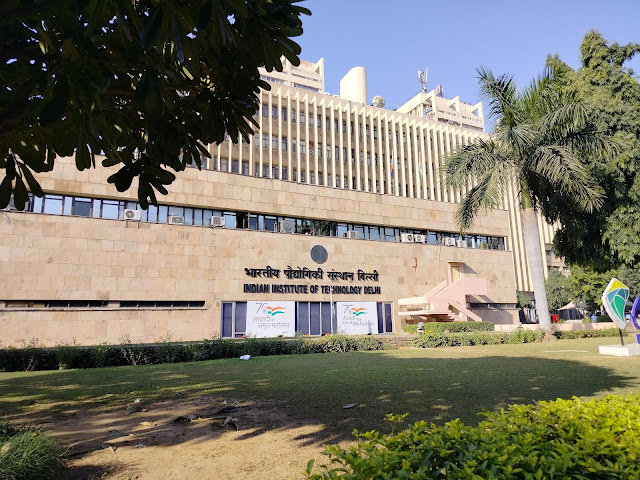
IIT Delhi Department of Management Studies

  IIT Delhi Department of Management Studies was established in 1993 and launched its first MBA program in 1997. It is regarded as one of the best institutes for management studies in India and is placed at the eighth position according to the NIRF rankings.


Learn More about  IIT Delhi Department of Management Studies

The curriculum is designed in order to meet the changing needs of the business environment and the industry. The Institute currently offers a 2 year full time MBA program, a 3 year part time program and a 3 year Executive MBA program. The students are selected after a rigorous screening process which includes performance of the candidate in CAT, followed by a group discussion and personal interview.

Students at DMS, IIT Delhi are trained by eminent faculty who are experienced professionals from India as well as abroad. The placement record of the Department is quite impressive with the 83 offers made for the 2018-2020 batch, which achieved a 100% placement record. The highest salary package offered to the students was INR 33 LPA and the average salary package offered was INR 22.69 LPA. Top recruiters visiting the DMS, IIT Delhi campus were well- known companies like Reliance Industries Ltd., Wipro, Amway, OLA and others.

DMS, IIT Delhi Key Points

  • The Institute provides world class IT infrastructure with facilities like hostels, library, wi-fi campus, hi-tech classrooms and others.
  • The Department of Management Studies is spread across an area of 320 Acres.
  • The Institute has successfully managed to maintain a 100% placement record.
  • Admissions are done on the basis of Selection Index which is computed by taking into account 7 parameters- CATA Score, Bachelor’s degree, 12th marks, 10th marks, Work Experience, Gender diversity and graduation from IIT/NIT.

DMS, IIT Delhi Rankings

  • The Department of Management Studies is ranked 8th in the NIRF rankings 2020.
  • The India Today group and Financial Express ranked DMS, IIT Delhi 9th in 2020.
  • The institute has been ranked 15th by Business Today in 2020.
  • DMS, IIT Delhi falls in the 101-150 rank band according to the QS World University Rankings 2020 in the Business and Management Studies category.

DMS, IIT Delhi Courses & Fees

The institute specializes in management courses and offers 3 related programs in the said field. Admissions to all these courses are entrance based, with students selected on the basis of CAT performance and several other parameters.

The courses offered by DMS, IIT Delhi and their respective details are given below.

COURSES COURSE DETAILS
MBA
  • Specializations – General, Telecommunication Systems Management
  • Fees- INR 4.8 Lakhs per year
  • Eligibility criteria-Passed graduation in any discipline or equivalent examination with minimum 60% aggregate marks (55% for SC/ST) + valid score in CAT + Personal Interview
Executive MBA
  • Specializations- Technology Management
  • Fees- INR 3.6 Lakhs per year
  • Eligibility criteria- Passed graduation in any branch of Engineering/ Technology/ Physical Sciences/ Statistics/ BCA/ Operation Research/ Economics/ Commerce with minimum 60% aggregate marks (55% for SC/ST)+ Minimum 2 years work experience + Personal Interview
Ph.D
  • Specializations- Management
  • Fees- INR 63,900 per year
  • Eligibility criteria- Passed M.Tech/ M.E./ M.D./M.Sc/ MBA/ M.A./MBBS with minimum 60% aggregate marks (55% for SC/ST) / Passed B.E./ B.Tech with minimum 70% aggregate marks + valid score in GATE/ CSIR/ UGC NET/ ICAR/ ICMR + Personal Interview

DMS, IIT Delhi Cut Off

DMS, IIT Delhi shortlisted eligible candidates for the Personal Interview round only if they secure more than the minimum CAT cut off set by the Institute.

Tabulated below are the cut off marks across 3 years and the cut off for different categories in different sections.

Categories CAT 2018 CAT 2019 CAT 2020
Overall Cut Off 90 90 90
Sectional Cut Off 80 80 80

DMS, IIT Delhi Placement

Category VARC DILR QUANT Overall CAT Percentile
General 80 80 80 90
NC-OBC 72 72 72 81
SC 53.3 53.3 53.3 60
ST 53.3 53.3 53.3 60
PWD 53.3 53.3 53.3 60

DMS, IIT Delhi Placement Highlights 

The Institute has a dedicated placement cell called the Campus Relations Team and has successfully managed to maintain a 100% placement record. The placement cell at DMS, IIT Delhi is constantly in touch with the reputed companies and organisations and is responsible for organising pre placement talks and visits on the campus. The resumes of the interested candidates are shared with the organisations and before the campus recruitment process begins. It ensures that the potential employers are constantly involved throughout the year through summer internships, guest lectures, Workshops and other activities.

  • 83 offers were made for the batch of 2020, which comprised 68 students.
  • The highest Salary Package Offered was INR 33 LPA
  • The average Salary Package Offered was INR 22.69 LPA
  • The median Salary Package Offered was INR 20.01 LPA
  • Students from the IT, General Management, Operations & Supply Chain, Finance, Sales & Marketing departments bagged the maximum placement offers.

Top Recruiters

  • Coca Cola
  • OLA
  • Vodafone
  • Deloitte
  • Infosys
  • Airtel
  • TCS
  • Idea
  • Wipro

DMS, IIT Delhi Scholarships

DMS, IIT Delhi does not award any scholarships. However, a scheme for the award of Teaching/Research Assistantship for providing financial assistance to those students who are admitted on full-time basis are considered.

Students under this scheme are required to render 8 hours of teaching/research assistance to the Department outside their normal academic work.The maximum duration for which this can be awarded to any Ph.D. student is 4 years. Continuation of the Assistantship depends on the academic performance, a minimum of 7.50 CGPA in course work each semester and minimum prescribed attendance requirement which needs to be fulfilled.


Numeraire (NMR) and Machine Learning: Revolutionizing Financial Prediction

 In today’s rapidly evolving financial landscape, maintaining a competitive edge is paramount for achieving success. The ongoing advancements in technology have ushered in a transformative era, with the integration of machine learning into financial prediction standing out as a significant game-changer. Numeraire (NMR), a cryptocurrency, leads this financial revolution by pioneering innovative approaches to predictive analytics. This article aims to provide an in-depth exploration of how Numeraire and the power of machine learning are reshaping the financial industry, offering traders and investors invaluable data-driven insights to enhance their decision-making processes and achieve more informed financial outcomes. For those seeking a platform to navigate the online trading landscape, consider exploring immediate-growth.com. Their resources and insights can provide a deeper understanding of topics like Numeraire (NMR) and the role of machine learning in financial predictions.

Photo by Worldspectrum on Pexels.com

The Rise of Numeraire (NMR)

What is Numeraire (NMR)?

Numeraire (NMR) is a unique and groundbreaking cryptocurrency introduced in 2017. Created by Numerai, a hedge fund based in San Francisco, NMR serves as a utility token that incentivizes data scientists to participate in their machine learning competition. The competition allows data scientists from around the world to develop predictive models on financial data.

How does the Numeraire Competition Work?

Numerai releases encrypted financial data to data scientists who compete to create the most accurate predictive models. Unlike traditional data competitions, Numerai does not know the real identities of its participants, fostering a trustless and decentralized environment. Participants use NMR to stake their predictions, and if their models perform well, they are rewarded with additional NMR tokens. This unique structure aligns the interests of data scientists with those of the hedge fund, creating a symbiotic relationship between the two.

Machine Learning and Its Role in Financial Prediction

Machine learning has transformed numerous industries, and the financial sector is no exception. Its ability to analyze vast amounts of data and identify patterns enables more accurate predictions. Financial institutions are increasingly integrating machine learning algorithms into their decision-making processes, and the results are promising.

Data-Driven Insights

Machine learning models can analyze historical market data, economic indicators, and even social sentiment to generate insights and predictions. These data-driven insights provide a significant advantage to traders and investors, allowing them to make well-informed decisions.

Risk Management

Managing risk is a critical aspect of financial trading and investment. Machine learning algorithms can assess risk more effectively than traditional methods, identifying potential pitfalls and mitigating losses.

Trading Algorithms

Automated trading algorithms driven by machine learning are gaining popularity. These algorithms can execute trades at lightning speed, reacting to market changes and opportunities instantly. They eliminate human emotions from the trading equation, leading to more rational and disciplined decision-making.

The Synergy of Numeraire and Machine Learning

Empowering Data Scientists

Numeraire’s unique approach empowers data scientists to build better predictive models. By providing them with encrypted financial data and rewarding successful predictions with NMR tokens, Numerai attracts top talent from around the world. The competition cultivates a community of data-driven enthusiasts who collaborate and push the boundaries of financial prediction.

Enhanced Accuracy and Performance

Combining machine learning with the Numeraire competition creates a dynamic environment where participants continuously improve their models. This leads to enhanced prediction accuracy over time. As the pool of talent and data grows, the predictions become more robust, enabling better financial decision-making.

Democratizing Financial Prediction

Numeraire and machine learning have the potential to democratize financial prediction. Traditionally, sophisticated financial forecasting tools were limited to large institutions with substantial resources. However, Numeraire’s decentralized model opens the door for anyone with data science expertise to contribute and be rewarded for their skills.

Real-World Applications

Asset Management

The integration of Numeraire and machine learning has significant implications for asset management firms. Hedge funds, mutual funds, and other investment institutions can leverage these technologies to generate alpha and improve portfolio performance.

Quantitative Trading

Quantitative trading, or algorithmic trading, relies heavily on data and mathematical models to identify trading opportunities. Numeraire’s competition and machine learning algorithms can enhance quantitative trading strategies, making them more effective and profitable.

Risk Assessment and Fraud Detection

The financial industry faces various risks, including credit risk, market risk, and fraud. Machine learning models can analyze historical data and patterns to assess risks accurately and detect fraudulent activities in real-time.

Conclusion

Numeraire (NMR) and machine learning are a formidable duo that is reshaping the financial landscape. The integration of these technologies empowers data scientists, improves prediction accuracy, and democratizes financial forecasting. As the financial industry continues to evolve, embracing innovation will be crucial for staying competitive. Numeraire and machine learning offer a glimpse into the future of finance, where data-driven insights drive smart decision-making, and the boundaries of possibility are continually pushed.

Ministry of Social Justice & Empowerment and National Safai Karamcharis Finance & Development Corporation

 A momentous collaboration has been cemented as the Ministry of Social Justice & Empowerment and the National Safai Karamcharis Finance and Development Corporation (NSKFDC) inked a Memorandum of Understanding (MoU) for the fiscal years 2023-24 and 2024-25. This strategic partnership aims to enhance the socio-economic upliftment of Safai Karamcharis, Manual Scavengers, Waste Pickers and their dependants focusing on empowering these marginalized communities across the nation.

The MoU underscores the commitment to accelerate inclusive growth through the effective allocation and utilization of funds for targeted welfare programs. The joint endeavor strives to amplify initiatives that promote safety, education, skill development, entrepreneurship, and sustainable employment opportunities, contributing to the holistic advancement of these workers who toil hard braving inclement weather to keep our surroundings clean.

NSKFDC, a prominent organization dedicated for this cause will collaborate closely with the Ministry to ensure the transparent and effective utilization of allocated funds. This alliance seeks to synergize expertise and resources for impactful implementation of programs that empower these marginalized populations.

The signing of this MoU is a testament to the shared vision of fostering equal opportunities and societal progress. Both parties are eager to channel their collective efforts to drive positive changes, fostering an environment where every individual can thrive and contribute to the nation’s growth.

****

Third G20 Finance Ministers and Central Bank Governors Meeting

All G20 Finance Ministers and Central Bank Governors agreed to paragraphs 1, 4, and paragraphs 6 to 26 along with Annexes 1 and 2.

  1. We, the Finance Ministers and Central Bank Governors of G20 countries, met on 17-18 July 2023, in Gandhinagar, India. Under the Indian Presidency’s theme of “One Earth, One Family, One Future”, we pledge to prioritize the well-being of our people and the planet and reaffirm our commitment to enhancing international economic cooperation, strengthening global development for all and steering the global economy towards strong, sustainable, balanced, and inclusive growth (SSBIG).
  2. 1 2Since February 2022, we have also witnessed the war in Ukraine further adversely impact the global economy. There was a discussion on the issue. We reiterated our national positions as expressed in other fora, including the UN Security Council and the UN General Assembly, which, in Resolution No. ES- 11/1 dated 2 March 2022, as adopted by majority vote (141 votes for, 5 against, 35 abstentions, 12 absent), deplores in the strongest terms the aggression by the Russian Federation against Ukraine and demands its complete and unconditional withdrawal from the territory of Ukraine. Most members strongly condemned the war in Ukraine and stressed that it is causing immense human suffering and exacerbating existing fragilities in the global economy constraining growth, increasing inflation, disrupting supply chains, heightening energy and food insecurity, and elevating financial stability risks. There were other views and different assessments of the situation and sanctions. Recognising that the G20 is not the forum to resolve security issues, we acknowledge that security issues can have significant consequences for the global economy.
  3. It is essential to uphold international law and the multilateral system that safeguards peace and stability. This includes defending all the Purposes and Principles enshrined in the Charter of the United Nations and adhering to international humanitarian law, including the protection of civilians and infrastructure in armed conflicts. The use or threat of use of nuclear weapons is inadmissible. The peaceful resolution of conflicts, efforts to address crises, as well as diplomacy and dialogue are vital. Today’s era must not be of war.

1 China stated that the G20 FMCBG meeting is not the right forum to discuss geopolitical issues.

2 Russia dissociated itself from the status of this document as a common outcome because of references in paragraphs 2, 3 and 5.

  1. Global economic growth is below its long-run average and remains uneven. The uncertainty around the outlook remains high. With notable tightening in global financial conditions, which could worsen debt vulnerabilities, persistent inflation and geoeconomic tensions, the balance of risks remains tilted to the downside. We, therefore, reiterate the need for well-calibrated monetary, fiscal, financial, and structural policies to promote growth, reduce inequalities and maintain macroeconomic and financial stability. We will continue to enhance macro policy cooperation and support the progress towards the 2030 Agenda for Sustainable Development. We reaffirm that achieving SSBIG will require policymakers to stay agile and flexible in their policy response, as evidenced during the recent banking turbulence in a few advanced economies where expeditious action by relevant authorities helped to maintain financial stability and manage spillovers. We welcome the initial steps taken by the Financial Stability Board (FSB), Standard Setting Bodies (SSBs) and in certain jurisdictions to examine what lessons can be learned from this recent banking turbulence and encourage them to advance their ongoing work. We will use macroprudential policies, where required, to safeguard against downside risks. Central banks remain strongly committed to achieving price stability in line with their respective mandates. They will ensure that inflation expectations remain well anchored and will clearly communicate policy stances to help limit negative cross-country spillovers. Central bank independence is crucial to maintaining policy credibility. We will prioritise temporary and targeted fiscal measures to protect the poor and the most vulnerable, while maintaining medium-term fiscal sustainability. We will ensure the coherence of the overall monetary and fiscal stances. We recognise the importance of supply-side policies, especially policies that increase labour supply and enhance productivity to boost growth and alleviate price pressures. We reaffirm our April 2021 exchange rate commitments. We also reaffirm the importance of the rules-based, non-discriminatory, fair, open, inclusive, equitable, sustainable and transparent multilateral trading system with the World Trade Organization (WTO) at its core in restoring growth and job creation and reiterate our commitment to fight protectionism and encourage concerted efforts for reform of the WTO.
  2. While global food and energy prices have fallen from their peak levels, the potential for high levels of volatility in food and energy markets remains, given the uncertainties in the global economy. In this context, we welcome the G20 Report on Macroeconomic Impacts of Food and Energy Insecurity and their Implications for the Global Economy, informed by policy experiences shared by members and supported by analysis from the International Monetary Fund (IMF), World Bank Group (WBG), International Energy Agency (IEA) and Food and Agriculture Organisation (FAO) and take note of its voluntary and non-binding policy learnings. We look forward to an ambitious replenishment of the International Fund for Agricultural Development (IFAD) resources at the end of the year by IFAD members, to support IFAD’s fight against food insecurity.
  3. We also take note of the discussions on assessing macroeconomic risks to SSBIG, including those stemming from climate change and various transition policies considering country-specific circumstances and different levels of development. The macroeconomic costs of the physical impacts of climate change are significant at an aggregate level and the cost of inaction substantially outweighs that of orderly and just climate transitions. We recognise the importance of international dialogue and cooperation, including in the areas of finance and technology, and timely policy action consistent with country- specific circumstances. It is also critical to assess and account for the short, medium and long-term macroeconomic impact of both the physical impact of climate change and transition policies, including on growth, inflation, and unemployment. We endorse the G20 Report on Macroeconomic Risks Stemming from Climate Change and Transition Pathways that presents an evidence-based assessment informed by policy experiences shared by members and technical inputs from the IMF, IEA, and the Network of Central Banks and Supervisors for Greening the Financial System (NGFS). Building on analysis in this Report, we will consider further work on the macroeconomic implications, as appropriate, particularly as relevant for fiscal and monetary policies, drawing on the inputs from a diverse set of stakeholders.
  4. We remain committed to pursuing ambitious efforts to evolve and strengthen Multilateral Development Banks (MDBs) to address the global challenges of the 21st century with a continued focus on addressing the development needs of low- and middle-income countries.
  5. Following up on the mandate from our Leaders in Bali in November 2022 and based on the updates from MDBs in Spring 2023, a G20 Roadmap for Implementing the Recommendations of the G20 Independent Review of MDBs Capital Adequacy Frameworks (CAFs) has been developed. We endorse this Roadmap and call for its ambitious implementation, within MDBs’ own governance frameworks while safeguarding their long-term financial sustainability, robust credit ratings and preferred creditor status. We also call for a regular review of the progress of implementation on a rolling basis including through engaging with MDBs, subject experts and shareholders. We commend the MDBs for their progress in implementing the CAF recommendations, especially with respect to adapting definitions of risk appetite and financial innovation. At the same time, we emphasise the need to give an additional push to CAF implementation. We appreciate the ongoing collaboration among MDBs on the timely release of Global Emerging Markets (GEMs) data and the launch of GEMs 2.0 as a stand-alone entity by early 2024. Going forward, we also encourage MDBs to collaborate in areas such as hybrid capital, callable capital, and guarantees. We appreciate the enhanced dialogue between the MDBs, Credit Rating Agencies and shareholders and encourage continued transparency in the exchange of information and rating methodologies. We take note that initial CAF measures, including those under implementation and consideration, could potentially yield additional lending headroom of approximately USD 200 billion over the next decade, as estimated in the G20 CAF Roadmap. While these are encouraging first steps, we will need continued and further impetus on CAF implementation.
  6. Furthermore, we reiterate our call for the MDBs to undertake comprehensive efforts to evolve their vision, incentive structures, operational approaches and financial capacities so that they are better equipped to maximize their impact in addressing a wide range of global challenges, while being consistent with their mandate and commitment to accelerate progress towards Sustainable Development Goals (SDGs). Recognising the urgent need to strengthen and evolve the MDB ecosystem for the 21st century, we appreciate the efforts of the G20 Independent Expert Group on Strengthening MDBs in preparing Volume 1 of the Report, and we will examine it in conjunction with Volume 2 expected in October 2023. We take note of Volume 1’s recommendations and the MDBs may choose to discuss these recommendations as relevant and appropriate, within their governance frameworks, in due course, with a view to enhancing the effectiveness of MDBs. We look forward to a High-Level Seminar, on the sidelines of the Fourth FMCBG meeting in October 2023 on strengthening the financial capacity of MDBs. We encourage MDBs to update the International Financial Architecture Working Group (IFA WG) on their evolution efforts to better address global challenges. We welcome the March 2023 Report on Evolution of the World Bank Group and call on the World Bank to advance the implementation of the agreed actions and continue to develop further proposals that can contribute to significant progress of the Bank’s evolution exercise by the IMF/WBG 2023 Annual Meetings in Marrakech. Recognising other multilateral efforts in this area, we take note of the Summit for a New Global Financing Pact. We also look forward to an ambitious IDA21 replenishment. We acknowledge the concluding report on the 2020 Shareholding Review of the International Bank for Reconstruction and Development (IBRD) and look forward to the 2025 Shareholding Review.
  7. We reiterate our commitment to a strong, quota-based, and adequately resourced IMF at the centre of the global financial safety net. We remain committed to revisiting the adequacy of quotas and will continue the process of IMF governance reform under the 16th General Review of Quotas (GRQ), including a new quota formula as a guide, and ensure the primary role of quotas in IMF resources, to be concluded by December 15, 2023. In this context, we support at least maintaining the IMF’s current resource envelope. We welcome the landmark achievement of the global ambition of USD 100 billion of voluntary contributions (in SDRs or equivalent) and USD 2.6 billion of grants in pledges for countries most in need and call for the swift delivery of pending pledges. We welcome the progress achieved under the Resilience and Sustainability Trust (RST) and Poverty Reduction and Growth Trust (PRGT) with pledges for the RST amounting to about USD 45.5 billion and for the PRGT to about USD 24.2 billion in loan resources and nearly USD 1.9 billion in subsidy resources, respectively, through the voluntary channelling of Special Drawing Rights (SDRs) or equivalent contributions. We call for further voluntary subsidy and loan pledges to the PRGT by the IMF/WBG 2023 Annual Meetings in Marrakech to meet the first stage PRGT fundraising needs. We look forward to the IMF delivering a preliminary analysis, by the 2023 IMF/WBG Annual Meetings, of the range of options to put the PRGT on a sustainable footing with a view to meeting the growing needs of low-income countries in the coming years. The G20 reiterates its continued support to Africa, including through the G20 Compact with Africa. We will continue to monitor progress on channelling SDRs or equivalent contributions from countries with strong external positions and look forward to the IMF Ex-Post Report on the use of SDRs in September. We will continue to monitor the effectiveness of RST supported programs and look forward to interim review scheduled for April 2024. We look forward to further progress on the exploration of viable options for channelling SDRs through MDBs, while respecting relevant legal frameworks and the need to preserve the reserve asset character and status of SDRs. We look forward to the review of precautionary arrangements (FCL, PLL and SLL) and take note of the discussions held on the IMF surcharge policy.
  8. We welcome discussions on the potential macro-financial implications arising from the introduction and adoption of Central Bank Digital Currencies (CBDCs), notably on cross-border payments as well as on the international monetary and financial system. We welcome the BIS Innovation Hub (BISIH) Report on Lessons Learnt on CBDCs and look forward to the IMF Report on Potential macro-financial implications of widespread adoption of CBDCs to advance the discussion on this issue. We also look forward to continued discussions on the implementation of international frameworks for the use of different tools in addressing capital flow volatility based on the policy updates by the IMF, the OECD, and the BIS while being mindful of their original purpose. We reiterate our commitment to promote sustainable capital flows. To this effect, we note the OECD’s Report on Towards Orderly Green Transition – Investment Requirements and Managing Risks to Capital Flows.
  9. We re-emphasise the importance of addressing debt vulnerabilities in low and middle-income countries in an effective, comprehensive and systematic manner. We continue to stand by all the commitments made in the Common Framework for Debt Treatments beyond the DSSI, including those in the second and final paragraphs, as agreed on November 13, 2020, and step up the implementation of the Common Framework in a predictable, timely, orderly and coordinated manner. To this end, we ask the G20 International Financial Architecture Working Group (IFA WG) to continue discussing policy-related issues linked to implementation of the Common Framework and make appropriate recommendations. We welcome the recent agreement between the Government of Zambia and official creditor committee on a debt treatment and look forward to a swift resolution. We welcome the formation of an official creditor committee for Ghana and look forward to an agreement on a debt treatment as soon as possible. We also call for a swift conclusion of the debt treatment for Ethiopia. Beyond the Common Framework, we welcome all efforts for timely resolution of the debt situation of Sri Lanka, including the formation of the official creditor committee, and we call for the resolution as soon as possible. Noting the work in developing the G20 Note on the Global Debt Landscape in a fair and comprehensive manner, we ask the G20 IFA WG to continue the development expeditiously. We encourage the efforts of the Global Sovereign Debt Roundtable (GSDR) participants to strengthen communication and foster a common understanding among key stakeholders, both within and outside the Common Framework, for facilitating effective debt treatments.
  10. We welcome joint efforts by all stakeholders, including private creditors, to continue working towards enhancing debt transparency. We note the results of the voluntary stocktaking exercise of data sharing with International Financial Institutions. We welcome the efforts of private sector lenders who have already contributed data to the joint Institute of International Finance (IIF)/OECD Data Repository Portal and continue to encourage others to also contribute on a voluntary basis.
  11. We emphasise the need for enhanced mobilisation of finances and efficient use of existing resources in our efforts to make the cities of tomorrow inclusive, resilient, and sustainable. To this effect, we endorse the G20 Principles for Financing Cities of Tomorrow, which are voluntary and non-binding in nature and the G20/OECD Report on Financing Cities of Tomorrow, which provides a financing strategy as well as presents a compendium of innovative urban planning and financing models. We encourage stakeholders, including the Development Financial Institutions and the MDBs, to explore the potential of drawing upon these principles in their planning and financing of urban infrastructure wherever applicable and share experiences from early pilot cases. We note the progress in outlining the enablers of inclusive cities. We also note the customisable G20/ADB Framework on Capacity Building of Urban Administration to guide local governments in assessing and enhancing their overall institutional capacity for the effective delivery of public services. We note the ongoing pilot application of the voluntary and non-binding Quality Infrastructure Investment (QII) Indicators and look forward to further discussion on their application considering the country circumstances. We thank the Global Infrastructure Hub for supporting the G20’s multi-year infrastructure agenda since 2014. We note that the GIH Board and shareholders are currently engaged in exploring a way to best sustain the value created so far. We look forward to the outcome report of the 2023 Infrastructure Investors Dialogue focused on integrating the private sector perspective in designing policies for financing cities of tomorrow.
  12. We continue to reaffirm our steadfast commitment to strengthening the full and effective implementation of the United Nations Framework Convention on Climate Change (UNFCCC) and the Paris Agreement. We recall and reaffirm the commitment made by developed countries to the goal of mobilising jointly USD 100 billion climate finance per year by 2020, and annually through 2025, to address the needs of developing countries, in the context of meaningful mitigation action and transparency in implementation. Developed country- contributors expect this goal to be met for the first time in 2023. In this context, we also support continued deliberations on an ambitious new collective quantified goal of climate finance from a floor of USD 100 billion per year to support developing countries, that helps in fulfilling the objective of the UNFCCC and implementation of the Paris Agreement.
  13. We welcome the Sustainable Finance Working Group (SFWG) recommendations on the mechanisms to support the timely and adequate mobilisation of resources for climate finance, while ensuring support for transition activities in line with country circumstances. We also recognise the significant role of public finance, as an important enabler of climate actions such as leveraging much-needed private finance through blended financial instruments, mechanisms and risk-sharing facilities, to address both adaptation and mitigation efforts in a balanced manner for reaching the ambitious Nationally Determined Contributions (NDCs), carbon neutrality and net-zero considering different national circumstances. We welcome the recommendations for scaling up blended finance and risk-sharing facilities, including the enhanced role of MDBs in mobilizing climate finance. We underscore the importance of maximizing the effect of concessional resources, such as those of the multilateral climate funds to support developing countries’ implementation of the Paris Agreement and look forward to an ambitious replenishment of the Green Climate Fund (GCF) this year. Recognizing the importance of supporting the commercialization of early-stage technologies that avoid, abate and remove greenhouse gas emissions and facilitate adaptation, we note the recommendations on financial solutions, policies, and incentives to encourage greater private flows for the rapid development, demonstration, and deployment of green and low-carbon technologies. We reiterate the importance of a policy mix consisting of fiscal, market and regulatory mechanisms including, as appropriate, the use of carbon pricing and non-pricing mechanisms and incentives, toward carbon neutrality and net zero. We look forward to the early finalisation of the Compendium comprising the discussions on Non-Pricing Policy Levers to Support Sustainable Investment.
  14. We reiterate our commitment to take action to scale up sustainable finance. In line with the G20 Sustainable Finance Roadmap, we welcome the analytical framework for SDG-aligned finance, and voluntary recommendations for scaling-up adoption of social impact investment instruments and improving nature-related data and reporting, informed by the stocktaking analyses, considering country circumstances. We encourage all relevant stakeholders to consider these recommendations in their actions and support for the 2030 Agenda.
  15. We endorse the multi-year G20 Technical Assistance Action Plan (TAAP) and the voluntary recommendations made to overcome data-related barriers to climate investments. We encourage the implementation of TAAP by relevant jurisdictions and stakeholders in line with the national circumstances. We look forward to reporting on the progress made by members, international organisations, networks and initiatives in the implementation of the G20 Sustainable Finance Roadmap, which is voluntary and flexible in nature, and call for further efforts to advance the Roadmap’s recommended actions that will scale up sustainable finance, including among others the implementation of the Transition Finance Framework. We look forward to the finalisation of the 2023 G20 Sustainable Finance Report, including a review of the implementation of the G20 Sustainable Finance Roadmap. We welcome finalization of the sustainability and climate-related disclosure standards published by the International Sustainability Standards Board (ISSB) in June 2023, which provide the mechanisms that address proportionality and promote interoperability. It is important that flexibility, to take into account country- specific circumstances, is preserved in the implementation of those standards. When put into practice as above, those standards will help to support globally comparable and reliable disclosures.
  16. We remain committed to strengthening the global health architecture for pandemic prevention, preparedness and response (PPR) through enhanced collaboration between Finance and Health Ministries under the Joint Finance and Health Task Force (JFHTF). Under the JFHTF, we welcome the participation of invited key regional organisations in the Task Force meetings as they enhance the voice of low-income countries. We welcome the discussion on the Framework on Economic Vulnerabilities and Risks (FEVR) and the initial Report for Economic Vulnerabilities and Risks arising from pandemics, created through collaboration between World Health Organisation (WHO), World Bank, IMF, and European Investment Bank (EIB). We call on the Task Force to continue refining this Framework over its multi-year work plan in order to regularly assess economic vulnerabilities and risks due to evolving pandemic threats, taking into account country-specific circumstances. We welcome the Report on Best Practices from Finance Health Institutional Arrangements during Covid-19 that will contribute towards joint finance-health sector readiness to support our response to future pandemics. We welcome the Report on Mapping Pandemic Response Financing Options and Gaps developed by the WHO and World Bank and look forward to further deliberations on how financing mechanisms could be optimized, better coordinated and, when necessary, suitably enhanced, to deploy the necessary financing quickly and efficiently, duly considering discussions in other global forums. The analysis provided by these three reports will offer important inputs for discussion in the Joint Finance-Health Ministerial Meeting in August on global response to the next pandemic threat. We welcome the conclusion of the call for proposals by the Pandemic Fund and look forward to the first round of funding in the coming months.
  17. We reaffirm our commitment to continue cooperation towards a globally fair, sustainable and modern international tax system appropriate to the needs of the 21st century. We welcome the delivery of a text of a Multilateral Convention (MLC) on Amount A, significant progress of work on Amount B and the completion of the work on the development of the Subject to Tax Rule (STTR) and its implementation framework as set out in the July 2023 Outcome Statement of the OECD/G20 Inclusive Framework on BEPS (Inclusive Framework). We call on the Inclusive Framework to swiftly resolve the few pending issues relating to the MLC with a view to prepare the MLC for signature in the second half of 2023 and complete the work on Amount B by end of 2023. We welcome the steps taken by various countries to implement the Global Anti-Base Erosion (GloBE) Rules as a common approach. We recognise the need for coordinated efforts towards capacity building to implement the two-pillar international tax package effectively and in particular, welcome a plan for additional support and technical assistance for developing countries. We welcome the launch of the pilot programme of the South Asia Academy in India for tax and financial crime investigation in collaboration with OECD. We note the 2023 update of the G20/OECD Roadmap on Developing Countries and International Taxation. We note the Update on the Implementation of the 2021 Strategy on Unleashing the Potential of Automatic Exchange of Information for Developing Countries by the Global Forum on Transparency and Exchange of Information for Tax Purposes (“Global Forum”). We call for the swift implementation of the Crypto-Asset Reporting Framework (“CARF”) and amendments to the CRS. We ask the Global Forum to identify an appropriate and coordinated timeline to commence exchanges by relevant jurisdictions, noting the aspiration of a significant number of these jurisdictions to start CARF exchanges by 2027, and to report to our future meetings on the progress of its work. We note the OECD Report on Enhancing International Tax Transparency on Real Estate and the Global Forum Report on Facilitating the Use of Tax-Treaty-Exchanged Information for Non-Tax Purposes. We note the discussions held at the G20 High-Level Tax Symposium on Combatting Tax Evasion, Corruption and Money Laundering.
  18. We continue to closely monitor the risks of the fast-paced developments in the crypto-asset ecosystem. We endorse the Financial Stability Board’s (FSB’s) high-level recommendations for the regulation, supervision and oversight of crypto-assets activities and markets and of global stablecoin arrangements. We ask the FSB and standard-setting bodies (SSBs) to promote the effective and timely implementation of these recommendations in a consistent manner globally to avoid regulatory arbitrage. We welcome the shared FSB and SSBs workplan for crypto assets. We look forward to receiving the IMF-FSB Synthesis Paper, including a Roadmap, before the Leaders’ Summit in September 2023, to support a coordinated and comprehensive policy and regulatory framework taking into account the full range of risks, and risks specific to the emerging market and developing economies (EMDEs) and ongoing global implementation of FATF standards to address money laundering and terrorism financing risks. In this context, we note the Presidency Note as an important input for the Synthesis Paper. We also welcome the BIS Report on The Crypto Ecosystem: Key Elements and Risks.
  19. We continue to strongly support the work of the FSB and SSBs to address vulnerabilities and enhance the resilience of non-bank financial intermediation (NBFI) from a systemic perspective while monitoring evolving developments in NBFI. We welcome the FSB’s consultation report on revisions to the FSB 2017 recommendations on addressing liquidity mismatch in open-ended funds, and we support work to promote implementation of the FSB money market fund proposals, enhance margining practices, and address vulnerabilities from non-bank leverage. We welcome the FSB’s recommendations to achieve greater convergence in cyber incident reporting, updates to the Cyber Lexicon and Concept Note for a Format for Incident Reporting Exchange (FIRE). We look forward to the FSB’s work to identify the reporting needs and the prerequisites for and feasibility of the development of FIRE, and we ask the FSB to develop an action plan with appropriate timelines.
  20. We welcome the FSB’s consultation Report on Enhancing Third-party Risk Management and Oversight. We expect the toolkit to support efforts in enhancing the operational resilience of financial institutions, addressing the challenges arising from their growing reliance on critical third-party service providers including BigTechs and FinTechs, as well as reducing fragmentation in regulatory and supervisory approaches across jurisdictions and in different areas of the financial services sector. We reaffirm our commitment to the effective implementation of the prioritised actions for the next phase of the G20 Roadmap for Enhancing Cross-border Payments and welcome the initiatives undertaken by SSBs and international organisations in this direction. To that end, we look forward to the FSB’s progress report in October on the implementation of this roadmap. We look forward to the G20 TechSprint 2023, a joint initiative with the BIS Innovation Hub, which will promote innovative solutions aimed at improving cross-border payments. We welcome the annual progress Report on the FSB’s Roadmap for Addressing Financial Risks from Climate Change. We endorse the revised G20/OECD Principles of Corporate Governance with the aim to strengthen policy and regulatory frameworks for corporate governance that support sustainability and access to finance from capital markets, which in turn can contribute to the resilience of the broader economy.
  21. We welcome the progress made by the Global Partnership for Financial Inclusion (GPFI) towards the completion of the deliverables under the G20 2020 Financial Inclusion Action Plan (FIAP). We welcome the 2023 Update to Leaders on Progress towards the G20 Remittance Target and endorse the Regulatory Toolkit for Enhanced Digital Financial Inclusion of Micro, Small and Medium Enterprises (MSMEs). We endorse the voluntary and non-binding G20 Policy Recommendations for Advancing Financial Inclusion and Productivity Gains through Digital Public Infrastructure. We take note of the significant role of digital public infrastructure in helping to advance financial inclusion in support of inclusive growth and sustainable development. We also encourage the continuous development and responsible use of technological innovations including innovative payment systems, to achieve financial inclusion of the last mile and progress towards reducing the cost of remittances in line with the G20 Leaders’ directions. We also support continuous efforts to strengthen digital financial literacy and consumer protection. We endorse the G20 2023 FIAP, which provides an action-oriented and forward-looking roadmap for rapidly accelerating the financial inclusion of individuals and MSMEs, particularly vulnerable and underserved groups in the G20 countries and beyond. We also endorse the 2023 Updated GPFI Terms of Reference.
  22. We recognise the importance of delivering on the strategic priorities of the Financial Action Task Force (FATF) and FATF Style Regional Bodies. We commit to supporting their increasing resource needs and encourage others to do the same, including for the next round of mutual evaluations. We remain committed to the timely and global implementation of the revised FATF Standards on the transparency of beneficial ownership of legal persons and legal arrangements to make it more difficult for criminals to hide and launder ill- gotten gains. We welcome the ongoing work of the FATF to enhance global efforts to recover criminal proceeds, in particular, the progress made by the FATF towards revising its standards on asset recovery and reinforcing global asset recovery networks. We reiterate the importance of countries developing and implementing effective regulatory and supervisory frameworks to mitigate risks associated with virtual assets in line with FATF Standards especially for terrorism financing, money laundering, and proliferation financing risks. In this regard, we support the FATF’s initiative to accelerate the global implementation of its standards, including the “travel rule”, and its work on risks of emerging technologies and innovations, including decentralised finance (DeFi) arrangements and peer-to-peer transactions. We look forward to the completion of FATF’s work on the use of crowdfunding for terrorism financing and on money laundering related to cyber-enabled fraud.
  23. With a vision reminiscent of Mahatma Gandhi’s teachings, we, the Finance Ministers and Central Bank Governors of G20 countries, envisage a future in which every nation thrives, prosperity is widely shared, and the well-being of humanity and the planet are harmoniously intertwined.


Annex I: Issues for further work

This Annex lists the deliverables from various G20 Finance Track workstreams following the July FMCBG meeting.

Framework Working Group

  • G20 IMF Report on Strong, Sustainable, Balanced and Inclusive Growth, October 2023, in the context of increasing vulnerabilities associated with macroeconomic instabilities and financial globalisation.

International Financial Architecture Working Group

· Volume 2 of the Report of G20 Expert Group on Strengthening MDBs

  • Regular review of the progress of implementation of CAF recommendations on a rolling basis including through engaging with MDBs, subject experts and shareholders

· Updates from IMF on the progress of the 16th General Review of Quotas

  • Update from the IMF on the ex-post assessment of 2021 SDR allocation
  • Continued exploration of opportunities for a “User manual” for the Common

Framework presenting the experience of the first cases.

  • G20 IFA WG to continue developing expeditiously the G20 Note on the Global Debt Landscape in a fair and comprehensive manner.
  • IFA WG to continue discussing policy-related issues linked to implementation of the Common Framework and make appropriate recommendations
  • Technical workshops to be held under the ambit of GSDR, such as the one on Comparability of Treatment (CoT).
  • Improvements to sovereign debt restructuring by continuing the discussion on some specific debt instruments, including potential best practices for LICs on collateralised financing practices, exploring ways to increase private sector involvement, in particular regarding the restructuring of syndicated loans, collective action clauses, assessing the benefits and complications of state- contingent debt instruments (SCDI), and climate-resilient debt clauses in international sovereign bonds and in official bilateral lending.
  • IMF Report on the potential macro-financial implication of widespread adoption of CBDCs, in September 2023.

Infrastructure

  • Continuation of the InfraTracker 2.0 to track planned infrastructure investments across G20 member economies using publicly available sources and transition it to an online tool.
  • Compilation of the scope and taxonomies related to infrastructure across G-20 economies and International Organisations.

Sustainable Finance Working Group

  • Monitoring and reporting of progress on G20 Sustainable Finance Roadmap on the SFWG online dashboard.
  • Finalisation of the 2023 G20 Sustainable Finance Report.
  • Compendium of case studies for financing SDGs.

International Taxation

  • A Handbook by the OECD on Pillar Two to facilitate implementation through a common approach, especially to assist capacity-constrained jurisdictions and present the Handbook by October 2023.

Financial Sector Issues

  • A joint synthesis paper by the IMF and the FSB integrating the macroeconomic and regulatory perspectives of crypto assets to be submitted in September 2023.
  • An interim report by the BIS Committee on Payments and Market Infrastructures (CPMI) on Fast Payment Systems (FPS) interlinking governance, risk management and oversight considerations; and the final report on ISO 20022 harmonisation requirements for cross-border payments in October 2023.
  • FSB to provide a report on the financial stability implications of leverage in NBFI in September 2023.
  • FSB to provide an overall progress report on enhancing the resilience of NBFI in September 2023.
  • FSB to provide its Annual Report on Promoting Global Financial Stability in October 2023.
  • FSB to report in October 2023 its progress on the implementation of the G20 Roadmap for Enhancing Cross-Border Payments.
  • FSB, in coordination with the ISSB and IOSCO, to prepare a report on the progress of jurisdictions and firms on climate-related financial disclosures by October 2023.

Global Partnership for Financial Inclusion

  • GPFI will continue work to complete the Second Update of National Remittance Plans and present a case-study on the impact of digital remittances in reducing the cost of remittances.
  • GPFI will report on progress in implementing the G20 GPFI High-Level Principles on Digital Financial Inclusion.
  • GPFI to work on SME best practices and innovative instruments to overcome common constraints in SME financing based on GPFI SME living database.


Annex 2: Reports and Documents received

  1. G20 Report on Macroeconomic Impacts of Food and Energy Insecurity and their implications for the global economy
  2. G20 Report on Macroeconomic risks stemming from climate change and transition pathways
  3. G20 Roadmap for implementing the recommendations of the G20 Independent Review of MDBs Capital Adequacy Frameworks (CAFs)
  4. Volume 1 of the G20 Expert Group on Strengthening MDBs
  5. BIS Innovation Hub (BISIH) Report on “Lessons learnt on CBDCs”
  6. OECD’s report on “Towards Orderly Green Transition – Investment Requirements and Managing Risks to Capital Flows
  7. G20 note on the total global ambition of USD 100bn of voluntary contributions for countries most in need
  8. G20 Principles for Financing Cities of Tomorrow: inclusive, resilient and sustainable
  9. G20/OECD Report on Financing Cities of Tomorrow
  10. G20/ADB Framework on Capacity Building of Urban Administration
  11. G20 Sustainable Finance Working Group Deliverables
  12. Framework on Economic Vulnerabilities and Risks (FEVR) and the initial Report for economic vulnerabilities and risks arising from pandemics
  13. Report on Best Practices from Finance Health Institutional Arrangements during Covid-19
  14. Report on Mapping Pandemic Response Financing Options and Gaps developed by the WHO and World Bank
  15. G20/OECD Roadmap on Developing Countries and International Taxation Update 2023
  16. OECD Report on ‘Enhancing International Tax Transparency on Real Estate’
  17. Global Forum Report on ‘Facilitating the Use of Tax-Treaty-Exchanged Information for Non-Tax Purposes’
  18. Global Forum Update on the implementation of the 2021 Strategy on Unleashing the Potential of Automatic Exchange of Information for Developing Countries
  19. FSB Chair’s Letters to G20 Finance Ministers and Central Bank Governors, April and July 2023.
  20. FSB’s global regulatory framework for crypto-asset activities: Umbrella public note to accompany final framework
  21. FSB’s high-level recommendations for the regulation, supervision, and oversight of crypto-asset activities and markets
  22. FSB’s high-level recommendations for the regulation, supervision, and oversight of global stablecoin arrangements
  23. BIS Report on “The crypto ecosystem: key elements and risks”.
  24. FSB Consultation report on addressing liquidity mismatch in open-ended funds-Revisions to the FSB 2017 policy recommendations
  25. FSB Report on Enhancing Third-Party Risk Management and Oversight: A toolkit for financial institutions and financial authorities
  26. FSB Roadmap for Addressing Financial Risks from Climate Change: 2023 Progress Report
  27. FSB Recommendations to Achieve Greater Convergence in Cyber Incident Reporting: Final Report
  28. FSB Concept Note on Format for Incident Reporting Exchange (FIRE) – A possible way forward
  29. Revised G20/OECD Principles of Corporate Governance
  30. G20 Policy Recommendations for Advancing Financial Inclusion and Productivity Gains through Digital Public Infrastructure
  31. 2023 Update to Leaders on Progress towards the G20 Remittance Target
  32. Regulatory Toolkit for Enhanced Digital Financial Inclusion of Micro, Small and Medium Enterprises (MSMEs)
  33. G20 2023 FIAP
  34. 2023 Updated GPFI Terms of Reference.
  35. 2023 GPFI Progress Report to G20 Leaders
  36. G20 Financial Inclusion Action Plan Progress Report 2021-23
  37. FATF Report- Countering Ransomware Financing Report (March 2023)
  38. Targeted Update on the Implementation of the FATF Standards for Virtual Assets (June 2023)
  39. FATF Report on Guidance on Beneficial Ownership Transparency for Legal Persons (March 2023)

****

The Top 5 Crypto Trading Indicators for Technical Analysis

 If you’re interested in trading cryptocurrencies, you’re not alone. With the rise of Bitcoin, Ethereum, and other digital currencies, the world of crypto trading has become increasingly popular. However, as with any form of trading, it’s important to have a solid understanding of technical analysis and the indicators that can help you make informed trading decisions. In this article, we’ll explore the top 5 crypto trading indicators that can help you with your technical analysis. Visit this Home Page this platform offers online trading for Bitcoin and other cryptocurrencies.

Moving Average

The moving average is one of the most popular technical indicators used in crypto trading. It measures the average price of a cryptocurrency over a certain period of time, and is used to identify trends. Traders use moving averages to determine the overall direction of a trend and to identify potential support and resistance levels.

Photo by RDNE Stock project on Pexels.com

There are two main types of moving averages: the simple moving average (SMA) and the exponential moving average (EMA). The SMA is calculated by adding up the closing prices over a certain period of time and dividing by the number of periods. The EMA, on the other hand, gives more weight to recent prices, making it more responsive to price changes.

Relative Strength Index (RSI)

The RSI is another popular indicator used in crypto trading. It measures the strength of a cryptocurrency’s price action by comparing the average gains and losses over a certain period of time. The RSI ranges from 0 to 100, with readings above 70 indicating overbought conditions and readings below 30 indicating oversold conditions.

Traders use the RSI to identify potential price reversals and to determine whether a cryptocurrency is overbought or oversold. It can also be used to confirm trends identified by other indicators, such as moving averages.

Bollinger Bands

Bollinger Bands are a type of volatility indicator used in crypto trading. They consist of a simple moving average and two standard deviations, one above and one below the moving average. The bands widen when volatility increases and narrow when volatility decreases.

Traders use Bollinger Bands to identify potential price breakouts and to determine whether a cryptocurrency is overbought or oversold. When the price of a cryptocurrency moves outside the upper or lower band, it is considered a potential breakout or reversal signal.

MACD

The MACD (Moving Average Convergence Divergence) is a trend-following momentum indicator used in crypto trading. It measures the relationship between two moving averages and is used to identify potential trend reversals.

The MACD is calculated by subtracting the 26-period exponential moving average (EMA) from the 12-period EMA. A signal line, which is a 9-period EMA of the MACD line, is then plotted on top of the MACD line. When the MACD line crosses above or below the signal line, it is considered a potential trend reversal signal.

Fibonacci Retracement

The Fibonacci retracement is a technical indicator used in crypto trading to identify potential support and resistance levels. It is based on the idea that prices will often retrace a predictable portion of a move, after which they will continue in the original direction.

The Fibonacci retracement levels are based on a sequence of numbers known as the Fibonacci sequence. The most commonly used retracement levels are 38.2%, 50%, and 61.8%.

Traders use Fibonacci retracements to identify potential buy and sell levels. When a cryptocurrency’s price retraces to a Fibonacci level, it is considered a potential support or resistance level.

Conclusion

In conclusion, technical analysis plays a crucial role in the decision-making process of traders and investors in the cryptocurrency market. The top five crypto trading indicators for technical analysis that we have discussed – Bollinger Bands, Fibonacci retracements, Relative Strength Index, Moving Average Convergence Divergence, and Ichimoku Kinko Hyo – can provide valuable insights into market trends and price movements. However, it is important to note that technical analysis is not foolproof, and traders must also consider fundamental analysis, market sentiment, and other factors that can impact the price of an asset. By combining technical analysis with other forms of analysis and developing a sound trading strategy, traders can increase their chances of success in the highly volatile and unpredictable cryptocurrency market.

3 Tokens to turn your $1 into $30 in a 2023 check

 Multiplying your dollar into a hundred dollars is everything that we need as investors. We turn saving into investments to generate a heavy flow of income. Acquiring profits by investing in cryptos is an easy way of intelligent earning. We long to invest more of our savings into places that potentially generate income In addition, you may improve your trading skills by using a reputable trading platform like www.immediateconnect-se.com

Photo by Jonathan Borba on Pexels.com

Yet, most of the middlemen infuse her wealth for unproductive purposes rather than inducing for their well-being. A general spread of awareness has to be attained to avoid this behavior. Enouage to save and invest in the best legitimate sources of earning should be an investor’s target. 

Cakes with a sweet frosting require more effort and time. Similarly, more returns might often take longer time but the wait is worthwhile. So, grab your cake in advance and enjoy your frosting when the trends shoot your way high. 

Let’s seize the golden chance to turn your dollar into thirty dollars by investing in the best-rated cryptos. There is no better opportunity to do so and build up your portfolio. Here are the 3 most incredible cryptos paving a new way of meaning opportunity: 

  1.  RenQ Finance (RENQ)

RENQ is a bridge to isolated blockchains on a decentralized Finance DeFi platform. Its mission is to resolve the ever-raging problem of liquidity. Innovation is the key intention of the platform and has placed it on its platter very precisely. 

Apart from the liquidity concept, it further emphasizes several other features. One of which is the scalability concept. The scalability is refurbished to promote a swift mode of transactions in a short time. Furthermore, its low transaction fees make RENQ the best choice for traders and investors. 

The wallet system is purely centralized with decentralized security set up to maintain transparency and uniformity. It further slaves the complexity issues that traders come across while dealing with DeFi exchanges. If you’re a trader of a basic level and have the least experience in managing DeFi networks then this is a perfect pick. 

It is a user-friendly platform that builds investors’ trust by resolving their issues. Traditional platforms have infused the scalability and liquidity concept but had a backlog in balancing the two. 

  • Shiba Inu (SHIB) 

Shiba Inu token is an inspiration from a dog breed that has a whole community-driven ecosystem. The meme crypto started its journey in the year 2020 in August. SHIB has a decentralized blockchain base that has come under the limelight recently. 

According to the resorts of the portal, the SHIB token is flaring remarkably. The initial price of one SHIB token in 2020 was $0.00000001 which has touched beyond the sky to $0.00001088. The reason behind this is the innovation and technology the model inhabits. 

The growth trajectory to Shiba Inu is bound to shoot up with no stop signs visibility. The meme coin is also framed as the “Dogecoin KIller” as it has been replacing it and setting its significant position. The SHIB token predictions reveal it will touch $30 by 2023 from a dollar investment to thirty. 

  • Cardano (ADA) 

The Cardano portal addresses interoperability on its front base. Additionally, it also aids the scalability issues by accessing faster transactions than Bitcoin and Ethereum. The blockchain platform aims at sustainability and an energy-efficient structure in its framework. To bring this into its model it runs on proof-of-stake consensus. 

On the other hand, well-known cryptos like BTC and ETH have a proof-of-work consensus. By market cap, Cardano ADA has touched the seventh-largest position in the galaxy of cryptos. Cardanoo has taken a steady climb from $0.18 in March 2020 to $3.10 in September 2021. 

The current price of Cardano is running at $0.414. Positive trends are favoring the Cardano portal which has highly friendly indications for its length as well as short-term investors. If ADA sets to rise at the same velocity then it is certainly bound to achieve $30.

Let us switch in to buy these cryptos and strengthen your portfolio and enhance your presence in the crypto industry.     For crypto trading and investment log onto Bitcoin smart 

Bitcoin As An Alternative Payment Mechanism

 In recent years, the popularity of Bitcoin has increased significantly, & many businesses are now considering accepting Bitcoin as a form of payment. But for those unfamiliar with Bitcoin, getting it can seem daunting. In this piece, we will see how a business can accept Bitcoin as payment & why it may be a wise decision. Know more at Register now.

Photo by Karolina Grabowska on Pexels.com

Why Accept Bitcoin as Payment?

It is crucial to recognize the advantages of accepting Bitcoin as payment before delving into the specifics of how to do so. Unlike traditional credit card transactions that can be disputed or reversed, Bitcoin transactions are cryptographically secure and cannot be altered, making them highly resistant to fraud and chargebacks.

Another advantage of Bitcoin payments is their speed and cost-effectiveness. This makes Bitcoin a highly attractive option for merchants looking to reduce the cost and time associated with processing transactions. This decentralization provides businesses with greater economic freedom & independence, as they can transact globally without being subject to the regulations & restrictions of traditional banking systems.

Finally, accepting Bitcoin as payment can attract a new customer base of tech-savvy individuals who value the privacy & security that Bitcoin provides.

How to Accept Bitcoin as Payment

There are several ways a business can start accepting Bitcoin as payment. Once you have a wallet, you can display your Bitcoin address on your website, & customers can send payments directly to that address.

However, displaying your Bitcoin address can be complicated for customers who are unfamiliar with Bitcoin. One solution is a Bitcoin payment processor, which can simplify the payment process for you & your customers.

Bitcoin payment processors are third-party services that process Bitcoin payments on behalf of businesses. These processors typically charge a small fee for their services, but they provide a range of benefits, including simplified payment processing, automatic conversion to fiat currency, & fraud protection.

These processors typically integrate with popular e-commerce platforms such as WooCommerce, Magento, & Shopify, making it easy to accept Bitcoin payments on your website.

In addition to payment processors, businesses can also use Bitcoin payment gateways, which are similar to payment processors but allow companies to accept Bitcoin payments in person. These gateways typically use QR codes to process payments, allowing customers to scan the code with their Bitcoin wallet & send payment directly to the business.

Finally, businesses can also use Bitcoin ATMs to accept Bitcoin payments. These ATMs allow customers to deposit cash & receive Bitcoin in return, providing businesses with a physical location where customers can purchase goods or services with Bitcoin.

Tips for Accepting Bitcoin as Payment

While accepting Bitcoin as payment can provide many benefits, there are some important things to keep in mind to ensure a smooth payment process. First, it’s essential to stay up to date on the current exchange rate of Bitcoin to ensure that you receive fair payment for your goods or services.

Second, it’s crucial to ensure that your payment processing system is secure & that you are taking the necessary precautions to protect your Bitcoin wallet from hacking attempts. This can include using multi-factor authentication & regularly backing up your wallet. Finally, it’s a good idea to educate your customers on how to use Bitcoin & provide them with resources to learn more about cryptocurrency. This can include tutorials on setting up a Bitcoin wallet & sending & receiving Bitcoin payments.

Conclusion

Accepting Bitcoin as payment can provide businesses with various benefits, including increased financial freedom, faster & cheaper payment processing, & access to a new customer base. To start accepting Bitcoin, companies can create a Bitcoin wallet, use a payment processor, payment gateway or Bitcoin ATM, & take steps to ensure a smooth payment process.

Furthermore, by accepting Bitcoin payments, businesses can tap into a rapidly growing market of tech-savvy and financially literate consumers who prefer to use digital currencies for their transactions. After going through every bit of the above article, it must be clear to you by now that bitcoins do come in handy in various payment processes all the time. Besides, it is your responsibility to figure out the best option of payment among all, in the first place. Thus, without wasting any further time, delve into the researches to stick to the most efficient option. 

UPI accounted for more than half of the digital transaction in FY 22.

Unified Payments Interface (UPI), the digital payment system that rides on smartphones and increased internet connectivity, has shown a quantum jump and is now a preferred mode of payment.

The Economic Survey released on 31st January  said “the progress of UPI has been remarkable”. In the fiscal year ending March 31, 2022, UPI accounted for 52 per cent of the total 8,840 crore financial digital transactions. “In December 2022, UPI touched its highest-ever mark with Rs 12.8 lakh crore worth of transactions,” the survey said.

It showed that UPI transactions touched a new high in December with 782 crore transactions worth Rs 12.8 lakh crore. On an average, over 2019-22 calendar years, the growth in UPI-based transactions in value and volume terms has been 121% and 115%, respectively.