United Nations Institute for Training and Research

Daily writing prompt
What’s your dream job?
The United Nations Institute for Training and Research is pleased to announce its 2025 portfolio of educational and training programmes, offered in partnership with world-class universities. These programmes, taught by UN experts and distinguished practitioners in their fields, offer flexible formats and a diverse array of learning opportunities, designed to equip diplomats, government officials, and professionals with the skills and knowledge needed to advance their careers.
Master’s ProgrammesComprehensive master’s degrees designed to provide in-depth knowledge in diplomacy and international relations, available in hybrid, online, or in-person formats. ● M.A. in Digital International Relations and Diplomacy In partnership with EU Business SchoolStart: October, January, April (In-person, Geneva, Full-time) | Deadline: Rolling Learn More >  

● M.A. in International Affairs and DiplomacyIn partnership with Open University of Catalonia Start: 12 March 2025 (Online, Full-time or Part-time) | Deadline: 21 February 2025Learn More >  

● Master’s Programmes in Diplomacy, International Law, Gender and DevelopmentIn partnership with the University for PeaceStart: July, August, September (Online, Hybrid, In-person, Full-time) | Deadline: April, June, August (Depending on the format)  |See related certificates >Learn More > 

● LL.M. in Public International Law In partnership with Sigmund Freud University ViennaStart: October 2025 (Online or In-person, Full-time) | Deadline: 14 April (Non-EU Citizens) / 31 August 2025 (EU/EFTA Citizens)Learn More >  

● M.S. in International Affairs and Diplomatic PracticeIn partnership with Seton Hall UniversityStart: August 2025 (Online, Full-time) | Deadline: RollingLearn More > | Join the info session (4 February) > 

● Professional Masters in Data Science and Artificial Intelligence ApplicationsIn partnership with the Asian Institute of TechnologyStart: August 2025 (Hybrid, Part-time)Learn More > 

● MBA in Alternative Dispute ResolutionIn partnership with the University of BoltonStart: September 2025 (Online Part-time, with 1-week in Geneva)Learn More > 

● MSc. Gender and Diplomatic PracticeIn partnership with the University of StirlingStart: September 2025 (In-person, Full-time or Part-time)Learn More > 

● M.A. in International Leadership and Negotiation In partnership with Universidad Europea de Valencia Start date: 2025 TBC (Online, Full-time)Learn More > 

* For programmes without confirmed deadlines, further details will be shared in upcoming communications.

Executive Diplomas Executive programmes for professionals seeking specialized knowledge in diplomacy, available in both in-person and online formats. 

● Executive Diploma in Cultural Diplomacy, International Relations and Global GovernanceIn partnership with the Center for Cultural Diplomacy StudiesStart: 9 February 2025 (Berlin or Online, 10 days) | Deadline: 8 February 2025Learn More >  

● Online Diploma in Multilateral Diplomacy Modules can also be taken separately as certified courses, with upgrade options toward the diploma.Start: 10 February/ 1 September 2025 | Deadline: 9 February/ 1 September 2025 (10 months)

Upcoming Courses Include:– The Art of Speechwriting- Overcoming Negotiation Deadlocks- United Nations Protocol- Public and Cultural Diplomacy- Cross-Cultural CommunicationLearn More >  

 Executive Diploma in Anti-Corruption and Diplomacy In partnership with the International Anti-Corruption Academy Start: March 2025 | Deadline: 21 February 2025 (Online, 5 months)Learn More >

Immersion Programmes 5-day field visits in the world’s multilateralism capitals, receiving expert lectures, training workshops, multilateral conferences, private guided tours, access to UN institutions, and career development sessions. 

● UN Geneva Immersion ProgrammeDates: February, May, July, August 2025Learn More >  

● UN Nairobi Immersion ProgrammeDates: 17 March – 21 March 2025 Learn More >  

● UN The Hague Immersion ProgrammeDates: 7 – 11 July 2025Learn More >  

● UN New York Immersion ProgrammeDates: 4 – 8 August 2025Learn More >  

● UN Vienna Immersion ProgrammeDates: 29 September – 3 October 2025Learn More >

Post Matric Scholarship Scheme for Scheduled Castes, Scheduled Tribes, and Other Backward Classes

Daily writing prompt
In what ways do you communicate online?

By Shashikant Nishant Sharma

The Post Matric Scholarship Scheme for Scheduled Castes, Scheduled Tribes, and Other Backward Classes is a significant initiative of the Government of India designed to provide financial assistance to students from economically weaker sections of society for pursuing post-matriculation education. Below are detailed aspects of this scheme:

1. Objective

The primary objective of the scheme is to remove financial barriers for students belonging to marginalized sections so that they can continue higher education after matriculation (Class 10). It aims to increase the literacy rate and reduce drop-out rates among these categories.


2. Target Beneficiaries

The scheme targets students belonging to:

  • Scheduled Castes (SC)
  • Scheduled Tribes (ST)
  • Other Backward Classes (OBC)
  • In some cases, students from Economically Backward Classes (EBC) may also be covered under certain states’ schemes.

3. Eligibility Criteria

  • Nationality: The applicant must be an Indian citizen.
  • Education Level: The student must have passed Class 10 and be pursuing studies in post-matriculation (Class 11 and above) up to postgraduate or professional courses.
  • Annual Family Income:
    • For SC/ST students: Family income should generally not exceed ₹2.5 lakhs per annum.
    • For OBC students: Family income limit is typically around ₹1 lakh to ₹1.5 lakhs per annum, depending on the state.

4. Scope of Assistance

The assistance covers:

  1. Maintenance Allowance: Monthly financial aid for lodging and boarding.
  2. Tuition Fees: Full reimbursement or payment of tuition and other compulsory fees charged by the educational institution.
  3. Book and Equipment Allowance: For students enrolled in professional courses.
  4. Special Allowance: For students with disabilities to support their educational needs.
  5. Study Tours and Thesis Preparation Allowance: Provided under certain conditions.

5. Key Features

  • Direct Benefit Transfer (DBT): The scholarship amount is transferred directly to the bank account of the eligible students.
  • Renewal of Scholarships: Students need to apply for renewal each year provided they fulfill the academic requirements.
  • Categorization of Courses: The amount disbursed depends on the level and category of the course. Courses are divided into groups such as Group I (engineering, medical), Group II (nursing, pharmacy), etc.

6. Application Process

  1. Online Registration: Most states and institutions require students to register online through national or state-level portals like the National Scholarship Portal (NSP).
  2. Submission of Documents:
    • Caste certificate
    • Income certificate
    • Academic certificates
    • Bank passbook details
    • Aadhaar card
  3. Verification Process: Applications are verified by the educational institution and state authorities before approval.

7. State and Central Responsibility

  • The Central Government bears 100% of the expenditure for SC and ST scholarships in Union Territories and a significant portion in other states.
  • State Governments share the expenditure for OBC scholarships.

8. Challenges and Reforms

Some challenges with the scheme include delays in fund disbursement, non-compliance by institutions, and lack of awareness. Efforts are being made to simplify the process and ensure timely payments through technology-enabled platforms like the NSP and integrating Aadhaar for verification.


The Post Matric Scholarship Scheme plays a crucial role in enabling students from disadvantaged backgrounds to access higher education, thereby promoting social equity and empowerment. It has a significant impact on reducing drop-out rates and improving the socio-economic conditions of marginalized communities.

References

Lama, M. (2019). An Evaluation of the Post Matric Scholarship Scheme provided to the tribal students of Darjeeling Municipality. International Journal of Advanced Scientific Research and Management4(4), 155-161.

Sikligar, P. C., & Madurai, N. V. (2006). Provision of Post Matric Scholarship for Development of Weaker Sections: A Study in Andhra Pradesh and Pondicherry. Indian Journal of Public Administration52(2), 190-201.

Sharma, S. N. Unveiling the Benefits of Turnitin Software in Academic Writing.

Sharma, S. N. (2018). Transformation of Aspirational Districts Programme: A Bold Endeavor Towards Progress. Think India Journal21(4), 197-206.

Umapathi, A., & Venkatramana, C. Higher Education Opportunities in Enhancing Capabilities–The Case of Reimbursement of Tuition Fee Scheme under Post-Matric Scholarships in Andhra Pradesh, India (2008–2012).

Post Matric Scholarship for Scheduled Castes (SC) and Scheduled Tribes (ST) in Madhya Pradesh

Daily writing prompt
In what ways do you communicate online?

By Kavita Dehalwar

The scheme “Post-Matric Scholarship” started in 1945 by the Tribal Welfare and Scheduled Caste (SC) Department, Madhya Pradesh, provides scholarships to Scheduled Tribe students studying in classes 11th, 12th, Colleges, PhD, and Professional Courses.

The Post Matric Scholarship for Scheduled Castes (SC) and Scheduled Tribes (ST) in Madhya Pradesh is a government initiative aimed at promoting higher education among students belonging to SC and ST communities. The scheme provides financial assistance to help students meet the expenses of their education after matriculation (Class 10). Here’s a detailed overview of the scholarship:


Objective

The primary goal of the Post Matric Scholarship is to reduce the financial burden on students from economically weaker SC and ST communities and to encourage them to pursue education beyond the matriculation level.


Eligibility Criteria

To be eligible for the Post Matric Scholarship, students must meet the following criteria:

  1. Caste Requirements:
    • The applicant must belong to the Scheduled Caste (SC) or Scheduled Tribe (ST) category as recognized by the Government of Madhya Pradesh.
  2. Educational Qualification:
    • Students must have passed Class 10 (matriculation) from a recognized board or institution.
    • The scholarship is applicable for studies at the post-matric level, including higher secondary, undergraduate, postgraduate, diploma, professional, and technical courses.
  3. Income Criteria:
    • For SC students: The family income should not exceed ₹3,00,000 per annum.
    • For ST students: The family income should not exceed ₹6,00,000 per annum.
  4. Domicile:
    • The applicant must be a resident of Madhya Pradesh.
  5. Other Requirements:
    • The student should be enrolled in a government or recognized private educational institution.
    • Students receiving similar scholarships or financial aid from other sources are not eligible.

Benefits of the Scholarship

The benefits of the Post Matric Scholarship include:

  1. Tuition Fee Coverage:
    • The tuition fees for the course are reimbursed directly to the institution.
  2. Maintenance Allowance:
    • A monthly allowance is provided to cover living expenses, books, and other necessities. The amount varies based on the level of study and the type of institution (government or private).
  3. Other Expenses:
    • Examination fees, library fees, and laboratory charges are also covered under the scheme.

Application Process

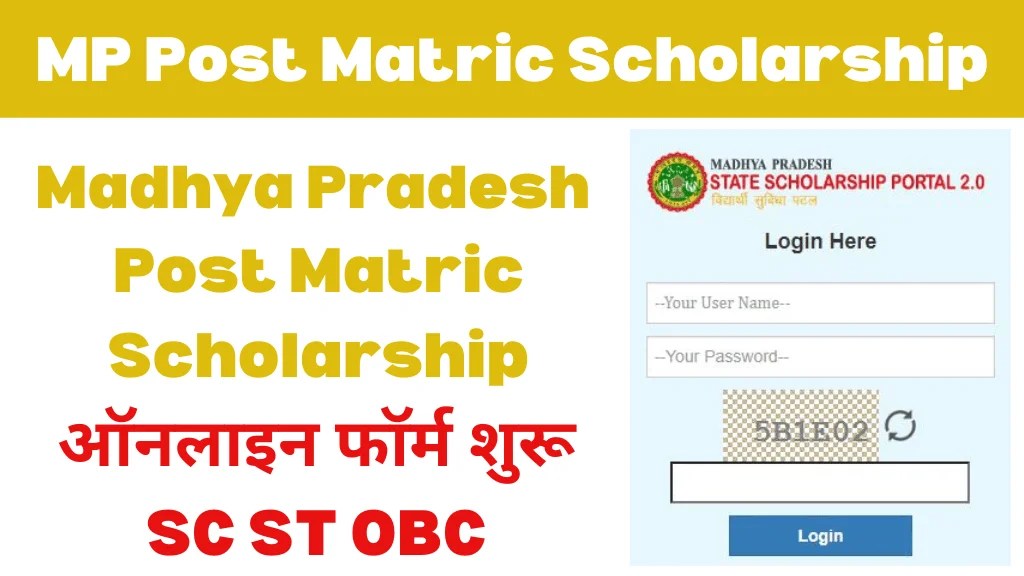
The application process for the scholarship is entirely online through the Madhya Pradesh Scholarship Portal. Here’s a step-by-step guide:

  1. Registration:
  2. Fill the Application Form:
    • Log in and complete the scholarship application form.
    • Provide details about your academic history, institution, caste certificate, and income certificate.
  3. Upload Documents:
    • Upload scanned copies of the required documents (see the list below).
  4. Verification:
    • Submit the application. The institute will verify the details provided.
  5. Approval:
    • After verification by the institution and authorities, the scholarship amount will be credited to the student’s or institution’s bank account.

Required Documents

Applicants need to upload the following documents during the application process:

  1. Recent passport-sized photograph.
  2. Caste certificate issued by a competent authority.
  3. Income certificate of the family (issued within the past year).
  4. Domicile certificate of Madhya Pradesh.
  5. Previous year’s mark sheet.
  6. Admission proof (fee receipt or admission letter).
  7. Bank account details of the student (linked with Aadhaar).

Important Dates

  • Application Start Date: Generally announced in July or August each year.
  • Application Deadline: Typically by November, with extensions announced as needed.
  • Renewal Applications: Renewal students must reapply before the deadline, providing updated documents.

Key Points to Note

  1. Renewal Process:
    • Students who continue their studies in subsequent years need to apply for scholarship renewal annually.
  2. Monitoring and Transparency:
    • The scheme is monitored through the online portal, ensuring transparency in fund disbursement.
  3. Grievance Redressal:
    • Any issues related to the scholarship can be resolved through the helpline available on the MP Scholarship Portal.

Contact Information

For further assistance, students can contact:

  • Helpline Number: Provided on the official portal.
  • District Education Office: For offline inquiries and document submission.

This scholarship program plays a crucial role in ensuring that financial barriers do not hinder the education of SC and ST students in Madhya Pradesh. By covering tuition fees and providing maintenance support, it encourages higher education and helps bridge the gap in educational opportunities.