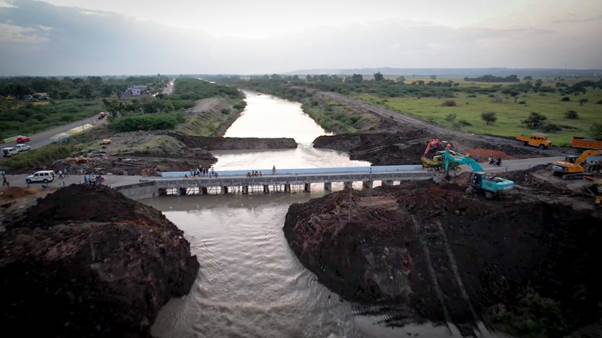
The long pending and vital work of permanent diversion of Paravanar river course (Tamilnadu) has been completed yesterday, i.e., 21st August2023. The major portion of 10.5 kms out of the total 12 kms had already been completed and from 26th July 2023, NLCIL took up the pending portion of 1.5 kms.
The temporary alignment of Paravanar river course is just 60 meters away from Mine-2 cut face. This Paravanar river has to handle storm water from the catchment area of more than 100 sq. kms from the north-west and southern areas. As several villages are involved in this area, it has become of paramount importance to safeguard the habitats as well as agricultural fields from inundation during incessant and heavy rains. Taking the accountability and responsibility of safeguarding the villages around mines, NLCIL took up the critical task of providing an adequate and permanent water way through the work of permanent diversion of Paravanar.
The approximate area involved for the permanent diversion of Paravanar for the total length of 12 kms is 18 hectares. Already, several acres of lands are being irrigated with the Paravanar river water being let out by NLCIL mines throughout the year. With the commissioning of present Paravanar permanent river course, additional extent of agricultural lands will now get water for irrigation for several acres. Also, the continuous source of water in Paravanar river will help augmenting of ground water availability.
Every year, monsoon season occurs in various parts of the world. It has been coming sooner in recent years, accompanied by rising amounts of rainfall, or later than normal, with a considerably drier start. While monsoon-affected nations plan for the monsoons on a yearly basis, the changes due to covid-19 are making it more difficult for them to respond without help.
Recently, the heavens have opened up in the highlands of north India and along the coasts of western India in the last ten days, unleashing severe weather phenomena. More than 150 people have died because of landslides and flash floods across Himachal Pradesh, Uttarakhand, Maharashtra, and parts of Karnataka. At least 53 people were killed when a hilltop collapsed south of the city in Raigad, Maharashtra’s hardest-hit district. The floods in Goa are the worst since 1982. The Indian monsoon is rapidly becoming known for its unpredictable behavior of the elements. However, the country’s weather forecasters, planners, and lawmakers have yet to accept climate change as a threat.
Most Indian cities, including Delhi and Mumbai, are ill-equipped to deal with such severe rains, with drainage systems blocked at many locations. The defense of city residents against weather oddities is jeopardized by urbanization that is uninformed by basic hydrological principles.
Farmers in several areas have discovered that rain is falling in torrents rather than being evenly distributed throughout the season, resulting in floods and erosion, followed by times of drought. Increasing automation, on the other hand, entails heavy machinery tamping down soil and producing rutting, all of which are detrimental to the orchard and vineyard floor. Furthermore, Aquifers that used to recharge groundwater and convey rainfall to bigger water bodies have been replaced by concrete in most cities.
Therefore, it is vital to tackle this problem as soon as possible because these disasters affect the poor in return. The scale of the devastation witnessed in the preceding examples, as well as what occurred in the Bay of Bengal last year, demonstrate a lack of disaster preparedness and mitigation, an issue that affects most of the country’s metropolitan areas.
We propose that the government develop long-term disaster management plans to reduce the impact of floods in Indian states. It is critical to enhance flood-forecasting techniques and install flood-warning systems in low-lying areas as a first step in this direction. Second, the government should devote greater resources to flood prevention, mitigation, and preparation. Third, river connection and the development of multifunctional structures and flood shelters in low-lying regions should be done on a mission-mode scale to assist minimize flood-related deaths. However, these methods will go a long way toward reducing and avoiding flood damage in Indian states. But its better to do something to prevent it all rather than sitting and watching the god’s show.
Scholars in development studies have written on these issues, but in ecologically vulnerable places, the political costs of altering the current development paradigm are frequently substantial. The Gadgil committee report on the Western Ghats, for example, which recommended for controlling development operations, was met with opposition in the region and largely ignored by mainstream political parties.
Flood is a type of natural hazard, affecting humans and natural habitats, or even killing them. A flood can also cause severe damage to homes, factories, places in public, etc. Initially, the trees in the forest should not be cut down unethically because they can cause many human disasters, which include flooding. A flood occurs; therefore, it is not possible to absorb the rainwater in the plant root, so water flows directly.
Secondly, in our properties, in the desert field and along the side of the road, we can plant any plants so that the plant root can quickly suck up the water. It provides other incentives, such as reducing air contamination and embracing the ‘Go Green’ Global Warming and Climate Change Policy on our Planet. The last thing is that we should not throw waste anywhere to disturb the flow of the river. In Jakarta, for example, people want to dump the trash somewhere as in the canal, and also in the drainage, resulting in flooding every year. In many other places, such as Situ Gintung and Wasior, the other flood is because people like to throw waste anywhere. By doing that, we can minimize disasters and contribute to defending our environment. So, we have to keep our environment clean.
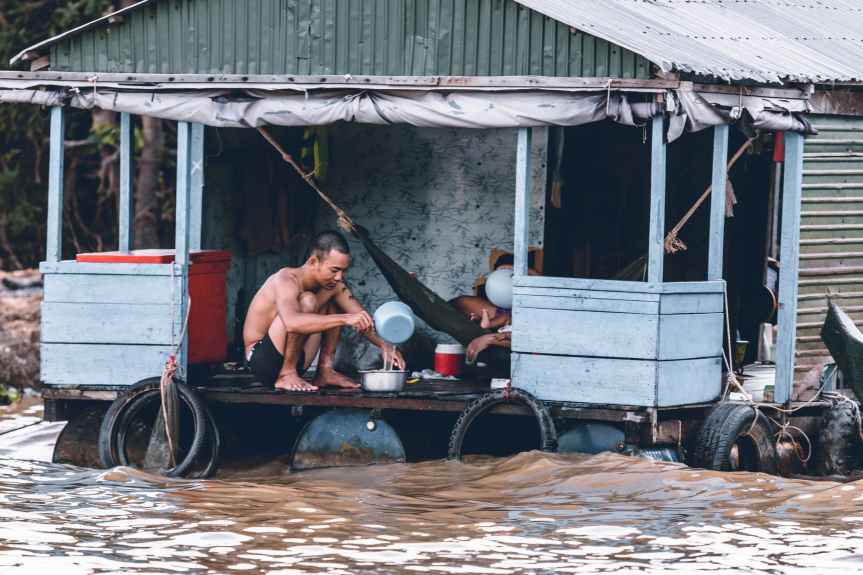
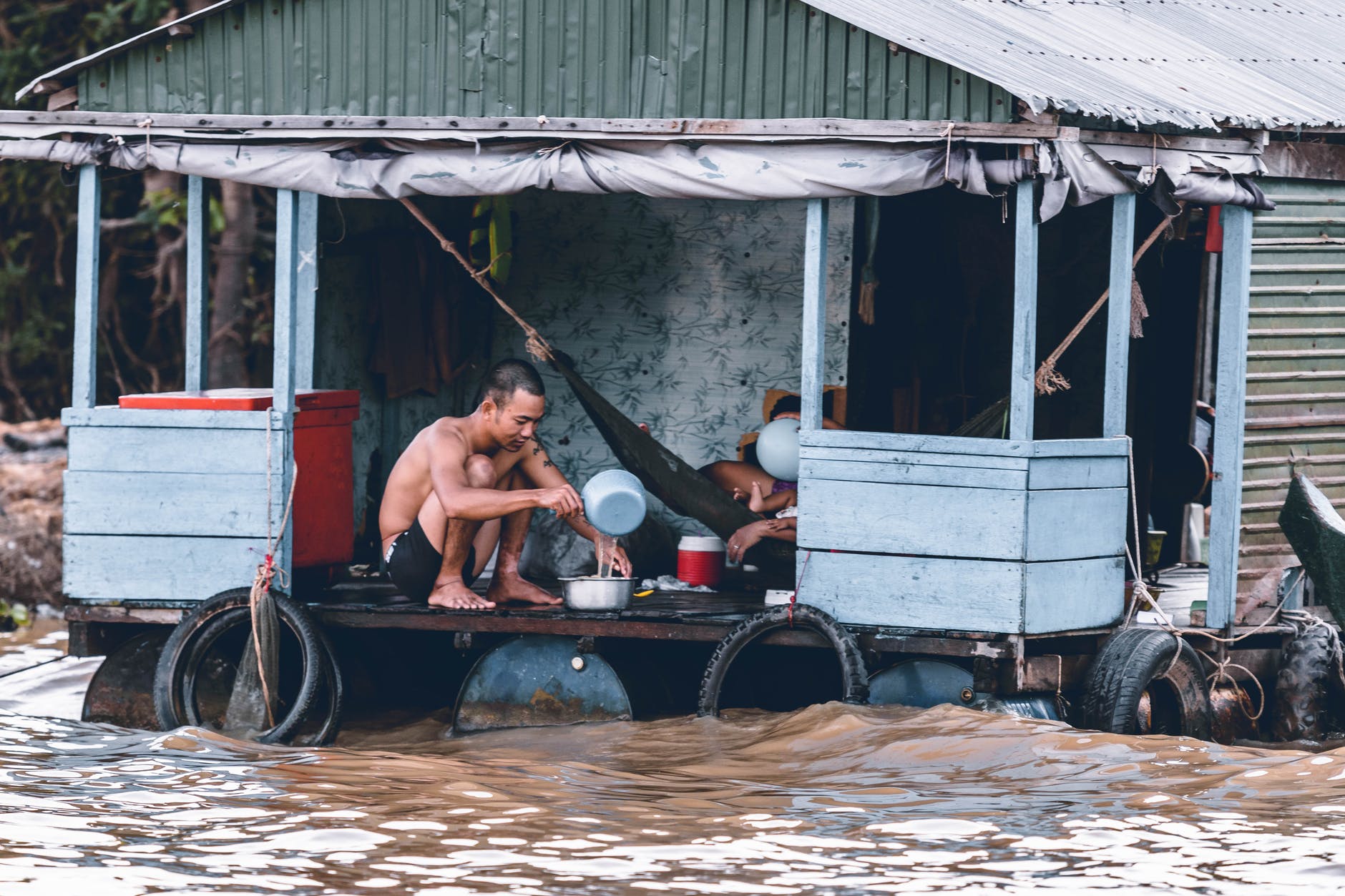
Flood is one of the most dangerous natural disasters. It happens when excessive water is collected in any area. It usually happens due to heavy rainfall. India is highly prone to flood. There are many regions in the country that face this natural disaster because of the overflowing of rivers. Moreover, it also happens because of the melting of snow. Another reason for floods is when the dam breaks down. If we look at the coastal areas, the hurricanes and tsunamis are held responsible for causing floods. In this essay on flood, we will see the prevention and after-affect of flood.
In other words, whatever the cause may be, it is equally dangerous. It has a lot of harmful consequences. Flood damages the living conditions and it takes a lot of time to recover from this disaster. Therefore, the consequences of floods must be known and steps must be taken to prevent it.
After-effects of Flood
Floods interrupt with the day to day functioning of the affected area. The severe floods sometimes cause mass destruction. A lot of people and animals lose their lives due to floods. Several others are injured. Floods also bring a rise in diseases. The stagnant water attracts mosquitoes causing malaria, dengue, and more illnesses.
Furthermore, people face power cuts due to the danger of electrocution. They also have to face expensive pricing. As the supply of food and goods gets limited, the prices naturally grow higher. This creates a big problem for the common man.
Most importantly, the whole country faces economic loss. The resources needed to rescue people and tackle this disaster demands a hefty amount. Plus, the citizens lose their houses and cars which they worked all their lives for.
Subsequently, floods also hamper the environment. It causes soil erosion and this degrades the quality of the soil. We lose out on fertile soil. Similarly, floods also damage flora and fauna. They damage crops and displace trees. Thus, the measure should be taken to avoid these grave consequences.
Ways to Prevent flood
The government and citizens must work together to formulate ways to prevent floods. Proper awareness must be spread about the steps to take when floods occur. Warning systems must be set up so people get sufficient time to save themselves. In addition, areas that are more likely to have floods must have tall buildings above the flood level.
Further, there should be an efficient system for storing excessive water due to rain. This will prevent the overflowing of water. One of the most important steps is to strengthen the drainage system. This can avoid water logging which will prevent floods.
Other than that, dams must be constructed strongly. The use of cheap materials causes dams to break. The government must ensure there is a quality building of dams to prevent floods.
In short, we cannot prevent natural causes like rain and the melting of glaciers. However, we can stop the manmade causes like breaking of dams, poor drainage system, installing warning systems and more. We should take inspiration from countries like Singapore that never experience floods despite having heavy rainfall for most time of the year.
It includes drains, pumps and outfalls. They frequently overflow by heavy rainfall or high levels of storm-water runoff from roads and streets. Indian cities like Bengaluru, Bihar, Delhi, Mumbai and Hyderabad are flooding frequently. There are multiple, recurring failures of grey infrastructure in India and other developing countries, for which alternatives are now being sought.
Blue-Green Infrastructure
Natural ecosystems such as lakes, parks, floodplains, forests are nature-based solutions called blue-green infrastructure and offer low-cost and flexible solutions for flood mitigation and management. They offer many other co-benefits.
Urban flood management in India continues to focus only on improving grey infrastructure, rescue and relief, instead of creating sustainable solutions. Cities continue to expand storm-water networks, clean channels and separate the sewage and storm-water drains. These are all important actions and urban areas bear high expenses to build grey infrastructure; but repeated floods mean that these actions are not sufficient.
Major reasons for frequent urban flooding across India
1. Construction on flood pathways.
During the monsoon, urban development and infrastructure such as roads, airports, bus depots, metro rail, etc. which are built on low-lying areas such as floodplains and lake beds, face higher risk of floods.
2. Making way for the floodwater.
Water penetrates into the ground, flows as surface runoff, evaporates and transpirate into the atmosphere. Urban regions with impenetrable surfaces, avoid water to go underground, decrease evaporation and transpiration. This highly increases surface runoff. Urban India is constantly building structures, streets, flyovers for urban citizens, frequently with inadequate storm-water infrastructure. Enormous volumes of storm-water deteriorate on these impenetrable surfaces, causing continued flooding.
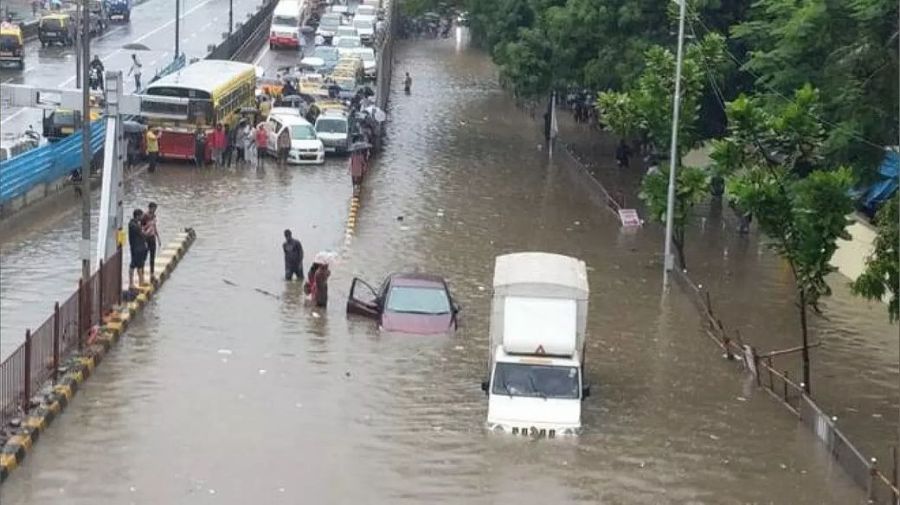
Source: Sentinel Assam MUMBAI FLOODS, 2020
3. Climate change and uncertainty.
The adverse climate change is creating uncertainty in many environmental phenomena. Rainfall variability is increasing because of climate change. Average monthly rainfall is now falling within days. Floods have high economic and social damage. This year (2020) Mumbai had 80% of its average rainfall in eight days.
Forecast, response and resilience.
Both grey and blue-green infrastructure expansion and upgrade is needed.
Official response to floods needs high-tech rainfall and flood warning systems like in Chennai and Mumbai.
Cities are building interactive maps of flood-prone zones (Bengaluru).
These measures enable evacuation and support effective deployment of rescue and relief measures, but do not prevent floods and mitigate against loss to life, property and infrastructure.
A reassessment of storm-water and cloudburst management is urgently needed in India. Depending solely on last century’s inflexible, expensive grey infrastructure does not manage current and future extreme natural events. Studies prove that the green infrastructure for storm-water management are cheaper and have more co-benefits than upgrading or expanding grey infrastructure.
Along with flood planning, we need major steps towards climate change and environmental protection. Much of the adverse natural and man-made events are happening because of collective ignorance towards climate and environment.


 Eduindex
You must be logged in to post a comment.