G20 Thematic Workshop on Nari Shakti: Towards Women-Led Development organised by NITI Aayog

 A workshop on the theme of Nari Shakti: Towards Women-led Development, emanating from the New Delhi Leaders’ Declaration 2023 (NDLD 2023), was held on 8 November 2023 at New Delhi.  The workshop was organized by NITI Aayog in collaboration with Institute of What Works to Advance Gender Equality (IWWAGE). This workshop was part of the series of thematic workshops steered and anchored by the NITI Aayog towards action items in the NDLD 2023.

The workshop focused on specific themes for enhancing the role of women in economy through economic and social empowerment. Discussions were held of topics of strengthening women’s collectives like Self-Help Groups (SHGs), Farmer Producer Organizations (FPOs); bridging gender skills gap and promoting women entrepreneurs; and strengthening legal safeguards for women’s empowerment.

The Workshop commenced with inaugural remarks by Dr. V.K Paul, Member NITI Aayog, where he highlighted that women-led development has been emphasized by our Hon’ble Prime Minister through various initiatives and programmes over the last few years. However, he underscored the challenge of low female labour force participation and stressed upon leveraging their social capital by providing them an enabling ecosystem. He called to synergize pathways of G20 priorities and national agendas, and create actionable strategies to achieve the same.

Dr. Preetam B Yashvant, Joint Secretary, Ministry of Women and Child Development, emphasized of the paradigm shift where women are no longer recipients but active participants in the development discourse. He further highlighted that G20 was truly a Peoples’ Presidency where women-led development was showcased through ‘Jan Bhagdari’ activities.

Dr Sandhya Purecha, Chair W20 India, highlighted that Nari Shakti encapsulates the strength that women embody and women-led development is a moral obligation necessary for equitable society.

The theme on Women in the Economy: Enhancing Women’s Economic and Social Empowerment delved into increasing women’s labour force participation to achieve women-led development. Issues like recognizing gender disparity in domestic and care work; and increasing investment in this sector to enable more women to participate meaningfully in the workforce; exploring the potential of gig economy; bridging gender skill gaps and social security for women; enhancing policies to create gender inclusive and supportive workplaces; and role of private sector to enhance and retain female workforce, were discussed.

The theme on Women’s Collectives: Strengthening SHGs, Women led FPOs and Rural Women’s Leadership Abilities focused on sharing the best practices in the women’s collectives’ space and strategies to scale them pan-India. The segment engaged in developing strategies to enable these women’s collectives reach the next stage of economic empowerment through formation of large producer enterprises or collectives and fostering leadership abilities among rural women.

The theme on Women and the Future of Work: Bridging Digital and Skilling Gaps for Access to Jobs and Strengthening Women’s Entrepreneurship concentrated on enhancing women’s access to digital skills and infrastructure, prioritizing quality and safety, to ensure a secure and inclusive digital literacy experience, fostering greater participation in the digital ecosystem. It also focused on incentivizing employers to promote women’s participation in non-traditional sectors by addressing structural issues that shape gender roles, thereby encouraging women’s entrepreneurship and diversification of career aspirations.

In the segment of Legal Safeguards for the Empowerment of Women, discussions focused on creating an enabling ecosystem by prioritizing women’s safety through improved public infrastructure, strengthening the implementation of gender-friendly laws by effective monitoring, evaluation and placing accountability system, and developing gender-disaggregated data for more evidence-based policy for women-led development.

This workshop provided a platform for experts, academics, experts, and civil society and think tank representatives working on gender empowerment to collaborate and design a roadmap for comprehensive gender equality and empowerment.

*****
G20 Leaders’ Summit

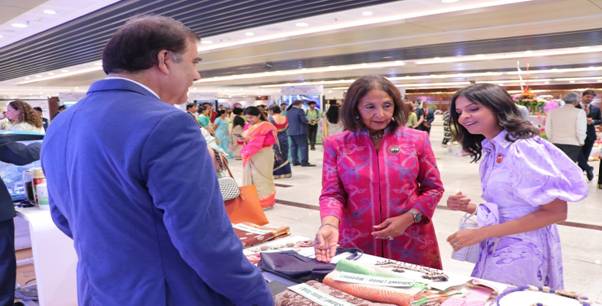
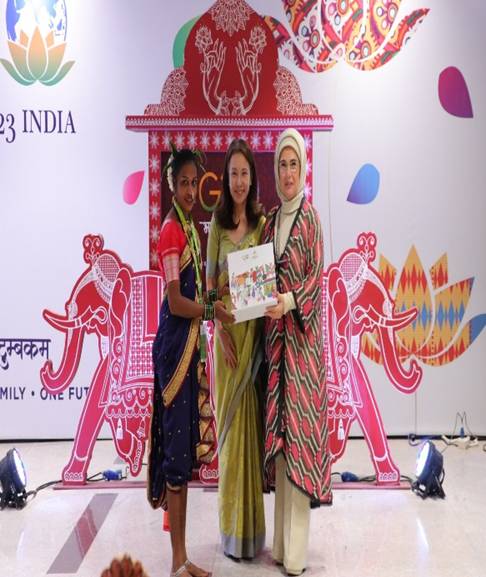
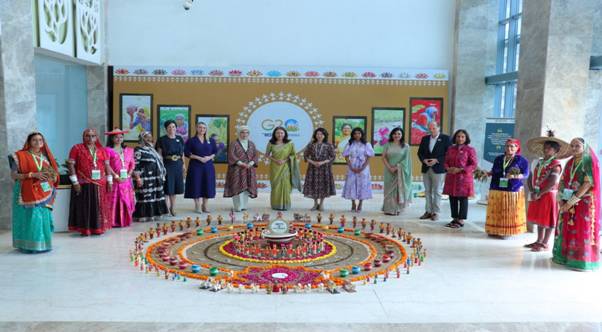
 The first ladies and spouses of G20 member countries experienced the Agricultural prowess of India first-hand, in a one-of-akind exhibition organized by Ministry of Agriculture and Farmers’ Welfare at IARI Campus,Pusa,today. The event featured a range of captivating components, such as a millet-focused live cooking session led by celebrity chefs KunalKapur, Anahita Dhondy, and Ajay Chopra, as well as the display of cutting-edge agricultural technology from prominent Indian startups, interaction with Indian women agri-champions, ‘Agri-Street’.

The spouses made their way to the exhibition area, prior to that they had a brief pitstop at the ‘Rangoli Area’, which featured two massive ‘Millet Rangolis’. The beautiful artworks were prepared using millet grains and local Indian motifs. The first rangoli captured the theme of “Harmony of Harvest” unveiling India’s deep-rooted agricultural traditions. This installation showcased India’s agricultural strength, emphasizing women’s pivotal roles in enhancing agricultural resilience. Curated with indigenous toys symbolizing women’s diverse agricultural contributions, millets, and rustic terracotta pots, this captivating Rangoli became a major highlight of the event. The second rangoli piece echoed India’s cultural philosophy – “The World is One Family”, emphasizing global unity. India as a prominent agriculture nation, plays a crucial role in global food security. The second rangoli, thus, celebrated India’s global commitment towards unity and sustenance.

In the exhibition area, the spouses witnessed the dynamic Agri-startup ecosystem, where 15 Agri-startups showcased their innovative tech solutions to address ground-level challenges and digitize agriculture. Climate Smart Agriculture, Innovation in Agriculture Value Chain, Agri-logistics & Supply Chains, Quality Assurance for Sustainable Consumption, and Millets: Sustaining Health, Empowering Agriculture, were a few themes that were covered in the exhibition. Additionally, diverse members of Farmer Producer Organizations (FPOs) from across the nation displayed a range of edible products marketed nationwide, aligned with the theme ‘Empowering Rural Prosperity through Collective Agriculture.’

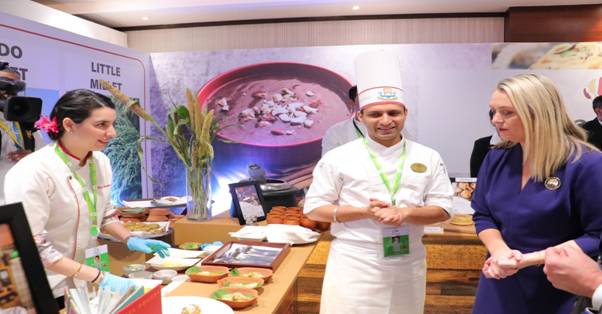
An enthralling ‘Live Cooking Session’ showcased a wide variety of millet-based culinary delights. This event was aligned with the celebrations of the International Year of Millets.It was helmed by three celebrity chefs – KunalKapur, Anahita Dhondy, and Ajay Chopra, who were joined by two culinary experts from the ITC Group, chef Kusha and chef Nikita.In the designated ‘Live Cooking Area,’ these five chefs prepared a ‘full course meal’ with a special focus on millets. This meal encompassed appetizers, salads, main courses, and desserts.

Chef Anahita, Chef Kunal, and Chef Ajay were each responsible for crafting a starter, main course, and dessert. For instance, Chef Anahita created a Raw Banana Barnyard Millet Tikki topped with puffed Amaranth. Meanwhile, Chef Kunal whipped up a delightful Jowar-Mushroom Khichda. Finally, Chef Ajay brought the multi-course millet experience to a close with a Millet Thekua and a Lemon Shrikhand Mille-feuille dessert. Within the exhibition, there was a dedicated culinary section that showcased millet-based dishes from all G20 member countries, paying homage to each nation that participated in the event.

The exhibition also highlighted India’s Research and Development achievements via the stalls presented by the Indian Council of Agricultural Research (ICAR), demonstrating the latest innovations in precision agriculture, agricultural technology, and mechanization advancements driving sector growth. Each stall showcased specific crop advancements backed by government initiatives. Some of the key stalls focused on themes like the journey of the Basmati revolution, its role in the prosperity of millions of Basmati farmers, and its status as a 5 billion USD forex earner. Another stall highlighted India’s status as the “Land of Spices” emphasizing the wide variety and global fame of Indian spices, along with future scope. A neighbouring stall provided insights into the nutritional and medicinal significance of mushrooms, their extensive diversity in India, and their potential for export. Additionally, the esteemed guests also viewed the sensor-based system that facilitated the real-time monitoring of environmental conditions during the transportation, storage, and ripening of bananas, among other interesting exhibits of ICAR.

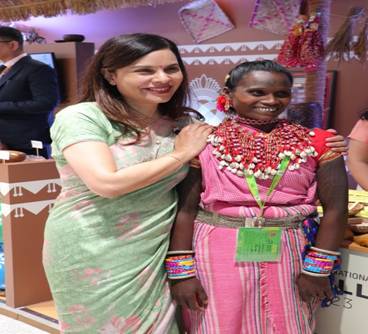
The ‘Agriculture Street’ was another major component of the exhibition curated by the Ministry, serving as a captivating journey into India’s agricultural legacy and offering insight into its vibrant past as well as the future. Here the Ministry presented a comprehensive view of agricultural practices, uniting experts, scientists, and farmers under one roof. This street was composed of nine interactive stalls, each adorned with rustic decor, creating an immersive environment for the spouses of G20 Head of States. Here, they could explore the diverse facets of agriculture, with a particular emphasis on millets. It also highlighted India’s initiatives aimed at enhancing food and nutritional security. One of the key highlights of the Agri Gully were the exhibits of Lahri Bai, a young female farmer from Dindori, Madhya Pradesh who conserved more than 150 indigenous seed varieties including about 50 varieties of millet seeds in her two-room hut earning the title of ‘Millet Queen’ of India.

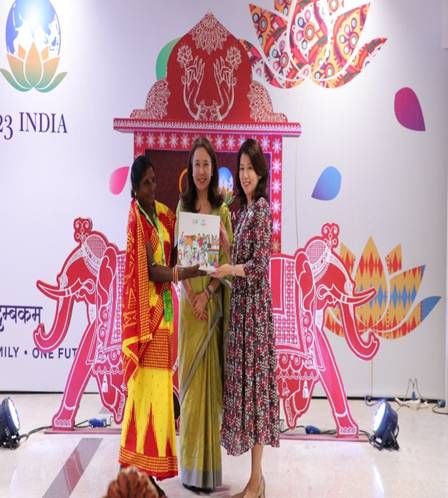
After the event concluded, the G20 Spouses received a token of appreciation in the form of a hamper. The hamper’s contents were carefully chosen to represent India’s vibrant cultural and artistic heritage. These items included handwoven stoles crafted from silk sourced from the Sal forests of Chhattisgarh, a handcrafted bell metal figurine created using an ancient lost wax technique reminiscent of the method used for the iconic ‘Dancing Girl’ artifact from the Harappan civilization (3300 BCE to 1300 BCE), and a Cheriyal Painting.

The visit provided the First Ladies and Spouses with an understanding of the progress India has made in the agricultural sector, including the area of millet farming. The women farmers who were invited from 10millet producing states which are Rajasthan, Maharashtra, Karnataka, Madhya Pradesh, Tamil Nadu, Uttarakhand, Odisha, Chhattisgarh, Bihar and Assam symbolize the grassroots-level changes occurringand interacting with them allowed the first ladies and spouses to gain insight into the evolving millet value chain in the country. Renowned chefs curated a remarkable feast to emphasize the versatility of millets and Indian cuisine to the distinguished guests, while Start-Ups and Farmer Producer Organizations (FPOs) showcased their latest technologies and products, creating a unique and memorable experience for all those in attendance.

***

Human-Centric Globalisation: Taking G20 to the Last Mile, Leaving None Behind

 ‘Vasudhaiva Kutumbakam’ – these two words capture a deep philosophy. It means ‘the world is one family’. This is an all-embracing outlook that encourages us to progress as one universal family, transcending borders, languages, and ideologies. During India’s G20 Presidency, this has translated into a call for human-centric progress. As One Earth, we are coming together to nurture our planet. As One Family, we support each other in the pursuit of growth. And we move together towards a shared future – One Future – which is an undeniable truth in these interconnected times.

The post-pandemic world order is very different from the world before it. There are three important changes, among others.

First, there is a growing realisation that a shift away from a GDP-centric view of the world to a human-centric view is needed.

Second, the world is recognizing the importance of resilience and reliability in global supply chains.

Third, there is a collective call for boosting multilateralism through the reform of global institutions.

Our G20 Presidency has played the role of a catalyst in these shifts.

In December 2022, when we took over the Presidency from Indonesia, I had written that a mindset shift must be catalysed by the G20. This was especially needed in the context of mainstreaming the marginalized aspirations of developing countries, the Global South and Africa.

The Voice of Global South Summit, which witnessed participation from 125 countries, was one of the foremost initiatives under our Presidency. It was an important exercise to gather inputs and ideas from the Global South. Further, our Presidency has not only seen the largest-ever participation from African countries but has also pushed for the inclusion of the African Union as a permanent member of the G20.

An interconnected world means our challenges across domains are interlinked. This is the midway year of the 2030 Agenda and many are noting with great concern that the progress on SDGs is off-track. The G20 2023 Action Plan on Accelerating Progress on SDGs will spearhead the future direction of the G20 towards implementing SDGs.

In India, living in harmony with nature has been a norm since ancient times and we have been contributing our share towards climate action even in modern times.

Many countries of the Global South are at various stages of development and climate action must be a complementary pursuit. Ambitions for climate action must be matched with actions on climate finance and transfer of technology.

We believe there is a need to move away from a purely restrictive attitude of what should not be done, to a more constructive attitude focusing on what can be done to fight climate change.

The Chennai HLPs for a Sustainable and Resilient Blue Economy focus on keeping our oceans healthy.

A global ecosystem for clean and green hydrogen will emerge from our presidency, along with a Green Hydrogen Innovation Centre.

In 2015, we launched the International Solar Alliance. Now, through the Global Biofuels Alliance, we will support the world to enable energy transitions in tune with the benefits of a circular economy.

Democratising climate action is the best way to impart momentum to the movement. Just as individuals make daily decisions based on their long-term health, they can make lifestyle decisions based on the impact on the planet’s long-term health. Just like Yoga became a global mass movement for wellness, we have also nudged the world with Lifestyles for Sustainable Environment (LiFE).

Due to the impact of climate change, ensuring food and nutritional security will be crucial. Millets, or Shree Anna, can help with this while also boosting climate-smart agriculture. In the International Year of Millets, we have taken millets to global palates. The Deccan High Level Principles on Food Security and Nutrition is also helpful in this direction.

Technology is transformative but it also needs to be made inclusive. In the past, the benefits of technological advancements have not benefited all sections of society equally. India, over the last few years, has shown how technology can be leveraged to narrow inequalities, rather than widen them.

For instance, the billions across the world that remain unbanked, or lack digital identities, can be financially included through digital public infrastructure (DPI). The solutions we have built using our DPI have now been recognised globally. Now, through the G20, we will help developing countries adapt, build, and scale DPI to unlock the power of inclusive growth.

That India is the fastest-growing large economy is no accident. Our simple, scalable and sustainable solutions have empowered the vulnerable and the marginalised to lead our development story. From space to sports, economy to entrepreneurship, Indian women have taken the lead in various sectors. They have shifted the narrative from the development of women to women-led development. Our G20 Presidency is working on bridging the gender digital divide, reducing labour force participation gaps and enabling a larger role for women in leadership and decision-making.

For India, the G20 Presidency is not merely a high-level diplomatic endeavour. As the Mother of Democracy and a model of diversity, we opened the doors of this experience to the world.

Today, accomplishing things at scale is a quality that is associated with India. The G20 Presidency is no exception. It has become a people-driven movement. Over 200 meetings will have been organised in 60 Indian cities across the length and breadth of our nation, hosting nearly 100,000 delegates from 125 countries by the end of our term. No Presidency has ever encompassed such a vast and diverse geographical expanse.

It is one thing to hear about India’s demography, democracy, diversity and development from someone else. It is totally different to experience them first-hand. I am sure our G20 delegates would vouch for this.

Our G20 Presidency strives to bridge divides, dismantle barriers, and sow seeds of collaboration that nourish a world where unity prevails over discord, where shared destiny eclipses isolation. As the G20 President, we had pledged to make the global table larger, ensuring that every voice is heard and every country contributes. I am positive that we have matched our pledge with actions and outcomes.

*******

Kashi – spiritual capital of India

 The Prime Minister, Shri Narendra Modi addressed the G20 Culture Ministers’ Meeting held in Varanasi, Uttar Pradesh via video link today.

The Prime Minister welcomed the dignitaries to Varanasi, also known as Kashi, and expressed delight that the G20 Culture Ministers’ Meeting is taking place here as the city is his parliamentary constituency. Referring to Kashi as one of the oldest living cities, the Prime Minister mentioned the nearing town of Sarnath where Lord Buddha delivered his first sermon. “Kashi is known to be a treasure chest of knowledge, duty and truth and it is indeed the cultural and spiritual capital of India”, the Prime Minister remarked and suggested the guests witness the the Ganga Aarti program, pay a visit to Sarnath and try out the delicacies of Kashi.

Highlighting the inherent potential of culture to unite and enable us to understand diverse backgrounds and perspectives, the Prime Minister said that the work of the G20 Culture Ministers Group holds immense significance for entire humanity. “We in India are very proud of our eternal and diverse culture. We also attach great value to our intangible cultural heritage”, Shri Modi said as he underlined that India has been working hard to preserve and revitalize its heritage sites. He mentioned mapping the country’s cultural assets and artists at the national level as well as village level. He also mentioned building several centers to celebrate India’s culture and gave the example of the tribal museums located in different parts of the country which showcase the vibrant culture of India’s tribal communities. Referring to the Prime Ministers’ Museum in New Delhi, the Prime Minister said that it is a one-of-a-kind effort to showcase India’s democratic heritage. He also mentioned developing the ‘Yuge Yugeen Bharat’ National Museum, which upon completion will stand as the world’s largest museum showcasing India’s history and culture spanning over 5,000 years.

Speaking about the important issue of restitution of cultural property, the Prime Minister welcomed the efforts of the working group and said that tangible heritage is not only of material value but it is also the history and identity of a nation. Shri Modi remarked, “Everyone has the right to access and enjoy their cultural heritage.” Since 2014, the Prime Minister informed that India has brought back hundreds of such artifacts that showcase the glory of its ancient civilisation. He also commended the efforts towards living heritage as well as contributions to ‘Culture for LiFE’. After all, the Prime Minister said, cultural heritage is not just what is cast in stone, it is also the traditions, customs and festivals that are handed down the generations. The Prime Minister expressed confidence that the efforts of the working group will foster sustainable practices and lifestyles.

The Prime Minister underlined that heritage is a vital asset for economic growth and diversification, and it is echoed in India’s mantra of ‘Vikas Bhi Virasat Bhi’ which means development as well as heritage. “India takes pride in its 2,000-year-old craft heritage, with nearly 3,000 unique arts and crafts”, the Prime Minister said as he highlighted the ‘One District, One Product’ initiative which showcases the uniqueness of Indian crafts while fostering self-reliance at the same time. He emphasized that the efforts of G20 nations towards promoting cultural and creative industries hold profound significance as they will facilitate inclusive economic development and support creativity and innovation. In the coming month, the Prime Minister informed that India is going to roll out the PM Vishwakarma Yojana with an initial outlay of 1.8 billion dollars. He stated that it would create an ecosystem of support for traditional artisans and enable them to flourish in their crafts and contribute to the preservation of India’s rich cultural heritage.

Noting that technology is an important ally in celebrating culture, the Prime Minister mentioned India’s National Digital District Repository which is helping rediscover the stories of freedom struggle. He emphasized India’s usage of technology to ensure better preservation of its cultural landmarks while also making places of cultural importance more tourist-friendly.

Concluding the address, the Prime Minister expressed delight that the G20 Culture Ministers’ working group has launched the ‘Culture Unites All’ campaign which encapsulates the spirit of Vasudhaiva Kutumbakam – One Earth, One Family, One Future. He also commended their pivotal role in shaping a G20 Action Plan with tangible outcomes. “Your work reflects the importance of the four Cs – Culture, Creativity, Commerce and Collaboration. It will enable us to harness the power of culture to build a compassionate, inclusive and peaceful future”, the Prime Minister concluded.

****

PM’s address at G20 Culture Ministers’ Meeting

 Welcome to Varanasi, also known as Kashi. I am delighted that you are meeting in Varanasi, which happens to be my Parliamentary Constituency. Kashi is not just the world’s oldest living city. Not far from here is Sarnath, where Lord Buddha delivered his first sermon. Kashi is said to be the city of ‘’सुज्ञान, धर्म, और सत्यराशि’’ – a treasure chest of knowledge, duty, and truth. It is indeed the cultural and spiritual capital of India. I hope you have kept some time in your program to watch the Ganga Aarti, to visit Sarnath, and sample the delicacies of Kashi.

Excellencies, 

Culture has an inherent potential to unite. It enables us to understand diverse backgrounds and perspectives. And therefore, your work holds immense significance for entire humanity. We in India are very proud of our eternal and diverse culture. We also attach great value to our Intangible Cultural Heritage. We have been working hard to preserve and revitalize our heritage sites. We have mapped our cultural assets and artists, not just at the national level, but also at the level of all villages in India. We are also building several centers to celebrate our culture. Prime among them are the tribal museums in different parts of the country. These museums will showcase the vibrant culture of India’s tribal communities. In New Delhi, we have the Prime Ministers’ Museum. This is a one of its kind effort which showcases India’s democratic heritage. We are also building the ‘Yuge Yugeen Bharat’ National Museum. Once completed, it will stand as the world’s largest museum. It will showcase India’s history and culture spanning over 5000 years.

Excellencies, 

The issue of restitution of cultural property is an important one. And, I welcome your efforts in this regard. After all, tangible heritage is not only of material value. It is also the history and identity of a nation. Everyone has the right to access and enjoy their cultural heritage. Since 2014, India has brought back hundreds of such artefacts that showcase the glory of our ancient civilization. I also commend your efforts towards ‘living heritage’ as well as your contributions to ‘Culture for LiFE’. After all, cultural heritage is not just what is cast in stone. It is also the traditions, customs and festivals that are handed down the generations. I am confident that your efforts will foster sustainable practices and lifestyles.

Excellencies, 

We believe that heritage is a vital asset for economic growth and diversification. This is echoed in our mantra, ‘Vikas Bhi Virasat Bhi’- Development as well as Heritage. India takes pride in its 2,000 years old craft heritage, with nearly 3,000 unique arts and crafts. Our ‘One District, One Product’ initiative showcases the uniqueness of Indian crafts, while fostering self-reliance. Your efforts towards promoting Cultural and Creative Industries hold profound significance. These will facilitate inclusive economic development, and support creativity and innovation. In the coming month, India is going to roll out the PM Vishwakarma Yojana. With an initial outlay of one point eight billion dollars, it will create an eco-system of support for traditional artisans. It will enable them to flourish in their crafts and contribute to the preservation of India’s rich cultural heritage.

Friends,

Technology is an important ally in celebrating culture. In India, we have a National Digital District Repository. It is helping to re-discover the stories of our freedom struggle. We are using technology to ensure better preservation of our cultural landmarks. We are also using technology to make our cultural places more tourist friendly.

Excellencies, 

I am glad that your group has launched the ‘Culture Unites All’ campaign. It encapsulates the spirit of Vasudhaiva Kutumbakam – One Earth, One Family, One Future. I also commend the pivotal role you are playing to shape a G20 Action Plan with tangible outcomes. Your work reflects the importance of the four Cs – Culture, Creativity, Commerce and Collaboration. It will enable us to harness the power of culture to build a compassionate, inclusive and peaceful future. I wish you all a very productive and successful meeting.

Thank You!

***

G20 Summit a grand success

 The Prime Minister, Shri Narendra Modi arrived to a grand welcome in Delhi. The Prime Minister landed in Delhi from Bengaluru today  after interacting with the ISRO team in the aftermath of the successful landing of the Chandrayaan – 3 moon lander. The Prime Minister had gone to Bengaluru directly after his 4 day tour of South Africa and Greece. Shri JP Nadda welcomed the Prime Minister and felicitated him on the achievements of his successful visit and the momentous achievement of the Indian scientists.

Responding to the warm civic reception, the Prime Minister expressed his gratitude for the enthusiasm of the people for the success of the Chandrayaan-3. The Prime talked about his interaction with the ISRO team and informed  that “the point where the moon lander of Chandrayaan-3 landed will now be known as ‘Shiv Shakti’” He elaborated that Shiv denotes Shubh and Shakti exemplifies Nari Shakti. Shiv Shakti also stands for the connection of Himalaya and Kanyakymari. Similarly, the Prime Minister informed that the point where Chandrayaan 2 left its footprints in 2019 will now be called ‘Tiranga’. He said that there was a proposal at that time too, but somehow heart was not ready. He said that a quiet resolution was taken to name the point of Chandrayaan-2 only after a fully successful mission. “Tiranga gives strength to deal with every Challenge”, the Prime Minister said. He also informed about the decision to celebrate August 23 as National Space Day. The Prime Minister conveyed the greetings and congratulatory messages that the global community showered to India during his visit.

The Prime Minister said that India is creating a new impact on the basis of its achievement and successes and the world is taking note.

Mentioning his visit to Greece, first in the last 40 years by an Indian Prime Minister, PM Modi highlighted love and regard for India in Greece and said that in a way Greece will become India’s gateway to Europe and will be a strong medium for robust India EU relations.

The Prime Minister stressed the need to take the youth’s involvement in Science further. Therefore, he said there is a need to see how space science can be leveraged for good governance and ease of living for the common citizen. He reiterated his decisions to deploy government departments in finding out ways of leveraging space science in service delivery, transparency and perfection. For this Hackathons will be organized in the coming days. 

The Prime Minister said that the 21st century is technology driven. “We have to move on the path of science and technology more firmly in order to achieve a Viksit Bharat by 2047”, he said. In order to instil scientific temper among the new generation, the fervour generated by the Chandrayaan success needs to be channelled into Shakti. For this a quiz competition will be organized on MyGov from September 1. New National Education Policy also has ample provisions for science and technology, he said.

The upcoming G-20 Summit, the Prime Minister said, is an occasion where the entire nation is a host but the maximum responsibility falls on Delhi. “Delhi has the good fortune to get an opportunity of keeping the flag of nations’ prestige flying high”, Shri Modi said. He emphasized that Delhi needs to follow the tradition of ‘Atithi Devo Bhava’ as this is a critical occasion to show the hospitality of India. “There will be a lot of activities between 5-15 September. I apologise in advance for the inconvenience that may be caused to the people of Delhi. As a family, all the dignitaries are our guests and we have to make our G20 Summit grand with collective efforts.”

Talking about the upcoming Raksha Bandhan and Indian tradition of treating Moon as a brother of Mother Earth, the Prime Minister called for a happy Raksha Bandhan and hoped that the fun filled spirit of the festival introduces the world to our traditions. He said in the month of September, the people of Delhi will give new strength to the achievements of our scientists by making the G20 Summit  a grand success.

***

India is hosting the G20 Group

  “India has arrived,” said Union Minister Dr Jitendra Singh today, adding, “This is one of the most auspicious times happening in India.”

“India is hosting the G20 Group this year, we will be hosting the G20 summit in New Delhi’s Bharat Mandapam after few days; International Year of Millets is also being observed this year, this is the second occasion such an event is being held at the behest of India and Prime Minister Shri Narendra Modi after the International Day of Yoga, and after 75 years (of India’s Independence) on the 15th August, we have entered the Amrit Kaal, and this week, just two days ago, Chandrayaan happened,” he said.

Dr Jitendra Singh said that now the time has come when India not only stands even with other countries, but has proven that it can lead the world.

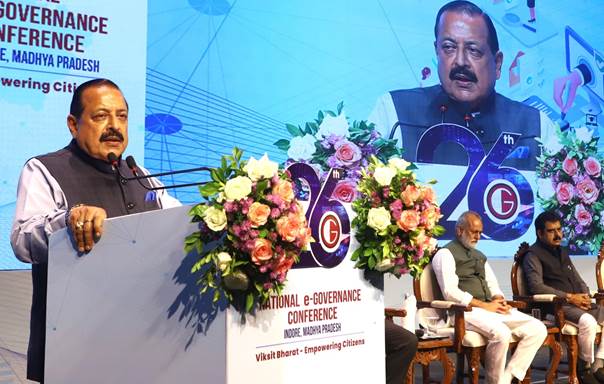
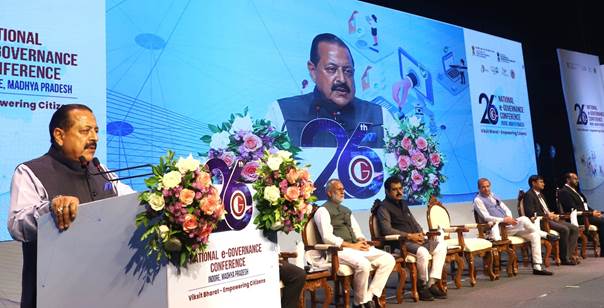
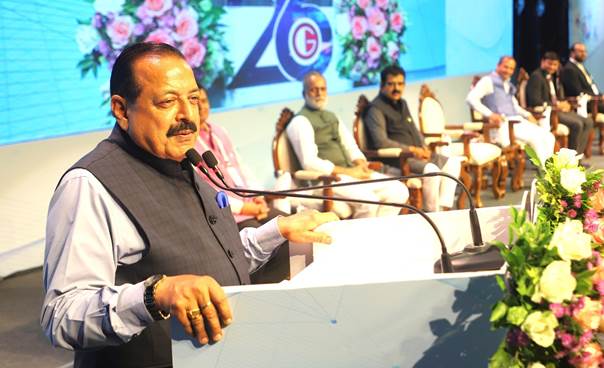
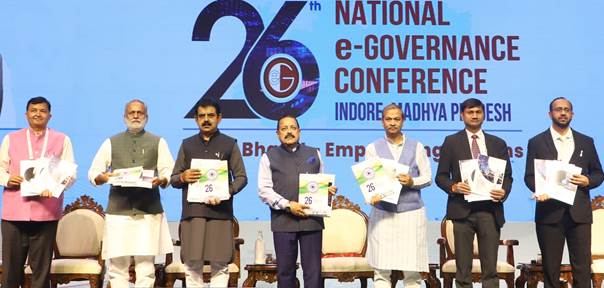
The Union Minister of State (Independent Charge) Science & Technology; MoS PMO, Personnel, Public Grievances, Pensions, Atomic Energy and Space, was addressing the Valedictory Session of the two-day 26th National Conference on e- Governance in Indore.


Dr Jitendra Singh said PM Modi has broken shackles of the past and set India free on the path to development.

“PM Modi opened the Space sector, and today there are more than 150 private Startups,” he said.

Dwelling on Administrative Reforms, Dr. Jitendra Singh said many reforms have been initiated by PM Modi in the last nine years.

“During the Covid period, life came to a standstill, but there was no delay in the Government of India’s administrative machinery, because we had already gone digital while others were just preparing for it,” he said, referring to transfer of benefits to the common man through DBT.


Dr Jitendra Singh said the Prime Minister gave us the mantra of ‘Minimum Government – Maximum Governance’. The DARPG took initiatives such as the practice of Attestation by Gazetted officers was done away with, Interviews were scrapped abolishing malpractices. Most of the functioning was converted online and in order to bring in transparency, accountability and citizen participation, the human interface was reduced to the bare minimum.

The Minister said, DoPPW introduced Digital Life Certificate (DLC) and later the Aadhar based scheme for online submission of DLC. Initially submission of DLCs was through biometric devices and now the Face-Authentication Technology-based system based on UIDAI Aadhaar software has been introduced.


Speaking about the transparency and accountability in the governance, the Minister said that the benchmark for clean and effective government is the robust grievance redressal mechanism. The CPGRAMS receives about 20 lakh grievances every year in comparison to just 2 lakhs annually earlier because this government followed a policy of time bound redressal and gained the confidence of the people.

Dr Jitendra Singh listed DigiLocker and SVAMITVA scheme bringing transparency in land registry, among technology driven reforms towards Ease of Living.

“Our goal is to gear up and work towards making India a developed nation by 2047, and we will accomplish this with speed and scale, leveraging the potential of digital transformations in e-governance,” he said.


***

G20 Culture Working Group (CWG)

 The 4th G20 Culture Working Group (CWG) Meeting will begin tomorrow in Varanasi culminating in the Culture Ministers’ Meeting (CMM) on 26th August 2023. Delegates from G20 member nations, invitee countries, and various international organizations will attend the meeting.

 Building upon the success of the previous three CWG meetings in Khajuraho, Bhubaneswar and Hampi, as well as the four Global Thematic Webinars, the 4th CWG meeting in Varanasi, from 23-25th August 2023, aims to arrive at actionable outcomes while positioning culture at the heart of policy making.

The insights and recommendations from the expert-driven Global Thematic Webinars on the priority areas of the CWG have been collated in a comprehensive report titled “G20 Culture: Shaping the Global Narrative for Inclusive Growth”. This insightful report, by India’s G20 presidency’s Culture Working Group, will be launched in Varanasi as a part of the Culture Ministers’ Meeting.

 The Culture Ministers’ Meeting in Varanasi will aim to catalyze collective actions for accelerating progress on the four priority areas articulated by the Indian Presidency- Protection and Restitution of Cultural Property, Harnessing Living Heritage for a Sustainable Future, Promotion of Cultural and Creative Industries and Creative Economy, and Leveraging Digital Technologies for the Protection and Promotion of Culture.

The CWG, under India’s G20 presidency, had launched the ‘Culture Unites All’ campaign to highlight India’s unwavering belief in multilateralism based on peaceful coexistence among diverse cultures and communities. The CWG is releasing a special stamp to commemorate the campaign on 26th August 2023. The ‘Culture Unites All’ postage stamp has been crafted as a distinctive emblem combining the ideas of connectivity, communication, and journey representing a cultural exchange and establishing cultural context.

 During the meet, the delegates will have the opportunity to experience world-renowned Ganga Aarti on the banks of the river Ganga, and explore the beautiful history of the lion capital of Sarnath. The G20 Global Orchestra performance titled “Sur Vasudha” celebrating the rich musical knowledge and heritage of G20 member nations and invitee countries will be presented in Varanasi. The delegates will also witness cultural performances including Indian classical music and dance forms during their time in Varanasi.

In 2020, under the Saudi Arabian Presidency, the Culture Ministers’ met for the first time on the side-lines of the G20. In 2021, Culture was formalised as a Working Group during the Italian Presidency, leading to the inaugural G20 Culture Ministers’ Meeting and the consequential ‘Rome Culture Ministers’ Declaration’. The ‘Bali Declaration’ of 2022 under the Indonesian presidency further stressed the role of culture in sustainable development. In Varanasi, this would be the fourth time that the Culture Ministers of the G20 members and invitee countries would be meeting.

***

G20 Anti-corruption Working Group Meeting

    The Second meeting of the G20 Anti-corruption Working Group that was inaugurated on May 25 by Union Minister of State for Defence & Tourism, Shri Ajay Bhatt, concluded today in Rishikesh (Tehri).

             The meeting had wide participation from 90 delegates of 20 member countries, 10 Invitee countries and 9 International Organisations including UNODC, OECD, Egmont Group, INTERPOL and IMF. It  was chaired by Mr. Rahul Singh, Additional Secretary, DoPT & Chair, G20 ACWG and co-chaired by Mr. Giovanni Tartaglia Polcini, Head of Task Force, Co-chair, G20 ACWG, Italy and Mr. Fabrizio Marcelli, Minister Plenipotentiary, Ministry of Foreign Affairs and International Cooperation, Italy.

    Over the past three days, there have been intensive and productive deliberations on several key focal areas pertaining to Asset recovery, Fugitive economic offenders, formal and informal channels of cooperation for information sharing, institutional frameworks for combating corruption and mutual legal assistance, among others. The delegates agreed upon the three High Level Principles on ‘Promoting Integrity and effectiveness of Public Bodies and Authorities responsible for Preventing and Combating Corruption’; ‘Strengthening Law Enforcement related International Cooperation and Information Sharing for Combating Corruption’ and ‘Strengthening Asset Recovery Mechanisms related to Corruption’.  

          On the first day of the ACWG, a unique Side Event was held on ‘Gender and Corruption’. Hon’ble Minister of State for External Affairs and Culture, Smt. Meenakshi Lekhi delivered the keynote address. During this event, national and international experts and practitioners deliberated on the gendered aspects of corruption, the ways in which women’s empowerment is intrinsically linked with anti-corruption initiatives and the need for gender sensitive governance and policy making.

          The delegates got a flavour of India’s rich culture, heritage and cuisine during their stay at Rishikesh. India looks forward eagerly to hosting the delegates again at Kolkata from August 9-11 for the Third ACWG meeting. India will also host the first ever in-person Anti Corruption Ministerial Meeting to provide further impetus to the G20 agenda of bolstering the international fight against corruption.

******

G20 Meeting of Agricultural Chief Scientists (MACS)

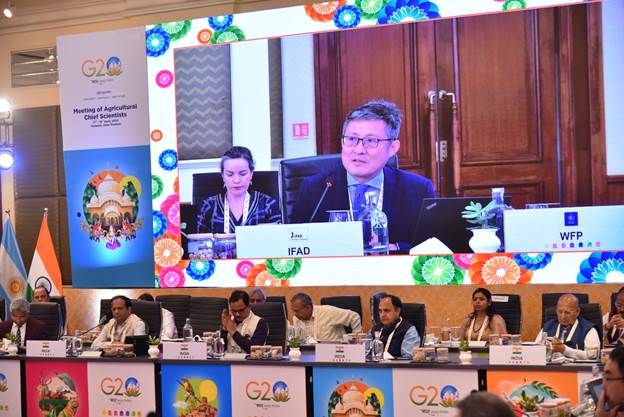
 On the second day of the G20 Meeting of Agricultural Chief Scientists (MACS) in Varanasi today, deliberations were held on Digital Agriculture and Sustainable Agri Value Chain & Public-Private Partnership in Agricultural R&D. MACS Communique was also discussed. Secretary (DARE) & Director General (ICAR), Dr. Himanshu Pathak, who is also the MACS Chair, led the discussions.

Morning session deliberations focused on Digital Agriculture and Traceability; Digital Technological Solutions for Reducing Food Loss and Waste; Agri-tech Startup Ecosystem; Pluralistic Agricultural Extension and Advisory Services (EAS): partnerships for improving lab to land and outreach, Smallholder and Family Farming: G20- Global South Cooperation for Agri-R&D, Public-private Agri-R&D for Public Goods: Experience in Generating and Accelerating Innovations.


Earlier today, a bilateral meeting was conducted with FAO. Dr. Pathak emphasized that the extension service through KVK to farmers would be a very important area of cooperation. FAO representatives also expressed keen interest in extending cooperation in extension service. Dr. Ishmahane Elouafi, Chief Scientist, FAO, and Dr. Selvaraju Ramasamy, Senior Agriculture Officer, FAO participated in the meeting.  They recognized India’s strength in the seed sector, which will be very useful to other countries.

Later in the evening the delegates visited the archaeological site and ASI Museum at Sarnath and witnessed the light and sound show.

The three-day G20 Meeting of Agricultural Chief Scientists (MACS) with the theme, “Sustainable Agriculture and Food System for Healthy People and Planet” is underway at Varanasi. The Meeting was inaugurated by the Union Minister of State for Civil Aviation, and Road Transport and Highways, General (Dr.) V K Singh (Retd) yesterday.

A session was conducted to discuss India’s initiative on Millets and Other Ancient Grains International Research Initiative (MAHARISHI). The representatives of G20 Nations, invited countries and International Organisations supported the MAHARISHI Initiative and expressed that millets being climate a smart crop and super health food, the International Research cooperation is pivotal for its promotion and adoption.

Dr. Himanshu Pathak and Mr. Philippe Mauguin, Chair & CEO, INRAE – National Research Institute for Agriculture, Food and the Environment (France) led their respective delegation in the bilateral meeting between India and France.

Both countries expressed keen interest in cooperation in the areas of climate change, crop diversification, soil & water conservation, natural farming and biofortified crops.

Last evening the delegates experienced Ganga Arati on a river cruise through the Ganges followed by an exhilarating cultural programme.

About 80 foreign delegates from the G20 Member States, Invited Guest Countries, International Organizations and Special Invitees by India are participating in the three day meeting.

On the concluding day on 19th April 2023 discussion on MACS Communique will continue.

India assumes G-20 presidency.

Indonesian President Joko Widodo officially handed over the G20 presidency to India on November 16 this year at the summit in Bali. The year-long presidency assumed by India comes at a time when the world is struck with uncertainties about recovery from a pandemic-hit economy.                                  Prime Minister Narendra Modi, in a series of tweets, highlighted the country’s commitment towards resolving challenges of “climate change, terrorism and pandemic” through international cooperation.

The main objectives of G20, according to the Council on Foreign Relations (CFR), includes policy discussion and coordination on economic and financial issues around the globe. However, over the years, the meeting has extended its aims to cover global terrorism, health and sustainable development.

The leadership of G20 rotates annually among nations, where the President nation determines the agenda of the summit held every year. Non-members, namely, the International Monetary Fund (IMF), the World Bank, the United Nations (UN), World Trade Organization (WTO), among others participate regularly in the G20 proceedings.

India assumes G-20 presidency.

Indonesian President Joko Widodo officially handed over the G20 presidency to India on November 16 this year at the summit in Bali. The year-long presidency assumed by India comes at a time when the world is struck with uncertainties about recovery from a pandemic-hit economy.                                  Prime Minister Narendra Modi, in a series of tweets, highlighted the country’s commitment towards resolving challenges of “climate change, terrorism and pandemic” through international cooperation.

The main objectives of G20, according to the Council on Foreign Relations (CFR), includes policy discussion and coordination on economic and financial issues around the globe. However, over the years, the meeting has extended its aims to cover global terrorism, health and sustainable development.

The leadership of G20 rotates annually among nations, where the President nation determines the agenda of the summit held every year. Non-members, namely, the International Monetary Fund (IMF), the World Bank, the United Nations (UN), World Trade Organization (WTO), among others participate regularly in the G20 proceedings.