TRIFED's Artisanal Treasures Steal the Spotlight at G20 Summit

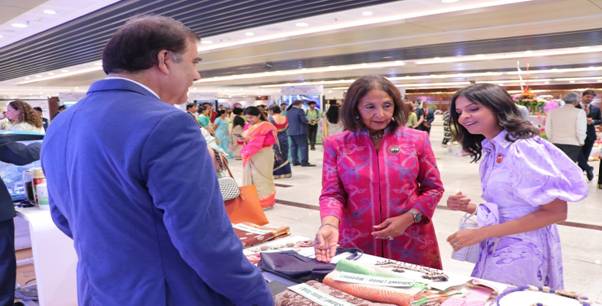
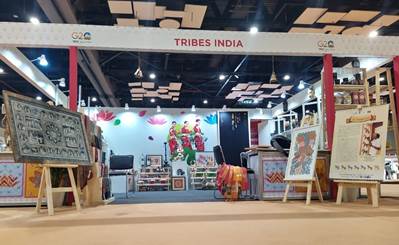
 The G20 Summit witnessed a remarkable showcase of India’s rich tribal heritage and craftsmanship, curated and presented by TRIFED (Tribal Cooperative Marketing Development Federation of India), Ministry of Tribal Affairs. Several exquisite products, handcrafted by tribal artisans from various  regions of India, captured the attention and admiration of delegates from around the  world. Acknowledged for his outstanding contributions, Shri Pareshbhai Jayantibhai Rathwa showcased his remarkable talent with a live demonstration of Pithora Art at the G20 Crafts Bazaar.
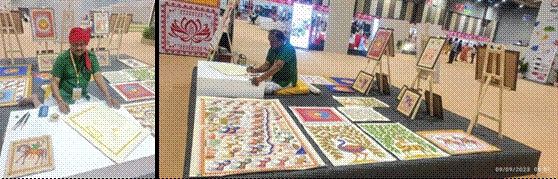
” Shri Pareshbhai Jayantibhai Rathwa showcasing his remarkable talent of Pithora Art


  Among the array of offerings, the following articles were the most reached and generated immense interest among the delegates:

  1. Longpi PotteryNamed after the village of Longpi in Manipur, the Tangkhul Naga tribes practice this exceptional pottery style. Unlike most pottery, Longpi does not resort to the potter’s wheel. All shaping is done with the hand and with the help of moulds. The characteristic gray- black cooking pots, the stout kettles, quaint bowls, mugs and nut trays, at times with a handle of fine cane are trademarks of Longpi but now fresh design elements are being introduced both to extend the product range as well as to embellish the existing pottery.
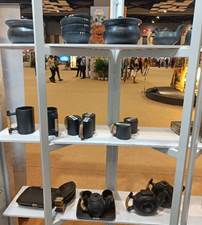
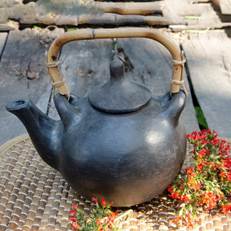
 

“Longpi Pottery is an art form that is shaping heritage, one pot at a time.”


  1. Chhattisgarh Wind Flutes: Curated by the Gond Tribe of Bastar in Chhattisgarh, the ‘Sulur’ bamboo wind flute stands out as a unique musical creation. Unlike traditional flutes, it produces melodies through a simple one-handed twirl. Craftsmanship involves meticulous bamboo selection, hole drilling, and surface etching with fish emblems, geometric lines, and triangles. Beyond music, the ‘Sulur’ serves utilitarian purposes, helping tribal men ward off animals and guide cattle through jungles. It’s a harmonious blend of artistry and functionality, showcasing the Gond Tribe’s ingenious craftsmanship.
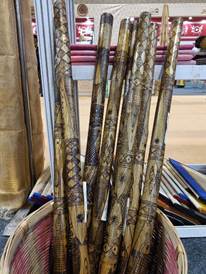
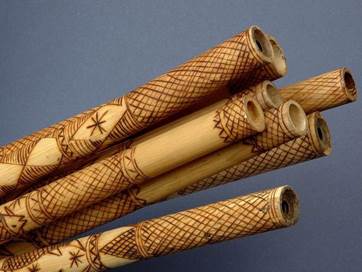


“Wind flute is a beautiful creation by the Gond tribes of Bastar in Chhattisgrah”


  1. Gond Paintings: The Gond tribe’s artistic brilliance shines through their intricate paintings, reflecting their deep connection to nature and tradition. These paintings tell stories that resonate with art enthusiasts worldwide. Gond artists have ingeniously adapted to contemporary mediums, employing unique techniques. They start with dots, calculating image volume, which they then connect to form outer shapes filled with vibrant colors. These artworks, deeply influenced by their social milieu, artfully transform everyday objects. Gond painting stands as a testament to the tribe’s artistic ingenuity and their profound connection with their surroundings.
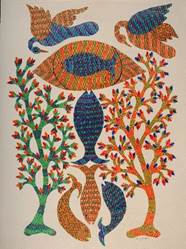
 

“Vivid Tales in Every Stroke: The World of Gond Art”


  1. Gujarat Hangings: Curated by the Bhil & Patelia Tribe in Dahod, Gujarat, Gujarati Wall Hangings, much loved for their wall-enhancing charm, stem from an ancient Gujarat art form. Crafted by the Bhil tribes of Western Gujarat, these hangings, initially dolls and cradle birds,

feature cotton cloth and recycled materials. Now, they boast mirror work, zari, stones, and beads, evolving to suit contemporary fashion while preserving tradition.
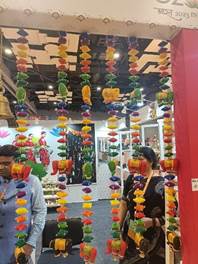
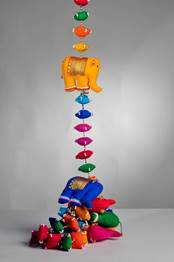
 

“Gujarat Hangings, Curated by the Bhil & Patelia Tribe in Dahod, Gujarat


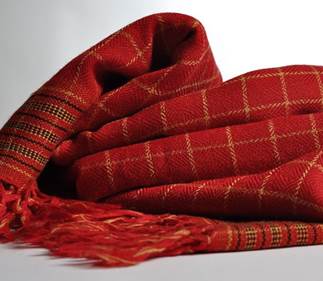
  1. Sheep Wool Stoles: Originally featuring monochromatic schemes of white, black, and grey, the world of tribal craftsmanship is witnessing a transformation. Dual-colored designs now dominate, mirroring evolving market preferences. Bodh, Bhutia and Gujjar Bakarwal tribes from Himachal Pradesh/Jammu & Kashmir exhibit their ingenuity with pure sheep wool, fashioning a diverse range of apparel, from jackets to shawls and stoles. The process is a labor of love, meticulously performed on hand-operated looms with four pedals and stitching machines. Sheep wool threads are woven into intricate diamond, plain, and herringbone patterns. 
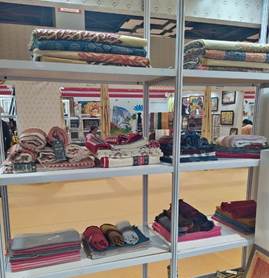
 

“Showcasing of Sheep wool from Himachal Pradesh/Jammu & Kashmir”


  1. Araku Valley Coffee: Hailing from the picturesque Araku Valley in Andhra Pradesh, this coffee is renowned for its unique flavors and sustainable cultivation practices. It offers a taste of India’s natural bounty. Cultivating premium coffee beans, they meticulously oversee the entire process, from harvest to pulping and roasting, resulting in an irresistible brew. Araku Valley Arabica Coffee, produced organically, boasts a distinguished reputation for its rich flavor, invigorating aroma, and unmatched purity.
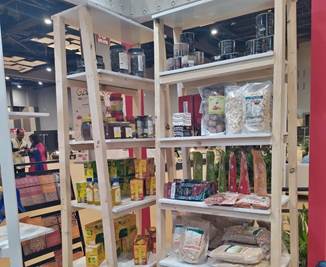
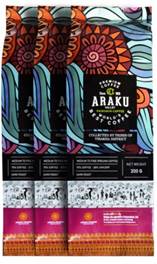


“Display of Araku Coffee & other natural products”


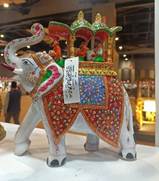
  1. Rajasthan Artistry Unveiled: Mosaic Lamps, Ambabari Metalwork, and Meenakari Crafts:

Hailing from Rajasthan, these handcrafted marvels reflect a rich tribal heritage.

Glass Mosaic Pottery captures the mosaic art style, meticulously crafted into lamp shades and candle holders. When illuminated, they unleash a kaleidoscope of colors, adding vibrancy to any space.

Meenakari is an art of decorating metal surfaces with vibrant mineral substances, a technique introduced by the Mughals. This Rajasthan tradition demands exceptional skill. Delicate designs are etched onto metal, creating grooves for colors to nestle in. Each hue is fired individually, creating intricate, enamel-adorned pieces.

Metal Ambabari Craft curated by the Meena Tribe, also embraces enameling, a meticulous process that elevates metal decoration. Today, it extends beyond gold to metals like silver and copper. Each piece reflects Rajasthan’s rich cultural legacy and craftsmanship.
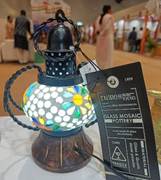
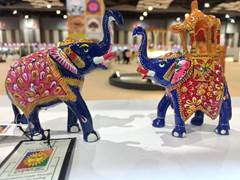


“Display of Home Décor products from Rajasthan”


These artisanal products are not just decorative items but living embodiments of India’s rich cultural diversity and heritage.


****
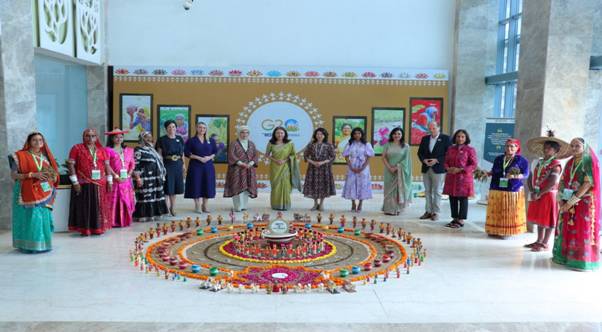
G20 Leaders’ Summit

 The first ladies and spouses of G20 member countries experienced the Agricultural prowess of India first-hand, in a one-of-akind exhibition organized by Ministry of Agriculture and Farmers’ Welfare at IARI Campus,Pusa,today. The event featured a range of captivating components, such as a millet-focused live cooking session led by celebrity chefs KunalKapur, Anahita Dhondy, and Ajay Chopra, as well as the display of cutting-edge agricultural technology from prominent Indian startups, interaction with Indian women agri-champions, ‘Agri-Street’.

The spouses made their way to the exhibition area, prior to that they had a brief pitstop at the ‘Rangoli Area’, which featured two massive ‘Millet Rangolis’. The beautiful artworks were prepared using millet grains and local Indian motifs. The first rangoli captured the theme of “Harmony of Harvest” unveiling India’s deep-rooted agricultural traditions. This installation showcased India’s agricultural strength, emphasizing women’s pivotal roles in enhancing agricultural resilience. Curated with indigenous toys symbolizing women’s diverse agricultural contributions, millets, and rustic terracotta pots, this captivating Rangoli became a major highlight of the event. The second rangoli piece echoed India’s cultural philosophy – “The World is One Family”, emphasizing global unity. India as a prominent agriculture nation, plays a crucial role in global food security. The second rangoli, thus, celebrated India’s global commitment towards unity and sustenance.

In the exhibition area, the spouses witnessed the dynamic Agri-startup ecosystem, where 15 Agri-startups showcased their innovative tech solutions to address ground-level challenges and digitize agriculture. Climate Smart Agriculture, Innovation in Agriculture Value Chain, Agri-logistics & Supply Chains, Quality Assurance for Sustainable Consumption, and Millets: Sustaining Health, Empowering Agriculture, were a few themes that were covered in the exhibition. Additionally, diverse members of Farmer Producer Organizations (FPOs) from across the nation displayed a range of edible products marketed nationwide, aligned with the theme ‘Empowering Rural Prosperity through Collective Agriculture.’

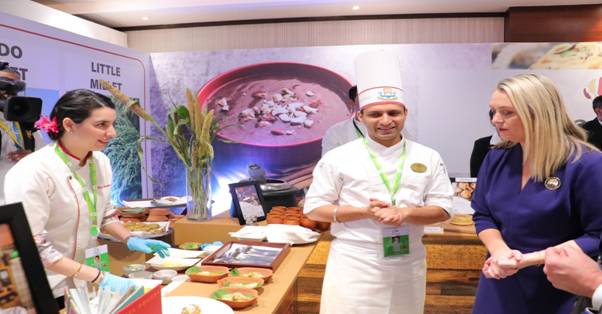
An enthralling ‘Live Cooking Session’ showcased a wide variety of millet-based culinary delights. This event was aligned with the celebrations of the International Year of Millets.It was helmed by three celebrity chefs – KunalKapur, Anahita Dhondy, and Ajay Chopra, who were joined by two culinary experts from the ITC Group, chef Kusha and chef Nikita.In the designated ‘Live Cooking Area,’ these five chefs prepared a ‘full course meal’ with a special focus on millets. This meal encompassed appetizers, salads, main courses, and desserts.

Chef Anahita, Chef Kunal, and Chef Ajay were each responsible for crafting a starter, main course, and dessert. For instance, Chef Anahita created a Raw Banana Barnyard Millet Tikki topped with puffed Amaranth. Meanwhile, Chef Kunal whipped up a delightful Jowar-Mushroom Khichda. Finally, Chef Ajay brought the multi-course millet experience to a close with a Millet Thekua and a Lemon Shrikhand Mille-feuille dessert. Within the exhibition, there was a dedicated culinary section that showcased millet-based dishes from all G20 member countries, paying homage to each nation that participated in the event.

The exhibition also highlighted India’s Research and Development achievements via the stalls presented by the Indian Council of Agricultural Research (ICAR), demonstrating the latest innovations in precision agriculture, agricultural technology, and mechanization advancements driving sector growth. Each stall showcased specific crop advancements backed by government initiatives. Some of the key stalls focused on themes like the journey of the Basmati revolution, its role in the prosperity of millions of Basmati farmers, and its status as a 5 billion USD forex earner. Another stall highlighted India’s status as the “Land of Spices” emphasizing the wide variety and global fame of Indian spices, along with future scope. A neighbouring stall provided insights into the nutritional and medicinal significance of mushrooms, their extensive diversity in India, and their potential for export. Additionally, the esteemed guests also viewed the sensor-based system that facilitated the real-time monitoring of environmental conditions during the transportation, storage, and ripening of bananas, among other interesting exhibits of ICAR.

The ‘Agriculture Street’ was another major component of the exhibition curated by the Ministry, serving as a captivating journey into India’s agricultural legacy and offering insight into its vibrant past as well as the future. Here the Ministry presented a comprehensive view of agricultural practices, uniting experts, scientists, and farmers under one roof. This street was composed of nine interactive stalls, each adorned with rustic decor, creating an immersive environment for the spouses of G20 Head of States. Here, they could explore the diverse facets of agriculture, with a particular emphasis on millets. It also highlighted India’s initiatives aimed at enhancing food and nutritional security. One of the key highlights of the Agri Gully were the exhibits of Lahri Bai, a young female farmer from Dindori, Madhya Pradesh who conserved more than 150 indigenous seed varieties including about 50 varieties of millet seeds in her two-room hut earning the title of ‘Millet Queen’ of India.

After the event concluded, the G20 Spouses received a token of appreciation in the form of a hamper. The hamper’s contents were carefully chosen to represent India’s vibrant cultural and artistic heritage. These items included handwoven stoles crafted from silk sourced from the Sal forests of Chhattisgarh, a handcrafted bell metal figurine created using an ancient lost wax technique reminiscent of the method used for the iconic ‘Dancing Girl’ artifact from the Harappan civilization (3300 BCE to 1300 BCE), and a Cheriyal Painting.

The visit provided the First Ladies and Spouses with an understanding of the progress India has made in the agricultural sector, including the area of millet farming. The women farmers who were invited from 10millet producing states which are Rajasthan, Maharashtra, Karnataka, Madhya Pradesh, Tamil Nadu, Uttarakhand, Odisha, Chhattisgarh, Bihar and Assam symbolize the grassroots-level changes occurringand interacting with them allowed the first ladies and spouses to gain insight into the evolving millet value chain in the country. Renowned chefs curated a remarkable feast to emphasize the versatility of millets and Indian cuisine to the distinguished guests, while Start-Ups and Farmer Producer Organizations (FPOs) showcased their latest technologies and products, creating a unique and memorable experience for all those in attendance.

***

G20 Summit a grand success

 The Prime Minister, Shri Narendra Modi arrived to a grand welcome in Delhi. The Prime Minister landed in Delhi from Bengaluru today  after interacting with the ISRO team in the aftermath of the successful landing of the Chandrayaan – 3 moon lander. The Prime Minister had gone to Bengaluru directly after his 4 day tour of South Africa and Greece. Shri JP Nadda welcomed the Prime Minister and felicitated him on the achievements of his successful visit and the momentous achievement of the Indian scientists.

Responding to the warm civic reception, the Prime Minister expressed his gratitude for the enthusiasm of the people for the success of the Chandrayaan-3. The Prime talked about his interaction with the ISRO team and informed  that “the point where the moon lander of Chandrayaan-3 landed will now be known as ‘Shiv Shakti’” He elaborated that Shiv denotes Shubh and Shakti exemplifies Nari Shakti. Shiv Shakti also stands for the connection of Himalaya and Kanyakymari. Similarly, the Prime Minister informed that the point where Chandrayaan 2 left its footprints in 2019 will now be called ‘Tiranga’. He said that there was a proposal at that time too, but somehow heart was not ready. He said that a quiet resolution was taken to name the point of Chandrayaan-2 only after a fully successful mission. “Tiranga gives strength to deal with every Challenge”, the Prime Minister said. He also informed about the decision to celebrate August 23 as National Space Day. The Prime Minister conveyed the greetings and congratulatory messages that the global community showered to India during his visit.

The Prime Minister said that India is creating a new impact on the basis of its achievement and successes and the world is taking note.

Mentioning his visit to Greece, first in the last 40 years by an Indian Prime Minister, PM Modi highlighted love and regard for India in Greece and said that in a way Greece will become India’s gateway to Europe and will be a strong medium for robust India EU relations.

The Prime Minister stressed the need to take the youth’s involvement in Science further. Therefore, he said there is a need to see how space science can be leveraged for good governance and ease of living for the common citizen. He reiterated his decisions to deploy government departments in finding out ways of leveraging space science in service delivery, transparency and perfection. For this Hackathons will be organized in the coming days. 

The Prime Minister said that the 21st century is technology driven. “We have to move on the path of science and technology more firmly in order to achieve a Viksit Bharat by 2047”, he said. In order to instil scientific temper among the new generation, the fervour generated by the Chandrayaan success needs to be channelled into Shakti. For this a quiz competition will be organized on MyGov from September 1. New National Education Policy also has ample provisions for science and technology, he said.

The upcoming G-20 Summit, the Prime Minister said, is an occasion where the entire nation is a host but the maximum responsibility falls on Delhi. “Delhi has the good fortune to get an opportunity of keeping the flag of nations’ prestige flying high”, Shri Modi said. He emphasized that Delhi needs to follow the tradition of ‘Atithi Devo Bhava’ as this is a critical occasion to show the hospitality of India. “There will be a lot of activities between 5-15 September. I apologise in advance for the inconvenience that may be caused to the people of Delhi. As a family, all the dignitaries are our guests and we have to make our G20 Summit grand with collective efforts.”

Talking about the upcoming Raksha Bandhan and Indian tradition of treating Moon as a brother of Mother Earth, the Prime Minister called for a happy Raksha Bandhan and hoped that the fun filled spirit of the festival introduces the world to our traditions. He said in the month of September, the people of Delhi will give new strength to the achievements of our scientists by making the G20 Summit  a grand success.

***