The Quit India Movement Day

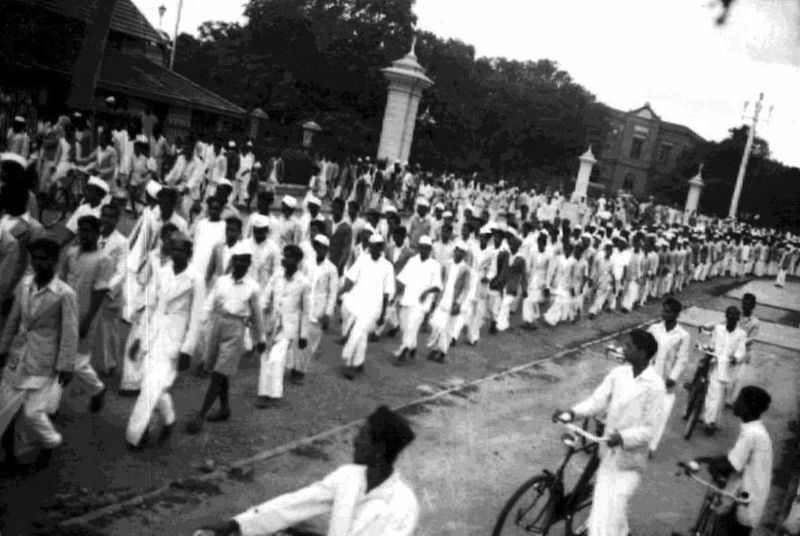
August 8th marks a very iconic day in Indian history. The Indian National Congress declared its ultimatum for the British to leave India. This movement in itself had contested set of consequences – the strengthening of the Muslim League, the rise of freedom struggle motivated Subash Chandra Bose to invade the British camps in Noth East and Gandhi, for the fist time in his career was willing to go agressive even if he had his own definitions of the word – when he announced, “karo ya maro” (Do or Die).

Quit India Movement: Who gave the slogan 'Do or Die' - Oneindia News

The Quit India movement came up at the heels of the failure of the Cripps Mission that was sent by the Raj to secure Indian cooperation towards the British war efforts in the second world war. The leader of the mission, Sir S. Cripps was left wing British statesman who was sympathetic to the cause of Indian self rule but was also a member of the war cabinet of 1942.

The proposals of the mission were refused by the Congress which had seen similar proposals in the first world war where the Raj had promised more autonomy but ended up imposing harsher taxes that resulted in the Non-Cooperation movement, the Rowlatt and Jalia Walah Bagh massacres. The Indian National Congress resigned from its positions in all provincial governments and announced the Quit India Resolution that led a national movement that was difficult for the British to look after in the face of the then ongoing second world war. Virtually all of the INC leaders were jailed for the next three years and the Muslim league got enough time to build itself a support that shook the years Gandhi had spent projecting himself and his colleagues as leaders of a secular, united state of India. To add to it was the vehement opposition Hindu nationalists showed to the movement where many, including the Hindu Mahasabha and Veer Savarakar denounced the movement pointing out to the power vacuum it might cause and quite correctly predicitng the Muslim League partially filling the same.

The British soon left the subcontinent – too weak due to the war to control a population that was showing both civil disobedience and had an army of its own – a reference to the insurgency and attacks the INA had started in the Raj’s territories.

The Quit India movement – with all its pros and cons and consequences formed a very important phase in the history of modern India.
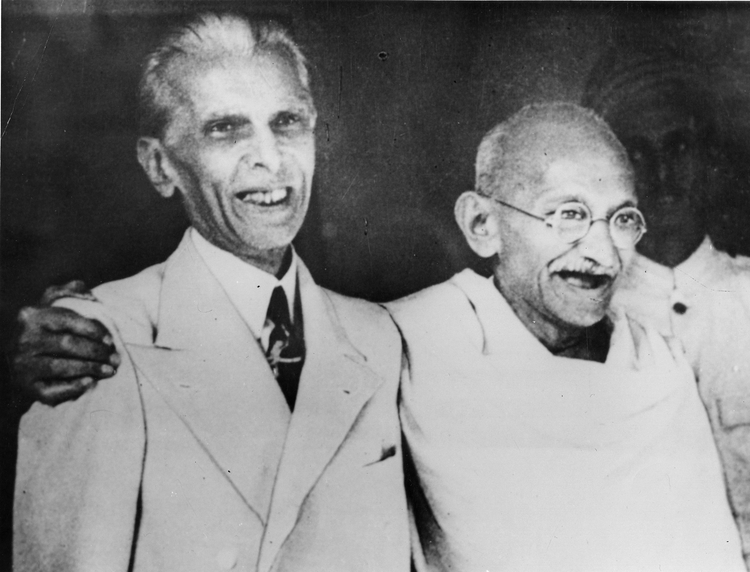
Jinnah expected India and Pakistan to be best of friends - Telegraph India
Jinnah and Gandhi had quite different outlook and faced different consequences due to the Quit India Movement – one failed in his projection of a secular and inclusive India, the other successfully used it to campaign for Pakistan

India and her Handlooms

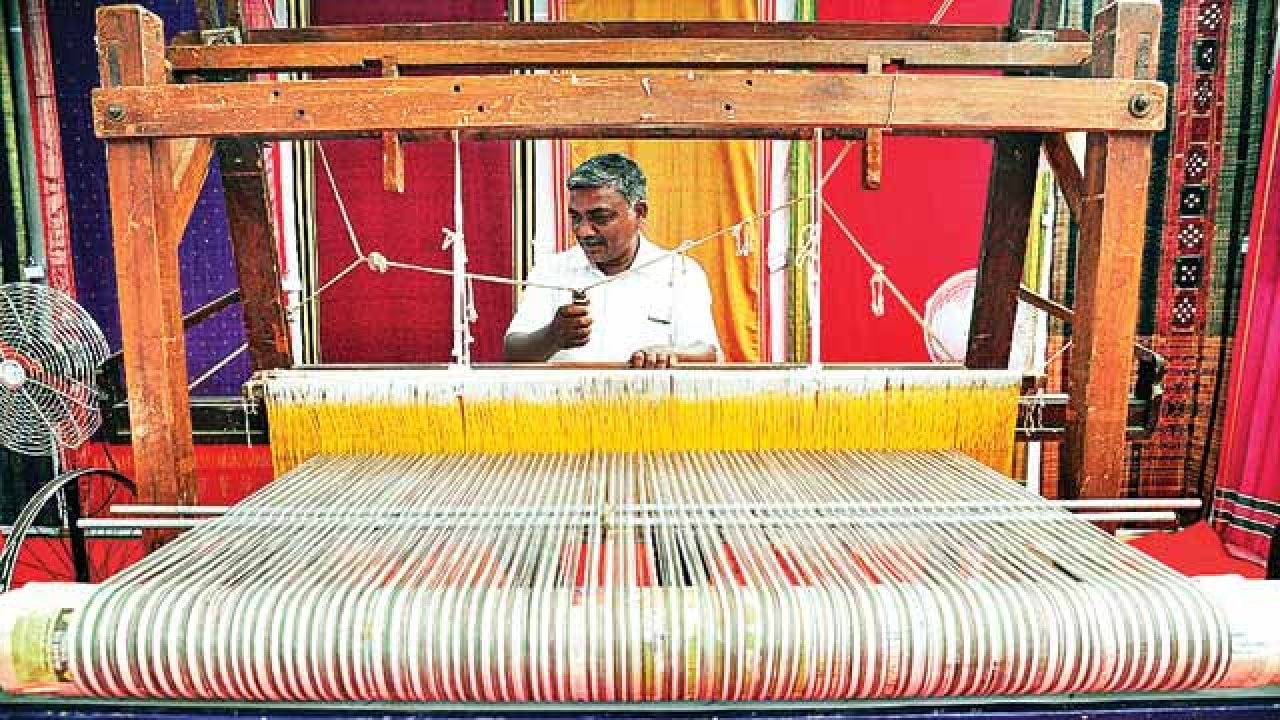
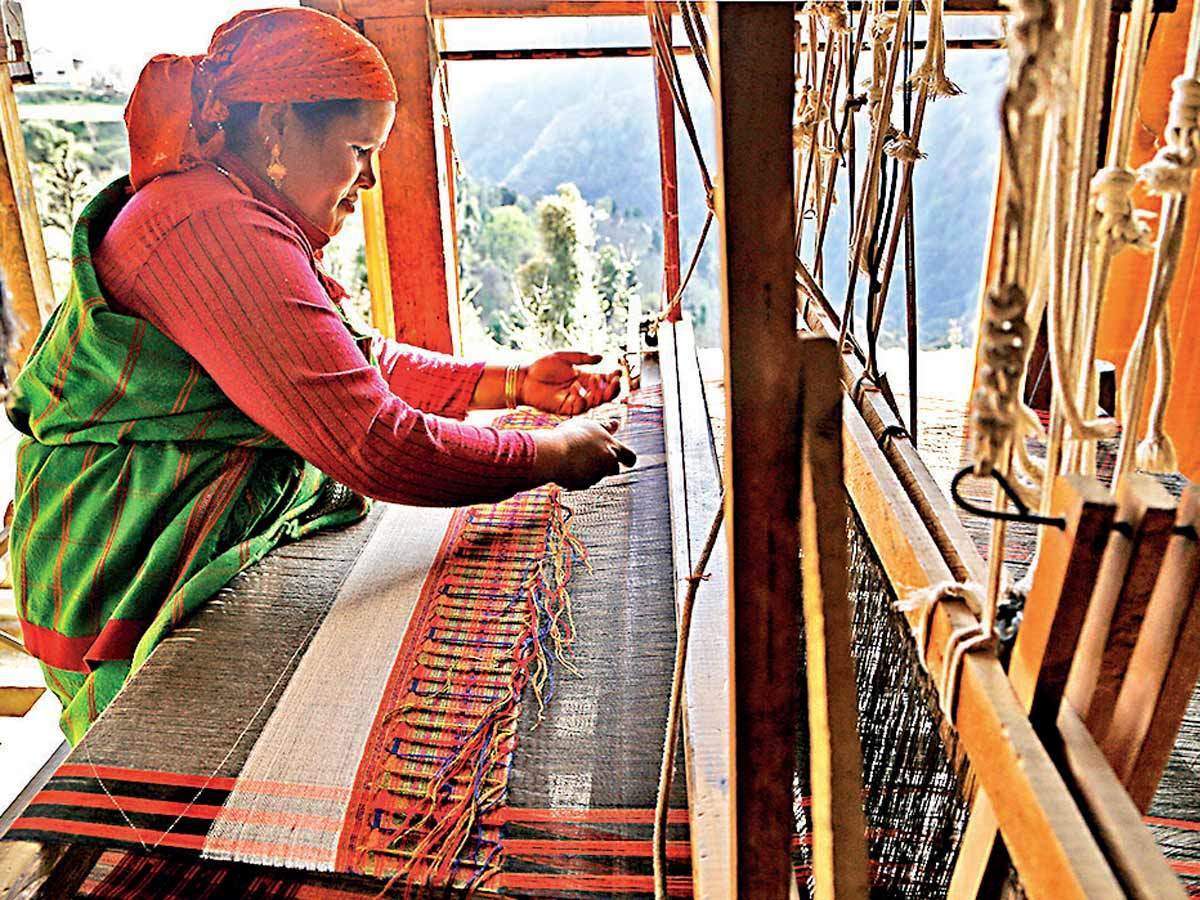
Indian handloom industry saw a reduction in 30% of its trade in the year 2020. This means that the already struggling industry will see further cut in costs. There is an urgent need to innovate new ways to market the goods it produces. The modern state of India still has one of the largest employed workforce in the textile sector, and a large part of it is the handloom industry – which is mostly worked in by the artisans who are either poor or are working hard to preserve their traditional way of manufacturing clothes and designs. For India presents a rainbow in manufacturing methods – right from the famous Benarasi Saree to the now almost extinct methods of making silk and woolen garments in the remote hills of Ladakh and Kashmir.

Cotton has been cultivated in the Indian subcontinent for over 3000 years. And that is probably also the age of a rich tradition of fabric making. With the advent of the bronze age through the influx of Greco-Roman, Mongol, Iranian, Vedic and Afghan cultures into the modern age of Mughals, Marathas, British and later the republic of India and her neighbours – the Indian textile industry has seen a plethora of changes and demand.

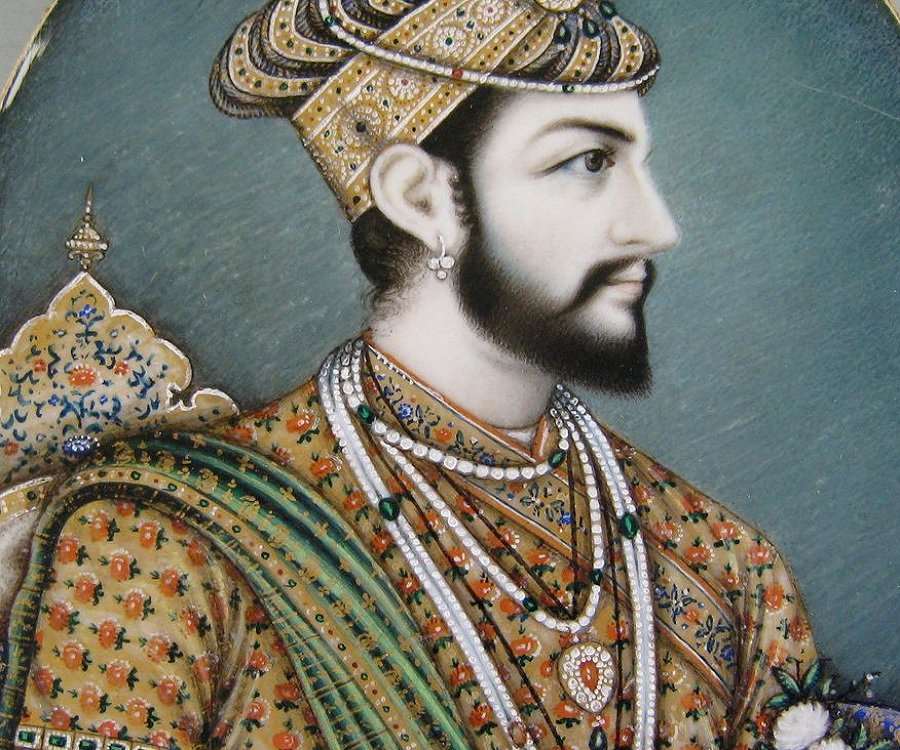
Shah Jahan Biography - Childhood, Life Achievements & Timeline
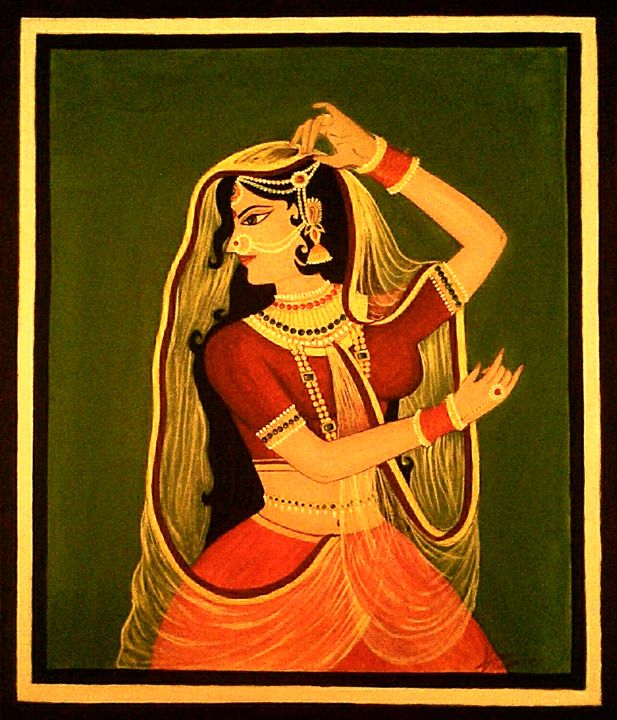
Queen of royal India - SSK Art Gallery - Paintings & Prints, Ethnic,  Cultural, & Tribal, Asian & Indian, Indian - ArtPal
From dhotis and sarees to kurtas and Salwars – India has seen a plethora of changes in its clothing culture.
India's handloom export declined by 30% within a year: Text Min statistics
Social enterprises looking at innovative ways to revive handloom sector  post-lockdown - The Economic Times

Handloom has a great symbolic importance to India. For it was the first Industry that stood as a symbol of self-reliance during the British Raj resistance period, a rhetoric the current Indian Prime Minister used in his Atmanirbhar Bharat campaign. After all, if it were not for Indian fabric – the famed Muslins and Pashminas and Indian spices – the British would have had to search for other reasons to come and settle in a land so very far away from their motherland.

Cherishing the charkha | Indian Link
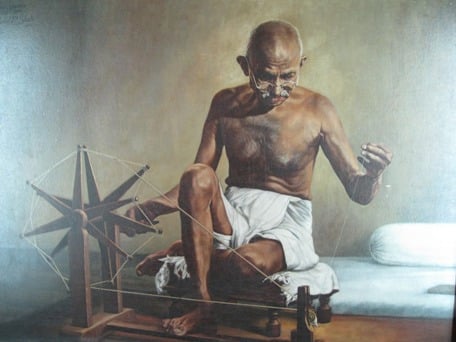
Gandhi used handloom as a symbol of self reliance

7th August marks the National Handloom day – a day dedicated to an industry that is rapidly finding itself in a stage where only the ones who are super-nationalist and the rich opting for it. Handloom products are often costly than the cheap produce of the machines that invaded the textile industry 200 years ago, effectively ushering in the Industrial Revolution in the 17th century England.

Back to India, here is a list of some famous Indian handloom industries and the cities in which they are concentrated.

  1. Varanasi – The famed Banaras Silk sari is the prized possession of many north Indian women as that is the standard sari of the bride in marriages in households that can afford them. And yet, the Benarasi artists are increasingly been replaced by machines that are producing cheaper saris though with reduced finesse. To add to it is the Zamdani works on cotton fabric, quite endemic to the city.
  2. Jaipur – Jaipur and its handloom industry have the royal family of Jaipur as its patrons. There are establishments and shops that were opened by the last Rajmata of the city, Gayatri Deviji to promote local industries. To add to that is the already existing tradition of Bandhni, Zari and Patti works.
  3. Surat – One of the oldest textile industries that were spotted and used by the local rulers and the British alike. The silk industry in Surat is one of the largest of its kind in the country.
  4. Kota – The tuition capital of the country is also home to the Kota Doria, Gotta Patti and the Kota weave artisans.
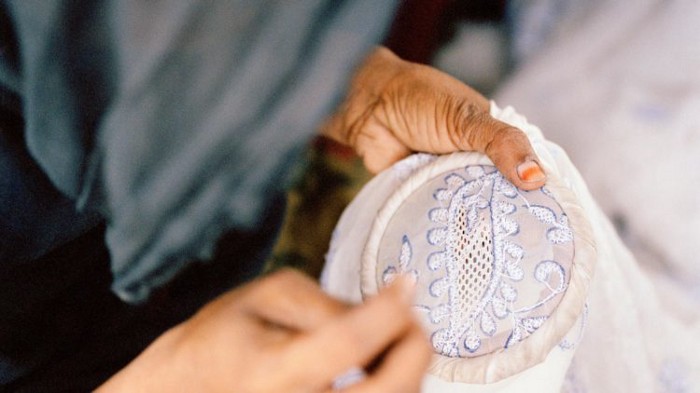
  5. Lucknow – The city has an industry that keeps alive the times when nawabs ruled over the city of Lucknow, the then capital of the Awadh state. Most famous of its local weaves is the Chikankari work.
  6. Bhadohi – The small town is only 40km from Varanasi and has been the centre of Indo-Persian carpet work since the era of the Mughal Emperor Akbar and has the largest carpet making industry in the country.

Well, there are many more of such cities and villages when one researches about them. Many of the ingenious art forms that are involved in making clothes are dying with less than 50 families left that carry forward the tradition. The sad part – machines cannot replicate that finesse. Such is the case of the wool and silk industry in the Gharwal and Kashmir valleys.

After the pandemic or even during it, let us and our government support this remnant of our history, our art, our tradition and a symbol of first instance of our modern industrial self reliance.

Gandhi’s Concept of Bread Labour and Sarvodaya

Mahatma Gandhi are one of the legend figures associated with India and it’s Independence. Born on 2 October 1869, Gandhi Ji always stood strong about their principles. Two of their very famous principles; Bread Labour and Sarvodaya are explored in this article.

Bread Labour is a concept that is referred to as a blessing to those who observe non-violence and worship truth. When we talk about labour there exists two types of labour, manual labour and intelligence labour. Manual labour, as the name suggests refers to work that includes physical handwork like carpentry or labours that help in construction works. Intelligence labour talks about work that uses the intellect of a human being for example scientists, teachers, salesmen etc.

Gandhi advocated that an individual must labour to fulfil their daily needs and desires but along with this the individual should also make use of their intellect to help others and provide service to mankind. E.g. NGOs, social workers who labour for the well-being of others.

Gandhi ji first practiced the ideal of Bread Labour in Phoenix Settlement and Tolstoy farm in South Africa. Bread labour was a compulsion for certain hours of every day in the ashrams and people performed activities like agriculture, dairying, weaving, carpentry etc.

When Gandhi ji returned to India he continued with the bread labour concept in his Sabarmati Ashram along with providing people with basic educational activities. The reason why Gandhi ji strongly believed in Bread Labour and encouraged it was because he believed that upon the adoption of bread labour, we will have a classless and casteless society.

Gandhi ji also said that a rich man cannot forever be happy with his riches and will someday get bored of them.  And that this rich man will be able to understand others and feel satisfied only when he takes upon physical work and engages in the activity of bread labour.

In his concept of Sarvodaya Gandhi ji explores a more a comprehensive, social, economic, political, moral and spiritual philosophy.

Sarvodaya is a term meaning ‘Universal Uplift’ or ‘Progress of All’. It is based on the principle of duties rather than rights of individuals. It lays great emphasis on moral and spiritual values. It seeks to create new social and economic values.

The term was first coined by Mohandas Gandhi as the title of his 1908 translation of John Ruskin’s tract on political economy, “Unto This Last”, and Gandhi came to use the term for the ideal of his own political philosophy.

Gandhi advances the concept of Sarvodaya, which were the based on three basic principles:

  1. That the good of the individual is contained in the good of all.
  2. That a lawyer’s work has the same value as the barber’s in as much as all have the same right of earning their livelihood from their work.
  3. That is a life of labour, i.e., the life of the tiller of the soil and the handicraftsman is the life worth living.

Gandhi ji were of the firm view that the earth provides enough to satisfy every man’s needs, but not for every man’s greed. The concept of possession yields places to the concept of trusteeship. In the Sarvodaya society of Gandhi ji’s dream, therefore, every member will be free from any greed for limitless acquisition of material wealth and more and more luxurious living and they will follow the motto of simple living and high thinking. Everyone will, thus, get ample opportunity to produce and earn sufficiently through honest work for decent and dignified living. Consequently there will be no problem of unemployment.

In short we can say that the concept of Sarvodaya and Bread Labour is for the betterment of the society and holds a significant role even today in its application.