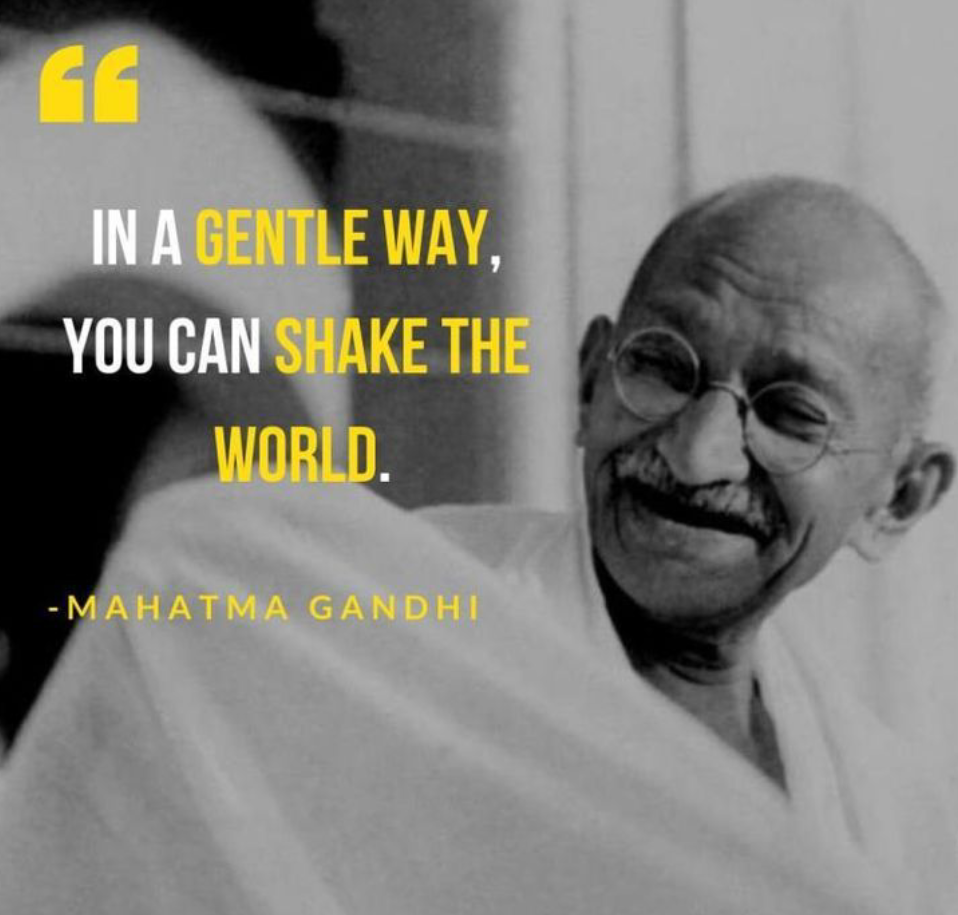
What is the Biography of Mahatma Gandhi?

I would like to ask you some questions first. What happened in the life of Mahatma Gandhi? How many struggles did he face? How did he passed away? Do you know the answer to all this? We are going to read the answers in this article. Let’s start reading the article.

In this we will see in detail about Mahatma Gandhi who was born as a human being and transformed himself into a ‘Great Man’ in accordance with the words in Tirukkural ” If man you walk the stage, appear adorned with glory’s grace. “

Gandhi’s birth and adolescence 

Gandhi was born on October 2, 1869 in Porbandar, Gujarat. His father’s name was Karamchand Gandhi and his mother’s name was Putlibai. He learned to pay divine feeling and love to his mother. He later earned his title of barrister in England. At the age of 12, he married Kasturba. But then at the age of 19 he went to study barrister.

Gandhi’s mental strength and self-awareness

Anything born as an organism has a kind of mental strength and self-awareness. Time can put it off if desired. Thus many events took place in the life of Gandhiji. He worked as a lawyer in South Africa from 1893 to 1914. He was heartbroken to see that there were racist policies against Indians in British-dominated South Africa. Gandhi was once denied that he could not be given the opportunity to get a ticket to travel in a first class compartment while traveling by train. He was not allowed to sit in the train on another trip when he was so thoughtful about it. But he struggled and eventually sat down with the driver and traveled. When the driver asked him to get off, he refused.

The struggles waged by Gandhiji


He started a “Civil disobedience movement” against the British there because of the many atrocities he witnessed while in South Africa. Gandhi returned to India after 1914 and took the field in the Indian independence struggle. After the demise of Bal Gangadhar Tilak, he assumed the responsibility of leading the Indian freedom fighters. But unlike Tilak, he did not follow extremist methods but followed a non-violent system called moderation. He also accepted Gopal Krishna Gokhale as his guru for his struggle. 

He opposed the laws of England by using the Rowlatt Act in an oral way. He spoke out against not only the British but also the atrocities such as sectarianism, untouchability and feminism that had plagued the Indians at the same time. 

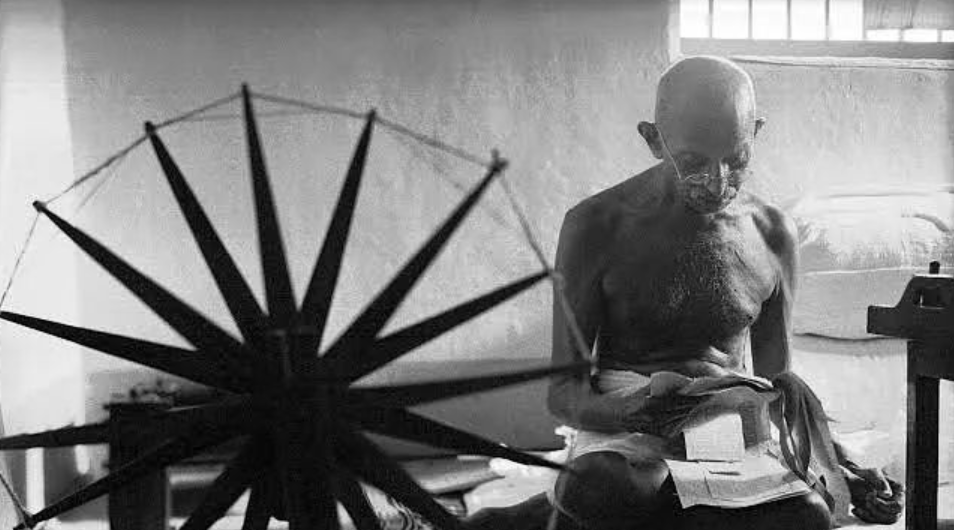
He wore Khadar clothes to support the Swadeshi movement. On March 12, 1930, he launched the Non-Cooperation Movement against the British. On April 6 of the same year he staged a salt satyagraha with 2500 volunteers against the tax on salt. In 1942, he launched the ‘Quit India Movement’ movement.

Victories achieved by struggles

He started the ‘Civil Disobedience Movement’ against the South Africans. So got the rights for Indians in South Africa. August 15, 1947 was declared our Independence Day because of the determination of the British Government to liberate India as a way of fighting ‘Without a knife and without blood’. 

On January 30, 1948, one of us, ‘Godse’, shot and killed our Gandhiji, who loved the Indian nation and people very much and lived for us. Gandhiji even forgave the one who shot himself. One cannot talk about Gandhiji who lost all his body, substance and spirit for others by proving that man can become Mahatma through his activities. But we must try, that we may live in his way. This is the duty we owe him.

GANDHI JAYANTI

The birthday of Mohandas Karamchand Gandhi is celebrated as ‘Gandhi Jayanti.’ On October 2nd, 1869, India’s “Father of the Nation,” Gandhiji, was born. Thus, every year on October 2nd, Gandhi Jayanti is commemorated. In India, Gandhi Jayanti is observed as a public holiday. The International Day of Non-Violence is observed on this date around the world. Mahatma Gandhi’s contribution to Indian politics is incomparable. Gandhi suffered and was imprisoned multiple times throughout the tumultuous days of the campaign for Indian independence, but freedom for his motherland remained his cherished objective. He was a key figure in several freedom fights and was the founder of the “Quit India Movement.”

ABOUT MAHATMA GANDHI:

On October 2, 1869, in Porbandar, Gujarat, India, Mohandas Karamchand Gandhi was born. His father was the dewan (chief minister) of Porbandar, and his deeply religious mother was a staunch follower of Vaishnavism (the worship of the Hindu god Vishnu), influenced by Jainism, an ascetic faith built on self-discipline and nonviolence. Mohandas Gandhi left home at the age of 19 to study law at the Inner Temple, one of London’s four legal schools. In mid-1891, he returned to India and opened a law office in Bombay, but it was a flop. He quickly took a job with an Indian company, which dispatched him to its South African branch. Gandhi stayed in South Africa for approximately 20 years with his wife Kasturbai and their children. Mohandas Karamchand Gandhi, also known as Mahatma Gandhi, was a well-known freedom activist and a significant political figure in India’s fight for independence from British control. He was also known as the country’s founding father. He had, without a doubt, made a difference in the lives of India’s impoverished. Every year on Gandhi Jayanti, his birthday, is commemorated. Many people were impacted by his idea of truth and nonviolence, which was embraced by Martin Luther and Nelson Mandela for their respective battle movements.

SIGNIFICANCE OF MAHATMA GANDHI AND GANDHISM:

Mahatma Gandhi was a pivotal figure in both the Indian Independence Movement and the Indian National Congress, and is considered one of the most influential figures in Indian history. Gandhi was born in the city of Porbandar, in western British India, on October 2nd, 1869. Mohandas Karamchand Gandhi was his birth name. He was given the epithet ‘Mahatma’ later in life, which means ‘Great Soul,’ and refers to his role in assisting India in gaining independence from Britain.

“I have nothing new to teach the world. Truth and non-violence are as old as the hills. All I have done is to try experiments in both on as vast a scale as I could.” – M K Gandhi

Gandhism is an amalgamation of Mahatma Gandhi’s ideals and practices, as well as his activities, in plain and simple terms. It comprises of Mahatma Gandhi’s thoughts, which he gave to the world, and his acts, which he termed as “truth experiments.” We know that he lived his life to the fullest extent feasible in accordance with his principles; therefore, people who believe that Gandhism is defined solely by his ideas are mistaken. Mahatma Gandhi cannot be compared to Karl Marx, whose ideas are referred to as Marxism. It would be incorrect to label the Mahatma’s views as Gandhism because he was also a man of action.

Are Gandhian principles relevant today?

Gandhiji was a national leader of India who forced the Britishers to leave India without resorting to violence. He is regarded both as a transformational leader and a leader of the masses. Every year on 2nd October, we celebrate Mahatma Gandhi’s birth anniversary and recall his principles and philosophies. It is a fact that Gandhiji adhered to his principles of non violence, truth and satyagraha with utmost sincerity to achieve his goals. Many people argue that all his principles hold good in today’s world. We all have moved years ahead with lots of changes in lives, innovations in science and technology, vivid variety of lifestyles. Here the point is if the principles and ideologies of Gandhi are still relevant or practical in modern world or not.

YES

•Gandhiji’s principle are valid and everlasting His principles are based on truth and non-violence are the base of civilized human society. He practically proved to the whole world that a war can be fought without indulging in violence. In modern world violence is increasing rapidly. Nuclear weapons and terrorism are becoming common these days. More and more People are resorting to violence and divided into religious and ethnic compartments. We need guidance and the direction to save the world from this desperate situation.

• Gandhiji is an inspiration to international leaders also.

Gandhian principles are followed not only by national leaders but also by some eminent foreign leaders like Dalai Lama, Barack Obama, Martin Luther King Jr, Nelson Mandela etc.

• Gandhi’s principles of economic independence valid even today

Even today, our Prime minister has launched a programme ‘Make in India’ which very much reflects Gandhiji’s principles of spinning Khadi and giving employment to thousands of poor people.

NO

• Violence multiplies on being non-violent

In today’s era, violence can best be answered by violence. Those who remain silent when treated with violence suffer even worse if they do not fire back in the same way.

• Modern culture outplays Gandhian swawlambi philosophy

In today’s modern world, trends and fashion have taken a new shape and so people wear trendy outfits and by no means they are restricted to use self made khadi clothes as part of ‘Swawlambi’ philosophy of Gandhiji.

• Principle of truth not valid today

In a world where money is the most important part of life, big business houses and capitalists thrive on lies to make huge profits. Advertising agencies most of the time try to cheat people by projecting false claims. Today values and meaning of the success are far more different from the values of Gandhiji.

To conclude we can say that some of Gandhian principles are relevant even today, though some of them have become outdated and irrelevant. The principle of non violence cannot be ignored. Gandhiji’s vision cannot be ignored as they form the very base on which a new generation of decision makers must adapt in order to compete on the global level. If the energy of the youth can receive honest and selfless motivation and direction from the experienced then India can surely progress. Gandhi’s vision should not be lost in religious, political and emotional fervours. It must be reorganized and reconstructed for a brighter and logical future.

Thank you for reading. Have a nice day! 🌼