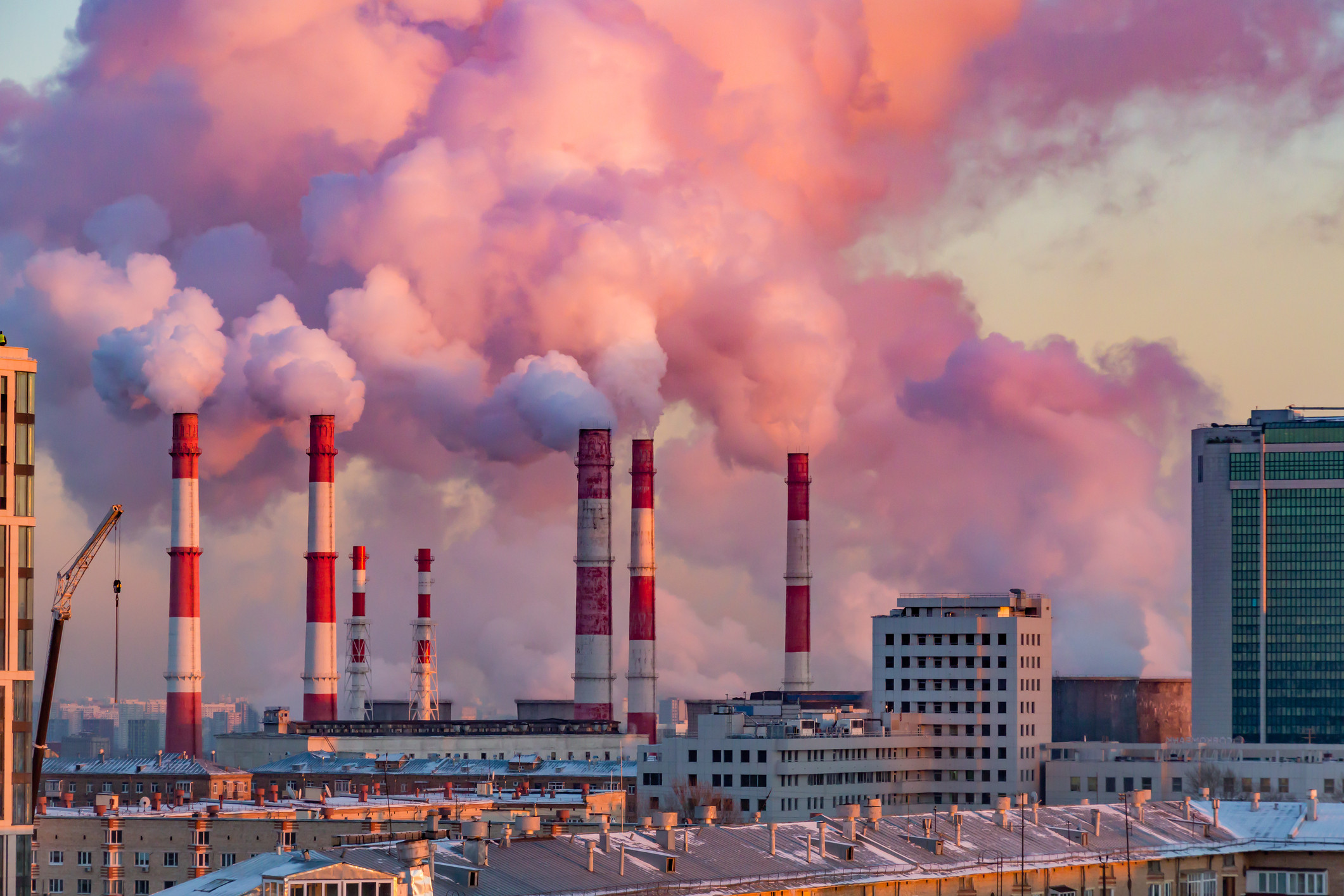
AIR POLLUTION

Pollution

Any undesirable changes in the physical, chemical or biological characteristics of any component of environment i.e. air, water and soil – which can cause harmful effects on various form of life or property are called environmental pollution.

Any favorable unpolluted environment has pertains a specific composition in their component i.e. air, water and soil.

The problem like pollution come into existence due to short-term economic gain over long-term ecological benefits for humanity.

During last few decades we have contaminated badly on air, water and land on which life itself depends with a variety of waste products.

Be the part of Solution , not the part of Pollution…

We can survive without food for a few days, without water for few hours but without air it is impossible to survive for few min.

An average human require about 12 Kg of their each day which is nearly 12 – 15 times greater than the amount of food we eat.

Types

  1. Air pollution
  2. Water pollution
  3. Soil pollution
  4. Marine pollution
  5. Noise pollution
  6. Thermal pollution
  7. Nuclear hazard

Air pollution

Air pollution started from very beginning of human evolution. Hippocrates had mentioned air pollution in 400 BC.

  • Any undesirable changes in physical, chemical or biological characteristics of any component of the in air which can cause harmful effect on living things is called Air pollution.
  • Earlier the air pollution is caused only by burning of fire word as a means of cooking and heating.
  • With the industrial revolution the problem become more serious due to cold burning in the industries and development of Transportation system leads to large amount of petrol and diesel was started utilising in the beginning of 20th century.
  • Severe air quality problem due to diesel and petrol engines were felt for the first time in Los Angeles in1943.
  • The gaseous pollutants include oxides of sulphur, oxides of Nitrogen, carbon monoxide, volatile organic compound, Ozone etc.
  • Particulate pollutants includes smoke, soot, fumes, aerosoles, liquid droplets, Pollen Grain etc.
  • Radioactive pollutants include Radon222 , Iodine 131, Strontium 19 plutonium 239 etc.

Greatest industrial disaster leading to serious air pollution took place in Bhopal were extremely poisonous methyl isocyanide gas was accidentally released from union carbide pesticides manufacturing plant on the night of 3rd December 1984, the effect of this disaster on human health and the soil are felt even today.

Now we know this tragedy as Bhopal gas tragedy.

The London smog was the major disasters were recorded in 1952 which cause more than 8000 deaths due to accumulation of air pollutants over the city for 5 days.

Primary pollutants – primary pollutants are emitted directly from the point source (natural or human activities).

  • Five primary pollutants together constitute 90% of the Global air pollution
    • Carbon dioxide
    • Carbon monoxide
    • Sulphur oxide
    • volatile organic compound mostly hydrocarbon
    • suspended particulate matter

Secondary pollutants – secondary pollutants formed by the interaction of primary pollutants. example – peroxyacetyl nitrate, smog, Ozone, sulfuric acid, nitric acid, carbonic acid etc.

Indoor air pollution

Many people spend large portion of their time in inside the homes as much as 80% of their life.

We work study, eat, drink, sleep in enclosed environment whereas circulation may be restricted.

  • Children and Womens are more exposed to rest in indoor air pollution
  • Burning of dung cake , wood, kerosene for fuel.
  • Cigarette smoke
  • Incomplete combustion produce carbon monoxide that are injurious to health.
  • Chemical fumes from paint and solvents
  • Chemicals released from Modern building and Furnishing material

Effects of air pollution

  • Human health
  • Animals
  • plants
  • material
  • stratosphere
  • environment

Control of air pollution

  • Reduce energy uses
  • Remove pollutant generating stuff
  • Check the generation of pollutant where burned
    • Putting catalytic converter in automobiles.
  • Protect the object from pollutants
    • Coat statues with protective material.
  • Constructing walking and bicycle lanes
  • Encourage mass transportation

CHEMICAL AGENTS IN MICROBIAL CONTROL

The chemical agents are mostly employed in disinfection and antisepsis. The proper use of these agents is essential to laboratory and hospital safety. Many disinfectants are available and each has its own advantages and disadvantages, but ideally the disinfectant must be effective against a wide variety of infectious agents. The disinfectant must be stable upon storage, odorless, or with pleasant order, soluble in water and lipids for penetration into microorganisms, and have a low surface tension through that it can enter cracks in surfaces.

  1. Phenols
    In 1867, Joseph Lister employed it to reduce the risk of infection during operations and phenol was the first widely used antiseptic and disinfectant. Today phenol and phenolics such as cresols, xylenols, and orthophenylphenol are used as disinfectants in laboratories and hospitals. Lysol is made of a mixture of phenolics which is commercially available disinfectant. They act by denaturing proteins and disrupting cell membranes.
  2. Alcohols
    Alcohols are the most widely used disinfectant and antiseptic. They are bactericidal and fungicidal but not sporicidal. Ethanol and isopropanol are the two most popular alcohol germicides. Small instruments like thermometers can be disinfected by soaking them for 10 to 15 minutes in alcohol solutions. 70% ethanol is more effective than 95% as water is needed for proteins to coagulate.
  3. Halogens
    Halogens exist as diatomic molecules in the free state and form salt like compounds with sodium and most other metals. Iodine and chlorine are the most important antimicrobial agents. Spores can be destroyed at higher concentration. Iodine is often applied as tincture of iodine, 2% or more iodine in a water-ethanol solution of potassium iodide. Skin scars result and sometimes iodine allergies can result.
    Chlorine is mostly used as a disinfectant for municipal water supplies and swimming pools and also employed in dairy and food industry. It may be applied as chlorine gas, sodium hypochlorite or calcium hypochlorite, all of which yield hypochlorous acid and then atomic oxygen.
  4. Heavy metals
    Heavy metals such as mercury, silver, arsenic, zinc and copper were used as germicides and these have nit been most recently superseded by other less toxic and more effective germicides. A 1% solution of silver nitrate if often added to the eyes of infants to prevent ophthalmic gonorrhea but now erythromycin is used instead of silver nitrate because it is more effective. Silver sulfadiazine is used on burns. Copper sulphate is an effective algicide in lakes and swimming pools. The action of these heavy metals is mostly on the proteins, and they combine often with their sulfhydryl groups, and inactivate them. They may also precipitate cell proteins.
  5. Quaternary ammonium compounds
    Detergents are organic molecules that serve as wetting agents and emulsifiers and are amphipathic in nature and hence solubilize otherwise insoluble residues and are very effective cleansing agents and are efficient from soaps, which are derived from fats.
    Only cationic detergent are effective disinfectants characterized by positively charged quaternary nitrogen and a long hydrophobic aliphatic chain. They are mostly used as disinfectants for food utensils and small instruments and as skin antiseptics.
  6. Sterilizing gases
    Gases may also be used as sterilizing agents in order to sterilize many heat-sensitive items such as disposable petri dishes and many syringes, heat-lung machine components, sutures, etc. Ethylene oxide gas is used for this purpose as it readily penetrates packing materials, even plastic wraps and is both microbicidal and sporicidal and kills by combining with cell proteins.
  7. Hydrogen peroxide
    Hydrogen peroxide effects our direct and indirect actions of oxygen as it forms hydroxyl free radical which is highly toxic and reactive to cells. As an antiseptic, 3% hydrogen peroxide serves a variety of needs including skin and wound cleansing, bedsore care and mouth washing. When it is applied to a wound, the enzyme catalase in the tissue decomposes the hydrogen peroxide into water and free oxygen. The oxygen causes the wound tissues to bubble and the bubbling removes microorganism mechanically.
  8. Acids and alkalis
    Aqueous solutions of ammonium hydroxide remain a common component of detergent, cleanser and deodorizers. Organic acids are widely used in food preservatives because they prevent spore germination and bacterial and fungal growth. Acetic acid in the form of vinegar is a picking agents that inhibits bacterial growth, propionic acid is commonly incorporated into breads and cakes to retard molds, benzoic acid and sorbic acids are added to beverages, syrups to inhibit yeasts.