Gender Roles In The Indian Society .

The family is a significant foundation that assumes a focal part in the existences of most Indians. As a collectivistic culture, Indians frequently accentuate unwaveringness and association. The interests of the family normally take need over those of the individual, and choices influencing one’s very own life –, for example, marriage and profession ways – are by and large made in discussion with one’s family. Individuals will in general demonstration to the greatest advantage of their family’s standing, as the demonstration of an individual might affect the impression of the whole family by their local area.

Albeit most relatives are inside topographical nearness or part of the equivalent word related gatherings, the development of urbanization and relocation has seen more youthful ages testing these impression of family. Today, numerous individuals have broad family networks that are spread across a wide range of locales and hold various occupations. The connections an Indian individual keeps up with their more distant family abroad are regularly a lot nearer than those of a great many people in English-speaking Western social orders. Indians living abroad likewise keep up with close associations with their family staying in India through standard calls, sending settlements or visiting if conditions permit.

Family Structure

The idea of family stretches out past the normal atomic unit to include the more extensive family circle. These huge multigenerational families can likewise be fundamental to giving financial security to a person. They regularly give a wellspring of work in a family agrarian business or lead to promising circumstances in urban areas where connection ties and outsider presentations are critical for employment.

Individuals might be urged to have associations with their aunties and uncles that are similarly just about as solid as parental connections. In numerous pieces of India, it is entirely expected to discover three or four ages living respectively. The dad (or oldest child, if the dad is absent) is normally the patriarch while his better half might manage any girls or girls in-law that have moved into the family. More distant families will in general concede to the older and notice a reasonable pecking order among relatives. In more metropolitan regions, individuals will generally live in more modest family units yet keep up with solid connections to their more distant family.

Sexual orientation Roles

The disparity between the situation with men and women is very articulated in India. There are fluctuating traditions encompassing a training known as ‘pardah’ that requires the disengagement of women in specific circumstances. It is rehearsed generally in northern India and among traditionalist Hindu or Muslim families. As per pardah, females are by and large expected to leave the homegrown domain just when hidden and joined by a man. Subtleties in the custom fluctuate between identities, religions and social foundations. For instance, hitched Hindu women specifically parts of northern India might wear a ‘ghoonghat’ (a particular sort of shroud or headscarf) within the sight of more seasoned male family members on their significant other’s side.

How much sexual orientation imbalances endure is going through persistent change. For instance, a sibling and sister in India are presently liable to get equivalent tutoring and treatment in the instructive framework. Albeit still limited by many obliging cultural assumptions, instructed women in the public arena are turning out to be more engaged through employment openings and political portrayal. There are likewise governmental policy regarding minorities in society programs for women to assist with tending to underlying disparities.

Connections and Marriage

Organized relationships are normal all through India, however assumptions and practices of conjugal arrangements fluctuate contingent upon the district and religion. Relationships are commonly organized through a go between, two or three’s folks or some other confided in outsider. Dissimilar to in the past where people would not be educated about their future accomplice, it is presently more normal for the family to counsel the couple for assent before the wedding.

Organized relationships are almost consistently impacted by station contemplations. Along these lines, endogamous relationships stay a typical practice (restricted to individuals from a similar standing or, sometimes, religion). This is to some degree since organizing relationships is a family action that is helped out through prior organizations of a more extensive local area. Despite the fact that individuals will wed inside a similar rank, families keep away from marriage inside the equivalent subcaste. The establishments of masterminded marriage and position endogamy empower guardians to impact the fates of their children just as support the neighborhood and social design. Intercaste relationships are rarely orchestrated. Such relationships are known as ‘affection relationships’ and are turning out to be more normal. Notwithstanding how one discovers a companion, the family is almost consistently counseled in the marriage cycle.

Generally, weddings are directed in the towns of the families, whether or not the family dwells in their town or in a significant city. To be sure, it isn’t unexpected for families to keep their town home with the end goal of weddings or other significant family occasions. Weddings might length over various days and explicit practices change contingent upon the locale and the religion of the families.
GENDER INEQUALITY

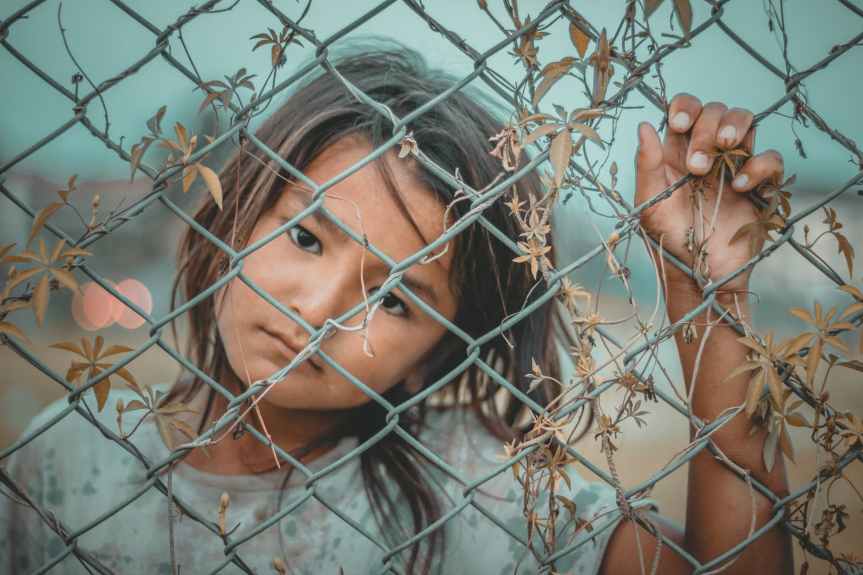
Gender is one of the major sources of inequality in the world today. Girls are usually deprived of their rights and are likely to suffer from abuse and violence.

Discrimination based on gender gives rise to food insecurity, health risks, and exclusion from several opportunities. The United Nations (UN) estimates that 70% of the 1.3 billion people in poverty globally are women. According to World Food Program USA, more than 60% of the world’s hungry are women and girls, in nearly 2/3rd of countries, women are more likely than men to report food insecurity and one in three women with anemia are left untreated.

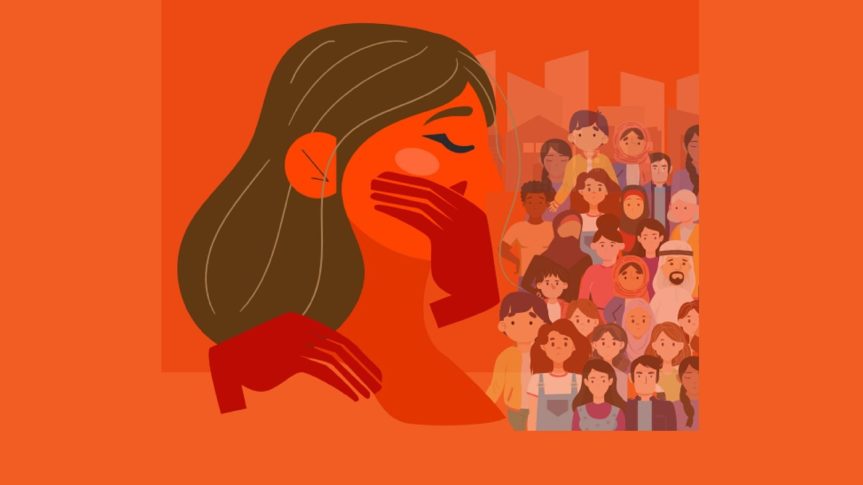
In a lot of countries women are not allowed to pursue higher education and they are married off early. In addition, domestic violence is a major problem in many countries including India. The women get beaten up by their husbands as men think they are superior to their wife and many women stay in abusive relationships and don’t speak up because of the fear of society.

Sometimes women face discrimation even at work, women who do actually work get paid less than their male counterparts and are disproportionately impacted by poverty. It is just unfair to pay someone less for the same work because of their sex. Therefore, we see how women empowerment is the need of the hour. We need women empowerment so that these women can speak up for their rights and never be a victim of injustice.

Women have suffered a lot at the hands of men. In earlier times, women were treated as non-existent and as if all the rights belonged to men. With the passage of time, women realised their power and began the revolution for women empowerment. Women’s empowerment can be defined as empowering the women to make their own choices, to instil a sense of self-worth and to influence social change for themselves and others.

Promoting women’s empowerment has emerged as a major global movement and has been continuously gaining momentum. While the western countries are still making progress, third world countries still fall behind in empowering the women.  While there has been progress with the passage of time, even then women continue to face discrimination and exploitation in every part of the world.

Women can be empowered through government schemes as well as on an individual basis. The people of the society and government must both come together to make it happen.  At the societal level, we should start respecting women and encourage them to take up jobs, higher education,etc. Women should get equal opportunity in every field, irrespective of their gender. Various programs or schemes must be made available for women so they can be learn skills to fend for themselves in case they face financial crisis.

Today, more than ever, women enjoy their rights. However, there are many women who are still fighting to come out of the cluthes of patriarchy and there is a long way to go.

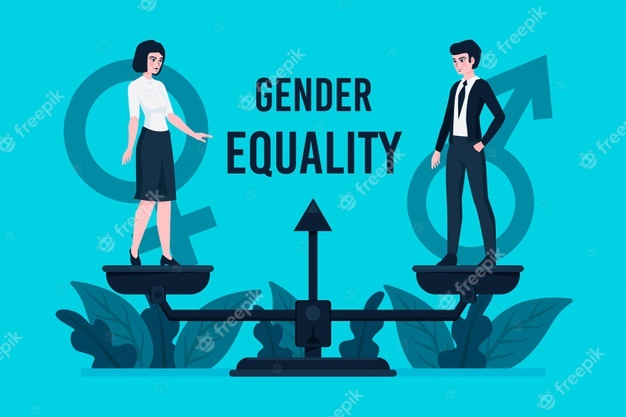
Gender equality

Gender equality can often be achieved just by holding everyone to the same standard. The problem, as highlighted by the evidence reviewed above, is the irrational gender bias that women and girls are routinely subjected to.

Objective of gender equality is a society in which women and men enjoy the same opportunities, rights and obligations in all spheres of life.

Here are some of the steps to achieve gender equality in our life:

1.Stop child marriage: If we want girls to complete education we have to end child marriage.

2.Empower mothers: When mothers are educated and empowered to make choices in their lives, they enable their daughters to go to school.

3.Work together: Between 1999 and 2010, the ratio of girls in secondary school fell from 83 to 82 girls for every 100 boys at the secondary level from 67 to 63 girls for every 100 boys at the tertiary level.

4.Encourage women into non-traditional vocations: To make the long-lasting change in women’s life, support women in non-traditional jobs.

5.Raise aspirations of girls and their parents: We need to give girls images and role models that expand their

dreams.

6.Give proper value to women’s work: The unpaid work women and girls do provide the foundation for the global economy.

7.Get women into power: A proven way to overcome many systematic barriers to a women’s success has been increased participation by women in local, regional and national legislation as empowered change agents.

8.Let girls use mobile phones: The majority of girls do not have access to using basic technology such as mobile phones and computers because of infrastructure related challenges and economic reasons.

9.Talk to women and girls: Gender equality in every realm is that women and girls voices are too often excluded from global and national decision making.

In this way we can help women and girls to achieve gender equality.

Language is Man-made, not “Human Made”!

This is a very simple title, yet a major loophole that our society is facing for many decades. This is not about giving rights to a specific gender but the suppressions which a language creates in the backdrop of society and makes it a center of concern. Never thought language can create such discrimination against two genders.

In colloquial context we see that every day we speak our language and communicate flawlessly yet we never recognized the ocean of problem which a language brings every day.

Profoundly, the title itself gives us the best example as to how we use the word “Manmade”, linguistically whenever a thing is made by a human it is denoted as manmade. But the question here arrives is that why don’t we spell it as human-made?

There are many endless words where the wordings are based on one gender-biased, for say: countrymen, mankind, etc and mostly these words denote men and women were often neglected or ignored since the formation of words.

“Language has always been a media through which many cultures and communities bounded and created a sense of harmony with each other”.

Whereas we can notice that Gender Discrimination has always been a core of fear since civilization. It has become one of the cliché topics when it comes to feminism and cause of this people are ignorant as they assume that the world is changed and there is no more discrimination in today’s society.

Taking back to the advent of the problem we can observe that many writers, critics have battled to always protect the women community as they are always considered the “weaker section of the society”. We can’t deny this fact but, inevitably, they are still subjected when it comes to literature and language.

  1. How Women are Neglected by Language  as Language reflects Patriarchal world:

She says, “Women can either read and choose to stay trapped in their bodies by a language that does not allow them to express themselves, or they can use the body as a way to communicate.”

Helene Cixous (in; “The Laugh of Medusa” )

This very quote is taken from the famous article written by a critic, writer, and feminist; Helene Cixous who has explained how a woman had gone through repression in history and how literature and language had given an upper hand to the men in society to suppress women.

In “The Laugh of Medusa”, she explains how women should find their voice and the Language is the symbol of how a person portrays themselves. “Writing is for you, you are for you, your body’s yours, take it”. This line highlights that it’s high time that women should raise their head and minds and be themselves by being flawlessly independent and break the walls which portray women as fragile and frail.

The author claims that there is a very close relationship between women’s bodies and their writings and both have been repressed by men for centuries. Literature, in particular, explains to us how women as a writer were hard for the audience to accept them due to cultural prejudices laid against them since ages.

Writers like Virginia Woolf show us the patriarchal world through one of her works namely “Room of one’s own” through the lens of all the women present in the world and the problems they go through.

“A Woman must have money and a room of her own if she is to write fiction”. This quote is quite relatable for the women of contemporary society, but this was a major issue which women of the 18th and 19th centuries were facing, to be independent they always needed acceptance to flourish in their fields and for that, they always needed acceptance which was a great hurdle in their lives. For their personal growth, they were bounded to be under 4 walls and do all sorts of wifely duties which gave the society that women are doing dutiful jibs under their husbands present.

But unfortunately, those women were never accepted who was unique and out of the box because society was not people’s perspective, rather it was the male perspective.

Even in “Room of one’s own”, Woolf mentions Judith Shakespeare ( was considered as Shakespeare’s real sister), her character portrays us the devastation a woman goes through while struggling for getting justice.

It also portrays us that many decades of literature didn’t accept women’s works as they were not considered as talented and rather, they were judged based on patriarchal society.

  •  Females were Disowned yet contributed best Literature:

As when we look into 18th century British literature, we can see that several female writers have given an immeasurable piece of works which is still remarkable to date.

It would be a disgrace if we forget to mention  Jane Austen, the Bronte sisters, Virginia Woolf, who were the pillars of 18th-century literature. Whether it is a broody romantic novel of wuthering heights or it is jane Eyre, every writer has spilled their hearts and provided the real situation of women in the era.

Some great writers are unforgettable like J.K Rowling who made us believe in fantasy and made childhood more fascinating by giving us Harry Potter which always provides us nostalgia going back to those days.

Unfortunately, these writers have always struggled to prove their identity to the world, that these immense writers like J.K.Rowling, Emily Bronte, had to change their names to get worldwide recognition. Even in the postmodern age, the situation didn’t change and the process of women hiding their originality, their names was like a custom they followed for ages.

But these female writers never let their readers down and always provided the best piece of art even having so many hurdles in their life.

It’s a long way to go, but still, the situation is better as women are gaining recognition and fame in society, the world, and literature through their masterpieces of works.