4 Most Sought After Fields in Germany

German education standards are pretty high. Germany is known for the quality of education it provides as well as its globally recognized qualifications. German universities are highly regarded worldwide, besides being among the highest-ranked in the world.

Planning to study in Germany? Here are the four most popular courses to study there!

Engineering

Every student in the world who wants to do Engineering, for them Germany is like a dream country, all of them wants to complete their Engineering in Germany.

Of course you saw this coming, didn’t you? if you didn’t, where do you think most of your luxury cars are made? Comprising nearly 25% of international students, it is one of most popular courses in Germany. Specializations include – Automobile, mechanical and electrical engineering amongst others. Technical University of Munich, RWTH Aachen University, Karlsruhe Institute of Technology, and the Technical University of Berlin are some of the most renowned universities for this course. 

It takes more or less than 4.5 or 5.5 years to complete your Engineering program in Germany including the time required for learning German and the foundation courses. According to recent statistics, Germany has the second highest number of Engineering workers among all employees in the EU. German Universities offers numerous scholarship opportunities for Engineering students, while studying Engineering in Germany you can research and collaborate with the Engineering Industry. If the student manages to secure a position in any of the public university, study in Germany is free for Indian students, just like students from other part of the world. Students just have to pay a nominal semester fee (around 250 to 500 Euros) per semester        

Humanities

Surprised to see this on the list? Well, Germany offers around 6000 courses in the field of humanities. With some of the best- ranked universities in the world for courses in the Humanities. more than 11,000 international students in Germany were seeking a degree in the humanities, in 2019 only.

A majority of the humanities degree programmes in Germany offer integrated modules which give students the opportunity to obtain the necessary practical skills, besides the theoretical ones. German universities make sure to provide students with both, theoretical and practical skills, in order to ensure that once these students graduate, they will be fully equipped to enter the job market with confidence. Humanities programmes will comprise of professionally related events, study semesters abroad, as well as research projects or internships so students understand exactly what they will encounter in the future, in their professions. Students can also choose from a variety of combinations, which further enhances the experience.  There are many best universities where you can purse your love for languages and the social sciences in Germany. Studying the humanities in Germany, in comparison to other countries, slightly more affordable.

Business and Finance

Boasting of one of the best economies in Europe, Germany is one of the best countries to earn a degree in Business and finance and gain practical knowledge. The strong German economy means a constant influx of educated workers – including many English speakers, who are highly sought in Frankfurt’s finance and business communities. The nation’s GDP has continued to grow in recent years. Economic freedom is partly responsible for why the city has become a seedbed for innovation and entrepreneurial initiative. According to Eurostat, amongst the 28 countries in the European Union more than 40% of all patents are held by Germany. Half of the cities in top-30 metropolitan areas for patents are in Germany.

Germany also has one of the lowest unemployment rates at just over 5%. Germany is a global leader in R & D investment that further assures access to top – notch training and resources.

Computer sciences and Mathematics

Due to Germany’s extremely advanced technology, disciplines intertwined with it are always in demand. Germany is an excellent place to work as a computer engineer, as it’s companies invest heavily in development and research, maintaining the country’s results as the biggest economy in Europe and the third in the world. In a 2015 OECD/PISA study, Germany ranked 16th in mathematics as well as in science.

In turn, the employability rate for careers related to these degrees is also extremely high. Once again, these aren’t restricted to these, one can explore course like Scientific computing, knowledge – Based Systems and robotics among other!
Bose-EinsteinCondensate The 5th Matter

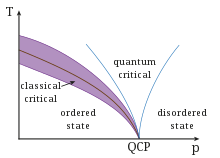
QuantumPhaseTransition.svg

In condensed matter physics, a Bose–Einstein condensate (BEC) is a state of matter (also called the fifth state of matter) which is typically formed when a gas of bosons at low densities is cooled to temperatures very close to absolute zero (−273.15 °C or −459.67 °F). Under such conditions, a large fraction of bosons occupy the lowest quantum state, at which point microscopic quantum mechanical phenomena, particularly wavefunction interference, become apparent macroscopically. A BEC is formed by cooling a gas of extremely low density (about one-hundred-thousandth (1/100,000) the density of normal air) to ultra-low temperatures.

This state was first predicted, generally, in 1924–1925 by Albert Einstein following and crediting a pioneering paper by Satyendra Nath Bose on the new field now known as quantum statistics.

This transition to BEC occurs below a critical temperature, which for a uniform three-dimensional gas consisting of non-interacting particles with no apparent internal degrees of freedom is given by:{\displaystyle T_{\rm {c}}=\left({\frac {n}{\zeta (3/2)}}\right)^{2/3}{\frac {2\pi \hbar ^{2}}{mk_{\rm {B}}}}\approx 3.3125\ {\frac {\hbar ^{2}n^{2/3}}{mk_{\rm {B}}}}}{\displaystyle T_{\rm {c}}=\left({\frac {n}{\zeta (3/2)}}\right)^{2/3}{\frac {2\pi \hbar ^{2}}{mk_{\rm {B}}}}\approx 3.3125\ {\frac {\hbar ^{2}n^{2/3}}{mk_{\rm {B}}}}}

where:

{\displaystyle \,T_{\rm {c}}}is the critical temperature,
\,nthe particle density,
\,mthe mass per boson,
\hbar the reduced Planck constant,
{\displaystyle \,k_{\rm {B}}}the Boltzmann constant and
\,\zeta the Riemann zeta function; {\displaystyle \,\zeta (3/2)\approx 2.6124.}\,\zeta(3/2)\approx 2.6124. 

Interactions shift the value and the corrections can be calculated by mean-field theory. This formula is derived from finding the gas degeneracy in the Bose gas using Bose–Einstein statistics.

Superfluidity of BEC and Landau criterion

The phenomena of superfluidity of a Bose gas and superconductivity of a strongly-correlated Fermi gas (a gas of Cooper pairs) are tightly connected to Bose–Einstein condensation. Under corresponding conditions, below the temperature of phase transition, these phenomena were observed in helium-4 and different classes of superconductors. In this sense, the superconductivity is often called the superfluidity of Fermi gas. In the simplest form, the origin of superfluidity can be seen from the weakly interacting bosons model.

Green Finance

It ain’t a shocking or new news to us that homo sapiens are consistently destroying our mother nature and the result of our deeds would not be greatly cataclysmic, we all are very well aware of this fact. But still most of are not taking this seriously and what we are doing will ultimately lead a catastrophe for our planet.

Some countries, especially in this article I would write about Germany are taking steps regarding this matter and one of the biggest highlight of today’s news channel is their funds allotment for the projects related to the environment. Germany on 24th August, 2020, announced the details of the first green bond placing, tapping financial market to fund environmental projects.

The finance ministry said funding for climate-related programs will generate up to € 11 billion by 2020. The first question of a 10-year bond in September, would have a total of at least four billion euros. Late last year, the German Government confirmed it will introduce the bonds as part of its attempts to tackle climate change in the second half of 2020. As part of a climate plan that involves imposing a carbon tax to slash greenhouse emissions by 55 per cent by 2030 relative to 1990 rates , the government committed € 54 billion in investment to 2023. Rita Schwarzeluehr-Sutter, parliamentary state environment minister, said the bonds would add to the actions of the administration.

“Green federal bonds offer a simple opportunity, and we demonstrate how renewable and climate-friendly business practices can be made straightforward and consistent,” she said. The green bonds would be “twin bonds,” sold with the same maturity and coupon opposite the traditional federal bonds, the finance ministry stated. According to Joerg Kukies, parliamentary secretary at the finance ministry, it means creditors should be able to move their bonds from one version to the other, with the intention of rendering them more appealing to buyers.

According to the European Central Bank ( ECB), green bonds accounted for 2.85 per cent of global bond issuance in 2019, or around US$ 205 billion. Nearly half of last year’s released green bonds worldwide were in euros, the ECB added. ECB chief Christine Lagarde said in July that climate security was the bank’s top priority after launching a €1.35 trillion programme to help the European economy recover from the coronavirus pandemic. Lagarde began at the ECB late last year with a promise to follow a “greener” monetary policy, increasing the possibility that the bank may increase its portfolio’s share of climate-friendly investments.

A tale of two countries:- how the reopened.

As the pandemic increases its foothold over the world, nations worldwide are looking to reopen with varying degrees of success. Various countries have seen a slow decline in the number of cases while some a sudden spike. As the world slowly wakes up from its corona stupor, lets have a look at how two countries have made changes in order to reopen.

Photo by Gustavo Fring on Pexels.com

If the world is a family, I think we can agree that the current US is the crazy cousin who constantly does weird shenanigans. Most countries have gone the traditional way which is a partial reopening followed by a full reopening. However not so in case of America, where the existence of corona is a political debate. Even now, as the entire country staggers some news outlets continue to make scarce of the Covid threat. Amongst the frontrunners is Sean Hannity, a main feature of Fox news, a news outlet that has made its entire existence sculpted to favour Donald J. trump. The channel has constantly reported fake news in order to incite the crowd and further Trump’s image. As the country is hit by several catastrophic events which include the likes of earthquakes, nation wide riots and the ever-looming global pandemic, a few states have opted for the full reopening in order to “save their economy”. However foolish as the idea maybe some companies and brands have taken onto themselves to follow the guidelines. A certain church in USA has seen its pastor greeting their reverends with a squirt gun, in order to bless them. The pastor, wearing a mask and gloves can has been seen greeting the people as the pull up by the church in order to be blessed. While the church tries to see a sense of normalcy, various brands have come up with a new solution to help keep people safe while still being up to trends during this summer. Some designers have come up with a concept being termed as a “trikini” for women looking to enjoy beach season. By providing a mask of similar design in order to look fashionable, some worry about how safe it would actually be, being in a crowd filled beach. Germany has been a country that has seen a good decrease in the number of cases and has safely reopened the country. However, it has not been without some bizarre changes. Germany was the first country to reopen their football league, the Bundesliga which notched up a very large group of viewers who had been starved of action during the pandemic. But there were a number of changes such as no fans being allowed inside the stadium, serious checking of players before and after the matches, going so far as to quarantine a coach of a team who had stepped out of the assigned hotel to buy toothpaste. Even in terms of music being played in public places, a number of changes have taken place. Fans of classical music can see and hear live performances one on one in a designated area in places like airports, museums etc. But a good plan has seen the country come out of the pandemic safely

Thus we see the stark difference in the outcomes of the state of the nations, due to the method used by them to reopen heir countries. What happens in India is still too soon to tell.