

Globalization and it’s effects
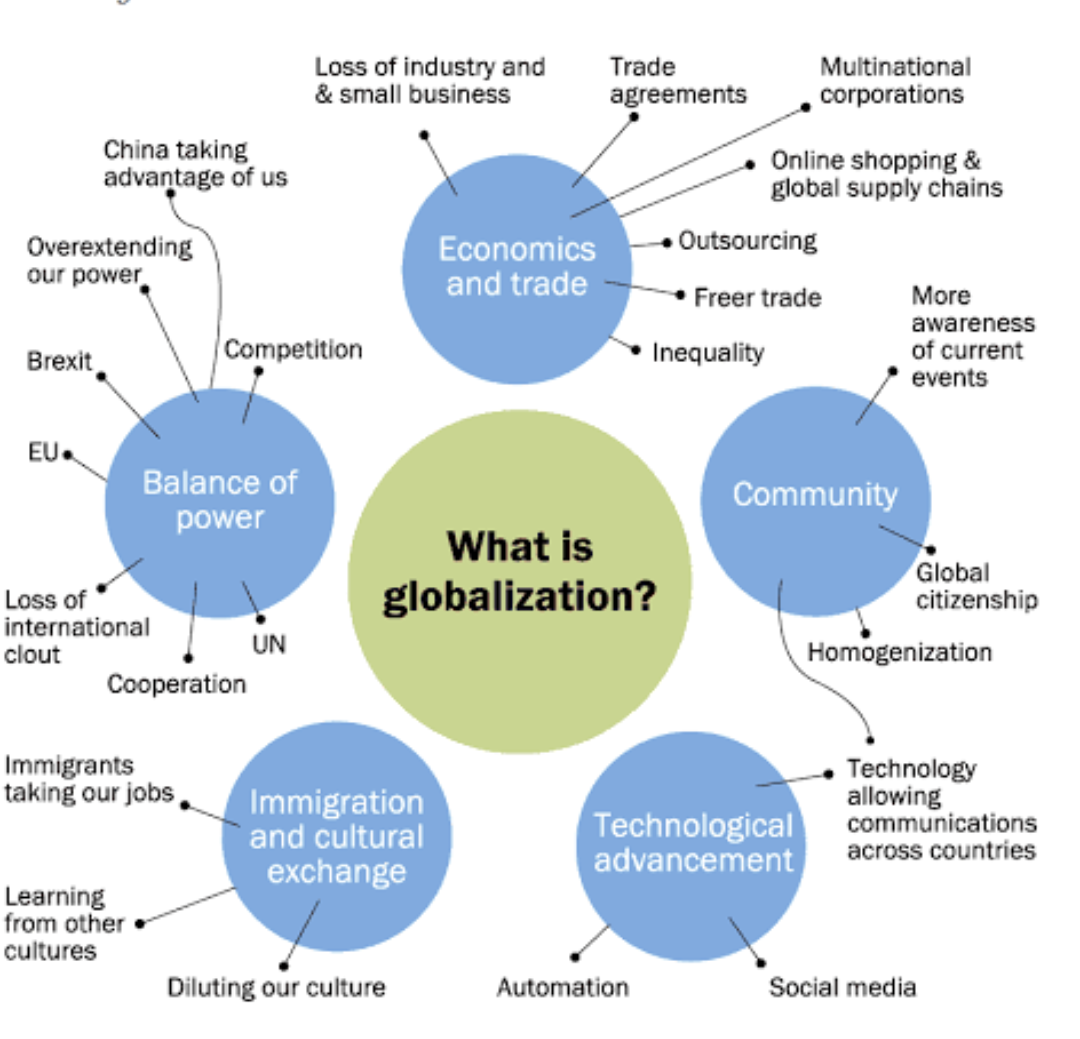
Globalization is the free movement of goods, services and people across the world in a seamless and integrated manner .
Globalization can be thought of to be the result of the opening up of the global economy and the concomitant increase in trade between nations. In other words, when countries that were hitherto closed to trade and foreign investment open up their economies and go global, the result is an increasing interconnectedness and integration of the economies of the world. This is a brief introduction to globalization.
Further, globalization can also mean that countries liberalise their import protocols and welcome foreign investment into sectors that are the mainstays of its economy. What this means is that countries become magnets for attracting global capital by opening up their economies to multinational corporations.
Further, globalization also means that countries liberalise their visa rules and procedures so as to permit the free flow of people from country to country. Moreover, globalization results in freeing up the unproductive sectors to investment and the productive sectors to export related activities resulting in a win-win situation for the economies of the world.

Importance of globalisation
Globalization changes the way nations, businesses and people interact. Specifically, it changes the nature of economic activity among nations, expanding trade, opening global supply chains and providing access to natural resources and labor markets.
Changing the way trade and financial exchange and interaction occurs among nations also promotes the cultural exchange of ideas. It removes the barriers set by geographic constraints, political boundaries and political economies.
For example, globalization enables businesses in one nation to access another nation’s resources. More open access changes the way products are developed, supply chains are managed and organizations communicate. Businesses find cheaper raw materials and parts, less expensive or more skilled labor and more efficient ways to develop products.
With fewer restrictions on trade, globalization creates opportunities to expand. Increased trade promotes international competition. This, in turn, spurs innovation and, in some cases, the exchange of ideas and knowhow. In addition, people coming from other nations to do business and work bring with them their own cultures, which influence and mix with other cultures.
The many types of exchange that globalization facilitates can have positive and negative effects. For instance, the exchange of people and goods across borders can bring fresh ideas and help business. However, this movement can also heighten the spread of disease and promote ideas that might destabilize political economies.
Effect of globalisation
The effects of globalization can be felt locally and globally, touching the lives of individuals as well as the broader society in the following ways:
1. Individuals – Here, a variety of international influences affect ordinary people. Globalization affects their access to goods, the prices they pay and their ability to travel to or even move to other countries.
2. Communities – This level encompasses the impact of globalization on local or regional organizations, businesses and economies. It affects who lives in communities, where they work, who they work for, their ability to move out of their community and into one in another country, among other things. Globalization also changes the way local cultures develop within communities.
3. Institutions – Multinational corporations, national governments and other organizations such as colleges and universities are all affected by their country’s approach to and acceptance of globalization. Globalization affects the ability of companies to grow and expand, a university’s ability to diversify and grow its student body and a government’s ability to pursue specific economic policies.
While the effects of globalization can be observed, analyzing the net impact is more complex. Proponents often see specific results as positive and critics of globalization view the same results as negative. A relationship that benefits one entity may damage another, and whether globalization benefits the world at large remains a point of contention.

 Eduindex