Why Skyscrapers are not that great.

The story of early skyscrapers begins in the late 19th and early 20th century America. Between 1884 and 1945 numerous skyscrapers were built American cities of New York City and Chicago. The two cities competed with each other with many subsequent constructions surpassing the earlier one. The growth of the skyscrapers in the 20th century American cities were mainly fueled by dynamic economic growth as the demand for various new office spaces to hold America’s expanding workforce of white-collar employees continued to grow. With better engineering and construction methods it became easier to construct taller buildings.    

Flatiron Building in New York City finished its construction in June 1902. The 22 floors building was one of the first tallest skyscrapers and later in the subsequent decades even taller buildings were constructed.

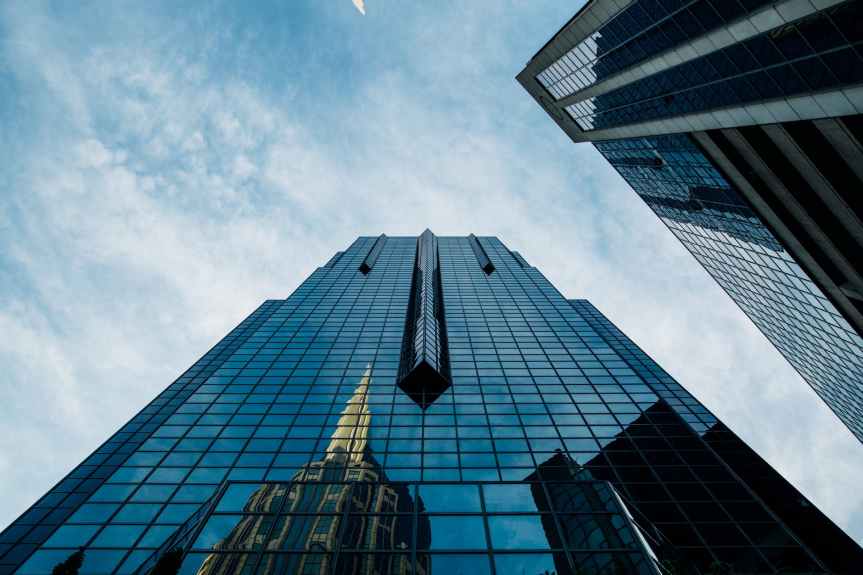
But the developments of modern skyscrapers have many challenges and questions that need to be cleared. Though the growth of skyscrapers has not subsided, they are not the most ideal form of buildings. According to engineer Tim Snelson, of the design consultancy, a typical skyscraper will have at least double the carbon footprint of a 10-story building of the same floor area. This tells us that skyscrapers are not environmentally sustainable. Also, any additional methods to minimize the environmental impact will require overcoming the fight of the handicap of being a tall skyscraper in the first place. As the majority of the building is made with glass and steel frame, high-rise buildings are subject to the consequence of the substantial amount of sunlight and a lot of wind on their mostly glass skins. Glass is inherently inefficient in keeping excessive heat out of the buildings in summer or keep heat trapped in the colder months. This also leads to the reliance on continuous Air Conditioning.

The modern construction of skyscrapers in the cities of today is no longer driven purely by economic growth or the need for commercial office space, but instead, it is more driven by glamorous architecture construction and many times the dirty money gets funneled into the construction of Skyscrapers.  High rises also separate people from the street and people lose a connection to nature and the outdoors. The occupants in the tall buildings are often isolated from the street of the city and meaningful contact with ground-level events is often disconnected with taller buildings.  

High-rise buildings also lead to gentrification and inequality. It is no surprise that taller buildings often tend to be luxury units as the higher a building rises, it becomes more expensive to construct. This means that high rises also inflate the prices of the adjacent lands and driving out the affordable properties, thus increasing the inequality. The areas near the skyscrapers are often dark and swept under the shadow of these tall buildings.

Contrary to the popular notion, skyscrapers are not the only way to build high-density construction. The mid-rise buildings are often more able to house more amount of people per area compared to the high rises. Mid rises are also more flexible to affordable.  The mid-rises can work as a good middle ground between the taller buildings and low-density buildings. Instead of blindly building taller buildings we will have to look at the construction of our future buildings that are more sustainable, affordable, and efficient.

References:
Urban Agriculture

Urban agriculture can be described as the agricultural practices to producing fresh food or other agricultural products in urban areas and their surrounding regions (peri-urban). This can function centrally where plants can be grown and animal husbandry, horticulture, and aquaculture can be practiced. It also involves the processing, packaging, marketing, and delivery of food. In purview urban agriculture extends to establish food production sites within the city’s sphere.

As more land area is getting urbanized and larger number of people are coming to the urban areas to reside. It becomes very critical to properly utilize the space in our cities and suburban areas. Research in the last two decades is has proven that Urban agriculture can be a viable option for food production. It can also help in decreasing the effects of climate change and make the food supply chain more efficient.  Proper land use and spatial planning are crucial to practice this effectively. There are various methods to practice urban agriculture including ground-level farming, hydroponic farming, rooftop farming, vertical farming, greenhouses, and other new technologies.

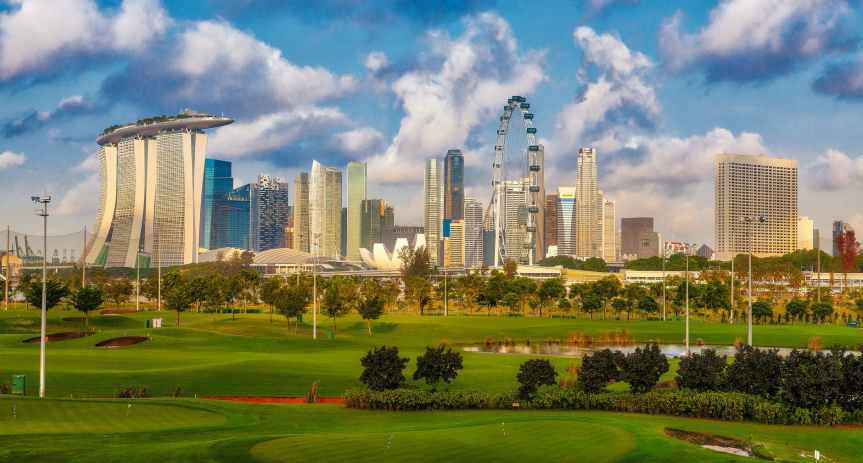
As cities are expanding, this has created new sets of issues like the urban heat island effect, waste management, lack of biodiversity, and high levels of air pollution. With more people moving around the urban space, this has also increased carbon emissions. With urban agriculture, we can try to offset some of the adverse effects of these problems. This kind of agriculture is now being practiced in many cities. Cities like Tokyo, Seoul, and Sao Paulo have their own urban agriculture initiatives. But one of the cities is betting on urban farming in Singapore. The city-state currently imports 90 percent of its food. This also means that any kind of geopolitical tension or a global crisis can severely affect the food supply of Singapore. This means that growing own food becomes critical and essential. Due to this, the Singaporean government has envisioned an ambitious goal to produce 30 percent of its food in the city itself by 2030. This is a special challenge in Singapore’s care due to its tiny land area and highly urbanized population. The city has almost non-existent agriculture land and this is why the focus of food production is on the unutilized urban spaces, on top of shopping malls, hotels, schools, homes, rooftops in parking lots across the city, etc.

In 2009 Singapore government launched a program that incentivizes injecting greenery into development projects across the nation The program was aptly named ‘Landscaping for Urban Spaces and High-Rises’ (LUSH). Their current initiative to build urban food-growing areas within the city will be built upon this program.

Some of the benefits that Urban farming enjoys are immunity from water pollution, a better-controlled environment from the physical forces, and minimal to no use of pesticides and insecticides. But there are some limitations as well. This type of farming can be quite energy-intensive and the outputs can be comparatively lower than traditional farming. This also makes it more expensive.

To make Urban farming more effective governments will also need policies that will make use of the maximum amount of land across the city. Hydroponic farming can be a very effective way to rapidly scale the production where plants are grown with the help of water and the additional nutrients and minerals are added to the water to substitute soil. Additional Urban farming can also help in reducing carbon emissions and making cities cooler. Private firm involvement can also help in stepping up the scale of this kind of farming. This will be the step towards sustainable food production in the cities of the future but to make this happen greater involvement across the citizens and sectors will be needed.

References:

ACIDIFICATION OF THE OCEANS AND ITS CONSEQUENCES

Ocean acidification is defined as a drop in the pH of the ocean over time, largely due to the uptake of carbon dioxide (CO2) from the atmosphere. Defining it simply, as we all know human activities releases CO2 into the atmosphere which leads to atmospheric warming and climate change. The seas absorb around a third to half of the CO2 produced by human activities. While this serves to slow atmospheric warming and climate change, it also has a direct chemical impact on seawater, which we refer to as ocean acidification.

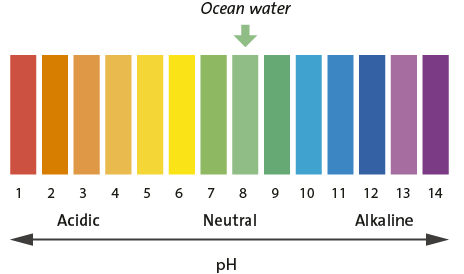
pH as mentioned above is frequently used to describe ocean acidification. The pH scale measures acidity and alkalinity. A pH of less than 7 is acidic, whereas a pH of higher than 7 is alkaline, or basic. 

Currently, the average pH of ocean water is 8.1. Because the pH scale is logarithmic, a one-point change in concentration corresponds to a tenfold change in concentration. Carbon dioxide (CO2) levels in the atmosphere have been rising for more than 200 years, or since the industrial revolution, mainly to the combustion of fossil fuels and changes in land use. The ocean absorbs roughly 30% of the CO2 that is emitted into the atmosphere, and as atmospheric CO2 levels rise, so do ocean CO2 levels. 

As a consequence, the median pH of ocean surface waters has dropped somewhat, from 8.2 to 8.1. This translates to a 26% increase in ocean acidity, which is about 10 times quicker than any other period in the previous 55 million years.

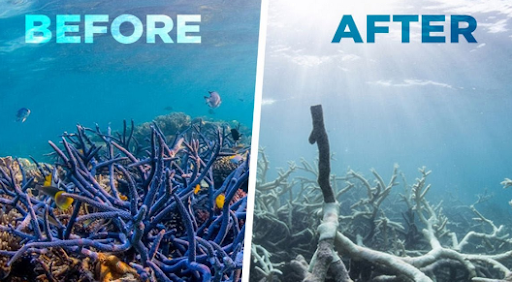
But now, the question arises why the seawater becomes acidic. So to answer this we must understand that When co2 is consumed by seawater, it triggers a chain of chemical processes that result in an increase in hydrogen ion concentration. As a result of this rise, saltwater becomes more acidic and carbonate ions become less prevalent. Carbonate ions are essential mainly for marine shells and carol skeletons because these ions  are the building components of it. Reduced carbonate ions can make it difficult for calcifying animals including oysters, sea urchins, shallow water corals, deep sea corals, and calcareous plankton to develop and maintain shells and other calcium carbonate structures.

Due to such increased acidification, whole world’s seas especially coastal estuaries and rivers, are being affected by ocean acidification and it eventually affects the ocean chemistry because In more acidic environments, certain fish’s ability to detect predators is harmed. And when these creatures feel threatened, the entire food web feel threatened as well.

Taking the future world in view, due to the increase in atmospheric co2 , it will have a direct impact on the degree of future ocean acidification. So if, current greenhouse gas emissions continue, ocean acidity might rise by 0.4 units by the end of the century. However, Ocean acidification will not be consistent throughout the planet. Polar waters and upwelling zones, which are frequently located along continents’ west coastlines, are predicted to acidify more quickly than temperate or tropical regions. Depending on the environment, the pH will vary substantially. 

Therefore, While the ultimate answer to lessen the ocean acidification is to reduce global greenhouse gas emissions. It can be done by  adopting certain difficult decisions and activities which can help us prepare for the negative impacts of ocean acidification. On a smaller scale, Water quality improvements, Development of fisheries management methods that are sustainable, New technology implementation such as development of aquaculture industry and  protecting Marine ecosystems that are very fragile and endangered may assist marine ecosystems adapt better with changing environmental circumstances by mitigating the negative impacts of other local factors.