Sexual Harassment Among Employees | Strategies to Eliminate it

Sexual harassment at work can have very serious consequences both for the harassed individual as well as for other working women who experience it secondhand.

The consequences to the individual employee can be many and serious. In some situations, a harassed woman risks losing her job or the chance for a promotion if she refuses to give in to the sexual demands of someone in authority. In other situations, the unwelcome sexual conduct of co-workers makes the working conditions hostile and unpleasant- putting indirect pressure on her to leave the job. Sometimes, the employee is so traumatized by the harassment that she suffers serious emotional and physical consequences and very often, becomes unable to perform her job properly.

According to data complied by Equal Rights Advocates, a women’s law center in the U.S., 90 to 95% of sexually harassed women suffer from some debilitating stress reaction, including anxiety, depression, headaches, sleep disorders, weight loss or gain, nausea, lowered self-esteem and sexual dysfunction. In addition, victims of sexual harassment lose $4.4 million dollars in wages and 973,000 hours in unpaid leave each year in the United States.

The consequences to working women as a group are no less serious. Sexual harassment has a cumulative, demoralizing effect that discourages women from asserting themselves within the workplace, while among men it reinforces stereotypes of women employees as sex objects.Severe or pervasive sexual harassment in certain types of businesses creates a hostile or intimidating environment that causes women to leave their jobs and look elsewhere for work or discourages them from seeking those jobs in the first place.

The effect on the morale of all employees can also be serious. Both men and women in a workplace can find their work disrupted by sexual harassment even if they are not directly involved. Sexual harassment can have a demoralizing effect on everyone within range of it, and it often negatively impacts company productivity on the whole.

Strategies
to prevent sexual harassment

It is recommended that employers take the following steps to prevent sexual
harassment.

(a) Get
high-level management support

Obtain high level support from the chief executive officer and senior
management for implementing a comprehensive strategy to address sexual
harassment.

(b) Write
and implement a sexual harassment policy

  • Develop a written policy which prohibits sexual harassment in consultation
    with staff and relevant unions.
  • Regularly distribute and promote the policy at all levels of the
    organisation. Ensure the policy is easily accessible on the organisation’s
    intranet.
  • Provide the policy and other relevant information on sexual harassment to
    new staff as a standard part of induction.
  • Translate the policy into relevant community languages where required so it
    is accessible to employees from culturally and linguistically diverse
    backgrounds.
  • Ensure that the policy is accessible to staff members with a
    disability.
  • Ensure that managers and supervisors discuss and reinforce the policy at
    staff meetings. Verbal communication of the policy is particularly important in
    workplaces where the literacy of staff may be an issue.
  • Periodically review the policy to ensure it is operating effectively and
    contains up-to-date information.

(c) Provide
regular training and information on sexual harassment to all staff and
management

  • Conduct regular training sessions for all staff and management on sexual
    harassment and the organisational policy. This training should be behaviourally
    based which means it should increase knowledge and understanding of specific
    behaviours that may amount to sexual harassment under the Sex Discrimination
    Act. Regular refresher training is recommended.
  • Train all line managers on their role in ensuring that the workplace is free
    from sexual harassment.
  • Display anti-sexual harassment posters on notice boards in common work areas
    and distribute relevant brochures.

(d) Encourage
appropriate conduct by managers

  • Line managers should understand the need to model appropriate standards of
    professional conduct at all times.
  • Include accountability mechanisms in position descriptions for
    managers.
  • Ensure that selection criteria for management positions include the
    requirement that managers have a demonstrated understanding of and ability to
    deal with discrimination and harassment issues as part of their overall
    responsibility for human resources.
  • Check that managers are fulfilling their responsibilities through
    performance appraisal schemes.

(e) Create
a positive workplace environment

  • Remove offensive, sexually explicit or pornographic calendars, literature,
    posters and other materials from the workplace.
  • Develop a policy prohibiting inappropriate use of computer technology, such
    as e-mail, screen savers and the internet.
  • It is recommended that medium and large employers undertake regular audits
    to monitor the incidence of sexual harassment in their workplaces and the use
    and effectiveness of their complaints procedures.

Trailing blaze of Workplace Discrimination

Clara did not get her due promotion to be the Associate VP because she was expecting her first child. Mike was not allowed to put up his rosary bead on his computer. Gloria was not allowed to welcome her client because she was of ‘differential’ color. Sabrina was not given employment because she requested two 5 minutes break each day for her prayers. Satarupa was denied to be a part of the upcoming ‘big-client project’ because she was getting married in a month. Rahul never hangs out at the coffee spot, fearing his colleagues might ask him about his ‘personal’ life. Taylor was asked to resign because of a brawl with his ‘white‘ colleague.

Direct Discrimination. Religious Discrimination. Colorism. Religious Discrimination. Gender discrimination. Sexual Orientation Discrimination. Racial Discrimination.

The 21st Century Spectrum of Racism in America – Blue Delaware
Racial Discrimination

Almost everyday, we read about discrimination and how it is affecting lives worldwide. We read about it and for a few days, we feel very infuriated with it and then, like any other news, we just forget and move on. Then again a headlines come up and then the cycle continues. So did we actually manage to make any progress in that area. I believe we have, just momentarily.

Let me narrate a personal incident. It was about 3 years back. I recently joined a premium service-based organization after my graduation. After a month, my boss announced that our client is throwing a project success party. I was excited since that was going to be my first ‘corporate’ party. I got dressed up into, what people usually call as ‘one-piece’. It was pretty normal for me to be dressed like that. But the moment I stepped into the cubicle to leave with my colleagues for the party, one of my male colleagues looked at me directly and said:

“You are looking different. In fact, to tell you the truth, you are looking great in that short dress.”

I felt uneasy. The word ‘short’ made me uncomfortable. I did not say anything, I just smiled and went to the party.

At the party, I sat at the bar and ordered beer. My manager, who came with her family, appeared out of nowhere and gave a look at my bottle and said:

How can a girl drink beer or any other hard drinks.”

I was astonished. I did not say anything and simply stood up and left. I was afraid to say anything because I thought that it might ruin my career in that company.

At the turn of the decade, gender inequality still affects ...
Gender Discrimination

But few years later, I ended up leaving the place because of multiple social reasons but that is not the point. The point is how on earth, even in this 21st century, are we dealing with such petty issues.

DISCRIMINATION.

Long word. Even have longer implications on the people who face it. Discriminatory remark, in its simplest form is very subtle and people usually fail to realize it. Like in my instance, I found those two comments to be quite derogatory but I was not sure whether to label it as discrimination.

Recently, CISCO was sued by the State of California because of it racial discriminatory actions against a ‘Dalit Indian-American’ employee as well as allowing him to be harassed by a couple of managers. Infosys is also facing a lawsuit due to racial discrimination which was filed by the diversity head of Infosys. Long back, Walmart faced a lawsuit due to gender as well as racial discrimination where they paid a black woman very less as well as denied her rightful promotion for years. Abercrombie &Fitch faced racial discrimination because of allowing the Latino and the Asians to work in the stock room and the ‘classically American’ on the shop floor. Nike faced lawsuit due to gender discrimination for violating Equal Pay Act and treating the women employees inferior to the male employees.

These are just few of the reported cases in the new. What goes unnoticed are the hundreds of such cases where the victims usually do not have the support to report it. It’s quite imperative that it’s high time for the Human Resource Manager to come into the play. They should take measures to curb such forms of discrimination at the workplace. Even though corporate and industries are embracing diversity and inclusion, HR Managers should promote this ‘diversity and inclusion‘ as a practice rather than an activity. A workplace is like a second home where we spend one-third of our day. We feel safe with our family, because they embrace us despite our flaws. AT the same time, HR should also make sure that the work environment should be inclusive enough to accept our diverse profiles. Such discrimination only creates differences and headlines which is like a blooming path for our competitors. Rather it is important that being an HR, we should promote this diversity, and use it to our own competitive advantage.

Be different. Be unique.

Source:

https://www.vox.com/2018/8/15/17683484/nike-women-gender-pay-discrimination-lawsuit

https://economictimes.indiatimes.com/tech/ites/infosys-faces-fresh-race-discrimination-suit-in-us/articleshow/76347038.cms

All you need to know about Cyberbullying ( and how to prevent it)

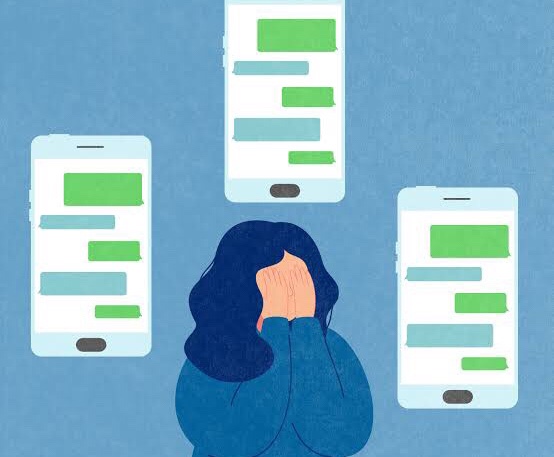
Cyberbullying, also known as cyberharassment, which happens using electronic means. It is also known as online bullying. It has become increasingly prevalent nowadays, especially among adolescents, as technology had advanced and the digital sphere has broadened. Cyber bullying occur on platforms like social media, chat rooms, and gaming sites where people can see and participate in sharing of content.

Cyber bullying is said to be happen, when someone bullies or harasses others on the internet and other digital spaces, usually on social media sites.

Cyber bullying behaviour involves posting threats, rumors, hateful comments on online platforms/apps, or via SMS or messaging in order to cause humiliation to other users. It includes posting, sending or sharing negative, Unpleasant or false information about an individual for causing humiliation and character assassination. It also involves posting threats, a victim’s personal information, hate speech or sexual remarks to someone on the internet.

Types of Cyber Bullying

An awareness of the different types of Cyberbullying is important. This helps parents and young adults to report cyber bullying and adopt various measures for the same. Following are some of the common types of cyber harassment:

• Trolling has become increasingly prevalent in these days and is the most common form of bullying that happens in an online community. This is done to evoke a reaction or disruption, or sometimes, even for personal amusement.

Cyberstalking is another type of bullying or harassment which involves electronic communications to stalk a victim; this may tend to be threatening to the victim.

• posting an embarrassing or unpleasant photo/video.

• faking identity online

• issuing online threats to hurt or provoke someone.

• posting hate comments or content triggering religious, racial, ethnic or political malice.

• Also Doxing, it is a practice common on the internet where personal information about an individual is reasearched and published. One finds out information from the person’s social media and other online platforms. It is then used for online defamation, harassment or other forms of cyber bullying.

Cyber Bullying in India 

Cyber bullying in India had increased prominently since availability of affordable data services and social media presence has increased. According to a research by Symantec, almost 8 out of 10 individuals are exposed to different types of internet bullying in India. Most of the victims are generally women and teenagers.

The same study categorises India as the country facing the highest cyber bullying in the Asia Pacific region, more than Australia and Japan.

Special Concerns

with the widespread presence of digital forums, social media websites, posts, comments, content shared by individual can be seen by strangers as well as acquaintances. Whatever content the individual shares online, be it personal or public, creates a kind of public record of their activities, views and behaviour. this can basically represents their personality, which may be accessible to schools, employers, college, clubs, and other institutions who may be researching an individual now or in the future. Cyberbullying can tamper the reputation of everyone involved, not just the the person being bullied but also those who are participating in the bullying. 

What can you do?

Ask for help: if you are experiencing any distress related to online bullying, reach out to someone for help. It maybe your friend, relative, colleague or someone you trust.

Use the technology to cut off the Bully: almost every social media site allows you to report or block someone. They also enable you to report inappropriate content or behaviour. 

Protect your Accounts: passwords are your private information. never share your passwords with anyone no matter who the person might be. Password protect your phone so that no one can use it for impersonation. 

Report Cyber Bullying: The Ministry of Women and Child Development launched a helpline to report cyber bullying/harassment, cyber defamation, especially for women and children as they are subject to cyberbullying the most. most institutions also have special faculty of development whom you may report to, about the bullying.

Helpline – complaint-mwcd@gov.in