
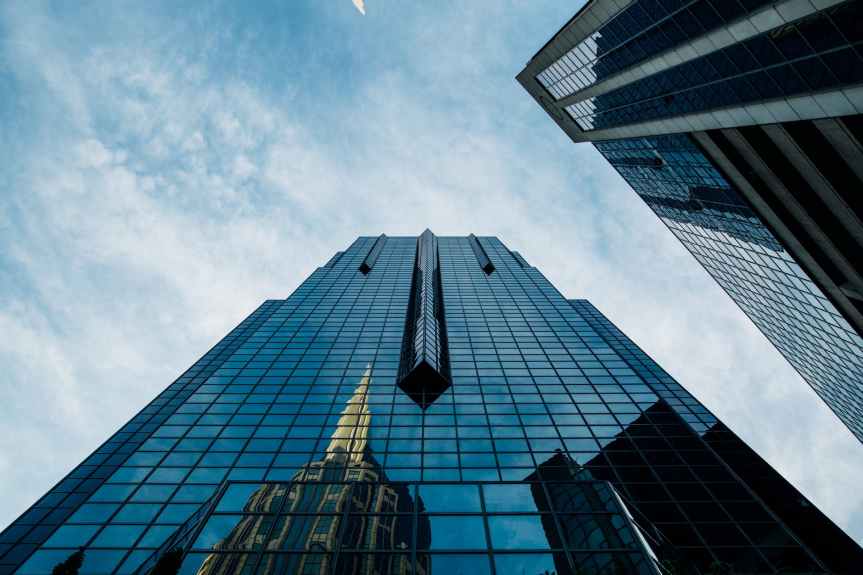
Why Skyscrapers are not that great.

The story of early skyscrapers begins in the late 19th and early 20th century America. Between 1884 and 1945 numerous skyscrapers were built American cities of New York City and Chicago. The two cities competed with each other with many subsequent constructions surpassing the earlier one. The growth of the skyscrapers in the 20th century American cities were mainly fueled by dynamic economic growth as the demand for various new office spaces to hold America’s expanding workforce of white-collar employees continued to grow. With better engineering and construction methods it became easier to construct taller buildings.    

Flatiron Building in New York City finished its construction in June 1902. The 22 floors building was one of the first tallest skyscrapers and later in the subsequent decades even taller buildings were constructed.

But the developments of modern skyscrapers have many challenges and questions that need to be cleared. Though the growth of skyscrapers has not subsided, they are not the most ideal form of buildings. According to engineer Tim Snelson, of the design consultancy, a typical skyscraper will have at least double the carbon footprint of a 10-story building of the same floor area. This tells us that skyscrapers are not environmentally sustainable. Also, any additional methods to minimize the environmental impact will require overcoming the fight of the handicap of being a tall skyscraper in the first place. As the majority of the building is made with glass and steel frame, high-rise buildings are subject to the consequence of the substantial amount of sunlight and a lot of wind on their mostly glass skins. Glass is inherently inefficient in keeping excessive heat out of the buildings in summer or keep heat trapped in the colder months. This also leads to the reliance on continuous Air Conditioning.

The modern construction of skyscrapers in the cities of today is no longer driven purely by economic growth or the need for commercial office space, but instead, it is more driven by glamorous architecture construction and many times the dirty money gets funneled into the construction of Skyscrapers.  High rises also separate people from the street and people lose a connection to nature and the outdoors. The occupants in the tall buildings are often isolated from the street of the city and meaningful contact with ground-level events is often disconnected with taller buildings.  

High-rise buildings also lead to gentrification and inequality. It is no surprise that taller buildings often tend to be luxury units as the higher a building rises, it becomes more expensive to construct. This means that high rises also inflate the prices of the adjacent lands and driving out the affordable properties, thus increasing the inequality. The areas near the skyscrapers are often dark and swept under the shadow of these tall buildings.

Contrary to the popular notion, skyscrapers are not the only way to build high-density construction. The mid-rise buildings are often more able to house more amount of people per area compared to the high rises. Mid rises are also more flexible to affordable.  The mid-rises can work as a good middle ground between the taller buildings and low-density buildings. Instead of blindly building taller buildings we will have to look at the construction of our future buildings that are more sustainable, affordable, and efficient.

References:
The Rule of Harmonious Construction

Law has an important place as a representative for social evolution. In this democratic system of governance, there are many intersections between legal order and social evolution. The source of the law in legislation is called statute law. It is made very fast, definite and does not have to wait for identification by the courts. The courts acknowledge a statute because it is law; it is merely not law because the courts recognize it. The cause for uncertainty of legislation is the basic nature of language. It is not always likely to perfectly turn the real intend of the legislation into written words. The ability to adopt the language inevitably means that there will be equally good or unconvincing arguments for both competing interpretation. Many of times the provisions are having more than one meaning or the uncertainty in the language. The legislature becomes functus officio when after enacting the statues. The interpreters cannot revert back to the legislature and ask the exact meaning of the statute because the legislators would not have take up such a wide variety of conditions while making any particular statute. Thus it is totally depend on the Judges to interpret such provisions to make both effective. To avoid further uncertainty, the legislation has provided us with some of the primary rules of interpretations. Harmonious Construction is one of the most significant rules where it is said that if the two or more or more than two provisions of the same act are conflicting with each other then it must be interpreted in such a manner that effect should be given to both, and the provision which has a wider concept will always prevail.

When there is a conflict or inconsistent between two or more provisions or two or more parts of a statute then the rule of harmonious construction is implemented. This rule follows a very simple theory that each and every statute has a purpose and intent as per the law and should be read as a whole. The interpretation should be adopted when all of the provisions are consistent. In the case in which it is totally impossible to harmonize both the provisions, the court’s decision regarding the provision shall prevail. Harmonious rule brings harmony among the various lists referred to in Schedule 7 of Constitution of India. (The 3 Lists of Legislation – Union list, State list, and Concurrent List). This doctrine follows a settled rule that an interpretation that results in hardship, injustice, inconvenience and anomaly should be avoided. The interpretation with the nearest compliance to justice must be picked.

Harmonious Construction has helped Judges to interpret between two conflicting laws easily and has proved easily in providing the justice to society at large. This does not mean that judicial interpretations always thought to be the true and as per the intention of the legislation. More but not the less their interpretation power has given a space for their own ideas to flourish. Although they in most of the cases they gave their best to bring sense out of miserably worded statute. The legislative inability to anticipate all conceivable future scenarios is understandable, and hence it is the task of the judiciary to make existing laws practical by rational interpretations. Judges must control themselves from their own thoughts and philosophy which affects the judgment and many a times they end up in making of new laws. Filling up of such space will ensure that the interpretation by judiciary in the future will produce fruit bearing results for all.