

If anyone manages to come to Kolkata during the upcoming festive months of Durga Puja, one would definitely feel very lucky to watch tall brightly coloured idols with crowds dressed in their best attire and swarming through the streets. But it is all gone now, at least for this year.
Usually for each year, all the orders for idols used to come during Rath-yatra and the days following that. And there existed a countdown for the final day. And not to forget about the markets, which always remained overcrowded for at least three months before the actual occasion. There was a feeling of joy and celebration in the air with people in extremely good mood. But this year is going to markedly very different from all the previous years. As per the sources, orders to Kumartuli have slashed by a great percentage this year. At the same time, the delay in the orders is quite noticeable. This year, even the big budget Durga Puja clubs have not yet placed the orders and even if some of them did, the height of the idols have reduced drastically. Previously, the normal height used to range from 12 to 15 feet and that too added with expensive clothes and ornaments. But this year, sources verify that the height ranges somewhere between 8 and 10 feet, with none exceeding 10 feet. Many clubs who usually hosted such big budget idols are very much sceptical whether they should go for it considering the financial stress and social isolation issue. Some are outright enough to cancel the celebrations and others who are hopeful that the situation will subside eventually have gone for placing the orders.
But this is not just all. The Forum of Dugotsab which is a committee of 350 Durga Puja Committees have passed certain rules to make this a safe festive season. Some recommendations which are passed include thermal screening of visitors, wearing of masks is mandatory, regular sanitisation of structures and finally there should be only 25 people inside a marquee at any point of time. But just to ensure that every devotee gets to enjoy the festival, the authorities have also ensured to place screens outside or podiums so that the devotees can at least view the idols. As per the Puja committees, they have specified that they will strictly adhere to the safety guidelines and that that they will celebrate keeping in mind the safety and livelihood of thousands of individuals.
But recent concern is that due to such economic constraints, the Kumartuli artisans have asked for the advance payment of 50% of the total idol making cost at the time of booking the idol. They are fearing that they will incur heavy losses owing to the lockdown and the destruction caused due to the Amphan Cyclone. Kumartuli artisans are sceptical because they have made the idols for Basanti Puja, but because of the onset of lockdown they could not sell those and thus had to suffer huge losses. So according to them they want to be sure for this time.
Durga Puja which is the most quintessential celebration of the Bengalis, will be celebrated in a completely different way. But whatever it is, we just wish for our Ma Durga to abode on this earth with her children and demolish the COVID-19 Rakshash with her Trishul.
Till then, stay safe.

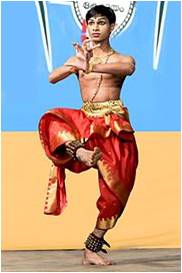 The history of Kuchipudi can further be traced back to the 1st century B.C. but the more popular stories are from 1502 A.D. According to some local legends, an orphan boy adopted the name Sidhendra Yogi acquiring higher studies, and one day when he asked God to help him cross a river, he vowed to devote his life to religious affairs. He then began to teach Brahmin boys devotional dance which was called Natya Shastra (which translated to offerings to God). In those days Kuchipudi was performed once in a year but was cautiously kept out of the reach of Devadasis. Even today in some coastal areas of Andhra Pradesh Kuchipudi is not accessible by all; it is still performed by all-male troupes.
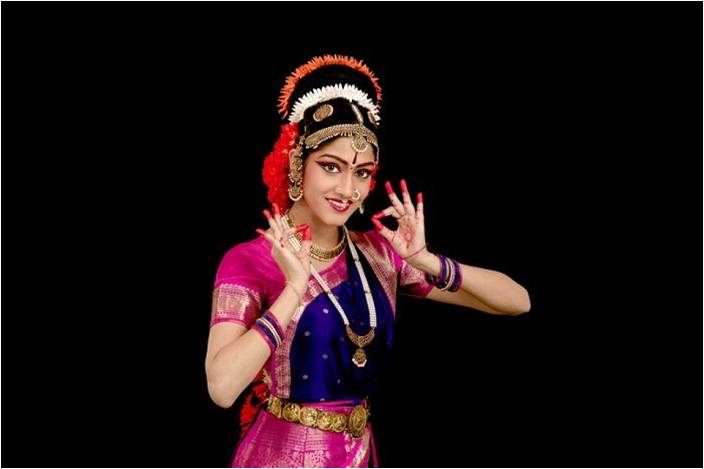 With its lilting music and flowing music, Kuchipudi performances are a delight to watch. The beautiful costumes and light makeup of the artists contribute to their vibrant stage presence. While a male wears a dhoti, a female is adorned with a sari that is stitched with a pleated cloth that opens like a hand fan when the dancer stretches or bends her legs while portraying spectacular footwork. Traditional jewelry like a metallic waist belt is used along with ghungroos for producing rhythmic sounds. The eye expressions are given extra importance by outlining them with black kajal.
 Eduindex
You must be logged in to post a comment.