
What is HPC

High-Performance Computing (HPC): Unlocking Computational Power
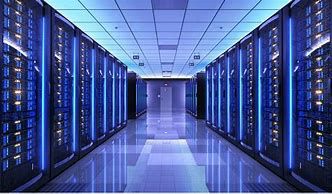
High-Performance Computing (HPC) refers to the use of advanced computing systems, architectures, and software to solve complex computational problems in various fields, including science, engineering, finance, and more.

Characteristics of HPC

  1. Scalability: Ability to process large amounts of data and scale up to meet increasing computational demands.
  2. Performance: Fast processing speeds, typically measured in floating-point operations per second (FLOPS).
  3. Parallel Processing: Ability to execute multiple tasks simultaneously, leveraging multiple processors or cores.
  4. Distributed Computing: Breaking down complex problems into smaller tasks, executed across multiple systems or nodes.

HPC Applications

  1. Scientific Research: Climate modeling, molecular dynamics, and genomics.
  2. Engineering: Finite element analysis, computational fluid dynamics, and structural analysis.
  3. Finance: Risk analysis, portfolio optimization, and high-frequency trading.
  4. Artificial Intelligence: Machine learning, deep learning, and natural language processing.
  5. Weather Forecasting: Numerical weather prediction and climate modeling.
  6. Cybersecurity: Cryptanalysis and intrusion detection.

HPC Architectures

  1. Clusters: Groups of interconnected nodes, often using commodity hardware.
  2. Grids: Distributed computing environments, leveraging geographically dispersed resources.
  3. Clouds: On-demand, scalable computing resources, provided by cloud service providers.
  4. Supercomputers: Custom-built, high-performance systems, often used for large-scale simulations.
  5. GPUs: Graphics Processing Units, optimized for parallel processing.

HPC Technologies

  1. MPI (Message Passing Interface): Standard for parallel programming.
  2. OpenMP: API for multi-threaded programming.
  3. CUDA: NVIDIA’s parallel computing platform.
  4. OpenACC: Directive-based programming model.
  5. InfiniBand: High-speed interconnect technology.

Benefits of HPC

  1. Increased Productivity: Faster simulation and analysis times.
  2. Improved Accuracy: Enhanced modeling and simulation capabilities.
  3. Competitive Advantage: Faster time-to-market and better decision-making.
  4. Innovation: Enables research and development in new fields.
  5. Cost Savings: Reduced energy consumption and infrastructure costs.

Challenges in HPC

  1. Scalability: Managing complexity and ensuring scalability.
  2. Power Consumption: Reducing energy consumption and heat generation.
  3. Cooling: Efficient cooling systems to prevent overheating.
  4. Security: Protecting sensitive data and ensuring secure access.
  5. Skill Gap: Addressing the shortage of skilled HPC professionals.

Real-World Examples

  1. NASA’s Pleiades Supercomputer: Simulates complex aerospace phenomena.
  2. IBM’s Watson: AI-powered system for healthcare and finance.
  3. Google’s DeepMind: AI research and development.
  4. Climate Prediction Center: Weather forecasting and climate modeling.
  5. CERN’s Large Hadron Collider: Simulates particle collisions.

Future of HPC

  1. Exascale Computing: Next-generation supercomputing, targeting 1 exaflop performance.
  2. Quantum Computing: Leveraging quantum mechanics for computational advantage.
  3. Artificial Intelligence: Integration of AI and HPC for accelerated insights.
  4. Edge Computing: Distributed computing for real-time analytics.
  5. Cloud-Native HPC: Scalable, on-demand HPC resources.

Conclusion

High-Performance Computing (HPC) plays a vital role in driving innovation and advancements across various industries. As computational demands continue to grow, HPC will remain essential for solving complex problems, accelerating discovery, and transforming industries.
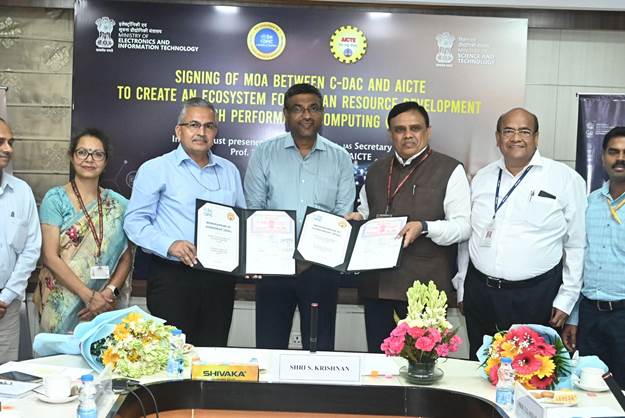
C-DAC and AICTE sign MoA to create an ecosystem for human resource development in High Performance Computing and allied areas

 Centre for Development of Advanced Computing (C-DAC) today entered into Memorandum of Agreement (MoA) with All India Council for Technical Education (AICTE) to create an ecosystem for human resource development in High Performance Computing (HPC) and allied areas.

The MoA was signed by Prof. T. G. Sitharam, Chairman AICTE and Col. Asheet Nath (Retd.), Executive Director, C-DAC Pune and Corporate Strategy, in presence of Shri S. Krishnan, Secretary, Ministry of Electronics and Information Technology (MeitY), and other officials of MeitY & Department of Science and Technology (DST).

Some of the key activities to be taken up under this Memorandum of Association (MoA) are:

  • Master Trainer Programs: These training and refresher programs will be conducted to train the Master Trainers in order to enhance their teaching skills in HPC and allied technologies. The master trainers will in turn train faculty members with the necessary knowledge to teach students in their colleges.
  • Quality Improvement Programs: These training programs will be conducted to enhance the subject expertise in HPC and allied technologies of faculties from streams other than Computer Science.
  • Courses on SWAYAM: Courses in HPC will be offered on the Ministry of Education’s SWAYAM platform which offers free online courses in various disciplines to the learners. This will help in reaching out to students across the country
  • Formulation of Course Aligned with Industry Needs: HPC related courses will be designed in such a way so as to ensure that they are aligned with the current and emerging requirements of the HPC industry.
  • Offering C-DAC developed HPC learning platforms: C-DAC will offer the HPC learning platforms like PARAM Shavak, PARAM Vidya and other upcoming ones through AICTE to nominated institutes

As is evident from these objectives, the MoA between C-DAC and AICTE aims to drive sustainable human resource development in HPC and allied technologies, foster innovation, and meet the evolving needs of the industry and academia.

On this occasion, Shri S. Krishnan, Secretary, MeitY mentioned that the HPC-aware manpower development activity under NSM will now reach a wider audience in engineering colleges across the country. “This, in turn, will help in building HPC-related capability in the technical workforce, making them ready for the industry”, he added.

Prof. T. G. Sitharam, Chairman AICTE said “With the signing of this MoA between AICTE and C-DAC, we are taking a significant step towards creating a robust ecosystem for High Performance Computing (HPC) education in India.”. He also mentioned that this initiative aligns perfectly with the goals of the National Supercomputing Mission and the vision of NEP 2020, ensuring that our technical education system remains at the forefront of global advancements.

Advancing HPC through National Supercomputing Mission

Development of HPC aware manpower is one of the key deliverables of National Supercomputing Mission (NSM).  The NSM is a flagship program of the Government of India to build capacity and capability in HPC in the country, being executed by MeitY and DST. AICTE is mandated with planning and coordinated development of the technical education system across India and promotion of qualitative improvements of such education. Thus, to meet the goals of NSM, C-DAC is partnering with AICTE for the proliferation of HPC education in AICTE affiliated colleges across the country.

It is expected that 2500 faculty members from about 1000 engineering colleges across India will be trained through 50 Faculty Development Programs (FDP). These resources will then be able to teach HPC related topics to about 50,000 students as a part of their curriculum. To generate interest among aspirants from engineering colleges in the area of HPC, awareness programs introducing the nuances of HPC will be conducted in 1,000 colleges, eventually reaching out to 100,000 students. It is also proposed to install 50 numbers of PARAM Shavak – ‘Supercomputing Solution in a Box’ by C-DAC in AICTE affiliated institutions, helping students gain hands-on experience using supercomputers.

*****