
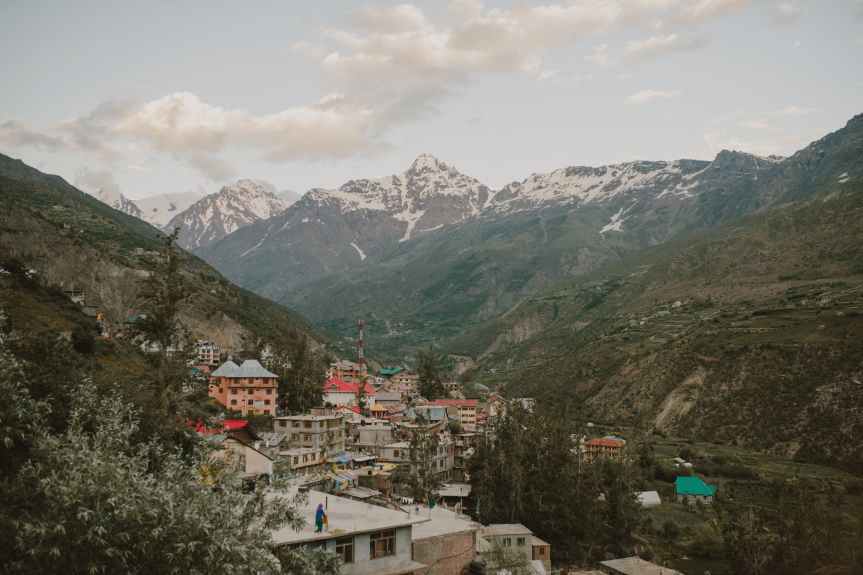
The fragile ecology of the Himalayas

On 7 February 2021 Uttarakhand’s Chamoli district experienced a disaster in the form of an avalanche when a small portion of the Nanda Devi glacier broke off. The sudden deluge caused considerable damage to NTPC’s Tapovan-Vishnugad hydel project and the Rishi Ganga Hydel Project. At least 72 people were confirmed to have been killed in the disaster. But this is not a new phenomenon and every year there are many reports of sudden deluge all across the Himalayan region.

The Himalayas has maintained the climate of the Indian subcontinent. Himalayas act as a barrier by diverting the monsoons to pour the rain in the fertile northern pains rather than to drift away to further north. Similarly, the mountain range also blocks the cold northern winds to reach the Indian subcontinent. The Himalayas all the way from Afghanistan to Myanmar with 110 peaks over 24,000 feet. They are also very rich in biodiversity and are the source of numerous perennial rivers and water bodies. Rivers like Indus, Ganges, and Brahmaputra that originate in the Himalayas are the lifelines of millions of people in the subcontinent.  

But in recent years, the Himalayan region has seen a drastic transformation with increasing population and deforestation. The Himalayas are still a very young mountain range and this means the region is not as stable as older mountain ranges. This is also the reason for the high number of earthquakes. There are many exploitative projects and resource extractions initiatives have are going throughout the region. The increasing influx of tourists in the Ladakh region which is increasing the pressure in the already sensitive region or the limestone extraction near Mussoorie which has transformed the surrounding lush mountain region barren and unstable are just some of the instances.  The cities located in the periphery of the Himalayas have started are also facing the same degradation problems in the plain region. Due to ever-increasing population growth, the size of cities is also increasing and this means overflowing garbage and drains. Unplanned growth of new settlements and uncontrolled tourism has only exacerbated this issue.
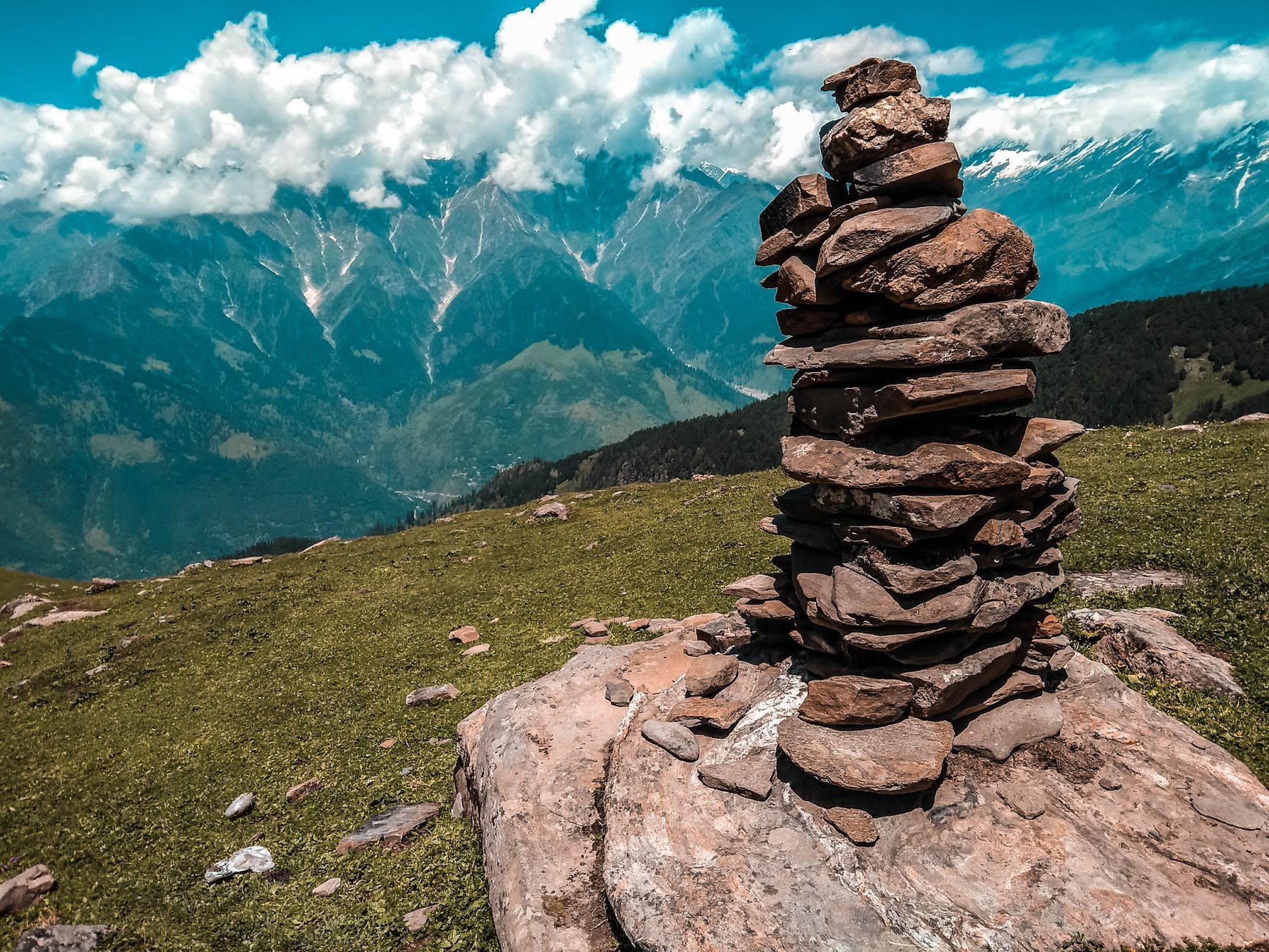
Photo by rasik on Pexels.com

Steps to safeguard the region

There is a need for safeguards on a national level that would help in preserving the fragile ecology of this region. First, it needs to be ensured that there is sustainable urbanization in the mountain habitats by town planning and adoption of architectural norms. Due to the sensitivity in this region, it is imperative that we have to control the growth of new settlements in the region and the existing settlements should be developed with all the basic urban facilities. Solid waste management is another area that needs to be the focus. Plastic bags use should be banned in all the towns and villages in the Himalayan region. Some states like Himachal Pradesh and Sikkim have enforced this rule but there are still many other states that have not fully implemented this rule. Pilgrimage is an important part of the tourism sector in the Himalayan region. Sustainable pilgrimage needs to be promoted and the inflow of pilgrims has to be determined according to the ecological capacity of that site. Roads are an essential node for the connectivity and development of a region but the construction of the roads and highways needs to take into account the sensitivity and fragility of the region as well. Environmental impact assessment should be compulsory before the construction of roads. Finally, environmental awareness needs to be propagated so that every individual can be empathetic and mindful of the dangers of environmental degradation. A coordinated effort will be essential between local cultures, local people, unions, and state governments to make this happen.

References:

http://www.ipcs.org/comm_select.php?articleNo=582

Himachal- Around the Next Bend

The Union Tourism Ministry’s “ Dekho Apna Desh”  webinar series on 11th June 2020 walked into its 31st session showcasing “Himachal- Around the next bend” focusing on the beautiful villages, mountains, pristine rivers, culture and heritage. Dekho Apna Desh Webinar Series is an effort to showcase India’s rich diversity under Ek Bharat Shreshtha Bharat programme. 

The session of the Dekho Apna Desh webinar series on 11th June, 2020 was moderated by Rupinder Brar, Additional Director General, Ministry of Tourism.  The session was presented by Frank Schlichtmann, Founder, The 4tables Project, Ankit Sood, Managing Host, Sunshine Himalayan Adventures and Michael & Devanshe Lidgley, Owners, Himalayan Orchard.   The three presenters virtualised and highlighted the unexplored destinations and unique cultural and heritage wealth of Himachal Pradesh.

Mr. Frank Schlichtmann started the session by highlighting an interesting Art village Called Gunehar, beautiful amalgamation of nature, streams, forest. Gunehar is located in the Kangra district. The idea behind this Art project in Gunehar is to develop conscious effort among the travellers to put focus on the village without affecting the place with too much crowding.  Gunehar is well connected by road, rail and air.  The valley has many small villages and Gunehar is the largest panchayat with just 3000 people.  People are largely Gaddis with a few Bara Bhangalis.  The settlement started a little 100 years ago.  Originally people of the village are shepherds but now many of them are farmers, some have shops and some work.  Villagers are grounded, have sense of dignity and knowledgeable.  4 tables project started in the year 2008 with good participation, followed by Art festival in 2013.  Art shops were developed, inviting the artists to come and work in empty spaces and present their art work which is attended by people from all walks of life.  The whole event is a joint venture with the artist, visitors and villagers.  The villagers call it Mela.  It has become a huge success and final week is organised as art festival with theatre, music, film screening etc.  Local cultural elements are well represented towards the closing ceremony of the Art festival. 

Mr.Ankit Sood took us virtually through the World Heritage Site Great Himalayan National Park located in the Kullu region.  Great Himalayan National Park is spread across four valleys-Sainj valley,  Jiwa Nal valley, Tirthan Valley and Parvati valley. The park protects over 1,000 plant species, including many medicinal herbs, 31 mammal species and 209 bird species, as well as amphibians, reptiles and insects. Four of GHNP’s mammal species and three of its bird species are globally threatened, including the musk deer and the western horned tragopan.

The third little known destination in Himachal Pradesh showcased by Michael & Devanshe Lidgley was that of  Kotkhai, a town in Shimla district.

• Kotkhai Palace is 800 years old and the royal family is still residing in the palace.

• Rukhla  village – An apple growing village.  A three hour hike from Rukhla takes you to the highest point where you can have a mesmerising 360 degree view of Greater Himalayas. The village is well known for its majestic flora and fauna including Black Bear, Barking Deer, Musk Deer, Langur, Leopards and Monal.

• Kiari temple- Kotkhai architecture wood and stone earthquake resistant

• Narayan temple- Rebuild based on original style.

• Naga cult-.Master of the underworld reigns over subterranean water sources linked to fertility.  Naag is the son of Bhuri Mata, a powerful Goddess worshipped in Himachal and sacrifice of sheep pleases him.  Songs are sung in Pahadi dialect.

• Apple farming

The Dekho Apna Desh Webinars are conducted in association with National e-Governance Division (NeGD) created by the Ministry of Electronics & Information Technology (MeitY).

The sessions of webinars are now available on the https://www.youtube.com/channel/UCbzIbBmMvtvH7d6Zo_ZEHDA/featured and also on all social media handles of Ministry of Tourism, Government of India.   

The next episode of the webinar scheduled on, 13th June 2020 at 11.00 am, is titled Trekking in the Himalayas – Magical Experiences. Registrations https://bit.ly/HimalayasDAD