

High-Performance Computing (HPC): Unlocking Computational Power
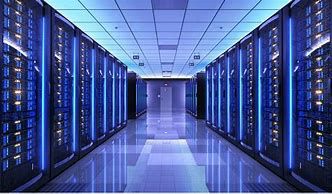
High-Performance Computing (HPC) refers to the use of advanced computing systems, architectures, and software to solve complex computational problems in various fields, including science, engineering, finance, and more.
Characteristics of HPC
- Scalability: Ability to process large amounts of data and scale up to meet increasing computational demands.
- Performance: Fast processing speeds, typically measured in floating-point operations per second (FLOPS).
- Parallel Processing: Ability to execute multiple tasks simultaneously, leveraging multiple processors or cores.
- Distributed Computing: Breaking down complex problems into smaller tasks, executed across multiple systems or nodes.
HPC Applications
- Scientific Research: Climate modeling, molecular dynamics, and genomics.
- Engineering: Finite element analysis, computational fluid dynamics, and structural analysis.
- Finance: Risk analysis, portfolio optimization, and high-frequency trading.
- Artificial Intelligence: Machine learning, deep learning, and natural language processing.
- Weather Forecasting: Numerical weather prediction and climate modeling.
- Cybersecurity: Cryptanalysis and intrusion detection.
HPC Architectures
- Clusters: Groups of interconnected nodes, often using commodity hardware.
- Grids: Distributed computing environments, leveraging geographically dispersed resources.
- Clouds: On-demand, scalable computing resources, provided by cloud service providers.
- Supercomputers: Custom-built, high-performance systems, often used for large-scale simulations.
- GPUs: Graphics Processing Units, optimized for parallel processing.
HPC Technologies
- MPI (Message Passing Interface): Standard for parallel programming.
- OpenMP: API for multi-threaded programming.
- CUDA: NVIDIA’s parallel computing platform.
- OpenACC: Directive-based programming model.
- InfiniBand: High-speed interconnect technology.
Benefits of HPC
- Increased Productivity: Faster simulation and analysis times.
- Improved Accuracy: Enhanced modeling and simulation capabilities.
- Competitive Advantage: Faster time-to-market and better decision-making.
- Innovation: Enables research and development in new fields.
- Cost Savings: Reduced energy consumption and infrastructure costs.
Challenges in HPC
- Scalability: Managing complexity and ensuring scalability.
- Power Consumption: Reducing energy consumption and heat generation.
- Cooling: Efficient cooling systems to prevent overheating.
- Security: Protecting sensitive data and ensuring secure access.
- Skill Gap: Addressing the shortage of skilled HPC professionals.
Real-World Examples
- NASA’s Pleiades Supercomputer: Simulates complex aerospace phenomena.
- IBM’s Watson: AI-powered system for healthcare and finance.
- Google’s DeepMind: AI research and development.
- Climate Prediction Center: Weather forecasting and climate modeling.
- CERN’s Large Hadron Collider: Simulates particle collisions.
Future of HPC
- Exascale Computing: Next-generation supercomputing, targeting 1 exaflop performance.
- Quantum Computing: Leveraging quantum mechanics for computational advantage.
- Artificial Intelligence: Integration of AI and HPC for accelerated insights.
- Edge Computing: Distributed computing for real-time analytics.
- Cloud-Native HPC: Scalable, on-demand HPC resources.
Conclusion
High-Performance Computing (HPC) plays a vital role in driving innovation and advancements across various industries. As computational demands continue to grow, HPC will remain essential for solving complex problems, accelerating discovery, and transforming industries.
 Eduindex
You must be logged in to post a comment.