Shift in the workplace legal structure

COVID-19 has completely revolutionized the workplace by pushing most of the organizations and the businesses to quickly switch from ‘office model’ to ‘work-from-home’ model. While working under the roof of an office, there existed legislations and legal framework to monitor the behaviour, but those existing policies need to be adjusted so as to incorporate the WFH scenario.

Some key areas where the legal framework needs to be adjusted are:

  1.  Women working at night. Previously as per the Shops and Establishment Act of each state, women employees were prohibited to work during some specified hours at night or they have to arrange for transport services along with escort to make sure that they reach their home safely. So employers had to face compliance issue with regard to women employees. But now since most female employees have moved to WFH, so the employers are free from such compliance issues and at the same time, the floor is open for the employers to look out for those women population who could not previously access the jobs due to geographical and other constraints.
  2. Change in compensation structure. Previously many allowances such as conveyance allowance, meal allowance or food coupons were given out to employees as a part of hardship allowance. But this might not be attractive now considering the WFH scenario. Instead, employers should provide other allowances such as internet reimbursement, ergonomic allowances, IT expenses etc.
  3. Sexual harassment at the new workplace. POSH Act was passed in the year 2013 for the prevention of sexual misconduct at office. But now as the workplace has changed, new forms of misconduct such as repeated phone calls at inappropriate and ungodly hours, forcing to switch on videos, playfully passing lewd remarks and over-discussion of work are creeping up with time. Considering the face that the boundary between work and home has become blurred, POSH needs to incorporate some new rules to prevent such misconduct.
  4. Overtime work. Just a few months back, employers used to measure productivity by checking the entry and exit times of an employee. They used to do so by either swiping their cards or by biometric screening. So if an associate is doing overtime work, usually it was thought that the person is very hardworking. But now the associates are working from home, so performance should now be measured depending on the outcome of the employees rather than on the time spent on doing the work.
  5. Security and compliance threats. SEZ does not have guidelines for WFH facility but STPI has it. As per them, it is necessary for the employees to work on Virtual Private Network. So employees should spend on securing a robust and private WiFi so that that IT security is not compromised on the local system and confidentiality is maintained.
  6. Modification of labour laws like maternity benefits and compensation laws. Previously associates can claim compensation from the employers if any accident occurs at the workplace, but now with the WFH arrangement, the existing compensation laws need to be modified so as to arrange for any compensation if any accident occurs at home.

Our workplace dynamics have completely changed and to enable smooth transition, employers also need to look into the existing legal structure so that eventually the employees does not feel to be disadvantaged. Our home is the new workplace and so laws have to be adjusted taking our ‘home-office’ into consideration.

Source – Self

Performance Management lessons from LAGAAN

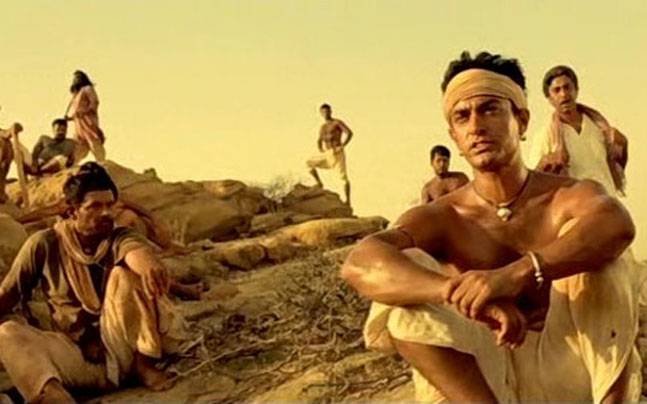
Released in the year of 2001, this sports-based iconic movie was based on a small number of people in a village in the Victorian India where they challenged the British for a game of cricket so as to avoid paying of taxes. The movie is an iconic one because it depicts how the protagonist, Amir Khan as Bhuvan took the responsibility to rescue his fellow villagers and how he taught them to play cricket. And the best part of the movie is that, how in spite of all the major and minor obstacles, Amir Khan won the game against the British and managed to secure an opportunity to not pay taxes for the coming three years.

That being said, this movie is quite extensively used by the B-Schools to teach about the various performance management lessons that can be derived from this movie. So after watching this movie again and following an extensive analysis, I have noticed certain instances which can provide exemplary examples of performance management. Below depicted are some of the instances:

World Water Day: From Lagaan to Well Done Abba, films that ...
  1. At the time when the villagers were unable to pay back the taxes, Bhuvan took the responsibility of all the villagers and acted as a leader to carve out a way of glory for them.
  2. After challenging the British over a game of cricket, Bhuvan took it upon himself to learn the game and then to teach all the fellow members.
  3. During the selection of the cricket team members, Bhuvan believed in instilling diversity and inclusion policy. Kachra was selected in the team because of a deformity in his hand which made him a good bowler, in spite of all the caste based differences. Bhura was selected because he was an expert in running to catch his hens which was identified as a major parameter to catch the ball. Even the drummer who could not speak, was selected because he spent most of his lifetime playing the drums and hence had a good upper body strength. So from these instance, Bhuvan was recognized to identify the differences in the team which can be a source of competitive advantage.
  4. At the onset of the game, Bhuvan and his team did not have the necessary resources. But he was more concerned about the performance of his team than about the scarcity of resources. He gave directions to build the necessity from the scratch and that too by the local folks. Being a leader, Bhuvan turned out to be innovative.
  5. Bhuvan did not just made the team, but he did a good job in allocating roles and responsibilities to each of the team members based on their strengths.
  6. One of the note-worthy point is that Bhuvan set some measurable goals and he supervised and improved the performance of his team members. His mantra was pure hard work but with empathy and compassion, which shows a good sign of performance management.
  7. At the end of the movie, even when Kachra facing the last ball, Bhuvan did not give up. He ran for that single run but then it was turned out to be ‘no-ball’. So as a leader of a team, Bhuvan showed immense amount of trust in his team members and a ‘never give up’ attitude.

Lagaan is definitely a movie to watch if one is trying to understand what it is that a leader truly believes in and does. So next time when you watch this movie, you can watch out for these instances of performance management.

Source: Movie ‘LAGAAN’

Succession Planning

One of the hardest task of an HR manager in any organization is talent management. It is the process of identifying the existing talent in the organization and then assessing the talent needs, followed by talent acquisition, talent engagement and finally by talent retention. The hardest part of this is not the process of talent acquisition or engagement, but rather it is the supply of talent itself. Most of the business and operating managers are of the notion that there exist an ample amount of talent in the labour market and that talent identification or acquisition would be easy. But the bitter truth is that, talent with the specific skill set and qualities is in scarce quantity in the talent market and thus the talent acquisition strategies should be very streamlined and well-defined so as not to lose out on the desired candidates. But on top of all this, one very important way that should be followed by each and every organization is Succession Planning.

Succession Planning is the process of identification and development of new leaders, usually at the executive level, with the intention to replace the old leaders when they die, retire or they leave the organization abruptly. This is a practice which is followed so that the existing capable leaders develop themselves so that they can assume the positions of the higher authorities as and when that become vacant. Succession planning is extremely important in an organization because of multiple reasons:

  1. Talent resource with the desired skill set is very scarce in the labour market.
  2. If an executive leaves the organization abruptly, there would be no qualified candidate to become the successor of the vacant position.
  3. Even if a candidate is selected to fill the vacant position, there would be loss in terms of acquisition costs, loss of productivity and hence un-productive costs and then the cost of upskilling among the few direct costs.

Considering the fact that talent is scarce in this unpredictable talent market, it is important for every organization to take strategic decisions as to how to implement the succession planning. It is a way by which an organization can plan for the future in case of uncertain events.

Now, while planning on how to conduct succession planning, an organization can follow a few steps. Some of the steps are:

  1.  At first, try to understand that how the organizational structure is going to be affected if some executive at the key position abruptly leaves the organization. And then while charting out the organizational hierarchy structure, identify the employees who play a critical role in the organization.
  2. Try to identify which are the key positions in your organization which if left vacant even for a single day will create a he dent in your organization.
  3. Scanning the organizational hierarchy, try to identify the top and the bottom players, by looking at their performance records, their career growth and majorly by discussing with their managers.
  4. For any single key position, always try to keep more than one option open.
  5. One of the most crucial step is to communicate who is selected and what is the purpose of selection. This communication should be done to both the new selects as well as the key position holders.
  6. After selection of the individuals, provide them the required training so as to make them ready to occupy the upper positions as and when required.

These is the backbone of succession planning which should be followed by every organization so that the entire organizational structure does not crumble down for a key member leaving the organization.

Source: https://www.insperity.com/blog/5-ways-your-org-chart-can-kick-start-your-succession-plan/

The HR Industry in India

Human resources is the set of the people who make up the workforce of an organization, business sector, industry, or economy. A narrower concept is human capital, the knowledge which the individuals embody. Similar terms include manpower, labour, personnel, associates or simply people.

A human-resources department (HR department) of an organization performs human resource management, overseeing various aspects of employment, such as compliance with labor law and employment standards, administration of employee benefits, organizing of employees files with the required documents for future reference, and some aspects of recruitment and employee off boarding.

HR Industry (Human resource) industry in India has become a common need for almost every business that is looking forward for a good growth at the same time improved organization managements. Right from hiring the right candidate for the company till providing the best of the curriculum activates for the employees to grow, there are so many things that an HR actually does.

As per the research conducted, according to social, economic and cultural landscape, it is in unprecedented change due to which the need for a right solution that can lead to growth and professionalization has become quite common. This is the reason why HR industry in India has gained lot of scope.

It is considered as one of the most precious resource for any organization. Right from recruiting the right person on the board of a company till ensuring that the management works in an organized manner to achieve success of the organization, HR looks into every concern related to the company.

The solution that is offered by the team of HR is worth to take and certainly leads to the growth. There is a dedicated team of experts in HR who are engaged to offer the clients with workforce solutions and thus also acts as a middleman between the client and the employee.  

To staff the industry in a proper way has become a necessary for the dynamic business environment. The HR industry thus, ensure that entire gamut of employment solutions are given to the client to satisfy him in all the best possible ways.  

Looking forward to the increasing demand of HR industry, the following services are performed by the team which includes :

• Recruitment process outsourcing • Corporate training • Pay-roll processing • Organizing the clients meeting • Representing the team • Looking forward to increase ether venue of the Company  

History

Human resource management used to be referred to as “personnel administration.” In the 1920s, personnel administration focused mostly on the aspects of hiring, evaluating, and compensating employees. However, they did not focus on any employment relationships in an organizational performance level or on the systematic relationships in any parties. This led to a lacked unifying paradigm in the field during this period.

According to an HR Magazine article, the first personnel management department started at the National Cash Register Co. in 1900. The owner, John Henry Patterson, organized a personnel department to deal with grievances, discharges and safety, and information for supervisors on new laws and practices after several strikes and employee lockouts. This action was followed by other companies; for example, Ford had high turnover ratios of 380 percent in 1913, but just one year later, the line workers of the company had doubled their daily salaries from $2.50 to $5, even though $2.50 was a fair wage at that time. This example clearly shows the importance of effective management which leads to a greater outcome of employee satisfaction as well as encouraging employees to work together in order to achieve better business objectives.

During the 1970s, American business began experiencing challenges due to the substantial increase in competitive pressures. Companies experienced globalization, deregulation, and rapid technological change which caused the major companies to enhance their strategic planning – a process of predicting future changes in a particular environment and focus on ways to promote organizational effectiveness. This resulted in developing more jobs and opportunities for people to show their skills which were directed to effective applying employees toward the fulfillment of individual, group, and organizational goals. Many years later the major/minor of human resource management was created at universities and colleges also known as business administration. It consists of all the activities that companies used to ensure more effective utilization of employees.

Now, human resources focus on the people side of management.There are two real definitions of HRM (Human Resource Management); one is that it is the process of managing people in organizations in a structured and thorough manner. This means that it covers the hiring, firing, pay and perks, and performance management. This first definition is the modern and traditional version more like what a personnel manager would have done back in the 1920s. The second definition is that HRM circles the ideas of management of people in organizations from a macro management perspective like customers and competitors in a marketplace. This involves the focus on making the “employment relationship” fulfilling for both management and employees.

Some research showed that employees can perform at a much higher rate of productivity when their supervisors and managers paid more attention to them. The Father of Human relations, Elton Mayo, was the first person to reinforce the importance of employee communications, cooperation, and involvement. His studies concluded that sometimes the human factors are more important than physical factors, such as quality of lighting and physical workplace conditions. As a result, individuals often place value more in how they feel. For example, a rewarding system in Human resource management, applied effectively, can further encourage employees to achieve their best performance.

The HR industry also known as staffing industry is highly noticed in different streams like Information Technology, Finance, Management, Sales, and Engineering. As per the research made, it has been also noted down that now a days, the need for such services has increased in aviation and retail industry as well.     

The growth in the economy that is shown by India is highly said to be due to the HR industry that has come into existence. There are so many factors due to which Indian HR industry is driven that includes the client industry growth, entry of multinational companies, large conglomerates in new business domains and many more.   As per the report, it has been noticed down that the Indian HR industry with regards to permanent and temporary recruitment segments has shown tremendous improvement. It has been providing with the best of the opportunities in the market.

The HR industry is fast gaining ground. They are no longer a small and slow department but crucial members in the major business decision making processes in various companies. Read on to know how and why the Human Resources industry has changed, the prospects in this field and what skills are necessary to be employed in HR now.

So far, this industry in India as grown at a compounded annual growth rate of 21% which is certainly a good thing to notice. HR industry in India is certainly at its peak to get to more success and allow the client to grow.