‘Not all men’ vicious – Pseudo Feminism

If you pick up a dictionary, the definition you’ll find for the word ‘feminism’. In simple terms, there shouldn’t be any injustice met out to either sex. They should be treated equally. But, off late, a new type of feminism is developing which is rightly called as pseudo feminism. Pseudo feminists hold a strong resolve to correct all the injustices done to women, mostly by lashing out at men and demeaning them. What they forget is the basic essence of feminism movement: equality. Another form of pseudo feminism, according to me, is the feminism of convenience. The biggest example being: men paying for dates. If we’re as equal as women proclaim to be, why can’t a restaurant bill be split between the two? The reason is simple-men are too egoistic to let a woman pay, and for a few women it miraculously becomes a man’s job to pay for the date. Where, I ask these feminists, does the feminism vanish then?

Feminism is now a muddied term. Difficult to say what it means today. We often don’t realise it, but pseudo feminism is all around us, hiding behind feminism in clandestine. We’re the women shouting for equal rights everywhere, but don’t waste a single minute asking a guy sitting on a Ladies Reserved seat to vacate it. Why do we need reservations in general coaches? Since we’re able bodied, strong, grown-up women of strength, can’t we stand in a general coach? Men doing 9-5 jobs, burning their hours toiling hard to earn, are as tired as we are. It is just a very preposterous notion. Like it’s correctly said, two wrongs don’t make a right.

Although they are in the minority, it’s a crystal clear truth there are men who too are subjected to sexual crimes. The numbers of cases reported to the police are on the lower side, because most of the men don’t report such crime for the fear of being ridiculed at, not being believed and instead facing the charges themselves. Men are mostly kidnapped and abducted for illegal sexual intercourse, forced marriages, prostitution, etc. The number of such victims is really low but it’s a fact we cannot ignore. When we are talking of rising violence against women, we shouldn’t neglect the fact that somewhere out there are men also being subjected to same brutalities.

Board results are a few months away, but a boy has passed with flying colors by refusing to be part of a plan to rape a girl, hatched by the girl herself, who was pretending to be a boy. The boy passed but, many say, feminism failed. They have been saying that for years now. They are not too off the mark though. While it may not have failed, it sure has taken a huge hit.

Fake accounts, false allegations and fraudulent charges have harmed men and their reputations. They are also building a case against women’s right to stay in the fight for justice.
Part of the problem is the fact that the odds are heavily stacked against women. But another part of the problem is the way women used social media to fight this battle.

Each true story helps build credibility. Each false story is turned into a weapon against the fight for gender justice. The girl, who faked herself as a boy, is not part of the Bois Locker Room chats, but the story is now all about this one girl who faked her identity.

So what should women do?

I will answer with what they should not.

One, do not shoot and scoot. Don’t get into it if you cannot stay in it. Weigh in before you jump in. This is for the long haul. There is a lot of mudslinging that happens. You can’t escape the splashes.

Two, do not use fake accounts to bring down men. It’s easy to prove. The consequences are for everyone – the man, the movement and also you. Take care of You. Take care of the fight that is for us to stand equal to men with no biases in workplaces, no casual sexism, no acid attacks, no rapes and no honor killings.

If true feminism was followed, then we would treat all the victims equally. Victims would cease to be women or men, but just victims of abuse. But sadly, that is not the case. Pseudo feminism shouts out loudly that men can’t be raped, men can’t be tormented, and men claiming to have been put under such atrocities are lying cheats. It’s most likely that I would be branded ‘anti-feminist’ by pseudo feminists all around, but I don’t mind. I don’t mind because I know how to stand up for my fellow sisters when they actually need it.

When a woman is put on fire, when she is raped, is brutalized, is stripped naked on the streets, forced to quit her studies to marry a man three times her senior in age, when she is blamed if she is raped, or teased, when a woman is beaten repeatedly for refusing to pressurize her parents into paying dowry, when she is considered inferior to her male counterparts, that is when I need to give voice to my anger and lash out at the people responsible for it. If I am a true feminist, I will do the same if it were a man being stoned on the streets, being raped, being accused of a fake rape, being doubted over just because he is a man. As Gloria Steinem rightly said, a feminist is anyone who recognizes the equality and full humanity of women and men.

Not all men do it, but all women suffer through it.

This is serious. Take it seriously.

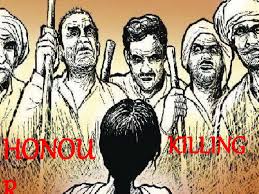
HONOR KILLINGS -not so honorable!

For ages the Indian society has been embroiled down by many social evils and many of them were pertaining to woman. Women have always been on the target ranging from female infanticide, dowry, domestic violence, prostitution, rape  etc. although with changing times people have been educated and changed their perception and these practices have been reduced in some places but till date there are certain social evils  prevalent in not only our country but many other countries , one such act is of HONOR KILLING.

According to a survey there are more than 300 cases of honor killing in last 3 years in India. It is one of the most tenacious forms of gender violence – and also the least acknowledged.

In India, women are not considered individual entity  with lives and choices of their own. Instead, they are seen as the torchbearers of family ‘honor’. The “honor (ijjat)” of a family,society or the community is so called the ‘purity of women. Hence, instead of being considered as independent individuals with their own choices, women’s lives are controlled by an honor code.

Human Rights Watch defines “honor killings” as, Honor crimes are acts of violence, usually murder, committed by male members of family against females of the family who are seemed to have brought dishonor upon the family. The mere perception that a woman has acted in a manner to bring “dishonor” to the family is enough to trigger an attack. Sometimes men can also be the victims of honor killings by members of the family of a woman with whom they are considered to have an inappropriate relationship, or by partaking in homosexual activities.

Honor killings are often a result of strongly misogynistic views towards women, and also  the position of women in society. In these traditionally patriarchal  societies women are dependent first on their father and then on their husband, whom they are expected to obey. Women are contemplated  as property and not as individuals with their own agency. Violence is seen as a way of ensuring compliance and to avert the rebellion.

The concept of ownership has turned women into a commodity that can be exchanged, bought and sold”.In such cultures, women are restricted to take control over their bodies and sexuality: these are the properties of the males of the family, the father (and other male relatives) who must ensure virginity until marriage; and then the husband to whom his wife’s sexuality is subordinated—a woman must not sabotage the ownership rights of her guardian by engaging in premarital sex or adultery.

The occurrences of honor killings are extremely  difficult to determine and estimates vary widely. In most countries data on honor killings isn’t collected systematically, and most of those killings are reported by the families as suicides or accidents.  Murder is not the only form of honor crime, other crimes such as acid attacks, abduction, mutilations, and domestic violence occur too.  The cultures in which honor killings take place are usually considered “collectivist cultures”, where the family’s pride is more important than the individuals life.

LETS TAKE FEW RECENT EXAMPLES OF THESE HIDEOUS KILLINGS IN INDIA

Couple killed in Tamil Nadu

25-year-old Nandhish from the Dalit community fell in love with Swathi, an upper caste woman. The couple got married and lived together for a few months before they were both murdered by the couple’s father. Swathi’s father has confessed to murdering them and throwing the bodies into a river in Tamil Nadu’s Krishnagiri district.

Honour killing caught on CCTV

Amrutha, who belongs to a wealthy upper caste family, fell in love with Pranay from the Dalit community and the couple got married. In September 2018, while returning after a medical check-up, Pranay was hacked to death in broad daylight in front of his pregnant wife. The gruesome murder that shook south India was caught on CCTV. Amrutha’s father confessed to have plotted the murder as he did not approve of Pranay’s caste and lack of wealth.

Minor killed allegedly by father 

In Chandigarh, a 16-year-old girl was found dead in mysterious circumstances in October. Why ??? only because The girl was reported to be in love with a 19-year-old from her village. The girl’s parents had earlier filed a rape case against him.

And recently on 6 may 2020 in Hisar, a woman died at a village near Uklana town of Hisar district on Monday. Her live in partner alleged an honour killing. The Village sarpanch said she died of electric shocks sustained while ironing clothes, in his police complaint, The man had an affair with the deceased for last 3years and said that her family was against their marriage.

Although honor killings are often linked with the Asian continent, especially the middle east  and South Asia. In 2000, the United Nations estimated that 5,000 women were victims of honor killings each year . The existence of ‘honor killings’ all over the world puts universal human rights under severe threat . It puts the agency of “individualism” and “choice” against the notion of collective social agency and strict norms. The right to marry comes under “right to life” enshrined by Article 21 of the Constitution of India. However, In India, the concept of free will in exercising the right to marry is considered more as a duty or social in nature, rather than an individual choice or opinion.


The term “honor” crime is somewhat misleading because it implicit that such crimes are “honorable”. These acts of violence, attack something more than women’s bodies: they additionally strike their challenge to oppressive patriarchy. By adding the word “honor” to killing, we use the language of those who rationalize  this loathsome crime on the basis of “honorable” motives. We use the language of their excuse. We must stop doing this. The term “honor killing” not only gives too much power to the culprit, but is offensive to survivors and women. Instead, we need to see the crime through the eyes of those assaulted.

It is true that these culprits invariably invoke their slighted “honor”. But there is a further common feature: this violence seeks to punish women for seeking to exercise independent choice, and to flout not only the wishes of their families and societal  expectation – for daring to be free. That’s the heart of the matter, and that’s the right lens to view the problem through.

International Human Rights in Sports

Sports is about achieving excellence, about working individually and collectively as a team  to reach a common goal. The world of sports today is filled with thousands of enthusiastic people amongst whom a few stand out from the rest, but the challenge is to demonstrate how the world of sport can bring these benefits while preventing harms to people at every level. [1]Human rights refer to those rights that are inherent to the person and belong equally to all human beings regardless of their race, colour, sex, language, religion, political or other opinion, national or social origin, property, birth or other status. They deal with freedom from fear and want, and call for respect, protection, and fulfilment from duty-bearers. At the international level, human rights are laid down in numerous international treaties and declarations. There are some treaties, agreements and declarations that were signed and ratified by a great number of member countries of the UN, spread around the globe. The collection of such documents is called the Universal System of Human Rights Protection.

Sport is one of the best platforms to promote human rights and inclusion of all. Through sport, people learn values of co-existing with people of  cross gender, nationality, age or even physical condition. It is now the need of the hour to build stronger bridges to advocate for sport as a Human Right – to pledge, to defend and to promote it. Sports is closely connected to many human rights such as right to education, right to culture, right to health and wellbeing as well as the right to political participation. Sport is ought to be practiced without any kind of discrimination, such as race, colour, sex, sexual orientation, language, religion, political or other opinion, national or social origin, property, birth or other status.  Sports can easily inculcate many positive values, such as fairness, teambuilding, equality, discipline, inclusion, perseverance and respect, all of which can be found in the Olympic Charter, the Universal Declaration of Human Rights and the European Charter for Fundamental Rights.

[2]Despite this, many Human Rights violations occur in mega sporting events (MSE). The protection of various rights and freedoms have been affected during sporting events, an example of which, was the mass evictions of residents from the Rio favelas for the 2016 Olympic games. Other Human Rights violations range from labour rights, to migrants’ rights, children rights, and women rights in relation of Qatar Olympics 2022. Discriminatory policies are also introduced, against, for example, minorities, the freedom of press and the freedom of assembly in the case of the Russian-hosted FIFA World Cup 2018. Moreover, the rights of athletes are never a topic of discussion. There is still a major gap between the will to maximise results, and the dignity and the freedoms of athletes: freedom of movement, freedom of expression, religious freedoms, image rights, labour rights, right to privacy, etc. It is important that the fundamental rights of athletes are not based on a comparison between ‘the athletes’ and the ‘others’, and that their human dignity is protected. Several players across various sports have iconic moves that they perform after achieving a particular objective in the game. These players after a point in time are recognized by their celebratory moves by the common man and these particular celebratory moves are then associated with only that one person performing it. In today’s world of sports, the Ronaldo “SII” celebration is something that is largely associated with the Portuguese winger and nobody else.

Each time the celebration has been seen on television or elsewhere, the one person associated with it is Cristiano Ronaldo.[3] LeBron James is also associated with the “Silencer” celebration which has also been copied and followed by many other people across the sporting universe. Cristian Benteke, the Belgian footballer has gone on to use LeBron’s celebration during games.[4] The intent of protecting the celebrations of these persons is to maintain the originality of creator with the help of Copyright and Trademark to prevent others from taking wrongful advantages of the iconic posture or symbol that the creator of such posture or symbol uses.

The 2030 Agenda for Sustainable Development also points to sport as an important enabler of development and peace. At last December’s third annual Sporting Chance Forum, hosted in Paris at UNESCO, the stories of those who have faced sport-related human rights violations were heard first hand. They included stories of young athletes that experienced sexual abuse perpetrated by coaches or others in positions of authority; those forcibly displaced to make way for the infrastructure; workers building sporting facilities whose labour rights were violated during construction and fans and communities adversely impacted by harsh security and other public authority measures.

Yet despite these and many other attributes, the world of sport doesn’t always produce one’s wanted outcomes. All too often, sport is linked with harmful impacts on people—on athletes and communities, on workers at events or in supply chains, and on fans who cheer for their teams. The famous “You’ll never walk alone” chant that is constantly sung by Liverpool fans at Anfield, had originally been written Oscar Hammerstein and was then adopted by the English club and made the Liverpool Anthem.[5]The same anthem has also been adopted by clubs like Borussia Dortmund and Celtic. The fact that these clubs alter these songs and come up with entirely new compositions with their own artistic abilities, protection under Copyright must be granted. [6]Addressing these and other human rights challenges implies a major and important change within the world of sport itself. Fortunately, there are some positive signs that reforms are beginning to take place. Historic policy commitments to ensure respect for human rights have been made in recent years by some leading sport’s governing bodies (see for example, FIFA, the Commonwealth Games Federation, and UEFA), but many more have yet to acknowledge their responsibility to do no harm. Such commitments are only a first step, though a crucial one. They must lead to a larger effort to inculcate human rights due diligence into every aspect of sporting events, as well as spread rights awareness into regional and country-level activities and actors, and into the culture of sport at large.

To do so requires implementation of human rights standards and legal commitments into principles that can be readily understood by all involved in the sport industry, along with formal  steps for action. In practical terms, as a starting point, that means showing those involved how human rights have been impacted by sporting events or sport activity. Workshops and interactive sessions need to be organised to engage potentially affected groups, including those advocating for a range of fundamental rights such as decent working conditions, privacy rights, the rights of the LGBTQI+ community, persons with disabilities, and journalists, among others. These workshops should aim at generating practical recommendations that will shape how the organizers of a sporting event will seek to prevent and mitigate the risks identified, as well as establish effective grievance mechanisms.

Making long-term progress requires new levels of co-operation that can produce shared learning and collective action by the vast assembling of actors involved in sport. Sports bodies, intergovernmental organisations and representatives of governments, host actors, corporate sponsors, broadcasters, civil society, trade unions, employers and their associations, national human rights institutions, as well as athletes, all have important roles to play. We need institutions to help bring these actors together to generate the power of sport in ways that lead to greater realization of rights in practice. Over a passage of time, all involved in this process of generating power of sport have developed a strong sense of collective purpose. The challenge now moves towards converting the shared purpose and commitment into practical and effective action. We need to act now, as the structures as currently constituted aren’t sufficient. As per the current scenario, existing mechanisms for sport-related harms don’t address the particular needs of children or address risks to those that are without union representation, and don’t ensure protection of athletes with refugee status, among other gaps.

[7]The attempted forcible return of football player Hakeem al-Araibi to Bahrain despite his refugee status in Australia forced FIFA, the International Olympic Committee, human rights activists, governments and millions worldwide seeking to protect the rights of an athlete who is also a human rights defender. After imprisonment for over two months, Hakeem was returned home to Melbourne, thanks to the collective action and impact of the key actors involved who created leverage in public and behind the scenes. Given this and other cases often require urgent action, a key area of focus should be supporting improvement of credible and effective mechanisms to address accountability gaps and help create new structures where needed.

The sport and human rights movement is now actively mobilised. We have trusted spaces for constructive dialogue to address real-time challenges and dilemmas linked to sport. We  also have a growing body of knowledge and expertise that can be deployed to help build the capabilities of all actors involved in sport in order to prevent and remediate harms. Sport, because of global interest has the potential to create economic, social and political changes. From ancient times when the origin of sport were shaped at the foot of Mount Olympus in Greece, humanity is concerned with sport. Today, except from sporting events, there is no other event where representatives of different nations with conflicting interests interact with each other at this level, and this is a sign of the importance of sport in the stressful world today. [8]Firstly, the relationship between sports and human rights is extended, complex and evolving. Sports and human rights have developing interaction with each other as global phenomena. All sports and physical education are human rights. The second aspect, human rights relation with sport to protect the human rights of athletes at Sport arenas.

Today, sport organizations cannot be unrelated to international human rights. The needs for gender equality between male and female athletes, the need to anticipate the protective measures to children and create equal opportunities for disabled athletes are commitments of the sports institutions and agencies. Its third area, the relation of human rights with sport concerns the role of sport in maintaining and promoting human rights. Sport is of global interest and millions or even billions of spectators can serve human rights and transform the world to a better place to live accordingly. Sport can provide the context of a developed society by reducing costs related to health and non-communicable diseases such as cardiovascular disease.

In today’s world, the relationship between peace and human rights is undeniable. In this regard sport as a tool at the service of human rights can become a tool for creating and maintaining peace. The domestic and international disputes before the war, in a narrow sense, have brought challenge for humanity. Thus, sport can play a key role in peace building and protecting human rights at international stage.


[1] Adams, A, and Harris, K (2014). Making sense of the lack of evidence discourse, power and knowledge in the field of sport for development. International Journal of Public Sector Management. Vol 27 (2)

[2] Amnesty International November 2013 ‘TREAT US LIKE WE ARE HUMAN’ MIGRANT WORKERS IN QATAR

[3] Adnan Riaz, Cristiano Ronaldo Opens Up About His Trademark ‘Sii’ Celebration, SPORTS BIBLE, http://www.sportbible.com/football/news-cristiano-ronaldo-opens-up-about-his-Trademark-sii-celebration-20190805. 

[4] Ryan Bailey, Christian Benteke Does LeBron James’ ‘Silencer’ Celebration After Liverpool Goal, BLEACH REPORT (Dec. 26th, 2015), https://bleacherreport.com/articles/2602534-christian-benteke-does-lebron-james-silencer-celebration-after-liverpool-goal. 

[5] Oli Platt, YNWA: How you’ll never walk alone became a Liverpool FC anthem, Goal (Jul. 29th, 2019) https://www.goal.com/en-in/news/ynwa-how-youll-never-walk-alone-became-a-liverpool-fc-anthem/selbcrlre9lz1n9dat1b1e60q. 

[6] Alkemeyer, T. and Richartz, A (1993) The Olympics Games: From Ceremony to Show, The International Journal of Olympic Studies. Vol II, pp 79-89.

[7] Aljazeera (2014) Jerome Valcke: ‘FIFA is not the UN’, available at: http://www.aljazeera.com/programmes/talktojazeera/2014/04/jerome-valcke-fifa-not-un-201444155314260788.html. Accessed on 12 May 2014.

[8] Transnational Corporations and the Duty to Respect Basic Human Rights, Business Ethics Quarterly, 20, 3, pp. 371-399.Bairner, A. and Molnar, G. (2010)


Human Rights in the Digital Age

Our digitally connected world poses serious challenges to human rights. Mobile connectivity and internet use, low-cost and fast computing systems, and rapid AI advances have on one hand, provided new opportunities. But, on the other hand, they present unique challenges to the protections of core human rights.

Budding technologies like Al have massive potential to divide societies, violate privacy and provoke prejudice, extremism, racism, hatred, and violence across the globe in a short span of time. Breaches of data safety protocols and social media campaigns can create opportunities for blackmail and influence political processes. Defenders of human rights and democracy need to discourse these challenges as priority.

[1]Focusing on human rights in the digital age is key. Data collection has already begun on an industrial scale. States, political parties, various organizations and, in particular, businesses hold remarkably detailed and powerful information about us. More and more aspects of our lives are being digitally tracked, stored, used – and misused.

Digital technology already brings many benefits. Its value for human rights and development is huge. We can connect and communicate around the globe as never before. We can empower, inform and investigate. We can use encrypted communications, satellite imagery and data streams to directly defend and promote human rights. We can even use artificial intelligence to predict and eradicate human rights violations.

There is an urgent need to scrutinize the international treaties and conventions that codify human rights to provide strong policy guidelines regarding international cooperation for the protection of human rights in the digital age.

International courts, tribunals, and national courts, for example, should interpret international human rights conventions and national fundamental rights laws to simplify duty of care, refine the right to privacy, and freedom of speech, religious freedom, and association in the digital context. The vulnerability of women and children need instant attention. Women experience a higher level of online harassment than men. Children are more exposed to online persecution and sexual exploitation than adults. So, privacy protection rules should be made specifically for women and children. There should be detailed design and data consent standards for online services. The Age Appropriate Design Code announced by the UK in 2019 and American Children’s Online Privacy Protection Rule of 2013, for example, prescribe such standards for digital services.

Nonetheless we cannot ignore the dark side, the digital revolution is a major global human rights issue. Its unquestionable benefits do not cancel out its unmistakable risks. We should not feel overwhelmed by the scale or pace of digital development and do need to understand the risks associated with it.

[2]A lot of our attention is rightly focused on challenges to freedom of expression online and inciting hatred and violence. Online harassment, trolling campaigns and intimidation have polluted parts of the internet and pose very real off-line threats, with a disproportionate impact on women. In the most deadly case, social media posts targeted the Rohingya community in Myanmar in the run-up to the mass killings and rapes in 2017. Human rights investigators found that Facebook – and its algorithmically driven news feed – had helped spread hate speech

and incited violence.

These grave violations of human rights leave no room for doubt. Threats, intimidation, and cyber-bullying on the internet lead to real world targeting, harassment, violence and murder, even to alleged genocide and ethnic cleansing. Failure to take action will result in further shrinking of civic space, decreased participation, enhanced discrimination, and a continuing risk of lethal consequences – in particular for women, minorities and migrants, for anyone seen as “other”. But over-reaction by regulators to rein in speech and use of the online space is also a critical human rights issue. Dozens of countries are limiting what people can access, curbing free speech and political activity, often under the pretence of fighting hate or extremism. Internet shutdowns seem to have become a common tool to stifle legitimate debate, dissent and protests. The NGO Access Now counted 196 shutdowns in 25 states in 2018, almost three times the number (75)  as per the statistics recorded in 2016.


Some States are deliberately tarnishing the reputations of human rights defenders and civil society groups by posting false information about them or orchestrating harassment campaigns. Others are using digital surveillance tools to track down and target rights defenders and other people perceived as critics. Digital technologies have put privacy at risk. AI has enormously improved the possibility of electronic surveillance and interception. Thus, authentic national security and business interests need to be balanced against a basic right to privacy. How can the latter be ensured without undermining the former? International agencies like the United Nations should help state parties negotiate and enforce data-protection treaties and laws to ensure that governments, non-state actors, and companies cannot misuse the personal information of their citizens.

[3]Reportedly, the 2016 US presidential election and Brexit were shaped by spiteful use of digital technology. It is completely possible that powerful countries and multinational corporations will employ AI to raid the economy of the under-developed countries and weaken their national security. In view of the increasing misappropriation of digital technology in economic and political affairs, the developing countries, in particular, need to raise a voice at regional and international forums for an effective mechanism of collaboration and safety of the developing world.

[4]The UN, state governments, social media networks, and private business must guarantee that digital technology is working for the welfare of humanity in a transparent and accountable manner. AI systems must follow stringent ethical standards. It is becoming evident that AI can be used to create discrimination as prejudices can be fed into algorithms to produce a specific pattern or result. For example, the Artificial Intelligence can be misused to decide who is eligible for a particular job or permitted for a pertinent public service such as housing loan or healthcare. Therefore, there are constant global efforts to make AI developers subject to law and ethical values.

Those who progress and employ Al for political or business or war purposes must be held responsible for their actions. People are legally responsible for their actions under all legal systems. So, those who design, develop, adapt or deploy AI must also be held answerable for the consequences of their decisions. The legal responsibility of these actions becomes more critical when lethal autonomous weapons systems are used in striking violation of international human rights and humanitarian law. The UN secretary-general emphasized in 2018 that “machines with the power and will to take lives without human involvement are politically unacceptable, morally objectionable and should be prohibited by international law”.

[5]As we live in an age of digital interconnectedness, governments, human rights defenders, citizens and AI companies should work together to boost digital cooperation for the protection of human rights. Common human values like equality before law, dignity, privacy, freedom, inclusiveness, respect, and sustainability should be preserved. These human values must serve as a guiding light to our conduct in the digital age.

So while our notions of privacy are developing along with social media and data-capturing technology, we also need to identify that it’s not “just privacy” that is affected by the digitization of everything. The exercise of all fundamental freedoms is diluted when governments utilize new capacities that flow from digitization without regard for human rights. Furthermore, by engaging in tactics that weaken digital security for individuals, for networks and for data, governments trigger and further inspire a hackers race to the bottom. Practices that weaken digital security will be learned and followed by other governments and non-state actors, and ultimately undermine security for critical infrastructure, as well as individuals users everywhere. Defending and improving digital security for individuals, for data, for networks, and for critical infrastructure must be seen as a priority for national and global security.

There is already an urgent need for governments, social media platforms and other businesses to protect the fundamental pillars of democratic society, rule of law, and the full range of our rights on line: a need for oversight, accountability and responsibility. As the digital frontiers expand, one of our greatest challenges as a human rights community will be to help companies and societies to implement the international human rights framework in the land we have not yet reached. This includes clear guidance on responsibilities of business as well as the obligations of states.

At its best, the digital revolution will empower, connect, inform and save lives. At its worst, it will disempower, disconnect, misinform and cost lives.


[1] Robin Blom. Naming Crime Suspects in the News. Media Law, Ethics, and Policy in the Digital Age, pages 207-225.

[2] Katharine Sarikakis, Izabela Korbiel, Wagner Piassaroli Mantovaneli. (2018) Social control and the institutionalization of human rights as an ethical framework for media and ICT corporations. Journal of Information, Communication and Ethics in Society 16:3, pages 275-289.

[3] Robin Blom. 2020. Naming Crime Suspects in the News. Media Controversy, pages 354-372.

[4] Stephen Cory Robinson. (2015) The Good, the Bad, and the Ugly: Applying Rawlsian Ethics in Data Mining MarketingJournal of Media Ethics 30:1, pages 19-30.

[5] Corinne Cath. 2019. Internet Governance and Human Rights: A Literature Review. The 2018 Yearbook of the Digital Ethics Lab, pages 105-132.

Pride Month 2020: #21daysallychallenge

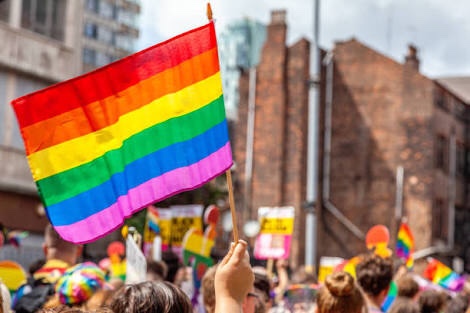
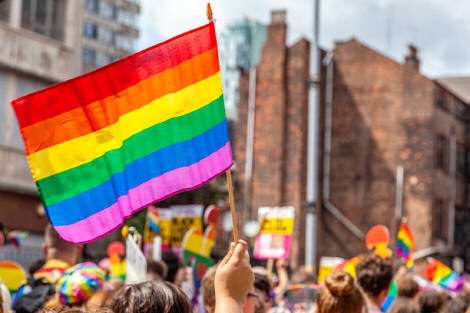
Pride march

Every year, in the month of June, the LGBTQ community hosts pride celebration in various ways. It is a month long celebration of diversity, love, acceptance, inclusion and unabashed self-pride. Various events are held across the globe during this commemorative month as a way of recognising the LGBTQ community and their influence around the world.

Why the month of June?

The month of June was chosen for LGBTQ pride month to memorialise the riots held by LGBTQ community members against a police raid that occured at the Stonewall Inn, a gay club, in New York City on June 28, 1969.

The message was clear; to peacefully protest and raise political and social awareness of the issues facing by the community. The queer community wanted to be open about their sexual orientation and be free to go anywhere without the fear of being arrested.

Pride Month 2020: #21daysallychallenge

This year, because of the social distancing norms across the world, many pride parades and events are on hold. But still we would not be restricted to celebrate all forms of love. Due to the global pandemic concerns, this year a different approach have been taken by the Pride Circle to take aware and conscious steps to acknowledge and redress stereotypes and biases about the LGBTQ community and bring about social change.

The aim of the challenge is to bring together individuals and influencers from over 28 countries and 70 organisations to establish a global community of LGBTQ allies. It started on June 1, there will be 21 mini-challenges extended over a period of 21 days in the month of June. As per the Pride Circle’s Statement, “this is based on science that it takes 21 days to form a new habit. Anyone can participate free-of-cost and sign up for it by clicking on the link – https://thepridecircle.com/21daysallychallenge/

Some of the challenges of the initiative include building awareness about the existence and journey of an LGTBQ person, for instance, read or watch or find out about the coming out story of an LGTBQ person, laws associated with the community; show your allyship, test your biasness- have you ever made fun of or discriminated an LGBTQ. Wear something symbolic or just shout out, let the world know that you’re an ally. Build your knowledge about the community. Learn about the art and literature by them and go all out. Don’t hold back, talk about the stigma and bias against LGBTQ persons.

In our country, decriminalisation of homosexuality is yet to complete 2 years, this initiative which has sprouted in India could become our leap of faith to ignite a global movement to look out for equal rights and fair treatment for the people belonging to that community. Allies would be able to contribute in creating a safe space where people of every sexual orientation is welcome and respected. It will help bridge the gap and let people understand the importance of treating others, who may be different from them, with equality, fairness, acceptance and mutual respect. The #21daysallychallenge could be a favourable step in the direction of building and inclusive and conscientious society with support and trust.

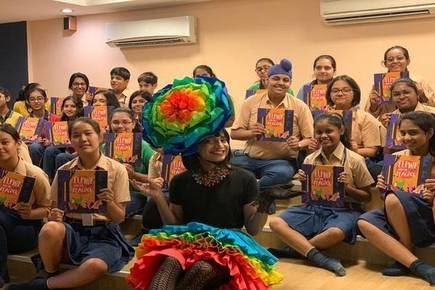
The movement is supported by various organisations, along with eminent academic institutions such as IIMs, IITs, NMIMS, MICA and the only school in India participating in Pride month celebrations, Tagore International School, Vasant vihar. This is a great achievement towards creating safer schools, workplaces and society for the coming generation. Such support from organisations like these is the need of the hour as it plays a vital role in the bigger fight to advance the community and promote inclusion in all spheres of life.

Pic credit: The Hindu

https://www.google.co.in/amp/s/www.thehindu.com/society/celebrating-pride-month-in-june-with-the-21daysallychallenge/article31720256.ece

Now, more than ever, we, the people of India, should encourage everyone who believes in LGTBQ equality to come out and be an ally or support in the best possible way. It’s time we move towards being a more accepting society and initiatives like these is the fundamental step towards that larger goal of “vasudhaiva kutumbakam”, i.e. “the world is one family”.

Human Rights of Women Must Also be Respected

It is most unfortunate and most disgraceful that in India where women is worshipped as Durga, Kali, Gauri etc and where we all show utmost respect to our sister and mother, we don’t care to ensure that those men who without being brainwashed in Pakistan by Pakistani Army or ISI or terror leaders like Hafiz Saeed or Syed Salaluddin or Masood Azhar or anyone else and without being trained in any hostile foreign country perpetrate the worst kind of crimes against women which under no circumstances can ever be justified by anyone. Why when rapists gang rape a women turn by turn and then stab her and then set her ablaze still why in our country are our lawmakers always bothered only and only about the human rights of men alone? Why are such rapists and gang rapists not killed like mosquitoes?

Why should any leniency be shown towards such demons?  Why is it that in last 15 years just one poor Dhananjoy Chatterjee is hanged on circumstantial evidence alone in 2004 and whose petition was drafted by prisoners of Tihar jail as was pointed by earlier by senior Supreme Court advocate Colin Gonsalves as he could not hire a lawyer even though every year we keep hearing that more than 32,000 to 33,000 rape incidents keep happening? Why is it that from 1982 to 2004 only Ranga and Birla are hanged for rape cum murder and who certainly deserved no mercy?

But what about other rapists cum murderers? Why were they also not hanged for similar crimes? Why the rich and the affluent are able to escape punishment just because they are able to hire a battery of “eminent and experienced” lawyers to offer thousands of reasons for sparing their client from being sent to the gallows?

Why are our lawmakers not closing all the escape routes in the form of “discretion bomb” in our IPC which many times mostly saves a rapist from being sent to the gallows? Why there is no mandatory death penalty for rape and gang rape? Why even for repeated offenders we see that there is no mandatory death penalty?

Why are rape trials and trials of other crimes perpetrated against women not conducted most expeditiously? Why do we see inordinate delay in the completion of rape trials and trials of other crimes pertaining to women? Should we be proud of it? Certainly not!

It is heartening to note that while urging for quick disposal of rape cases, Union Law Minister Ravi Shankar Prasad on December 8 said that he would write to all Chief Ministers and Chief Justices of the High Courts to complete investigation in cases of rape and those registered under the Protection of Children from Sexual Offences (Pocso) Act in two months. He also said that the trial of such cases should also be completed within six months. Inordinate delay in completing rape cases has certainly brought disrepute to our legal system and to our judiciary and so what our Union Law Minister has just recently stated is good to read and it must now be earnestly implemented in totality! It brooks no more delay.

While noting that incidents of rape and crimes against women are “unfortunate and highly condemnable”, Ravi Shankar Prasad asserted quite unequivocally that perpetrators of such “heinous” crimes will be punished expeditiously through the judicial process. He said that, “I am going to write letters to all the chief ministers urging them to complete the investigation within two months in rape and Pocso cases.” This is certainly a commendable and courageous step which must be appreciated unequivocally!

Not stopping here, Ravi Shankar Prasad further added that, “I will also write to the Chief Justices of all the High Courts to dispose of expeditiously all cases relating to rape and Pocso pending in the Fast Track Courts.” He also disclosed that he has also requested the Chief Justice of India to ensure that there is a mechanism for speedy disposal of such cases. His comments assume huge significance as they came in the backdrop of nation-wide outrage and uproar over the alleged gang rape cum murder cases at Hyderabad and Unnao.

While mentioning that 704 Fast Track Courts (FTCs) are currently working across the country, Ravi Shankar Prasad further revealed that 1,023 new FTCs are going to be constituted to try cases of Pocso and rape offences, besides other crimes against women. All such FTCs must be constituted at the earliest. It brooks no more delay now!

It is most concerning that there is an alarming increase in the incidents of rape, gang rape, throwing of acid on women, and many other crimes perpetrated on women. The main reason behind such a meteoric upsurge is that criminals feel that they can get away by doing anything in India as the criminal justice system functions at an excruciatingly glacial pace which only further punished women and accused easily gets bail! Can this be ever justified by any sane person?

We all know that the Unnao rape victim who was gang raped earlier in March and after complaining to police the gang rapists were arrested. But they were released after Allahabad High Court granted them bail. What did it culminate into?

As we all know the gang rapists ensured that they waylaid the rape victim while she was on her way to attend court hearing at Raebareli to testify against the criminals. Why were the gang rapists given bail at the first instance? Why were the rights of accused given precedence over the rights of the women?

Not stopping here, why did the police not provide adequate security to the rape victim? Why were the criminals allowed to easily set her ablaze and stab her? Should no policemen be held accountable in this regard?

Why are such policemen just suspended? Why are they not dismissed from service and why are they not held accountable for the death of the Unnao gangrape victim? Why is there so much of leniency towards those police cops who should have jolly well ensured that the gangrape victim was not left alone and especially when she was going to attend court hearing and testify herself in gang rape case why was she not provided full security?

It is good to learn that just a day after the Chief Justice of India Sharad Bobde said that justice can never be instant and loses its character when it becomes revenge we also got to read what our Vice President M Venkaiah Naidu said that, “There cannot be instant justice, but there cannot be constant delays in justice delivery either, else people become restive.” Moreover, how can we afford to ignore the time tested dictum that “Justice delayed is justice denied”? There can be no denying that even the Chief Justice of India – Sharad Bobde is most concerned to see how rapidly crimes against women are increasing in our country and he fully realizes the invaluable importance of combating such crimes on a war footing!

We get to read everyday so many news of even minors being most brutally raped, murdered with her head smashed and what not. But how many times do we read that such rapists, gang rapists and murderers are hanged? Why always we see that the rights of the accused takes precedence over the rights of the women victim? This has to certainly change now if we really want that the people’s faith in our judiciary stands intact!

Why should throwing of acid on women not be punished with mandatory death penalty? How can throwing of acid on women be justified on any ground? How can any punishment less than death penalty or at the least life term without any remission which means imprisonment for the whole life not be awarded on all those who throw acid on women or hurt her in grievous manner?

Why are woman’s right to safety and her right to life not accorded the highest priority in India? Should we not feel ashamed to see that even those who throw acid on women escape very easily after spending at the most just few years in prison? Why should dowry death not be punished with mandatory death penalty? Why are so many escape routes left open for criminals to escape easily and with just a light punishment even after committing the most horrifying crimes against women?

Why is it that under our penal laws there is no mandatory life imprisonment also for gang rape as stipulated in Section 376D of the IPC? Why the punishment for gang rape as stipulated in Section 376D of the IPC is “shall not be less than twenty years but which may extend to life”? Why this “discretion bomb” in form of “may” is inserted in Section 376D dealing with gang rape?

Should this “discretion bomb” not be defused promptly by removing it and providing for “mandatory death penalty” considering the irrefutable fact that gang rape incidents are increasing alarmingly in our country followed by even gang burning of gang rape victims as we saw most recently in Unnao and earlier in Hyderabad with a 26-year-old veterinary doctor? Can gang rape be justified under any circumstances? Why then do we see that there is no mandatory death penalty for such offences?

Why different punishment prescribed for gang rape on woman under 16 years of age as prescribed in Section 376DA and that on woman under 12 years of age as prescribed under Section 376DB of IPC? Why only life imprisonment under Section 376DA and not death? Why option of life and death in Section 376DB of IPC? Why not mandatory death penalty?

Why should minors who rape and gang rape not be punished with death? Why should they at least not be punished with mandatory life term? Why should they be allowed to escape easily after spending some time in reformatory home as we saw in Nirbhaya gang rape cum murder case where the maximum brutality was committed by the minor?

What message are we sending to the world? That in India you can get away by doing anything just because you are a minor! Why should our law makers not listen to the invaluable advice of Vice President M Venkaiah Naidu in this regard who said that there should be no benefit given to minors when they commit such heinous crimes and underscored that political will is needed to implement it?

Why does India figure even far below Pakistan and Bangladesh in happiness index ranking at an abysmally low 140? It is because in India just two rapists are hanged from 1982 to 2003 and from 2004 to 2019 just one rapist is hanged on circumstantial evidence alone! Is this what is fair and can this be justified in the guise of “due process of law”?

Why should our outdated colonial laws like IPC, Evidence Act and CrPC not be changed drastically to meet the present circumstances? Why should human rights of women not be accorded the topmost priority? Why when incidents of rape, gang rape by 4 men or 14 men or even more followed by stabbing and followed by setting her ablaze not be followed by gang hanging?

How many incidents of gang rape are followed by gang hanging? Why our rape laws ensure that gang rapists are never hanged? Should we not be ashamed of this?

Why judiciary never ensures that gang rapists are gang hanged? Why we are happy just after seeing that one poor Dhananjoy Chatterjee is hanged on circumstantial evidence alone? If gang rapists who first gang rape and then set the women ablaze after stabbing her also not deserve death penalty then this death penalty must be kicked out of India right now!

Today that is December 10 is “Human Rights Day”! We must always accept that even “woman” is “human” and not just “men” alone! Therefore, our law makers must ensure that human rights of “women” are accorded the top priority and those who dare to violate them are dealt with swiftly and sternly in accordance with law which must be now amended urgently to ensure that no criminal is able to mock at women and yet escape lightly just by using his “money and muscle power”!

Sanjeev Sirohi, Advocate,

s/o Col BPS Sirohi,

A 82, Defence Enclave,

Sardhana Road, Kankerkhera,

Meerut – 250001, Uttar Pradesh