Maharashtra is home to some of India’s most prestigious universities, known for their academic excellence, research, and diverse programs. Here are the top universities in Maharashtra:
Indian Institute of Technology Bombay (IIT Bombay), Mumbai: One of India’s leading engineering and research institutions, renowned for its cutting-edge research, innovation, and top-ranked programs in engineering, technology, and sciences.
University of Mumbai, Mumbai: One of India’s oldest universities, offering a wide range of undergraduate, postgraduate, and doctoral programs in arts, science, commerce, law, and management.
Savitribai Phule Pune University (SPPU), Pune: A well-regarded public university offering a diverse array of programs in arts, science, commerce, engineering, and management, known for its research contributions.
Institute of Chemical Technology (ICT), Mumbai: A premier institute specializing in chemical engineering, technology, and applied sciences, known for its research and industry collaborations.
Tata Institute of Social Sciences (TISS), Mumbai: A prestigious institute offering programs in social sciences, humanities, public policy, and social work, with a strong focus on research and societal impact.
Symbiosis International (Deemed University), Pune: A leading private university offering diverse programs in management, law, humanities, and health sciences, known for its international collaborations and industry connections.
Narsee Monjee Institute of Management Studies (NMIMS), Mumbai: A top private university offering programs in management, engineering, commerce, law, and health sciences, with a focus on innovation and entrepreneurship.
Dr. Babasaheb Ambedkar Marathwada University, Aurangabad: A prominent public university offering a variety of programs in arts, science, commerce, law, and management, with a focus on regional development.
Maharashtra Institute of Technology (MIT), Pune: A leading private institute offering programs in engineering, technology, management, and humanities, known for its academic rigor and innovation.
Shivaji University, Kolhapur: A well-known public university offering programs in arts, science, commerce, and engineering, with a strong emphasis on research and community engagement.
These universities are recognized for their contributions to higher education, research, and innovation in Maharashtra, making them top choices for students across India.
Human rights day celebrated in 10th December.The National Human Rights Commission of India defines human rights as provided under the Protection of Human Rights Act (PHRA), 1993, as Rights Relating To Life, liberty, equality and dignity of the individual guaranteed by the constitution or embodied in the international covenants and enforceable by courts in India.Human Rights Day is observed on December 10 every year, since it was on this very day in 1948 that the United Nations General Assembly (UNGA) adopted the Universal Declaration of Human Rights, a milestone document that enshrines the rights and freedoms of all human beings.The international document also commits nations to recognise all humans as being “born free and equal in dignity and rights” regardless of “nationality, place of residence, gender, national or ethnic origin, colour, religion, language, or any other status
7 human rights in India:-
* Origins.
* Significance and characteristics.
* Right to equality.
* Right to freedom.
* Right against exploitation.
* Right to freedom of religion.
* Right to life.
* Cultural and educational rights.
An Act to provide for the constitution of a National Human Rights Commission, State Human Rights Commissions in States and Human Rights Courts for better protection of human rights and for matters connected therewith or incidental thereto. Ministry: Ministry of Home Affairs. Department: Department of States.Protection of human rights is essential for the development of the people of the country, which ultimately leads to development of the national as a whole. The Constitution of India guarantees basic human rights to each and every citizen of the country.The Constitution of India guarantees to all Indian women equality (Article 14), no discrimination by the State (Article 15(1)), equality of opportunity (Article 16), equal pay for equal work (Article 39(d)) and Article 42.
Human rights are important because no one should be abused or discriminated against, and because everyone should have the chance to develop their talents. Unfortunately, many people around the world don’t have these basic rights and freedoms.It is constitutional mandate of judiciary to protect human rights of the citizens. Supreme Court and High Courts are empowered to take action to enforce these rights. Machinery for redress is provided under Articles 32 and 226 of the constitution.
The most significant human rights issues included police and security force abuses, such as extrajudicial killings, disappearances, torture, arbitrary arrest and detention, rape, harsh and life-threatening prison conditions, and lengthy pretrial detention.
In India, a child has the right to be protected from neglect, exploitation, and abuse at home and elsewhere. Children have the right to be protected from the incidence of abuse, exploitation, violence, neglect, commercial sexual exploitation, trafficking, child labour, and harmful traditional practices.
United Nations General Assembly (UNGA) is the main deliberative, policymaking and representative organ of the United Nations (UN). Each 193 member state has equal power to vote, providing a unique forum for multilateral discussion of the International issue by comprising all the member states.
Each year in September the Assembly meets for regular sessions; thereafter as required. Through the dedicated agenda items or sub-items discussion of certain issues is done which leads to the adoption of resolutions. Amid covid-19 when all in-person meeting was not possible UNGA included virtual platforms to conduct meetings and other novel means to guarantee business continuity.
Abdulla Shahid of the Maldives opened the 76th session of the United Nations General Assembly on 14 September 2021 as he was sworn in as General Assembly President. Over 100 heads of state and government are expected to attend in person. The size of delegations allowed into the General Assembly Hall has been limited. Due to the global pandemic, UN Member States were encouraged to provide pre-recorded statements instead of travelling to UN Headquarters.
Pandemic is not the only problem the world is facing right now. The world has been facing the challenges such as Racism, intolerance, inequality, poverty, hunger, armed conflict, climate change and other ills for decades. General Assembly is an important opportunity for all to come together and work for the future that is different from today.
The theme for the 76th session is “Building Resilience through hope to recover from COVID-19, rebuild sustainably, respond to the needs of the planet, respect the rights of people, and revitalise the United Nations.”
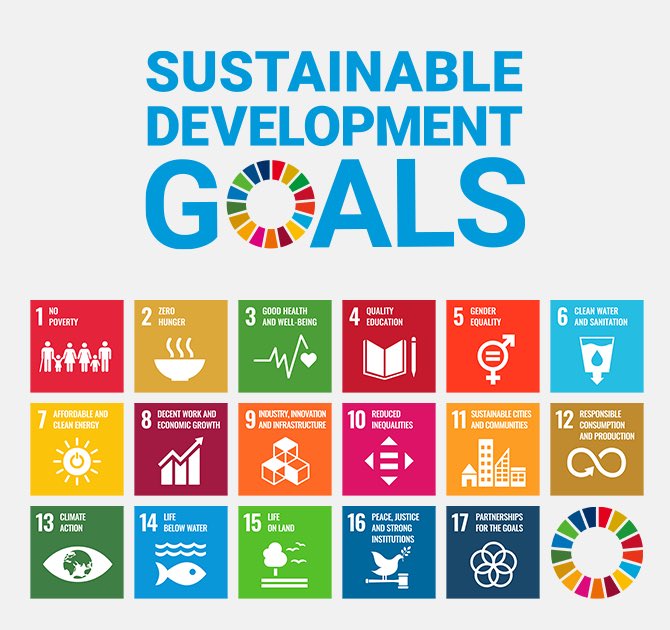
• SUSTAINABLE DEVELOPMENT GOALS (SDG) Sustainable Development Goals are a call for action by all countries- poor, rich and middle-income – to promote prosperity while protecting the planet. It is also an outline for fighting poverty and hunger, achieving gender equality, confronting the climate crisis and much more, within the next ten years.
In unpredictable times, the SDGs show the way to advance towards a strong recovery from COVID-19 and a better future for all on a safe and healthy planet. Sustainable Development Goals are a global pact to create a future where nobody is left behind. These 17 goals were adopted by all countries at the United Nations in September 2015.
DECADE OF ACTION In the aspect of human and planetary well being ‘Decade of action’ is a universal call to action to end poverty, to protect Earth and ensure all people enjoy peace and prosperity. In September 2019, the secretary-general called on all sectors of society to mobilize for a decade of action on three levels: Global action to secure greater leadership, more resources and smarter solutions for the Sustainable Development Goals; local action implanting the needed transitions in the policies, budgets, institutions and regulatory frameworks of governments, cities and local authorities; and people action, including by youth, civil society, the media, the private sector, unions, academia and other stakeholders, to generate an unstoppable movement pushing for the required transformations.
Progress is being made in several places but action to meet the Goals is not yet developing at speed that is required to meet the achievements. The Decade of Action calls for accelerating sustainable solutions to all the world’s biggest challenges — ranging from poverty and gender to climate change, inequality and closing the finance gap.
The pandemic became the unprecedented wake-up call that demanded urgency in actions and ambition. The progress that was planned and had been achieved for the decade of action got shaken in the very first five months of the pandemic, spreading the vary that then SGD moment is going off track.
Covid-19 began as a health crisis and quickly become a human and socio-economic crisis. It also urged everyone to see the importance of the preservation of the achieved progress.
“We need to turn the recovery into a real opportunity to do things right for the future.” – UN Secretary-General António Guterres.
Some of the event highlights
• On 20 September the second SDG moment took place with leaders from over 30 countries addressing the theme ‘Plans, pathways and partners for Recovery and beyond.’ In inclusion of four focal topics Gender equality; Connectivity; Youth in Action; and Localising the SDGs.
• On 23 September, the first-ever food summit will take place completely virtually to mobilise the actionable commitments to transform food systems.
• On 24 September, the first global gathering on energy under UNGA auspices since the UN Conference on New and Renewable Sources of Energy in 1981, ‘High-level Dialogue on Energy’ will be commenced.
• On 28 September, the High-Level Event on Jobs and Social Protection for Poverty Elimination event will be conveyed virtually.
2021 remains a crucial year to bring back the balance with nature, take measures about the climate emergency, and get ahead of the pollution crisis while making sure that no one is left behind. The topics that have been discussed and are to be discussed in the 76th United Nations general assembly are a reminder of what must be done for the future so our dreams won’t be lost forever. Only by being together, we can tackle the feeling of helplessness and hopelessness that many of us are currently feeling. As long as we are united we can make a difference for the sake of our planet and each other.
‘One person can hope for change and two can make it come true with the support of each other.’
If you are a BA student and confused about what to do after graduation, don’t worry we have sorted out some career paths that you can choose after getting a bachelor’s degree in BA programme.
As we all know BA is one of the most popular undergraduate course among students specially humanities students. This three year course allows you to study a combination of subjects ranging from English, Hindi, Economics to History, political science and philosophy. Due to variety of subjects it opens up many job opportunities. Following are the most popular career paths after doing BA:
Post Graduation in courses like B.Ed. or M.A. (in a specific subject).
After M.A in Education, candidates are eligible for PGT jobs, elementary and secondary teaching jobs in private and government schools. After qualifying NET/SET in education, candidates are also eligible for university level teaching jobs in private and government institutions while obtaining a degree of B.Ed. only provides an opportunity to be a teacher in a government or private school.
2. MBA (Masters in Business Administration) is another sought after course after a degree in BA programme where upon completion, candidates are offered jobs in private/ government financial institutes. In an MBA program, you’ll learn about solving business problems, which would allow you to become a competent manager. You need to give the Common Admission Test (CAT) to apply for MBA degrees in numerous colleges and universities. Your CAT Score determines which colleges you can enter. Students of every stream are eligible for this course. This job pays handsome amount of money. Average salary of a MBA graduate is 5-10 LPA.
3. Civil Services Examination, Bank PO Exams, NDA Exams – After completing graduation, students are eligible to apply for civil service examinations and Bank PO exams. They can apply in Union public service communication for posts like IPS, IAS, IFS, Indian defense service. Jobs in public sector banking system is another good option. As these jobs provide job security.
4. Computer Courses– A B.A. graduate can pursue many certifications like web designing, animations, coral draw etc. to get a job/profession in the media industry in fields like web and graphics designing. This field is becoming broader with the rise of social media platform and inclusion of AI. It is almost certain that this field will provide a large number of jobs in near future.
5. Law – Students who have studied English, Hindi, Political Science as subjects can pursue law as a career. The program imparts extensive knowledge on topics like Jurisprudence, Environment Laws, Arbitration, Law of Insurance, Consumer Protection Act. Upon completing the course, one can either pursue LLB, start practice after registering oneself with the respective councils or can work in government or private sectors.
6. Master of Fine Arts is another sought after course for ones who are inclined towards artistic endeavors. Some of the prominent specialization offered under master’s level design programmes are: Industrial design, design computing, architectural design, fashion and textile design, shoe designing, leather designing, graphic designing, house design etc. After completion of the course, one can practice as a designer in the field of specialization in the private/government sector.
Taking Arts stream always seems like a tough choice and a stressful one too. You constantly doubt yourself asking whether you had made the right choice. Just like science arts also have holistic area of study and expertise all we have to do is search thoroughly and read more about
Arts stream offers a wide variety of opportunities in all kinds of fields. We usually find UPSC aspirants quite common but not just UPSC but we can also be lawyer, psychologist,fashion designers, journalists and lot more
Here are the most commonly chosen options
Union Public Service Commission aspirants
This is the most common choice of a Humanities student. Being a UPSC aspirant is the main attraction of the arts subject. Students all across India opt for political science with the dreams of being a Civil Servant. Delhi University has become a hub for UPSC aspirants and political science its main attraction. online and offline coaching are available for civil services all across India
Lawyers
One of the professional courses under the arts stream is that of lawyers law courses are now integrated with B A, BBA , B.Com and all sorts of new subject in order to enhance the learning. law has a lot of different fields under it ranging from Civil, Environmental, criminal etc
Mass Media
Mass Media itself covers a lot of opportunities like reporters, journalists, news readers, editors, magazine writers and lots more. Mass media is a field of great attention. Being creative can be a quick JumpStart in this sector
Fashion Designing
This field of study is quite accepting one, creativity and one’s skill and talents are to be put into use in this field. Fashion designers are widely recognised and highly paid too
Professors and Lecturers
This is is one of the commonly opted jobs by the students. Teaching in colleges have its own perks and benefits too professors are widely respected around the country, not only they command respect but they have become an icon for teaching a very skillful young Nation
Event Management
One of the recent trends in our economy is the growing tertiary sector. More and more jobs are being created in this very sector. Event management is one such emerging one. Managing events and Ceremonies by a team of well equipped and professional people has become quite common these days
Hotel Management
Food technology and food studies have become a hit among the youth. This course takes life in a different perspective and teaches you that not only classroom learning matters but learning by experience is important too.
Theater and Film Making
Some of us love the idea of stage and performing arts and where most of us fail to follow these passions is because we are afraid to take a risk, due to this we never come across its advantages and courses. We often focus on the big picture that we forget the little things.
Criminologist
This course can also come under a science branch too. It can also be learned as a discipline under arts too. What’s more interesting that looking at a crime from the point of view of a social thinker
There are even more courses like interior designing, international studies, linguistic expert and lots more to study.
What’s more important is to read more, Learn more and explore more.






 Eduindex
You must be logged in to post a comment.