Give out the major sources of terror funding in India and the efforts being made to curtail these sources. In the light of this, also discuss the aim and objective of the No Money for Terror (NMFT)' Conference recently held at New Delhi in November 2022.

Here are the major sources of terror funding in India and the efforts being made to curtail these sources

*Major sources of terror funding in India:*
– *State Sponsorship*: States sponsor crimes and support terrorist organizations to further their diplomatic interests.
– *Counterfeit Currency*: Counterfeit Indian currency is used by neighboring states to destabilize the Indian economy.
– *Organized Crime*: Criminal organizations work in nexus and are often connected to bigger terrorist groups.
– *Extortion*: Extortion remains the biggest source of funding of terrorism in India, especially in the North-East.
– *Hawala System*: This is an illegal method of transferring money, generally through international borders that is used by criminal networks.
– *Donations*: Contributions from sympathetic individuals and organizations.
– *Proxy organizations*: Funding from non-profit or charitable institutions which are put up as fronts.
– *Fake Currency Network*: Manufacturing counterfeit currency.
– *Hawala Operations*: Charge a fees for transfer of funds through an informal system.
– *Use of digital assets*: Such as cryptocurrencies.
*Efforts to curtail sources:*
– *National Investigation Agency (NIA)*: The premier agency in India for combating terror across states without special permission from the states.
– *Unlawful Activities Prevention Act*: This anti-terror legislation seeks to designate an individual as a “terrorist”.
– *National Intelligence Grid (NATGRID)*: A centralized data library of terror and crime-related information.
– *SAMADHAN Doctrine*: Developed specifically for the Left-Wing Extremism problems, it also aims to curb the access of terror organizations to funds.
– *Prevention of Money Laundering Act*: Focuses on preventing and controlling money laundering, with the Financial Intelligence Unit (FIU-IND) receiving reports on suspicious transactions.
– *Enforcement Directorate*: Investigates money laundering offenses and coordinates internationally.
– *Combating Financing of Terrorism (CFT) Cell*: Addresses terror funding cases.
– *Terror Funding and Fake Currency Cell*: Constituted in National Investigation Agency (NIA) to tackle terror funding cases.
– *Amendments to the Unlawful Activities (Prevention) Act*: Expanded its scope in 2013.
– *India is a member of international bodies*: Like FATF, EAG, and APG, to combat terror funding.
*Aim and objective of the No Money for Terror (NMFT) Conference:*
– *Collaborate with countries*: To curtail terror and extremist funding.
– *Set up a secretariat*: To operate on the concept of collaboration and cooperation.
– *Investigate new and emerging threats*: To understand and counter new methods of propagating terrorism.
The No Money for Terror (NMFT) Conference aimed to bring countries together to combat terror funding and to set up a secretariat to collaborate and cooperate in this effort. The conference also aimed to investigate new and emerging threats and methods of propagating terrorism. India has been actively working to combat terror funding through various efforts, including the NIA, UAPA, NATGRID, and SAMADHAN Doctrine. Despite facing challenges from its neighbors, India stands firm against terrorism.
All about Civil Services Exam

UPSC has declared the final result for Civil Services 2021 in which Shruti Sharma, Ankita Agarwal and Gamini Singla have secured the first, second and third rank respectively.

Civil Services Examination (CSE) is one of the examinations conducted by the Union Public Service Commission to recruit suitable candidates into civil services of India including IAS, IPS, IFS, and other allied services.

The prescribed UPSC exam eligibility criteria are that the candidate should be a graduate and must have attained 21 years of age. There is also an upper age limit and a number of attempts restriction based on the candidate’s category. Generally, the upper age limit is 32 years, but the commission gives age relaxation for OBC, SC, ST and PH candidates.

The UPSC exam is held in three stages. The three stages are Prelims, Mains and Interview/personality test. The prelims exam consists of two papers of objective type questions. Paper 1 is GS paper Paper 2 is CSAT (Qualifying in nature- 33%). The mains exam consists of nine descriptive type papers. The last stage consists of an interview round with the UPSC board. Candidates should clear each round in order to qualify for the subsequent round. Final merit is based on combined marks obtained in Mains and Interview.

In Mains there is one Essay Paper, 4 GS papers and 2 Papers for Optional Subject (all of 250 marks) which a candidate has to select from a prescribed list according to his/her interest. Some of the optional subjects are – Agriculture, Animal Husbandry and Veterinary Science, Anthropology, Botany, Chemistry, Civil Engineering, Commerce and Accountancy, Economics Electrical Engineering, Geography, Geology, History, Law, Management, Mathematics, Political Science and International Relations, Public Administration, Sociology etc.

  • PAPER-I: Essay: 
  • PAPER-II: General Studies-I: Indian Heritage and Culture, History and Geography of the World and Society. 
  • PAPER-III: General Studies- II: Governance, Constitution, Polity, Social Justice and International Relations. 
  • PAPER-IV: General Studies-III: Technology, Economic Development, Biodiversity, Environment, Security and Disaster Management. 
  • PAPER-V: General Studies- IV: Ethics, Integrity, and Aptitude 
  • Paper-VI and VII: Optional Paper-I and Optional Paper-II

There are to more papers which are qualifying in nature.

Service Profile of an IAS Officer

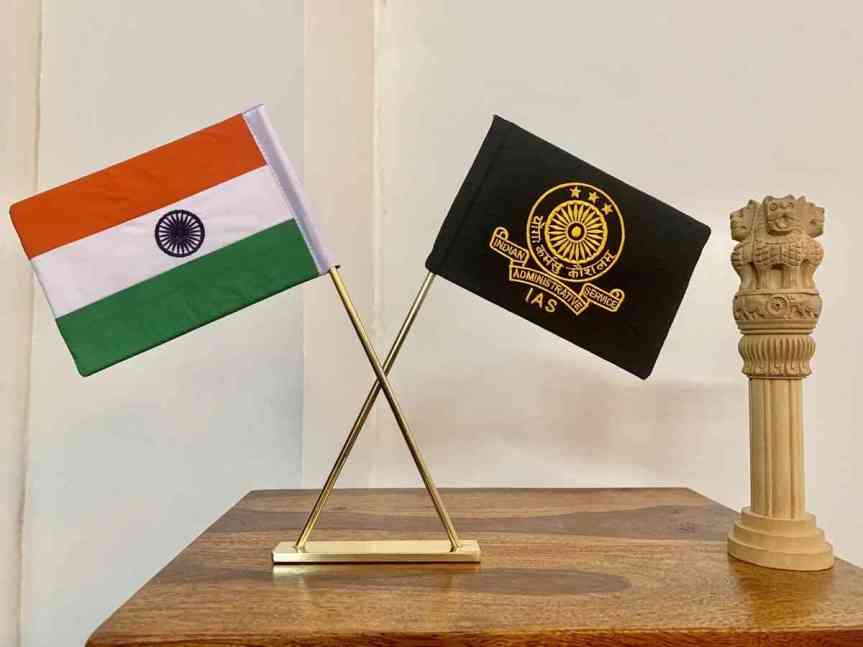
Indian Administrative Service (IAS), the premier service of the Government of India was constituted in 1946. Prior to that Indian imperial Service (1893-1946) was in force. As on 1.1.2013, sanctioned strength of IAS was 6217, comprising of 4313 posts to the filled by direct recruits and 1904 posts to be filled by promotion /appointment of State Civil Services officers/ Non-State Civil Service officers. The civil services have been a hallmark of governance in India. The Constitution provides that without depriving the States of their right to form their own Civil Services, there shall be an All India service recruited on an All- India basis with common qualifications, with uniform scale of pay and the members of which alone could be appointed to these strategic posts throughout the Union.”
No wonder Sardar Vallabhbhai Patel, one of the eminent leaders of the freedom struggle, referred to the. ICS as ‘the steel frame. Of the ‘country. The civil services, therefore, represent the essential spirit of our nation — unity in diversity.

Recruitment

UPSC – Civil Services Exam

At present there are three modes of recruitment to IAS viz

(i) Through Civil Services Examination conducted by UPSC every year;

(ii) Through promotion of State Civil Service officers to IAS

(iii) Through selection of non – State Civil Service officers.

Roughly 66 (1/3)% posts are meant for Direct Recruitment and 33 (1/3%) are
meant for promotion quota.

Training

LBSNAA

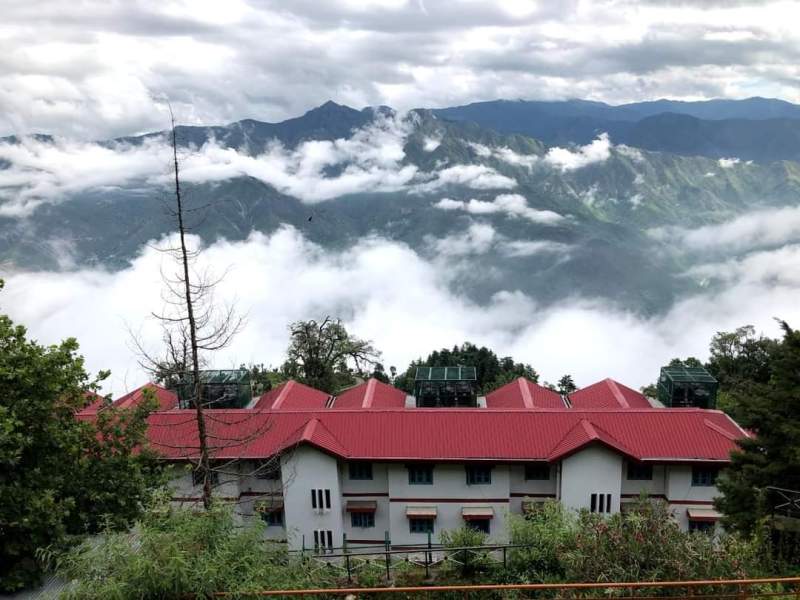
Both Direct Recruit as well as promotee IAS officers are imparted probationary training at Lal Bahadur Shastri National Academy of Administration (LBSNAA). After completion of successful probation, they are confirmed. Also, there is a Provision for mandatory Mid-career Training for IAS officers spread across the entire service span.

Functions of IAS officer

IAS officer is responsible for the maintenance of law and order, revenue administration and general administration in the area under him. His functions broadly include:


(i) Collection of revenue and function as Courts in revenue matters;
(ii) Maintenance of law and order;
(iii) Function as Executive Magistrate;
(iv) Function as Chief Development Officer (CDO)/District Development Commissioner;
(v) Supervision of implementation of policies of State Government and Central Government;
(vi) To travel to places to oversee the implementation of policies;
(vii) Supervision of expenditure of public funds as per norms of financial propriety;
(viii) In the process of policy formulation and decision making, IAS officers at various levels like Joint Secretary, Deputy Secretary etc. make their “contributions and the give final shape to policies;
(ix) To ‘handle the daily affairs ‘of the government, including framing and implementation of policy in ‘consultation with the minister-in-charge of the concerned Ministry.

Source : DoPT website