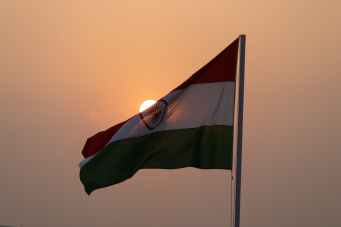
Teacher's Day Celebration in India

Teacher’s Day in India is celebrated on September 5th every year to honor the birth anniversary of Dr. Sarvepalli Radhakrishnan, a renowned philosopher, scholar, and India’s second President. Dr. Radhakrishnan was an esteemed academician and an influential teacher, and his dedication to education prompted the tradition of commemorating this day as a tribute to all teachers across the nation.

Celebrations on Teacher’s Day in India typically involve various activities:

  1. Greeting and Honoring Teachers: Students express their gratitude and respect for their teachers by presenting them with cards, flowers, gifts, or writing heartfelt messages thanking them for their guidance and mentorship.

  2. Cultural Programs: Schools and colleges organize cultural events, performances, and competitions where students showcase their talents through music, dance, drama, poetry recitals, and other artistic presentations dedicated to their teachers.

  3. Teacher Felicitation: Some educational institutions honor exceptional teachers with awards, certificates, or ceremonies recognizing their contributions to education and their impact on students’ lives.

  4. Student-Teacher Interactions: There may be sessions where students share their experiences, memories, and anecdotes about their favorite teachers, fostering a sense of camaraderie and appreciation among students and teachers.

  5. Special Assemblies or Gatherings: Schools often organize special assemblies or gatherings where students and teachers come together to celebrate, share thoughts, and participate in various programs dedicated to teachers.

  6. Educational Workshops or Seminars: Some educational institutions conduct workshops, seminars, or discussions on teaching methodologies, education reforms, and the role of educators in shaping society.

  7. Reflection and Appreciation: Teacher’s Day serves as an opportunity for both teachers and students to reflect on the significance of education, the impact of teachers on students’ lives, and the importance of imparting knowledge and values.

Teacher’s Day celebrations in India aim to acknowledge and appreciate the dedication, hard work, and invaluable contributions of teachers in shaping the future of the nation by nurturing and guiding the younger generation. It’s a day to recognize the pivotal role that teachers play in shaping individuals and society as a whole.

Russia showed a great gesture of friendship towards India by recognising the disputed area as integral part of Indian region.

Moscow: India’s friend Russia has recognized Jammu and Kashmir, Ladakh and Arunachal Pradesh as an integral part of India. This has been seen in the map of SCO member countries issued by the Russian government. According to media reports, the map released shows Pakistan-occupied Kashmir (POK) and Aksai Chin as well as the entire Arunachal Pradesh as part of India. Despite Pakistan and China being member countries of the SCO, Moscow has taken this step. 
This map has further strengthened the Indian side on the issue of Jammu and Kashmir at the international level and within the SCO.

The Soviet Union and Russia have backed India on Kashmir since 1947 and have used veto in the UNSC to block anti-India resolutions. Moscow has repeatedly said Kashmir was a bilateral issue between India and Pakistan, preventing any internationalisation of the dispute.

Rupee slides to record low at 83 against US dollar.

The rupee plunged 61 paise to decline below the 83-mark for the first time against the US dollar on today amid unabated foreign capital outflows and a strong dollar in the overseas markets.

Besides, rising crude prices in the international markets and risk-averse sentiment among investors weighed on the local currency, traders said.

The consumer price index rose 10.1 per cent, compared with 9.9 per cent the previous month, the Office for National Statistics said Wednesday. The new data shows inflation returned to the July peak and is once again at the highest since early 1982. The increase was driven by food prices, which leapt by 14.5 per cent from a year earlier, the biggest jump since 1980, the ONS said.

The US dollar held at a 32-year peak against the yen and rose from a two-week trough against a basket of major peers, underpinned by expectations of aggressive US Federal Reserve interest rate hikes.

What is 'ONDC' initiative by GoI.

To reduce the dominance of e-commerce giants like Flipkart and Amazon, the government rolled out its big initiative — Open Network for Digital Commerce (ONDC) — for public in Bengaluru. With the help of ONDC, government plans to help small retailers and create an alternative to dominant global giants like Amazon and Walmart, who controls over half of India’s fast-growing e-commerce market.

The platform aims to create new opportunities, curb digital monopolies and by supporting micro, small and medium enterprises and small traders and help them get on online platforms. It is an initiative of the Department for Promotion of Industry and Internal Trade (DPIIT) under the Ministry of Commerce and Industry.

The government says existing platforms work in silos and are tightly controlled, keeping out many small players. It expects ONDC to increase competition and foster innovation by start-ups.
It also hopes to bring in logistics firms and others who can collaborate with sellers to deliver products to customers.

The focus would be on small merchants and rural consumers, with apps in Indian languages.
ONDC officials liken the network to a mall with 1,000 gates instead of just two, thereby limiting opportunities for selected sellers to receive preferential treatment – a common accusation against major e-commerce companies. Users will be able to rate service providers on ONDC, which will be applicable and visible across the network. The government says ONDC will help to end “predatory pricing, especially in high-margin, high-value products”. Amazon and Flipkart deny that they have engaged in predatory pricing.

How does ONDC work?

The ONDC platform lies in the middle of the interfaces hosting the buyers and the sellers. So far, the buyer side interface is being hosted by Paytm, whereas the seller side interface is being hosted by other players like GoFrugal, etc.

When a buyer searches for an item on the Paytm app, from where ONDC has gone live, the app will connect to the ONDC platform, which will connect it to seller side interfaces that will list all the companies from where you can buy the particular item.

On ONDC, there will be several other backend partners such as logistics service providers, enterprise resource planners, e-commerce store hosting service providers, etc.

India set a new record by exporting cellphones more than $1 billion worth in september month

Monthly mobile phone exports from India touched the $1-billion mark (over ₹8,200 crore) for the first time ever in September. They were boosted by the government’s production-linked incentive (PLI) scheme, which has pushed global players such as Apple and Samsung to increase local production for the domestic as well as overseas markets.

According to data available, mobile phone exports for April-September more than doubled to $4.2 billion, from $1.7 billion in the corresponding period of 2021. Previously, the highest monthly export of cellphones was in December 2021, when devices worth $770 million were shipped. Exports hovered around $700 million each month during June-August this year.

The growth in exports is primarily driven by Apple contract manufacturers Foxconn, Wistron and Pegatron as well as Samsung; these companies are the leading global participants of the government’s Rs 40,995-crore PLI scheme announced by the government in April 2020.

Global Hunger Index report is an attempt to tarnish India's image : says GoI.

The government has yet again rejected the Global Hunger Index (GHI) 2022 which ranks India 107 among 121 countries and has called it “an erroneous measure of hunger” and an attempt to “taint” India’s image. It also wrongly claims that the ranks are based on an opinion poll.

“Three out of the four indicators used for calculation of the index are related to health of Children and cannot be representative of the entire population,” says the press statement issued by the Ministry of Women and Child Development. This is the second year in a row the government has rejected the GHI rankings.

The GHI scores are calculated using four indicators — undernourishment, child stunting, child wasting and child mortality.

It adds that that the fourth indicator, estimate of Proportion of Undernourished (PoU), population is based on an opinion poll conducted on a very small sample size of 3000 based on “Food Insecurity Experience Scale (FIES)” Survey Module of Food and Agriculture Organisation- a claim that was also rejected last year by representatives of the Global Hunger Index.

The government said the data used to arrive at the rating drawn from a narrow sample for a country of India’s size and through dubious methods is not only wrong & unethical, but it also reeks of obvious bias. It also accused the Concern Worldwide and Welt Hunger Hilfe, the publishing agencies of the Global Hunger Report, of not having done their due diligence before releasing the report.

The central government highlighted the prejudice and erroneous method used by the agency, pointing out how irrelevant, and questions not searching for factual responses were used in the survey to arrive at the Hunger Index. 

Inflation not yet in control.

In twin blows to Indian economic revival, higher food prices drove retail inflation to a five-month high of 7.4 per cent while factory output fell for the first time in 18 months. This relates to data of september month.

The second consecutive month of rise in consumer price index (CPI)-based inflation will add to the pressure on the Reserve Bank of India (RBI) to again raise interest rates to tame high prices.

Inflation has been above the targeted zone for the ninth month in a row and as per statute, the RBI will now have to explain to the government in writing why it failed to keep prices below 6 per cent.

This is the ninth consecutive month where the inflation print has remained above the upper band of 6 per cent and the second successive quarter where the average is higher than 7 per cent.

Irregular rainfall is said to be the primary reason behind higher inflation in vegetable and fruits. While inflation in cereals has also inched up, the steps taken by the government and a reasonably healthy Kharif output are expected to address the concerns behind the further hike in prices.

IMF's Chief praises India's economic growth.

India has emerged as “a bright light” at a time when the world is facing imminent prospects of a recession, the chief economist of the International Monetary Fund (IMF) said on 12 October, noting that the country, however, needed key structural reforms in order to achieve the ambitious target of being a USD 10 trillion economy.

Pierre-Olivier Gourinchas, chief economist of the IMF said: “Well, India is, I want to say, sort of bright light. The Indian economy has been doing reasonably well.”   In its World Economic Outlook, the IMF projected a growth rate of 6.8 per cent in 2022 as compared to 8.7 per cent in 2021 for India.

The projection for 2023 slides down further to 6.1 per cent, he noted.

Responding to a question on the ambitious goal of India becoming a USD 10 trillion economy, Gourinchas told PTI that he certainly believes this is achievable.

“Inflation is still above the central bank target in India. We expect India’s inflation at 6.9 per cent in 2022-23, which is likely to come down to 5.1 per cent next year. So, the overall stance of the policy we think that fiscal and monetary policy should be probably on the tightening side,” Gourinchas said.

India surpasses Japan in term of metro rail system length to become 4th largest metro system in the world.

India has a new title to boast on an international level. With the newest addition of the Ahmedabad metro, the length of metro projects in India has reached 810 km, surpassing the lines in Japan. India will overtake South Korea and the United States to be the second longest metro line in the world. This ambitious project is expected to be completed within the next one or two years. 

After the inauguration of Ahmedabad metro, the coverage of metrorail in India reaches 810 kilometers. It is a matter of pride, that India is among leading countries with respect to total length of metrorail”, the union minister Puri said during inauguration, adding that India has not only overtaken Japan, but also has 982 kilometers of Metro rail under construction. “Once this (982 kilometers of metro rail) finishes, India will overtake South Korea and United States and will reach the second position in the world. I am expecting this to happen within next 1-2 years,” he added.

RBI may soon launch E-Rupee on pilot phase.

E-rupee or digital rupee is a digital version of the Indian rupee that the RBI is exploring. The RBI has proposed to issue two versions – wholesale for interbank settlement and retail for the public. According to the indirect model proposed by the RBI, you will hold the digital rupee in a wallet with a bank or service provider.

The Reserve Bank of India on 7th october said it will soon commence the pilot launch of digital Rupee or e-Rupee for specific use cases as it tests digital currency in India.

“As the extent and scope of such pilot launches expand, RBI will continue to communicate about the specific features and benefits of e-rupee, from time to time,” the central bank said in a concept note on Central Bank Digital Currency (CBDC).

The concept note also discusses key considerations such as technology and design choices, possible uses of the digital rupee, and issuance mechanisms, among others.

Biography of Mulayam Singh Yadav

Mulayam Singh Yadav (22 November 1939 – 10 October 2022) was
an Indian politician and the founder-patron of the Samajwadi Party. He served
for three non-consecutive terms as the Chief Minister of Uttar Pradesh, and
also served as the Minister of Defence, Government of India. A long-time
parliamentarian, he was the Member of Parliament, representing the constituency
of Mainpuri in the Lok Sabha, and has also earlier served as the Member of
Parliament from Azamgarh and Sambhal constituencies. He was often referred to
as Netaji (meaning respected leader in Hindi) by party leaders and workers.

Early life and education

Mulayam Singh Yadav was born to Murti Devi and Sughar Singh
Yadav on 22 November 1939 in Saifai village, Etawah district, Uttar Pradesh,
India.


Yadav had three degrees in political science — a B.A. from
Karm Kshetra Post Graduate College in Etawah, a B.T. from A. K. College in
Shikohabad, and an M.A. from B. R. College, Agra University.


Personal life

Yadav has married twice. His first wife, Malti Devi, was in
a vegetative state from 1974 until her death in May 2003 following
complications while giving birth to their only child, Akhilesh Yadav. Akhilesh
was Chief Minister of Uttar Pradesh from 2012 to 2017.


Mulayam had a relationship with Sadhana Gupta while still
married to Malti Devi in the 1990s. Gupta was not well known until February
2007, when the relationship was admitted in India’s Supreme Court. Sadhana
Gupta has a son named Prateek Yadav (born 1988), from her first marriage.


Prateek’s wife Aparna Bisht Yadav (born 1990) joined BJP in
2022. Sadhana Gupta died in July 2022 after a brief illness.


Early political career

Groomed by leaders such as Ram Manohar Lohia and Raj Narain,
Yadav was first elected as a Member of the Legislative Assembly in Legislative
Assembly of Uttar Pradesh in 1967. Yadav served eight terms there In 1975,
during Indira Gandhi’s imposition of the Emergency, Yadav was arrested and kept
in custody for 19 months. He first became a state minister in 1977. Later, in
1980, he became the president of the Lok Dal (People’s Party) in Uttar Pradesh
which became a part of the Janata Dal (People’s Party) afterwards. In 1982, he
was elected leader of the opposition in the Uttar Pradesh Legislative Council
and held that post until 1985. When the Lok Dal party split, Yadav launched the
Krantikari Morcha party.


Chief Minister

First term

Yadav first became Chief Minister of Uttar Pradesh in 1989.


After the collapse of the V. P. Singh national government in
November 1990, Yadav joined Chandra Shekhar’s Janata Dal (Socialist) party and
continued in office as chief minister with the support of the Indian National
Congress (INC). His government fell when the INC withdrew their support in
April 1991 in the aftermath of developments at the national level where it has
earlier withdrawn its support for Chandra Shekhar’s government. Mid-term
elections to Uttar Pradesh assembly were held in mid-1991, in which Mulayam
Singh’s party lost power to the BJP.


Second term

In 1992, Yadav founded his own Samajwadi Party (Socialist
Party). In 1993, he allied with the Bahujan Samaj Party for the elections to
Uttar Pradesh assembly due to be held in November 1993. The alliance between
Samajwadi Party and Bahujan Samaj Party prevented the return of BJP to power in
the state. Yadav became chief minister of Uttar Pradesh with the support of
Congress and Janata Dal. His stand on movement for demanding separate statehood
for Uttarakhand was as much controversial as his stand on Ayodhya movement in
1990 was. There was a firing on Uttarakhand activists at Muzaffarnagar on 2
October 1994, something for which Uttarakhand activists held him responsible.
He continued holding that post until his ally opted into another alliance in
June 1995.


Third term

In 2002, following a fluid post-election situation in Uttar
Pradesh, the Bharatiya Janata Party and Bahujan Samaj Party joined to form a
government under Dalit leader Mayawati, who was considered to be Yadav’s
greatest political rival in the state. The BJP pulled out of the government on
25 August 2003, and enough rebel legislators of the Bahujan Samaj Party left to
allow Yadav to become the Chief Minister, with the support of independents and
small parties. He was sworn in as chief minister of Uttar Pradesh for the third
time in September 2003.


Yadav was still a member of the Lok Sabha when he was sworn
in as chief minister. In order to meet the constitutional requirement of
becoming the member of state legislature within six months of being sworn in,
he contested the assembly by-election from Gunnaur assembly seat in January
2004. Yadav won by a record margin, polling almost 94 per cent of the votes.


With the hope of playing a major role at the centre, Yadav
contested the 2004 Lok Sabha elections from Mainpuri while still Chief Minister
of Uttar Pradesh. He won the seat and his Samajwadi Party won more seats in
Uttar Pradesh than all other parties. However the Congress party, which formed
the coalition government at the centre after the elections, had majority in the
Lok Sabha with the support of the Communist parties. As a result, Yadav could
not play any significant role at the centre, Yadav resigned from the Lok Sabha
and chose to continue as chief minister of Uttar Pradesh until the 2007
elections, when he lost to the BSP.


Cabinet minister

In 1996, Yadav was elected to the eleventh Lok Sabha from
Mainpuri constituency. In the United Front coalition government formed that
year, his party joined and he was named India’s Defence Minister. That
government fell in 1998 as India went in for fresh elections, but he returned
to the Lok Sabha that yearfrom Sambhal parliamentary constituency. After the
fall of Atal Bihari Vajpayee government at the centre in April 1999, he did not
support the Congress party in the formation of the government at the centre. He
contested Lok Sabha elections of 1999 from two seats, Sambhal and Kannauj, and
won from both. He resigned from Kannauj seat for his son Akhilesh in the
by-elections.


Positions held

Mulayam Singh Yadav has been elected 10 times as MLA and 7
times as Lok Sabha MP.

Criticism over comment on rape

The crime of rape became a capital offence in India
following the 2012 Delhi gang rape incident. Yadav has opposed this change in
the law, saying that “Boys will be boys. Boys commit mistakes”. In
response to 2014 Badaun gang rape and Yadav’s comments, UN Secretary-General
Ban Ki-moon said “We say no to the dismissive, destructive attitude of,
‘Boys will be boys'”. On 19 August 2015, Yadav remarked that gang-rapes
are impractical and rape-victims in those cases tend to lie. He was summoned by
the Judicial Magistrate of Mahoba district court in Uttar Pradesh for that
remark.


Support for a sovereign independent Tibet

Yadav has said it is necessary for India to support a
sovereign and independent Tibet. He said that a past government had made a
“big mistake” on the issue and noted that he had spoken against it at
the time.He believed that Tibet was a traditional buffer between China and
India and that India should support the Dalai Lama and Tibetan independence. Claiming
that China had secreted nuclear weapons in Pakistan, he cautioned that
“China is our enemy, not Pakistan. Pakistan can do us no damage”.


Family feud

Since the young Akhilesh Yadav became Chief Minister of
Uttar Pradesh in 2012, surpassing Mulayam’s brother Shivpal Singh Yadav, the
Yadav family was divided into two feuding groups. One of the groups, led by
Akhilesh, enjoyed the support of his father’s cousin and National General
Secretary Ram Gopal Yadav. The rival group was led by Mulayam Singh and
supported by his brother and State Chief of Party, Shivpal Yadav, and a friend,
former MP Amar Singh. Akhilesh had fired his uncle twice from his cabinet as it
was seen by many as a direct challenge to his father, who has steadily
supported Shivpal over Akhilesh. On 30 December 2016, Mulayam Yadav expelled
his son Akhilesh and his cousin Ram Gopal from the party for six years on the
grounds of indiscipline, only to revoke the decision 24 hours later. Akhilesh,
in response, stripped his father off the party presidency and instead named him
the chief patron of the party following the national convention of the party on
1 January 2017. Mulayam termed the national convention as illegal and directly
expelled his cousin, Ram Gopal Yadav, who had convened the national executive
convention. But the Election commission of India ruled that Ram Gopal Yadav had
the right to convene that executive convention, and reversed Mulayam’s order.
Hence Akhilesh Yadav officially became the new national leader of the party.


Know about India's first Solar village

The Modhera village, located in the Mehsana district of Gujarat, declared as India’s first solar-powered village.

Modhera has a deep, historical Sun connection, thanks to the Sun Temple, or Surya Mandir, it hosts on the banks of river Pushpavati.

The renowned temple was built close to a thousand years ago, in 1026-27 CE, during the reign of Chalukya King Bhima I (1022-1063 CE). Connecting the old and the new, Modhera, which hosts this ancient architectural marvel, is heading into a modern, renewable future through the production of electricity using the energy of the Sun.

This initiative came about from a programme led by both the centre and state, called the “Solarisation of Modhera Sun Temple and Town.” As part of the project, they developed a ground-mounted solar power plant in addition to installing 1,300 rooftop solar systems on top of residential and government buildings. The solar systems are integrated with a 15Mwh battery energy storage system. This makes up a 6MW grid.

Solar energy is thus available to Modhera round the clock. According to the Gujarat government, the village residents will be able to save 60 to 100 per cent on their electricity bills with the solar push.

Air Force Day.

The Indian Air Force (IAF) is the fourth largest air force in the world after the US, China, and Russia. Indian Air Force Day is observed on October 8 and this year marks its 90th anniversary of this day. IAF will hold a parade at the Hindon airbase in Ghaziabad where it showcases its air power. 

The Indian Air Force was officially established on 8 October 1932. Its first ac flight came into being on 01 April 1933. Therefore, the celebration of this day was officially started on 8th October in the year 1932 in order to increase the awareness of the Indian air force in any organization of national security both officially and publicly.

Also known as ‘Bharatiya Vayu Sena’, the IAF was officially established on October 8, 1932, by the British Empire. The President of India holds the rank of Supreme Commander of the air force. The Chief of Air Staff, an air chief marshal is responsible for the operational command of the air force.

The Indian Air Force not only safeguards Indian territory and national interests from all threats, but also provides support during natural calamities. The IAF provides air support to the Indian Army on the battlefield as well as strategic and tactical airlift capabilities.

The Indian Air Force comprises highly-trained crews and pilots and has access to modern military resources which provide India with the capacity to carry out rapid response evacuation, search-and-rescue (SAR) operations, and delivery of relief supplies to affected areas through cargo aircraft.

 The day is celebrated in air force bases all across the nation with air shows and parades conducted by air force cadets, as the Indian Air Force (IAF) has its prime responsibility of securing the Indian airspace as well as carrying out aerial warfare during any clash.

India abstained to vote against China at UNHRC.

During this week UN Human Rights Council was holding a debate on the human rights situation in China’s restive Xinjiang region. Human rights groups have been sounding the alarm over what is happening in the resource-rich north-western Chinese province for years, alleging that more than one million Uyghurs had been detained against their will in a large network of what Beijing calls “re-education camps”.

The efforts of the US and Western countries to bring a resolution against China on the situation of Uighur Muslims in the United Nations Human Rights Council (UNHRC) suffered a setback when 11 countries, including India and Ukraine, indirectly helped China by abstaining to vote at the time of voting.

This is only the second time in the UNHRC’s 16-year history that a US resolution has been rejected. It also explains the changing global equations. Most of the discussion after the UNHRC vote is about India’s stand. Given the current state of relations with China, the US expected support from India. However, India said that it has stuck to its policy of not voting against any country in institutions like the UNHRC.

However, it is believed that India has taken this step due to the apprehension of a UN vote on Jammu and Kashmir in future.

Know all about 'Prachand', India's own homemade attack helicopter.

Indigenously-built light combat helicopter (LCH) ‘Prachand’ was inducted into the Indian Air Force at Jodhpur airbase. The Light Combat Helicopter (LCH), developed by state-run aerospace major Hindustan Aeronautics Ltd (HAL), has been primarily designed for deployment in high-altitude regions. It was inducted into the IAF at a ceremony in Jodhpur in the presence of Defence Minister Rajnath Singh and Chief of Air Staff Air Chief Marshal VR Chaudhari.

The LCH is a multi-role combat helicopter designed and manufactured by HAL, which is made in HAL’s helicopter division in Bengaluru. The helicopter can carry rockets, air-to-air and anti-tank missiles, and bombs.

The helicopter has the necessary agility, manoeuvrability, range extension, high elevation efficiency, and 24/7/365 all-weather fighting potential to carry out tasks like combat search and rescue (CSAR), destruction of enemy air defence (DEAD), counter-insurgency (CI), functions against slow-moving aircraft and remotely piloted aircraft (RPAs), high altitude bunker busting, counter-insurgency operations in the jungle and urban environments, and support to ground forces.

The production of LCH by HAL will give the Atmanirbhar Bharat initiative more momentum and encourage the indigenization of defence production and the nation’s defence industry as part of the ongoing effort to achieve self-reliance in the defence manufacturing sector and reduce imports.