What are Carbon Markets ?


Carbon Markets: Carbon markets facilitate the trading of emission reductions. Such a market allows countries, or industries, to earn carbon credits for the emission reductions they make in excess of their targets. These carbon credits can be traded to the highest bidder in exchange of money. The buyers of carbon credits can show the emission reductions as their own and use them to meet their reduction targets. Carbon markets are considered a very important and effective instrument to reduce overall emissions.


A carbon market existed under Kyoto Protocol but is no longer there because the Protocol itself expired last year. A new market under Paris Agreement is yet to become functional. Developing countries like India, China or Brazil have large amounts of carbon credits left over because of the lack of demand as many countries abandoned their emission reduction targets. The developing countries wanted their unused carbon credits to be transitioned to the new market, something that the developed nations had been opposing on the grounds that the quality of these credits — the question whether these credits represent actual emission reductions — was a suspect. A deadlock over this had been holding up the finalisation of the rules and procedures of the Paris Agreement.


The Glasgow Pact has offered some reprieve to the developing nations. It has allowed these carbon credits to be used in meeting countries’ first NDC targets. These cannot be used for meeting targets in subsequent NDCs. That means, if a developed country wants to buy these credits to meet its own emission reduction targets, it can do so till 2025. Most countries have presented climate targets for 2025 in their first NDCs.

The resolution of the deadlock over carbon markets represents one of the major successes of COP26.

Achievements of the Glasgow Summit 2021


What was achieved?

Mitigation: The Glasgow agreement has emphasised that stronger action in the current decade was most critical to achieving the 1.5-degree target. Accordingly, it has:

1. Asked countries to strengthen their 2030 climate action plans, or NDCs (nationally-determined contributions), by next year.

2. Established a work programme to urgently scale-up mitigation ambition and implementation.

3. Decided to convene an annual meeting of ministers to raise ambition of 2030 climate actions.

4. Called for an annual synthesis report on what countries were doing.

5. Requested the UN Secretary General to convene a meeting of world leaders in 2023 to scale-up ambition of climate action.

6. Asked countries to make efforts to reduce usage of coal as a source of fuel, and abolish “inefficient” subsidies on fossil fuels
Has called for a phase-down of coal, and phase-out of fossil fuels. This is the first time that coal has been explicitly mentioned in any COP decision. It also led to big fracas at the end, with a group of countries led by India and China forcing an amendment to the word “phase-out” in relation to coal changed to “phase-down”. The initial language on this provision was much more direct. It called on all parties to accelerate phase-out of coal and fossil fuel subsidies. It was watered down in subsequent drafts to read phase-out of “unabated” coal power and “inefficient” fossil fuel subsidies. But even this was not liking to the developing countries who then got it changed to “phase down unabated coal power and phase out inefficient fossil fuel subsidies while providing targeted support to the poorest and the most vulnerable in line with national circumstances…”. Despite the dilution, the inclusion of language on reduction of coal power is being seen as a significant movement forward.


Adaptation: Most of the countries, especially the smaller and poorer ones, and the small island states, consider adaptation to be the most important component of climate action. These countries, due to their lower capacities, are already facing the worst impacts of climate change, and require immediate money, technology and capacity building for their adaptation activities.

As such, the Glasgow Climate Pact has:

Asked the developed countries to at least double the money being provided for adaptation by 2025 from the 2019 levels. In 2019, about $15 billion was made available for adaptation that was less than 20 per cent of the total climate finance flows. Developing countries have been demanding that at least half of all climate finance should be directed towards adaptation efforts.


Created a two-year work programme to define a global goal on adaptation. The Paris Agreement has a global goal on mitigation — reduce greenhouse gas emissions deep enough to keep the temperature rise within 2 degree Celsius of pre-industrial times. A similar global goal on adaptation has been missing, primarily because of the difficulty in defining such a target. Unlike mitigation efforts that bring global benefits, the benefits from adaptation are local or regional. There are no uniform global criteria against which adaptation targets can be set and measured. However, this has been a long-pending demand of developing countries and the Paris Agreement also asks for defining such a goal.


Finance: Every climate action has financial implications. It is now estimated that trillions of dollars are required every year to fund all the actions necessary to achieve the climate targets. But, money has been in short supply. Developed countries are under an obligation, due to their historical responsibility in emitting greenhouse gases, to provide finance and technology to the developing nations to help them deal with climate change. In 2009, developed countries had promised to mobilise at least $100 billion every year from 2020. This promise was reaffirmed during the Paris Agreement, which also asked the developed countries to scale up this amount from 2025. The 2020 deadline has long passed but the $100 billion promise has not been fulfilled. The developed nations have now said that they will arrange this amount by 2023.

What does the Glasgow Agreement say?

Following are the major observations of the Glasgow Summit :

1. A deal aimed at staving off dangerous climate change has been struck at the COP26 summit in Glasgow.

2. Expressed “deep regrets” over the failure of the developed countries to deliver on their $100 billion promise. It has asked them to arrange this money urgently and in every year till 2025.

3. Initiated discussions on setting the new target for climate finance, beyond $100 billion for the post-2025 period.

4. Asked the developed countries to provide transparent information about the money they plan to provide.

5. Loss and Damage: The frequency of climate disasters has been rising rapidly, and many of these cause largescale devastation. The worst affected are the poor and small countries, and the island states. There is no institutional mechanism to compensate these nations for the losses, or provide them help in the form of relief and rehabilitation. The loss and damage provision in the Paris Agreement seeks to address that.


Introduced eight years ago in Warsaw, the provision hasn’t received much attention at the COPs, mainly because it was seen as an effort requiring huge sums of money. However, the affected countries have been demanding some meaningful action on this front. Thanks to a push from many nations, substantive discussions on loss and damage could take place in Glasgow. One of the earlier drafts included a provision for setting up of a facility to coordinate loss and damage activities. However, the final agreement, which has acknowledged the problem and dealt with the subject at substantial length, has only established a “dialogue” to discuss arrangements for funding of such activities. This is being seen as a major let-down.

What are Carbon Markets ?

Glasgow Summit 2021


Carbon Markets: Carbon markets facilitate the trading of emission reductions. Such a market allows countries, or industries, to earn carbon credits for the emission reductions they make in excess of their targets. These carbon credits can be traded to the highest bidder in exchange of money. The buyers of carbon credits can show the emission reductions as their own and use them to meet their reduction targets. Carbon markets are considered a very important and effective instrument to reduce overall emissions.


A carbon market existed under Kyoto Protocol but is no longer there because the Protocol itself expired last year. A new market under Paris Agreement is yet to become functional. Developing countries like India, China or Brazil have large amounts of carbon credits left over because of the lack of demand as many countries abandoned their emission reduction targets. The developing countries wanted their unused carbon credits to be transitioned to the new market, something that the developed nations had been opposing on the grounds that the quality of these credits — the question whether these credits represent actual emission reductions — was a suspect. A deadlock over this had been holding up the finalisation of the rules and procedures of the Paris Agreement.


The Glasgow Pact has offered some reprieve to the developing nations. It has allowed these carbon credits to be used in meeting countries’ first NDC targets. These cannot be used for meeting targets in subsequent NDCs. That means, if a developed country wants to buy these credits to meet its own emission reduction targets, it can do so till 2025. Most countries have presented climate targets for 2025 in their first NDCs.

The resolution of the deadlock over carbon markets represents one of the major successes of COP26.

Five terms that came up at the climate change conference in Glasgow 2021


The main task for COP26 was to finalise the rules and procedures for implementation of the Paris Agreement. Most of these rules had been finalised by 2018, but a few provisions, like the one relating to creation of new carbon markets, had remained unresolved.

After two weeks of negotiations with governments debating over provisions on phasing out coal, cutting greenhouse gas emissions and providing money to the poor world, the annual climate change summit came to an end on Saturday night with the adoption of a weaker-than-expected agreement called the Glasgow Climate Pact.


The Glasgow meeting was the 26th session of the Conference of Parties to the UN Framework Convention on Climate Change, or COP26. The main task for COP26 was to finalise the rules and procedures for implementation of the Paris Agreement. Most of these rules had been finalised by 2018, but a few provisions, like the one relating to creation of new carbon markets, had remained unresolved. However, due to clear evidence of worsening of the climate crisis in the six years since the Paris Agreement was finalised, host country United Kingdom was keen to ensure that Glasgow, instead of becoming merely a “procedural” COP, was a turning point in enhancing climate actions. The effort was to push for an agreement that could put the world on a 1.5 degree Celsius pathway, instead of the 2 degree Celsius trajectory which is the main objective of the Paris Agreement.

Objectification of Women through Item Songs

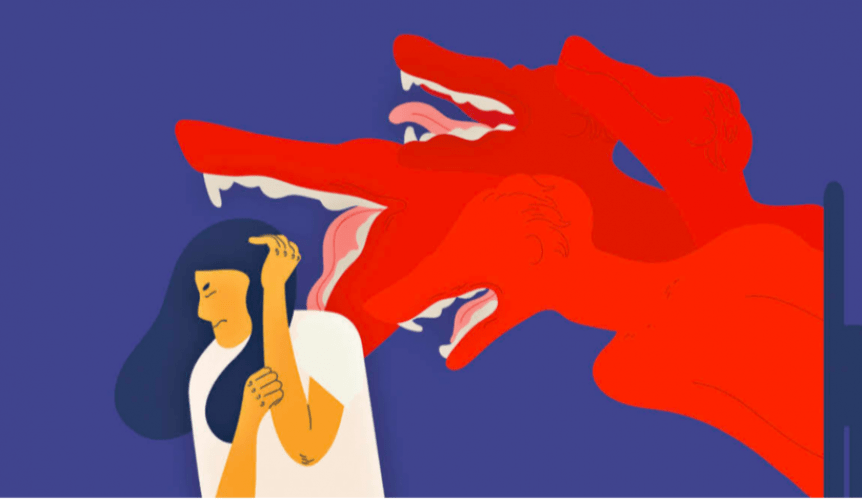
Objectification of women is quite self-explanatory, is it not? In a very simple term, it explains how women are treated as objects rather than breathing, living human beings. This subject has been discussed before, article have been written on the same, petition has been filled for the same. However, I sit to write about it again, for when I discussed about this to an acquaintance, I was asked why am I so hung up on these almost feminist issues, why not I write about ‘pressing issues’ such as poverty and other such issues. I agree that these are important issues but the subject in hand is no less important. The fact that people consider it to be of less importance is really disturbing and bothersome How are we to bring a change when we don’t deem it significant enough to look after.

For a very long time, women have been referred to as ‘weaker sex’, a source of entertainment. This notion has only been promoted in various ways. Bollywood movies have been a very strong medium for the same. The article throws light on one of the aspects in Bollywood movies which in not-so-subtle ways objectify women – ‘Item Songs’. Interestingly, the term ‘item’ refers only to women, specifically very curvaceous women. Moreover, the ‘songs’, the lyrical content of all these item songs unabashedly objectify women. Let’s take for instance, ‘tandoori chicken’ (Fevicol), ‘Chikni Chameli’; ‘Ab Karunga tere saath Gandi Baat’. Oh! The list is endless. The new so called pop songs are not giving it a break. What do songs like ‘Genda Phool’; ‘Chocolate’ among many others are trying to portray?

Yes! Entertainment is always welcomed but not at the cost of women being objectified, being compared to all the objects that one can think of. It affects the mindset of people; it adds to the not so progressive mindset. It in a way says that ‘it is okay if we refer women as such, she has no complaints, look at the way she smiles among all the leering, lustful, predatory eyes.’ However, we all know that it is not okay. In any given real-life situations, no one would love the idea of being cat-called, being called names or whatsoever. Media has somehow come dictate the ways people think, their perspective, their actions. If people can enjoy the actors and actresses enjoying all these in a ‘T.V. screen’, who says it won’t be enjoyable outside the screen, right!

We need to realize that this is unacceptable, not everyone way of entertainment is ‘not’ harmful. The portrait of women as being skinny has somehow fed into the mind of every other person that only acceptable body-shape is being skinny, lean and not otherwise. In other words, body-shaming becomes prominent.

It is important for such discussion to take place more, for more involvement of people in this direction, for raising voice. Moreover, as Sabhana Azmi suggested that it is important for actresses to have a say in the lyrical content. All such lyrics are written by a man – describing a woman through a male gaze. It is very disturbing that people with mighty pen in their swords would resort to writing such lines which can influence a lot of audience. Not one person is to blame, the mind-set of people will take years to change, you cannot expect women to carry knife while always moving around. However, it somewhere needs to start. A little initiative needs to be taken. Somewhere, someone. A conversation about this cannot be ignored. Media can always be important instrument in bringing the wind of change.

Image Credit: Google

Globalization and Rural Areas

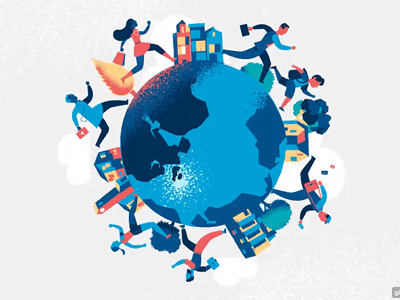
Globalization is not a foreign concept to many – the term might be as we proceed to the interior. Its effects have been too much and many, touching every spectrum of life to be easily ignored. It can never be not given the time of the day when it has so successfully managed to touch every aspect of life. Its effect as we al know has been positive and negative, just like the two sides of a coin. Often cited to be double-edged sword, it has managed to flourish life for some while disrupt it for some. Bringing and making everything come out to be in open, liberalized, interlinked, interdependent, it has created chaos for beings who couldn’t grasp the complexities of apparently simple notion.

Rural areas with its close-knitted community, spatially located has too not been spared, not any of us expected. Rural development and sustenance have always been necessary for the sprouting and survival of urban areas. How would have urban areas survived if it not were for surplus of agriculture among many other reasons?! However, when we think of a backward area, rural areas would come to our mind if not immediately. It could not act keep up with the pace of development or it might have been neglected in some ways or others.

When Liberalization, Privatization and Globalization reforms were taken up in India, it did allow the country to let its fortunes grow but the negative impact cannot be ignored. The article takes up the case of rural areas and how it has been impacted on the negative side. It does not take up the analysis of data given the time crunch but throws a light on the subject. One of the many effects has been the draining of human resources – sort of every industrial model predicted. With industries coming up attracting the labor for the same. Abundance of labor with just minimum wage served as a profitable interest for the industrialist. However, it led to the rural areas filled with old age people capable of doing only minimum work. With technology coming up requiring more skilled laborers, unemployment is only rising. The lack of proper skills has also compelled the concentration of laborers in the field (disguise unemployment). A viscous cycle has been created, somehow and poverty could never actually leave. Although, development has taken place, reforms have been made in terms of basic needs, imparting training and education, a lot still need to be done. There has been a difference, a very bold line created because of the cultural difference. Though the interlinkages and interdependence has led the spread of ideas, it has also created some sort of animosity among the community towards urban dwellers. One of the reasons can be the exploitation – low wages, some unfair action taken up by the middleman, less profitable trades and the obvious, the viscous cycle of debts, they are unable to escape.

Steps have been taken on the part of government to bring in the development in rural areas. Focus should also be thrown in preserving the culture of the same, creation of jobs in the same heritage, promotion of cottage industries, more push to the handicrafts, encouraging the participation of communities in decision making among many.

Image Credit: Google

ECO FEMINISM IN INDIAN CONTEXT

According to Merriam-Webster, ecofeminism is a movement or a theory that applies feminist principles and ideas to ecological issues. This term was first coined by a French feminist, Francoise d’Eaubonne in her book “Le Feminisme ou la Mort” (Feminism or Death). She raised the point that patriarchy is the root cause of all ecological crisis – men’s control over women and nature have led to overpopulation and overexploitation of nature respectively. When we talk about the environmental disaster that’s taking place, the role of gender about how we can move forward comes into play.

As United Nations Environment Programme puts it, “Around the world, environmental conditions impact the lives of women and men in different ways as a result of existing inequalities. Gender roles often create differences in the ways men and women act in relation to the environment and in the ways men and women are enabled and prevented from acting as agents of environmental change”; and here comes the concept of ecofeminism.

In India, ecofeminist Vandana Shiva is the pioneer who prepared the ground for ecofeminism with a strong belief that women have always been the key to solve various societal problems and environmental problems are one of them. By highlighting their presence in the Indian literature, the nature and form of ecofeminism in India can be assessed. Literature in which the concept of ecofeminism has been taken into account ranges from early ecofeminism to the recent or the urbanized one such as ‘Nectar in a Sieve’ (1954) by Kamala Markandya, ‘Fire on the Mountain’ (1977) by Anita Desai, ‘A Riversutra’ (1993) by Gita Mehta, ‘The God of Small Things’ (1997) and ‘An Atlas of Impossible Longing’ (2008) by Arundhati Roy and ‘Monkey-Man’ (2010) by Usha K.R.

Many female Indian novelists not only explore the subjectivity that is embedded in the relationship of women and the patriarchal society but also make several social issues as the key subjects. Many of the works from twentieth century of such novelists have been regarded as effective mediums of ‘modernism and feminism’. With Arundhati Roy and Kiran Desai getting hold of Booker Prizes, works of Indian women novelists have been highlighted. Indian women’s fiction on the relationship between women and the environment has added to the theory and development of ecofeminism in India.

In the West, there are large bodies of literary accounts that have analyzed ecofeminism in different ideological terms but in India, the struggle to save environment went on for long even before it was accounted in the West. It was Vandana Shiva who brought ecofeminism movements to the forefront in India with her active involvement in the Chipko Movement- wherein women wrapped themselves around trees to prevent contractors from felling them off- as a young woman. The struggle to protect the environment is believed to be the same across all communities in India but we would be at a loss in our thinking if we ignore the fact that protests against environmental damage and questions of survival and subsistence are interlinked deeply with the axiom of caste, class and gender issues.  Vandana Shiva, the pioneer in this field, critiques that modern technology which has actually reinforced the patriarchal system and violence perpetuates it towards women and nature.  According to her, switching to such a lifestyle is deviating us from the traditional lifestyle which promotes human-environment balance ‘prakriti’. Under the influence and grab of these new developments, nature has been mercilessly exploited and feminine principles in terms of the environment are no longer considered for creativity and sanctity but merely to be passive resources. Thus, though women’s knowledge of dependence on nature for subsistence has been dissipated and marginalized under the grab of modern science, she strongly believes that third world women have the power within them for causing a change. In this regard, we can cite the example of ‘Narmada Bachao Andolan’ in which the active participation of Medha Patkar and Arundhati Roy helped the movement gain momentum.

The issue of sustainable development to protect the environment from degrading was raised in Conference on Environment and development at Stockholm in 1974 for the first time. If we turn the pages of history, we will find instances which prove that women are better connected with nature. Since time immemorial, they have been responsible to look after households and prepare basic needs for survival and thus, are better connected to nature.

Women’s interaction and relationship with nature must be located within the material reality of caste, class and gender. Women are the victims of environmental disaster but they can also be very effective agents of environmental regeneration – as is clearly evident by the success of the Chipko Movement. The need of the hour is to mobilise them into a proper channel and to give ecofeminism a proper voice and a way so that it does not turn into a superficial shout. There is also a need to abolish the class and caste basis for an effective collective movement in India. The adverse class-caste effects on women’s relationship with nature are reflected in the erosion of indigeneous knowledge and livelihood strategies on which poor, rural women are dependent. Thus, there is a need for ecofeminism in India to strengthen itself in the face of different barriers and be more than a superficial shout.

Image Credit: Google

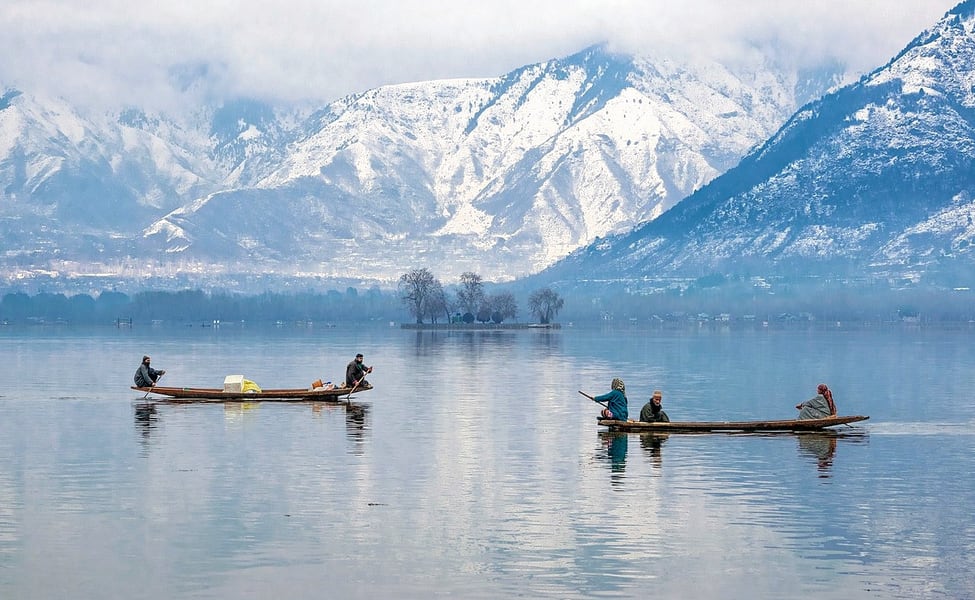
Srinagar designated a creative city by UNESCO

On November 8, 2021, UNESCO designated Srinagar a creative city. Srinagar became the sixth city after Mumbai, Chennai, Hyderabad, Varanasi, and Jaipur to achieve such distinction. With this, the capital city of Jammu and Kashmir has entered the club of 295 creative cities network across the world.

The UNESCO Creative Cities Network is a project launched by UNESCO in 2004 to “promote cooperation among cities which recognized creativity as a strategic factor in their urban development”. According to UNESCO, the cities designated as creative cities work together towards a common objective of “placing creativity and cultural industries at the heart of their development plans at the local level and cooperating actively at the international level”.

On Monday, UNESCO designated 49 cities as part of the creative cities network. With this, the total number of creative cities in the world has reached 295 across 90 countries. The Srinagar city had applied in 2018 also but the application was rejected then.

UNESCO designates the creative cities in seven fields — Craft, Folk Art, Media Arts, Film Design, Gastronomy, Literature, and Music. The Srinagar city has been designated the creative city in Crafts and Folk Arts — the only second city in India in this category after Jaipur. While Mumbai has been honored in the film category, Chennai and Varanasi have been made part of UCCN for their music. Hyderabad is a UCCN city in the gastronomy category.

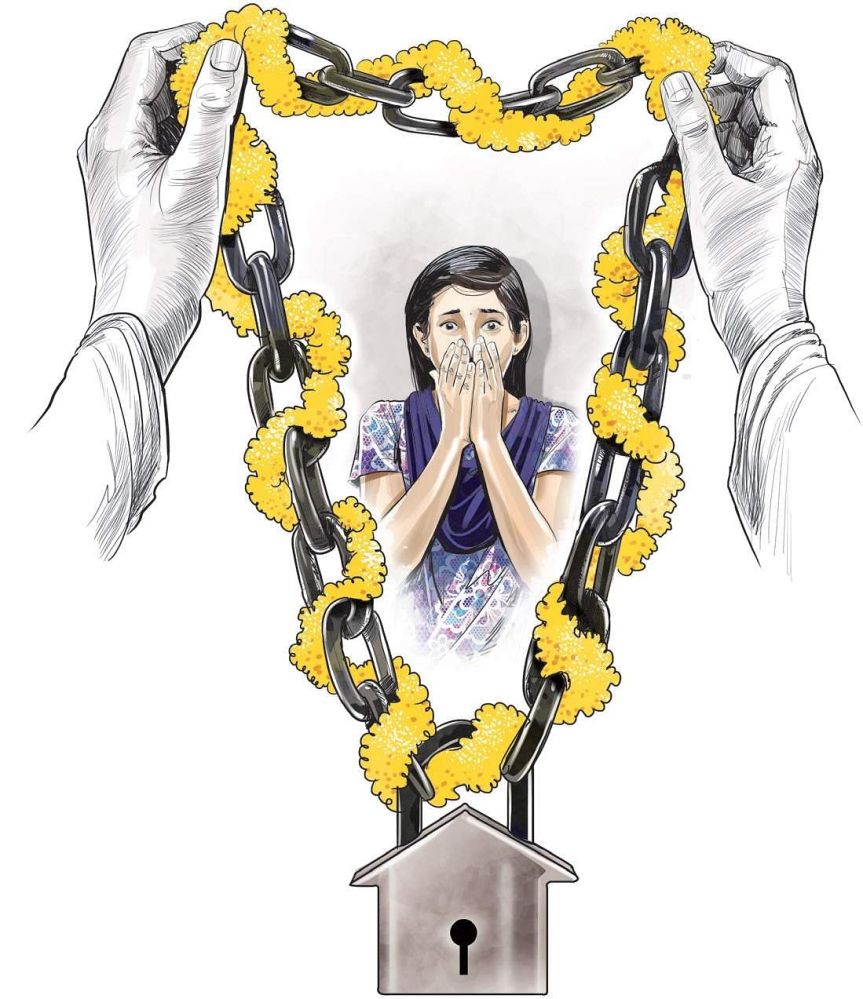
Child Marriages in India – Two Steps Backward!

It is in common knowledge that the legal age of marriage for girls is 18 years and 21 years for boys. However, social factors and circumstances, age-old prejudices cloud the judgement – leading to child marriage as a solution to one thing or other. Child marriages are not confined to a single country but happens across the world – barring the girls from being empowered and at times, the boys too. Keeping this in mind, the Sustainable Development Goal 5, which focuses on ‘Gender Equality’ has set a target to stop child marriages entirely by 2030.

According to UNICEF report, about one in three of the world’s child brides live in India and about 102 million were married before turning 15 and were pregnant even before reaching adolescents. Among the states in India, 36 billion child brides have been reported to be in Uttar Pradesh. Other states with large population of child brides are Bihar, West Bengal, Maharashtra and Madhya Pradesh. Among the Southern states, Andhra Pradesh with 13 million tops the list followed by Tamil Nadu with 11 million. It has also been reported that about 60 % of the child brides who were married before turning 15 went through pregnancy before completing the adolescent period. Whereas those married after the age of 15 but before age 18, about 20% of them went through pregnancy before completing adolescent period. Those married before turning 15 tend to contribute to larger families. During the trying COVID-19 times when the entire focus of the world was on healthcare system, the child marriages saw a spike. United Nations Population Fund has estimated that COVID-19 will result in 13 million additional child marriages globally. Women Development and Child Welfare, India has reported that child marriages saw a rise of 27%. While rural areas are the hub of reports against child marriages, interestingly, “more than 25 percentage of child marriages in 2011 happened in urban districts. In other words, one out of five girls aged between 10-17 was married in urban districts in the ear 2011”, IANS reports (yourstory, 2017).

Even with the coming of Child Marriage Prevention Act, 2006, one of the reasons for its so not grand success can be the poor implementation and also the fact that people always find ways to try and tamper with the acts and laws. What actually force them to do so? What actually compels them to do – send off their buds away, forcing them to marriage? One of the reasons is being orphaned. COVID-19 has taken lives of many people, parents of many rendering the children orphan (Jejeebhoy, 2021). The lack of parents or unwilling relatives to take care of the orphaned, thus marriage. Financial constraints are another compelling factor. Families tend to marry all the girls together (if there is more than one girl and the family is drowning in poverty) in a single place to save money. It is sort of passing off the so-called burden.

It is important to bring back the focus of the world to the atrocities happening. While there are cases where girls have escaped, seeking help and prevention of child marriage, there are still alarming cases of ‘being stuck’ in the unlawful marriage. At this point of time, youth volunteers can be a powerful force. Bringing in more volunteers to spread awareness as well as for on ground action to prevent marriages from happening can be a helpful approach. The schemes of the government seem to fail to trickle down, more maybe because of the lack of effort in the lower vertical ladder. Bringing in the community in action can help to keep in check the local government and vice-versa.

Image Credit: Google

India and Quality Education – SDG 4

Education is an integral part for the mental development of a human being. Not just education on paper but ‘Quality Education’ which in turn allows the beings to add to the well-being of themselves as well as others without comprising anyone’s needs. Given the importance of quality education in ensuring sustainable growth of the world, one of the sustainable development goals is “Ensure Inclusive and Equitable Quality Education and Promote Lifelong Learning Opportunities for All” (SDG 4).

Around 11 indicators have been decided by UNDP to ensure Quality Education across countries, which are:

  1. Free Primary and Secondary Education
  2. Equal Access to Quality Pre-Primary Education
  3. Equal Access to Affordable Technical, Vocational and Higher Education
  4. Increase the number of people with relevant skills for financial success
  5. Eliminate all discrimination in education
  6. Universal literacy and numeracy
  7. Education for sustainable development and global citizenship
  8. Build and upgrade inclusive and safe schools – in terms of electricity, toilets (including gender neutral toilets), apt infrastructure for disables, gender inclusive.
  9. Expand higher education scholarships for developing countries – by ensuring the sufficient volume of ‘Official Development Assistance’ flows for scholarships.
  10. Increase the supply of qualified teachers in developing schools
  11. Custodian agencies such as UNDP

The article attempts to throw light on the performance of India in the sphere of Education based on NSSO Education data. It is with no doubt that India has made great strides in this particular aspect but the challenges are always present – which will be taken up in the later section of the article.

As per the data, in 2014, total urban literacy rate stood at 86% (male: 91%; female: 81%) while total rural literacy rate was 71% (male: 80%; female: 61%). The difference between rural and urban male and female literacy rate is quite large. The reasons among many can be lack of initiatives; income-deficit; ingrained favoritism; lack of safe and inclusive schooling etc.

To better understand the Gender-gap/parity, data on Gender-Parity Index (GPI) based on Gross Enrolment Ratio (GER). It has been defined as “the ratio of GER of female students enrolled at Primary, Secondary and Tertiary Levels of education to the corresponding ratio of male students at that level” (ESAG, 2018). During 2015-16, the gender parity stood at 1.03 (Primary); 1.05 (Elementary); 1.01 (Senior-Secondary) to 0.92 (Higher Education). While up to +2 level, gender parity favors females but when it comes to higher education, it favors males. Interestingly, if we focus on the annual dropout rate in school education, 2014-15, it will come to notice that boys dropout percentage is higher in secondary (17.21%) than girls (16.88%).

To get a better grasp of gender equation, the article looks into the teaching section. The data for percentage of teachers who are females, 2014 speaks that the percentage is less than 50 at all levels – with dropping percentage as we move from Primary (49.49%), Secondary (43.21%) to Tertiary (39.03%).

Evaluation of reasons for dropout among both males and females as per NSSO brings out – for males, engagement in economic activities has been vetoed as the major reason while for females, reasons such as engagement in domestic activities followed by marriage stand out. The distance between home and school has also been one of the reasons of dropout among females.

Another set of data released by UNESCO as part of the realization of SDG 4 – ‘State of the Education Report: No Teacher, No Class’ for India, 2021 can be used as reference to right the wrongs, fill in the holes in the education scenario of the country. The report points out that there is shortage of 11.6 lakh teachers and about 1.2 lakh are single-teacher school, with 89% being in rural areas. However, in the private sector, the pupil teacher ratio increased from 21% in 2013-14 to 35% in 2018-19. With variation among states, the national average for percentage of females employed stands at 50.

The pandemic has only thrown obstacles testing the efficiency of the country in this sphere. As the world and its works shifted online, this country and sector did too. The shifting to online classes has led to many dropouts, leading to a break in the education of many pupils. When it comes to teaching, the country has faced certain inadequacy in the percentage of trained government school teacher – to use and teach using electronical devises. The Hindu (2021) reports that only 15% of government school teachers were trained and about 31% in private school.

However, when the world was still in offline mode and so the sector – various government schemes had benefitted the children. In this era of everything being online – government need to come up with new schemes focusing towards digital India, co-operating with various grassroot levels can be quite helpful in percolating the benefits to lower levels.

Image Credit: Google

Self-Help Groups – a factor in women empowerment!?

The article takes up the subject of Self-Help Groups which is considered to be one of the major factors in women empowerment. It tries to understand the question ‘why’ and reflects on if the prevalent casteism in the society affects its functioning in any way. Let’s have a quick recap of women empowerment and why do women need to be empowered!

Women Empowerment is an umbrella term which brings in the ways to help and enable women to grasp the freedom they are entitled to as all human beings are. The freedom to make choices; the freedom to spread their wings; the freedom to be just human beings. We need women empowerment because of the very perspective that women are so-called ‘weaker sex’. Years of being told this, it has penetrated into every hook and corner – and we need an uplift from this. We need empowerment to break free from the chains of “being allowed”. The actual fact that I am attempting to write an article on ‘women empowerment’ proves the very point of why we need to it.

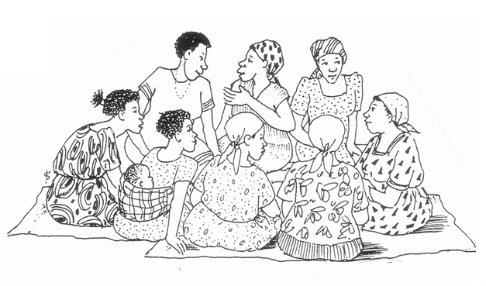
Self-help groups has been one of the many ways adopted by different parties to empower women. How? In very simple words, it enables women to take financial decisions and help each other in doing so. Pretty simple, right! There are NGOs and banks which helps them take this process a long way or to even help them start. There are various ways this group can help women build up themselves. A group of women coming together can be quite an upliftment – other than providing a platform for financial decisions, it gives them an opportunity to discuss problems at personal level, bring out the issues of domestic violence; come out collectively with a solution; tackle issues of alcoholism and other such problems which are likely to pose threat to financial, emotional and social decisions of women.

However, even if SHGs provides the way to move forward to women, escaping the casteism issues is another thing. An article published in The Hindu brought out the point that caste play a dominant role in Self-help groups. The groups employ different categories, etiquettes r requirements of inclusion – a preference to caste could be seen, the study brought out (The Hindu, 2013). The caste issues have been ignored and been confirmed. A resistance to change in leadership, the position going to same caste has been detected. The strive to bring in diversity is lost. Rural areas – where community are more closely knitted also showcases casteism in not-so-subtle ways.

Nonetheless, it cannot be ignored that SHGs have been an empowering factor. During the Covid-19 times, may SHGs suffered a backlog due to lack of funding affecting the lives of many. With no financial means, savings became out of question. However, there were many SHGs which also helped in battling Covid-19 by the production of masks – helping to meet the demand of the same. The point is to diversify the means of finance in the groups; to clear the inherent obstacle of caste; to collaborate across districts; to train them for the worst scenarios; to educate them. SHGs has enabled women to take financial decisions and come a long way but its diversification of ways is necessary to combat the worst times. It is important to identify the loopholes and come up with the collective solutions and move above the issues of castes.

Image Credit: Google

Women in Indian Politics

Women In Indian Politics

India is the largest democracy in the world and to sustain its democracy, it has undergone various struggles. As soon as it was freed from the clutches of colonialism, it was faced with the challenges of social and economic development of the country. The Constitution of India has bestowed various rights to its citizens to ensure equal rights and equality, liberty, gender justice etc. Though the constitutional provisions allowed the women to leave the relative calm of the domestic sphere to enter the male-dominated political sphere, the involvement of women in politics has been low key (Khanna, 2009). Khanna has classified the factors which affects the political participation of women in politics into three categories-psychological variables, socio-economic variable and political variable. The questions of reservation for women in representative institutions has long been debated in India. The issue of reservations for women had come up in the Constituent Assembly had been rejected by women representative as it was felt to be unnecessary, since the working of democracy in the normal course would ensure the representation of all sections of Indian society. The suggestions were also seen to underestimate the strength of women to compete as equals (Menon, 2000).

Reservation as a strategy for enhancing women’s status within the new polity had been rejected very early on by women leaders as a retrograde step (Rai & Sharma, 2000). But by 1996, women had emerged as a significant force in politics and almost the same representative of women’s movement who rejected any such demand, demanded reservations. Women had been at the forefront of the movements against corruption and price-rise that preceded the imposition of Emergency. The 1980s saw the emergence of the vocal and visible autonomous women’s groups (Menon, 2000). The question that looms before these is-if increase in the number of women in parliament will bring any socio-economic benefits to them. However, while the political ground in India is shifting with regard to women participation in politics, this is a slow and difficult process, which needs constant vigilance by movements and groups within and outside of state institutions (Rai and Sharma, 2000).

The debate regarding women’s reservations in parliament has taken various shapes. There have been number of arguments for and against it. But a fact that cannot be ignored is that women in India have climbed the ladder too. Although they are not huge in number but they are there. But being a woman, they have faced many brickbats and mud slung. The criticisms that they faced carried an ingrained sexism reflecting the very nature of a male dominated politics.

Access to politics for women has never been a bed of roses. Participation of women anywhere has never been easy but politics being a male bastion traditionally, makes it difficult for the presence of women in it. To penetrate this highly male dominated arena, women have to go through various struggles to consolidate one’s position in it. While it becomes relatively easier for some as compared to others, but it’s never without any struggle or completely easy for any woman.

If we analyse the journey of three women i.e., Indira Gandhi, Jayalalitha and Sushma Swaraj to politics, it will come to view that – initially, these women were not into politics either because they wanted to pursue some other career or they had no one to guide them to it but eventually as in the case of Indira Gandhi, the atmosphere (her house being the centre of freedom movement) during her time as well the pursuance of her father got her into politics. In case of Jayalalithaa, her mentor and guide MGR introduced her to politics while Sushma Swaraj after the pursuance of law developed an interest in politics with moral support from her family. Though Indira Gandhi had a background – involvement of her family in freedom struggle as well as in Parliamentary politics and Jayalalithaa was introduced into politics by the most loved figure of his time MGR and Sushma Swaraj dug her own well, none of these women had an easier path. Being a woman, they had to fight to consolidate their positions in the party. The path through which they got into politics and the intensity of struggle faced by them though differ, but nevertheless, they had to work twice as men to stay, to establish themselves. Jayalalithaa’s modesty had been violated in the Assembly Hall; Indira Gandhi had been dubbed as ‘only man in the politics’ and Sushma Swaraj had been the target of derogatory online trolls. Evaluating the leaders on the basis of their decisions in a democracy is one thing while criticism based on sexism is an entirely different thing.

Being from different family background, lives of every woman is bound to differ, the only common thing is that they are ‘woman’. Being a woman is all that takes for people to throw harsh comments. Indira Gandhi’s tenure was termed as authoritarian while Jayalalithaa was termed as irresponsible and inconsistent. It was so because they were able to keep in check their male counterparts. Any action by a women minister is judged by a gendered perspective and the online trolls faced by Sushma Swaraj while she was the Minister of External Affairs points to this. Jayalalithaa claimed that baseless questions were asked to her because she is a self- made woman.

Why is it that the corruption case of Jayalalithaa has been in the talk for a long time and not that of Mr. Karunanidhi (Jayalalithaa was condemned for arresting him on corruption case just because he was an old ‘man’)? Why is it that the decisions of Indira Gandhi have been equated with an authoritarian rule and not that any other male counterparts? Why the evaluation against every women politician involves threats of rape and beating? Is it because in this highly male dominated politics, participation of women is not accepted for it seems to threaten the authority of men?

The point is that it is not at all unfair evaluating any leader-women or men on the basis of their decisions but criticising them with ingrained sexism in it doesn’t seem to be compatible with the values that we cherish in our democracy. Women continue to be target of sexist remarks but it doesn’t mean that they have stopped asserting themselves with force. Women have taken very active part in various political activism. It doesn’t apply only to urban areas but also to rural women. They have been engaged in political acumen from protesting against the British rule to demands for equal wages. Feminist issues usually appear something else in public discourse (Menon, 2000) be it Uniform Civil Code or Women’s Reservation Bill. While women participation in politics is improving overtime but they constantly have to fight for their presence to be felt. They have to constantly engage in negotiations to consolidate their positions. India, though largest democracy in the world has long way to go to sustain its democratic principles and rights. It still lacks in many ways in terms of gender parity, not only in politics but in many other spheres. But participation of women in politics become important because until and unless women are in decision making position, safe and sustainable cities or lifestyle will be out of reach. Though, legally women have been granted rights but only with social development as well as change in the mind-set will bring life to these rights!

P.S. This is an opinionated piece – believing that everyone is entitled to opinions!

Image Credit: Google

Delhi: JNU VC made appointments ‘without authority’.

HC restrains chairpersons from taking major decisions.


The division bench of Justice Rajiv Shakdher and Justice Talwant Singh said that the power to appoint chairpersons is expressly conferred upon the executive council and not the vice-chancellor. Rejecting the varsity’s argument that the VC had exercised the powers under Statue 4(5) of the Statute of the university, the court said that the VC can exercise such powers only when immediate action is required “on account of emergent situation”, which then is reported to the concerned authority for obtaining its approval.

Observing that Sood had objected to the agenda for the 296th meeting of the executive council and informed the latter that the appointments made by the VC are flawed, the court said therefore prima facie the authorities were put to notice that the course on which they were proceeding was perhaps not the correct one.


“Despite this, respondent no.2 (VC), it appears, went on to appoint the Chairpersons of the concerned Centres/Special Centres,” reads the order.

The division bench also noted a submission made by Sood’s counsel Abhik Chimni that after a single bench of the high court refused to stay the nine appointments made by the VC, he went ahead with the appointment of another person as chairperson of Centre of Spanish, Portuguese, Italian and Latin American Studies/School of Language, Literature & Cultural Studies on October 08, again exercising the emergency powers vested in him.

Observing that the vice-chancellor of Jawaharlal Nehru University (JNU) is not vested with the power to appoint chairpersons of centres, the Delhi High Court has restrained the nine chairpersons appointed by Prof M Jagadesh Kumar from taking any major decisions, including those relating to the convening of selection committees or carrying out selections concerning the centres or special centres.

The division bench of Justice Rajiv Shakdher and Justice Talwant Singh said that the power to appoint chairpersons is expressly conferred upon the executive council and not the VC.


“Therefore, prima facie, respondent no.2 could not have exercised the power to appoint Chairpersons of Centres/Special Centres,” said the court, adding that the appointments made by the VC prima facie are without authority.

The court was hearing a matter relating to the appointment of professors as chairpersons of the centres or special centres by the VC. Professor Atul Sood has approached the court with a petition challenging the approval granted by the executive council to the nine appointments made by the VC. It has been argued before the court that the appointments cannot emanate from the VC.

Written by: Ananya Kaushal

G20 Summit ‘fruitful’: PM Modi

G20 Summit 'fruitful': PM Modi - The Hindu

prime Minister Narendra Modi on Sunday portrayed the just-finished up G20 Highest point in Rome as “productive” and said world pioneers had elaborate considerations on issues of worldwide significance like battling the pandemic, further developing wellbeing framework, helping financial collaboration and encouraging advancement.

The G20 pioneers during their two-day highest point, taken on the ‘Rome Assertion’ and the nations concurred that the Coronavirus inoculation is a worldwide public great.

“Leaving for Glasgow after a productive @g20org Culmination in Rome. During the Culmination, we had the option to have elaborate thoughts on issues of worldwide significance like battling the pandemic, further developing wellbeing foundation, supporting monetary collaboration and encouraging advancement,” Mr. Modi tweeted.

The G20 pioneers have concurred that the World Wellbeing Association would be fortified to quick track the interaction for crisis use authorisation for Coronavirus antibodies, India’s G20 Sherpa Piyush Goyal said on Sunday.

“We have truly got into the text the language that affirms that the created world has recognized that they have not done what’s necessary as far as meeting their responsibilities and that they should be more impending in giving money in giving innovation and (be) the empowering influences to make the progress to a spotless energy world later on,” he said.

Mr. Goyal said it was additionally concluded that the acknowledgment of Coronavirus immunizations which are considered to be protected and solid by the WHO will be commonly acknowledged subject to public and security laws that the nations might have.

In Rome, Mr. Modi cooperated with a few world pioneers, including U.S. President Joe Biden, French President Emmanuel Macron, Canadian PM Justin Trudeau, Singapore Head administrator Lee Hsien Loong and South Korean President Moon Jae-in among others.

In Glasgow, Mr. Modi will join in excess of 120 Heads of Government and Heads of State at the World Chiefs’ Highest point (WLS) of the 26th Gathering of Gatherings (COP26) to the Assembled Countries System Show on Environmental Change (UNFCCC) at the Scottish Occasion Grounds (SEC) – an assigned UN zone for the worldwide culmination.

During his three-day U.K. visit until Tuesday, Mr. Modi is leaned to address the COP26 culmination with a public assertion about India’s environment activity plan in the early evening meeting on Monday.