‘Viksit Bharat @2047: Voice of Youth’

 The Prime Minister, Shri Narendra Modi launched ‘Viksit Bharat @2047: Voice of Youth’ via video conferencing today. During the program, Prime Minister Modi addressed the Vice Chancellors of Universities, Heads of Institutes and faculty members in workshops organized at Raj Bhawans across the country to mark the beginning of this initiative.

The Prime Minister began his address by extending a huge thank you to all the Governors for organizing today’s workshop for the development of Viksit Bharat and said that today is a special occasion regarding this resolution. He lauded their contributions of bringing together all the stakeholders who hold the responsibility of guiding the youth of the nation in accomplishing the goal of Viksit Bharat 2047. Prime Minister Modi highlighted the role of educational institutions in the personality development of an individual and said that a nation becomes developed only with the development of its people. Underlining the importance of personality development in the present era, the Prime Minister extended his wishes for the success of the Voice of Youth workshop.

The Prime Minister said that in the life of any nation, history provides a time period when the nation can make exponential strides in its development journey. For India, “This Amrit Kaal is ongoing” and “this is the period in the history of India when the country is going to take a quantum leap”. He gave examples of many nearby countries that took such a quantum jump in a set timeframe and turned into developed nations. “ For India, this is the time, right time (Yahi Samay hai, Sahi Samay hai)”, he said, adding that each and every moment of this Amrit Kaal should be utilized. 

The Prime Minister reiterated the glorious struggle for freedom as a source of motivation. He said each endeavour such as Satyagrah, revolutionary path, non-cooperation, swadeshi, and social and educational reforms during that time were geared towards freedom. This period saw Universities like Kashi, Lucknow, Vishwa Bharti, Gujarat Vidyapeeth, Nagpur University, Annamalai, Andhra and University of Kerala strengthen the consciousness of the nation. An entire generation of youth dedicated to the freedom of the nation came into being whose every effort was directed toward the goal of Independence. “Today, every institution and every individual should move with a resolution that every effort and act will be for Viksit Bharat. The aim of your goals, your resolutions should be only one – Developed India”. The Prime Minister emphasized that teachers and universities ponder about finding ways to make India a developed country at a faster pace and also identify specific sectors for improvement towards becoming a developed nation. 

Prime Minister Modi underlined the need to channel the energy of the students and the youth of every university towards achieving the common goal of ‘Viksit Bharat’. Noting the diversity of ideas, the Prime Minister stressed linking all the streams towards building a developed India. Shri Modi urged everyone to go beyond their limits to contribute to the vision of Viksit Bharat@2047. He suggested running special campaigns in every college and university in the country to connect more and more youth with this campaign. The Prime Minister mentioned the launch of Ideas Portal related to Viksit Bharat and informed that suggestions can be given on 5 different themes. “A prize has also been arranged for the best 10 suggestions. You can also give your suggestions on MyGov”, he added. “Idea starts with an ‘I’ just like India begins with an ‘I’”, the Prime Minister remarked as he underlined that the idea of development can only begin with the ‘I’ of the self. 

Elaborating on the exercise of seeking suggestions, the Prime Minister emphasized the need to create an Amrit generation which keeps the national interest paramount. He stressed the need to go beyond education and skills and called for alertness for the national interest and civic sense among the citizens. “When citizens,  in whatever role, start doing their duty, the country moves forward”, the Prime Minister said. He gave examples of the preservation of natural resources through water conservation, saving electricity, using fewer chemicals in farming and using public transport. He asked the educationist fraternity to suggest ways of giving new energy to Swachhta Abhiyan, combating lifestyle issues and exploration of the world beyond mobile phones by the youth. He asked them to be role models for the students. He said that social thinking is reflected in the governance too and asked the gathering to see that degree holders should have at least one vocational skill. “You should carry forward a comprehensive process of brainstorming on these topics at every cap, every institution and at the state level”, he added. 

Drawing the analogy of the period of development of ‘Viksit Bharat’ to that of an examination, the Prime Minister mentioned the confidence, preparation and dedication of the students as well as the contributions of the families in maintaining the required discipline to accomplish the goal. He remarked that the exam date has also been declared for us as citizens of the country. “We have 25 years of Amrit Kaal in front of us. We have to work 24 hours a day for the goal of Viksit Bharat. This is the environment we have to create as a family”, the Prime Minister emphasized. 

Noting that the rapidly increasing population of the country is empowered by youth, Shri Modi informed that India is going to be the leader in terms of the working-age population for the coming 25-30 years and the world recognizes this. “Youth power is both the agent of change and also the beneficiaries of change”, PM Modi said. He emphasized that the next 25 years are going to be decisive for the careers of the youth in colleges and universities of today. Noting that it is the youth who are going to create new families and a new society in the future, the Prime Minister said that it is they who have the right to decide how a developed India should be. With this spirit, the Prime Minister added, the government wants to connect every youth of the country with the action plan of a developed India. The Prime Minister stressed moulding the voice of the country’s youth into the policy strategy for building a developed India and highlighted the role of educational institutions that maintain maximum contact with the youth.

Concluding the address, the Prime Minister underlined that the roadmap of progress will not be decided by the government alone but by the nation. “Every citizen of the country will have input and active participation in it”, Shri Modi said pointing out that even the biggest resolutions can be accomplished by the mantra of Sabka Prayas, i.e. public participation. He gave examples of Swachh Bharat Abhiyan, Digital India Campaign, resilience during the Corona pandemic, and Vocal for Local highlighting the power of Sabka Prayas. “Viksit Bharat has to be built only through Sabka Prayas”, the Prime Minister said. Shri Modi reiterated the high expectations from the scholars present on the occasion as it is they who shape the vision of the country’s development and channelize the youth power. “This is a great campaign to write the future of the country”, the Prime Minister concluded and urged them to turn in their suggestions to further enhance the grandeur of Viksit Bharat.

Background

In line with the Prime Minister’s vision to actively involve the youth of the country in the formulation of national plans, priorities and goals of the country, ‘Viksit Bharat @2047: Voice of Youth’ initiative will provide a platform to the youth of the country to contribute ideas to the vision of Viksit Bharat @2047. The workshops will be a key step towards initiating the process of engaging youth to share their ideas and suggestions for Viksit Bharat @2047.

Viksit Bharat @2047 is the vision to make India a developed nation by 2047, the 100th year of independence. The vision encompasses various aspects of development, including economic growth, social progress, environmental sustainability, and good governance.


***

A Few Facts about ‘Ayyappa Puja’ Celebrations: My Experience in Hyderabad, India

 India is one of the most ethnically diverse countries in the world. It is a pluralistic society that in no other countries can be found. Besides its many religions and sects, India is home to many castes, tribes, and linguistic groups. Religious minorities of all sects, including Muslims, Christians, Sikhs, Buddhists, and Jains, still account for a significant proportion of the population. All the festivals of different religions are observed with full gaiety in India. As per the Hindu religion, also known as ‘Sanatan dharma,’ many celebrations and Pujas are performed. The people in the world are aware of Ganesh Chaturthi, Diwali, Dusshera/Durga Puja and other celebrations. In addition, many devotees, mainly from the southern part of India, visit ‘Sabarimala Sree Dharma Sastha Temple’, dedicated to Bhagawan Ayyappa/ Ayyappan, which is the most famous and prominent temple located in Kerala. The temple is situated on a hilltop (about 3,000 feet above sea level) named Sabarimala in Pathanamthitta district. There is a place near the temple, east of Sannidhanam (the abode of Bhagawan Ayyappa), dedicated to Vavar (a close friend of Bhagawan Ayyappa) which is called Vavaru Nada, an epitome of religious harmony.

Anyway, before going to Sabarimala, devotees/ pilgrims have to observe celibacy for 41 days. I wish to mention that those who observe for 41 days take ‘Mala,’ which means they must follow some rules and regulations. Further, instead of calling by the name of a person, addressed as ‘Swami. Once taking ‘Mala,’ the devotee has to observe certain principles. These inter alia are- sleeping on the ground, wearing a special blackish dress, moving bare-foot (no chappal, etc. wear), one-time food, i.e., lunch with rice and other vegetarian items, in the evening as tiffin other items not rice, of course, fruits can be taken anytime and no non-veg during this 41-day. All gents, irrespective of age are allowed to visit the Sabarimala temple, and girls before puberty can visit and take ‘Mala’. 

I am from the eastern part of India, but last three decades, I have been living in Hyderabad. After I retire from the Central Government Institute, Hyderabad, I am staying by purchasing a villa in the Suncity of Hyderabad, which is known as ‘Libdom Villa Campus’ Raj Reddy Valley. This is spread over an area of 17 acres with all modern facilities. It is pertinent to mention that Libdom has been derived from two words – Liberty, ‘Lib’ and Freedom, ‘Dom’ and finally, the word is  “Libdom.” Around 190 families stay on the campus, representing a mini-India as people from different states live here. Also, people have different faiths, so all the festivals of different religions are celebrated with gaiety. 

On this campus, some people, from time to time, took ‘Mala’ as part of Ayyappa puja to visit Sabarimala.

 In 2023, I had the opportunity to visit two families because, as a part of the visit to Sabarimala, they invited two different periods for Prasadam and lunch as a part of Puja celebrations. It is pertinent t to mention that inviting lunch as a part of puja celebrations to ‘Swamis’ and guests is not mandatory. According to economic capability, anyone can do it. Anyway, One was by Mahesh Reddy (49 years), who himself took ‘Mala,’ and another was by Rudrasena Reddy (47 years), whose two sons, namely, Rishikesh Reddy (20 years) and Akhilesh Reddy (17 years), accepted ‘Mala.’ As a part of the puja celebration, both (Mahesh Reddy and Rudrasena Reddy) on different days invited my family members and me, along with ‘many ‘Swamis’ and guests. From morning onwards, ‘Bhajan -kirtan’,(“singing to glorify God/Bhagawan), mainly focussing on Ayyappa, started followed by ‘Aarati ‘and other rituals’. After completing all the rituals, lunch, with many items (all vegetarians), was offered to the guests, and initially, ‘Swamis’ were served food; later, other guests were served lunch. I was told many ‘Swamis,’ instead of staying in their home, stay in temples day and night, and thus, they spend 41 days in temples where there are provisions for sleeping and cooking for all. They take common food and pass the timeby chanting ‘bhajans’ etc. 

I have presented brief facts based on primary and secondary sources so that readers can understand ‘Ayyappa puja celebration’. 

Prof Shankar Chatterjee, Hyderabad


The Anticipation Builds: 2024 General Elections in India

 As the calendar inches closer to the year 2024, all eyes are fixed on the horizon of Indian politics, eagerly awaiting the next General Elections. India, the world’s largest democracy, conducts these elections every five years to determine the fate of the nation and its people. With its diverse population, myriad challenges, and evolving political landscape, the 2024 General Elections promise to be a defining moment in India’s history.

  1. Political Dynamics

The political landscape in India is ever-changing, marked by the dynamic nature of its political parties. The 2024 elections will be a litmus test for the ruling party, which will seek to secure another term, while the opposition parties will strive to make inroads. The BJP, led by Prime Minister Narendra Modi, has been in power since 2014 and is expected to present a formidable challenge to its opponents. However, the Indian political arena is known for its unpredictability, and alliances and realignments can alter the equations significantly.

  1. Key Issues

The 2024 General Elections are expected to revolve around a range of critical issues that resonate with the Indian populace. Some of these issues include:

a. Economic Recovery: In the wake of the COVID-19 pandemic, India, like the rest of the world, faces economic challenges. The electorate will scrutinize the government’s performance in reviving the economy, generating employment, and alleviating poverty.

b. Healthcare Infrastructure: The pandemic exposed weaknesses in India’s healthcare system. Voters will be interested in the government’s efforts to bolster healthcare infrastructure and ensure better access to quality medical care.

c. Agricultural Reforms: The contentious agricultural reforms implemented by the government will likely remain a focal point. The stance taken by various parties on these reforms will be closely observed by voters, particularly in agrarian states.

d. National Security: Security concerns, especially in border areas, will feature prominently in the election discourse. The government’s handling of national security issues will be closely scrutinized.

e. Environment and Climate Change: Climate change and environmental degradation have become global concerns. Voters may press for more comprehensive policies to address these issues.

  1. Electoral Technology

India is known for its mammoth electoral process, with millions of voters spread across diverse geographical regions. Technology is expected to play a crucial role in making the election process more efficient and transparent. The Election Commission of India has been at the forefront of implementing technology-driven solutions to facilitate voter registration, booth management, and result dissemination.

  1. Youth and Women’s Participation

The youth vote is expected to be a significant factor in the 2024 elections. India has a large and young population, and their concerns and aspirations will shape the election narrative. Moreover, the participation of women in Indian politics has been steadily increasing, and their role in deciding the outcome of elections cannot be underestimated.

  1. Conclusion

The 2024 General Elections in India are poised to be a watershed moment in the country’s political history. The electorate will have the responsibility of choosing leaders and policies that will shape India’s future. As the nation awaits this crucial event, it is imperative that the elections are conducted smoothly, fairly, and in a manner that upholds the principles of democracy. The world will be watching as India takes another step forward in its democratic journey.

India’s economy and global respect and credibility of India have increased manifold

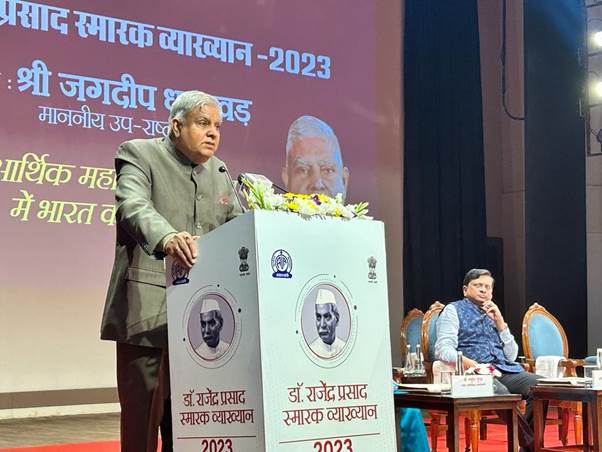
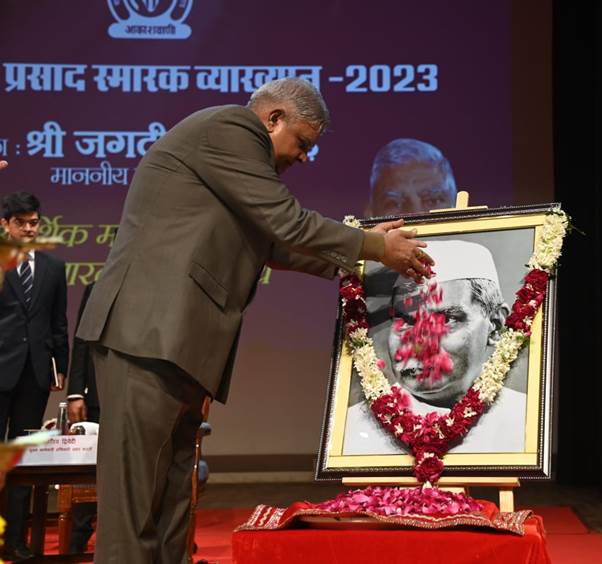
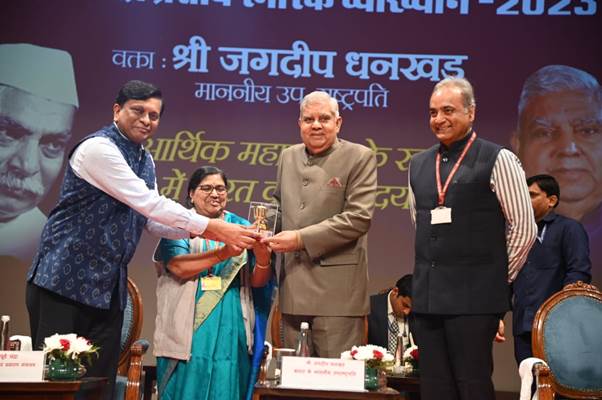
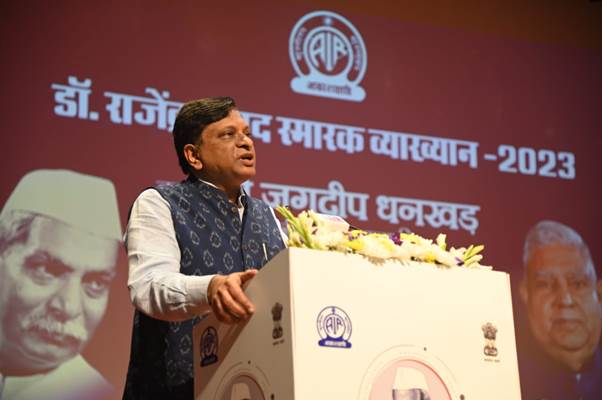
 Vice President of India Shri Jagdeep Dhankhar today delivered the Dr. Rajendra Prasad Memorial Lecture, being organized by Akashvani since 1969 in the memory of the first President of India, Dr. Rajendra Prasad. The topic for this year’s lecture was “Emergence of India as an Economic Superpower”. Addressing the gathering at Broadcasting House, Akashvani, New Delhi, the Vice President said that India’s economy as well as its global respect and credibility has increased manifold in the recent years. “Today, the countries of the world want to listen to India and respect its views and the entire world has recognized the skills and talent of India’s youth. The African Union was granted membership of G20 under India’s G20 Presidency. This is the result of India’s increasing credibility and respect in the world.”

The Vice President pointed out that a decade ago, the Indian economy was counted among the fragile five, but that today it is the fifth largest economy in the world. “The nation has achieved this feat due to the hard work of 140 crore citizens and efficient leadership. India has become the first country in the world to reach the southern end of the Moon. The country has made several achievements in the field of digital public infrastructure and digital payments as well.”

Taking about Prime Minister Narendra Modi’s Mann Ki Baat programme, the Vice President said that it is probably the first programme in the history of radio, which is so regular and has completed the journey of 107 episodes. “The Prime Minister chose radio to communicate with the people and through it, he created a communication revolution. Mann Ki Baat has become Jan Ki Baat of the country and reaches the hearts of the people.”

Image

The Vice President said that the production of some basic goods is necessary to strengthen any country and its economy. “It hurts a lot when India imports small items like candles, lamps, children’s toys and kites. Today, when India is emerging as an economic superpower, there is a need to ensure that the people remain connected to country’s roots and culture.” The Vice President also called upon the citizens to foil the attempts of those tarnishing the image of the country.

Underlining that the country’s youth have the power to take India to the top in Amritkaal, Shri Dhankhar said that India’s re-emergence as a world leader is possible only when every person of the country discharges their duties.

The full text of the Vice President’s lecture can be accessed here.

Image

Image

In his welcome address, Union Information and Broadcasting Secretary Shri Apurva Chandra said that Dr. Rajendra Prasad taught us that the post of President should be independent, non-partisan and outside party politics. The path laid by him is continuing to this day, wherein constitutional posts such as those of President, Vice President and Governor of states are kept out of politics, he added. The Secretary pointed out that Dr. Rajendra Prasad is the only President who served two full terms, having served as the first President of independent India, from 1950 – 1962.

Image

The Secretary recalled that Akashvani has been organizing Dr. Rajendra Prasad Memorial Lecture on December 3, the birth anniversary of Dr. Rajendra Prasad, since 1969.

The Lectures seek to thoroughly evaluate the nation’s political, social and cultural environment. The achievements and the future prospects of the country are also critically analyzed in these lectures. Noted scholars and thinkers of India deliver the Lectures on a subject of their choice before an invited audience.

The first Lecture of this series was delivered in 1969 by Hindi litterateur and thinker, Dr. Hazari Prasad Dwivedi. Former President Dr. Shankar Dayal Sharma, former Prime Ministers Shri Atal Bijari Vajpayee, Shri Chandrashekhar and Shri Vishwanath Pratap Singh; Uttar Pradesh Chief Minister Shri Yogi Adityanath; political leaders Shri Vishambhar Nath Pandey and Shri Yashvant Sinha;  litterateurs Smt. Mahadevi Verma, Shri Agyey, Shri Harivansh Rai Bachchan, Dr. Vidyanivas Mishra, Shri Bhishma Sahni, Smt. Gaura Pant Shivani and Shri Krishna Chandra Sharma Bhikkhu are among the distinguished people who have delivered this lecture in the past.

Prasar Bharati CEO Gaurav Dwivedi; Principal Director General, Akashvani News Dr. Vasudha Gupta, officials of Prasar Bharati and I&B Ministry and students of schools and colleges in Delhi attended the programme, at Akashvani’s office in Broadcasting House, New Delhi. The lecture can be watched here.

***

New India has democratized opportunities

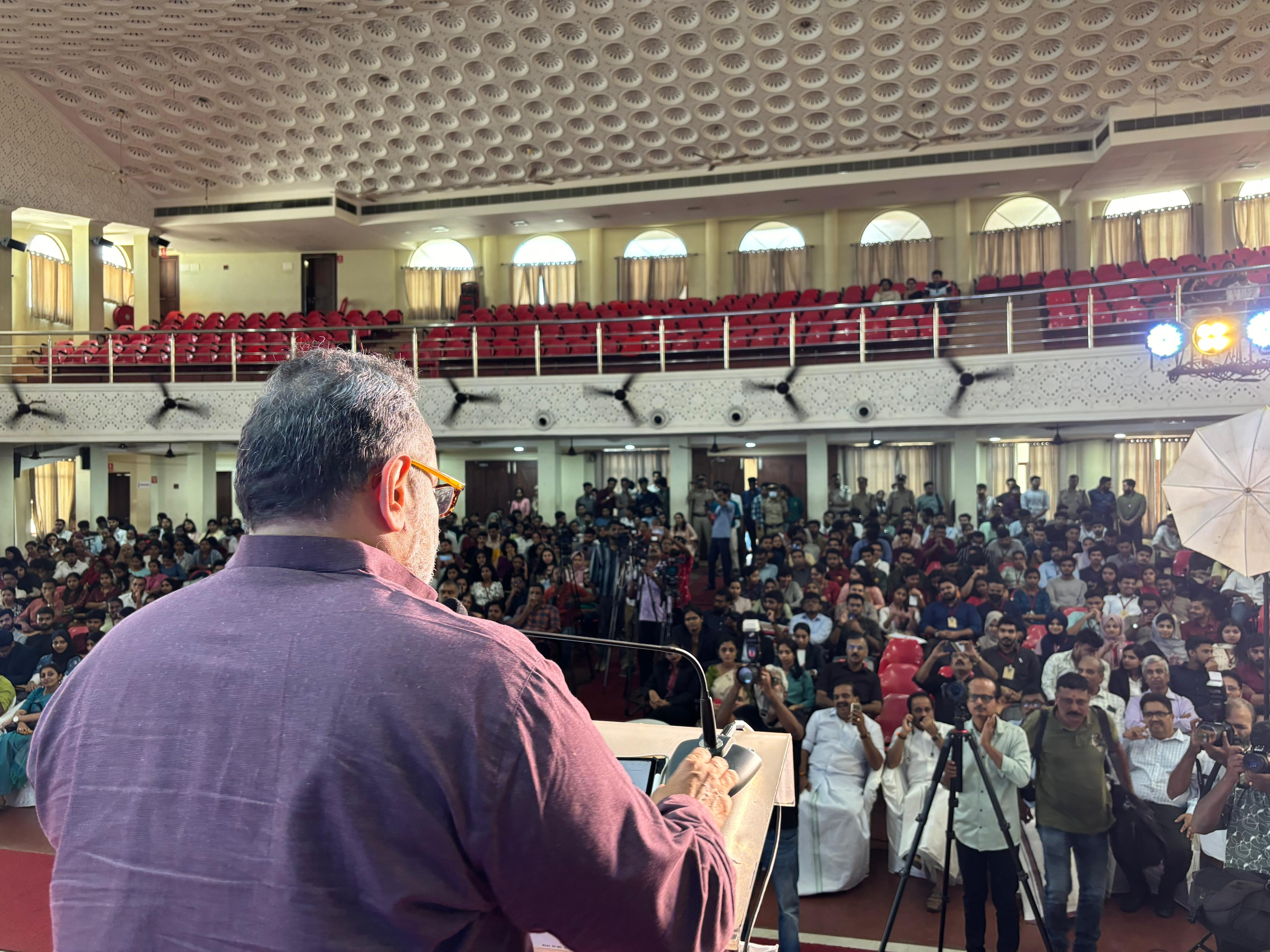
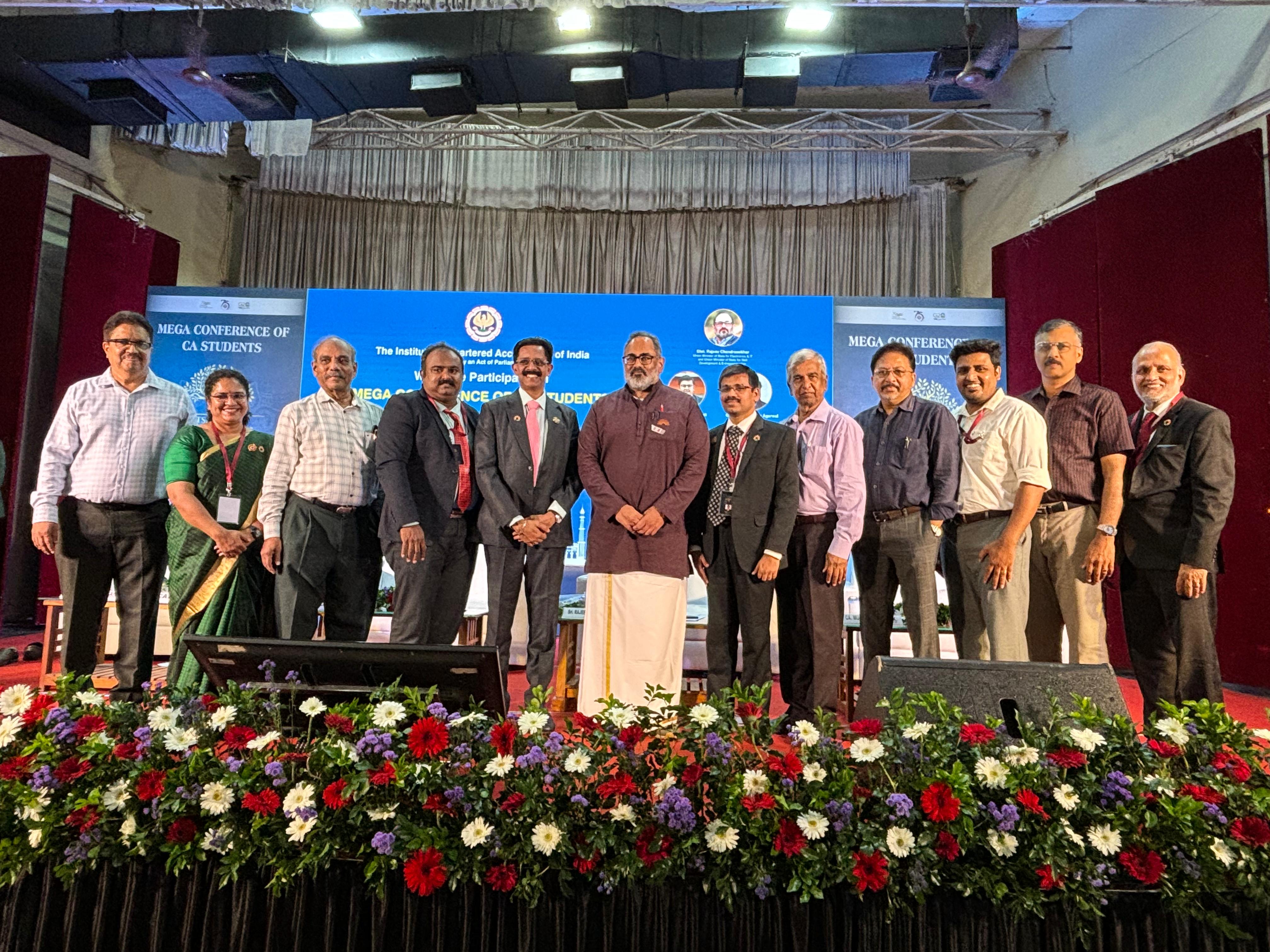
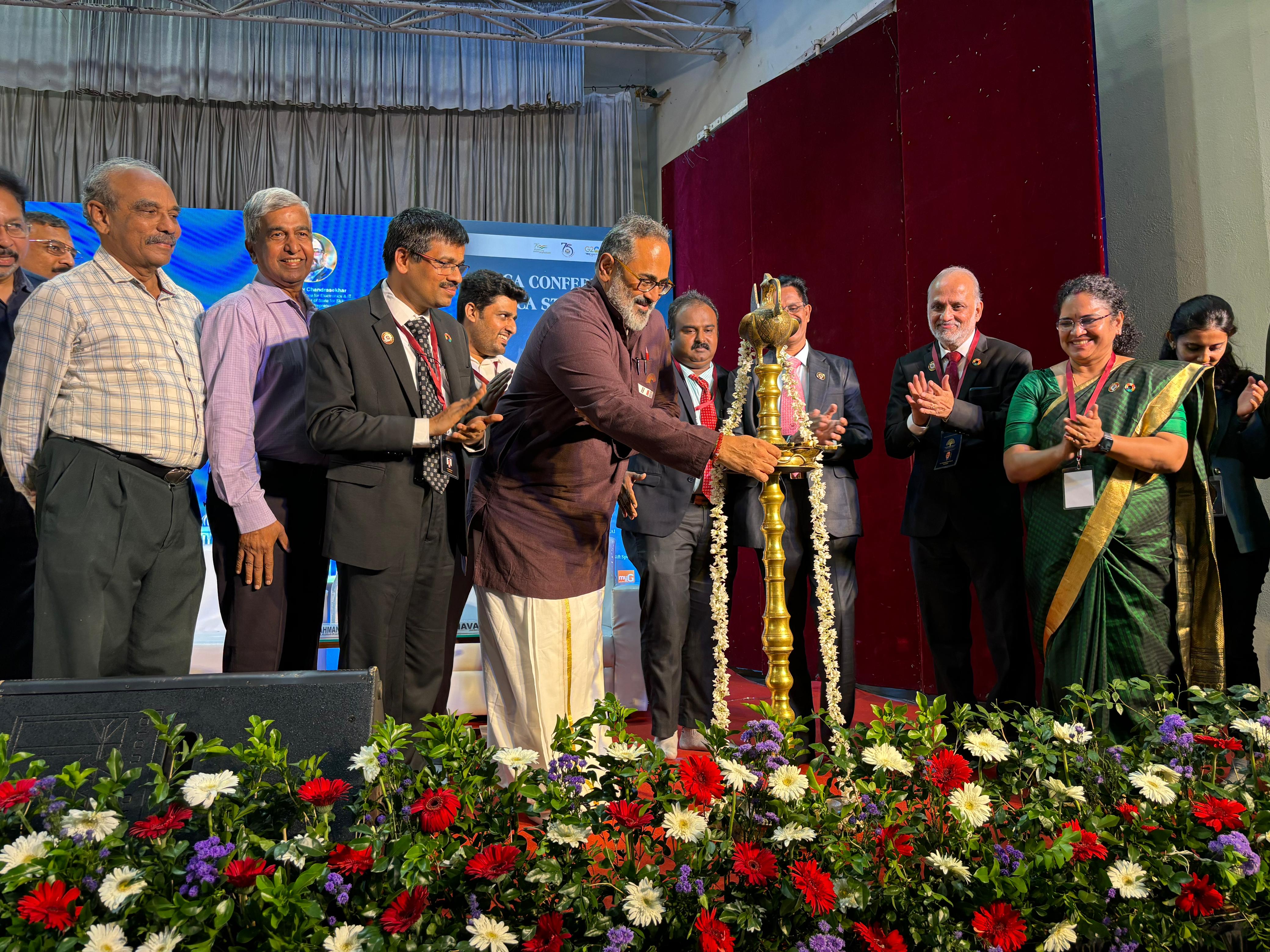
 Union Minister of State for Skill Development & Entrepreneurship and Electronics & IT, Shri Rajeev Chandrasekhar, continued his engagements in Kerala on Day 2 of his visit with an address at the Satsang 2023 Mega-Conference for CA students at Nalanda Auditorium, Kozhikode. The event, organized by the Institute of Chartered Accountants of India, focused on the theme “Insight – Discover the Unseen!”

In his address, Minister Shri Rajeev Chandrasekhar emphasized how New India is leveraging technology to create opportunities for young Indians and startups. He said, “As a Minister, I’ve had the opportunity to travel across the country, engaging with students, and discussing their concerns. One undeniable truth I’ve discovered is that young Indians in this generation are the luckiest in the history of Independent India. They possess unprecedented opportunities for growth and success, unlike any previous generation in the history of independent India. The older generation didn’t have these options; upon graduation, they were limited to just two or three choices.”

Highlighting the democratization of opportunities over the last decade, the Minister expressed, “Today, young Indians from cities like Calicut, Vizag, Bengaluru, Kohima, Surat, or Kashmir have tremendous opportunities. Over the last five years alone, we’ve witnessed the emergence of 1.2 lakh startups and 108 unicorns. The need for a godfather or a famous last name to succeed is obsolete. New India has democratized opportunities, building an enabling environment for success. Whether in semiconductors, Web3, electronics, HPC, or any tech-related field, Indians are excelling in all things tech, and young Indians are at the forefront of these opportunities.”

Encouraging CA students to embrace digital skills, Shri Rajeev Chandrasekhar stated, “Our Prime Minister emphasized the importance of skills alongside degrees and knowledge, especially in the post-Covid world of rapid digitization, digital technologies, and unprecedented electronification. I urge aspiring CAs today to acquire digital skills. Combining these skills with the existing accountancy knowledge will make you unstoppable. India is an unstoppable country. Every CA today has the potential to become catalysts for not just their own success, but the success of their profession, and the overall Indian economy.”

At an event organized by Kozhikode CSC VLE Welfare society, Minister Rajeev Chandrasekhar spoke about the goal of launching Common Service Centre (CSC) 2.0 to further the objectives set by PM Vishwakarma Yojana.

The Minister said, “PM Vishwakarma Yojana is a groundbreaking scheme for artisans who have been ignored for decades. This will certify unskilled artisans, and CSCs hold immense importance in connecting these artisans to schemes. Although CSCs have been successful nationwide, they have faced some hurdles in Kerala, which we are keen on resolving. We will further expand, modernize, and broaden the scope of this initiative.”

Minister Shri Rajeev Chandrasekhar also engaged with prominent citizens of the state in subsequent meetings, where he highlighted PM’s vision of “Vikasit Bharat”.

*****

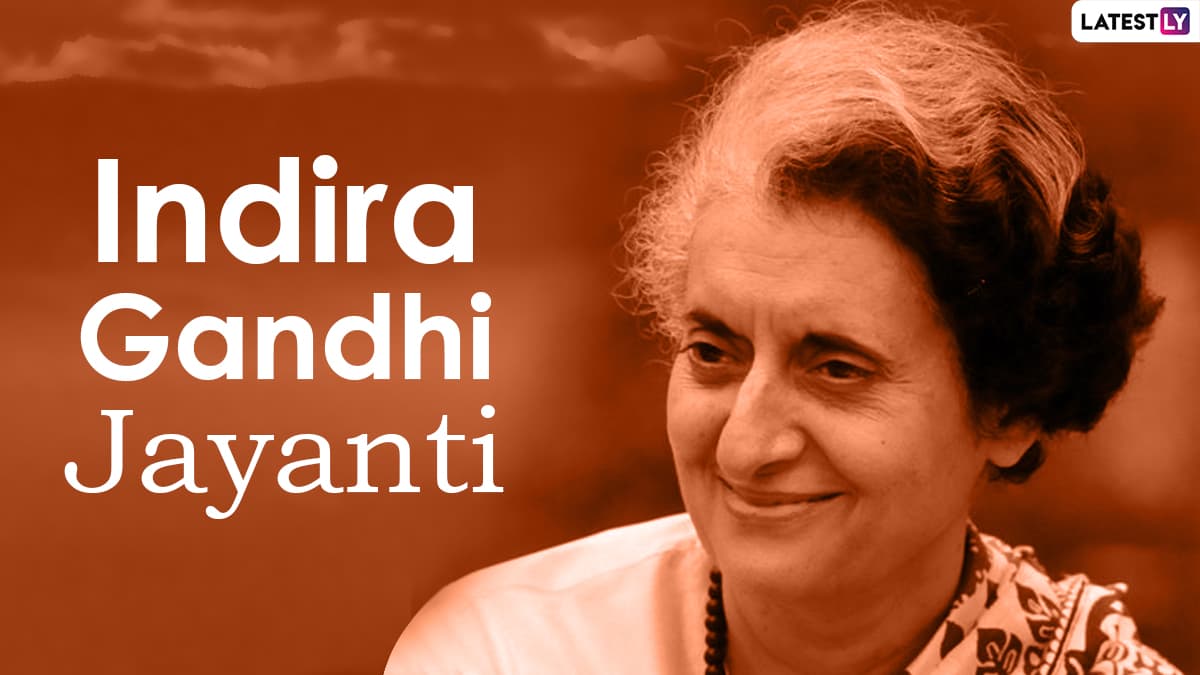
Indira Gandhi

 Indira Gandhi was a prominent political figure in India, serving as the Prime Minister of India for multiple terms and leaving a lasting impact on the country’s political landscape. Here are some key highlights of her life and legacy:

Early Life and Background:

  • Birth and Family: Indira Priyadarshini Gandhi was born on November 19, 1917, in Allahabad (now Prayagraj), into the Nehru-Gandhi family. She was the daughter of Jawaharlal Nehru, India’s first Prime Minister, and Kamala Nehru.

  • Education: She studied at Oxford University and later became involved in India’s freedom struggle, influenced by her father’s political activism.

Political Career:

  • Entry into Politics: Indira Gandhi entered politics under the guidance of her father, Jawaharlal Nehru, and held various positions within the Congress party.

  • Prime Ministerial Tenures: She served as Prime Minister of India from 1966 to 1977 and later from 1980 until her assassination in 1984, making her India’s first and only female Prime Minister to date.

  • Major Policy Initiatives: During her tenure, she implemented several policies aimed at nationalizing banks, initiating the Green Revolution in agriculture, and leading the country during the Bangladesh Liberation War in 1971, which led to the creation of Bangladesh.

  • Emergency Period: Her declaration of a state of emergency in 1975, due to political unrest and economic challenges, was a controversial period marked by curtailment of civil liberties.

Assassination and Legacy:

  • Assassination: Indira Gandhi was assassinated on October 31, 1984, by her own bodyguards in retaliation for ordering a military operation against Sikh militants in the Golden Temple in Amritsar.

  • Legacy: Indira Gandhi’s legacy is complex and multifaceted. She is remembered for her strong leadership, resilience, and contributions to India’s development and foreign policy. Her policies left a lasting impact on India’s political and economic landscape.

  • Criticism and Controversy: Her tenure also faced criticism for authoritarian tendencies, censorship, and the declaration of Emergency in 1975, which led to curtailed civil liberties.

Indira Gandhi’s political journey, leadership during challenging times, and significant policy decisions have left a lasting impact on India’s history and continue to be a subject of debate and analysis in Indian politics.

Kashi – spiritual capital of India

 The Prime Minister, Shri Narendra Modi addressed the G20 Culture Ministers’ Meeting held in Varanasi, Uttar Pradesh via video link today.

The Prime Minister welcomed the dignitaries to Varanasi, also known as Kashi, and expressed delight that the G20 Culture Ministers’ Meeting is taking place here as the city is his parliamentary constituency. Referring to Kashi as one of the oldest living cities, the Prime Minister mentioned the nearing town of Sarnath where Lord Buddha delivered his first sermon. “Kashi is known to be a treasure chest of knowledge, duty and truth and it is indeed the cultural and spiritual capital of India”, the Prime Minister remarked and suggested the guests witness the the Ganga Aarti program, pay a visit to Sarnath and try out the delicacies of Kashi.

Highlighting the inherent potential of culture to unite and enable us to understand diverse backgrounds and perspectives, the Prime Minister said that the work of the G20 Culture Ministers Group holds immense significance for entire humanity. “We in India are very proud of our eternal and diverse culture. We also attach great value to our intangible cultural heritage”, Shri Modi said as he underlined that India has been working hard to preserve and revitalize its heritage sites. He mentioned mapping the country’s cultural assets and artists at the national level as well as village level. He also mentioned building several centers to celebrate India’s culture and gave the example of the tribal museums located in different parts of the country which showcase the vibrant culture of India’s tribal communities. Referring to the Prime Ministers’ Museum in New Delhi, the Prime Minister said that it is a one-of-a-kind effort to showcase India’s democratic heritage. He also mentioned developing the ‘Yuge Yugeen Bharat’ National Museum, which upon completion will stand as the world’s largest museum showcasing India’s history and culture spanning over 5,000 years.

Speaking about the important issue of restitution of cultural property, the Prime Minister welcomed the efforts of the working group and said that tangible heritage is not only of material value but it is also the history and identity of a nation. Shri Modi remarked, “Everyone has the right to access and enjoy their cultural heritage.” Since 2014, the Prime Minister informed that India has brought back hundreds of such artifacts that showcase the glory of its ancient civilisation. He also commended the efforts towards living heritage as well as contributions to ‘Culture for LiFE’. After all, the Prime Minister said, cultural heritage is not just what is cast in stone, it is also the traditions, customs and festivals that are handed down the generations. The Prime Minister expressed confidence that the efforts of the working group will foster sustainable practices and lifestyles.

The Prime Minister underlined that heritage is a vital asset for economic growth and diversification, and it is echoed in India’s mantra of ‘Vikas Bhi Virasat Bhi’ which means development as well as heritage. “India takes pride in its 2,000-year-old craft heritage, with nearly 3,000 unique arts and crafts”, the Prime Minister said as he highlighted the ‘One District, One Product’ initiative which showcases the uniqueness of Indian crafts while fostering self-reliance at the same time. He emphasized that the efforts of G20 nations towards promoting cultural and creative industries hold profound significance as they will facilitate inclusive economic development and support creativity and innovation. In the coming month, the Prime Minister informed that India is going to roll out the PM Vishwakarma Yojana with an initial outlay of 1.8 billion dollars. He stated that it would create an ecosystem of support for traditional artisans and enable them to flourish in their crafts and contribute to the preservation of India’s rich cultural heritage.

Noting that technology is an important ally in celebrating culture, the Prime Minister mentioned India’s National Digital District Repository which is helping rediscover the stories of freedom struggle. He emphasized India’s usage of technology to ensure better preservation of its cultural landmarks while also making places of cultural importance more tourist-friendly.

Concluding the address, the Prime Minister expressed delight that the G20 Culture Ministers’ working group has launched the ‘Culture Unites All’ campaign which encapsulates the spirit of Vasudhaiva Kutumbakam – One Earth, One Family, One Future. He also commended their pivotal role in shaping a G20 Action Plan with tangible outcomes. “Your work reflects the importance of the four Cs – Culture, Creativity, Commerce and Collaboration. It will enable us to harness the power of culture to build a compassionate, inclusive and peaceful future”, the Prime Minister concluded.

****

ISRO Centre in Bengaluru

 Bharat Mata ki – Jai!

This morning, I was in Bengaluru. I arrived very early in the morning and decided to meet the scientists who have brought such great achievements to the country. So, I went there early in the morning. However, the way people celebrated the success of Chandrayaan, holding the Tricolour in their hands even before sunrise, was incredibly inspiring. And now the sun is scorching equally in this intense heat which can even pierce the skin. It’s fortunate for me too to be a part of the celebration and share in the joy of Chandrayaan’s success in this intense heat with you who have come here. I congratulate all of you for this, and for me, it’s also a privilege to be a part of this celebration. I congratulate all of you for this.

Today, when I arrived at ISRO in the morning, I had the privilege of releasing the images captured by Chandrayaan for the first time. Perhaps, you might have seen those images on TV as well by now. Those beautiful images were a significant scientific success in itself. Traditionally, it’s a global tradition to name such points which are part of such successful campaigns. After much deliberation, I felt that the point where Chandrayaan-3 has successfully landed should be given a name, and that name is ‘Shivshakti’. When we talk about Lord Shiva, it signifies auspiciousness, and when we talk about power, it signifies the strength of the women of my country. When we talk about Lord Shiva, the Himalayas come to mind, and when we talk about Shakti (power), Kanyakumari comes to mind. Therefore, that point has been named ‘Shivshakti’ to capture the essence of this sentiment from the Himalayas to Kanyakumari. In fact, this name was brought to my notice during Chandrayaan-2 in 2019. However, my mind wasn’t ready. Deep down in my mind, I had resolved that Chandrayaan-2 Point would only get a name after we truly succeed in our journey. And when Chandrayaan-3 succeeded, the point of Chandrayaan-2 also got its name, and that point has been named ‘Tiranga’ (the Indian Tricolour flag). The Tricolour gives the strength to overcome all challenges and the Tricolour provides the inspiration to manifest every dream. Hence, as Chandrayaan-2 faced failure and Chandrayaan-3 achieved success, the Tricolour turned into inspiration. This is why the Chandrayaan-2 point will now be known as Tiranga. Another significant aspect that I mentioned this morning is that August 23 is a milestone in India’s scientific journey of development. Therefore, every year, India will celebrate August 23 as National Space Day.

Friends,

I was in South Africa for the BRICS Summit in the past few days. This time, along with members of the BRICS Summit, the entire Africa was also invited there. During the BRICS Summit, I observed that there was hardly anyone in the world who did not mention Chandrayaan, or had not conveyed their congratulations. The congratulations I received there, I instantly shared them with all the scientists. And I’m also sharing all the congratulations from across the world with you.

Friends,

Everyone wanted to know about Chandrayaan’s journey, its timeless accomplishment, and the impact of New India, new dreams, new resolutions, and successive achievements, one after another. The world is sensing the emergence of a new influence, based on the capabilities of our Indian Tricolour, our successes and achievements. Today, the world is not only experiencing this influence but also acknowledging and respecting it.

Friends,

After the BRICS Summit, I went to Greece. It had been 40 years since any Indian Prime Minister had visited Greece. I am fortunate that many tasks that are left undone are destined to be done by me. India was accorded respect for its capabilities in Greece as well. Greece perceives that it can become a gateway to Europe due to the friendship between India and Greece and the friendship between India and Greece will serve as a significant means to strengthen the relationships between India and the European Union.

Friends,

We also have some responsibilities in the days to come. Scientists have done their part. Whether it’s satellites or Chandrayaan’s journey, it has a significant impact on the lives of ordinary people. Therefore, we need to work so that the interest of the youth of my country in science and technology develops further. We are not just people who get stuck with celebrations, enthusiasm, and energy. When we achieve success, we are prepared to take strong steps forward for new advancements. Hence, we should explore how space science can work, how satellite capabilities can be used and how this journey can be useful for good governance, for last-mile delivery, for improvements in the lives of ordinary people. And therefore, I am sounding out all the departments of the government to use space science, space technology and the capabilities of satellites for improvement in delivery, quick response, transparency and perfection. We need to explore all these aspects within our respective departments. I also wish to organize hackathons for the country’s youth in the coming days. In recent days, the country’s students have provided excellent ideas by working non-stop for 30-40 hours during various hackathons, creating an environment of innovation. I want to initiate a series of such hackathons very soon. This will allow the young minds, the young talents of the country, to use space science, satellites, and technology for finding solutions to the challenges faced by ordinary people. We will work in that direction.

Alongside this, we also need to attract the new generation towards science. The 21st century is technology-driven, and the country that progresses ahead in the world will be the one with prowess in science and technology. Therefore, the demand of the time is that by 2047, as we strive to make our country a developed India, we must advance further on the path of science and technology with greater strength. We need to prepare our new generation right from childhood with a scientific temperament. Hence, the significant success we have achieved, the enthusiasm and energy we have, need to be channelled into strength. To channelize this strength, a quiz competition will begin on MyGov from September 1. Through this, our youth will engage with small questions and answers, and gradually develop an interest. Our new education policy has made ample provisions for science and technology. Our new education policy is such that gives significant emphasis to this, and the quiz competition will help our students develop interest in science and technology. Today, I would like to tell the youth of the country, to the students of my country, and to every school, to participate actively in this quiz competition which is centred round Chandrayaan. Millions and millions of youth in the country should become a part of it, and we should take it forward. I believe this will yield significant results.

Today, I want to draw your attention to one more thing. Despite the world’s increasing curiosity, attraction, and belief in India, there are still occasions when it should experience these aspects first hand. There will be an immediate opportunity before us, especially for the people of Delhi, and that is the G20 Summit. In a way, the world’s significant decision-making leadership will be on the soil of Delhi, in the land of India. While the entire India is the host, the guests are coming to Delhi.

The hosting of the G20 Summit is a responsibility of the entire country, but the greater responsibility lies with my brothers and sisters of Delhi, the citizens of Delhi. Therefore, we need to show the world that Delhi can handle this responsibility without any glitches. The privilege of raising the flag of our country’s honour, dignity, and prestige is in the hands of the people of Delhi. There is bound to be some inconvenience when a significant number of guests come. Even when some 5-7 guests visit us, we accommodate them in the main sofa even though we have to sit on smaller chairs. We have the tradition of ‘Atithi Devo Bhava’ i.e., treating guests as gods. The more respect, honour, and welcome we extend to the leaders of the world, the more will they enhance our own pride, our dignity, and our reputation. Therefore, there will be numerous activities taking place here from September 5th to September 15th. Therefore, I apologize in advance to the people of Delhi for the inconvenience which will be caused to them in the days to come. I request the citizens of Delhi to be patient with the inconveniences that may arise during these upcoming days. I urge them to understand that these guests are everyone’s guests, and we might experience some discomfort, changes in traffic arrangements, and restrictions on movement. But some things are necessary. And as we know if there is a wedding in the family, even if a small cut happens while trimming nails, people say, “Take care, it’s a special occasion, nothing bad should happen.” Therefore, this is a significant opportunity, and just as in a family, all these guests are ours. With the collective efforts of all of us, I believe that our G20 Summit will be spectacular, vibrant, and the entire Delhi will be immersed in colours. My fellow citizens of Delhi will showcase this through their endeavours, and I have full confidence in this.

My dear brothers and sisters, my family members,

In just a few days, the festival of Raksha Bandhan is approaching. Sisters tie a rakhi to their brothers. And we have all grown up saying, “Chanda Mama”. From childhood, we are taught about Chanda Mama, and from childhood, we are taught that earth is our mother. The earth is our “mother” and the moon is “mama”. It means that our Mother Earth is the sister of Chanda Mama. Our Mother Earth is going to celebrate the festival of Raksha Bandhan with Chanda Mama this time. And so, let’s celebrate this Raksha Bandhan festival in a splendid way, with brotherhood, unity, and a loving atmosphere, so that in the G20 Summit too, this brotherhood, this unity, this love, our culture, and our traditions introduce the world to this essence. I believe that the upcoming festivals will be grand, and in September, our achievements will once again introduce India in various ways on the world stage. Just as the scientists have raised our flag high with the success of Chandrayaan, we, the citizens of Delhi, will strengthen that flag with our splendid hosting of the G20 Summit. I have full confidence in this. I extend my warm wishes to all of you who have gathered here in this bright sunshine to collectively celebrate the achievements of our scientists, to wave our Tricolour with pride, and I offer my heartfelt congratulations. Let’s chant together –

Bharat Mata ki – Jai!

Bharat Mata ki – Jai!

Bharat Mata ki – Jai!

Thanks a lot!


DISCLAIMER: This is the approximate translation of PM’s speech. Original speech was delivered in Hindi.

***

Availability and use of fertilizers in India

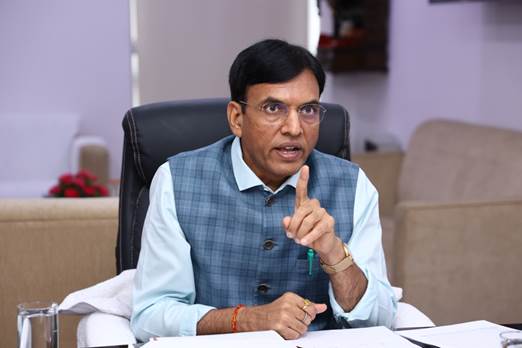
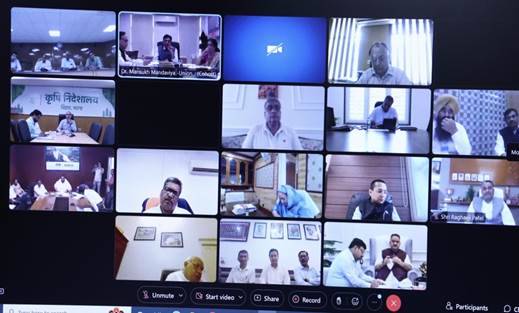
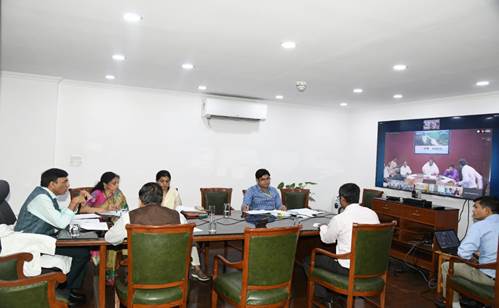
 Union Minister of Chemicals and Fertilizers, Health & Family Welfare Dr. Mansukh Mandaviya interacted with State Agriculture Ministers on the availability and use of fertilizers in the country, here today. During the meeting he also reviewed progress of nano urea, nano DAP and promotion of alternate fertilizers at the field level and steps initiated by the States in this regard.

At the outset, Dr. Mandaviya informed all the States that there is adequate availability of fertilizers in the country with the present level of 150 LMT stocks. This stock will not only take care of ongoing Kharif Season but will also ensure comfortable opening for the forthcoming Rabi Season.

Dr Mandaviya highlighted the necessity of reducing the excessive use of chemical fertilizers to save soil. He reiterated that Union Government has already taken a step in the form of PM PRANAM scheme. The efforts also include introduction of slow-release Sulphur Coated Urea (Urea Gold), nano urea, nano DAP etc. to promote use of alternate fertilizers to save the mother earth. The State Government expressed their willingness to be active participants in this resolve.

There was a discussion on the initiative of PMKSKs across the country which are acting as One-Stop-Shop catering to all the needs of farmers at one place. He made an appeal to all the State Agriculture Ministers and State Government Officials to regularly visit these PMKSKs and spread awareness among farmers.

Hon’ble Minister made an earnest appeal to the States/ UTs about the need to keep a check on diversion of agriculture grade urea for non-agricultural purpose. He further asked the States/ UTs to run awareness campaigns, thereby, reducing the possible diversion of Agriculture Urea and to take strict action against the defaulters. It is recalled that based on the Joint Inspections by the Fertilizer Flying Squad of Centre Government and various State Agriculture Departments, State Governments have registered 45 FIRs against defaulting Urea Using Units, cancelled licenses of 32 Mixture Units and de-authorized 79 mixture units along with strict actions under Essential Commodities Act & Prevention of Black Marketing Act. The State Government also echoed the sentiment of Zero Tolerance against such culprits.

The Meeting concluded with Centre and States on board to take all necessary steps forward to promote use of alternate fertilizers, reduce the excessive consumption of Chemical Fertilizers. The recently launched initiatives like PM-PRANAM, Urea Gold, Nano-Urea, Nano-DAP were well recognized by the States with equal resolve to achieve the desired results in the larger interests of the farming community.  

State Agriculture Ministers from various States and senior officers from State Governments  and senior officials of Department of Fertilizers & Department of Agriculture & Farmers Welfare attended the meeting.

****

Chandrayaan-3 mission is attracting wider international collaborations for India

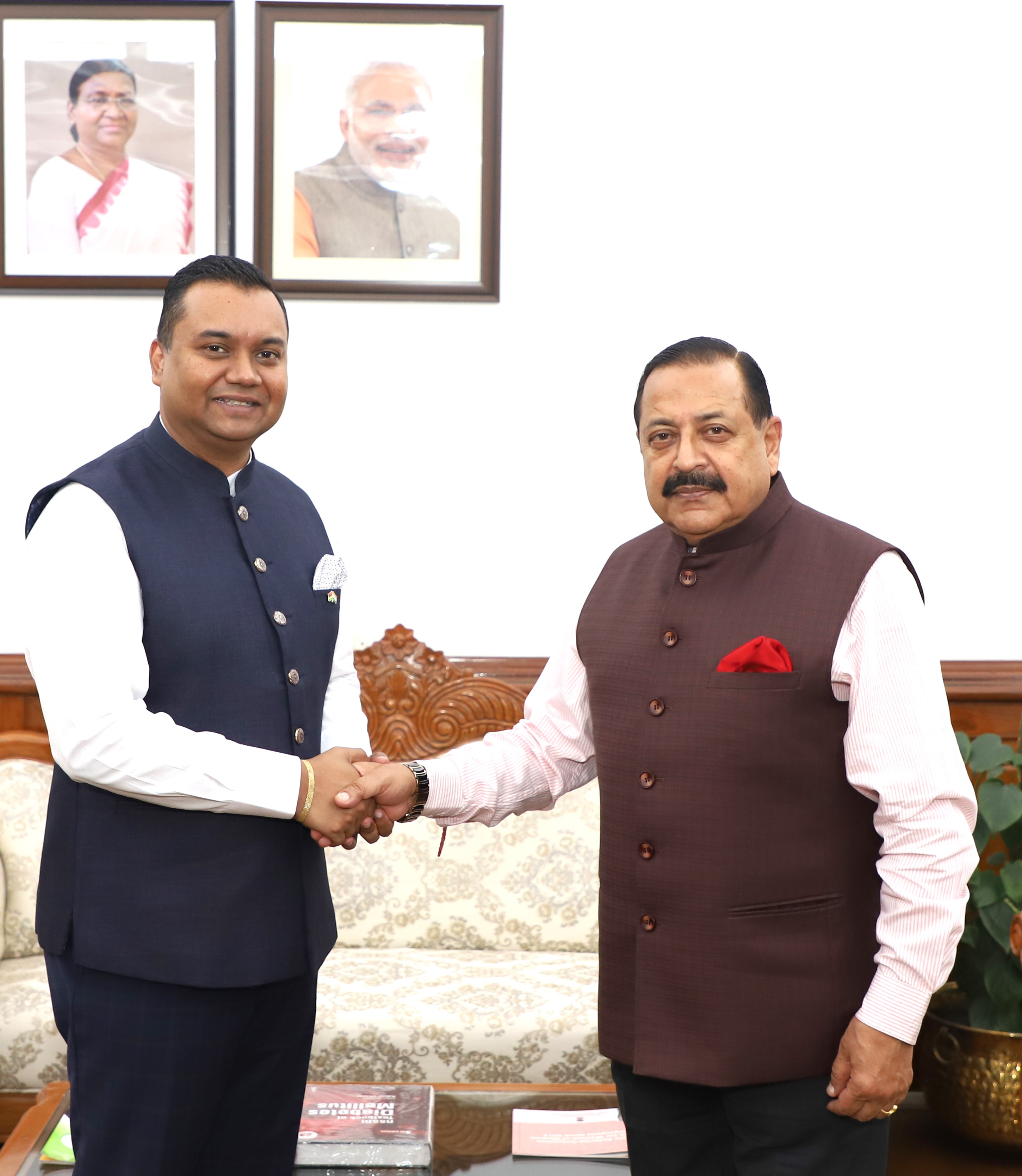
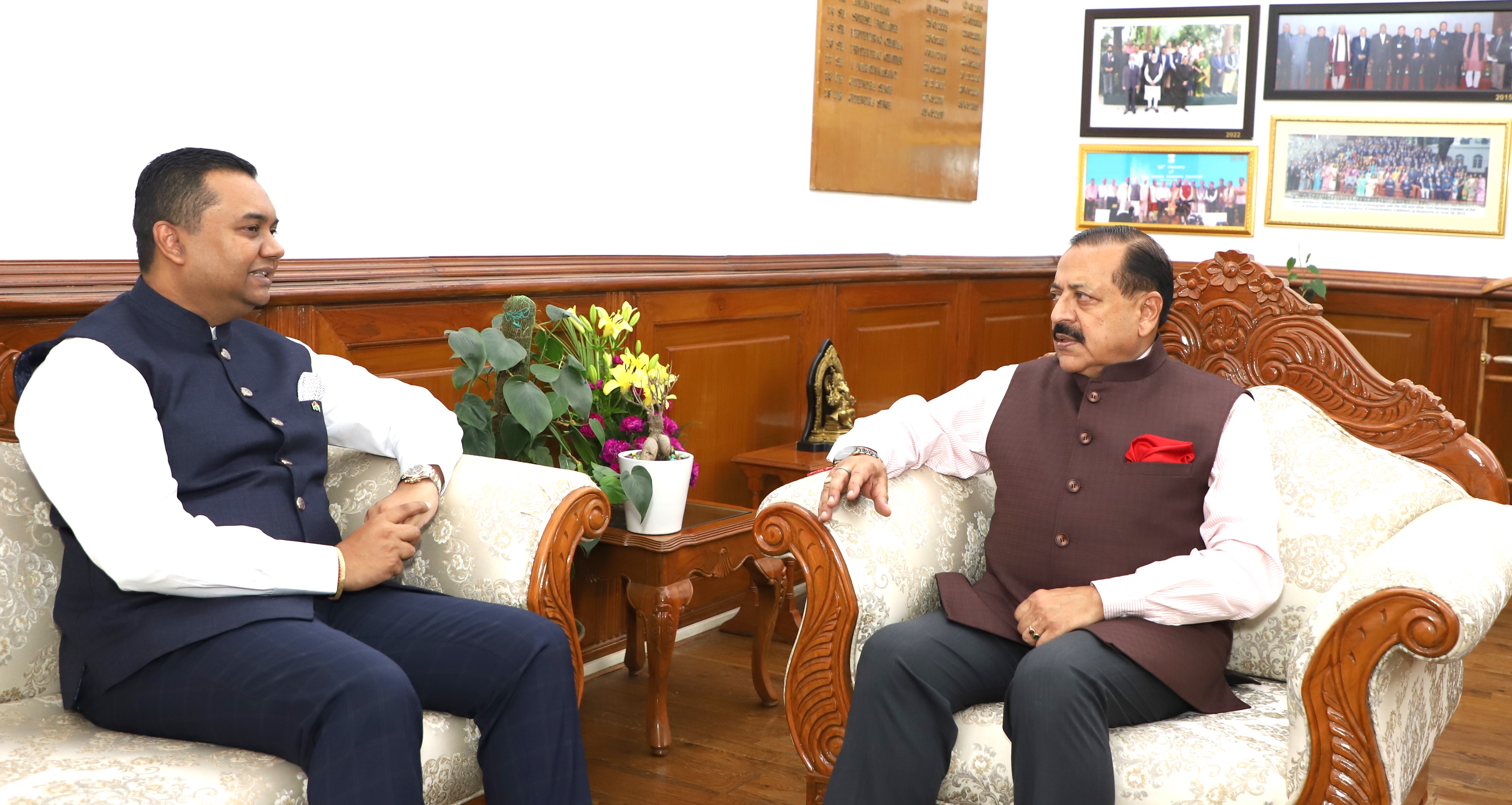
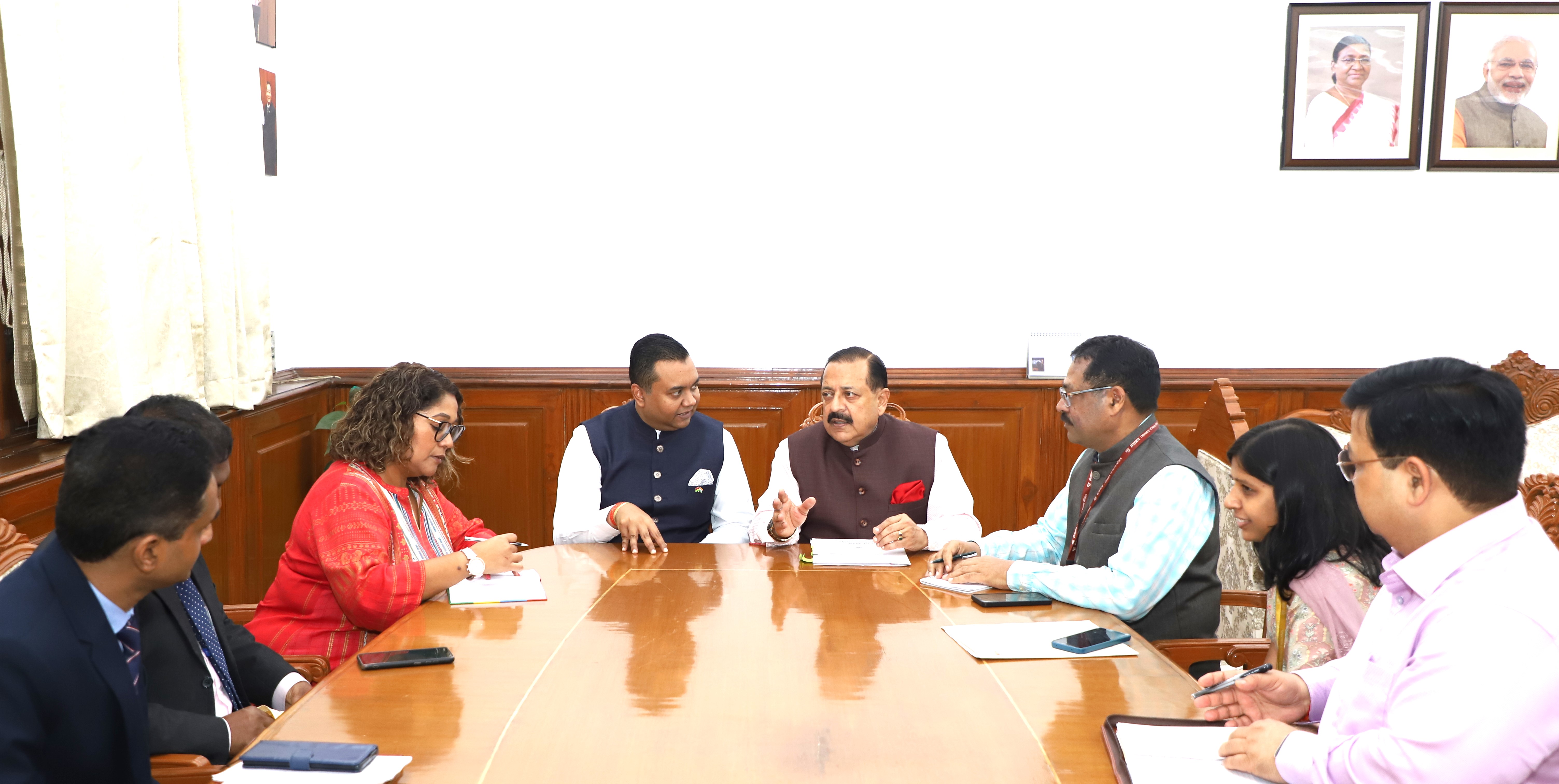
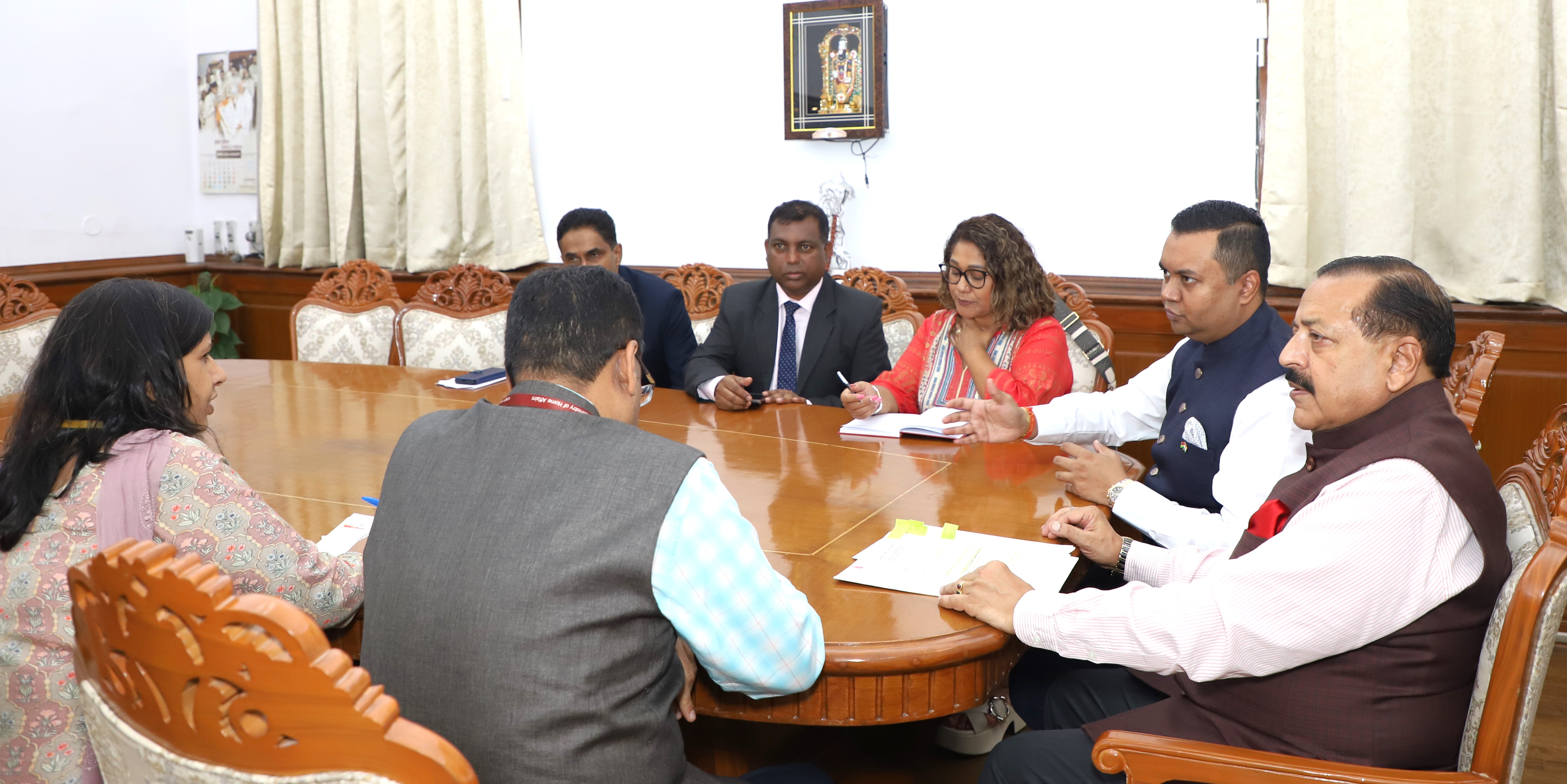
 Union Minister of State (Independent Charge) Science & Technology; MoS PMO, Personnel, Public Grievances, Pensions, Atomic Energy and Space, Dr Jitendra Singh today said, Chandrayaan-3 mission is attracting wider international collaborations for India.

The Minister was speaking  after a high-level Mauritius delegation led by  Minister for Information Technology, Communication and Innovation (MITCI), Mr. Darsanand Deepak Balgobin called on him in New Delhi today to discuss the proposal for a Joint India-Mauritius Satellite. 

India and Mauritius have  also agreed to utilize ISRO’s ground station in Mauritius to offer support to third party missions. 

By signing up the Artemis Accords during the landmark visit of Prime Minister Shri Narendra Modi to the United States, India has demonstrated its capability to collaborate in the Space sector with other  nations of the world  as an equal partner, said Dr Jitendra Singh.

Mr. Balgobin earlier visited ISRO facilities in Bengaluru on August 17, 2023. ISRO presented technical details and application potentials of the proposed India – Mauritius joint satellite to the Minister.

The two ministers agreed on expanding the scope of ISRO’s Ground Station set up in Mauritius to include third party missions including the European Space Agency and an amendment to the existing MoU is planned to be signed to facilitate such collaboration.

Mauritius has hosted ISRO’s ground station for tracking satellite and launch vehicles for more than 3 decades and currently this ground station is continuously manned with two antennas (of 11 m diameter) operated in Mauritius.

Dr Jitendra Singh said, India has supported Mauritius by establishing a remote sensing centre in 1999 and also by providing satellite data pertaining to Mauritius territory and officials from Mauritius have benefited from the training courses offered by Indian institutes on space technology applications.

Dr Jitendra Singh and Mr. Balgobin also discussed areas like space cooperation through: (i) sharing of earth observation satellite data; (ii) Developing an ‘India-Mauritius space portal’ with satellite data, geospatial layers and value-added services pertaining to Mauritius; (iii) Initiating discussion for space industry level collaboration.

*****

Strengthen the Bilateral Cooperation between India and Norway

 A high-level delegation led by the Union Minister of Fisheries, Animal Husbandry and Dairying Shri Parshottam Rupala alongwith Minister of State, Fisheries, Animal Husbandry & Dairying, Dr L. Murugan, will be visiting Norway from August 21st  to 24th August, 2023. The delegation will also include Joint Secretary (Marine Fisheries) and other senior officers from the Department of Fisheries.

The main objective of the visit is to strengthen the bilateral cooperation between India and Norway in the field of fisheries and aquaculture, as per the Memorandum of Understanding signed by both countries in March, 2010. The delegation will hold bilateral discussions with the Norwegian Minister of Fisheries and Ocean Policy, Mr Bjørnar Selnes Skjæran, Ms. Kristina Sigursdottir Hansen and State Secretary, Ministry of Trade, Industry and Fisheries, Norway other key officials on various aspects of fisheries development, resource management, research, innovation and trade.

The delegation will also attend the Aqua Nor 2023, the biannual aquaculture exhibition and trade fair in Trondheim, Norway from 22nd to 24th of August, 2023, one of the world’s largest trade shows for aquaculture technology and innovation. The exhibition will showcase the latest developments and solutions for sustainable and profitable aquaculture. The delegation will interact with various Norwegian enterprises that have expertise in different aspects of fisheries and aquaculture, such as fish health, feed, genetics, equipment, processing and marketing.

The delegation will also visit some of the state of art facilities in Norway related to fisheries and aquaculture, such as fishing vessels, fishing harbours, hatcheries, cage farms and seafood processing units. The delegation will learn from the Norwegian experience and explore the possibilities of collaboration and investment in these areas.

The delegation will also engage with the Indian diaspora in Norway and apprise them of the initiatives and achievements of the Government of India in the fisheries sector and seek their suggestions and feedback.

The visit is expected to enhance the mutual understanding and bilateral cooperation between India and Norway in the fisheries sector and pave the way for substantial development through partnership in the future.

****

SK/SS

INDIA, FRANCE AND UAE COMPLETE MAIDEN MARITIME PARTNERSHIP EXERCISE

 India, France and UAE trilateral cooperation achieved another milestone in history with successful completion of first ever trilateral Maritime Partnership Exercise between three navies from 07 -08 Jun 23.

During the maiden edition of the exercise, a wide spectrum of operations at sea such as surface Warfare involving tactical firing and drills for Missile engagements, close quarter manoeuvres, Advanced Air Defence Exercise with French Rafale and UAE Dash 8 MPA, Helicopter Cross Landing Operations, Drills for Replenishment at sea were undertaken by the participating units.

The exercise also saw cross embarkation of personnel that facilitated exchange of best practices.

The exercise has further strengthened the maritime ties between the navies and enhanced interoperability to address traditional and non-traditional threats in the maritime environment thus ensuring safety of mercantile trade and freedom of navigation at high seas in the region.

VM/PS                               

Nyaya Vikas Portal

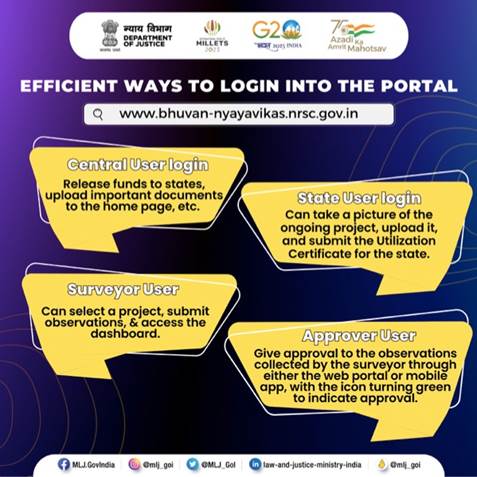
 Nyaya Vikas Portal allows four  efficient ways of logging into the portal, thereby empowering stakeholders with seamless access to information pertaining to funding, documentation, project monitoring and approval.

About Nyaya Vikas: The Department of Justice has been implementing the Centrally Sponsored Scheme (CSS) for Development of Infrastructure Facilities for Districts and Subordinate Judiciary since 1993-94.

Under the Scheme,  central assistance is provided to the State Government / UT Administrations for construction of court halls and residential units for Judicial Officers / Judges of District and Subordinate Courts. With further extension of the scheme beyond 31.03.2021, some new features like Lawyers Hall, Toilet complexes and Digital computer rooms have been added to the scheme for the convenience of lawyers and litigants, besides court halls and residential units.

The funds sharing pattern under the Scheme for Center and State is 60:40 in respect of States other than North Eastern and Himalayan States. The funds sharing pattern is 90:10 in respect of North Eastern and Himalayan States; and 100% in respect of Union Territories. This portal has been created for monitoring the implementation of this Scheme.


*****

Indian Deaf Cricket Team, winners of IDCA TR-Nation ODI for the Deaf against Bangladesh

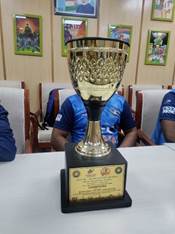
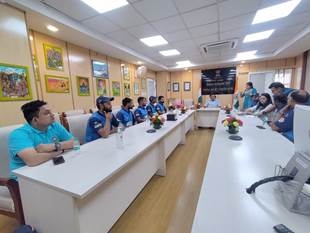
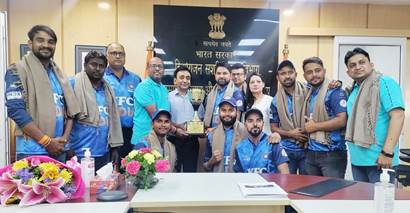
 Today on 1st June, 2023, Shri Rajesh Aggarwal, Secretary, Department of Empowerment of Persons with Disabilities (DEPwD) felicitated the winning team of IDCA TR-Nation ODI for the Deaf, 2023 in the conference hall of the Department at Pandit Deen Dayal Antyodaya Bhavan, CGO Complex, New Delhi. This International tournament was held between 29th April & 5th May and came to a successful close at Merlin Rise, Sport’s City, Club Pavilion Cricket Grounds, Rajarhat, Kolkata.  The Indian Deaf cricket team won IDCA TR-Nation ODI for the Deaf, 2023 by defeating Bangladesh Deaf Team by record 166 runs.

A trophy on a tableDescription automatically generated with medium confidenceA group of people sitting at a tableDescription automatically generated with medium confidence

Speaking on the occasion, Shri Rajesh Aggarwal, Secretary (DEPwD) congratulated all the team members including the coaches and president IDCA for their outstanding efforts. He interacted with each team member to know their background, employment status, etc. He wished victory of the team in the coming Deaf ICC ODI World Cup in Qatar.

A group of people posing for a photoDescription automatically generated

Ms. Reena Jain Malhotra, Patron of IDCA has informed that IDCA was formed in 2020 and registered under the Societies Registration Act 1860 with the sole aim to promote the game of Cricket amongst the deaf athletes of the country and to provide them with a platform to showcase their talent and to represent their respective States at a national level and country at international level. She further told that Indian Deaf Cricket Association (IDCA) is a governing body for deaf cricket in India and a member of DICC (Deaf International Cricket Council) which closely works with ICC to promote Cricket amongst Deaf Cricketers globally.

***

Raksha Mantri Shri Rajnath Singh to visit Nigeria

  Raksha Mantri Shri Rajnath Singh will visit Nigeria between May 28-30, 2023 to attend the swearing-in ceremony of the President-elect of the West African nation Mr Bola Ahmed Tinubu. Shri Rajnath Singh will attend the swearing-in ceremony at Eagle Square in Abuja on 29th May. He will also meet the outgoing Nigerian President Mr Muhammadu Buhari during a reception hosted by him on 28th May.

This will be the first-ever visit of an Indian Defence Minister to Nigeria. The Raksha Mantri’s visit will be an important landmark in building the strong bonds of friendship between the two countries. Considering the growing defence cooperation between India & Nigeria, senior officers of Ministry of Defence and top leadership of important Defence PSUs will accompany Shri Rajnath Singh. They will hold meetings with the representatives from the Nigerian industry and the Armed Forces to identify the equipment and platforms, through which the Indian defence industry can support the country’s requirements.

Nigeria is home to an estimated 50,000 members of the Indian community. The Raksha Mantri will address the Indian diaspora at Abuja during the visit.

*****