Khadi: The Sustainable Fashion of India

Khadi, India‘s own versatile clothing material for ages

Introduction

Khadi, also known as Khaddar ,which started as a symbol of the Swadeshi Movement led by Mahatma Gandhi 100 years ago, is now a fashion statement in India and is gradually getting popular across the globe. Not only as an affordable and comfortable fabric for daily-wears, but also Khadi is now being considered as a Style Statement for its sustainability and eco-friendliness.
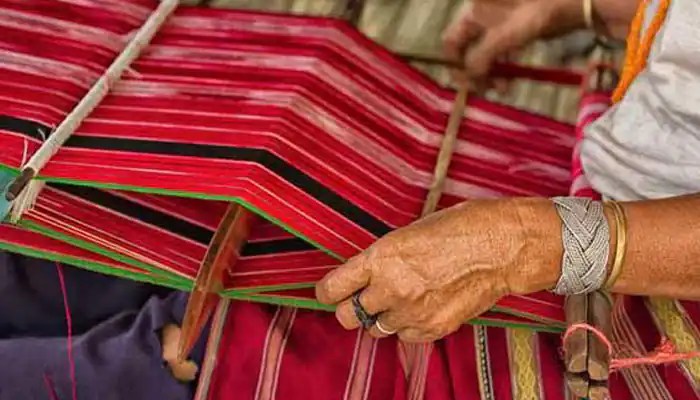
Khadi production

Nature of The Khadi Material

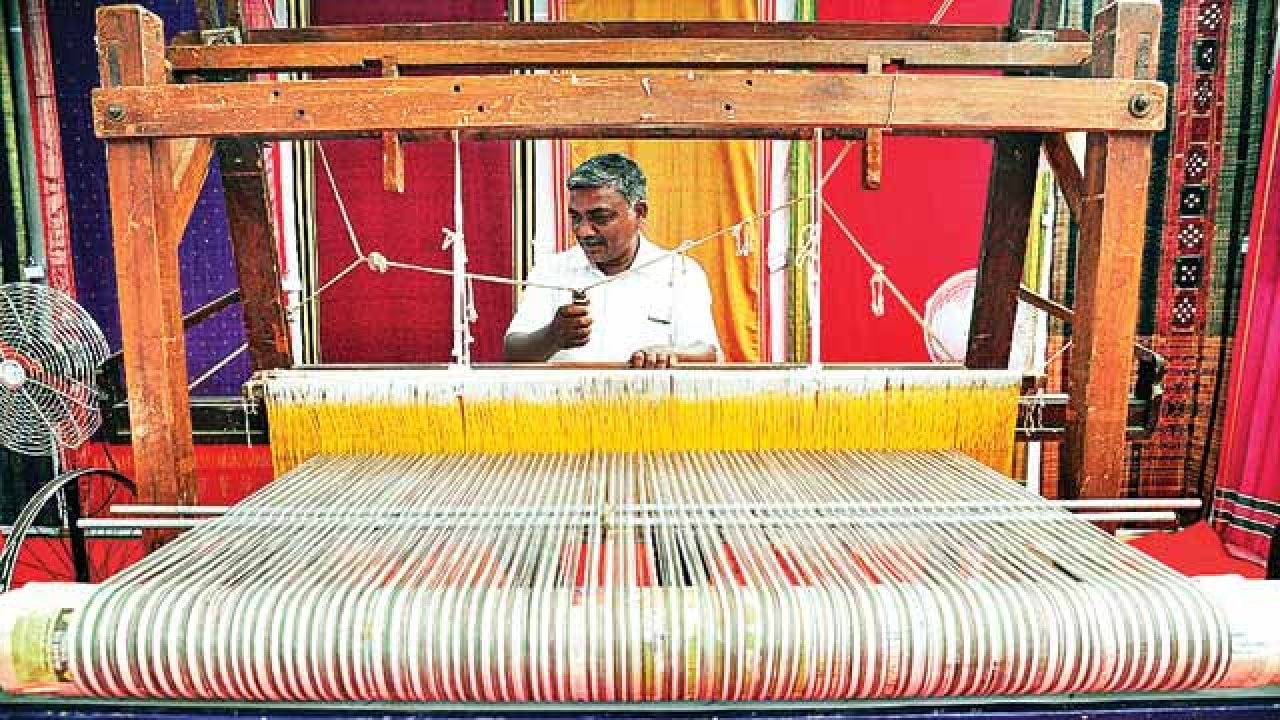
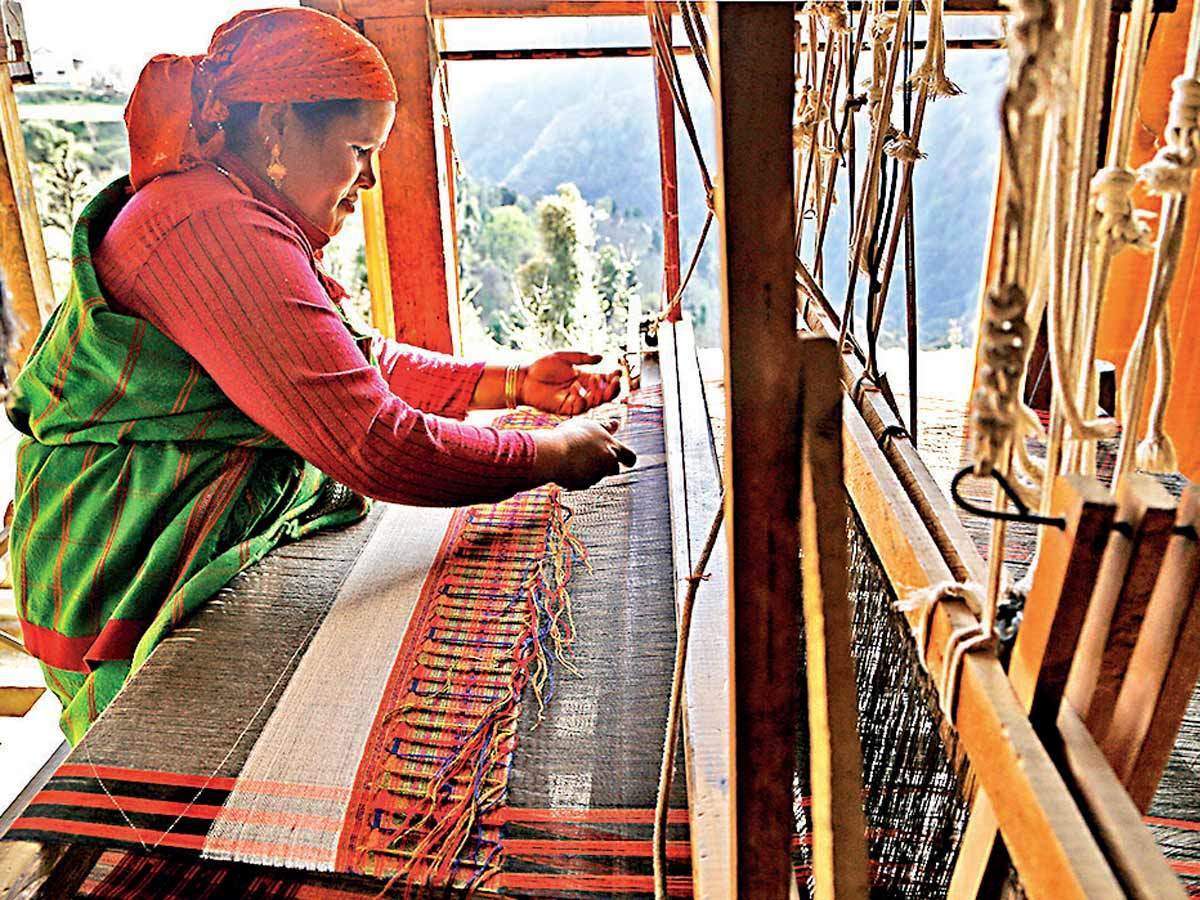
Khadi is a textile fabric made by hand-spun and hand-woven cotton, silk, wool or a mixture of these fibres. It is a traditional way of textile manufacturing and is generally produced by rural artisans. The method of manual spinning and weaving makes the fabric structure somewhat rugged and imparts a unique appearance and makes it soft and comfortable to wear. The spinning is carried out on a traditional wooden frame called charkha, while the weaving is done on a handloom. The specific fabric construction helps in circulation of air within the threads and imparts unique property of keeping the wearer warm in winter as well as cool in summer.
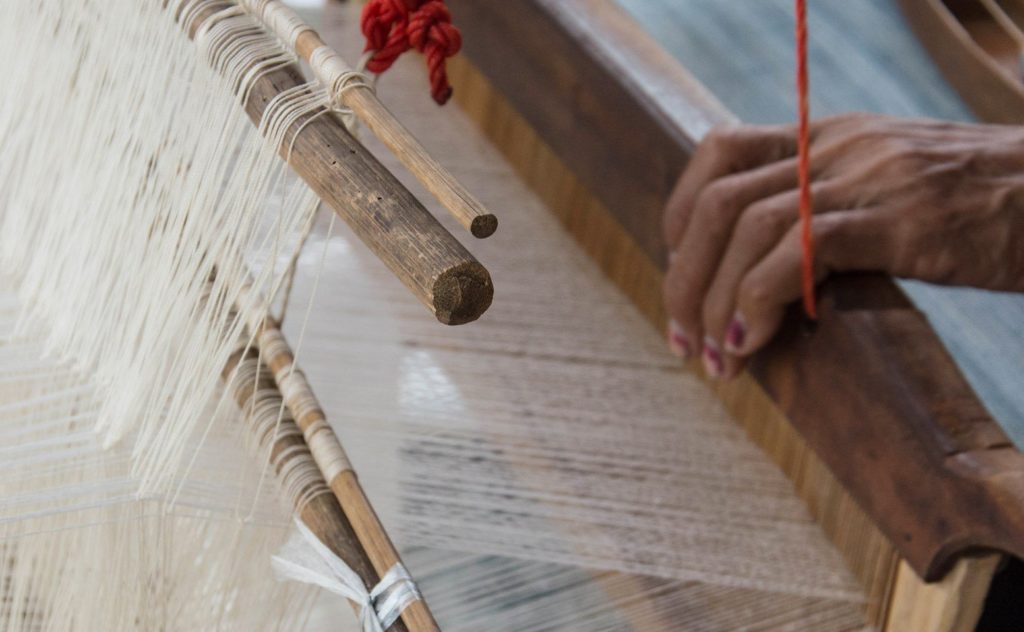
Weaving of Khadi

History of Khadi : Role in India’s Freedom Movement

India has an ancient heritage of cloth making based on the availability of natural fibrous raw material such as -agricultural cotton owing to the clement climatic conditions and fertile land, varieties of silk from different sericulture and wool from domestically reared sheep. The textile coloration was carried out using abundantly available natural dyes, derived from various plant and animal extracts. Such flourishing textile base was one of the major attractions for the Western world. After mechanised industrialisation, the situation changed and the basic raw material was exported from India, converted into mill-processed finished cloth and the imported fabric was brought back. This led to the demolition of traditional textile manufacturing in India and eventually the art and craft of fabric making diminished.

During the initial phase of the freedom movement, national leaders like Dadabhai Naoroji and Lokmanya Tilak initiated the Swadeshi Movement to promote Indian-made products. However, it was Mahatma Gandhi who in 1918 brought the focus of India’s freedom struggle to khadi by promoting that as a Swadeshi symbol.

Under the leadership of Mahatma Gandhi, khadi-making regained momentum and became a symbol of revolution and resistance. It also provided employment to the vast rural population of India and achieved distinct identity as a common man’s cloth. As everybody could wear the same form of clothing without any distinctions of class, creed or religion, they could demonstrate solidarity in freedom struggle. Wearing khadi became a matter of national pride and united the population of India by surpassing the divisive system of the region, language, religion, caste, age and gender. It reflected our country’s legacy of sustainable living and self-reliance. The Indian national flag is also made from khadi material.
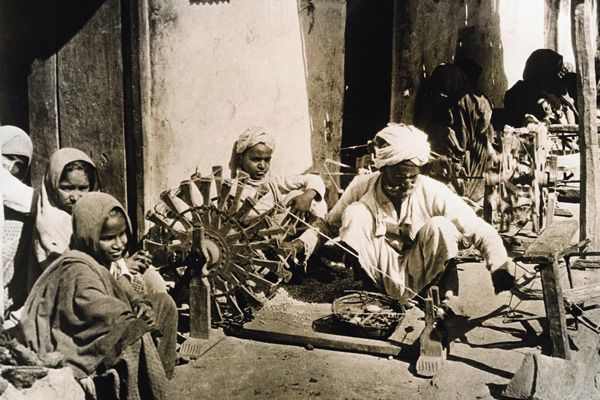
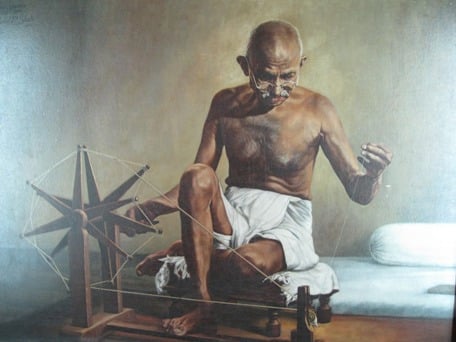
Khadi making with Charkha, during India‘s Freedom Movement

Government Initiatives After India’s Independence

The Khadi and Village Industries Commission (KVIC) is the Indian government body that promotes khadi, whose production and sale comes under the small scale industry sector. KVIC was created by a parliament act after which many KVIC outlets were opened across the country. These shops sell khadi fabrics and apparel. Every year between October to January, all Khadi Gramodyog Bhavans offer discounts on their products. KVIC also organises exhibitions and trade fairs in the country and abroad to promote khadi.

An estimated 15 lakh people are now engaged in producing over 12 crore metres of khadi. KVIC is taking further steps to enhance its production as the market demand for such products is much more than the supply. A new programme is expected to establish the ‘Khadi Mark’ and a logo to indicate the genuineness of the product. The financial support provided and the political will exerted by the present government and the special emphasis from Prime Minister Narendra Modi has helped boost employment in the manufacturing and promotion of khadi products. Leading film artists, sports personalities and fashion designers have come forward to promote this unique ‘Made in India’ fabric in the global arena.
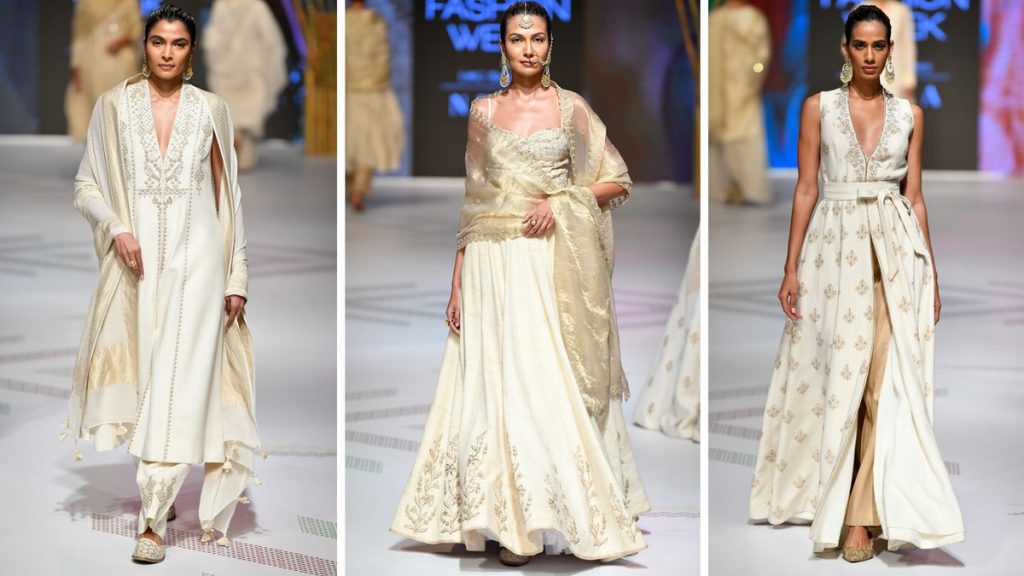
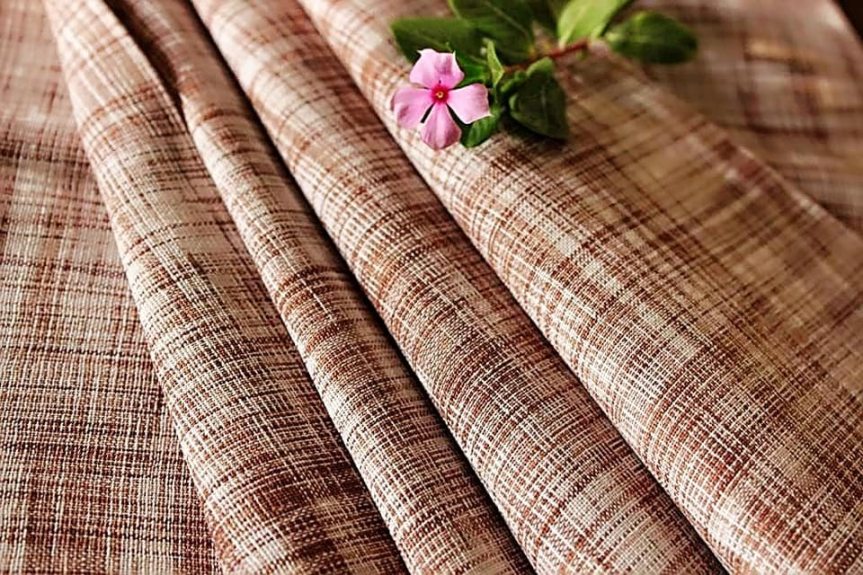
Khadi used in sustainable fashion

Contribution of Khadi in World Fashion

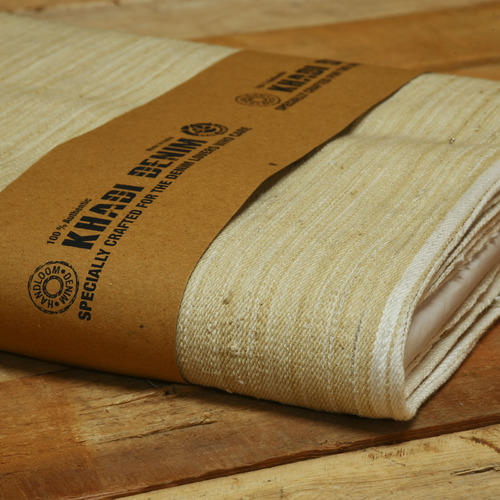
Considering khadi‘s eco-friendly and natural origin, it has become a focal point of global fashion owing to growing consumer awareness and the consistent demand for sustainability. Fashion designers have acknowledged the aesthetic appeal and comfort attributes of khadi and experimented it in blending with many other stuff to synergistically enhance the fashion appeal and outlook of products. Khadi is now used in denims, jackets, shirts, dress material, stoles, home furnishings and apparel accessories like handbags. Khadi, once considered as the fabric for political leaders and the rural folk, has entered the wardrobe of the fashion-conscious urban population. Wearing khadi now symbolises affluence as it offers a distinguished look. The ecological aspect and ethnic looks of khadi have caught the fancy of global brands and leading fashion designers have started including khadi material in their collections.
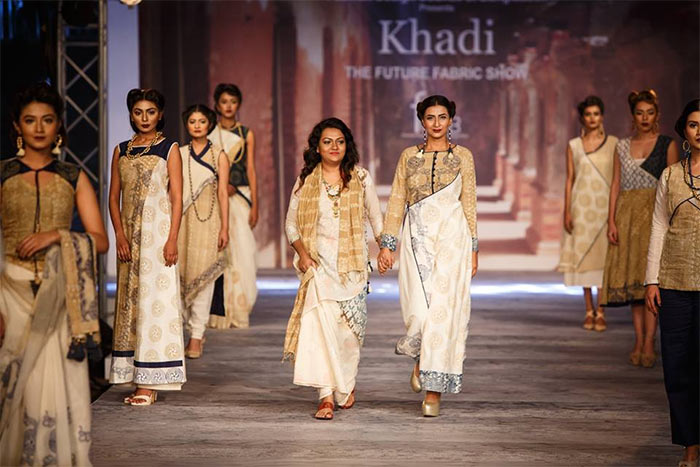
Global acceptance of the Khadi in fashion

Conclusion

Incorporating Khadi in our daily life may also pave the way for a simple spiritual living exuded by our clothing and home décor items. Khadi being such a versatile fabric can be easily incorporated, by changing the warp and weft, in a home decor and clothing lines. This will make us come closer to nature and add a touch of earthiness in our lifestyle.
Dhakai Muslin: The Exclusive Bengal Silk from The Past

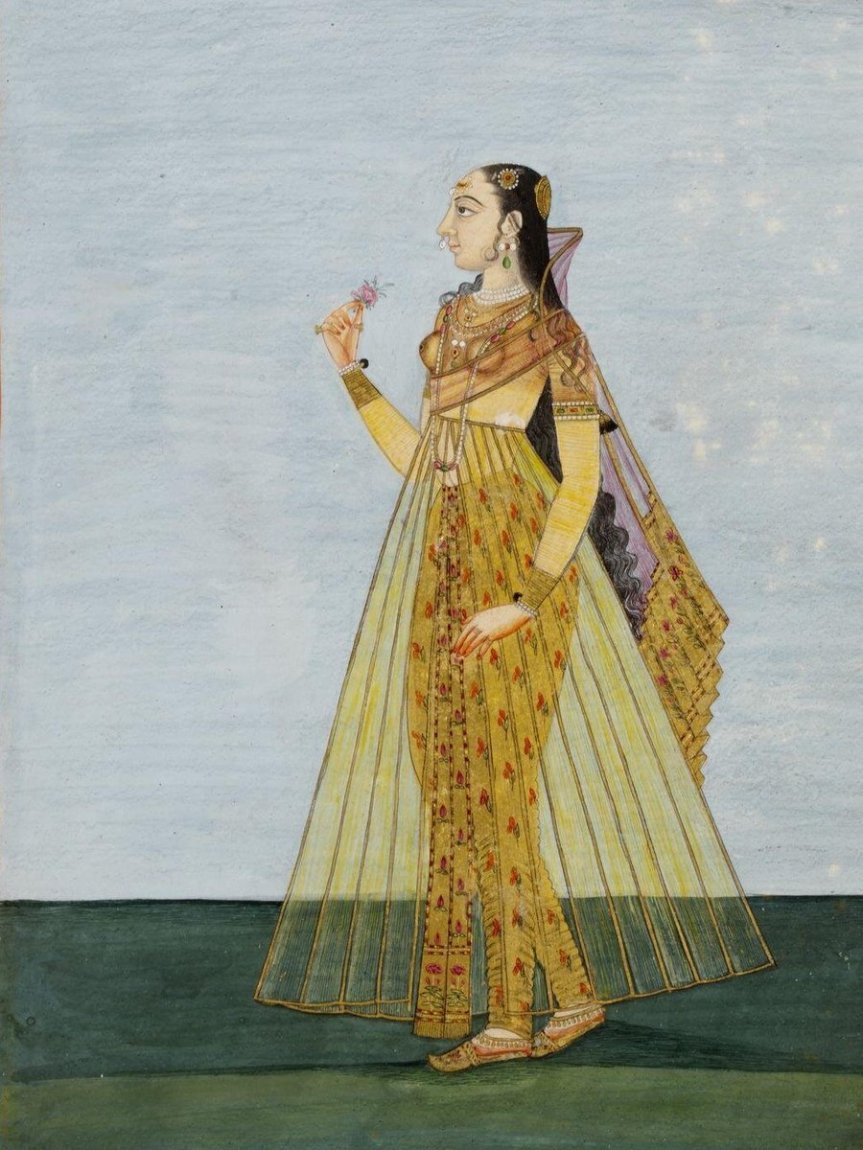
A portrait illustrating how Transparent Muslins were

Introduction

Muslin today has come to mean almost any lightweight, gauzy, mostly inexpensive, machine-milled cotton cloth. The word has lost all connection to the handwoven fabric that once came exclusively from Bengal. Cotton, stated the historian Fernand Braudel, was first used by the ancient civilizations on the Indus, while the art of weaving itself has been traced back to much earlier times. This head start perhaps was why ancient India became proficient in making cotton textiles. They became a staple export commodity to the Roman Empire, and they expanded in volume in the Middle Ages with the growth of the “maritime Silk Road” in the Indian Ocean.

Historic Background

Muslin a brand name of pre-colonial Bengal textile, especially of Dhaka origins. Muslin was manufactured in the city of Dhaka and in some surrounding stations, by local skill with locally produced cotton and attained world-wide fame as the Dhaka Muslin. The origin of the word Muslin is obscure; some say that the word was derived from Mosul, an old trade centre in Iraq, while others think that Muslin was connected with Musulipattam, sometime headquarters of European trading companies in southern India. Muslin is not a Persian word, nor Sanskrit, nor Bengali, so it is very likely that the name Muslin was given by the Europeans to cotton cloth imported by them from Mosul, and through Mosul from other eastern countries, and when they saw the fine cotton goods of Dhaka, they gave the same name to Dhaka fabrics. That the name Muslin was given by the Europeans admits of little doubt, because not only Dhaka cotton textiles, but cotton goods imported by the Europeans from other parts of India like Gujrat, Golconda, etc were also called Muslin.

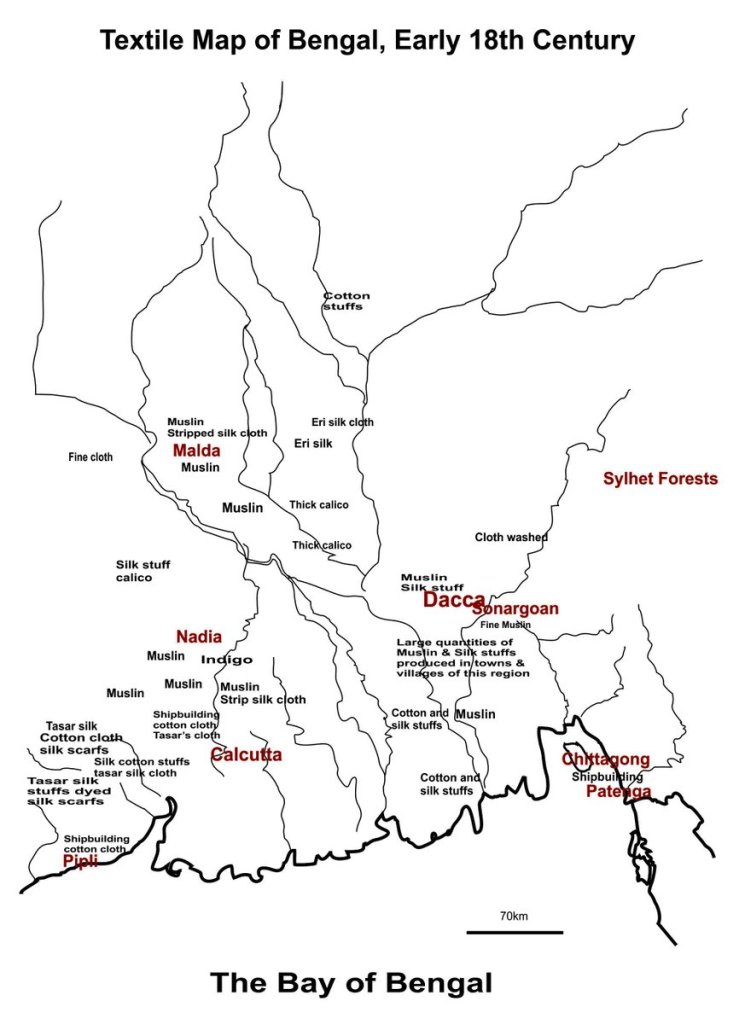
The route connecting the Hubs of Muslin Industry in Bengal

How Muslins Were Made

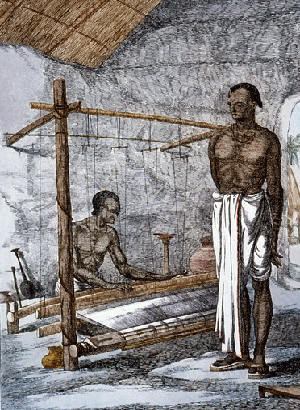
The textile industry of Bengal is very old. Bengal cotton fabrics were exported to the Roman and the Chinese empires and they are mentioned in Ptolemy’s Geography and the Periplus of the Erythraean Sea, and by the ancient Chinese travellers. But Dhaka Muslin became famous and attracted foreign and transmarine buyers after the establishment of the Mughal capital at Dhaka. The Muslin industry of Dhaka received patronage from the Mughal emperors and the Mughal nobility. A huge quantity of the finest sort of Muslin was procured for the use of the Mughal emperors, provincial governors and high officers and nobles. In the great 1851 Exhibition of London, Dhaka Muslin occupied a prominent place, attracted a large number of visitors and the British Press spoke very highly of the marvelous Muslin fabrics of Dhaka. Weavers in Dhaka, Bangladesh, used to make this incredibly fine cloth using a method called the discontinuous weft technique. This technique required the weaver to work two layers of weft – one as fine as spider’s silk to hold the cloth together and the other forming the pattern. Each pattern motif was worked individually, using fine bamboo sticks to interlace the pattern threads with the warp threads.

Weaving of Muslins under the supervision of royal official( Painting, in 1800s)

Types And Variations

The finest sort of Muslin was made of phuti cotton, which was grown in certain localities on the banks of the Brahmaputra and his branches. The other kinds of cotton called bairait and desee were inferior and were produced in different parts of Dhaka and neighbouring areas; they were used for manufacturing slightly inferior and coarse clothes.The productions of Dhaka weavers consisted of fabrics of varying quality, ranging from the finest texture used by the highly aristocratic people, the emperor, viziers, nawabs and so on, down to the coarse thick wrapper used by the poor people. Muslins were designated by names denoting either fineness or transparency of texture, or the place of manufacture or the uses to which they were applied as articles of dress. Names thus derived were Malmal (the finest sort), Jhuna (used by native dancers), Rang (of transparent and net-like texture), Abirawan (fancifully compared with running water), Khasa (special quality, fine or elegant), Shabnam (morning dew) Alaballee (very fine), Tanzib (adorning the body), Nayansukh (pleasing to the eye), Buddankhas (a special sort of cloth), Seerbund (used for turbans), Kumees (used for making shirts), Doorea (striped), Charkona (chequered cloth), Jamdanee (figured cloth). The finest sort of Muslin was called Malmal, sometimes mentioned as Malmal Shahi or Malmal Khas by foreign travellers. It was costly, and the weavers spent a long time, sometimes six months, to make a piece of this sort. It was used by emperors, nawabs etc. Muslins procured for emperors were called Malbus Khas and those procured for nawabs were called Sarkar-i-Ala. The Mughal government appointed an officer, Darogah or Darogah-i-Malbus Khas to supervise the manufacture of Muslins meant for the emperor or a nawab.

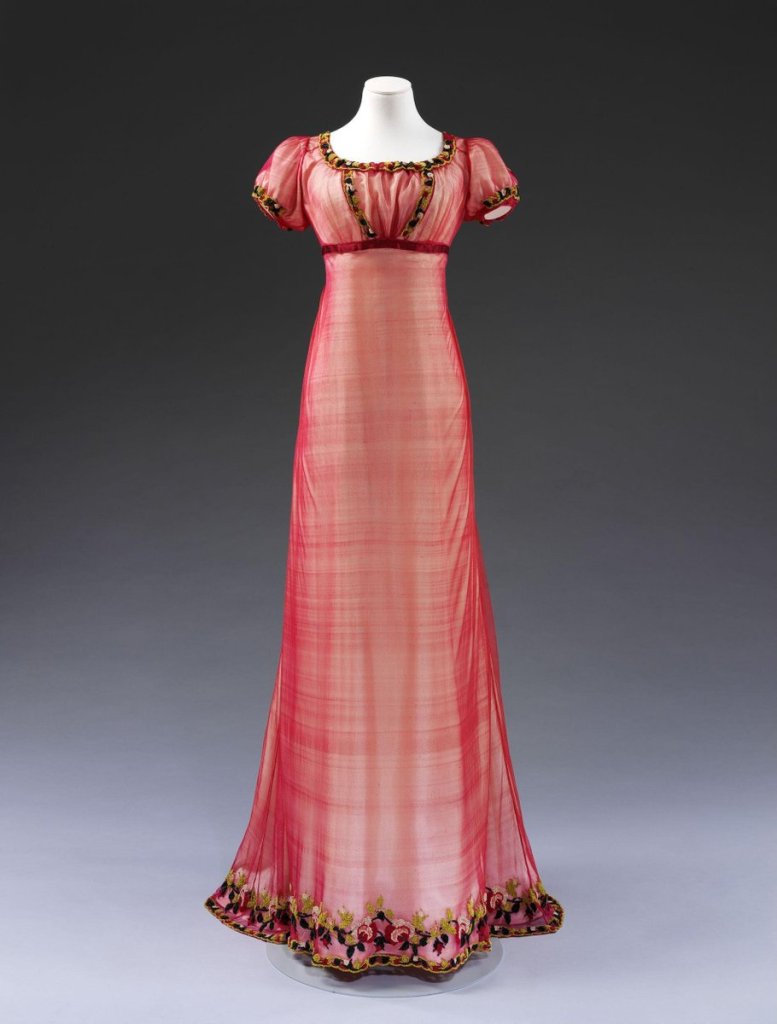
A real Muslin dress exported to England from colonized India

Areas of Production

Weaving was prevalent in the Dhaka district in almost every village, but some places became famous for manufacturing superior quality of Muslins. These places were Dhaka, Sonargaon , Dhamrai, Teetbady, Junglebary and Bajitpur.

Why It Was So Exclusive

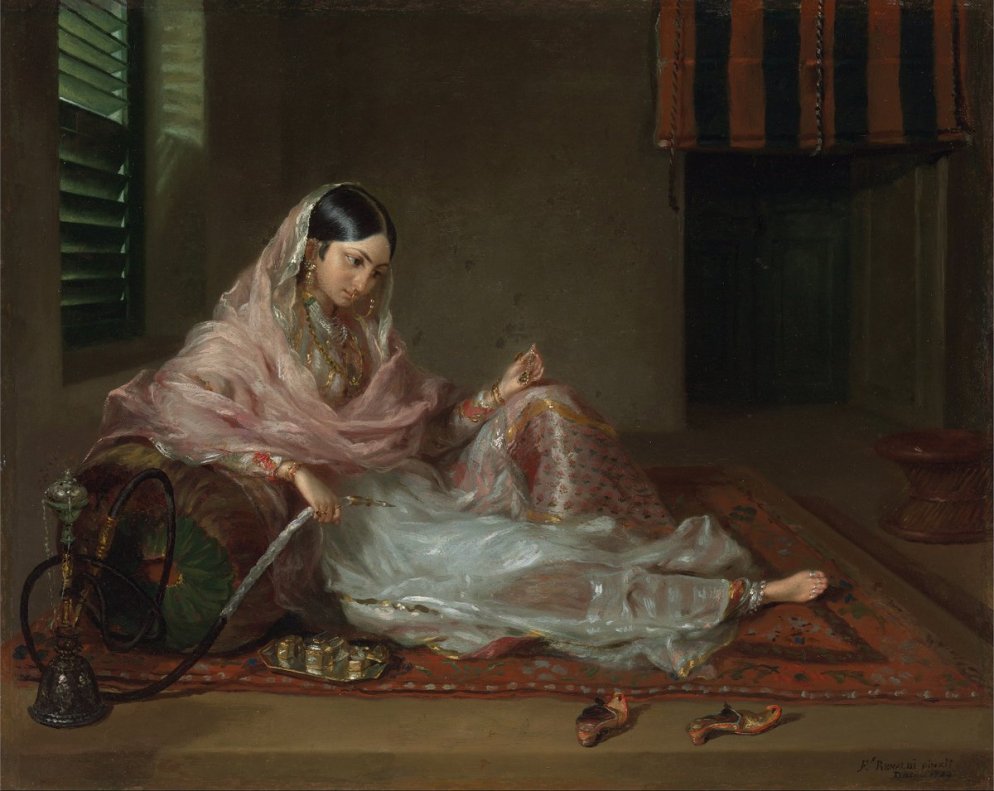
The finest of Muslins were honoured with evocative names conjured up by imperial poets, such as “baft-hawa”, literally “woven air”. These high-end muslins were said to be as light and soft as the wind. According to one traveller, they were so fluid you could pull a bolt – a length of 300ft, or 91m, through the centre of a ring. Another wrote that you could fit a piece of 60ft, or 18m, into a pocket match-box. Dhaka muslin was also more than a little transparent.

Muslins were adored by the elites

How The Industry Was Lost

Unfortunately, during the period of the East India Company, European manufacturers all but destroyed the industry by flooding the market with factory produced muslin equivalents. Through a combination of punitive taxes on locally produced textiles and the dissolution of local and influential patrons, Jamdani muslin became uneconomical to produce and the skills were almost lost.

Conclusion

Thankfully, there are organisations in Bangladesh today that are encouraging local weavers to continue to practice their craft. Coupled with the UNESCO listing of Jamdani muslin on its Representative List of the Intangible Cultural Heritage of Humanity, there is more impetus to continuing production, albeit on a very small scale. With the proliferation of mass produced and synthetic fabrics on the market today, it is important that these historical techniques aren’t lost forever. No factory can ever emulate the quality arising out of a skilled artisan. Their skills are part of our textile heritage and it’s wonderful they are being recognised and preserved.

India and her Handlooms

Indian handloom industry saw a reduction in 30% of its trade in the year 2020. This means that the already struggling industry will see further cut in costs. There is an urgent need to innovate new ways to market the goods it produces. The modern state of India still has one of the largest employed workforce in the textile sector, and a large part of it is the handloom industry – which is mostly worked in by the artisans who are either poor or are working hard to preserve their traditional way of manufacturing clothes and designs. For India presents a rainbow in manufacturing methods – right from the famous Benarasi Saree to the now almost extinct methods of making silk and woolen garments in the remote hills of Ladakh and Kashmir.

Cotton has been cultivated in the Indian subcontinent for over 3000 years. And that is probably also the age of a rich tradition of fabric making. With the advent of the bronze age through the influx of Greco-Roman, Mongol, Iranian, Vedic and Afghan cultures into the modern age of Mughals, Marathas, British and later the republic of India and her neighbours – the Indian textile industry has seen a plethora of changes and demand.

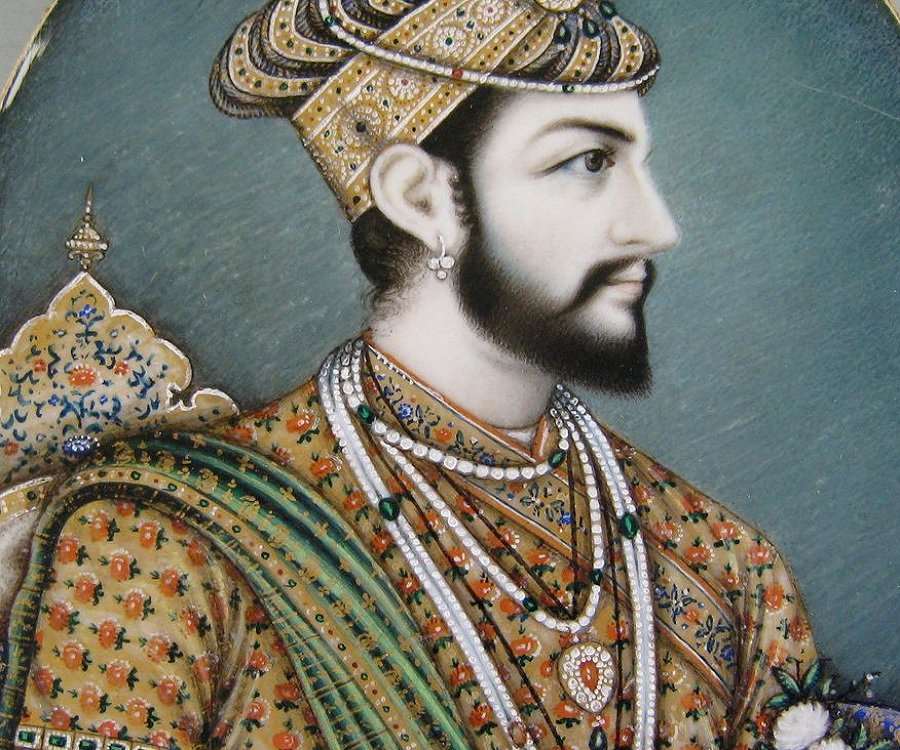
Shah Jahan Biography - Childhood, Life Achievements & Timeline
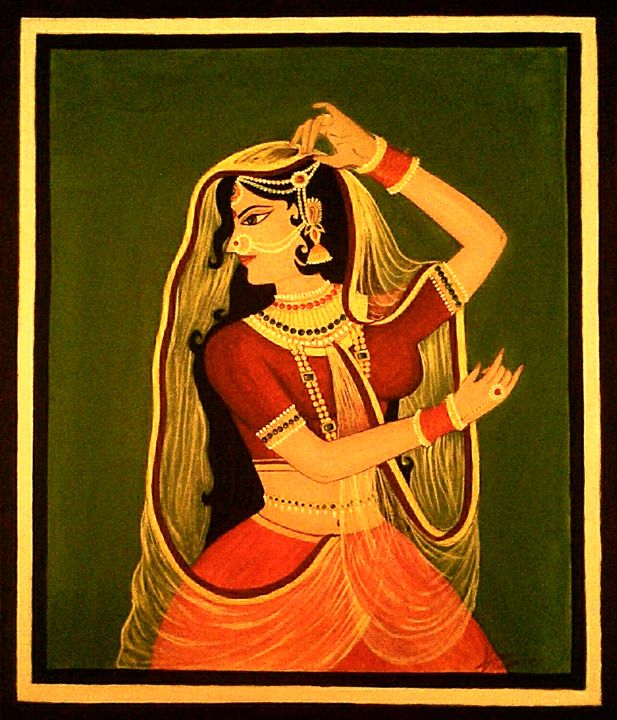
Queen of royal India - SSK Art Gallery - Paintings & Prints, Ethnic,  Cultural, & Tribal, Asian & Indian, Indian - ArtPal
From dhotis and sarees to kurtas and Salwars – India has seen a plethora of changes in its clothing culture.
India's handloom export declined by 30% within a year: Text Min statistics
Social enterprises looking at innovative ways to revive handloom sector  post-lockdown - The Economic Times

Handloom has a great symbolic importance to India. For it was the first Industry that stood as a symbol of self-reliance during the British Raj resistance period, a rhetoric the current Indian Prime Minister used in his Atmanirbhar Bharat campaign. After all, if it were not for Indian fabric – the famed Muslins and Pashminas and Indian spices – the British would have had to search for other reasons to come and settle in a land so very far away from their motherland.

Cherishing the charkha | Indian Link
Gandhi used handloom as a symbol of self reliance

7th August marks the National Handloom day – a day dedicated to an industry that is rapidly finding itself in a stage where only the ones who are super-nationalist and the rich opting for it. Handloom products are often costly than the cheap produce of the machines that invaded the textile industry 200 years ago, effectively ushering in the Industrial Revolution in the 17th century England.

Back to India, here is a list of some famous Indian handloom industries and the cities in which they are concentrated.

  1. Varanasi – The famed Banaras Silk sari is the prized possession of many north Indian women as that is the standard sari of the bride in marriages in households that can afford them. And yet, the Benarasi artists are increasingly been replaced by machines that are producing cheaper saris though with reduced finesse. To add to it is the Zamdani works on cotton fabric, quite endemic to the city.
  2. Jaipur – Jaipur and its handloom industry have the royal family of Jaipur as its patrons. There are establishments and shops that were opened by the last Rajmata of the city, Gayatri Deviji to promote local industries. To add to that is the already existing tradition of Bandhni, Zari and Patti works.
  3. Surat – One of the oldest textile industries that were spotted and used by the local rulers and the British alike. The silk industry in Surat is one of the largest of its kind in the country.
  4. Kota – The tuition capital of the country is also home to the Kota Doria, Gotta Patti and the Kota weave artisans.
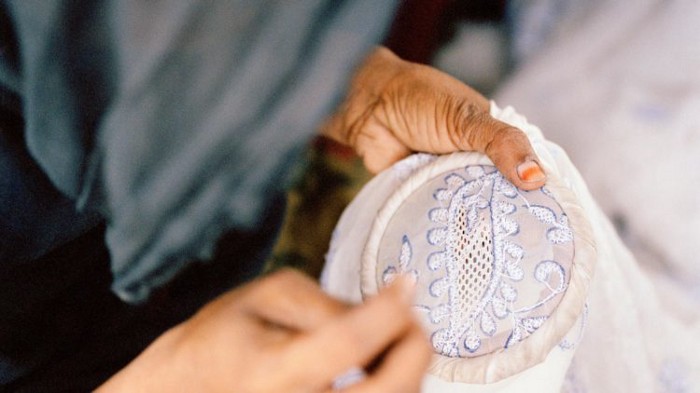
  5. Lucknow – The city has an industry that keeps alive the times when nawabs ruled over the city of Lucknow, the then capital of the Awadh state. Most famous of its local weaves is the Chikankari work.
  6. Bhadohi – The small town is only 40km from Varanasi and has been the centre of Indo-Persian carpet work since the era of the Mughal Emperor Akbar and has the largest carpet making industry in the country.

Well, there are many more of such cities and villages when one researches about them. Many of the ingenious art forms that are involved in making clothes are dying with less than 50 families left that carry forward the tradition. The sad part – machines cannot replicate that finesse. Such is the case of the wool and silk industry in the Gharwal and Kashmir valleys.

After the pandemic or even during it, let us and our government support this remnant of our history, our art, our tradition and a symbol of first instance of our modern industrial self reliance.