
B. R. Ambedkar

Bhimrao Ramji Ambedkar was an Indian economist, politician and social reformer. He was also known as Babasaheb Ambedkar. He campaigned against social discrimination against the lower castes or Dalits of the country. Completing his doctorate from Columbia University and The London School of Economics, he gained reputation as a scholar for his research in economics, law and political science. 
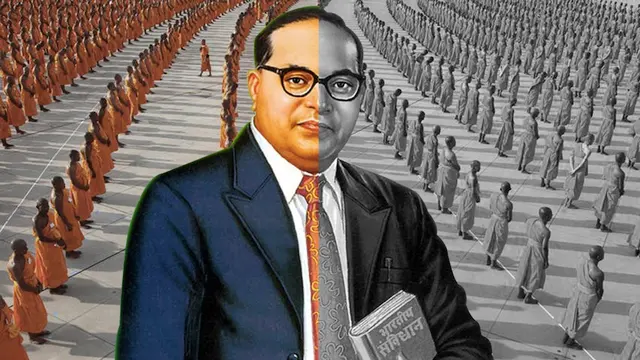
In the early phases of his career, he was an economist, professor and lawyer. Towards the later phases, he was actively involved in campaigns for India’s independence. He published journals and advocated for political and social rights for Dalits. He made a significant contribution to the establishment of the state of India. He was the first Minister of Law and Justice of India and the chief architect of the Constitution of India. 

He had a Marathi family background and was from the town of Ambadawe in Ratnagiri district of modern-day Maharashtra. Ambedkar was born into a poor Mahar (Dalit caste), who were treated as untouchables and faced a lot of socio-economic discrimination. Although he attended school, Ambedkar and other untouchable children were segregated from the rest of the children and given little attention by teachers. They were not even allowed to sit inside the class. He had to sit on a gunny sack which he took home after school. When they needed to drink water, someone from a higher caste had to pour that water from a height as they were not allowed to touch the water vessel. It was usually the peon who did this for him and on days when the peon was not available, he had to go without water. He had later described this as “No peon, No water” in one of his writings.  

During British rule, Ambedkar’s effort for the political representation of the oppressed untouchables of India bore fruit in the 1920s. The colonial state was forced to include two members from among the Dalits in the Round Table Conference in 1930. This eventually led to the framing of the Government of India Act, 1935.   

From 1927, Ambedkar launched active movements against untouchability. He began public movements and marches to open up public drinking water resources for all. He led a satyagraha in Mahad to fight for the right of the untouchable community to draw water from the main water tank of the town. He also began a struggle for the right of Dalits to enter Hindu temples. In a conference in1927, Ambedkar publicly condemned the Hindu text Manusmriti (Laws of Manu), for ideologically justifying caste discrimination and “untouchability”. He ceremonially burned copies of the ancient text. On 25th December 1927, he led thousands of followers to burn copies of Manusmrti. Since then 25 December is celebrated as Manusmriti Dahan Din (Manusmriti Burning Day) by Ambedkarites and Dalits.  

In 1956, he converted to Buddhism, initiating mass conversions of Dalits which eventually led to the Dalit-Buddhist movement. 

A few days after completing his final manuscript ‘The Buddha and His Dhamma’, he died in his sleep on 6 December 1956 at his home in Delhi.  

The Casteless Collective

The Casteless Collective is a Chennai based Tamil indie band.   

The band currently consists of 19 members including Tenma (leader and music producer), singers Muthu, Bala Chandar, Isaivani, Arivu and Chellamuthu, Dharani (Dholak), Sarath (Satti), Gautham (Katta molam), Nandan (Parai and Tavil), Manu Krishnan (drums) and Sahib Singh (guitar).  

Formed in the year 2017, the band was started by Pa. Ranjith and Tamil Indie Musician and Composer, Tenma, founder of Madras Records. The band’s name originated from the phrase ‘Jaathi Illadha Tamizhargal’ which was coined by the 19th century anti caste activist C. Iyothee Thass. He was a social activist who urged Dalits across Tamil Nadu to register themselves as Tamils without caste in the first census in 1871. The band makes music to protest and rebel against the age-old caste-based discrimination and violence. Their songs are political which speaks against the inequalities of the caste system and oppression of women and minorities in Tamil Nadu.  

The leader and music producer of the band, Tenma was preparing to put together a group of indie musical artists for the Madras Indie Collective in 2017 when he got the idea from Pa. Ranjith, of training Gaana musicians for it. They prepared auditions for over 150 applicants and looked for artists who had a socio-political motivation in their lives as well as musical strengths. A mixture of Gaana, hip hop, rap and folk musicians were brought together. About 19 singers were selected for the initial ensemble.  

Jai Bhim Anthem (2018), Quota (2018), Magizhchi (2018), Vada Chennai (2018), Thalaiva (2019), Dabba Dabba (2019) are popular singles of the band.  

It has broken caste boundaries by engaging with the current social and political issue in the state. Instead of making music for entertainment alone the band has tried to eradicate discrimination through its music. Their main intention is “to create political awareness through music and art” because “art which makes us question discomfort is beautiful”. The band is a collective without caste which aims to eradicate caste based and religious discrimination through music.  

The Casteless Collective had their very first concert on January 2018 in Chennai. It was their first performance in front of more than 4000 people. The 19 members including one female artist, all dressed in identical grey suits gave a wonderful performance. Their cries of “Jai Bhim!” would be greeted with thunderous applause. They did not expect such a big entusiastic crowd and it was a very emotional experience for all of them. This was also because most of the artists came from small backgrounds and they had mostly performed in one or two funeral processions. The instumentalists who played katte and chatti were really overwhelmed as these instuments were restricted to only funeral events. 

It was not a concert that had people head-banging or jumping to the beat of drums. Instead, the audience listened to the songs with rapt attention. They broke into applause and shouts of agreement whenever the lyrics hit home. The Bhim Rap, a song on BR Ambedkar’s life and work, was met with a very enthusiastic reception. So was the rap song that condemned honour killings in the name of caste pride which was a major social evil in Tamil Nadu. Another popular track, Madrasin Magizhchi, spoke about the small joys of living in Madras, despite being poor.  

They say that people often ask them about the song lyrics and the stories about their experiences, so a discussion has begun. The band believes that social problems cannot be solved unless it is spoken about. Without discussions around caste-based discrimination one cannot attempt to eradicate the social evil. Their songs have already fulfilled their aim and created a stir among people. We hope that the band achieves greater heights and reaches out to everyone out there who has been a victim of caste discrimination and that it becomes successful in eradicating the malpractices of the system.  

Graduates of WhatsApp University


My phone chimes with a notification sound, while the birds from the trees and skies chirp outside, my phone twitters me awake at 5:30 in the morning. My alarm is yet to wake me up but I turn it off nevertheless and reach for my device or ‘WhatsApp’ to be specific. It is now 5:45am, the Sun is not out yet but my mobile screen is brighter than ever. The world has entered my room bombarding me with wisdom and a flower wishing me good morning. It is demanding my attention, comments, jokes, wits, opinions and some fun emojis.

Continue reading “Graduates of WhatsApp University”