Indian army to get jetpack suits.

In a bid to modernise and upgrade its capabilities, the Indian Army is seeking to acquire jetpack suits and robotic mules through fast-track procedures for emergency procurements under the Buy Indian category.

The Army has floated Request for Proposal (RFP) for 48 jetpacks with modern propulsion system including Turbine engines, Electric and Hybrid systems.

Jet Pack suit is a turbine based individual mobility platform, which can lift a man safely across varied terrain.

The suit must provide controls for safe ascent, safe descent, take off and landing and movement in all directions, the Army said in the RFP document.

India’s 75th Army day.

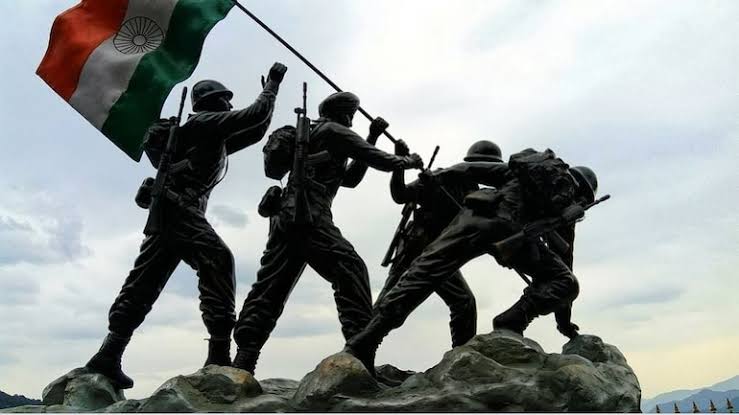
India celebrates Army Day on January 15 every year to commemorate the achievements of the first Indian Commander in Chief of the Indian Army — General (later Field Marshal) K.M. Cariappa.

On this day, Cariappa, who led Indian forces to victory in the 1947 war, took over the command of the Indian Army from General Sir FRR Bucher, the last British Commander-in-Chief in 1949 and became the first Indian Commander-in-Chief of Independent India. The Army Day is celebrated every year to honour Cariappa and the defence forces.

As part of an initiative to take major events to other parts of the country, away from the national capital region, the 75th Army Day will be held in Bengaluru this year.

The rationale behind the move is to bring about increased visibility of these events and secure greater engagement with the local population.

India's 75th Army day.

India celebrates Army Day on January 15 every year to commemorate the achievements of the first Indian Commander in Chief of the Indian Army — General (later Field Marshal) K.M. Cariappa.

On this day, Cariappa, who led Indian forces to victory in the 1947 war, took over the command of the Indian Army from General Sir FRR Bucher, the last British Commander-in-Chief in 1949 and became the first Indian Commander-in-Chief of Independent India. The Army Day is celebrated every year to honour Cariappa and the defence forces.

As part of an initiative to take major events to other parts of the country, away from the national capital region, the 75th Army Day will be held in Bengaluru this year.

The rationale behind the move is to bring about increased visibility of these events and secure greater engagement with the local population.

AGNIPATH SCHEME

On 14 June 2022, the central government launched the Agnipath scheme which is a recruitment of soldiers below the rank of commissioned officers into the three services of the armed forces. With this scheme, the central government hopes to fulfill the dream of an individual to join the armed forces and serve the nation. Various other reasons for the government to start this scheme were to reduce salaries and defence pension bill, to increase employment opportunities and higher skilled work force and to provide a youthful profile to the armed forces. One of the important reasons was also to have a large number of military trained and disciplined people in the society. The soldiers recruited through this scheme will be known as ‘AGNIVEERS’.

Under this scheme 45,000 to 50,000 youth aged between 17.5 to 21 years will be recruited annually for 4 years in the Navy, Air force & Armed forces. Enrollment will be based on an ‘All India All Class’ basis. The enrolment of the Agniveers to all the three services will be through a centralized online system, with special rallies and campus interviews at recognized technical institutes such as the National skills Qualifications framework, Industrial Training Institutes. In each batch, 25% of Engineers will be chosen for the permanent cadre in the armed services. The remaining 75% of Agniveers will receive an amount of Rs. 11.71 lakh as Seva Nidhi Package.

The salary per month of the Agniveers is Rs. 30,000 in 1st year, Rs. 33,00 in 2nd year, Rs. 36,500 in 3rd year and Rs. 40,000 in 4th year but the Agniveers contribution to Seva Nidhi will be 30% which means 30% will be deducted from the initial salary which means in hand they will receive 21,000 in first year, 23,100 in second year, 25,580 in third year and 28,000 in fourth year.

The Agniveers will also receive a non-contributory insurance cover of Rs. 48 lakh during the period.

Every demolished AGNIVEER will have a 10% reservation in CAPFs, Assam Rifle recruitment. They are also provided with the Upper age relaxation beyond the prescribed age limit for AGNIVEERS in CAPF & Assam Rifles. Other benefits include:

  • Priority in bank loan schemes in case they want to be entrepreneurs.
  • Many other states including Uttar Pradesh and Madhya Pradesh have stated that agniveers will be given priority in the recruitment of state police officers.
  • Some major companies and sectors like IT, Engineering Security, etc. have also announced that they will prefer hiring skilled, trained, and disciplined Agniveers.
  • It also stated that all those wishing to study further class 12 equivalent certificate and Bridging Course of choice for further studies.

The Upper age limit for recruitment has also increased only for 2022 under the Agnipath scheme to 23 years from 21 years for the first year of the scheme for enrolment of soldiers into the Army, Navy and Air Force.

AIM OF THE SCHEME

  • One of the important aims of the scheme is to make the army a future-ready fighting force with the youth of the nation capable of meeting multiple challenges.
  • To strengthen the national security
  • To provide the youth of the nation to serve the country.
  • To cut down salary and pension bills.
  • To harness the youth potential and make them future ready soldiers.
  • They will be provided with certificates and bridge courses that will help in creating future entrepreneurs.

CRITICISM OF THE SCHEMES

After the announcement of this scheme, there were several protests held throughout the country in several states. Students from throughout the country held riots, burned trains, and caused severe damage to the public as well as private properties. This scheme is criticized on a number of basis such as:

  • The service period that is 4 years is very less and it will provide employment for just 4 years. T
  • he real skills cannot be acquired in such a short period and what about those who want to serve the nation for longer terms.
  • only 25% of the candidates will be taken permanently and the rest 75% will again be unemployed.
  • No pension will be given to these candidates that will be appointed during this scheme.
  • The candidates that will be selected will only be selected for non-commissioned ranks like Naik, Sepoy, and Lance Naik.
  • The recruitment is only for candidates of 17.5 – 23 years of age.
  • After 4 years is over, there will be no job security.
  • Unlike other governments’ jobs no extra basic benefits will be provided to the candidates.
  • The salary will also be deducted for the Seva Nidhi contribution.

With the provided advantages and disadvantages of this AGNIPATH scheme it is way forward for a reform in the Defence policy. This schemes aims to increase employment opportunities with skills and training, to give a better opportunity to the youth who choose to serve the nation and it hopes to have a positive impact on the human resouces management of armed forces and for the country’s development.

Sources: https://byjus.com/free-ias-prep/agnipath-defence-policy-reforms/

Surgical Strike

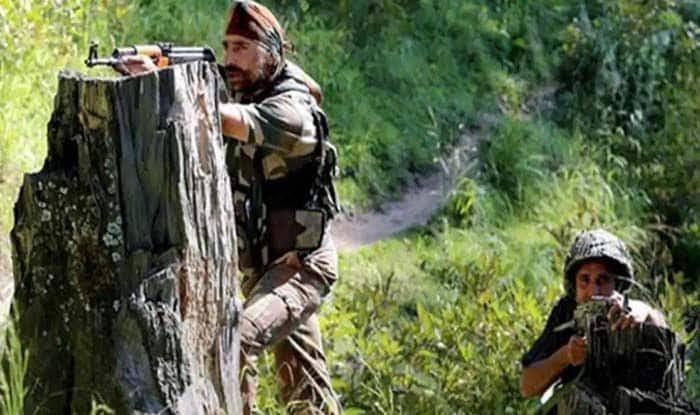
We sleep because our soldiers wake. We live in peace because they guard and protect us. What army does is always and only for the country. Surgical strike is a well planned militant affair of crossing the borders of their nation and destroying the camps, and arms and kill terrorists. In a surgical strike, the forces do no harm to the innocent people and to the public property. The army performs it with proper guidance and instructions of Defence Ministry and Army authorities. That surgical strike was held by Indian Army against Pakistan on 28th and 29th September 2016.

Surgical Strike of 2016

Since 1947, the Indo-Pak cold war is one of the most talked-about rivalries in the world. After that Pakistan has always sought ways to attack our nation. The events leading to surgical strike can be dated back to 18th September 2016 when four Pakistani attacked Indian army at Uri-base in Jammu and Kashmir. It was Jaish-e-Mohammad Fidayeen group of Pakistan who planned the attack.

On 21st September India gave a protest letter to Pakistan High Commissioner Abdul Basit regarding the involvement of Pakistan in those attacks. It, in turn, back-fired India as Pakistani Defence minister blamed us of carrying Uri attack to grab the attention from protestors group in Jammu and Kashmir. These events offended India and consequently led to its outbreak in the form of surgical strike.

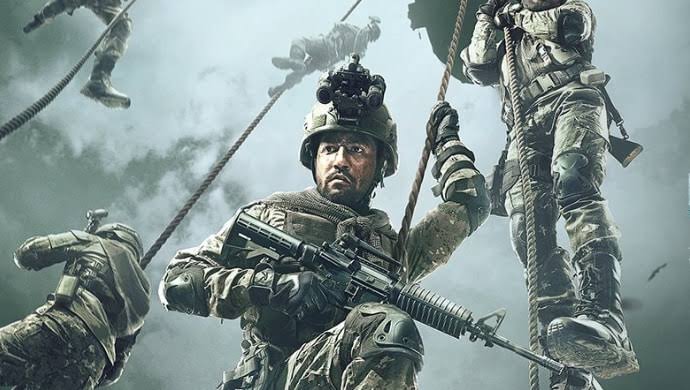
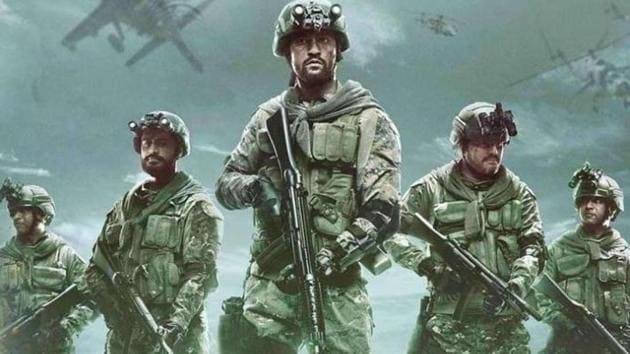
On 28th September 2016, at 12.30 am, the commandos of Indian Army were dropped at Line of Control (LoC) in the region of Pakistan. The surgical operation was conducted in Bhimber, Hotspring, Kel and Lipa sectors. India claims that during the surgical strike 7 military launch pads with 38 terrorists and 2 Pakistani soldiers were killed and destroyed.

Before the attack was held the army forces walked for 1-3 km destroying terrorist bases. This kind of operation or strike always requires coordination among the government, intelligence agencies and the security forces for the success.

After Effect of Surgical Strike

After the surgical strike, there was a heated discussion on the political grounds. Pakistan claimed that there had been no surgical strike conducted by India. The formation of allied groups in Pakistan was also seen and they feared another attack by India on a larger scale.

The Modi government got support from the neighboring countries like Japan and Germany whereas Pakistan tried to improve their relationship with China. In today’s political scenario every country is trying to strengthen its powers.

Conclusion.

A nation with no terrorism, extortion, black money and murders is a dream of every citizen. Whereas peace and harmony is yet the ultimate desire of every being. No matter how we justify the cause of destruction which these attacks create on either side of the border, can never be reasonable. At the end of the day what anyone aspires from life is immense happiness, peace, and satisfaction. If every civilian adheres to it the world would be a happy and peaceful place to live in.

The phrase surgical strike might be more acceptable if it were common practice to perform surgery with high explosives.

—Gesnge Carlin

Indian army

Indian armed forces are divided into three parts – Indian army, Indian Airforce and the Indian Navy. Indian army is the land-based unit, while Indian Airforce deals in air defence and Indian Navy is the naval unit. Our Indian army is the second largest in the world with about 1.23 million personnel on active rolls and another 9.6 lakhs in reserves.

Indian army is mainly responsible to protect the country against land based attacks. It also lends a helping hand to other agencies in dealing with terrorism, tackling emergency situations in the country and also rescuing people in case of natural calamities like flood, earthquake etc.

The current chief of army staff (COAS) is General Bipin Rawat (as of 2018). As Indian army is very huge, it is divided into regiments. Some important regiments are Punjab regiment, Madras regiment, Rajputana rifles, Sikh regiment etc. It also has its own intelligence unit, known as “Military Intelligence” or “MI” in short.

Indian army before independence (under British rule) had participated in World War I and II. After independence it has also fought many full-fledged wars like the Kargil war (1999), Bangladesh liberation war (1971), India -Pakistan war (1965), India-China war (1962) and first Kashmir war (1947). Besides these, Indian army has also handled some smaller conflicts like Siachen conflict (1984), Operation Polo (1948), India-China conflict (1967) etc.

There is no doubt that our Indian army is one of the best armies in the world.

Meet our Commandos…..!

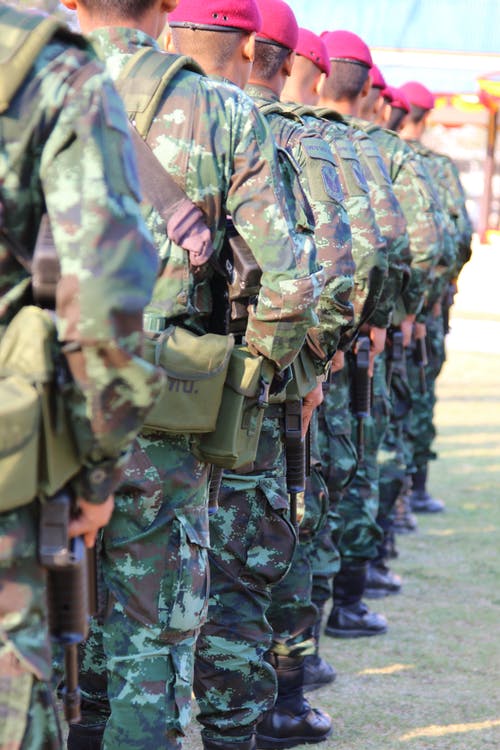
Photo by Somchai Kongkamsri from Pexels

India has many special forces ( SF ). The three branches of Indian armed forces have special forces units. There are other special forces which are operated by the civilian organization. Small groups from the military SF units are deputed in the Armed Forces Special Operations Division, which has a unified command and control structure. Research and Analysis Wing, the external Intelligence agency of India, has separate special forces under its control, namely the Special Group and the Special Frontier Force.

  • Para commandos :
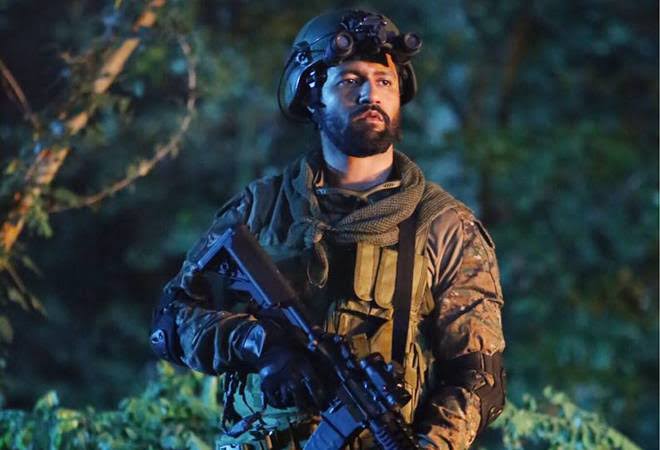
    • The Indian Army has 7 units that are a part of a larger parachute regiment. This unit was created in June 1966 in the aftermath of the 1965 Indo-Pakistani war. An impromptu commando unit called Meghdoot Force, which took part in the 1965 war, formed the first nucleus of the permanent Para commando battalion which was to be raised under the Parachute Regiment. By 1969, the unit had grown into 2 battalions, viz. the 9 Para and the 10 Para. The unit’s first combat missions were conducted during the 1971 Indo-Pakistani war in which they undertook raids against Pakistan’s military. They are trained to carry out intelligence collection subversion and sabotage of vital enemy infrastructure and communication through deep penetration and surgical strike behind enemy lines. In 2002, the 2 Para (SF) participated in Operation Khukri in Sierra Leone to rescue 223 soldiers of the Indian Army’s 5/8 Gorkha Rifles who were deployed as UN peacekeepers but were surrounded by militants from the Revolutionary United Front of Sierra Leone. Some of the later reported missions carried out by Para (SF) include the 2016 ′Surgical Strikes′ and the 2015 Operation Hot Pursuit, purportedly undertaken inside Myanmar.
    • The list of PARA (SF) Battalions is as follows:
      1. 1 PARA (SF)
      2. 2 PARA (SF)
      3. 3 PARA (SF)
      4. 4 PARA (SF)
      5. 9 PARA (SF)
      6. 10 PARA (SF)
      7. 11 PARA (SF)
      8. 12 PARA (SF)
      9. 21 PARA (SF)
  • MARCOS ( Marine Commandos ) :
    • The special force unit of Indian Navy, is modelled on the US Navy SEALS. It was established in 1987. Months after their creation, MARCOS were deployed in Sri Lanka against the Liberation Tigers of Tamil Eelam (LTTE) in July 1987. 
    • Some main operations of MARCOS:
    • 1. Operation Tasha (1991) against the LTTE,
    • 2. Operation Zabardust (1992) against a ship that was smuggling arms,
      3. In support of the United Nations in Somalia (1993),
      4. Participated in 1999 Kargil War,
      5. MARCOS had participated in efforts against the 2008 Mumbai attacks.
    • After a 10 week long basic training, MARCOS are sent to train alongside Indian Army’s Para commandos for 3 weeks. Advanced training follows, during which MARCOS learn skills such as sky-diving, weapons training, counter-insurgency, languages and warfare in different terrains, among other things. Each MARCOS squad, called Prahar, is composed of 8 soldiers.
  • Garud Commando force :
    • The Garud commandos are the special forces of the Indian Air Force (IAF). Their tasks include counter-terrorism, hostage rescue, providing security to IAF’s vulnerably located assets and various air force-specific special operations. First conceived in 2002, this unit was officially established on February 6, 2004. It gets it name from Garuda ( A Hindu mythological God/bird ) .

      All Garuds are volunteers who are imparted a 52-week basic training, which includes a three-month probation followed by special operations training, basic airborne training and other warfare and survival skills. The last phase of basic training sees Garuds been deployed to get combat experience. Advanced training follows, which includes specialised weapons training.
  • Special frontier force :
    • The Special Frontier Force is a confidential special forces unit of the Research and Analysis Wing which was created on 14 November 1962, to conduct covert operations behind Chinese lines in the event of another Sino-Indian war. It works under the operational command of Indian RAW. The units personnel are derived from Tibetan resistance fighters. Is a dedicated mountain and Jungle warfare unit.
  • National security guard or Black cats :
    • The National Security Guard, which is a specialized counter-terrorism Federal Contingency Force. The NSG was formally created in 1986. It is modelled on the basis of the British Special Air Service and the German GSG 9. The commandos are trained to conduct counter terrorist tasks, including counter hijacking on land, sea and air, bomb disposal, post blast investigation and hostage rescue missions.
  • Special protection group :
    • Formed in the 1988, SPG is tasked with proximate security of prime minister, former PMs and their immediate family members. They carry some of the most sophisticated weapons that include the FN Herstal (Assault rifle ), Glock pistol and FN Herstal ( P90 ) .

( The main source of the article : https://en.wikipedia.org/wiki/Special_forces_of_India )