Assassination Of Former Prime Minister Rajiv Gandhi .

The assassination of former Prime Minister of India Rajiv Gandhi, , occurred on 21 May 1991 as a result of a suicide bombing in Sriperumbudur in Tamil Nadu, India . At least 14 others,we’re killed alongside Rajiv Gandhi in the suicide bombing.
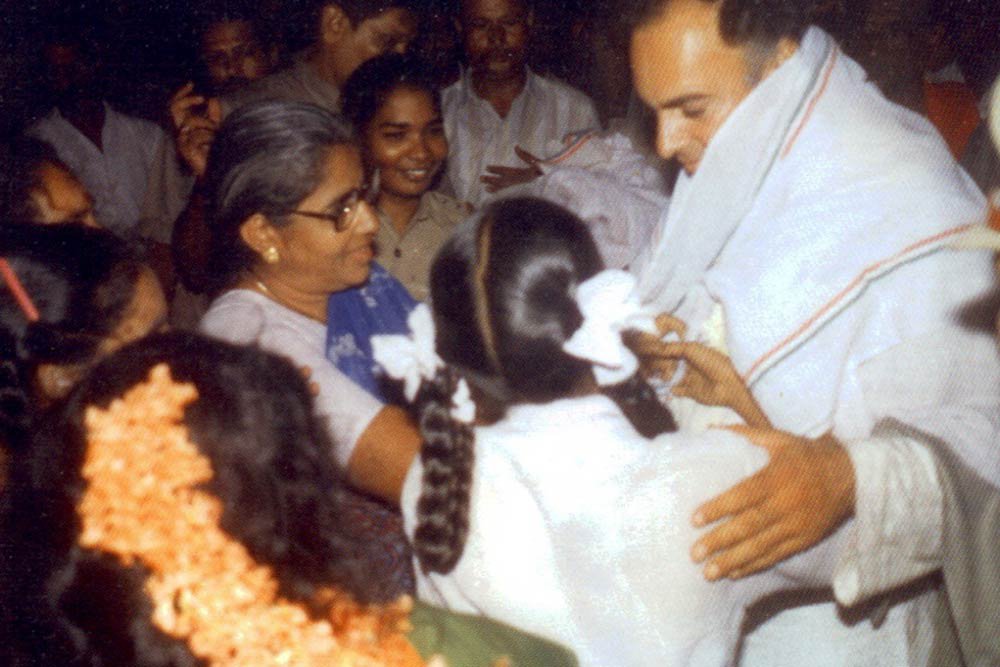
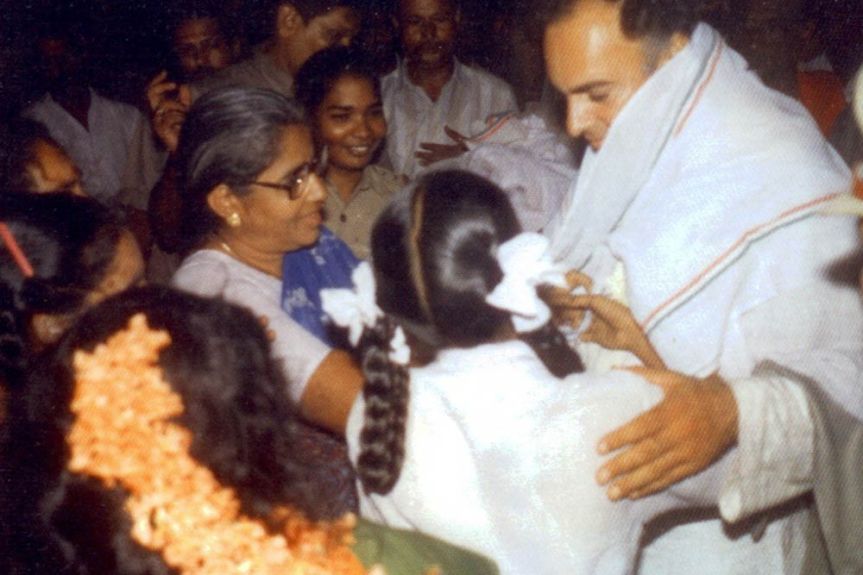
The assassination was carried out by Thenmozhi Rajaratnam, a member of the Tamil Liberation Tigers (LTTE), a Tamil separatist organization in Sri Lanka, and Dr. Jagjit Singh Chohan of the National Council of Khalistan (NCK) and Gurjant Singh Budhsinghwala of the Khalistan Liberation Force. At that time, India had just finished its involvement in the civil war in Sri Lanka through the Indian Peace Keeping Force. Rajiv Gandhi along with G.K. Moupanal started election campaign in southern state of India. After campaigning in Visakhapatnam, Andhra Pradesh on May 21, his next destination was Sriperumbudur, Tamil Nadu. Approximately two hours after arriving in Madras ,Rajiv Gandhi rode a white ambassador car to Slipelumbudur in a convoy, stopping at several other campaign sites along the way. Arriving at the campaign rally at Sriperumbudur, Rajiv left the car and went up to the podium, where he gave a speech. After the soeech the assassin Danu (Thenmozhi Rajaratnam) approached and greeted him. Then she bent over and touched his leg, and at 10:10 pm, detonated a belt loaded with RDX explosives place under her dress. Gandhi, his assassin and 14 others were killed in a subsequent explosion, and 43 were seriously injured. The assassination was filmed by local photographer Haribab. Haribab’s camera and film were found intact on the scene, but he also died in the blast.

Apart from Rajiv Gandhi, former Prime Minister of India and the suicide bomber Thenmozhi Rajaratnam , several people were killed in the blast on 21 May 1991:
Including Pradeep K Gupta (personal security officer of Rajiv Gandhi ), K.S Mohammed Iqbal (police superintendent), Edward Joseph ( police inspector) ,Dharman,Chandra, Ethiraju Muruganand and Rajguru (police constables), Santhani Begum (Mahila Congressn Leader) ,Latha Kannan ( Mahila Congress worker,who was with her daughter Kokilavani ),Kokilavani (ten-year-old daughter of Latha Kannan, who sang a poem to Gandhi immediately before the blast), Munuswamy (former member of the Tamil Nadu Legislative Council) ,Saroja Devi (seventeen-year-old college student), Ravichandran (Black Cat commando).
Around forty-three spectator present in the campaign including police sub-inspector Anushiya Daisy were also injured in the explosion.
Immediately after the assassination, the Chandrasekhar government handed over the investigation to the CBI on May 22, 1991. Authorities, formed a special research team led by Karthikeyan to determine who is responsible for the assassination. A SIT investigation confirmed the role of the LTTE in assassination and was endorsed by the Supreme Court of India. Judge Millap Chand Jain’s interim report investigated the secret aspects of the assassination and accused DMK of working with the LTTE. The report concluded that the DMK provided the LTTE with shelter and made it easier for rebels to assassinate Rajiv Gandhi. The report also claimed that Jaffna’s LTTE leaders possessed confidential, encrypted messages exchanged between the federal and DMK state governments.Authorities also stated in reports “There is evidence that during this period some of the most important radio messages were exchanged between the LTTE agents stationed in Tamil Nadu and Jaffna. These later deciphered messages are directly related to the assassination of Rajiv Gandhi “. The Congress demanded withdrawal of DMK from the Union Front government, after claiming to have played an important role in Rajiv Gandhi’s death. According to reports Dr. Jagjit Singh Chohan supported the LITTE with logistic and tactical support. His involvement was first revealed in 2016, about 10 years later. Speculation. This was evidence of the Jain Commission’s report and was suspected that the LTTE had contacted Gurjant Singh Budhsinghwala with Jagjit Singh Chohan to plan the plot.

After the investigation on the assassination of former prime minister Rajiv Gandhi ,the court convicted and sentenced the seven persons who were involved in the assassination to life imprisonment. They are currently undergoing life imprisonment in prisons in India.
They are:
Murugan – A LTTE operative from Sri Lanka, Nalini – Wife of Murugan. Nalini is a citizen of India ,Jayakumar – The brother in law of Robert Pious ,Ravichandran – A Sri Lankan national ,T. Suthenthiraraja – A Sri Lankan national ,Robert Pious – A Sri Lankan national and A. G. Perarivalan – An Indian citizen who was arrested for supplying a 9-volt battery for the explosive device.
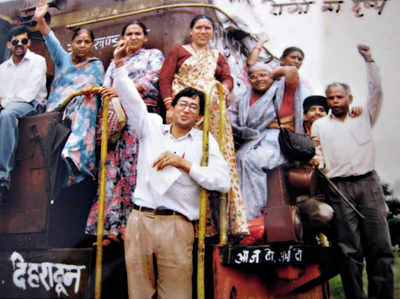
A Struggle of many people to make Uttarakhand a state.

Uttarakhand became a state on November 9, 2000. The establishment of Uttarakhand was achieved after a lot of hard work and sacrifice. The voice for Uttarakhand to become a state was first raised in a special session of the Indian National Congress in Srinagar, May 5-6, 1938. In 1994, after a series of events, demand gradually increased for another state eventually which took the form of a mass movement, leading to the formation of India’s 27th state by 2000.

In March 1994, Uttar Pradesh Chief Minister Mulayam Singh Yadav recommended the Mandal Commission to secure 27% of government positions and places in schools and universities for socially and economically weaker classes,which was later on carried on. The Hill region OBC population was very small at 2.5% and reserving OBC seats meant that all government seats would go to the plains of Uttar Pradesh. This led to intensified protests against the nation.

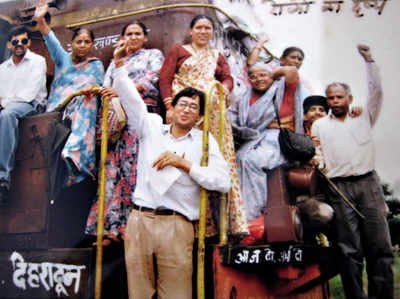
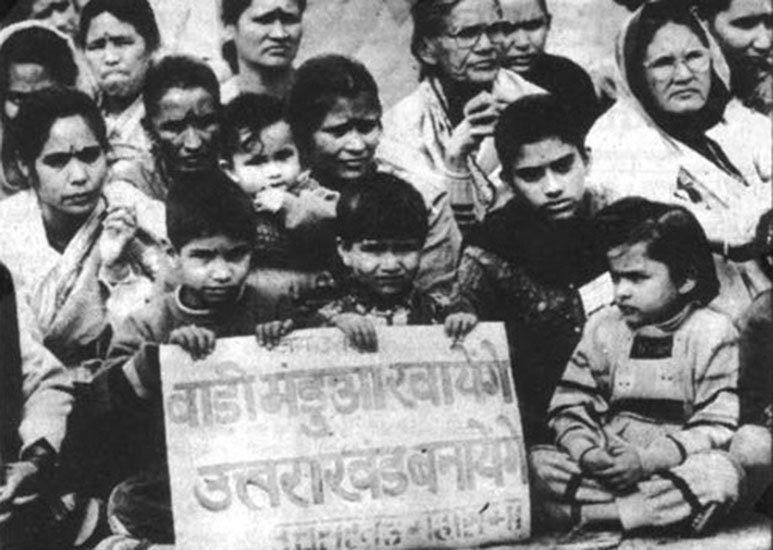
In 1994, the students throughout the region participated in separate state and group movements for reservations. The Uttarakhand movement was further intensified locally by the anti-Uttarakhand statement by then-Chief Minister of Uttar Pradesh, Mulayam Singh Yadav. Uttarakhand leaders continued to support their call for another state until their death. State officials went on strike for three months, and the Uttarakhand movement was exacerbated by the blockade and confrontation with police. Uttarakhand activists in Mussoorie and Khatima were shot dead by police. On October 2, 1994, in Delhi, the capital of the country, a large-scale demonstration and protest was held in support of the state under the support of Samyukta Morcha. Uttarakhand activists marched to Delhi to participate in the struggle. Activists who participated in peaceful demonstrations near Ranpur Tiraha Junction in Muzaffarnagar were tortured and shot dead openly without warning. Police officers were also charged with obscene behavior and rape with female activists. Satya Pokhriyal was a leader who led all people out of misery and other Andolankari helped others and showed courage. Several people were killed and many were injured. These incidents has fueled the Uttarakhand movement. The next day, October 3, the destruction of gunfights across the region and protests over multiple deaths broke up.

On October 7, 1994, a female activists died after police brutally attacked her in Dehradun while she protested against the shooting at Rampur Tiraha and many activists attacked the police station in return. A curfew was imposed in Dehradun on October 15, and one activists was also killed on the same day. On October 27, 1994, then Indian Minister of Home Affairs Rajesh Pilot met with state activists. Meanwhile, a brutal police attack in Srinagar’s Sriyantra Tapu killed several activists while they were protesting.


On August 15, 1996, then Prime Minister H.D. Deve Gowda announced at the Red Fort of Delhi the forming of a new state Uttarakhand.

In 1998, the BJP-led coalition government at the centre sent the “Uttarakhand Bill” through the President of India to the Uttar Pradesh state government . The Uttar Pradesh State Assembly passed , the Uttarakhand bill with 26 amendments and sent back to the central government. On July 27, 2000, the central government submitted the 2000 Uttar Pradesh Reorganization Bill to the Parliament of India. Lok Sabha passed the bill on August 1, 2000, and Rajya Sabha passed the bill on August 10, 2000. The Uttar Pradesh Reorganization Act was approved by then President of India, K.R. Narayana on August 28, 2000 and on November 9, 2000, the new state of Uttaranchal was established as the 27th state of India, now known as Uttarakhand.

WHAT ARE THE CONTEMPORARY TRENDS IN THE VOTING BEHAVIOR OF THE INDIAN ELECTORATE

Studying about the voting pattern and election pattern of the world’s largest democracy is a challenge. India has seen a tremendous change in the voting pattern since the first elections of 1952. Election during that time was solely based on the leader and there was principal focus on only one political party but now the situations have changed. India has grown through the 21st century to see a lot of changes within the political system. Starting from the changes during the time of independence till today.

The voting pattern has seen considerable changes lately. During the time of independence the pattern of voting was solely based on the legacy of the nationalist movement. This was because people only voted for the single largest party at that time and that is the Indian National Congress. INC was people’s first choice since it had the legacy of the Independence struggle as well as it had an all India background which accommodated people from all kinds of religion and caste unlike other political parties which had its ground on only a single community of people.

While Today’s political system is quite complicated. The voting pattern has also become quite complex unlike earlier times. These days people’s voting pattern and behaviour have changed a lot. There are many factors for this change. It is quite a complex study where we have to unravel things from the core. For this we have to take a look from where this change in voting period has started from.

       Till the 1977 elections congress party ruled India. The INC consecutively won the elections till 1977. Only to be defeated by the Janata Party. In 1989 INC was again defeated for the second time due to the unpopular rule of the congress and the lack of representation of the regional parties, lower or backward castes, minorities etc. 1989 put an end to the rule of single party system and welcomed in the multi-party coalition system in India.

Most striking trend in the Indian politics is the political competition between the Indian Political Parties that have grown past these years. This rise in the number of the political parties in India is due to the lack of representation of the various regionalities and communities. There has been a constant competition between various communities in the country for power. People are being voted mainly because they belong to a particular community or religion. This pattern of politics emerged only very recently within the country.      

The behaviour of a voter in India is defined by the various factors

  • Religion
  • Caste
  • Performance of the party in power
  • Money
  • Policy

The political parties make use of these factors to attract more voters. Although no party can convince a person to vote for them in the name of religion and caste, this is an important factor

In the elections. Since India is a secular country the political parties nor the government cannot have a tilt towards a single religion. Even still political parties use religion and caste to catch the polls.

RELIGION is one of the main factors which affect the voting behaviour these days in our country. People are more interested to elect for candidates to more or less belong to their same religion or community since they feel that then only they can identify themselves with the leader. Despite India being a secular country and the fact that no religious affiliations can be used in the election matters we can still see that people use the religious sentiments of the people to make use of their vote. Political campaigning’s are also done for the same. For an example the Bharatiya Janata Party (BJP) is the leading political party of India which is said to have the ideology of Hindutva. The party has a tilt towards the Hindu religion. Another example of a political party is the Indian Muslim League which is as the name says a Muslim political party.

The establishment of a secular state along with the freedom of religion – that is to choose to practise, profess and propagate any religion of our choice, treating all religions equally and not putting any religion one above the other , the political parties have failed to keep their word. Even after all these laws the use of religion in politics hasn’t come to and end and it seems like it never will according to the recent political activities and trends. The continued existence of political parties which are one way or the other linked with a religion is the main reason why religion cannot be put away from politics. The very existence of these religious acts as a black hole to the act of secularism in our country. The existence of religious pluralism affects the political system. The selection of a candidate is sometimes solely based on religions preferences. The religionization of socio- political issues by the political parties is one of the methods by which they continue to get the voters in their consideration.

CASTE is yet another important factor in determining the voting behaviour of the people. Caste has always had its root in all kinds of problems in India. Caste is an important determinant in the politics of India. It constitutes an important basis for social relations in the country. Despite the various measure taken stop the discrimination,  caste still continues to an important basis for election. Politics in caste and caste in politics are very common in the Indian political scenario as we all know. Sometimes for the elections to various constituencies people are selected on the basis of their caste. Also while formulating various policies, election strategies and programme caste is taken as a major factor in the backdrop.  Caste system has had its roots for years and so it will take a lot of time for people to weed out these roots even from the political scenario. Votes are brought in the name of caste by the candidates.

Caste is an important determinant for the selection of candidate for the rural population. Despite the various laws and the adoption of secularism, uneducated people mostly living in the rural India choose to vote for people who belong to their own caste. The candidates despite the laws in the country make use of their sentiments to seek vote for them. Although recently this trend has been changing at least in the urban households since as you go up the social ladder caste tends to be invisible. While in the rural areas caste tends to be an important factor in the selection of their leader.

PERFROMANCE OF THE PARTY IN POWER. The performance of the party already ruling is also another important determinant. Each political party comes into power with a election manifesto and various promises. After the elections it is their duty to fulfil all of this and meet the various aspirations of the people. And so the performance of the party during the time it rules is an important factor in determining whether the people should elect for the party next time too.

Improper ruling of the party during its tenure can result in it being not chosen for the next time. The way the party rules influences the people in a big way. We can see an example of this by looking at the example of the elections during 1989. The parties which got elected only stayed in power for a short period of time due to their political instability and the lack of a charismatic leader during the time of ruling. Their unpopular rule with the lack of ideology since it was a coalition lead the people to choose another political party.

MONEY influences people in different ways. Usually people with money and power tend to stay in high positions and rule the people according to their wishes. India is a developing country and most of people live under the poverty line. And so the people having money and power tend to rise to the top. Without other factors like political wave getting involved usually it’s the people with money and power who wins the elections. Rich and the powerful throw around the money to catch the ballot. But this is not always true though because in the 1989 elections congress used a lot of money and power but it couldn’t win the elections. BJP won the elections.

POLICY. Various policies taken by the government or the political parties stand out as an important deciding factor in elections by a common man. When a party announces its political manifesto the policies it takes for the people is an important determinant in voting. A person who doesn’t know much about politics and party tends to take a look at the policies of the party or what it has done in the past years. And so creating a policy that attract the crowd and implementing it in a proper way is important for any party.

These are the various trends which are seen across the country during the election time. The voters turnout has consistently increased from the time of independence till today. People has started to see election as an important way of choosing their leaders. As people are getting educated they started to look into the doings of the party and make a proper decision when it comes to who to vote for. Voting behavior is a form of electoral behavior and understanding it can help us understand how and why people choose to vote for certain people. And the above study was about voting behavior and its determinants.