What Indians worry about most, read the survey report by 'Ipsos'.

Urban Indians are most worried about unemployment (39 per cent), financial and political corruption (27 per cent), crime and violence (25 per cent), poverty, social inequality (22 per cent) and climate change (22 per cent) in the month of October, revealed Ipsos What Worries the World survey.

At least 2 in 10 urban Indians were worried about inflation (21 per cent), and India was placed last among 29 markets in its worry around inflation. 

Ipsos in India said, “India is still reeling under the collateral impact of the prolonged coronavirus and global slowdown of the economy due to the war in Ukraine, which are impacting jobs, leading to rising in corruption, crime and social inequality. Even the inflation impact is manifesting itself though India is better placed than its global counterparts due to the government’s steps to keep the fuel prices in check. Floods and adverse climate impacts are making urban Indians worry about climate change. These issues need to be addressed by the government first.

Population Explosion: The cause of poor living conditions of indians

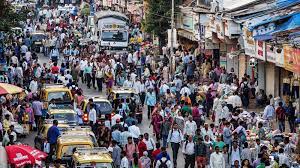
India is a over-populated country. It is the second most populated country in the world, after China. However, researchers say that India is all set to surpass China in population density by 2024. That means India is about to become the country with the highest population density across the world.

The population of India is increasing at an alarming rate. India is not the country with the highest number of people. There are countries which has more number of people than India like Russia. But they are not overpopulated. Those countries have enough space to fit in the number of people. India has more people than the country could fit in. The number of people residing in per unit square of land in India is much higher than that of other countries. This makes India an over-crowded country.

The huge population of India makes a lot of people live in poverty. The country’s economy is not enough to sustain its population. Adding to the problem, the country’s wealth is not equally distributed. The economic gap between the rich and the poor is widening. The major chunk of the country’s wealth is held by the rich and the powerful who are quite few in number compared to the country’s huge population. A large chunk of the population live below poverty line who do not have enough money to afford their meals thrice a day.

Also, the country does not have enough employment opportunities for all its citizens. This leads to unemployment, economic distress, stress and mental health problems. Unemployment increases the amount of crimes, theft and illegal business practices.

Along with wealth and job opportunities, India’s natural resources are also limited and not enough for its huge population. Over-consumption of natural resources would exhaust them and leave none for our future generations. Overpopulation is also a threat to our environment. The air and water bodies are becoming more and more polluted day by day. Too much burning of fossil fuels, congested roads and too many vehicles are releasing toxic gases in the air.

Accommodation is also a problem in India. Thousands of people live in slums which are over-crowded with unhealthy living conditions. More houses and buildings are being constructed which leaves no place for plants and nature. Forests are cut down to make room for construction projects. The cutting down of trees leads to increase in the level of carbon dioxide in the atmosphere.

Population explosion is a serious problem which needs to be addressed at any cost. The Indian population should be controlled to improve the lives of the people. Awareness drives and contraceptive alternatives should be adopted with immediate effect.

How India’s Oldest Civilisations Taught The New India

India is the earth’s most advanced, biggest and oldest civilisation and if we do not consider the 19th and 20th centuries, the wealthiest civilisation too. The influence of ancient Indian history on the modern world is due to the many manifestations of Indian genius and the fact that the language people used was so logical that it nourished critical thinking on the fundamental unity underlying mankind’s diversity.

Up to the 17th century, the wealth in India was more than twice that of the rest of the world combined. So many of the foundations of modern society be it science, medicine, mathematics, metaphysics, religion and astronomy — originated in India. We can call India the cradle of human civilization, the birthplace of speech, the mother of history and numerous languages, the grandmother of legends and traditions.

The Harappa Civilizations

One of the most fascinating yet mysterious cultures of the ancient world is the Harappan civilization. This culture existed along the Indus River in present day Pakistan. It was named after the city of Harappa which it was centred around. Harappa and the city of Mohenjo-Daro were the greatest achievements of the Indus valley civilization. These cities are well known for their impressive, organized and regular layout. They have well laid our plumbing and drainage system, including indoor toilets. Over one hundred other towns and villages also existed in this region. The Harappan people were literate and used the Dravidian language. Only part of this language has been deciphered today, leaving numerous questions about this civilization unanswered.

Artefacts and clues discovered at Mohenjo-Daro have allowed archaeologists to reconstruct this civilization. The similarities in plan and construction between Mohenjo-Daro and Harappa indicate that they were part of a unified government with extreme organization. Both cities were constructed of the same type and shape of bricks. The two cities may have existed simultaneously and their sizes suggest that they served as capitals of their provinces. In contrast to other civilizations, burials found from these cities are not magnificent; they are more simplistic and contain few material goods. This evidence suggests that this civilization did not have social classes. Remains of palaces or temples in the cities have not been found. No hard evidence exists indicating military activity; it is likely that the Harappans were a peaceful civilization. The cities did contain fortifications and the people used copper and bronze knives, spears, and arrowheads.

The Harappan civilization was mainly urban and mercantile. Inhabitants of the Indus valley traded with Mesopotamia, southern India, Afghanistan, and Persia for gold, silver, copper, and turquoise. The Mesopotamian model of irrigated agriculture was used to take advantage of the fertile grounds along the Indus River. EarthLink’s were built to control the river’s annual flooding. Crops that were grown included wheat, barley, peas, melons, and sesame. This civilization was the first to cultivate cotton for the production of cloth. Several animals were domesticated including the elephant which was used for its ivory.

Mathematics

Indians invented zero and the number system, one of the greatest innovations in history. The decimal system, the value of pi, algebra, trigonometry, calculus and many mathematical concepts were all born in India. The largest number Greeks and Romans used was 10 to the power of 6; well before 5000 B.C., Indians used numbers as big as 10 to the power of 53.

Albert Einstein was once quoted: “We owe a lot to the Indians, who taught us how to count, without which no worthwhile scientific discoveries could have been made.”

Medicine

Sushruta was the father of medicine — the first to invent the art of performing surgery with anaesthesia. The first school of medicine, Ayurveda, was based on a systematic knowledge of plant-derived medicines and is practiced effectively even today. Detailed knowledge of anatomy, embryology, digestion, metabolism, physiology, genetics, immunity, psychology and ethology can be found in many ancient Indian texts.

Astronomy

Some of Europe’s greatest discoveries were first made in India thousands of years earlier, before Europe even existed. Gravity for example, It was not Isaac Newton, but an Indian named Brahmagupta, who explained gravity, 1,000 years before the British Empire emerged. Ancient Indians had a profound knowledge of the origin and age of the universe and Earth, the circumference of the Earth and other planets. Mathematician Bhaskaracharya accurately calculated the time it takes our planet to orbit the sun to be 365.258756484 days, well before Western astronomers. 

The Indian system of astronomy is by far the oldest. It was the source from which the Egyptians, Greeks, Romans and Jews derived their knowledge. The motion of the stars on the tables of Giovanni Cassini and Tobias Mayer, used in the 19th century, do not vary by even a minute from Indian calculations made 4,500 years before. Indian tables give the same annual variation of the moon as discovered by Tyco Brahe — a variation unknown to the schools of Alexandria and the Arabs.

Religion

Four of the world’s major religions — Hinduism, Sikhism, Buddhism and Jainism — originated in India. India’s literary, artistic and philosophical contributions to the world are far greater than those of any other civilization in history.

Almost all religious, philosophical and mathematical theories taught by the Pythagoreans were known in India in the sixth century B.C. Indian sages of philosophy were the prototypes of Greece — to whose works Plato, Thales and Pythagoras were disciples. The priests of Egypt and the sages of Greece drew directly from India. Nearly 2,500 years ago, Pythagoras went from Samos to the Indian Ganges to learn geometry.

Indians also invented yoga, the art of unifying the mind and body. Today, it is practiced for its health benefits all over the world. The Chinese learned yoga, martial arts and Buddhism from India. Chess, snakes and ladders, buttons, high-grade steel manufacturing, the art of navigation, playing cards, the gymnasium, the university, rocket artillery, almost every geometrical instrument, the cultivation of cotton and jute, mining, the concept of gross domestic product — all have roots in India.

If there is one place where all of humanity’s dreams have found a home from the very earliest days of existence, it is India. Modern Indians should understand the original scientific culture their ancestors developed, make use of modern technology to demonstrate their in-born abilities, and strive for breakthroughs that will help all of society. And modern writers may need to rewrite the scientific history books after consulting Indian experts.

Proud of India? Facts to Be Known

Though there is no dearth of things that makes us proud to be Indians, listed in the article are some of such reasons.We all know that India is a great nation. It is not one particular thing that makes it great, it is an exhibition of some awesome things. From being the world’s largest democracy to being one of the oldest civilisations in the world, there are many things that make it unique.

Listed below are some of the reasons that make us proud of being Indians:

Despite budgetary constraints, India’s space program is one of the top 5 space programs in the world.

India has the world’s largest school in terms of students, the City Montessori School in Lucknow. It has more than 45 thousand students.

World’s biggest family lives together in India: A man with 39 wives and 94 children.

India is the largest producer of movies in the world.

English actor Sir Ben Kingsley’s birth name is Krishna Pandit Bhanji and he is of Indian descent.

India is the largest milk producer in the world.

The world’s largest road network is in India – over 1.9 million miles of roads cover the country.

Martial arts was first created in India.

May 26 is celebrated as Science Day in Switzerland in honour of former President Dr. APJ Abdul Kalam; because on that day, Kalam visited the country.

The first rocket in India was transported on a cycle.

Water on moon was discovered by India.

Shampoo was invented in India. The word ‘shampoo’ is derived from a sanskrit word ‘champu’.

India’s kumbh mela is the largest in the world. It is also visible from the space.

Chess was invented in India

Algebra, Trigonometry, calculus are studies originated in India

India is the second largest English speaking population in the world

Besides US and Japan, India is the only country which indigenously developed its own super computer

India never invaded any country in her last 100,000 years of History

Indian National kabaddi team has won all world cups

The largest employer in India is Indian Railways, with over 1 million employees

Until 1896, India was the only source of diamonds to the world

The second largest number of scientists and engineers is in India

India exports softwares to 90 countries

Rabindranath Tagore was the first Indian and the first Asian to win a Nobel Prize in Literature.

India is home to the world’s largest under-25 population, putting young people at the helm of decision making.

India gave its best ever Paralympics performance in 2016, with 4 medals. Devendra Jhajharia broke the World Record in Javelin throw.

Sanskrit is considered as the mother of all higher languages. It is the most precise and therefore suitable language for computer software. (A report in Forbes magazine, July 1987).

India is the largest producer of cashew nuts, coconuts, tea, ginger, turmeric and black pepper, in the world. It also has the world’s largest cattle population (281 million). It is the second largest producer of wheat, rice, sugar, groundnut and inland fish.

Indians abroad —

* 38% of Doctors in America are Indians.

* 12% of Scientists in America are Indians.

* 36% of NASA employees are Indians.

* 34% of Microsoft employees are Indians.

* 28% of IBM employees are Indians.

* 17% of Intel employees are Indians.

* 13% of Xerox employees are Indians.

Varanasi, also known as Benares, was called “the ancient city” when Lord Buddha visited it in 500 B.C.E, and is the oldest, continuously inhabited city in the world today.

Nearly 49% of the high-tech start-ups in silicon Valley and Washington, D.C. are owned by Indians or Indian-Americans.

Bharata’s empire covered all of the Indian subcontinent, Uzbekistan, Afghanistan, Tajikistan, Kyrgyzstan, Turkmenistan, and Persia.

Martin Luther King Jr. once said, “To other countries, I may go as a Tourist, but to India, I come as a Pilgrim.” The kind of status we once got as a country seems to be lost amidst the fight to become a superpower.

We have the most number of vegetarians. Our citizens generally lead a healthy lifestyle because the average meat consumption per person is far less as compared to other countries. 500 million out of 1.2 billion Indians are pure vegetarians.

After going through these amazing facts about India, it is natural to feel proud on her and this required to be known to every citizen of India. Nationalism should be spread across the nation to unite modified India.