Indus Valley Civilization

 The Indus Valley Civilization, also known as the Harappan Civilization, was an ancient civilization that flourished in the northwestern region of the Indian subcontinent from approximately 2600 BCE to 1900 BCE. It is considered one of the world’s earliest urban civilizations, alongside Mesopotamia and Egypt.
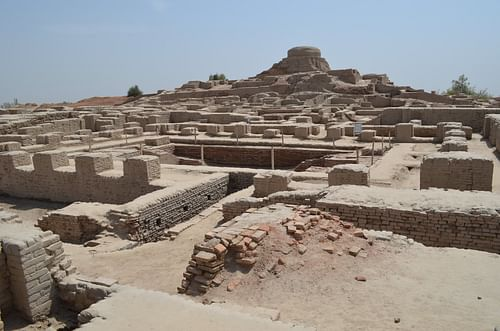

Source – worldhistory.org

The Indus Valley Civilization was spread across the regions that are now parts of Pakistan, India, and Afghanistan, covering an area of over 1.2 million square kilometers. It is believed to have had a population of around five million people at its peak. The civilization was named after the Indus River, which runs through the heart of the region.

The Indus Valley Civilization is known for its impressive urban planning, with well-organized cities that had complex drainage systems, multi-story houses, and public baths. The cities were also home to large granaries, suggesting that the civilization had a well-developed agricultural system. The Indus Valley Civilization is also known for its sophisticated writing system, which used symbols and pictographs that have yet to be fully deciphered.

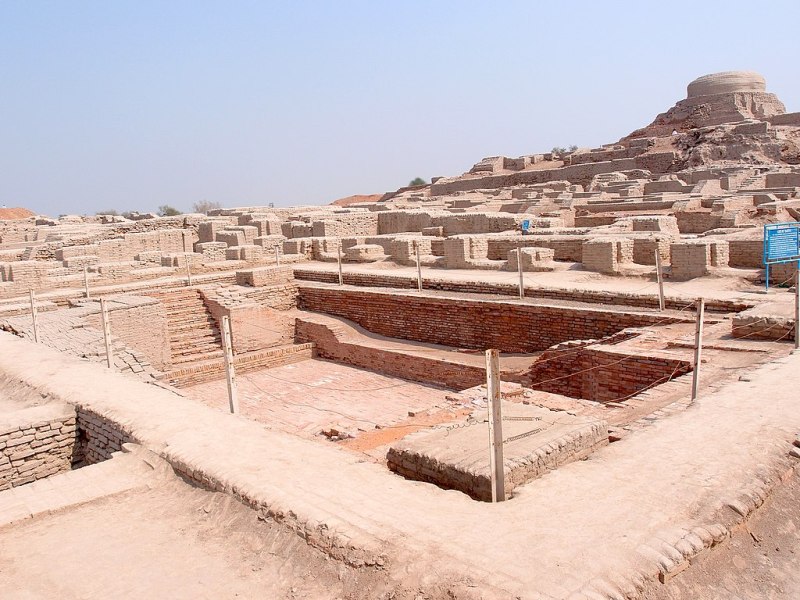
One of the most significant discoveries of the Indus Valley Civilization is the existence of the Great Bath in Mohenjo-daro, a large pool that is believed to have been used for religious ceremonies and public bathing. The cities of the Indus Valley Civilization also had impressive fortifications, suggesting that they faced some form of external threat.

The economy of the Indus Valley Civilization was based on agriculture, with the cultivation of wheat, barley, and cotton. The civilization also engaged in trade with other regions, with evidence of trade links with Mesopotamia and Egypt. The Indus Valley Civilization is known for its production of high-quality cotton textiles, which were exported to other regions.

The religion of the Indus Valley Civilization is not well-understood, as the civilization left behind no religious texts. However, it is believed that the civilization was polytheistic, with worship of various gods and goddesses. The civilization also had a sophisticated system of weights and measures, suggesting that it had a well-developed system of trade and commerce.

The decline of the Indus Valley Civilization is still a subject of debate among scholars. Some suggest that the civilization was hit by a major ecological disaster, such as a drought or flood. Others suggest that the civilization faced invasions from external forces, such as the Aryans, who are believed to have migrated to the region around 1500 BCE. Whatever the cause, the Indus Valley Civilization gradually declined and was abandoned by around 1900 BCE.

In conclusion, the Indus Valley Civilization was a remarkable ancient civilization that had a well-developed urban infrastructure, a sophisticated system of writing, and a thriving economy based on agriculture and trade. While the civilization’s decline remains a subject of debate, it left behind a rich legacy that continues to fascinate historians and scholars to this day.

Bronze Age Civilization

The Bronze Age was a period of human history that began around 3000 BCE and lasted until around 1200 BCE. During this time, many civilizations emerged and developed in various parts of the world. Some of the most well-known Bronze Age civilizations include:

  1. Mesopotamian Civilization: The Oldest Civilization of the world Mesopotamia means land between the rivers. Mesopotamia is the land that developed in the region between the Tigris and Euphrates rivers is often referred to as the cradle of civilization.

  2. Egyptian Civilization: The civilization that developed along the Nile River in northeastern Africa is one of the most famous Bronze Age civilizations. The ancient Egyptians developed a sophisticated system of writing, art, architecture, religion, and government that influenced later cultures.

  3. Indus Valley Civilization: This Bronze Age civilization developed in the northwestern region of the Indian subcontinent around 2500 BCE. The Indus Valley Civilization was known for its advanced urban planning, including a complex system of drainage and water management.

  4. Chinese Civilization: The Shang Dynasty was a Bronze Age civilization that developed in China around 1600 BCE. The Shang Dynasty is known for its sophisticated system of writing, bronze metallurgy, and art.

Source – flagfen.com

Mesopotamian Civilization:

The Mesopotamian civilization emerged in the region that is now Iraq around 4000 BCE and lasted until the 6th century BCE. It is known as one of the earliest civilizations in the world, and its contributions to human history are numerous.

The Mesopotamians developed a system of writing called cuneiform, which involved pressing a reed stylus into clay tablets to create wedge-shaped marks. This system allowed for the recording of laws, contracts, and other important documents, making it possible to keep records and communicate across long distances.

The potter’s wheel was perhaps first used in Mesopotamia. They also developed the first written legal code, the Code of Hammurabi, which established a set of laws and punishments for crimes. They had discovered the Pythagoras Theorem and could also calculate the length of day and night.

Overall, the Mesopotamians were a highly influential civilization, and their innovations and achievements continue to shape the world today.

Egyptian Civilization:


The Egyptian civilization emerged along the Nile River and hence, Egypt is called the ‘Gift of the Nile’. The Old Kingdom is also called as the ‘Age of the Pyramids’. The Egyptians built impressive structures, including the pyramids, temples, and palaces. These structures were designed to honor the pharaohs, who were considered to be divine rulers.

The Egyptians had a complex religion, which included a pantheon of gods and goddesses, each of whom controlled different aspects of the natural world. They believed in the afterlife and developed elaborate burial practices, including the construction of tombs and the preservation of bodies through mummification.

The Egyptians also made significant contributions to mathematics and science, including the development of geometry, astronomy, and medicine. They developed a decimal system of numeration. The crowing achievement of the Egyptians was the Solar Calendar.

Overall, the Egyptian civilization was one of the most influential and long-lasting in human history, leaving behind a rich legacy of art, architecture, literature, and culture that continues to inspire us today.

Indus Valley Civilization:

The Indus Valley Civilization (also known as the Harappan Civilization) was an ancient civilization that flourished in the northwestern region of the Indian subcontinent from approximately 2600 BCE to 1900 BCE. It was named after the Indus River, which flows through the region.

The Indus Valley Civilization was one of the world’s earliest urban civilizations, and it had a highly sophisticated culture with a well-developed system of writing, impressive architecture, and advanced agricultural techniques. The cities of the Indus Valley Civilization were also notable for their efficient drainage systems, which were among the most advanced of their time.

Some of the major cities of the Indus Valley Civilization included Harappa, Mohenjo-Daro, and Dholavira, which were all located in present-day Pakistan. The civilization also had extensive trade networks that reached as far as Mesopotamia, Central Asia, and the Persian Gulf.

Despite its significant achievements, much about the Indus Valley Civilization remains a mystery, as the script used by the civilization has yet to be fully deciphered, and there is still much debate about the reasons for its decline and ultimate collapse.

Chinese Civilization:


Chinese civilization is one of the world’s oldest, dating back to around 2100 BCE. The civilization emerged in the Yellow River Valley of China and has contributed immensely to the world in fields such as philosophy, art, science, and technology.

The early Chinese civilization was characterized by a series of dynasties, which were ruled by emperors and marked by significant achievements in technology, art, and literature. The Shang Dynasty (1600 BCE-1046 BCE) was known for its bronze casting, oracle bone inscriptions, and advanced agriculture.

The Chinese civilization is also known for its significant contributions to philosophy, including the teachings of Confucius, Taoism, and Buddhism. Confucianism emphasizes the importance of moral values and ethics, while Taoism emphasizes the importance of harmony and balance in nature. Buddhism was introduced to China in the 1st century CE and became an influential religion in the country.

In the field of science and technology, the ancient Chinese civilization made significant contributions in areas such as astronomy, mathematics, medicine, and engineering. The Chinese were among the first to develop gunpowder, paper, printing, and the compass, which had a significant impact on the world.

Overall, Chinese civilization has had a profound impact on the world, with its contributions in various fields shaping the course of human history.

The Indus Valley Civilization

It was in 1921 and 1922 that archaeologists discovered remains of an ancient civilization after distinct stone seals from around the Indus river valley perked their interest. This civilization which flourished around the Indus river was termed the Indus Valley civilization or the Harappan civilization and it was found to be one of the earliest civilizations along with the Mesopotamian and Egyptian civilizations. But what makes Indus valley civilization intriguing for many is that this civilization, unlike its counterparts in Egypt, China and Mesopotamia, had no evidence of war, conquests, or the existence of armies or slaves. It had some of the most impressive city planning and sewage systems. So, what is the story of this civilization and how did it come to an end?

source: wikipedia.org

Indus Valley Civilization existed from 3300 BC to 1300 BC. Archaeologists first identified the civilization at Harappa in the Punjab region of Pakistan in 1921 and then at Mohenjo-Daro in the Sindh region in 1922. These two sites were found to be the 2 major cities of the civilization. It is the most extensive of the world’s 3 earliest civilizations, covering an area of 1 million square kilometers. Like many other civilizations, this one also developed around river valleys. The people set up farming and grew crops along the banks of 2 rivers – the river Indus and the Ghaggar river. A larger number of settlements were found along the Ghaggar than the Indus and it appears to have been more productive too. The river Ghaggar has presently almost completely dried up, however, and flows only during the monsoon season. Many even believe that this is the lost river Saraswati which is mentioned in the Rig Veda as a big river located between the Indus and the Ganges.

Agriculture was the main source of livelihood while trade was also an important part of the economy. People grew wheat, barley, mustard field peas and spices like turmeric, ginger, cumin and cinnamon. Cattle, water buffalos, sheep, goats, chickens and even elephants were domesticated. Figurines of dogs with collars and paw prints suggest that dogs and cats were kept as pets too. . The Harappans also practiced extensive trade with the Mesopotamians, Central Asia and Iran, with Mesopotamian records calling the land of Harappans “Meluha”. Gold, silver, lapis lazuli, copper, timber etc. were exported to Mesopotamia probably in exchange for luxury or manufactured goods.

One of the most impressive discoveries about this civilization was how well planned their cities and sewage systems were. It seems water, drainage and bathing were held in high significance by the people. There was a brick-lined sewage system below the main streets that channeled water out of the city. Every house had a bathroom and toilet from where the used water flowed into a small drain cut into the house wall which brought it to the brick-lined sewage system. The public bath in Mohenjo-Daro called “The Great Bath” is one of the earliest instances of water-proofing in the world. This stately multistoried building had a 2.4m deep bathing pool in the center made of specifically-fitted burnt bricks coated with a layer of tar. Every brick found in these sites has the exact same ratio of 1:2:4. They also had a well-formed regular system of weights and measures. Harappan settlements were walled and important buildings like the granaries, warehouses and the Great Bath were separately walled and built on a mound to protect them at the time of floods.

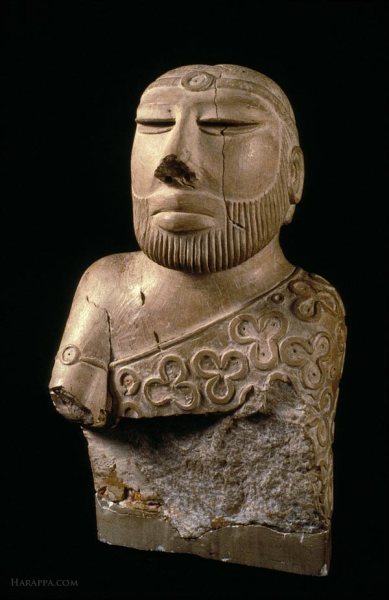
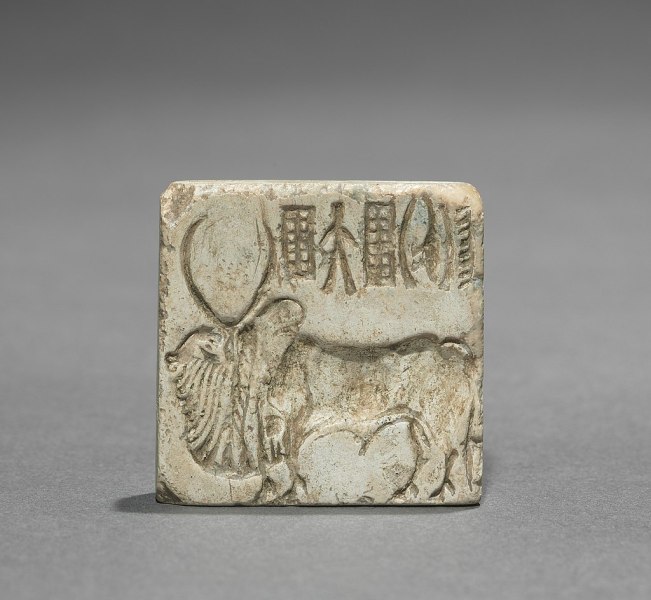
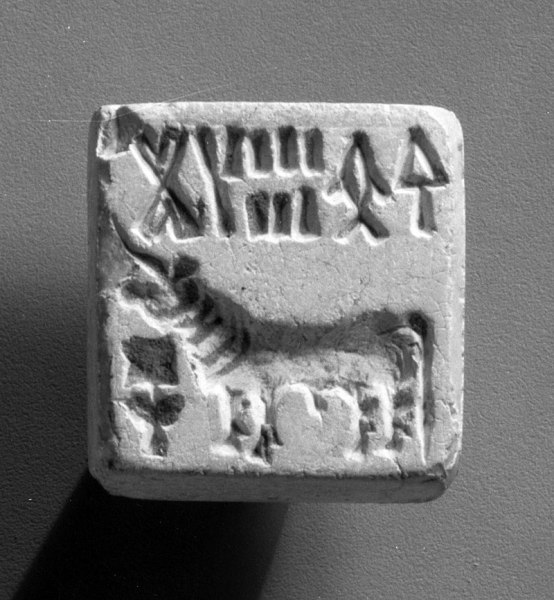
A number of statues and terracotta figurines have been excavated, most of which were probably intended as images for worship. There were figures of seated men, a standing nude male, a dancing girl, small chariots, and kids and animals which appear to be toys. All of them are of excellent quality, signifying that it was a highly developed art in the Harappan culture. Thousands of small Harappan seals are the best-known artifacts from these sites. These seals show an animal such as a “humpless unicorn”, buffalo, elephant, bison, rhinoceros or tiger, with some kind of inscription on top. Around 450 signs or symbols have been identified from these seals which are the only proof that the Harappans had a written language. These seals were could have been used as stamps, identity cards or passports.

This rich and prosperous civilization went into a sudden decline around 1900 BC. It is said that in over a century, the urban social and political system collapsed, and the use of seals and writing disappeared. The Ghaggar or the Saraswati river started to dry up, causing many of the Harappans living in its banks to move in search of greener pastures. Some of them moved to the Ganges which would become the center of North Indian civilization. By 1300 BC, this majestic civilization was completely gone, leaving no traces of its written language or beliefs.