

Tag: industrial revolution
Industrial Revolution
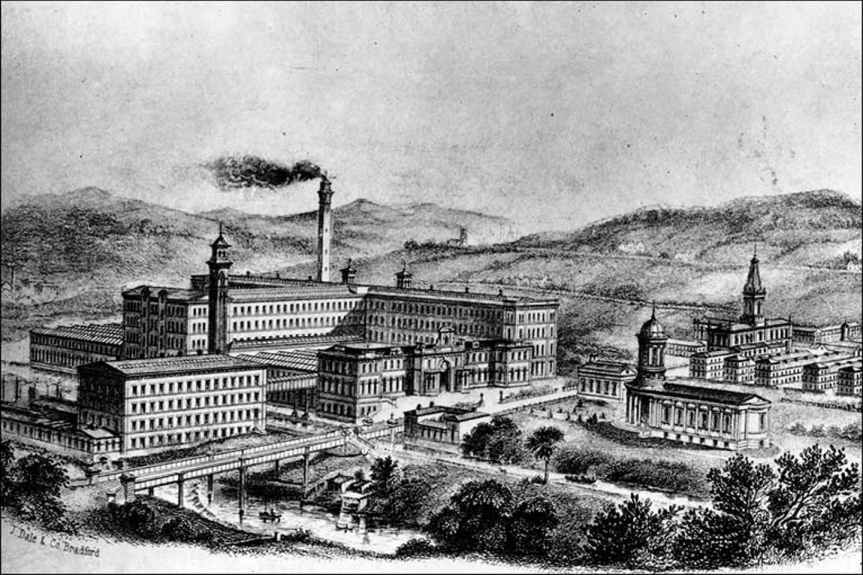
Industrial Revolution is the transition from agricultural economy to an economy dominated by industries and machines. Technology made it easier for people to work with modern approach to working and living. The concept of modern way of living with the help of machines first began in Britain and soon spread to different parts of the world.
The technological changes that were made consisted of – use of iron and steel; use of coal, electricity and petroleum as the new energy sources; new machines were invented like power loom and spinning jenny to increase production with minimum use of man energy; Factory system was adopted where labors were segregated according to their expertise; application of science. These technological advancements made it possible to manufacture more with maximum use of natural resources.
Other socio-economic changes were possible because of industry dominated economy like agricultural improvements, where food was available to people who belonged to non-agricultural society. Economic changed brought about better distribution of wealth among the people. It widely improved the growth of the cities that resulted in provision of better amenities and proper governance. State policies changed and were made more industry intensive. Art and culture had seen major transformation. With the use of machines, workers were more efficient in producing more modern and durable goods.
First Industrial Revolution began in Britain in 1760. Britain is the birthplace of industrial revolution. Britain were more aware of the need of industrial dominance with growing opportunities abroad. Britain had an astounding growth in textile industry. New inventions like power loom, spinning yarn helped weavers and spinners to build a massive industry in Britain and other countries. New techniques introduced were less expensive and highly productive.
Industrial Revolution gave birth to better ways of communication and transportation. Steam engine was the key invention in the revolution. These innovation widely spread across various industries like cotton mills, paper industry, iron industry.
Steam power in mining industries pumped water from deep mines. Factories were not the only result of this revolution, steam ships and railroads were invented too. Steam powered boats and ships were used by British to transport goods through rivers and canals.
Ways of communication had developed with the introduction of telegraphy system for effective communication over greater distances. Banks and financial institutions were significant during this time. Stock exchange was founded during 1770’s in London. British had created industrial dominance over a large part of Europe and other nations.
Belgium transformed economically when William and John Cockerill developed a machine. Resources like iron and coal were majorly used. Textile advancements were seen as well.
France were shifting to strategies to reach industrial revolution. Due to uncertain political situation, huge investments to grow industrial presence in France was not supported. Though, it stayed behind British in creating industrial power in Europe, it still was known to be a well-known revolution.
Germany’s industrial revolution did not start until 1870’s but when its revolution began it became the greatest producers of steel, leaving British behind and dominated chemical industry.
United States industrial revolution rose to power in 19th century. Mid-20th century was the period of industrial revolution in China and India.
Industrialization made transportation and communication simpler but worsened the working conditions of labors. Workers were forced to work for longer hours with lower wages. Small towns were transformed into cities and this transition gave rise to pollution and lack of sanitation. Thus, people opposed technological change in 19th century. To ensure workers interests are met, trade unions were formed and laws were passed to protect poor workers.
The Industrial Revolution
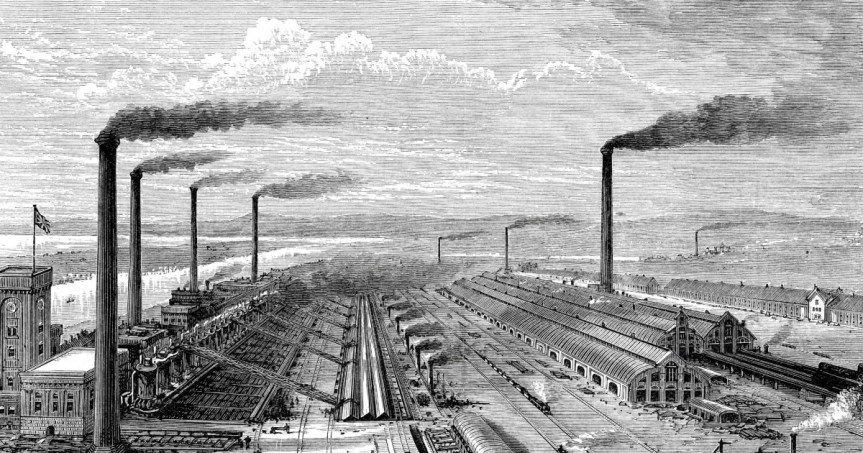
The Industrial Revolution began in the 18th century, when agricultural societies became more industrialized and urban. The transcontinental railroad, the cotton gin, electricity and other inventions permanently changed society. The revolution marked a period of development in the latter half of the 18th century that transformed large rural societies in Europe and America into industrialized, urban ones.
Goods that had once been painstakingly crafted by hand started to be produced in mass quantities by machines in factories, thanks to the introduction of new machines and techniques in textiles, iron making and other industries.
England : Birthplace of the Industrial Revolution

Britain had a long history of producing textiles like wool, linen and cotton. The big gamechanger prior to the industrial revolution was in “cotton industry” with the work performed in small workshops or even homes by individual spinners, weavers and dyers. Producing cloth became faster and required less time and far less human labour. The mechanical production of cloth could meet the growind demand at home and abroad. Apart from textiles, the iron industry also adopted new innovations.
Steam Power
An icon of the Industrial Revolution broke onto the scene in the early 1700s, when Thomas Newcomen designed the prototype for the first modern steam engine . Called the “atmospheric steam engine,” Newcomen’s invention was originally applied to power the machines used to pump water out of mine shafts.
In the 1760s, Scottish engineer James Watt began tinkering with one of Newcomen’s models, adding a separate water condenser that made it far more efficient. Watt later collaborated with Matthew Boulton to invent a steam engine with a rotary motion, a key innovation that would allow steam power to spread across British industries, including flour, paper, and cotton mills, iron works, distilleries, waterworks and canals.
Just as steam engines needed coal, steam power allowed miners to go deeper and extract more of this relatively cheap energy source. The demand for coal skyrocketed throughout the Industrial Revolution and beyond, as it would be needed to run not only the factories used to produce manufactured goods, but also the railroads and steamships used for transporting them.
Transportation
Britain’s road network, which had been relatively primitive prior to industrialization, soon saw substantial improvements, and more than 2,000 miles of canals were in use across Britain by 1815.

In the early 1800s, Richard Trevithick debuted a steam-powered locomotive, and in 1830 similar locomotives started transporting freight and passengers between the industrial hubs of Manchester and Liverpool. By that time, steam-powered boats and ships were already in wide use, carrying goods along Britain’s rivers and canals as well as across the Atlantic.
Communication and Banking
In 1837, British inventors William Cooke and Charles Wheatstone patented the first commercial telegraphy system. Cooke and Wheatstone’s system would be used for railroad signalling, as the speed of the new trains had created a need for more sophisticated means of communication.
Banks and industrial financiers rose to new prominent during the period, as well as a factory system dependent on owners and managers. A stock exchange was established in London in the 1770s; the New York Stock Exchange was founded in the early 1790s.
In 1776, Scottish social philosopher Adam Smith (1723-1790), who is regarded as the founder of modern economics, published The Wealth of Nations. In it, Smith promoted an economic system based on free enterprise, the private ownership of means of production, and lack of government interference.
Working Conditions

Rapid urbanization brought significant challenges, as overcrowded cities suffered from pollution, inadequate sanitation and a lack of clean drinking water. Industrialization increased economic output overall and improved the standard of living for the middle and upper classes, poor and working class people continued to struggle. The mechanization of labor created by technological innovation had made working in factories increasingly tedious and sometimes dangerous, and many workers were forced to work long hours for pitifully low wages.
In the decades to come, outrage over substandard working and living conditions would fuel the formation of labour unions, as well as the passage of new child labour laws and public health regulations in both Britain and the United States, all aimed at improving life for working class and poor citizens who had been negatively impacted by industrialization.
 Eduindex