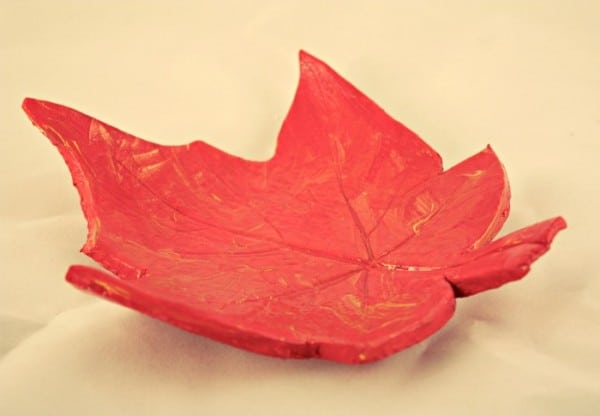
1.Start with a fist sized lump of potters clay. Review and complete wedging of the clay. 2.Simply roll the clay into 1/4″ slabs using rolling pins and two guide sticks which help you get an even result. 3.Place a large leaf over the clay- facing up so that the veins are down. Go over with the rolling pin to make an imprint. 4.Use the knife to trim around the leaf. 5.Smooth the rough edges with one finger and a bit of water. 6.Lay some plastic wrap, a paper towel or a thin cotton cloth inside of a disposable paper bowl. Lay your clay leaf inside of the bowl and gently press it down to take its new shape. 7.Dry for several days and then paint.
South Korea is like a dream country for all youngsters out there!! because of “K-pop” and specially “BTS”, every teenager girl wants to move South Korea. So here are the 5 most interesting things you should know about South Korea before moving.
1. Koreans never smell bad
Korean people lack a gene which produces smelly odour due to sweat. Hence they don’t smell bad at all even if they are sweat a sea. Don’t you think it’s amazing, after working all day, you are sweating like a sea but you won’t smell bad at all!!
2. Shutter sound while taking picture
You can’t turn off the shutter sound while taking picture. If you bought a smartphone from South Korea no matter what you do or how much you try but, you can’t turn off the shutter sound while taking pictures. This is for safety reasons, if someone is taking your picture secretly or without your permission then, this shutter sound will help you to know that someone is clicking your picture.
3. Your age
In Korea you are 1 or 2 years older that your actual present age. Koreans consider a year in the womb as counting towards their age, so everyone is one year old at birth. Everyone gets one year added to their Korean age on New Year’s Day.
Formula for calculating your Korean age = Current year + 1 – Birth year
4. Safety light spots
Whenever you feel unsafe while walking alone on streets of South korea don’t panic, you just have to stand on safety light spot positions which are under cctv observation 24/7 then, no one will dare to do anything to you. These safety light spots will monitor you continuously so no one can harm you and you will be safe until you call someone for help. Don’t you think this is the most coolest thing in South Korea!!
5. Don’t wear any cleavage-baring tops
Even if there are tops or blouses with cleavage, women take extra precaution generally when sitting, bending, and bowing. But in Korea if you wore a top with cleavage, you will have to face a negative comments because it’s consider sexual or too revealing. For girls, don’t wear low cut shirts or expose your shoulders. This is considered very provocative. But wearing short skirts consider as cute.
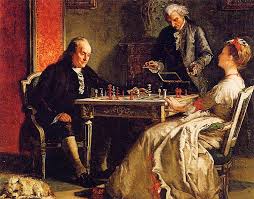
Chess was the most important indoor game of the nineteenth century in England. It enjoyed centuries-old privileged status. It was considered as a ‘rational recreation’. Chess, unlike any other game, deals more with logic and rationality rather than fun, as we know, Rationalism had taken over the Victorian era abundantly.
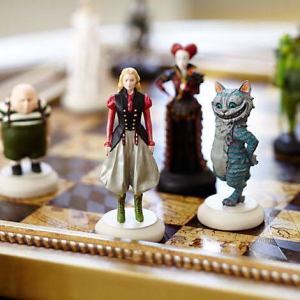
(Alice playing Chess in Looking Glass world)
Alice, at once, recognizes the chess board stretched on the vast land in the Looking Glass World. It shows that although she is just seven and a half years, still familiar to the this game, which signifies the popularity of Chess in England in Victorian Era, especially among the bourgeois class(as it is also called ‘game of royals’) and Alice belonged to the same.
In life we make ‘choices’, in chess we make ‘moves’. In order to attain something valuable in life as to capture the opponent’s castle in chess, initiative has to be taken. Nobody can make decisions for me, I’ll have to play myself, it’s just suggestions that our people may put before us. Here, Alice makes a choice to participate in the game ‘imagining’ her goal where she wants to be in the end. Well, talking about imagination with reference to Victorian era, it significantly brought out a drastic change in society, though previously children along with adults were forced into realism. ‘Imagination’ is quite efficient to presume one’s position in the coming years and then working out to get there can be useful, because life makes it hard to calculate the further possibilities due to lack of information. Alice restrained herself asking the Queens about their arrival, thinking it would be obtrusive, which keeps her away from the information, also we see Alice not able to distinguish between Red Knight and White Knight and actually who’s there to save her declares her ignorance towards information.
Chess is symbolic to attributes of life, we see, there are (apparently) three stages in chess, that is, opening, middle game and the end game, similarly we have childhood, youth and adulthood in life. Alice joins the giant Chess game of life as a white pawn, that is, she holds very limited power and can move once at a time. We always need to start from the beginning, that is, from the very first ladder in order to earn it step by step. Alice has the freedom to setup her ‘goal’ to be a Queen, but she has no power over her inevitable maturation that’s leading her to womanhood. Within the framework of the chess game, Alice has almost no control over her path and she, with certain implied rules of the game, is driven by the corresponding characters in the book, as in chess, every piece moves in answer to the move of the other one. She is pushed towards her goal by the various situations occurring before her in every square, such as, the train ride, no-name forest, Humpty Dumpty and the White Knight. Thus, it can be traced from the narrative that in life, there is some invisible force that’s propelling every individual in the direction of set goal. It can be comprehended that collaboration is the biggest instrument to victory, for example, White Knight saved Alice from the attack of Red Knight without which it had been a Herculean task for her to reach to final square. We will have to rely on our people somehow, otherwise we can’t achieve our dreams just by our own self. In chess, one can take full credit for one’s victories, but in life it would be naive to say that what I achieved is all because of my sole efforts.
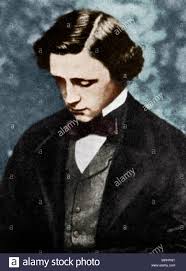
(Lewis Carroll)
The game of Chess in Through The Looking Glass represents the interest of Carroll in logics and mathematics, and the agent is ‘Alice’. This game is not about luck unlike other indoor/board games, rather brainy. In the same way, Life is more about randomness, it’s not alone in the hands of fate, though life is much more unpredictable. We need statistics as well as probability in both chess and life. Also, chess possesses two different colors, that is, one is light and the other one is dark, where I suppose, they stand for logic and nonsense respectively. Based on this idea, Alice often proves to be smarter, more prudent than the so-called adults she confronts in the Looking Glass world. This might also be a reverse-reflection of actual world, I guess, where we see adults inclined towards logic and children uttering stuff and nonsense and vice-versa, here, in the world of mirror.
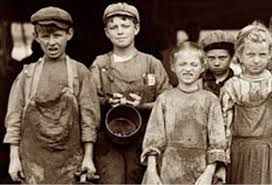
(Children doing factory chores in Victorian England)
Life of the children in Victorian period was totally opposite to that of present-day children. They were considered as miniature adults and were expected to be highly sophisticated, more in the case of rich class children. Children were not allowed to shout, complain, interrupt or disagree with anyone. The children of rich parents were usually looked after by governesses, no matter humble or strict, and they only used to teach them manners and the way of living. Here, in Looking Glass world, Red Queen, the first character to guide Alice in the reverse world,
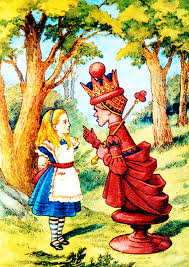
(Red Queen scolding Alice)
resembles very much like a governess of Alice when she teaches her how to not tweedle her fingers while speaking, how to behave, and to curtsey, and how Alice couldn’t go against her. She says, “when you’ve once said a thing, that fixes it, and you must take the consequences.”, because Alice is a Pawn and a Pawn cannot move backward, it is also allusion to the fact that once you have made the decision/choice, you can’t step back and stay committed bearing with it’s outcome, and she also asks Alice only to speak when she was asked to. Even we see TweedleDum-TweedleDee not ready to converse with Alice before she greets them. When Alice thinks that asking the Queens how they arrived would be impertinent, it shows again the social structure built for children in the real Victorian world.
When we are in a state of childhood, we want to turn into an adult soon. Similarly, Alice is excited about her lone-tour of adulthood through the Looking Glass world as she thinks she will be free of all the scolding, she says, “….no one here to scold me away from the fire….and can’t get me!” In the beginning, Alice was thrilled about her journey but as she is heading forward, she encounters the sense of loneliness in her journey to become a Queen(apparently) and acts adult herself. Though she is surrounded by different creatures many a times, but she feels alienated to their foreign ways. Hence, here Chess is a symbol of journey advancing from childhood to adulthood. She undergoes many crucial experiences, putting forward the idea of challenges one has to face in this journey of adulthood in one’s life. In the beginning, we see Alice being rude to Gnat about his jokes and later we see her kindness with White Knight that declares the change in her attitude as moving towards adulthood. When the Queen gives Alice directions as how to be a proper queen, it indicates that Alice wasn’t actually prepared to become a queen, just as it’s hard to prepare to be an adult in real world. Every square leads her to different characters and every character teaches Alice something significant, as we know, advice can come from the most unexpected places. For example, revelation of identity imposed by the situation in the woods of forgetfulness, the White Queen teaches her to believe in impossible, the fall of Humpty Dumpty symbolizes ‘the fall of man for pride’ and also ‘the fall of innocence’ proceeding towards maturity, and likewise all the other characters. These teachings help Alice to inherent the characteristics of adulthood within her. The crown here, symbolizes the transformation of Alice from childhood to adulthood.
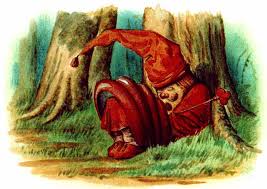
The Red King and the White King are almost doing nothing throughout the game as compared to their Queens. The Red King, as first encountered by Alice, is sleeping and his other pieces are performing their tasks to save him, whereas, the White King seems to be nervous not able to catch up with her Queen.
White King
Red King
Now these characters resemble in moves of both as that of the White and Red King in the real chess board. These actions of Queens and Kings in the world behind the mirror, may portray the position of women in the Victorian era. Women, at that time, used to engage themselves working for their husband and family, and also middle class and the working class women were employed to earn bread for their family, in support of their husbands. Red Queen saying to Alice, “…if you want to get somewhere else, you must run at least twice as fast as that!” may ascertain the idea that in a male-dominated society, women need to work double/toil harder in comparison to men in order to attain recognition. Women in the nineteenth century were not given much of the rights and privileges. This period is named after Queen Victoria, who was in the place of power. It is strange to encounter such a frivolous situation of women at the time when a lady herself was reigning over the society. When we behold Alice as a little woman moving from actual world to Looking Glass world, it may seem as she is struggling to change her confided world. She starts her journey all by herself which reflects the essence of independence in her. The characters like Live flowers resemble the social class structure that pushes Alice to follow their rules. When she chooses to be a Queen, she establishes the path for women/girls to upgrade their status because Alice learns that she must have a powerful authority to control Looking Glass world when one of the servants at once answers her after she turns into a Queen, so is the case for women in Victorian era, for example, Queen Victoria.
We need not be afraid of our high-rated opponents and feel incapable before them and it is then only that Alice is able to shake Red Queen in frustration and raises her voice against her rather than stitching her lips out of fear as evident in the beginning, that is, crown here, symbolizes her transformation from childhood to womanhood, gives her voice and finally renovates her status from a pawn to a queen. All the exclusive pieces are placed right behind the pawns. And a Pawn in comparison to them is just an ordinary, common piece that can slowly and gradually become a Queen. Even a pawn can cut down a King, pertaining to life, a single human being, regardless of his status, is enough to bring about revolution in the society, and win the castle of life. Alice suffering through all the odds, obstructions eventually made it, checkmated the Red King and turned into a Queen.
As a Queen in the game, the Red Queen and the White Queen are able to move swiftly and effortlessly. The White Queen, as she says, “jam-tomorrow and jam-yesterday, but never jam-today.”, and screams before pricking her thumb, travels in past and future which is true for the Queen,
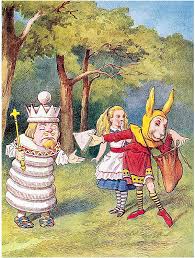
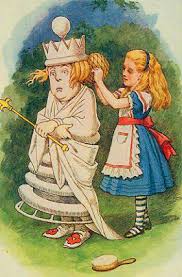
(Alice tying clumsy hair of White Queen)
in general, in chess that she can freely move in every direction possible, but she is seen nervous and messy all the time here, and ultimately at two points passes up a chance to checkmate and on another occasion she missed the opportunity to capture the Red Knight. Similarly, the Red Queen said to Alice, “Speak when you’re spoken to!”, and having supporting her words, she doesn’t announce it after putting White King on the check, hence, the check is ignored. Their individual character traits restrained them from performing their duties. This also discovers their absent-mindedness and reverse effect of the mirror world.
The Knight in the chess moves very distinctively and is allowed to jump over any other pieces. Riding and falling of the White Knight in looking glass world is signifying it’s unique L-shape movement. The inventions of White Knight are here to present his powerful character trait, like in chess board Knight is an only piece imbibed with many powers, unlike other pieces, not even a Queen can move in same way as Knight, though his inventions are unprofitable disclosing the touch of the illusionary world, still it is pointing to the fact that precaution is must, so his horse wears spikes on it’s ankles to protect it from shark bites and he collects things that might be useful in the difficult situation. The White Knight is the only character that is benevolent with Alice and saves Alice from the attack of Red Knight (stopping her to be a Queen/upgrade the position of women in society), but it can be an example of gender-biased society where a man is shown as a powerful figure and woman belongs to a weaker section. Alice, here, is represented as a weak girl and this action of White Knight throws light on the concept of feminism, and make Alice learn that a woman must stand for herself and must discover her own capabilities.
Chess wasn’t just one of the themes in Carroll’s story, indeed, it was the ground for the novel’s structure. The game of chess in real world is ‘logical’ while in looking glass world it can be called as ‘maddening game of chess’. Also as an inverted image created by the mirror, this indoor game is displayed as an outer giant field of chess. The pieces are definitely running and moving under the implied rules, but the pattern is not applied evenly. This game sets the deterministic way of life. Both life and chess are, more or less, synonymous in almost every aspect.
How does one gets married? Normally people get married by publishing matrimonial ads in newspapers, online sites, or with the help of relatives who acts as mediators. This was about the modern industrial society, but the tribal society is unique, so their ways of getting married are also unique. Tribes have nine different ways of acquiring a mate.
In this article, I will show the different ways of acquiring a mate prevalent in tribal society.
Marriage by capture– When a man snatches away a woman from her village and marries her, it is called marriage by capture. This form of marriage is most popular among the Naga who invade villages and capture girls.
Marriage by exchange- Under this marriage, two households exchange women with each other and thus avoid paying the bride price. Bride price is the payment made by the groom’s side to the bride’s side to marry her. This form of marriage is found all over India and is also found among the non-tribals.
Marriage by purchase- In this form of marriage bride price is the central theme. Among the Munda, Ho, Santhal it is the most prevalent. The high bride price has the worst consequences as is seen in the case of the Ho tribe of Chotanagpur where to escape the bride price many youth resorts to marriage by capture or remain unmarried.
Marriage by elopement- It is a peculiar feature of tribal India. Anthropologists believe this kind of marriage has emerged as a result of boys and girls shedding their traditional submissiveness. If the parents’ consent is not forthcoming, they resort to elopement and get married.
Marriage by service- In this form of marriage the groom serves in the house of the bride as suitor-servant and marries her after a lapse of few years. they have to work in the bride’s household for three years and have to fulfill all the responsibilities of a son. This form of marriage is a way to avoid payment of bride price completely or minimizing it through service rendered by the prospective groom at the bride’s residence. For example, marriage by service is found among the Gond Baiga, Birhor.
Marriage by intrusion- Here a girl desirous of marrying an unwilling young man thrust herself on the groom and his parents. She tries to serve her prospective in-laws and can be tortured in return. If she persists in her intentions and her endurance lasts for a considerable period she is finally accepted as a daughter-in-law.
Marriage by trial- In this form of marriage, the prospective groom has to prove his prowess before he can claim the desired girl. Thus he is required to undergo a trial.It is most popular among Bhils. During Holi festival, young men and women perform a folk dance known as ‘gol gadhedo’ around a pole or a tree to the top of which there is a coconut and jaggery tied. The girls make a ring around the tree and the boy to marry the girl has to break the ring and eat the coconut and jaggery after climbing the tree. In all this, he is beaten up, and inspite of all this if he succeeds he gets the right to demand any girl from the group as his wife.
Marriage by mutual consent- In this formalities of marriage are arranged by parties concerned through the process of mutual consent and consultation. This practice is result of tribal contacts with Hindus, Christians, etc.
Marriage by probation- Under this the prospective husband and wife are expected to live together for some time for marriage in the bride’s house. If they like each other and willing to marry, elders arrange their marriage.Otherwise, the man has to pay compensation to the girl’s parents. This form of marriage can be called a primitive version of the modern practice of courtship. It is prevalent among Kuki tribes of Andhra Pradesh.
Hence this was the nine different ways of acquiring mate found among the tribals. These kind of marriages is in contrast to the marriages in mainstream society. These interesting ways of getting married make the tribes even more unique.





 Eduindex
You must be logged in to post a comment.