Realism

Realism has been the most important approach of international relations over the years. It has been the dominant way of explaining international behaviour. Realism emphasizes relations among nations, as they have been and as they are. It is not concerned with the ideal world. It is the international interpretation of human behaviour. Individuals are essentially selfish, and they seek power to serve their interests and to prevail over others. As Morgenthau wrote in the 20th century, power is the control of men over the minds and actions of other men. And, there is constant strife leading to conflicts and clashes between individuals having divergent interests and seeking to acquire power. Thus, there is an ever-present struggle for power in the society. The same is the tone of nations that are guided by the same considerations as individuals.

Political Realism

Realism, or political realism, as an approach of international relations has evolved over the centuries. Prominent among its earlier advocates were Indian scholar Kautilya, Chinese strategist Sun Tzu, and Greek scholar Thucydides. Much later, Italian scholar Nicolo Machiavelli and English philosopher Thomas Hobbes also contributed to the evolution of realism. Their ideas may be called classical realism, though Morgenthau is now considered the principal classical realist. However, according to the view expressed by Robert Jackson and George Sorensen (1999) and many others, Morgenthau’s theory may be described as neo-classical realism. But, Morgenthau was the most systematic advocate of realism. However, British Professor E.H. Carr, who wrote The Twenty Years’ Crisis (1919-39) had prepared the ground on which Morgenthau developed his theory of realism.

Carr criticized democracies like the UK and France for their failure in defeating the designs of dictators. He blamed the democratic countries for failing to recognize the power realities in the world. Carr divided the scholars of international relations into two groups. These were ‘utopians’, or ‘idealists’, and the ‘realists’. He described the utopians as optimists- children of enlightenment and liberalism. The liberals held the view that reason and morality could structure international behaviour of the states towards peace. Wilson and (his) League of Nations were cited as main examples of utopians. Carr, who himself was a a realist, described realists as pessimists, or children of darkness, who emphasize power and national interest. Commenting on Carr’s views on power, Michael G Roskin and Nicholas O Berry wrote, ‘This does not necessarily mean perpetual war, for if statesmen are clever and willing to build and apply power, both economic and military, they can make the aggressors back down…’

Political realism is a significant theory in the field of international relations that seeks to explain state behavior under a set of specific and rigid assumptions. At its core, political realism is guided by three S’s: statismsurvival, and self-help.

Statism asserts that states are the only entity on the international stage that matter and that they are unitary (acting alone) and rational (acting in its best interests) actors. Survival identifies the state’s primary goal is to survive in an international system characterized by anarchy. The final S, self-help, conveys the assumption that states cannot trust others in their pursuit of survival and must secure their security.

Political realism is further delineated into sub-theoretical frameworks, including:

  • Classical realism
  • Liberal realism
  • Neorealism
  • Neoclassical realism

While each sub-framework has its own nuance within the broader political realist theory, all forms of political realism fundamentally believe world politics is a field of conflict among states pursuing power.

Structural Realism

Structural realism, also referred to as neorealism in the academic community, is a major branch of political realism derived from classical realism. While the latter incorporates analysis of human behavior within state decision-making, structural realism focuses predominantly on the anarchic structure of the international system. In other words, structural realists see global conflict as inevitable because there is no supranational body that could prevent or mediate conflict between individual states. Therefore, structural realists assume that states must always be preparing for conflict because war could break out at any time.

Structural realists believe that understanding the international system is guided by the three S’s of political realism. However, they do incorporate analysis of inter-relationships between distinct state entities, particularly regarding power relationships. A key concept in structural realism is polarity, the balance of power within the international system. Today, international theorists often describe the world as unipolar, with the United States acting as the sole superpower endowed with the ability to dominate international relations via their economic, political, and military supremacy.

REFERENCES : International Relations By V.N. Khanna
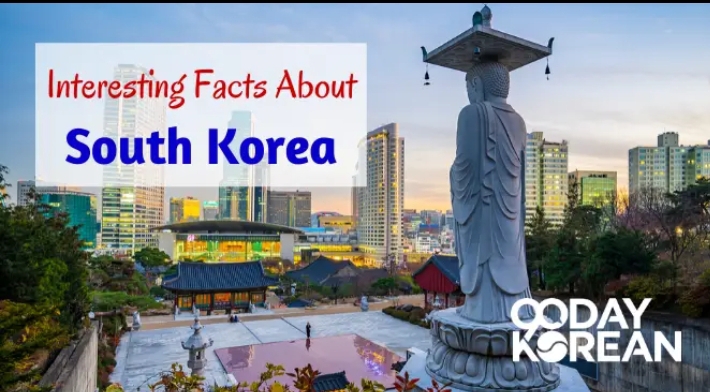
5 Interesting things you should know about South Korea

South Korea is like a dream country for all youngsters out there!! because of “K-pop” and specially “BTS”, every teenager girl wants to move South Korea. So here are the 5 most interesting things you should know about South Korea before moving.

1. Koreans never smell bad

Korean people lack a gene which produces smelly odour due to sweat. Hence they don’t smell bad at all even if they are sweat a sea. Don’t you think it’s amazing, after working all day, you are sweating like a sea but you won’t smell bad at all!!

2. Shutter sound while taking picture

You can’t turn off the shutter sound while taking picture. If you bought a smartphone from South Korea no matter what you do or how much you try but, you can’t turn off the shutter sound while taking pictures. This is for safety reasons, if someone is taking your picture secretly or without your permission then, this shutter sound will help you to know that someone is clicking your picture.

3. Your age

In Korea you are 1 or 2 years older that your actual present age. Koreans consider a year in the womb as counting towards their age, so everyone is one year old at birth. Everyone gets one year added to their Korean age on New Year’s Day.

Formula for calculating your Korean age = Current year + 1 – Birth year

4. Safety light spots

Whenever you feel unsafe while walking alone on streets of South korea don’t panic, you just have to stand on safety light spot positions which are under cctv observation 24/7 then, no one will dare to do anything to you. These safety light spots will monitor you continuously so no one can harm you and you will be safe until you call someone for help. Don’t you think this is the most coolest thing in South Korea!!

5. Don’t wear any cleavage-baring tops

Even if there are tops or blouses with cleavage, women take extra precaution generally when sitting, bending, and bowing. But in Korea if you wore a top with cleavage, you will have to face a negative comments because it’s consider sexual or too revealing.
For girls, don’t wear low cut shirts or expose your shoulders. This is considered very provocative. But wearing short skirts consider as cute.

International Workers Day

“Without labour nothing prospers.”

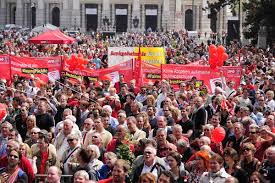
Labour Day or International Workers Day is celebrated annually on 1 May to celebrate the working class and labourers across the world. Socialist and labour unions celebrate this day by organising programmes to improve wages and working conditions of the workforce. In more than 80 countries Labour Day is a national holiday.

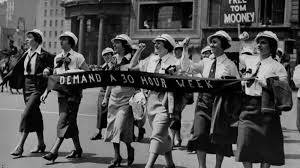
Before a formal Labour Day came into place, deaths, injuries and dangerous working conditions were very common among the working class globally. During the rise of industrialisation, the U.S. exploited the working class during the nineteenth century and made them work upto 15 hours a day under rigorous conditions. The rising death of the workforce in industries forced the working class to raise their voices for their safety. After efforts made by the workers and socialists, eight hours was declared as the legal time for the workers in the late nineteenth century by the American Federation of Labour.

The origin of Labour Day goes back to an incident in Chicago on May 4, 1886 known as the Haymarket Affair. On this day workers assembled as part of a peaceful rally in a strike demanding an eight hour work day. An unknown person threw a dynamite bomb at the police as they acted to disperse the meeting, and the bomb blast and ensuing gunfire resulted in the deaths of seven police officers and atleast four civilians; dozens of others were wounded. The Chicago protests led to many countries and at last they got the proper labour rights.

So, they had a long repression from the society. So, now the time has come to live respectfully and safe. Without labour no country can prosper. They are the ones who make a way towards country’s development. Their hardwork, dedication cherishes the path of development of country. So, respect them and provide safe working conditions to them. The below mentioned lives are aptly quoted;” A worker is a creator and a great asset to every nation”.

Tesco and it’s strategic changes during the ‘ Dave Lewis era’

Tesco is a multinational retailer company which was established in 1919 by Jack Cohen with its headquarters in the United Kingdom, being one of its ‘Big Four’ retailers. Tesco is known for implementing strategies that are effective in developing competitive advantages to acquire customer satisfaction. Tesco faced a major downfall in the year 2014 when it’s market share fell from 28.6% to 28.4% due to the growth of discounters and online retailers.
In the year 2014, Tesco’s chief Philip Clarke quit his job due to profit warning with r-£10m package after failing to halt slumping sales. After which Dave Lewis who led Unilever’s personal care business became the chief executive of Tesco in 2014. Tesco which was in dire need for a change expected Lewis whom they described as “responsible for a number of business turnarounds” to make their company’s strategies effective.
Tesco’s strategy analysis:

Lewis followed what Leahy, the former CEO of Tesco promoted profoundly, which was to put the customer first. This is very much evident in the 2015 strategic report of Tesco which quotes ” The champion of customers”. Lewis believed that small actions sum up to big differences with “every little helps”.

Lewis set top three priorities to get Tesco back on track. Firstly they set a goal to regain their customers focusing on four things – service, range, availability and price.There are three reasons companies should work on regaining it’s customers. Firstly because customers seek their services and have helped them have a stand in the market and not just any name on a cold call list. Secondly because they know the company better and treating them well decreases the marketing cost. Thirdly , with the improvement In technology and customer databases, it is easier to collect information on customer behaviour to the company’s services to build better successful offers and identify the profitable defectors. Tesco with the aim of regaining their customers invested in 4,652 new colleagues to improve services for them, reviewed their ranges across categories, increased the availability of products and made their prices stable, low and affordable by which they were able to attain the response of their consumers.
Secondly the company sort to protect and strengthen its financial stand as since they had a debt with with total leverage of £22bn .A difficult financial position of a company can be threatening to the existence of a company for which few measures have to be taken to recover from the crisis and obtain a state of balance for which the financial position has to evaluated which involves restructuring or making a change in its of its financial strategies. In order to revive from its crisis Tesco strengthened it’s capital spending by reducing their capital expenditure to £1bn, replaced their pension schemes and reviewed their profit portfolio by completing an asset swap with 21 British superstores to gain ownership and to increase the promotion of the stores they own.
Thirdly, Tesco strived to rebuild and improve their trust and transparency for which they set up a new management system to create long term, mutually beneficial partnerships with their consumers and suppliers in order to focus on cost prices. Suppliers help turn the ship around during tough times and companies need the help of their suppliers to have a turnaround in business for which they need to treat their suppliers fairly since the happiness of the supplier is vital to the success of the buyer. Tesco also created a new code of business conduct and to shift their focus on a more ethical and speak up culture .A study by Label Insight found that 94 percent of consumers were likely to be loyal to a brand if it is transparent and about 73 percent said that they would even pay more for a completely transparent product.
In the following year after Tesco had worked on regaining their customers the year seemed to be a transformational year for Tesco with their business on a road to recovery said Alan Stewart, the chief financial officer of Tesco. Tesco went on to adopt strategies for which it advanced it’s turnaround priorities. Tesco chose to regain their competitiveness in the market for which it improved the shopping experience by making easier shopping trips, better availability of goods and stable prices for the consumers which led them to regain their competitiveness with positive volume growths up-to 3.3% and transactions up-to 2.8% in the fourth quarter.

Stabilizing and driving Tesco forward:
Tesco encountered progress in its three priorities which Lewis put forth initially when he became the CEO. To ensure a stable long term horizon, Tesco enhanced six strategic drivers to enhance their competitiveness in the market.

Tesco’s six strategic drivers :

A differentiated brand:
2017-“Food love stories brought to you by Tesco” campaign
2018-Swaps with products that are lower in saturated fat, salt and sugar
2019-One hundred years of great value campaign
Reduce operating costs by £1.5bn:
2017-Generated £455m of cost savings, of which £226m contributes to the £1.5bn target.
2018-Delivered £541m of savings; logistics and distribution, with £104m of savings; and goods not for resale, making savings of £174m.
2019-Delivered in-year cost savings of £532m, with £1.4bn of savings.
Generate £9bn cash from operations:
2017-Generated £495m of retail operating cash
2018-Generated £2,773m of retail operating cash
2019-Generated £2.5bn of retail operating cash.
Maximise the mix to achieve a 3.5% – 4.0% margin
2017-driving growth in areas which deliver sustainable profits – in order to achieve a 3.5% – 4.0% Group operating margin
2018-Group operating margin for this year was 2.9%.
2019-Group operating margin was 3.79%.
Maximise value from property :
2017-Optimisation of freehold and leasehold mix.
2018-£1.4bn of value from property proceeds. 52% increase in freehold property in UK and ROI
2019-£285m of value from our property portfolio across the Group.
Innovation :
2017-Payquik digital wallet
2018-Tesco now app
2019-New brand – Jack, Thailand convenience proposition.
From the above data it is evident that the strategic plans used by Lewis has been effective for Tesco leading to its current strategic position.

Tesco’s business strategy is proven to be fit as it justifiably fits into three of these four categories – consistency, consonance, advantage and feasiblity.
Consistency :
Consistency must be followed between the organizational objectives a d the values of the company. It is impossible to have a successful strategy without consistency among the departments within the company. A business will be consistent only of the internal and external goals are aligned. Under Lewis’ strategical supervision Tesco was stabilizing and driving forward with a consistent business environment. This is evident from the strategical reports of Tesco from the year 2015-2019.
Consonance:
According to Rumelt “The strategy must represent an adaptive response to the external environment and to the critical changes occurring within it”. Lewis also was keen on creating value for his stakeholders (consumers, colleagues, suppliers and shareholders) . With the increase in the value for their stakeholders, Tesco created a 93% customer liking products which were exclusively at Tesco’s, 80% of the employees who were motivated by their purpose, an annual quantum sales of over £1bn and Diluted EPS of 15.4p . Lewis therefore established a compatibility between opinions and actions which led to the success of his strategies.
Competitive Advantage:
The strategy must provide for the creation and/or maintenance of a competitive advantage in the selected area of activity. Creation and maintenance of competitive advantage was created by the strategies created by Tesco. For maintaining this advantage Tesco created six key performance measures which included growing sales, delivering profit, improving operating cash flow, satisfaction of customers, providing power to colleagues and building trusted partnerships. With this simplification in the main performance indicators Tesco achieved the ‘advantage’ with 11.3% group sales, 33.5% operating profit, 9.8% retail operating cash flow and 77.5% of group supplier satisfaction.

Supply chain management :
Dave Lewis followed the supply chain management to make Tesco stable. A shift was made from a push to a pull in the supply chain with customers gaining more power in the marketing channel. Information systems gained more power and eliminated unnecessary inventory and he focused equally on both core and non core activities and increased its outsourcing. An effective supply chain management supply chain management with flexible organisations helps respond to customers faster ensuring profitability which is what Tesco under Lewis followed.


When Lewis became the CEO “There was no credible chairman or non-executives and colleagues were about to be prosecuted” said Clive Black. Now “The retailer’s departing boss did not solve all its problems. But the stable operation he leaves behind was in turmoil in 2014”.
In the year 2014 when Lewis joined Tesco as its CEO, an article by the guardian was written titled “We know Dave Lewis can sell soaps. Can he really run Tesco? “. The answer to that is a definite yes since he stabilised the company from its series of profit warnings and 33% share price drop to the success that Tesco is facing today and has definitely been this ‘Drastic Dave’ who back in Unilever was known for his ruthless approach to job cuts and excellent marketing strategies. He has followed this legacy even in Tesco.


Cheapest MBA in Canada for International Students

Do you want to get some information about the most affordable MBA in Canada for International Students? What is the very first thing that comes to your mind when you think about studying an MBA abroad? The cost, of course. Many students dream about going to international universities and pursuing their MBA from there. But we know how much studying and staying abroad costs. Worry not! Here are some selective universities that provide the cheapest MBA in Canada for International Students

List of Universities for MBA in Canada

Here’s a detailed list of universities that offer MBA to International students without charging a hefty sum of money. Once you go through the list, you would get an excellent idea of how to pursue your career abroad and which University suits your choice.

  • Memorial University of Newfoundland

The Memorial University of Newfoundland is popularly known as MUN is one of the leading universities in Canada. It is located in St. John’s and has four satellite campuses. It has a considerable student population from around the world. If you talk about universities that provide the cheapest MBA to International Students in Canada, this is the one that comes first to your mind. The tuition fees for MBA here are $4,833 per year.

  • University of New Brunswick

The University is the first-ever English-Speaking University of Canada. The University of New Brunswick is most famous for its MBA curriculum and its world-class faculty. Along with their excellent MBA framework, their fee is cheap compared to many other universities. They offer two business courses, MBA as well as Juris Doctor. Both of the classes cost $12,410, respectively.

  • Laval University

Laval University is most popularly known as the French Research University of Canada. Here, the duration of an MBA is one and a half years in total. Besides being the 15th best University in Canada, it also charges less tuition fee. The tuition fees for the MBA here is $14,774.16 in total.

  • University of Victoria

The University of Victoria is one of the best public universities, located in British Columbia. The University was formerly an affiliated college under McGill University. But it has developed to be an autonomous university now. The University offers an excellent Daytime MBA course, which is pocket-friendly for International Students. The tuition fees for the MBA here is $12,737.73 in total.

  • McMaster University

McMaster University is famous all around the world for the excellent research curriculum they have in Science as well as Engineering. Along with this, it also offers MBA to International Students, and the fee doesn’t cost much. The tuition fees for the MBA here is $19,868.16 in total.

Hence, you get an elegant idea about how much MBA costs in Canada for International Students. The five universities mentioned here offer the cheapest MBA in Canada for International Students. Now, all you have to do to take admission is to go to their official website and apply for the MBA course. That’s all you need to take the step forward to achieve your dream. Isn’t this exciting?