INTERNSHIPS

The internship is the main source for a college student to improve and prove his/her knowledge.

Every college student has composed placements and off compose placements.

At the time of placements in a different company, we have to submit our Resume. That resume gives our real appearance to interview. If we have done any internships and any skill development that will help for our desired company placements.

Lets more about internships

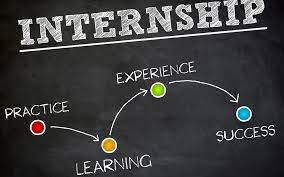
Internships is the training and real-time project to the confidence of our skills for real-world understanding

 The internship is an opportunity offered by an employer to potential employees, as an intern, to work at a firm for a fixed period of time. Interns are usually likes undergraduates or students, and most internships period last between a month and three months. … An internship can be either paid or voluntary.

Which internships we have done?

Internships are based on your desired knowledge, department and day by day improved courses

Things to consider when choosing an internship

  • Which sector are you interested? …
  • What will be your responsibilities? …
  • What will you will get ? …
  • Where you have to do? …
  • What’s the environment like is it comfortable ? …
  • Will you get the opportunity to more network? …
  • What are the skills will you learn? …
  • What are your qualifications for ?

Let specific directions for your internships

There are some websites for internships that may have offline and online internships :

  • Linkedin
  • Glassdoor
  • Google
  • Internshala
  • Internship.com
  • Internmatch.com
  • Youturn
  • Idealist
  • Global Experience
  • Coolworks

Go for these websites you will find “updated(your name) version.0”

SCIENCE AND TECHNOLOGY

The Google  every knows about  Google, it  gives us access to almost all information by typing what you want to know into the search bar. There are some interesting secrets you can have enjoy.

Then why are u waitimg just go with my steps ,

Go with,you have  type the phrase “Do a barrel roll”  into the search bar of Google and press enter, the entire page spin around once.

Second is a fun trick if you like Chuck Norris jokes. If you type in ‘Find Chuck Norris’ and click ‘I’m feeling lucky’, you will get a little message from Google about being careful what you search for.

Next, and this is one of my favourites, try typing ‘Google Gravity’ into the search bar on Google and pressing search. It will cause the entire page to fall into pieces. Although sometimes this doesn’t work, if you search it and click the first result on the page, it will take you back to the homepage which will then fall. The best part is that you can still search for things even after it has taken effect. It will, however, cause all of the results to fall from the sky and crash down on top of the already fallen homepage.

Finally, my favourite. Type ‘Zerg Rush’ into the search bar and hit enter. This will cause many ‘o’s to appear from all directions! But beware, they are not your friends. You must hover over each of the ‘o’s with your cursor and click like crazy. Soon they will vanish. Attempt this at your own peril, you have been warned.

So there you have it, a few cool things to do with Google when you’re bored. Of course, there are far more tricks to do with Google, but you can always find them by, you know, googling it. A little extra for reading this far: if you leave the search bar blank and click ‘I’m Feeling Lucky’, you’ll be shown all of the Google doodles that have ever been used on special dates.

Here are way more tricks you can do on google.

Do a Barrel Roll. Search for “do a barrel roll” without the quotes, and hold onto your desk for dear life. …

“As I rained blows upon him, I realized there had to be another way!” It’s a Festivus MIIIRACLE! …

Zerg Rush. …

Blink HTML. …

Party Like It’s 1998. …

Culture and history

China and Japan India and Byzantium traveling culture and history vector geisha and samurai men and women Taj Mahal and torii gate capitol building and Great wall landmarks and heritage nationalities.

Culture and history is the main building block of our lifes

The Culture is the characteristics and knowledge of a particular group of people, encompassing language, religion, cuisine, social habits, music and arts.

The word “culture” derives from a French term, which in turn derives from the Latin “colere,” which means to tend to the earth and grow, or cultivation and nurture

History is the study of life in society in the past, in all its aspect, in relation to present developments and future hopes. It is the story of man in time, an inquiry into the past based on evidence.

As with any scholarly approach that boasts of being “new” when it bursts onto the scene, new cultural history was fairly well established as one among many ways of thinking about history by the twenty-first century. This is not to say that new cultural historians enjoyed the unanimous esteem of their more traditional colleagues, for the field still managed to draw the fire of critics from the left and the right who believed that after twenty years this approach still represented a mere “trend.” One could agree with Peter Novick that this attests to the fragmentation of the historical profession into a plethora of specializations that no longer cohered around shared principles and whose denizens had little common ground for discussion. Yet much has changed in cultural history since its heyday in the 1980s.

 When new cultural history was actually “new” it provided innovations both in terms of the topics considered worthy of historical attention and in terms of the ways of theorizing such topics within their respective contexts. It is nevertheless apparent that a good portion of what was marketed in 2000 as “cultural history” reflected more of the topical rather than theoretical innovations entailed by this approach. In fact, some of these works even read more like conventional social histories with a few obligatory nods to one of many privileged theorists.

To some extent this state of affairs reflects the success of this approach in the academy and the willingness of historians to combine methodologies in a creative and eclectic manner. On the other hand, though, one might argue that cultural history lost much of its edge by becoming subsumed into a more or less nonreflective historical establishment. Some historians see less fragmentation than the cooptation of erstwhile radical approaches back into a surprisingly resilient mainstream.

“Whatever possibilities become evident,” notes Patrick Joyce, “something is needed to shake the hold of a history which continually reproduces itself, in the process sucking the erstwhile heterodox into its consensus, in much the way that ‘cultural history’ is slowly but surely becoming routinized as more methodology, yet one more subdiscipline in the house of history.” Joyce’s observation is astute, yet one wonders whether a historical approach that could successfully resist such cooptation is possible and, even if it were, whether it would still merit the name “history.” It seems evident that what makes history “history” has little to do with methodologies and innovations that are unique to it, and perhaps a more thoroughgoing interdisciplinarity would discourage the domestication of future innovations into mere additions to the mansion of conventional history.

Jobs and career

What is a JOB ?

A job is something you simply do for the money. Usually, jobs have a small impact on future resumes because they aren’t typically related to what your career is or will be. Also, jobs usually offer less networking opportunities because your coworkers often won’t be continuing on to the same field as you in your future career.

Most jobs consist of hourly wages, are more short-term, and focus on getting a task done.

What is a career ?

A career is all about building up skills through various employment opportunities, giving you the ability to move on to higher paying and more prestigious ones. Careers provide a foundation of experiences that help fuel your professional life for many years.

Careers are more long-term and are about learning, gaining experience, building connections, and putting yourself in the right position for promotions and raises. Also, careers tend to be more salary based, as opposed to hourly based like jobs, and often include benefits such as paid time off and healthcare.

While more education is often required for a career, you don’t need to spend the rest of your life in school just to get ahead. South College offers many associate degree programs that can be completed in just two years, getting you started on your new career before you know it.

If you’re interested in finding out what your future career should be or in getting the right education to put you there, contact us today!

That’s not to say that jobs aren’t valuable. Jobs show your work ethic, which is important to future employers, and money pays the bills! Jobs can help prepare you for a career by providing you with valuable skills like time management and communication.

DIFFERENCE

A job is more short-term oriented and tends to focus purely on earning money. On the other hand, a career is a series of related employment in one field that provides experience for your future and helps you earn a better paycheck and living status

7 Strategies to Build A Successful Career

  • Identify with Your Goals. Before even considering following a career route, you must get to know yourself. …
  • Build a Professional Resume. …
  • Become Aware of Your Strengths. …
  • Assume Full Responsibility for Your Life. …
  • Always Raise Your Standards. …
  • Brand Yourself. …
  • Network — A LOT. …
  • Conclusion

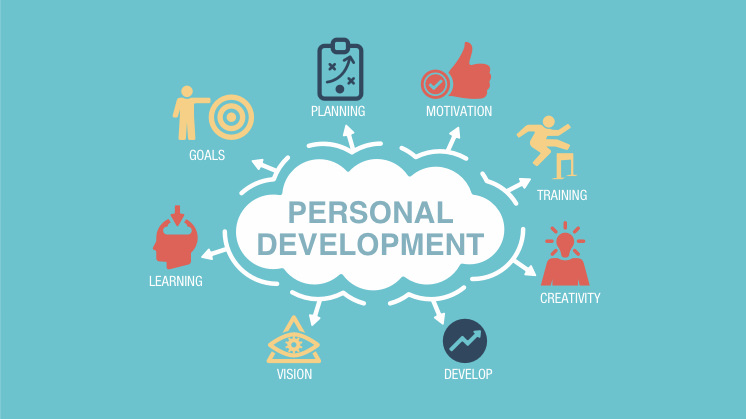
Self-help and personality development

Self help and personality development is a weapon for us

The spirit of self help creates many good qualities in a person. … These people work more harder than a person who is reliable on others for their work. This leads to help them obtain strong will- power and determination.

Self-help or self-improvement is a self-guided improvement—economically, intellectually, or emotionally—often with a substantial psychological basis. … Many different self-help group programs exist, each with its own focus, techniques, associated beliefs, proponents and in some cases, leaders

The following are common examples of self-improvement.

  • Self-Awareness. A process of introspection to understand your own character, behavior, fears and ambitions.
  • Awareness. A process of extrospection to understand the world around you.
  • Health. …
  • Physical Fitness. …
  • Time Management. …
  • Productivity. …
  • Performance. …
  • Know-How

Here’s a look at some ways to build self-improvement into your daily routine and let go of negative thoughts about yourself.

  • Cultivate gratitude. …
  • Greet everyone you meet. …
  • Try a digital detox. …
  • Use positive self-talk. …
  • Practice random acts of kindness. …
  • Eat at least one meal mindfully. …
  • Get enough sleep. …
  • Breathe consciously.

Personality development refers to how the organized patterns of behavior that make up each person’s unique personality emerge over time. Many factors go into influencing personality, including genetics, environment, parenting, and societal variables.

Personality development helps you gain recognition and acceptance from the society as well as people around. Personality development plays an essential role not only in an individual’s professional but also personal lives. It makes an individual disciplined, punctual and an asset for his/her organization.

Here are  great ways to improve your personality:

  • Be a better listener. …
  • Read more and expand your interests. …
  • Be a good conversationalist. …
  • Have an Opinion. …
  • Meet New People. …
  • Be yourself. …
  • Have a positive outlook and attitude. …
  • Be fun and see the humorous side of life.

The four personality types are: Driver, Expressive, Amiable, and Analytical. There are two variables to identify any personality: Are they better at facts & data or relationships? And are they introverted or extroverted. Note: Most people will have major and minor type.