Introduction about different Schools, Colleges, Universities

Every student wants to join a dream college or university.

After schooling, we desire to join a top college or university for the security of our feature

Is a college the same thing as a university? What does “liberal arts” mean? Why are some colleges called public and others private? Here are the basics of the types of colleges.

Let me know about NIT AGARTALA

Institute is committed to developing highly competent young Engineers, Scientists, and Management Professionals to cater to the ever-increasing techno-managerial needs of national and international standards fulfilling professional ethics and societal commitment.

MISSIONS

• To produce techno-managerial human resources in line with global needs, offering a state-of-the-art facility, research, and engineering and allied disciplines.

• To enhance the effectiveness of technical education with innovative systems and devising a mechanism to facilitate the application of research findings to solve real problems of industries/academics.

• To nurture and sustain an academic ambience conducive to the development of intellectually capable and committed professionals so that effective growth is obtained for the region’s economic development and the nation as a whole.

• To establish as the corridor of higher education for the South East Asian countries.

EDUCATION SYSTEM

Presently the Institute offers eight UG courses and PG courses in several fields along with Post Doctoral Fellowships. This Institute is autonomous under NIT being act passed by the parliament.

The Institute recently introduced a new curriculum in IITs where more elective subjects are being offered to make the system flexible. Previously, the Institute used to follow the mark based system of evaluation, but have been switching over to a credit-based system to keep track of the global evaluation methods. Industrial training, Undertaking projects are parts of the education system and students are also encouraged to take various activities for social development through NSS and NCC.

Initiatives

The Institute recently has been converted from State Engineering College to National Institute of Technology. The total seats have been increased from 250 to 420 for the academic session 2007-2008. Recently three Under Graduate courses has been introduced in Electrical & Electronics Engineering, Transportation Engineering and Production Engineering. The Civil Engineering Department will start a PG programme in Structural Engineering to fulfil the requirement of the State. The nonresidential campus is to be made residential with the reopening of two boys hostels and one girl’s hostel for the students admitted for the session 2007-2008. A master plan is under preparation for 335 acres of land where a new campus will be built with modern facilities for the overall requirement of the Institute. The Institute is getting a 33 VK dedicated power supply through Tripura State Electricity Corporation Limited for uninterrupted power supply in the campus. The R. D. Department of Govt. of Tripura took total renovation work of the existing buildings after conversion to NIT. The Institute has also obtained a grant of 12 crore rupees from DoNER for the development of infrastructures like the extension of the Library Building, an extension of the Academic Building, the Centralized Computer Centre, a new water treatment plant and boys and girls common room. The campus is now totally connected through Wi-Fi with WiMAX wireless backbone and all e-journal facilities are available in the digital library of NIT Agartala.

Digital marketing

Digital marketing the world become digitalizing day to day.

Every things we can do with digital, we are become digital life’s.

Marketing is main source for improve companies, on before digital life’s there was we have person to person and posters to expose their products and services  

Now , we are in surviving digital life’s . every things will get on internet so the bases of internet ,we  have recognised by Digital marketing .

The digital marketing  it is  high level, digital marketing refers to advertising delivered through digital channels such as search engines, websites, social media, email, and mobile apps.

by help of  these online media channels, digital marketing is the method by which companies endorse goods, brands and services.

On these digital marketing we have a wide range of digital marketing jobs out there meaning there are a huge variety of career options.

  • Video/audio production.
  • Interactive technology (such as AI)
  • Mobile marketing.
  • Search engine optimization (SEO)
  • Search engine marketing (SEM)
  • Social media.
  • E-commerce.
  • Email marketing.

Scopes for digital marketing

The scope of digital marketing is quite good. Anyone who is looking  to learning digital marketing  would surely get a good benefit from it. There are also huge of job opportunities available in the field .

How can you start

There we have many web sites and blogs, start learning digital marketing help of reading books or blogs, enrolling in courses, watching videos on YouTube, listening to podcasts, watching webinars, and more.

Global research on coronavirus disease (COVID-19)

WHO is bringing the world’s scientists and global health professionals together to accelerate the research and development process, and develop new norms and standards to contain the spread of the coronavirus pandemic and help care for those affected.

The R&D Blueprint has been activated to accelerate diagnostics, vaccines and therapeutics for this novel coronavirus.

The solidarity of all countries will be essential to ensure equitable access to COVID-19 health products.

Global research database

WHO is gathering the latest international multilingual scientific findings and knowledge on COVID-19. The global literature cited in the WHO COVID-19 database is updated daily (Monday through Friday) from searches of bibliographic databases, hand searching, and the addition of other expert-referred scientific articles. This database represents a comprehensive multilingual source of current literature on the topic. While it may not be exhaustive, new research is added regularly.

The WHO evidence retrieval sub-group has begun collaboration with key partners to enrich the citations and build a more comprehensive database with inclusion of other content. The database is built by BIREME, the Specialized Center of PAHO/AMRO and part of the Regional Office’s Department of Evidence and Intelligence for Action in Health.

For further information or questions, please contact the WHO Library via email.

Disclaimer: the designations employed and the presentation of the material in publications listed in this database does not imply the expression of any opinion whatsoever on the part of WHO concerning the legal status of any country, territory, city or area or of its authorities, or concerning the delimitation of its frontiers or boundaries. Dotted and dashed lines on maps represent approximate border lines for which there may not yet be full agreement.

The mention of specific companies or of certain manufacturers’ products in publications listed in the database does not imply that they are endorsed or recommended by WHO in preference to others of a similar nature that are not mentioned. Errors and omissions excepted, the names of proprietary products are distinguished by initial capital letters.

By listing publications in this database and providing links to external sites does not mean that WHO endorses or recommends those publications or sites, or has verified the content contained within them. The database has been compiled without warranty of any kind, either expressed or implied. The responsibility for the interpretation and use of publications included in this database lies with the reader. In no event shall WHO be liable for damages arising from its use.

Courses and programs

Courses and programs for students are the main role to their education .

A program is your degree . A course is one building block (subject) of your program

Our featyre is depends on our Courses and programs

Some of courses

1 B.Com. This is the most popular choice among Commerce stream students. …

2 Chartered Accountancy.

3 Bachelor’s course in Economics.

4 Company Secretaryship course.

5 Law courses. …

6 Management courses. …

7 Technical courses. …

8 Designing courses.          

And some more

Administration Studies

Architecture Studies

Art Studies

Aviation

Business Studies

Construction

Cosmetology Studies

Design Studies

Economic Studies

Education

Educational and academic news and updates

Energy Studies

Engineering Studies

Environmental Studies

Fashion

Food and Beverage Studies

General Studies

Health Care

Humanities Studies

Journalism and Mass Communication

Languages

Law Studies

Life Sciences

Life Skills

Management Studies

Marketing Studies

Natural Sciences

Performing Arts

Professional Studies

Self-Improvement

Social Sciences

Sport

Sustainability Studies n

Technology Studies

Tourism and Hospitality

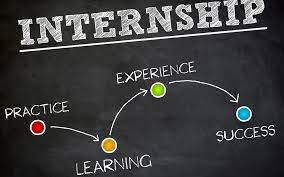
INTERNSHIPS

The internship is the main source for a college student to improve and prove his/her knowledge.

Every college student has composed placements and off compose placements.

At the time of placements in a different company, we have to submit our Resume. That resume gives our real appearance to interview. If we have done any internships and any skill development that will help for our desired company placements.

Lets more about internships

Internships is the training and real-time project to the confidence of our skills for real-world understanding

 The internship is an opportunity offered by an employer to potential employees, as an intern, to work at a firm for a fixed period of time. Interns are usually likes undergraduates or students, and most internships period last between a month and three months. … An internship can be either paid or voluntary.

Which internships we have done?

Internships are based on your desired knowledge, department and day by day improved courses

Things to consider when choosing an internship

  • Which sector are you interested? …
  • What will be your responsibilities? …
  • What will you will get ? …
  • Where you have to do? …
  • What’s the environment like is it comfortable ? …
  • Will you get the opportunity to more network? …
  • What are the skills will you learn? …
  • What are your qualifications for ?

Let specific directions for your internships

There are some websites for internships that may have offline and online internships :

  • Linkedin
  • Glassdoor
  • Google
  • Internshala
  • Internship.com
  • Internmatch.com
  • Youturn
  • Idealist
  • Global Experience
  • Coolworks

Go for these websites you will find “updated(your name) version.0”

SCIENCE AND TECHNOLOGY

The Google  every knows about  Google, it  gives us access to almost all information by typing what you want to know into the search bar. There are some interesting secrets you can have enjoy.

Then why are u waitimg just go with my steps ,

Go with,you have  type the phrase “Do a barrel roll”  into the search bar of Google and press enter, the entire page spin around once.

Second is a fun trick if you like Chuck Norris jokes. If you type in ‘Find Chuck Norris’ and click ‘I’m feeling lucky’, you will get a little message from Google about being careful what you search for.

Next, and this is one of my favourites, try typing ‘Google Gravity’ into the search bar on Google and pressing search. It will cause the entire page to fall into pieces. Although sometimes this doesn’t work, if you search it and click the first result on the page, it will take you back to the homepage which will then fall. The best part is that you can still search for things even after it has taken effect. It will, however, cause all of the results to fall from the sky and crash down on top of the already fallen homepage.

Finally, my favourite. Type ‘Zerg Rush’ into the search bar and hit enter. This will cause many ‘o’s to appear from all directions! But beware, they are not your friends. You must hover over each of the ‘o’s with your cursor and click like crazy. Soon they will vanish. Attempt this at your own peril, you have been warned.

So there you have it, a few cool things to do with Google when you’re bored. Of course, there are far more tricks to do with Google, but you can always find them by, you know, googling it. A little extra for reading this far: if you leave the search bar blank and click ‘I’m Feeling Lucky’, you’ll be shown all of the Google doodles that have ever been used on special dates.

Here are way more tricks you can do on google.

Do a Barrel Roll. Search for “do a barrel roll” without the quotes, and hold onto your desk for dear life. …

“As I rained blows upon him, I realized there had to be another way!” It’s a Festivus MIIIRACLE! …

Zerg Rush. …

Blink HTML. …

Party Like It’s 1998. …

Culture and history

China and Japan India and Byzantium traveling culture and history vector geisha and samurai men and women Taj Mahal and torii gate capitol building and Great wall landmarks and heritage nationalities.

Culture and history is the main building block of our lifes

The Culture is the characteristics and knowledge of a particular group of people, encompassing language, religion, cuisine, social habits, music and arts.

The word “culture” derives from a French term, which in turn derives from the Latin “colere,” which means to tend to the earth and grow, or cultivation and nurture

History is the study of life in society in the past, in all its aspect, in relation to present developments and future hopes. It is the story of man in time, an inquiry into the past based on evidence.

As with any scholarly approach that boasts of being “new” when it bursts onto the scene, new cultural history was fairly well established as one among many ways of thinking about history by the twenty-first century. This is not to say that new cultural historians enjoyed the unanimous esteem of their more traditional colleagues, for the field still managed to draw the fire of critics from the left and the right who believed that after twenty years this approach still represented a mere “trend.” One could agree with Peter Novick that this attests to the fragmentation of the historical profession into a plethora of specializations that no longer cohered around shared principles and whose denizens had little common ground for discussion. Yet much has changed in cultural history since its heyday in the 1980s.

 When new cultural history was actually “new” it provided innovations both in terms of the topics considered worthy of historical attention and in terms of the ways of theorizing such topics within their respective contexts. It is nevertheless apparent that a good portion of what was marketed in 2000 as “cultural history” reflected more of the topical rather than theoretical innovations entailed by this approach. In fact, some of these works even read more like conventional social histories with a few obligatory nods to one of many privileged theorists.

To some extent this state of affairs reflects the success of this approach in the academy and the willingness of historians to combine methodologies in a creative and eclectic manner. On the other hand, though, one might argue that cultural history lost much of its edge by becoming subsumed into a more or less nonreflective historical establishment. Some historians see less fragmentation than the cooptation of erstwhile radical approaches back into a surprisingly resilient mainstream.

“Whatever possibilities become evident,” notes Patrick Joyce, “something is needed to shake the hold of a history which continually reproduces itself, in the process sucking the erstwhile heterodox into its consensus, in much the way that ‘cultural history’ is slowly but surely becoming routinized as more methodology, yet one more subdiscipline in the house of history.” Joyce’s observation is astute, yet one wonders whether a historical approach that could successfully resist such cooptation is possible and, even if it were, whether it would still merit the name “history.” It seems evident that what makes history “history” has little to do with methodologies and innovations that are unique to it, and perhaps a more thoroughgoing interdisciplinarity would discourage the domestication of future innovations into mere additions to the mansion of conventional history.

Jobs and career

What is a JOB ?

A job is something you simply do for the money. Usually, jobs have a small impact on future resumes because they aren’t typically related to what your career is or will be. Also, jobs usually offer less networking opportunities because your coworkers often won’t be continuing on to the same field as you in your future career.

Most jobs consist of hourly wages, are more short-term, and focus on getting a task done.

What is a career ?

A career is all about building up skills through various employment opportunities, giving you the ability to move on to higher paying and more prestigious ones. Careers provide a foundation of experiences that help fuel your professional life for many years.

Careers are more long-term and are about learning, gaining experience, building connections, and putting yourself in the right position for promotions and raises. Also, careers tend to be more salary based, as opposed to hourly based like jobs, and often include benefits such as paid time off and healthcare.

While more education is often required for a career, you don’t need to spend the rest of your life in school just to get ahead. South College offers many associate degree programs that can be completed in just two years, getting you started on your new career before you know it.

If you’re interested in finding out what your future career should be or in getting the right education to put you there, contact us today!

That’s not to say that jobs aren’t valuable. Jobs show your work ethic, which is important to future employers, and money pays the bills! Jobs can help prepare you for a career by providing you with valuable skills like time management and communication.

DIFFERENCE

A job is more short-term oriented and tends to focus purely on earning money. On the other hand, a career is a series of related employment in one field that provides experience for your future and helps you earn a better paycheck and living status

7 Strategies to Build A Successful Career

  • Identify with Your Goals. Before even considering following a career route, you must get to know yourself. …
  • Build a Professional Resume. …
  • Become Aware of Your Strengths. …
  • Assume Full Responsibility for Your Life. …
  • Always Raise Your Standards. …
  • Brand Yourself. …
  • Network — A LOT. …
  • Conclusion

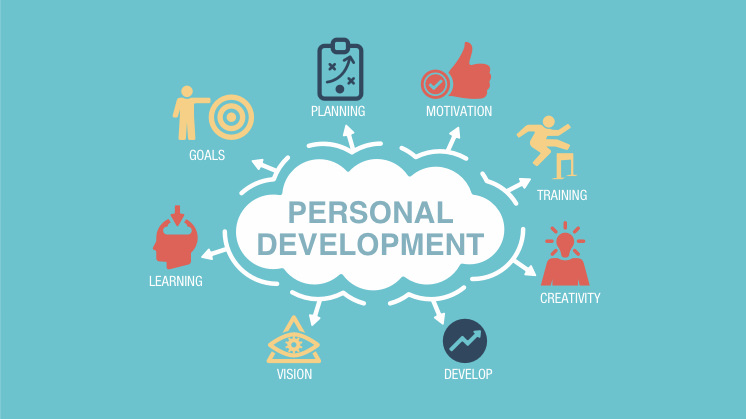
Self-help and personality development

Self help and personality development is a weapon for us

The spirit of self help creates many good qualities in a person. … These people work more harder than a person who is reliable on others for their work. This leads to help them obtain strong will- power and determination.

Self-help or self-improvement is a self-guided improvement—economically, intellectually, or emotionally—often with a substantial psychological basis. … Many different self-help group programs exist, each with its own focus, techniques, associated beliefs, proponents and in some cases, leaders

The following are common examples of self-improvement.

  • Self-Awareness. A process of introspection to understand your own character, behavior, fears and ambitions.
  • Awareness. A process of extrospection to understand the world around you.
  • Health. …
  • Physical Fitness. …
  • Time Management. …
  • Productivity. …
  • Performance. …
  • Know-How

Here’s a look at some ways to build self-improvement into your daily routine and let go of negative thoughts about yourself.

  • Cultivate gratitude. …
  • Greet everyone you meet. …
  • Try a digital detox. …
  • Use positive self-talk. …
  • Practice random acts of kindness. …
  • Eat at least one meal mindfully. …
  • Get enough sleep. …
  • Breathe consciously.

Personality development refers to how the organized patterns of behavior that make up each person’s unique personality emerge over time. Many factors go into influencing personality, including genetics, environment, parenting, and societal variables.

Personality development helps you gain recognition and acceptance from the society as well as people around. Personality development plays an essential role not only in an individual’s professional but also personal lives. It makes an individual disciplined, punctual and an asset for his/her organization.

Here are  great ways to improve your personality:

  • Be a better listener. …
  • Read more and expand your interests. …
  • Be a good conversationalist. …
  • Have an Opinion. …
  • Meet New People. …
  • Be yourself. …
  • Have a positive outlook and attitude. …
  • Be fun and see the humorous side of life.

The four personality types are: Driver, Expressive, Amiable, and Analytical. There are two variables to identify any personality: Are they better at facts & data or relationships? And are they introverted or extroverted. Note: Most people will have major and minor type.

Difference between a Data Analyst and a Business Analyst

In this blog, we are going to see the difference between a Business Analyst and a Data Analyst. 4 main things differtiate a Business Analyst from a Data Analyst in a team. They are Responsibility, Qualification, Skills and Salary. Let’s start off with responsibility.

Responsibilities:

First let’s look at the Business Analyst’s responsibilities. A business analyst works a lot with the clients to understand what they need and what the problem they are having. They are going to work with the managers and try to figure out how an idea is going to work within their team. They next thing they do is, using current data to outline a problem. They are going to go in and actually look at the data and then understand what the client is wanting so that they can describe to the  team what they are trying to solve and what they are looking for. The next thing they are going to do is outline and communicate what the client actually wants the team to do. After that a business analyst can only do all the analysis around that and then hands it off to either the programming team or Data analyst to look into this further and actually solve the problem. The Data Analyst is going to actually work with the programming teams that collect and analyse the data and so the difference between these two is a business analyst typically going to work mostly with the clients and the managers while the Data Analyst is going to work with the programming side. The next thing a Data Analyst is going to do is using pre-existing data to solve a problem and so the business analyst is going to bring the problem and define the problem and bring that to the programming team and the Data Analysts work with developers to actually solve the problem and figure out a solution. Then they have to create reports and dashboards and visually present the analytical findings to the team and that’s basically the part of any Data Analyst job.

Qualifications:

The qualifications for a Data Analyst and a Business Analyst are pretty similar. For a Business Analyst, a person must have a Bachelor’s degree in Business and Administration/ Finance/ Economics or something that is business related. Sometimes one may need a Master’s degree. For the most part, the business analysts mostly have MBA’s. Data Analysts typically don’t have MBA’s. For a Data Analyst, one must have a Bachelor’s degree and that’s typically in something like Computer Science/ Statistics/ Mathematics/ Economics or Finance. They is a lot of overlap between the Business Analyst and the Data Analyst.

Skills:

Business Analyst:

  • SQL
  • MS Access
  • Excel
  • Communication skills
  • Presentation skills
  • People skills

Data Analyst:

  • SQL
  • R/ Python
  • TABLEAu/ Power BI
  • Data Modeling
  • SAS/ SPSS
  • Excel
  • AWS/ Azure

Salary:

Business Analyst:

  • Entry level: 35k – 50k
  • Mid level: 50k – 75k
  • Senior level- 75k – 95k

Data Analyst:

  • Entry level: 45k – 60k
  • Mid level: 65k – 85k
  • Senior level- 85k – 110k

Data Analyst gets a little bit more salary on an average than a Business Analyst. This is because in small companies and at times in big companies, Data Analysts are asked to communicate with clients and in those cases there isn’t even necessary for a Business Analysts.

News and Current affairs

What is news

News is information about current events. This may be provided through many different media: word of mouth, printing, postal systems, broadcasting, electronic communication, or through the testimony of observers and witnesses to events. … The genre of news as we know it today is closely associated with the newspaper.

What is current affairs

Technically Current Affairs is defined as a genre of broadcast journalism where the emphasis is on detailed analysis and discussion of news stories that have recently occurred or are ongoing at the time of broadcast.

Difference

Current affairs is a genre of broadcast journalism. This differs from regular news broadcasts that place emphasis on news reports presented for simple presentation as soon as possible, often with a minimum of analysis.

Day to Day life many things happened that information will pass to us in the form of news and current affairs

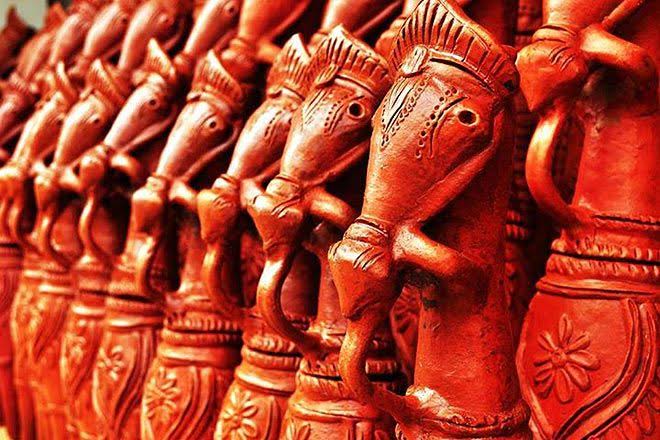
TERRACOTTA- LET’S COLLECT KNOWLEDGE ABOUT IT

Sparkle of Terracotta

TERRACOTTA- AN UNIQUE STYLE OF ART

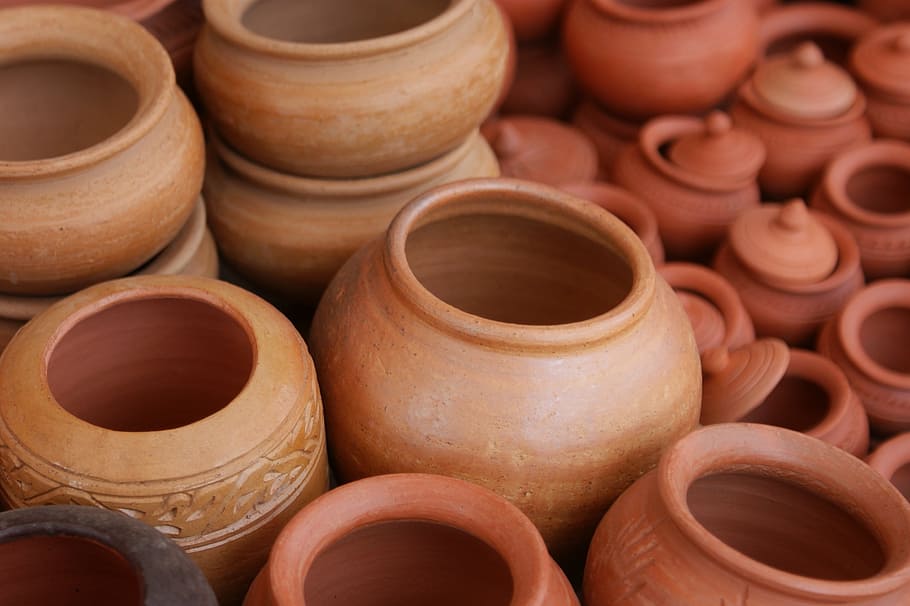
According to the dictionary the Terracotta art means hard,fired clay,brownish in colour when unglazed which is used to make architectural ornaments and facings, structural units, pottery and as a material for sculpture. The word ‘Terracotta’ came from Latin word ‘Terra-cotta’ and in Italian language Terrakotta means ‘baked-earth’.  

 Basically Terracotta is a type of earthenware or Ceramic pottery. At 1st we should have enough knowledge about earthenware. Earthenware is glazed or unglazed non-vitreous pottery which is made on fire below 1,200°C (2,190°F). So what do you say ? ‘baked-earth’ makes sense right? 

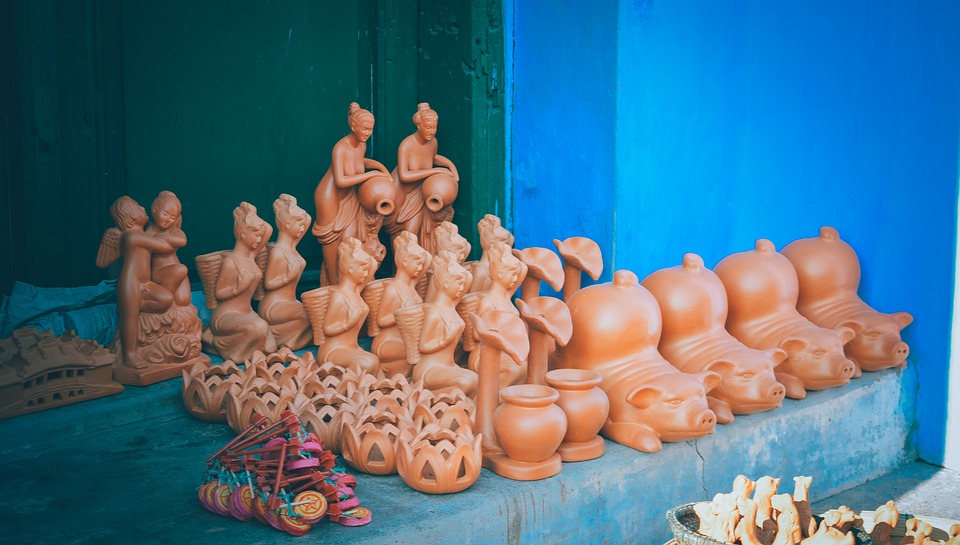
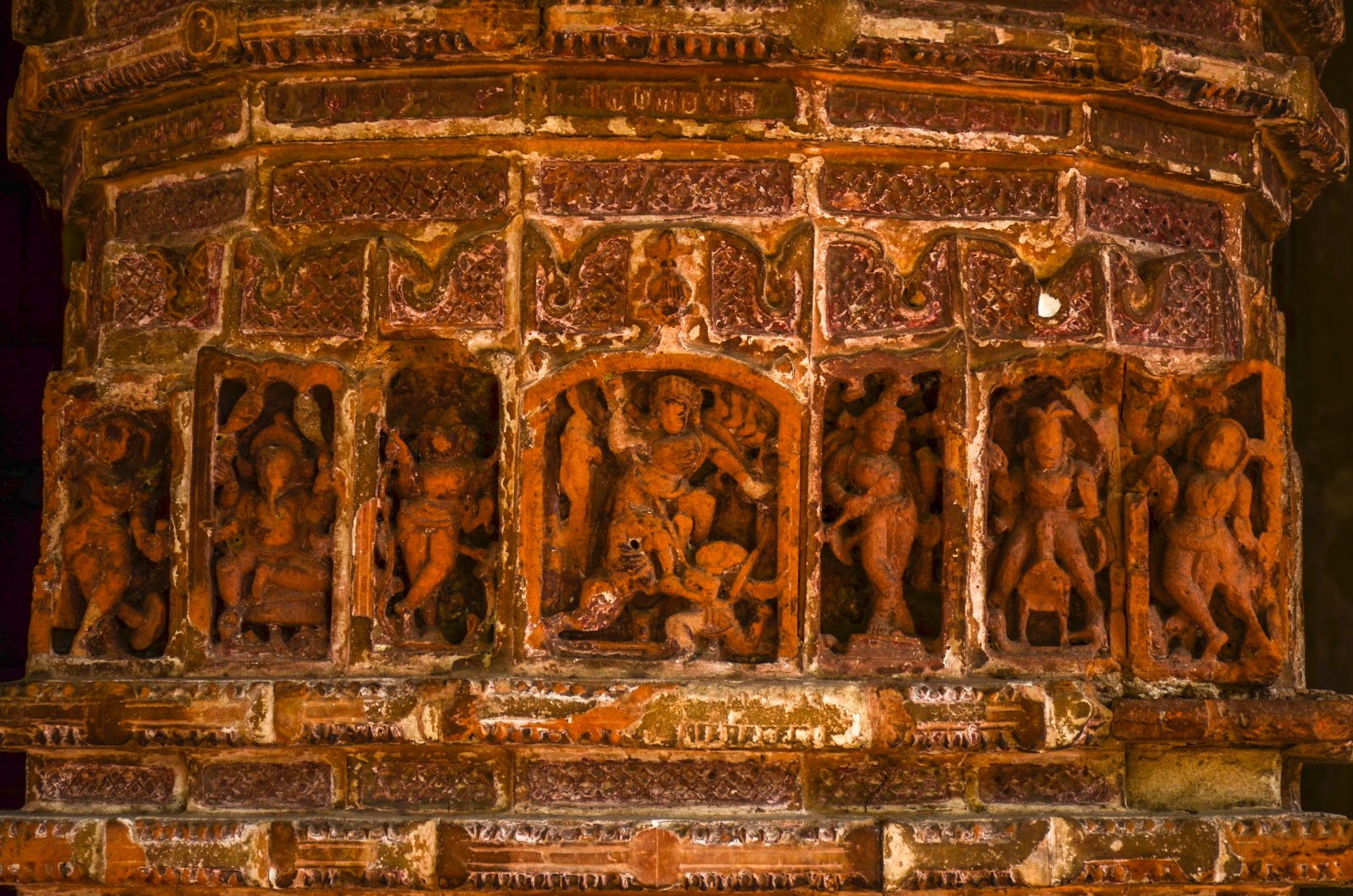
Normally Terracotta is used for sculpture making. But not only for sculpture but also for flower vas, doll,pot,water pipes, bricks,roofing tiles etc. Even there are also many temples of Terracotta. It is too flexible material for sculpture.Terracotta is usually a fairly coarse, porous type of clay. At first it has to be shaped then fired until hard. In the past, it was left to harden in the hot sun ,after that it was baked in primitive ovens. Ultimately, it was fired (at about 1000°C) in a special oven, kilns. After baking the clay became a brownish colour. Until it was glazed it was not watertight.terracotta is too simple than other bronze or other material work. 

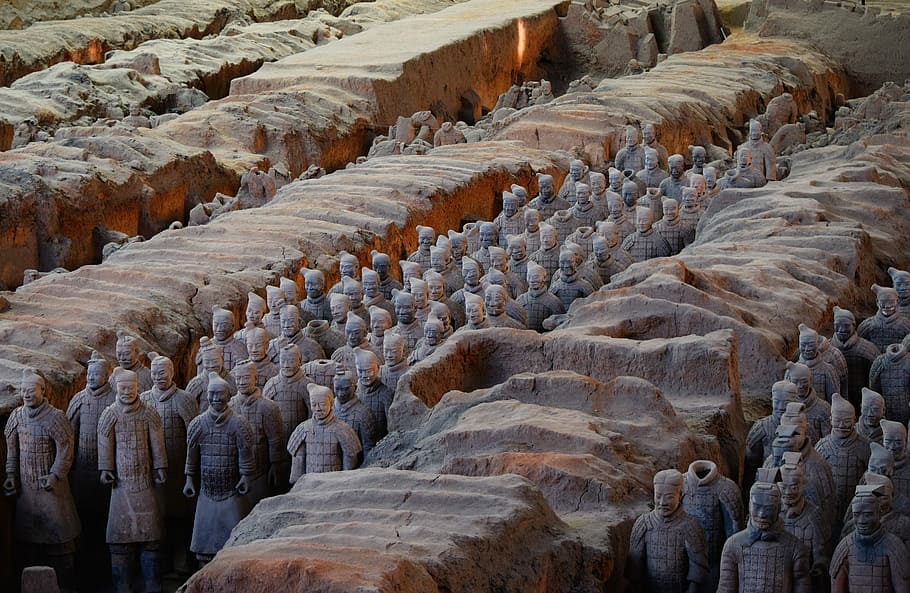
It was 1st used in Prehistoric art according to Venus of Dolni Vestonice (26,000-24,000 BCE) which was found buried in a layer of ash in Moravia at a paleolithic encampment. Some famous Terracotta figures are- The Thinker of Cernavoda(5000 BCE), The Enthroned Goddess Figurine(6000 BCE).Bronze and Iron Age artists kept the culture of the terracotta tradition, like the female fertility cult figures unearthed at Mohenjo-daro in Pakistan (3000-1500 BCE), and The Burney Relief (1950 BCE) from Ancient Mesopotamia. On the other hand we must say Chinese art created the biggest example of Terracotta art, those are-The Terracotta Army (246-208 BCE). Around the Mediterranean,such as early Egyptian, Minoan, Mycenaean, Greek and Etruscan cultures, employed terracotta for figurative works – such as the Tanagra Figurines from Boeotia in central Greece – besides  decorative art and architectural ornamentation.Particularly in the era of Hellenistic art (323-30 BCE) it was widely used by sculptors. It was also used in Early Christian art, for tomb reliefs (from c.200 CE). Terracotta is also famous in African sculpture, pre-Columbian art.

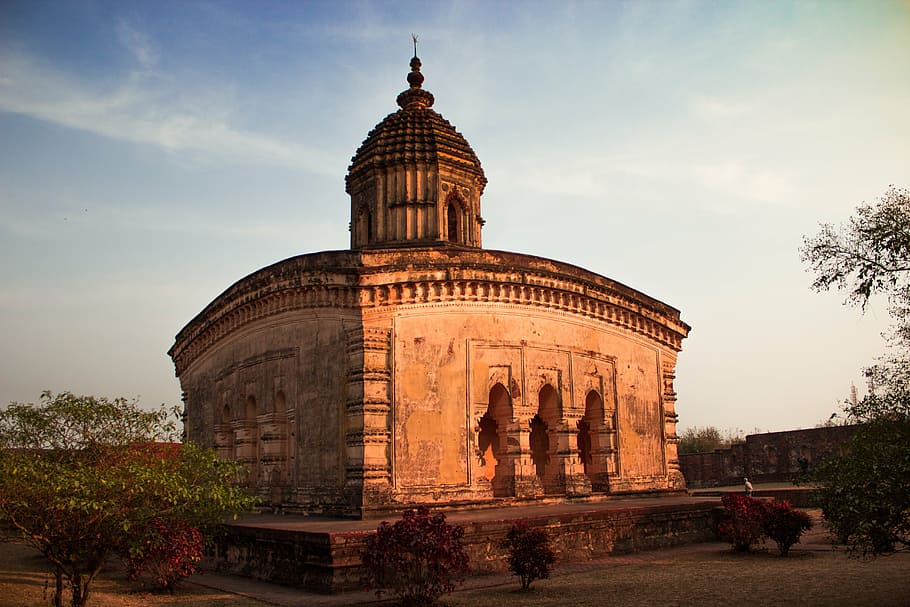
In India Terracotta is famous in the same way as in the past. In India Terracotta is a heritage culture. It is very common that there are many things of terracotta at most homes in India. ‘Bishnupur’ in West Bengal is a great source of Terracotta sculptures or other things. Murshidabad, Birbhum, Jessore, Digha (all are in West Bengal)  are also the treasure of Terracotta. There are also famous in Rajasthan, Bihar, Haryana, Himachal Pradesh, Odisha, Jammu and Kashmir etc.