Start-up to Success: Ola Cabs

Gone are the days when commuting without a personal vehicle, used to be an issue for city dwellers. Either they had to resort to public transport which is not always the safest option, or book rental car services way before the trip for enormous amounts. Now with the coming up of app based cab riding services, voyaging has become easier for city dwellers.

And Ola is one of the key players in the market in regard to cab services. It is the first Indian cab aggregator company. Ola has made it much easier for the public to book cab at their own convenience. The company started in 2010 by Bhavish Aggarwal and Ankit Bhatia, and since then it has been bridging the gap between cabs and commuters.

Ola partners with a number of taxi drivers and owners, and with the help of their app they allows people to book cabs by entering their pick up location and destination. Ola has users in over 250 Indian cities and employs more than 2.5 million driver-partners.
How did it start ?

It all started when Bhavish Aggarwal while journeying from Bandipur to Bangalore, was left abandoned in his journey by his driver. This was because the driver was renegotiating the already decided payment. This unfortunate incident lead him to come up with a economical and satisfying cab service. And thus, Ola cabs was born.

The founders of Ola, Bhavish Aggarwal and Ankit Bhatia are both IIT Mumbai graduates, and launched Ola in December 2010. Both of them became the youngest billionaires of India, at the age of 25 and 26.

The name of the company is driven from the Spanish word ‘Hola’ that translates to ‘Hello’. The name ‘Ola’ probably indicates their services as easy and simple to use. Their logo is simple yet elegant and has the ‘O’ in the shape of a tyre.

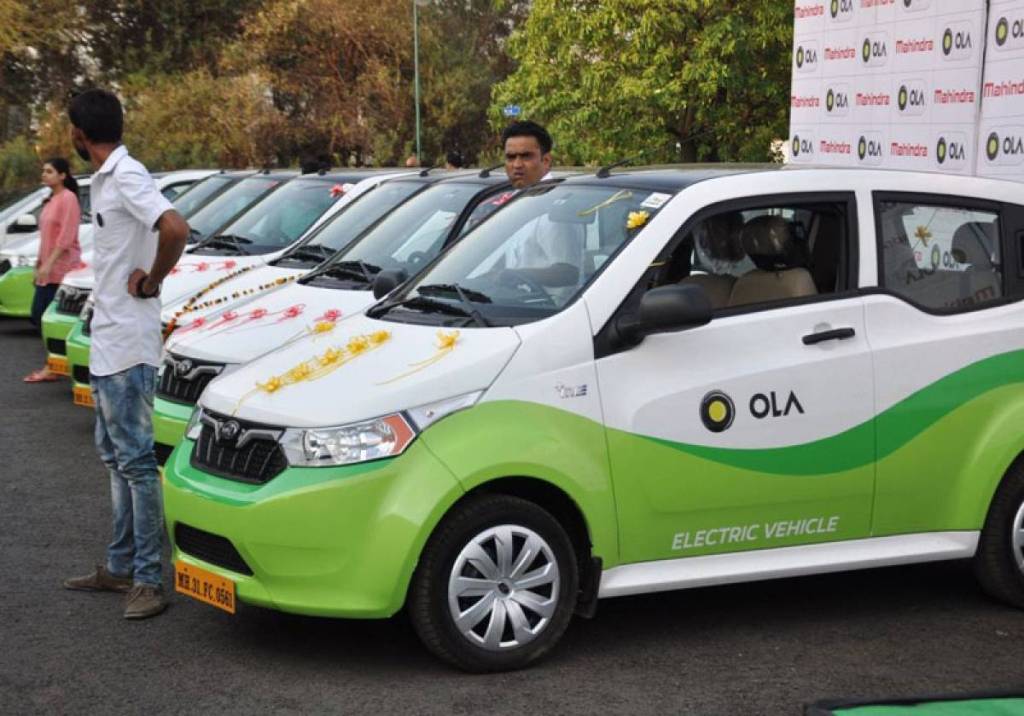
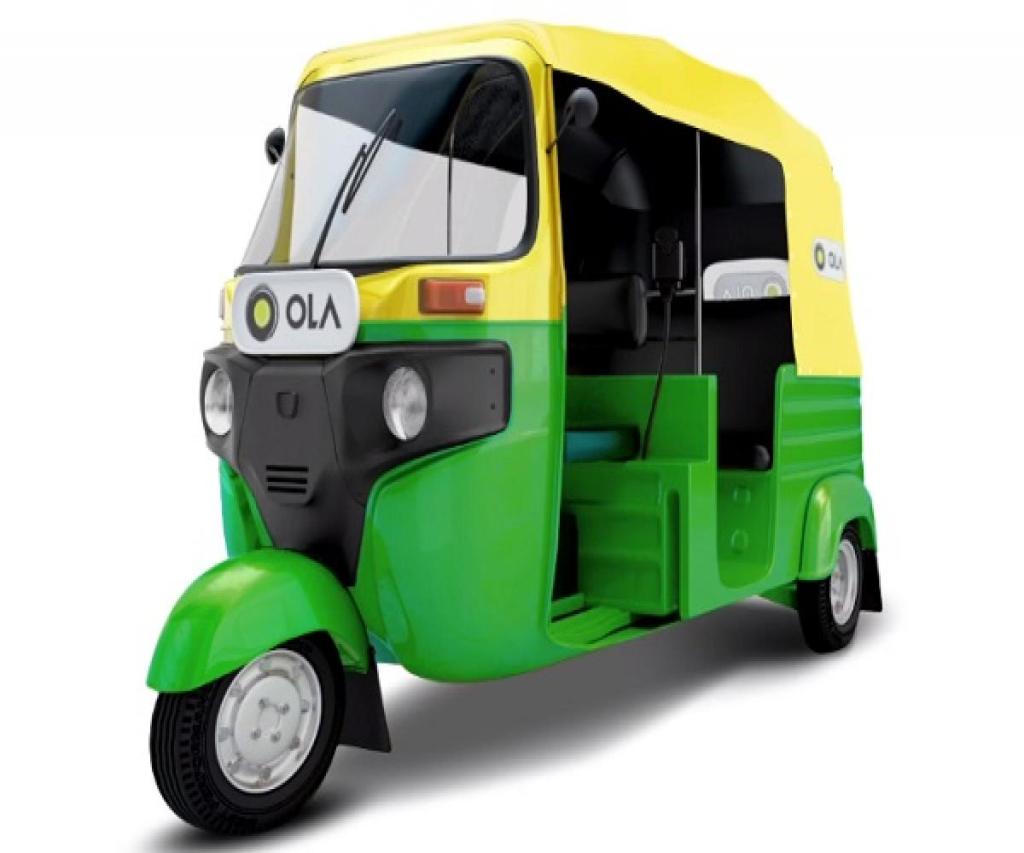
Ola has a wide range of car categories to choose from, such as hatchback, sedan, SUV and more. Travellers choose them depending on their budget and number of people travelling. For travelling within the city, people can hire cabs, bikes, autos and even e-rickshaws through Ola.
Challenges and Competitors

In the initial day of the start up they had to code for long hours and sometimes 48 hours straight. They even had to drive customers to their desired locations at times because the drivers did not show up. As much as Ola wanted to spread their services across India, they faced the issue of internet connectivity in smaller town. Thus, they designed the app so that I could accommodate network connectivity in smaller towns. However, after bagging an investment worth 2 crores, things were finally in track and there was no looking back.  

Every business has its fair share of competitors and so does Ola. Uber is Ola’s biggest competitor. There are other players in the Indian market such as, Meru Cabs, Zoomcars, PeIndia Cabs, Carzonerent and more. Rapido is increasing taking over the bike taxi segment as well, which is the competitor to Ola’s bike services.

Needless to say, just like most businesses, Ola too had to bear the burnt of the COVID-19 pandemic. The travel and transport sector was hit severely with the pandemic as there were repeated lockdowns and curfews affecting its revenue generation. However, with the upliftment of lockdowns and curfews, it is believed that Ola will regain its revenue generation soon.  
Addition and Expansions

In spite of facing ups and downs through out the years Ola manages to sail through smoothly. Over the years Ola introduced new services in ‘Ola pedal’, which is a huge success in IIT Kanpur and IIT Madras campuses. They have also introduced the option to book cabs on an hourly basis to travel out of the city and have named the segment ‘Ola outstation’.

‘Ola money’ was also introduced and the product includes Ola money credit card, Ola money post-paid, Ola money mobile wallet and Ola money hospicash. Ola launched ‘Ola corporates’ in 2016, where employees book their rides through Ola, and the fare is deducted from the company’s Ola corporate prepaid account.

In March 2015 Ola acquired ‘TaxiForSure’, another taxi aggregator for $200 million, and maintained its stand in the country’s cab hailing market. Another impressive deal was when Ola acquired Foodpanda-India, an food delivery aggregator in 2017 at a valuation of $40-$50 million. In 2018 onwards, Ola expanded its services overseas in countries of New Zealand, Australia and United Kingdom.

                     Clocking more than 150,000 bookings per day, Ola holds a little less than half of the Indian market (as of the Uber’s 2020 report). The CEO of Ola Bhavish Aggarwal has disclosed that the company is planning on initiating an IPO in the coming years. Ola plans on further expanding their services in remote areas, making India travel luxuriously on a budget.  
Start-up to Success: Zomato

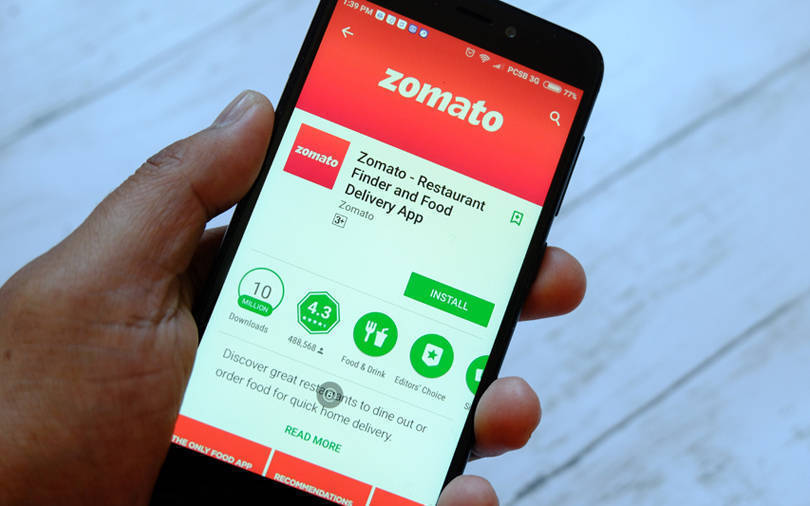
On lazy days when we aren’t in the mood to cook and don’t want to go out either, Zomato is one the first things that comes to our mind, to rescue us in situations like these. Zomato is an Indian food delivery aggregator app, other than delivery food from various partnered restaurants under one roof, it also provides concrete information regarding the restaurant, that includes the menu, reviews, pricing and more.  

The founders Deepinder Goyal and Pankaj Chaddah launched Foodiebay, a food directory website in 2008, and later rebranded it as Zomato in 2010. And since then the growth of Zomato has been phenomenal despite of having few ups and downs. The company is one of India’s first food-tech unicorn.

Origin of Zomato

The founders of Zomato, Deepinder Goyal and Pankaj Chaddah who are both IIT Delhi graduates worked as analysts at Bain and Company, Delhi. One day at their office they realised that there were a lot people who were waiting for a long time just to get a flash of the menu card at a nearby café. And at that moment, they came up with a solution to put an end to such inconveniences. And thus, Foodiebay was launched.   

Foodiebay gained tremendous user base and growth rate, and within nine months of its launch, it became the largest restaurant directory in Delhi NCR. It initially started out in Delhi and eventually extended their services to Mumbai and Kolkata, and now all across India. After having two successful years, the founders decided to go international. After being backed by investors and little modification, Foodiebay was rebranded to be called Zomato in 2010.

In 2012, Zomato started its international with its UAE launch and eventually launching its services in Europe and South Asia. In 2015, it launched Zomato Gold, which is a membership program in which consumers can avail exclusive deal at Gold-tagged restaurants.

Struggles of Zomato

Zomato had a good start to the business till 2014, as it had a fully functional international service, however things took a turn since 2015, and it went through a ‘make or break’ point. In 2015, Zomato laid off 300 employees to curb losses. In the same year, Zomato acquired Urbanspoon in the USA, and rebranded it as their own company, but things did not go as expected and the venture failed miserably.

In 2016, Zomato had to cut out its services in several countries like the US, UK, Chile, Canada, Brazil, Sri Lanka. Ireland, Italy and more. And when they resumed, Zomato had to resort to remote services. In 2017, Zomato faced its biggest blow as it encountered a cyberattack with a hacker that had breached into 17 million users record from the company database. However, the issue was soon resolved, as the hacker just wanted to prove that there were loopholes in the security system.

In 2019, the #logout campaigned surfaced when the partnered restaurants called out Zomato for consuming their profit margins through, Zomato Gold and Infinity dining service. The restaurants also highlighted unreasonably high commissions and arbitrarily applied additional charges. Post this campaigned Zomato altered Zomato Gold rules and discontinued Infinity dining features. In the following years, Zomato has been involved in a number of other controversies, which have been resolved soon.

Re-establishing Itself

Despite having such controversies, Zomato claims to have registered a rise of 177% of restaurant partners and got on board an additional 73,000 restaurants. Zomato has over 1.4 million listed restaurants and 12,000 restaurant partners aligned with its app, as of August 2021.

Zomato has raised more than $2.1 Billion in funding, and continues to do so. In the 12 years of its journey, Zomato acquired around 14 companies, and one of their biggest acquisition was Uber Eats- India for $206 Million in January 2021.

Despite having tough competitors like Swiggy, Foodpanda, it still managed to generate a revenue of $1 billion in the financial year 2021. And offered Rs 9,375 crore as initial IPO, which opened for subscription during July 14-15 July 2021, and received a strong reception from investors. The public issue was subscribed 38 times, which is the highest in the last 13 years among IPOs valued at more than Rs 5,000 crore.

Zomato also has a strong social media presences, which helps in connecting with urban youth. It produces content that are trendy and relevant to the target demographic.  

                      Zomato changed the Indian food delivery system and it continues to mould it further. Zomato’s tagline ‘Never have a bad meal’, truly lives up to it. Zomato shows that despite of having ups and downs, they stood strong and sailed through it, and continue to improve themselves by adding new and relevant features.

Start-up to Success: Nykaa

The cosmetic market is a 1.3 billion dollar industry in FY2020, and the growth is only expected to be double in the future. The amazing growth of the industry, along with rapid digitization, led its way to the establishment of the e-commerce giant, Nykaa.

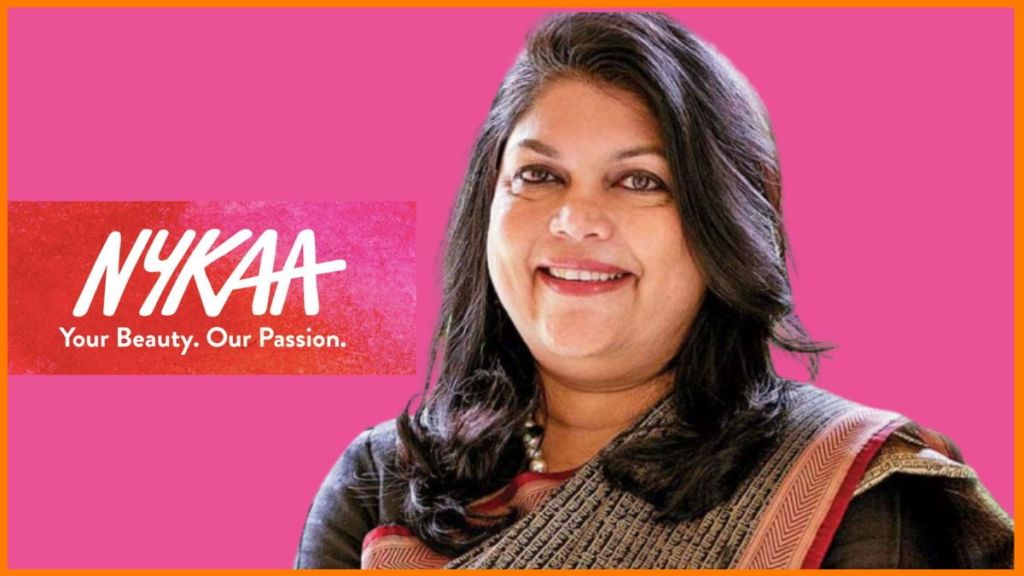
Nykaa was established by Falguni Nayar in 2021, as a retail company that sells cosmetic commodities online. However, after its enormous growth Nykaa also offers offline stores all across India. The company also offers comprehensive content that includes product reviews, beauty how-to videos, expert written articles, and even an e-magazine.

Origin of Nykaa

Prior to the coming of Nykaa, there was a huge discrepancy in regard to the beauty market. Falguni Nayar, the founder of the company, noticed the inconsistencies in the market of beauty products, and thus came the idea of the beauty e-commerce. ‘Nykaa’, the name comes from the Sanskrit word ‘nayaka’ which means actress or ‘one in the spotlight’.

Nykaa initially started as an online corporation and eventually turned to be an omnichannel strategy. Nykaa has its base in Mumbai, and showcases a wide variety of beauty and cosmetic products for all genders. Other than beauty and cosmetics, Nykaa is also a retailer for intimate wear, garments, jewellery, home décor and more. Nykaa also sells luxury brands such as Estee Lauder, Dior, Chanel, Gucci to name a few.

Soon after its success, Nykaa also launched its line of in-house products, under the same name. The products include a wide range of products from cosmetic to skin care to bath and body products and more.

About the founder

Falguni Nayar was a student at IIM Ahmedabad, where she pursued her MBA in Finance. She then joined Kodak Mahindra Capital Company, as an investment banker. She worked in Kodak Mahindra for 18 years, amidst which she decided to pursue her entrepreneurial venture, and resigned from the bank. And today, she is India’s first self-made billionaire.

The beauty and cosmetic products market in India was not at par with that of other countries like France and South Korea, despite of having a high demand market. She had the vision to see India in par with these countries in terms of catering to the beauty industry. And she thus, fulfilled her desire to established the online beauty sector a reliable source for consumers to confidently purchase authentic products.

Being passionate about beauty herself, she wished Nykaa to be a one stop solution for a Indian woman’s selfcare need, and change their grooming experience for the better. Nykaa’s motto Your beauty, Our passion, truly justifies their claim.

Future of Nykaa

Nykaa claims to make 5 million per month as revenue across India, and the numbers are only expected to grow. During the pandemic, online sector grew exponentially, and Nykaa shined exceptionally, helping India with delivering essentials during the lockdown.

Along with online deliveries, Nykaa has 80 plus stores all across India, and they are planning on growing 180 stores all over India by the year 2024. And they are further planning on expanding internationally.

Nykaa came into the spotlight when it launched IPO for subscription during the October 28 to November 1 2021, and fixed a price band of Rs 1085-1125 apiece for maidan offer. Nykaa was offered 81.78 times over the 2.64 crore shares that were being offered. Nykaa had a dream debut in its IPO where the market cap of the company crossed Rs 1 lakh crore. The valuation of Nykaa surged almost to $13 billion in its Indian market debut. And the valuation of Nykaa is only expected to grow further in the coming years.  

                    Falguni Nayar started Nykaa at the of 50 with no prior experience, and changed the fate of Indian beauty industry. The biggest take away from this journey is that, age is just a number, and you can turn your dreams and passion into a billion dollar industry when you have an entrepreneurial mindset. Falguni Nayar will be an inspiration for the generations to come.  

Everything about Zomato IPO

History

Zomato was established in 2010 as just a restaurant finding platform. Over the years, the young online startup expanded its services and is today one of the largest online food delivery platforms in India. It has currently expanded its territory to 24 countries including India. Its active restaurant partners have grown to over 1.5 lakhs in the fiscal year 2021 as compared to 94,286 in the fiscal year 2019. The average order value on this platform has risen from Rs 264 in 2020 to Rs 395 in 2021.

Zomato also boasts of having the largest local delivery networks in India with almost 1.7 lakh delivery partners. It’s units are making Rs 20.5 per order from the previous fiscal year. But it also suffered a loss of Rs 30.5 per order in the fiscal year 2020. However, the company has been suffering losses over the last three years.

About the IPO

The IPO issue size is Rs 9375 crores. Of this, Rs 9000 crores is a fresh issue which will be used for the company’s organic and inorganic growth. The remaining Rs 375 crores is an offer for sales. The IPO will be allocated to Qualified Institutional Buyers(QIB), Non-Institutional Buyers(NIB) and Retailers. Qualified Institutional Buyers are allotted a quota of 75%, Non-Institutional Buyers are allotted a quota of 15% and the Retailers are allotted a quota of 10%.

Price range per share is Rs 72-76. There will be 195 shares per lot and retailers can bid for a maximum of 13 lots for the maximum price. The issuing of IPO’s has already begun on 14 July 2021. As of now the IPO has been oversubscribed by more than 4 times in the retail investors quota. The QIB quota has been oversubscribed by 7 times and the NIB quota has seen an oversubscription of 0.45 times. Overall, the IPO has been oversubscribed by 4.79 times.

It is believed that the company will be a loss making company for the next 2-3 years. Experts say that this IPO is not suitable for retail investors. Only people with high risk appetite and those who are willing for long term holdings are advised to go for this IPO. Going ahead, the subscription for this IPO will be available for one more day from 10 am till 5 pm on Friday, July 16, 2021.

The allotment of this IPO will begin on Thursday, 22 July 2021. To the investors who didn’t get allotted, the refund will be initiated on Friday, July 23, 2021. Investors who have been allotted will get their shares on their respective demat accounts on Monday, July 26, 2021. The shares will be listed publicly for exchange from Tuesday, July 27, 2021.

Allotment of IPO’s is random and not based on first come first serve. But being too late is also not good for the allotment. To get higher chances of allotment, make sure that you apply early and apply from different demat accounts. If a person has applied for more than one time with the same PAN card, then all of his applications will be rejected. Buy the shares of it’s parent company to ensure more chances of subscription.

Zomato IPO opened for subscription

Indian Twitter is abuzz with activity as online food delivery service provider Zomato’s initial public offering (IPO) worth ₹ 9,375 crore opened up for subscription. India’s biggest this year – will be available for subscription till Friday, July 16, 2021. The price band of Zomato IPO is fixed at Rs 72-76 per share of the face value of Rs 1 each and the company aims to raise Rs 9,375 crore through the offer.The IPO comprises a fresh issue of equity shares worth Rs 9,000 crore and an offer for sale (OFS) worth Rs 375 crore by existing investor Info Edge (India), which is the parent company of Naukri.com, according to the information provided in the red herring prospectus.

What is IPO?

An initial public offering (IPO) refers to the process of offering shares of a private corporation to the public in a new stock issuance. Public share issuance allows a company to raise capital from public investors. The transition from a private to a public company can be an important time for private investors to fully realize gains from their investment as it typically includes share premiums for current private investors. Companies must meet requirements by exchanges and the Securities and Exchange Commission (SEC) to hold an initial public offering (IPO). An IPO can be seen as an exit strategy for the company’s founders and early investors, realizing the full profit from their private investment.

How does IPO work?

Prior to an IPO, a company is considered private. As a private company, the business has grown with a relatively small number of shareholders including early investors like the founders, family, and friends along with professional investors such as venture capitalists or angel investors.

When a company reaches a stage in its growth process where it believes it is mature enough for the rigors of SEC regulations along with the benefits and responsibilities to public shareholders, it will begin to advertise its interest in going public.

Typically, this stage of growth will occur when a company has reached a private valuation of approximately $1 billion, also known as unicorn status.

Zomato.

Zomato was founded as Foodiebay in 2008, and was renamed Zomato on 18 January 2010 as Zomato Media Pvt. Ltd In 2011, Zomato expanded across India to Delhi NCR, Mumbai, Bangalore, Chennai, Pune and Kolkata. In 2012, the company expanded operations internationally in several countries, including the United Arab Emirates, Sri Lanka.

With the introduction of “.xxx” domains in 2011, Zomato also launched zomato.xxx, a site dedicated to food porn. In May 2012, it launched a print version of the website named “Citibank Zomato Restaurant Guide,” in collaboration with Citibank, but it has since been discontinued.

  • On 21 January 2020, Zomato acquired its rival Uber Eats’ business in India in an all stock deal, giving Uber Eats 10% of the combined business.
  • On 29 June 2021, Zomato signed a deal with Grofers to invest nearly $120 Million in the online grocery firm by acquiring 9.3% stakes of the company

Breaches in security of users

On 4 June 2015, an Indian security researcher hacked the Zomato website and gained access to information about 62.5 million users. Using the vulnerability, he was able to access the personal data of users such as telephone numbers, email addresses, and Instagram private photos using their Instagram access token. Zomato fixed the issue within 48 hours of it becoming apparent. On 15 October 2015, Zomato changed business strategies from a Full-Stack market to an Enterprise market. This led Zomato to reduce its workforce by 10%, or around 300 people.

Initial Public Offers in India

Initial Public Offer (IPO) is a process through which an unlisted Company can be listed on the stock exchange by offering its securities to the public in the primary market. The objective of an IPO may be relating to expansion of existing activities of the Company or setting up of new projects or any other object as may be specified by the Company in its offer document or just to get its existing equity shares listed by diluting the stake of existing equity shareholders through offer for sale.   

The companies going public raises funds through IPO’s for working capital, debt repayment, acquisitions, and a host of other uses. When a firm proposes a public issue or IPO, it offers forms for submission to be filled by the shareholders. Public shares can be bought for a limited period only and as per the law, any IPO should be traded openly only for minimum 3 days and maximum 21 days.   

Some major benefits accruing to the firms going for an IPO are as under :  

• Public placement of shares on a stock exchange allows the company to attract capital to fund both organic growth (modernization and upgrade of production facilities, implementation of capital-intensive projects) and acquisitive expansion. If retained earnings and debt funding are insufficient, IPO becomes one of the most realistic and convenient ways to secure the continuing growth of the business. It provides access to a massive, timeless pool of capital and boosts the investment credibility of the business.

• Formation of a public market for the company’s shares at fair price creates liquidity and provides an opportunity to sell the shares promptly with minimal transactional costs. The private owners of the company can dispose of their stakes in the business both during an IPO (this route is often taken by the minority financial investors such as venture or private capital funds) and at a later stage (this is often preferred by the majority shareholders).

• Normally, an IPO is an offer to a large number of institutional and retail investors to become shareholders of the company. The very multitude of large investors and their confidence in the liquidity of their investment in a public entity assure the current owners of a private company about achieving the maximum possible valuation of the business at the time of an IPO or afterwards.

• Listing on a recognized stock exchange means that the business will receive wide media coverage, usually a very favorable one, thus increasing the company’s visibility and recognition of its products and services. The company’s activities will also be reflected in the reports by professional financial analysts. Such public profile supports liquidity of the shares and contributes to the expansion of the business contacts. It also helps to increase confidence among the company’s business partners.

• A company having low-transparency businesses with an inadequate financial reporting after listing on a recognized stock exchange becomes a desirable and reliable partner. Banks are often ready to extend loans to public companies in larger amounts, under smaller collateral, for longer maturities and with lower interest rates. Even the largest and most prestigious banking institutions are keen to work with public companies – whose transparency and corporate governance serve as additional factors of confidence for banks and other suppliers of credit. Partners and contractors of a public company feel more confident about its financial state and organizational capabilities as compared to those of a non-transparent private business.

• Publicly available information about the share price of a public company allows development of employee motivation schemes based on partial remuneration of staff in the form of participation in the equity capital (for example, ESOP –Employee Stock Option Plan). Equity-based incentive schemes stimulate the key personnel to become more efficient in their work in order to support the company’s growth rates and profitable development, which in turn increase the operational and financial efficiency of the company and its market value.

• Conduct of various due diligences during the IPO process requires a thorough and comprehensive analysis of the company’s business model. During the IPO implementation process, certain internal changes take place, including modification of the organizational structure; selection of the key personnel and delegation of responsibilities; improvement of internal reporting and controls; as well as critical evaluation of the efficiency of the entire business. Normally, such extensive internal efforts result in significant improvements of the communication system, management and controls; they also help eliminate any previously hidden shortcomings in the internal functioning of the business.  

However, before launching its IPOs, a company must disclose all the relevant information to the public and its prospective investors. For that matter, company making a public issue of securities has to file a Draft Red Herring Prospectus (DRHP) with capital market regulator Securities and Exchange Board of India, or SEBI through an eligible merchant banker prior to the filing of prospectus with the Registrar of Companies (RoCs). The issuer company engages a Sebi registered merchant banker to prepare the offer document. Besides due diligence in preparing the offer document, the merchant banker is also responsible for ensuring legal compliance. The merchant banker facilitates the issue in reaching the prospective investors by marketing the same. The Indian regulatory framework is based on a disclosure regime. SEBI reviews the draft offer document and may issue observations with a view to ensure that adequate disclosures are made by the issuer company/merchant bankers in the offer document to enable investors to make an informed investment decision in the issue.   

DRHP provides all the necessary information an investor ought to know about the company in order to make an informed decision. It contains details about the company, its promoters, the project, financial details, objects of raising the money, terms of the issue, risks involved with investing, use of proceeds from the offering, among others. However, the document does not provide information about the price or size of the offering.  

Generally, the stock of any fundamentally sound company would go up after being listed in an exchange. Hence, as far as investors particularly retail ones are concerned, the IPO is the only place where they can get the stock at the lowest possible price. Hence if they buy stocks in an IPO, they can sell it off at a higher price and make a profit.

However, there are certain factors which need to be taken into consideration before applying for Initial Public Offerings in India. They are :  

• Promoters, their reliability and past records

• Firm producing or facilitating services

• Product offered by the firm and its potential

• Whether the firm has entered into a collaboration with technological firm

• Status of the associates

• Historical record of the firm providing the Initial Public Offerings

• Project value and various techniques of sponsoring the plan

• Productivity estimates of the project

• Risk aspects engaged in the execution of the plan

• Authority that has reviewed the plan  

Thus, IPO is an opportunity for the company as well as the investors looking for long term capital and investments. But, less than 5% of India’s household savings of around $ 300 billion are invested in stocks and mutual funds, according to India’s central bank, depriving companies of a huge pool of potential funding for investments. Indians have typically preferred to put their money in gold jewelry and real estate. Some investors moved into stocks after markets began to boom in 2005, but a collapse in prices after 2008, allegations of wrongdoing and a number of IPOs that fell sharply after listing have turned many investors off. Moreover, Individual investors remain wary of equities. India’s benchmark Sensex gained 26% in 2012, but remains near where it traded at the end of 2007, leaving many investors without gains. Indian Capital Market had traded a long way but it needs more extended participation by the investors to make stock exchange a investment trading platform rather than a speculation platform.