BLACK HOLES – The great void

WHAT ARE BLACK HOLES ?

BLACK HOLES are points in space that are so dense they create deep gravity sinks. Beyond a certain region, not even light can escape the powerful tug of a black hole’s gravity. Because no light can get out, people can’t see black holes. They are invisible. Space telescopes with special tools can help find black holes. The special tools can see how stars that are very close to black holes act differently than other stars.

HOW ARE THEY FORMED ?

The most well-understood black holes are created when a massive star reaches the end of its life and implodes, collapsing in on itself.In their final stages, enormous stars go out with a bang in massive explosions known as supernovae. Such a burst flings star matter out into space but leaves behind the stellar core. when there are no longer forces to oppose that gravity, so the star core begins to collapse in on itself.

If its mass collapses into an infinitely small point, a black hole is born. Packing all of that bulk—many times the mass of our own sun—into such a tiny point gives black holes their powerful gravitational pull.

BLACK HOLES SWIRLING WITH STARS

Researchers have long estimated that the Milky Way is home to hundreds of millions of black holes, extremely dense objects whose gravitational fields are so intense, not even light can escape. But finding these dark objects has proven extremely difficult and majority of black holes in our galaxy are invisible, so the only way to find them is by observing their gravitational effects on surrounding objects.

After decades of black holes being known only as theoretical objects, the first physical black hole ever discovered was spotted in 1971. Then, in 2019 the Event Horizon Telescope (EHT) collaboration released the first image ever recorded of a black hole.
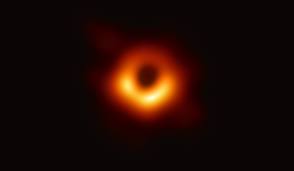
Using the Event Horizon Telescope, scientists obtained an image of the black hole at the center of galaxy M87

TYPES OF BLACK HOLES

The most common types of black holes are the stellar-mass and supermassive black holes. Stellar-mass black holes are created when massive stars explode, leaving behind a black hole with the mass of just a few suns. Supermassive black holes exist in the hearts of galaxies and usually contain the mass equivalent of millions of suns.

SUPERMASSIVE BLACK HOLES- BIRTH TO GIANTS

Small black holes populate the universe, but their cousins, supermassive black holes, dominate. These enormous black holes are millions or even billions of times as massive as the sun, but are about the same size in diameter. Such black holes are thought to lie at the center of pretty much every galaxy, including the Milky Way.Almost every galaxy, including our Milky Way, has a supermassive black hole at its heart, with masses of millions to billions of times the mass of the Sun. 

The supermassive black hole that lurks at the center of our galaxy, called Sgr A*, has a mass of about 4 million times that of our Sun. A black hole is a place in space where gravity is so strong that neither particles or light can escape from it. Surrounding Sgr A* is a dense cluster of stars. It is 26,000 light-years from the Solar System

On January 5, 2015, NASA reported observing an X-ray flare 400 times brighter than usual, a record-breaker, from Sagittarius A*. The unusual event may have been caused by the breaking apart of an asteroid falling into the black hole or by the entanglement of magnetic field lines within gas flowing into Sagittarius A*.
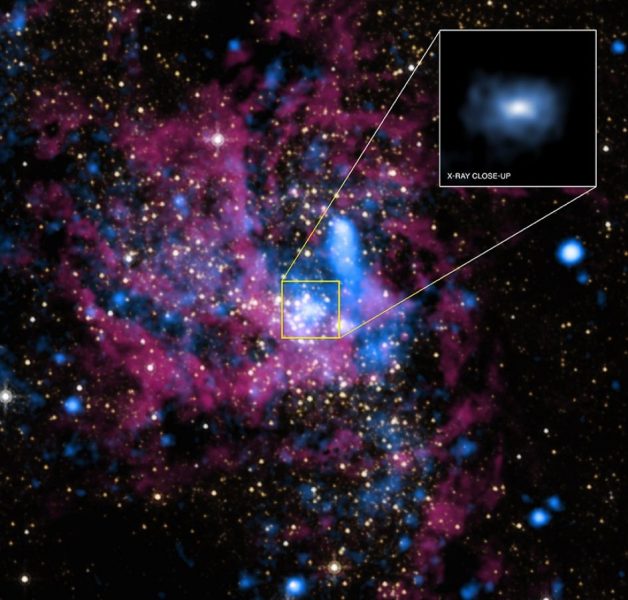
Sagittarius A* is the black hole at the center of the Milky Way galaxy. Credits: X-ray: NASA

FAMOUS BLACK HOLES

Cygnus X-1: a stellar-mass black hole and x-ray source that lies some 6,500 light-years away. It is a binary system that contains a blue supergiant variable star and the x-ray source thought to be the black hole.

Sagittarius A*: the supermassive black hole at the heart of the Milky Way Galaxy. It lies in the direction of the constellation Sagittarius. This black hole contains the mass of about 4 million suns.

M87: this elliptical galaxy has a 3.5 billion solar-mass black hole at its heart. The black hole is surrounded by a disk of super heated material and has a jet of super heated material streaming away from the black hole that extends across 5,000 light-years from the galaxy’s core.

Centaurus A: this galaxy, which lies in the direction of the constellation Centaurus, is a giant spiral galaxy with an incredibly active nucleus. It contains a 55 million solar-mass black hole at its heart, with two jets of material that stream away from the galaxy at about half the speed of light across a million light-years of space.

Amazing Facts :

1. Black holes will spaghettify you and everything else.

Black holes have this incredible ability to literally stretch you into a long spaghetti-like strand. Appropriately, this phenomenon is called ‘spaghettification’

2.Einstein didn’t discover black holes.

Einstein didn’t discover the existence of black holes – though his theory of relativity does predict their formation. Instead, Karl Schwarzschild was the first to use Einstein’s revolutionary equations and show that black holes could indeed form.

3. Black holes are the ultimate energy factories.

Black holes can generate energy more efficiently than our Sun.

4.Black holes slow down time

To understand why, think back on the twin experiment that is often used to explain how time and space work together in Einstein’s theory of general relativity: One twin stays on Earth while the other one zooms out into space at the speed of light, turns around, and returns home. The twin that travelled through space is significantly younger because the faster you move, the slower time passes for you. As you reach the event horizon, you are moving at such high speeds due to the strong gravitational force from the black hole, that time will slow down

5.Anything can become a black hole, in theory.

The only difference between a black hole and our Sun is that the centre of a black hole is made of extremely dense material, which gives the black hole a strong gravitational field. It’s that gravitational field that can trap everything, including light, which is why we can’t see black holes. You could theoretically turn anything into a black hole.
Space Race vs Space Rage : What is the Reality of World’s Space Exploration Program ???????

Unbeknownst to a world still reeling from the atomic catastrophe of Hiroshima, and under the crafty guise of a “peaceful nuclear explosion”, India detonated it’s first Weapon of Mass Destruction at the infamous Pokhran test range in 1974, carving for itself an irrevocable position in a community of toffee-nosed, nuclear-armed governments. The diplomatic furore that followed this tectonic shift would resound in the international nuclear coterie for decades to come, and incense totalitarian American administrations committed to crippling India’s self-defence programmes. Even the most imperious sanctions and underhanded espionage, however, could not muffle a nation of determined democracy, that tested it’s most triumphant space-technology yesterday – The GSLV Mk-III.

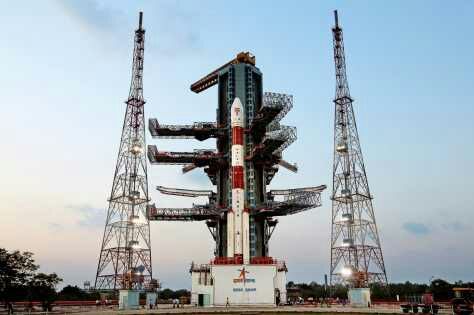
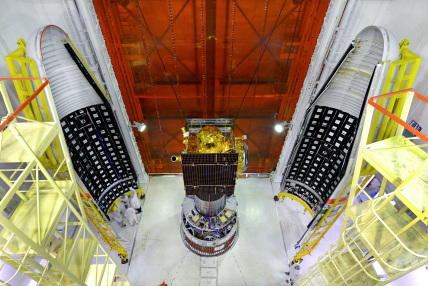
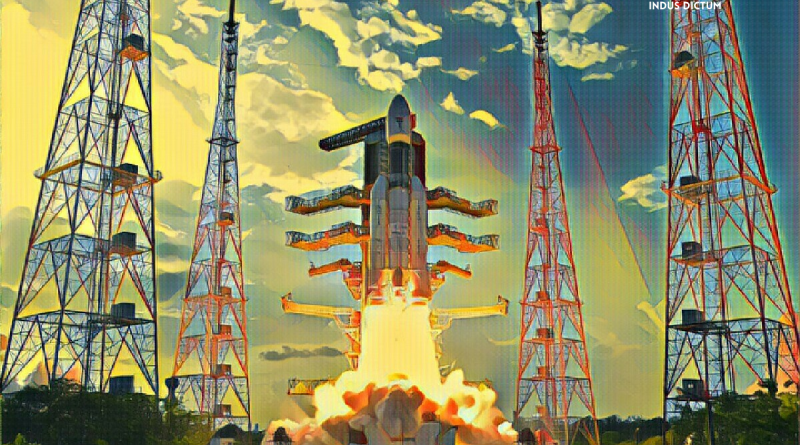
On June 5th, 2017, after more than 200 tests in 2 years, the Indian Space Research Organisation (ISRO) launched into orbit a three-tonne payload on a home-grown rocket of the class developed by only 5 others – Russia, China, Japan, the European Space Agency, and the United States. The Geosynchronous Satellite Launch Vehicle Mark-III (GSLV Mk-III) weighs 640 tonnes – as much as 200 fully grown elephants – and carries upto 10 tonnes to be delivered into orbit. It is a 140 foot-tall, three-stage, game-changing Launch Vehicle with a cryogenic engine, developed almost entirely using Indian components, and capable at long last of sending manned crews into space.

Credit : Third Party Reference

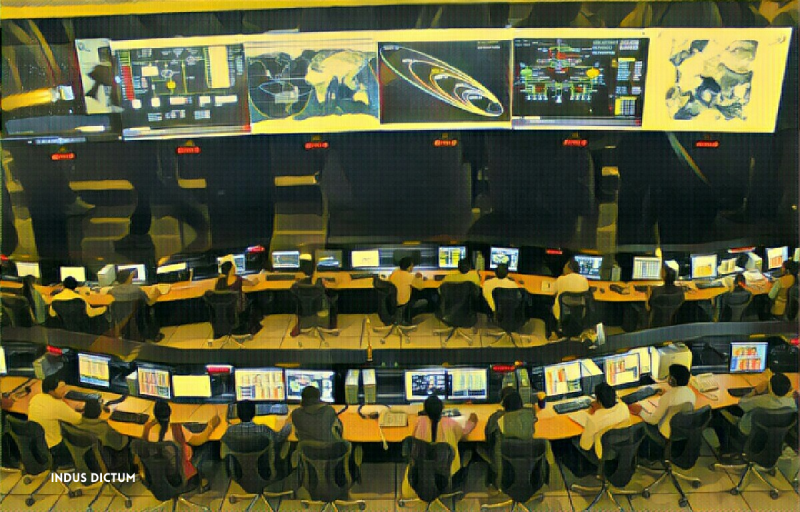
The Command Centre and Launchpad at Sriharikota, Andhra Pradesh, witnessed a turning point in the global space-race yesterday with the success of India’s GSLV Mk-III, placing the country at the heart of a space-industry valued at nearly $350 billion. Dependent on foreign agencies to launch satellites over 2,300 kilograms, India was confined to under 1 percent of this burgeoning market. Today, India has made “quantum leaps” in the words of P. V. Krishnan, Director of the ISRO Propulsion Complex, and is well on the way to launching Chandrayaan-II, slated for next year, and Aditya-I, a satellite mission designed to study the sun.

This jumbo-jet of the rocket-world, however, has a dramatic history riddled with international outrage and sabotage spanning nearly three decades. Beginning at the height of the Soviet era, India’s space and nuclear programmes have been the subject of gory eco-political power-plays between the two superpowers of our time – Russia and the United States. Yet, against all odds, and the express actions and sanctions of the US Government, Indian scientists designed by themselves a heavy-weight carrier of not only 10-tonne satellites, but also national pride and international glory.

Credit : Third Party Reference

After the successful Smiling Buddha nuclear tests at Pokhran, ISRO made enormous strides in space technology with the aid of it’s Russian counterparts, leading up to a $120 million contract in 1991 with the Soviet Space Agency Glavkosmos for seven cryogenic rocket engines, along with a complete transfer of technology. Cryogenic engines use super-cooled liquid fuels to produce massive amounts of thrust in order to lift heavy payloads into space, and the Russians were offering a secret engine, the RD-56 or KVD-1 – originally designed by the Isayev Design Bureau as part of the Soviet manned moon-landing programme of 1964 – with unparalleled thrust and capabilities that NASA could not match for years. Apprehensive of competition in the highly-lucrative commercial space industry, the US descended into a dirty game of geopolitical sanctions and espionage to disable this agreement.

Invoking the Missile Technology Control Regime (MTCR), the United States stalled the engine supply by sanctioning both ISRO and Glavkosmos. The American administration claimed that the issue was not India importing engine components from Russia, but that India was importing engines at all. The idea being that if India were forced to make those developments on their own instead of simply buying engines and the technology driving them, it would slow India’s rocket program and keep them from becoming a potential military threat.

The two-faced Americans, however, continued to import engines from Russia, simultaneously strong-arming India to sign the Non-Proliferation Treaty. India refused on the grounds that all signatories – except members of the UN Security Council – are required to unilaterally destroy their nuclear weapons, and could not afford to oblige given that the country is neighboured by two nuclear armed states, both of whom are hostile. Crippled but not killed, ISRO began the formidable task of developing indigenously a cryogenic rocket.

Credit : Third Party Reference

America views launch vehicles as weapons and components of ballistic missiles, as opposed to a commercial service. That is why it is acceptable when European nations, America, or other such countries purchase engines from each other, because they are allies and have advanced propulsion capabilities of their own, but a less developed, non-allied nation buying the same engines is not. This is, however, a remarkably flawed perspective.

In fact, there are no ballistic missiles in the world that use cryogenic engines. Because it takes several critical hours to fuel up a cryogenic rocket, such an engine could never be used in a ballistic missile. The fear mongering about using or selling these engines, then, is an outright farce and strawman fallacy.

Unblushing and wholly devoid of shame, the Machiavellian Americans turned around to sell banned WMD technologies to Pakistan, disobeying both US as well as international non-proliferation protocols. When US aid to Pakistan tapered off after the withdrawal of the Soviet Union from Afghanistan, the unscrupulous and impoverished Pakistani military responded in 1987 by selling it’s nuclear hardware and know-how for cash, pitching south Asia into three near-nuclear conflagrations, and enabling the nuclear weapons programmes of Iran, Libya and North Korea, which might never have got off the ground were it not for the duplicitous Americans. This hypocritical subterfuge is detailed in the account of CIA Agent and Pakistan-specialist Rich Barlow, reported by the Guardian almost a decade ago.

In defiance of ruthless international oppression and embargo, ISRO advanced swiftly and surely to counter America’s tyrannical throttling of the industry and reserve a seat at the space-table. Earlier this year, the triumphant ISRO launched a record 104 satellites on a single rocket. And now, having spurned the Non-Proliferation Treaty, this historic moment is an open-handed smack in the face of US monopoly.

India has overcome cumbrous obstacles and staunch opposition to design and launch it’s own cryogenic rocket. The GSLV Mk-III is a true testament to the ingenuity of an intrepid democracy. Resolute is the country we live in today.

Reference – divyanshspacetech.wordpress.com

SOLAR ECLIPSE, 21st June 2020

The Earth will witness an annular solar eclipse on Sunday, 21 June and the people in India will be able to catch this annual celestial event in action. It is not a regular one as it falls on the summer solstice, i.e. the longest day and the shortest night of the year.

What is solar eclipse?

A solar eclipse occurs when the moon passes between the sun and the earth. When this happens, the moon blocks the light of the sun from reaching the earth. The shadow of the moon is then cast on the earth.

There are three types of solar eclipses:

First, there is a total solar eclipse — which is only visible from a small area on earth. For the phenomenon to occur, the sun, moon and earth must be in a direct line.

Second is the partial solar eclipse when the sun, moon and earth are not exactly lined up.

The solar eclipse of 21 June, however, is an annular eclipse and is the third type. This happens when the moon is farthest from the earth, according to NASA blog. Since the moon is farther away from the earth, it seems smaller and does not block the entire view of the sun. The moon is in front of the sun and looks like a dark disk on top of an even larger disk which appears like a ring of fire.

The eclipse will be annular in some parts of the country, where sky gazers will get an opportunity to observe the “ring of fire” during the phenomenon. However, for most parts of the country, the eclipse will be partial.

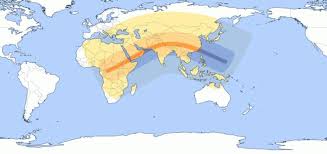
On June 21, the annular eclipse will first start for the people of Congo in Africa and progress through South Sudan, Ethiopia, Yemen, Oman, Saudi Arabia, the Indian Ocean and Pakistan, before entering India over Rajasthan. It will then move on to Tibet, China, Taiwan, before ending at the middle of the Pacific Ocean.

This will be the last eclipse to be seen from India for the next 28 months as the next eclipse will be seen in India on October 25, 2022.

In India, the solar eclipse of June 21 with begin at 9:15 am and will end at 3:03 pm. The sun will be seen as a ‘Ring Of Fire’ to the skygazers which is a rare event. The partial eclipse will begin at 9:15 am and it will reach its peak at 12:10 pm. The full eclipse will end at 2:02 pm and the phenomenon will end at 3:04 pm.

Some interesting facts

  1. In a year, there can be as many as five solar eclipses.
  2. A total solar eclipse is a rare sight and happens only once in every 18 months. For a total solar eclipse, the sun has to be blocked at least 90 percent by the moon.
  3. The longest duration of a total solar eclipse is 7.5 minutes
  4. The total solar eclipse cannot be seen from the North and South Poles

ISRO’s GSLV 3.0 can boost 5G Dream Constellation : Super Exclusive !!!

GSLV-F06 carrying GSAT-9 at the second launch pad” width=”660″ height=”auto” tw=”1200″ th=”801″ />In picture: The fully integrated GSLV-F06 carrying GSAT-9 at the second launch pad. India has long been yearning for uninhibited high-speed internet services, despite having the world’s second largest internet user base after China. The country has fallen behind numerous Asian countries in acquiring the fastest internet connectivity speeds due to infrastructure limitations and outdated satellite technology.

There is, however, some good news for the netizens of India as Indian Space Research Organisation (ISRO) has plans to introduce a new era of high-speed internet to the country with the launch of its three new communication satellites: GSAT-19 in June, followed by GSAT-11 and GSAT-20.

Credit : Third Party Reference

ISRO chairman Kiran Kumar said to Times of India (TOI):

We will launch three communication satellites. GSAT-19 in June and GSAT-11 and GSAT-20 thereafter. GSAT-19 will be launched by GSLV Mk III, Isro’s next-generation launch vehicle boosted by an indigenous cryogenic engine that is capable of carrying a four-tonne satellite to the geosynchronous transfer orbit. These satellites will use multiple spot beams (a special kind of transponder that operates on a high frequency) that will increase internet speed and connectivity. These multiple spot beams will cover the entire country.

Unlike the traditional broad beam, these new satellites will be using narrower beam known as “spot beam” which can travel faster and enable high-speed internet connectivity within a limited range of operation. As the name suggests, spot beams are concentrated high-power signals that can provide better signal reception within the specified boundaries and consequently the coverage will be limited.

The catch here is to reuse the beams multiple times over smaller areas, unlike the single broad beam sent across wider areas of coverage. The spot beams will not lose their signal strength which is the case with a single broad beam that has to travel longer distances and suffer from interference.

Tapan Misra (director of Ahmedabad-based Space Application Centre) sheds more light on the data-transfer speed comparison between the current-gen and next-gen GSAT satellites. Accordingly, the GSAT-19 is rated to be capable of reaching top data transfer speeds up to four gigabytes per second as opposed to existing data transfer speeds of one gigabyte per second. In other words, the GSAT-19 will offer a data transfer output which is equivalent to four existing GSATs and this output will be further multiplied with the use of up to eight beams.

The GSAT-11 (heavier version of GSAT-19) is touted to support up to 16 beams for a total attainable data transfer speed of 13 gigabytes per second. The GSAT-11 is expected to be launched by the end of 2017.

The GSAT-20 has a proposed launch set for the end of 2018 and it is expected to use two polarisations for each of its 40 beams. Thereby, it is expected to support a total of 80 beams for a net data throughput of 60-70 gigabytes per second. A recent report from the Internet and Mobile Association of India projects the country to reach a massive internet user-base of 450-465 million by June. In contrast, the country’s average connection speed is rated at a meagre 4.1Mbps.

Consequently, India has a lowly 105th position in the world’s fastest internet connectivity speed rankings behind other Asian countries, according to a recent survey report by a US-based cloud service provider. South Korea leads the pack with 26.3Mbps and followed by Hong Kong (20Mbps), Sri Lanka (6Mbps), Vietnam (6.3Mbps), and finally China (5.7Mbps).

Reference – divyanshspacetech.wordpresss.com

Next Generation Space Communication Powered by AI : Super Exclusive

Space may be the final frontier, but it continues to pose myriad technical challenges as commercial and government-driven space investment continues. One of those challenges is developing more effective space-based communication systems for the increasing number of satellites and spacecrafts that need to interact with one another in the void. A team of researchers has developed an algorithm to enable cognitive radio functions on satellite communications systems to adapt themselves autonomously.

Current space communication systems deploy radio-resource selection algorithms, but they are rudimentary and work with a pre-programmed look-up table. Furthermore, they have little flexibility regarding the various parameters for the performance goals the system needs to achieve. Researchers from Worcester Polytechnic Institute, Pennsylvania State University and NASA’s John H. Glenn Research Center, have designed a new algorithm that allows autonomous parameter selection for radio resource allocated using a novel artificial intelligence architecture.

Credit : Third Party Reference

Autonomous space communication is critical because space is a harsh environment. A number of things can go wrong in space, which why space communications systems should be able to operate without human intervention. The team’s algorithms could serve as the core of a new cognitive engine (CE) used as a baseline for developing communication systems for the next generation of spacecraft and satellites.

The team developed a CE design that autonomously selects multiple radio transmitter settings while attempting to achieve multiple conflicting goals in a dynamically changing communications channel.  It accomplishes this by leveraging reinforcement learning (RL) and “virtual exploration” structures studied in the author’s previous research. The CE integrates these with a novel artificial neural network ensemble design and new algorithms to implement the exploitation aspect of multi-objective reinforcement learning (MORL).

Credit : Third Party Reference

Through RL, the artificial neural network can be trained to adapt to the dynamic conditions of space through multiple trials and experiments, as the algorithm is set up to learn in a manner similar to the human brain by weighing inputs to achieve a goal. In the researchers’ CE, the system can learn how to adapt to achieve multiple goals for satellite communication.

The proof-of-concept design was created through computational simulations as well as ground- and spaced-based experiments. It successfully addresses the limitations of current technology by enabling:

  • Table-free state-action mapping with fixed memory size;
  • Operation over dynamically changing channels;
  • Decoupling of states from actions &
  • Usage of continuous action and state spaces.

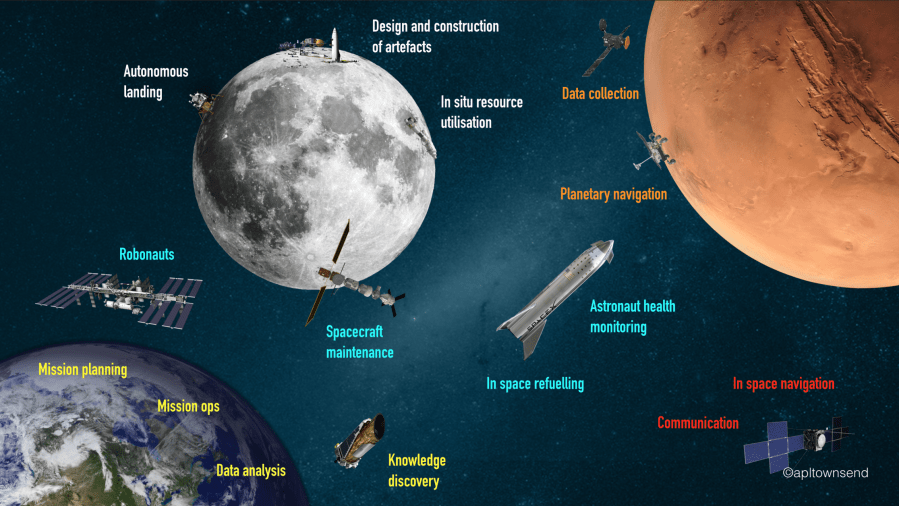
As space exploration continues to develop with trips to the moon and Mars, cognitive radio and communication systems will be essential for space flight. There will be a need for space “internetworking” to manage the interaction of user spacecrafts, relay spacecrafts and ground stations. This new CE could be a needed progression for space communication to be more efficient and reliable for any situation encountered during space travel.

Reference- https://divyanshspacetech.wordpress.com

ISRO-NASA Joint Mission “NISAR” : Super Exclusive

NASA (National Aeronautics and Space Administration) and ISRO (Indian Space Research Organisation) are one of the most admired space agencies know in today’s world (not to forget about ROSCOSMOS and ESA). While NASA is known throughout the world for its diverse missions (Voyagers, New Horizons, Cassini, Juno and many more to count on). In the meantime, ISRO is gearing up by creating the most cost-effective and marvelous launches known till date. But what if these two space agencies were to come together and work on a single project..? Well, that’s what NISAR is all about!

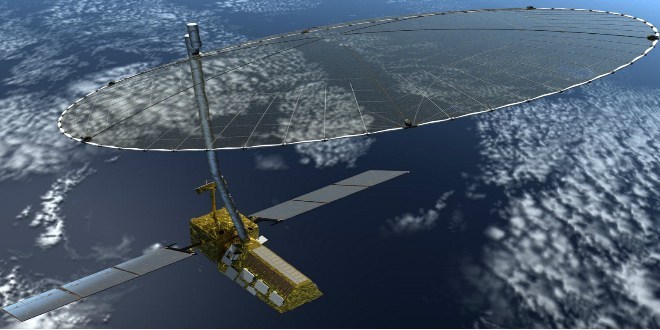
NISAR (NASA-ISRO Synthetic Aperture Radar) mission is a joint project between NASA and ISRO to co-develop and launch a dual-frequency synthetic aperture radar (SAR) satellite with the hopes of understanding our home planet in a better perspective than ever before.

Credit: Third Party Reference

KEY FACTS ABOUT NISAR:

  1. NISAR is designed to map out earth’s entire land and ice masses 4 to 6 times a month and possibly provide an explanation for planet’s most complex geological problems, including natural disasters like earthquakes, volcanoes, tsunamis and even the mysteries to their origin.

2. NISAR will use Advance Radar Imaging to provide mankind with the finest and crispier view of the earth than ever achieved, with a staggering resolution of 5-10 m/pixel(For example, Google Earth has a peak resolution of 15m/pixel!). Moreover,all the data from NISAR would be freely available within 1-2 days of any natural disaster, if any.

3. The Project has an allocated budget of over $1 Billion, making it the most expensive earth-imaging satellite till date. ISRO’s share of the project cost is about US$110 million, and NASA’s share is about US$808 million.

4. NISAR is planned to be launched by 2021 aboard a GSLV MKII (Geosynchronous Satellite Launch Vehicle Mark II) from Satish Dhawan Space center located in India. The mission will have a payload mass of 2800 kg and will be suspended in a Sun-Synchronous orbit. It has a life expectancy of about 3 years.

5. The satellite consists of a L Band and a S-Band Polarimetric Synthetic Aperture Radar (SAR), operating at the frequencies of 1.25 GHz and 3.2 GHz respectively. While NASA will be providing the L-band SAR, a payload data subsystem, a solid state recorder, and GPS receiver, ISRO will provide the Launch Vehicle and S-Band SAR.

Credit : Third Party Reference

Planned Launch Date: 2022

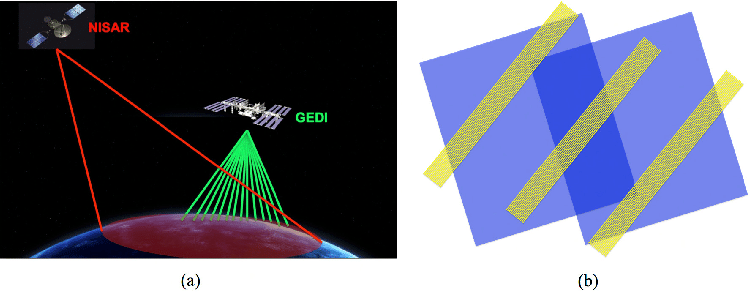
The NASA-ISRO SAR (NISAR) Mission will measure Earth’s changing ecosystems, dynamic surfaces, and ice masses providing information about biomass, natural hazards, sea level rise, and groundwater, and will support a host of other applications.

NISAR will observe Earth’s land and ice-covered surfaces globally with 12-day regularity on ascending and descending passes, sampling Earth on average every 6 days for a baseline 3-year mission.

Reference- divyanshspacetech.wordpress.com

But why can’t Globalized Navic as World Recognized GPS System : Super Exclusive >>>>>>>>

Why Navic :-

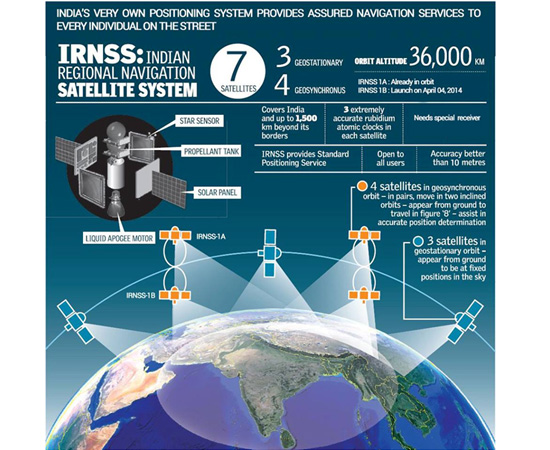
Navic is an independent Indian Satellite based positioning system for critical National applications. The main objective is to provide Reliable Position, Navigation and Timing services over India and its neighbourhood, to provide fairly good accuracy to the user. The IRNSS will provide basically two types of services

  1. Standard Positioning Service (SPS)
  2. Restricted Service (RS)

To date, ISRO has built a total of nine satellites in the IRNSS series; of which eight are currently in orbit Three of these satellites are in geostationary orbit (GEO) while the remaining in geosynchronous orbits (GSO) that maintain an inclination of 29° to the equatorial plane. The IRNSS constellation was named as “NavIC” (Navigation with Indian Constellation) by the Honourable Prime Minister, Mr. Narendra Modi and dedicated to the nation on the occasion of the successful launch of the IRNSS-1G satellite. The eight operational satellites in the IRNSS series, namely IRNSS-1A, 1B, 1C, 1D, 1E, 1F, 1G and 1I were launched on Jul 02, 2013; Apr 04, 2014; Oct 16, 2014; Mar 28, 2015; Jan 20, 2016; Mar 10, 2016, Apr 28, 2016; and Apr 12, 2018 respectively. The PSLV-39 / IRNSS-1H being unsuccessful; the satellite could not reach orbit.

Credit: Third Party Reference

Oh, Did I just ask to not address NAVIC (Navigation with Indian Constellation) as our own GPS (Global Positioning System). Have I lost my mind to go against the trend media has created? Am I actually serious about it? Well, let’s see why I am making such a preposterous appeal.

I have realised while talking to a lot of people on social media that they think GPS is a technology per say in generic terms which is completely incorrect. And the headlines all over media are reflecting as such. So first let’s talk about different satellite based navigation systems.

WHAT IS GPS :-

GPS (Global Positioning System) is a global satellite-based navigation system made up of a network of 24 satellites placed into orbit by the U.S. Department of Defense (DoD). It is a U.S.-owned utility that provides users with positioning, navigation, and timing (PNT) services. This system consists of three segments: the space segment, the control segment, and the user segment. GPS is operated and maintained by the U.S. Air Force. It is currently the world’s most utilized satellite navigation system.

ABOUT GNSS :-

The generic name of what we assume to be GPS is GNSS (Global Navigation Satellite System). Currently there are two operational GNSS:
1) Global Positioning System (GPS) is owned by the United States.
2) GLONASS is owned by Russia.

The third GNSS- GALILEO of European Union isn’t completely operational yet, 12 of 30 satellites in orbit. The forth BeiDou (Chinese Navigation system) is a limited test system, its full-scale global navigation system or GNSS also known as COMPASS or BeiDou-2 is currently under construction, it has about 20 satellites in orbit at present.

THEN WHAT’S THE ISSUE?

See, by now we have developed GPS isn’t a generic term, it’s just most popular and we human race runs after something that’s always more popular and it’s exactly what needs to be changed if we want to create our own identity in this world, if we want to stand with pride, if we want other nations to respect and recognise us then we need to be own people and not some ripped off identity of other nation and that’s what NAVIC deserve.

Credit: Third Party Reference

NAVIC was developed after so much of continuous handwork of ISRO scientists, thorough research and loads of money. It isn’t just another satellite based navigation system, it made us the fifth elite nation in this world to have our own navigation satellite system and it is a big deal. I am forever grateful to GPS for extending its services to us but we (India) developed and deployed NAVIC because many of the GPS services weren’t available to defence forces specially and we needed that thus came NAVIC.

NAVIC made us a proud nation, it showed the world the powerful force India is, it showed that we were Inventers/developers, we are and we always will be. We have some of the best brains in the world that is what NAVIC represents. It’s our pride and giving it a second hand name just dishearten me and it should dishearten you as well.

China has its own search engine Baidu and they do not call it ‘Chinese Google’. We do not call Flipkart as ‘India’s Amazon’ or Ola as ‘India’s Uber’ or every Smartphone an iPhone. Even you wouldn’t like to be called by other’s names!

What we say today, what we trend today will be remembered tomorrow and I do not want NAVIC to be known as ‘Indian GPS’.

If you agree with me then kindly share this post, raise your voice, talk about it, and aware more people about it. All I want is NAVIC to be known as NAVIC to the entire world and I need your help in doing so.

Reference- divyanshspacetech.wordpress.com and isro.gov.in

We are not lonely in the Universe : CETI World Exclusive Report >>>>>>

We are alone in the Universe ! It’s one of the biggest questions that haunts our imaginations. Astrobiologist Adam Frank argues in his new book “Light of the Stars” that we have never been in a better position to answer that question, thanks to a revolution in our knowledge gained by powerful telescopes like Hubble and space probes like Voyager. Indeed, the chances that there has never been another civilization in the universe are as low as one in ten billion trillion. But whether there is still one out there today is a more complicated question.

Your book centers on a relatively new field of study known as Astrobiology, which you call revolutionary. Explain what it means and why it is giving us new insights into our place in the universe.

Astrobiology is the study of life in its planetary or astronomical context. People will say we have only one example of life—here on Earth. But, if you take that position, you miss three revolutions that have happened in the last 30 years.

The first revolution is that we have been visiting other planets in our solar system. We have now sent probes to pretty much every kind of object in our solar system, including Mars. And from this we’ve learned about climate and how planets work in a generic sense. There’s an app you can pull up that will give you the weather on the Mars. We have climate models for Mars, Venus, and Saturn, and we know a huge amount about climate as a generic planetary phenomenon, not just on Earth.

Credit: Third Party Reference

The second revolution is studying the Earth’s history going back 4.5 billion years. We have been able to unspool in some detail the long history of the Earth and its life co-evolving over that time. We see that Earth has been many different kinds of planets, sometimes a snowball world, sometimes a hothouse world without ice. In the beginning there were no continents; it was pretty much a water world.

The last big revolution is the  revolution. When I was a school student in 2006, I did not know whether there were any stars in the universe with planets around them. Now we know that the universe has ten billion trillion planets that are in the right place for life to form. Those three revolutions completely changed not only how we think about life and planets, but also leads us to think very differently about exo-civilizations.

There are two possibilities, we are either alone in the universe or we are not. Both of these are equally terrifying.” Arthur C Clarke.

Workers in the search for extraterrestrial intelligence (SETI) would have needed more than a little luck in the first 45 years of the modern hunt for like-minded colleagues out there. Radio astronomer Frank Drake’s landmark Project Ozma was certainly a triumph of hope over daunting odds. In 1960, Drake pointed a 26-meter radio telescope dish in Green Bank, West Virginia, at two stars for a few days each. Given the vacuum-tube technology of the time, he could scan across 0.4 megahertz of the microwave spectrum one channel at a time.

Credit: Third Party Reference

Almost 45 years later, the SETI Institute in Mountain View, California, completed its 10-year-long Project Phoenix. Often using the 350-meter antenna at Arecibo, Puerto Rico, Phoenix researchers searched 710 star systems at 28 million channels simultaneously across an 1800-megahertz range. All in all, the Phoenix search was 100 trillion times more effective than Ozma was.

If Other beings live out there, if we’re to find them, we must do so before one or either of us is expired by the universe.” ~ Simon Farnell

Time as I have said before is such a relative thing, based on what we can perceive and measure with our minds. If we imagine the universe as a giant entity existing in its place we can maybe imagine that our existence is a fleeting and insignificant thing, a moment of time too short to measure and other races that may or may not exist will also be a similar fleeting moment.

Reference- divyanspacetech.wordpress.com and nationalgeographic.com

Missions to exploring Sun: World Exclusive Report @2020-21

The Indian Space Research Organization (ISRO) is preparing for its first scientific expedition to study the Sun, Aditya-L1. It would be placed into a point in space known as the L1 Lagrange point.

  • Aditya L1 will be ISRO’s 2nd space-based astronomy mission after AstroSat, which was launched in 2015.
  • Aditya 1 was renamed as Aditya-L1. The Aditya 1 was meant to observe only the solar corona.

AstroSat

  • AstroSat, was launched in September, 2015, by PSLV-C30 from Sriharikota (Andhra Pradesh).
  • It is the first dedicated Indian astronomy mission aimed at studying celestial sources in X-ray, optical and UV spectral bands simultaneously.

Key Points

  • Launch Vehicle: Aditya L1 will be launched using the Polar Satellite Launch Vehicle (PSLV) XL with 7 payloads (instruments) on board.
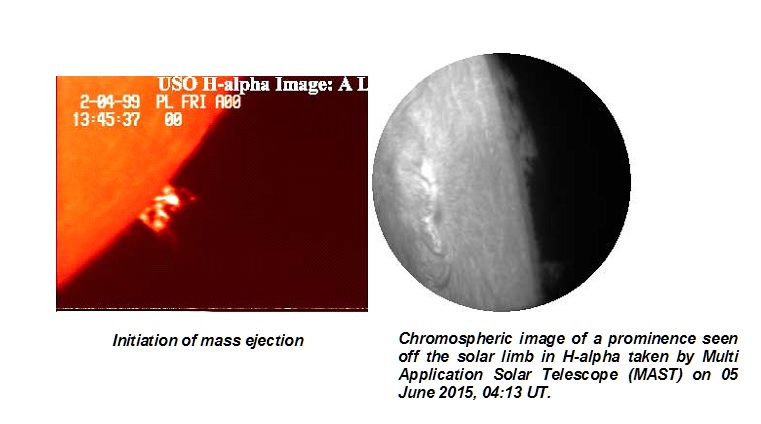
  • Objective: Aditya L1 will study the Sun’s corona (Visible and Near infrared rays), Sun’s photosphere (soft and hard X-ray), chromosphere (Ultra Violet ), solar emissions, solar winds and flares, and Coronal Mass Ejections(CMEs), and will carry out round-the-clock imaging of the Sun.
  • Challenges: The distance of the Sun from Earth ( approximately 15 crore kms on average, compared to the only 3.84 lakh kms to the Moon).This huge distance poses a scientific challenge.
    • Due to the risks involved, payloads in earlier ISRO missions have largely remained stationary in space; however, Aditya L1 will have some moving components which increases the risks of collision.
    • Other issues are the super hot temperatures and radiation in the solar atmosphere. However, Aditya L1 will stay much farther away, and the heat is not expected to be a major concern for the instruments on board.
Credits- Third Party Reference

Importance

  • Evolution of every planet, including Earth and the exoplanets beyond the Solar System, is governed by its parent star i.e the Sun in our case. The Solar weather and environment affects the weather of the entire system. Therefore, it is important to study the Sun.
  • Effects of Variation in Solar Weather System: Variations in this weather can change the orbits of satellites or shorten their lives, interfere with or damage onboard electronics, and cause power blackouts and other disturbances on Earth.
  • Knowledge of solar events is key to understanding space weather.
  • To learn about and track Earth-directed storms, and to predict their impact, continuous solar observations are needed.
  • Many of the instruments and their components for this mission are being manufactured for the first time in the country.

Lagrange Point 1

  • Lagrange Points, named after Italian-French mathematician Josephy-Louis Lagrange, are positions in space where the gravitational forces of a two-body system (like the Sun and the Earth) produce enhanced regions of attraction and repulsion.
  • The L1 point is about 1.5 million km from Earth, or about 1/100th of the way to the Sun.
  • L1 refers to Lagrangian/Lagrange Point 1, one of 5 points in the orbital plane of the Earth-Sun system.
  • These can be used by spacecraft to reduce fuel consumption needed to remain in position.
  • A Satellite placed in the halo orbit around the Lagrangian point 1 (L1) has the major advantage of continuously viewing the Sun without any occultation/ eclipses.
  • The L1 point is home to the Solar and Heliospheric Observatory Satellite (SOHO), an international collaboration project of National Aeronautics and Space Administration (NASA) and the European Space Agency (ESA).

Aditya L1 Mission

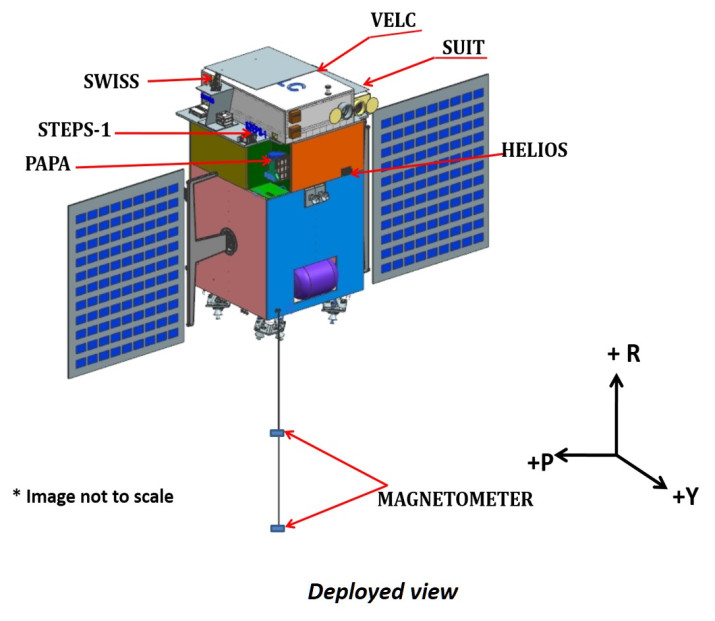
The Aditya-1 mission has conceived as a 400kg class satellite carrying one payload, the Visible Emission Line Coronagraph (VELC) and was planned to launch in a 800 km low earth orbit.  A Satellite placed in the halo orbit around the Lagrangian point 1 (L1) of the Sun-Earth system has the major advantage of continuously viewing the Sun without any occultation/ eclipses.  Therefore, the Aditya-1 mission has now been revised to “Aditya-L1 mission” and will be inserted in a halo orbit around the L1, which is 1.5 million km from the Earth.  The satellite carries additional six payloads with enhanced science scope and objectives.

The project is approved and the satellite will be launched during 2019 – 2020 timeframe by PSLV-XL from Sriharikota.

Aditya-1 was meant to observe only the solar corona.  The outer layers of the Sun, extending to thousands of km above the disc (photosphere) is termed as the corona.  It has a temperature of more than a million degree Kelvin which is much higher than the solar disc temperature of around 6000K. How the corona gets heated to such high temperatures is still an unanswered question in solar physics. 

Aditya-L1 with additional experiments can now provide observations of Sun’s Corona (soft and hard X-ray, Emission lines in the visible and NIR), Chromosphere (UV) and photosphere (broadband filters).  In addition, particle payloads will study the particle flux emanating from the Sun and reaching the L1 orbit, and the magnetometer payload will measure the variation in magnetic field strength at the halo orbit around L1.   These payloads have to be placed outside the interference from the Earth’s magnetic field and could not have been useful in the low earth orbit.

Credit- Third Party Reference

The main payload continues to be the coronagraph with improved capabilities.  The main optics for this experiment remains the same.  The complete list of payloads, their science objective and lead institute for developing the payload is provided below:

  • Visible Emission Line Coronagraph (VELC): To study the diagnostic parameters of solar corona and dynamics and origin of Coronal Mass Ejections (3 visible and 1 Infra-Red channels); magnetic field measurement of solar corona down to tens of Gauss – Indian Institute of Astrophysics (IIA)
  • Solar Ultraviolet Imaging Telescope (SUIT): To image the spatially resolved Solar Photosphere and Chromosphere in near Ultraviolet (200-400 nm) and measure solar irradiance variations – Inter-University Centre for Astronomy & Astrophysics (IUCAA)  
  • Aditya Solar wind Particle Experiment (ASPEX) : To study the variation of solar wind properties as well as its distribution and spectral characteristics – Physical Research Laboratory (PRL)        
  • Plasma Analyser Package for Aditya (PAPA) : To understand the composition of solar wind and its energy distribution – Space Physics Laboratory (SPL), VSSC        
  • Solar Low Energy X-ray Spectrometer (SoLEXS) : To monitor the X-ray flares for studying the heating mechanism of the solar corona – ISRO Satellite Centre (ISAC)
  • High Energy L1 Orbiting X-ray Spectrometer (HEL1OS): To observe the dynamic events in the solar corona and provide an estimate of the energy used to accelerate the particles during the eruptive events – ISRO Satellite Centre (ISAC)and Udaipur Solar Observatory (USO), PRL
  • Magnetometer: To measure the magnitude and nature of the Interplanetary Magnetic Field – Laboratory for Electro-optic Systems (LEOS) and ISAC.

With the inclusion of multiple payloads, this project also provides an opportunity to solar scientists from multiple institutions within the country to participate in space based instrumentation and observations.  Thus the enhanced Aditya-L1 project will enable a comprehensive understanding of the dynamical processes of the sun and address some of the outstanding problems in solar physics.

Other Missions to the Sun

  • NASA’s Parker Solar Probe’s aim is to trace how energy and heat move through the Sun’s corona and to study the source of the solar wind acceleration.
    • It is part of NASA’s ‘Living With a Star’ programme that explores different aspects of the Sun-Earth system.
  • The earlier Helios 2 solar probe, a joint venture between NASA and space agency of erstwhile West Germany, went within 43 million km of the Sun’s surface in 1976.

A more recent technical report on this topic by Dr. Angel, in which the idea is taken to another stage in development using only electromagnetic launch from Earth and no construction on the Moon or at L1

So we hope these mission will able to unveiled the secret of Sun’s Atmosphere and its Corona. Aditya L1 mission will create history for Indian Space Program and proved to be landmark as expected.

Reference- https://www.drishtiias.com/

The Truth of the Sophisticated Life @2020

Literature the mirror of the society. India refers to the country of the literature. In India the earlier works of literature was orally transmitted. Sanskrit literature begins with the oral literature of the Rig Veda a collection of literature during the period of 1500-1200 BCE. The Sanskrit epics Ramayana and Mahabharata appeared towards the end of the 2nd millennium BCE. In India literature was not only limited to the language Sanskrit but it was spread as the Hindi literature all across the world and gives the frame to the Indian literature. The literature that was based on reality, the literature that portrays the life of normal peoples of the country, the literature that shows the tradition, culture and beliefs of the Indian society.

 India is the fusion of many cultures, traditions, languages, festivals, beliefs, customs etc and this was only shown in the great ancient Indian literature which was popular all across the world. That literature portrays the life of the Indian villages. It’s Simplicity, its innocence; it’s down to earth nature. That literature represents the life of the ordinary peoples, their struggles, their challenges. Indian literature is very ancient it is coming from the times of rishi, minis and will last forever because of its reality. That literature teaches us the real meaning of our life, teaches us the ways to live your life happily in the amount of materials you have. That literature allows us to meet from our inner self, form our reality, from the reality of the country and even many old television shows was based on this only.  Earlier television used to be the face of the society, the face of the reality. The show of the doordarshan allows us to relate the instances of the shows with our surroundings but now the time has changed.

Today everyone is running for the money, frame and for the life of glamour which takes them out from the real world. Today people just want to become famous; they don’t love the lives of simplicity, the life near the nature. Everyone wants to fulfil their needs by destroying environment. Now they don’t love those farmlands where they have spend their childhood, today’s children’s want the video game in place of those gilli danda, in place of their traditional outdoor games like kabaddi, kho-kho and many more which was also responsible for their healthy lifestyle and this might be the reason the literature is also changed . Today the children’s love the fiction stories, fictious world in place of their traditional literature which gives the sense, the sweet smell of their soil.

When come the difference between fiction and nonfiction i.e. reality Joseph Salvatore, Associate Professor of writing & Literature at The New School in New York City, says

I teach a course on the craft, theory, and practice of fiction writing, and in it, we discuss this topic all the time. Although all of the ideas and theories… are disputed and challenged by writers and critics alike. I’d say there are some basic components of fiction.

Fiction is just based on author’s imaginations and that what he/she wants readers/viewers to do just imagine and this is what happening in today’s world where children are following the fictitious superheroes like superman, ironman instead of the real superheroes likes Mahatma Gandhi, APJ Abdul Kalam etc.

Today people are liking the supernatural movies, shows and stories instead of the real stories and this is the reason that the story of the struggles of the real hero in not liked by the people because they want the stories of the visual hero’s with their powers and with all thei

They are not ready to face the tough situations, the challenges of their life and this is what happening everywhere. Now no one likes the story of the normal boy who faces lots of struggles and takes India to the world of space, who takes ISRO to the impossible space research organisations to Indian Space Research organisation, who just vanish the word impossible of the field of space research in India. Now a person wants a story of the superhero that does all its work just by moving their hands or by using its power and that is the reason everyone wants to become superman and ironman.

It’s not the thing to just sit and just writing an article or just having a discussion, it’s the topic to think where we are today, it’s the topic to realize the need of an hour i.e. to come out of this virtual world and accept the reality, the reality of life. It’s not the time to just think it’s the time do the action, it’s the time to realize what we have done to our planet, it’s the time to realize that we have to fight for our rights, we have to face each and every challenges of our life and we only have to come out of it no superman will come with her powers to protect us. We only have to wake up and go through the road of success and we only have to defeat every difficulties of our life. “We are only responsible for every good or for every bad thing, we are only responsible!!