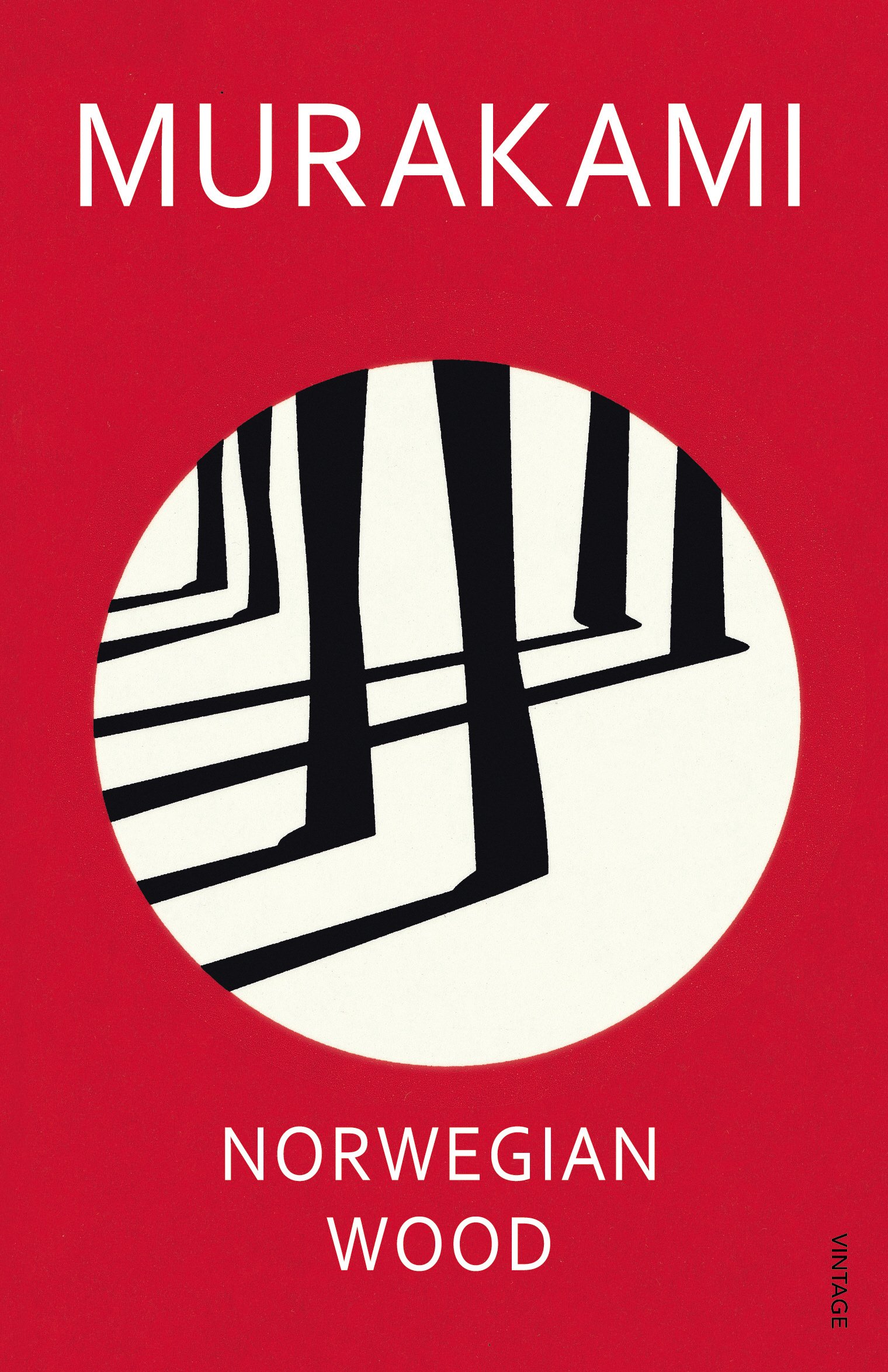
Book Review – Norwegian Wood

Amazon.in: Buy Norwegian Wood Book Online at Low Prices in India | Norwegian  Wood Reviews & Ratings

Norwegian Wood by Haruki Murakami is a coming-of-age story of Toru Watanabe, set in the late 1960s in Tokyo during the main character’s early student life. Toru narrates the story himself. Having lost his close friend, Kizuki, to suicide, Toru moves out of his hometown in Kobe and to Tokyo to study theater, which he clearly isn’t really interested in. Their lives in those days have a background context of a weak student revolution which fizzles out too soon, only to reveal the hypocrisy of the people leading it.

Here in Tokyo, Toru once accidentally bumps into Naoko, his deceased friend’s girlfriend. Naoko, if not more, is clearly as affected by Kizuki’s death as Toru (only to know later that Kizuki isn’t the only close one Naoko has lost to suicide). Naoko is broken and in dire need of someone’s emotional support in order to heal. And here comes ToruToru & Naoko share a bond, albeit a sad one, a bond strengthened by the death of the third partner of their group. They spend multiple Sundays together, wandering through the streets of Tokyo and, as one may expect, Toru falls for her. Unfortunately, that is where things take the melancholic path further down hill.

Naoko ends up in an institution called Ami Hostel up the hills, an hour from the city of Kyoto. Ami Hostel is a sophisticated version of (to put it subtly) a mental hospital. It’s secluded, clean, peaceful, and more of a community living where the lines between doctors & patients are blurred. While back in Tokyo, Toru finds Midori Kobayashi, his ‘History of Drama’ classmate. Midori, despite her own multiple problems — family, boyfriend, her family bookstore — to name a few, helps Toru to live through his lonely days, while he still yearns for Naoko to reach out to him. Toru is equally attracted to both Naoko and Midori. The story progresses as he sways back and forth and spends time with Naoko and Midori alternatively. While in his mind he is always rooting for Naoko to come back to his life, he doesn’t allow him to register that fact that he loves & misses Midori equally well. Naoko is troubled deeply & doesn’t want to come back to Toru until she is in a much better shape while Midori hates the fact that Toru always prioritizes Naoko over her, even though Midori Toru have never discussed Naoko even once. This is a tough choice Toru has to make and a journey he’ll have to take in his mind moving from Naoko to Midori or vice versa. What choice does he make? Do read the book to find out.

The two women in Toru’s life couldn’t have been more contradictory — One doesn’t speak much, the other doesn’t stop at all. One goes all out in showing affection for Toru while the other never confesses even though Toru keeps asking for it. Both have seen death, grief and loss, up close and personal, but one gets accustomed to it, jokes about it while the other gets crushed by it.

In the end, Toru has to make a choice between Naoko and Midori. Before he decides, you would have definitely made up yours. It’s not a grey area anymore. Norwegian Wood is a love story, with some ecstatic, arousing moments and with some dark, melancholic, heart wrenching ones as well — just like life, as one may say.

Bottom line, we will lose the people we love, friends and lovers will fall out of our lives, and there will be mistakes we make in our lives or watch others make towards other people we won’t be able to rewrite, because that’s the power of time. It can only go forward, not back. The characters interacting with each other are nostalgic; they recount the times that made them to be the person they are today. The lessons from this book aren’t any easy pills to swallow, so if you’re intending for a happy-go-lucky read, then I’d probably request you to skip Norwegian Wood.

Things to learn from the Japanese

Photo by Engin Akyurt on Pexels.com

Japanese people have a unique way of living that provides many lessons for people willing to open their minds and understand their incredible culture. Japan boasts a nation of people who are incredibly kind, good-natured and polite.

The few things I learnt from them are :

REVERENCE TO PEOPLE

Japanese are masters of showing respect. Whether it’s the way they greet people they don’t know or their incredible attention to detail when it comes to developing relationships. The Japanese are mindful of respect at all times.

HARDWORK TO ACHIEVE GOALS

They work extremely hard to achieve their goals. Its for this reason that they’re one of the most pioneering, forward thinking nations on the planet! They work really hard in their careers, so they can support their families and work on self-growth.

VISIONARIES

Japan has some of the most pioneering technology companies on the planet, including Toyota, Nippon and Honda. The country has propelled its technological advancements to the forefront of human history. We must learn to believe in our vision, even if no one has achieved that.

DISCIPLINED LIFE

Discipline is akin to respect in Japan. To be disciplined is not to give in to your urges but to live a life that is respectable and based on profound will to do good for people.

CLEALINESS

In Japan, there is a general obsessiveness with cleanliness that starts in the home and extends to public spaces like parks and schools. It certainly makes the country an extremely pleasant place to be.

The Impact Of Haruki Murakami On The World Of Literature

Fish dropping from the sky and human-animal hybrids are only a few of the “common” happenings in Haruki Murakami’s stories. The famous Japanese author has millions of admirers across the globe, with his best-selling novels translated into over 50 languages.

Haruki Murakami’s widespread fame signals the twenty-first century’s progress to a much more interconnected society, one where origin has no bearing on impact and everyone is a descendant of the diverse communities that happened to come before. Murakami’s huge reach stems in large part from the scope of his own preferences and capabilities. He not only has made many western readers acquainted with some of the East’s modern written achievements, but he’s also translated several  works of English authors like Raymond Carver, F. Scott Fitzgerald, and J.D. Salinger to Japanese, giving Japanese readers exposure to some of  these works for the very first time.

Murakami is heavily inspired by Western writers, finding inspiration in authors ranging from Franz Kafka to Kurt Vonnegut. He now admires the novelists Kazuo Ishiguro and Cormac McCarthy. He became particularly captivated to American culture as a young child, devouring any relics he would discover, whether jazz albums, dollar store paperback books, or Hollywood films.

Murakami’s life has been influenced by jazz music. Several of his novels, like Norwegian Wood (from the same Beatles song) as well as Tsukuru Tazaki, depend heavily on the music of Franz Liszt. 

When it pertains to Haruki Murakami, there seems to be an odd synchronicity between his supporters and his detractors. Everybody thinks that he’s often humorous, especially in his dialogue. His protagonists, who are frequently drawn into detective storylines without the need for a “FOR HIRE” notice in their windows, and who doesn’t love a detective? 

Cats, mundane kitchen activities, dingy barrooms, pop and/or classical theme tunes are always be present in the books, set against a surreal, Manichaean danger zone into which the modest yet progressively resilient protagonist must descend in quest as to what he’s missing, most likely to find something else instead. The hero may also stay a bit of time at the bottom of a well or in another dark and solitary place.

His thoughts and emotions will be torn between yearning for an otherworldly, spiritual lady (typically the one who has vanished) and desire towards a feisty, sensual, down-to-earth woman (who may at first just seem more like his sidekick on the journey but may just turn out to be just what he needed all along).  

Murakami has been writing many versions on similar themes for almost 40 years, and he admits about his tendency of reusing certain types of ideas in several interviews. Some people consider his repeats to be a detriment to him. But what divides his detractors is whether they will accommodate his logical leaps and propensity to build dreamworlds which defy consistency and appear to live irrespective of any writer-imposed constraints.

Although the Kyoto-born novelist might not be the first Japanese author to achieve international recognition, Murakami has dramatically changed the perception of Japanese literature throughout the globe, resulting in a high demand for Japanese books to be translated.