The practice of journalism requires collecting, researching,
synthesizing, and presenting news and information. Additionally, it is a
byproduct of these actions.
Certain distinguishable traits and practices make journalism
distinct from other pursuits and outcomes. These characteristics not only set
journalism apart from other types of communication, but also make it essential
in democracies. History demonstrates that a society tends to have more news and
information the more democratic it is.
Benefits of Journalism
1.You may
get to travel
Since it’s difficult to cover news globally,
However, working as a sports or entertainment journalist occasionally allows
you to travel extensively.
While exploring and moving around, you can talk
about current events. Who doesn’t enjoy travelling, right? This, in my opinion,
is one of the greatest advantages of journalism.
2.You can
meet different people
No matter what profession you are in, exposure
is crucial for your personal development. When you work in journalism, you are
exposed to many different things, which aids in your recognition.
Meeting all of those folks enables you to make
some really great friends as well as realize how relative life is and how our
way of life back home is merely one of many other lives that people celebrate
across the world.
3.You can
share your ideas
The
capacity to further your opinions and convictions is another benefit of working
as a journalist. In general, you can publish anything you want as long as it
abides by local laws, especially if you’re a freelance journalist who doesn’t
work for a media company. As a
result, if you see something you disagree with, you could become more conscious
of it and thereby feel better.
4.You can
cover a variety of genres
In
general, journalism offers you a wide range of topics on which to write. You
can never learn everything because there are so many new things introduced
every day.
As a
result, you won’t ever run out of topics to write about, and you’ll have the
freedom to focus on the subjects you think will be most important to and
interesting to your readers.
The field
of journalism is not standardized. In fact, you will pick up fresh information
every day because you will be speaking with a range of people.
5.You will
never find it boring
If you work as a newscaster, you won’t become
bored. They have a wide range of jobs and frequently interact with different
people, so I’m confident they’ll always have topics of conversation.
Additionally, you typically work in unfamiliar
environments and face problems every day. Journalism is one of the never-ending
careers as a result, so if you’re curious and want to be surprised, being a
journalism specialist can be the best choice for you.
6.You can
create your new comfort zone
A great way to step outside of your comfort zone
is to become a journalist. Because we humans are generally afraid of making a
mistake, we tend to want to stay in our comfort zone and refrain from trying
too many new things.
This might be exceedingly limiting, though, as
character development occurs solely as a result of new experiences. In
journalism, you must be willing to speak with people you otherwise would not
have. Throughout your work, you’ll also discover some unexpected items.
We hear the word journaling very often. Almost every other day this term falls on our ears but we simply pay no heed to it. The reason is we humans have a tendency to think that the most ordinary or simplest things cannot bring us extraordinary greatness. Which is not true ofcourse.
When it comes to journaling, we sometimes underestimate how important it is to include this beneficial habit into our daily routines. Our lives can thrive from journaling in many different ways. From increased productivity overall to self-improvement and improved mental wellness, this habit is proven to be effective.
Writing down your thoughts, feelings, or anything else you want to in order to try to understand them better is what journaling is fundamentally all about. Every time we write down our thoughts in a journal, our mind starts to get more organised, making it simpler for us to prioritise our goals and every aspect of our lives that we want to work on. As a result, journaling helps us stay productive by allowing us to acknowledge what needs to be done after letting us self-assess ourselves in a way.
The ability to learn new things quickly, as well as your capacity for analytical and innovative thought, are more important indicators of productivity in today ’s digital economy than how much work you can get done in an hour. Journaling is therefore valuable spending a few minutes on, just like any practise that enables you to learn more acutely and think more effectively.
Outlining your goals in a journal enables you to think thoroughly about all aspects of it. Journaling helps you keep motivated during the arduous process of actually achieving your goals by providing a track of the work you’ve made in that direction. We refer to it as effective journaling for this reason.
Anyone who really wishes to deal with their emotions, possibly to prevent it from driving themselves in the realms of depression or anxiety, might benefit much from this mindful practice.
You can thoroughly examine your feelings, let out chaos, and mentally assimilate your experiences through writing.
Furthermore, it can support you in attaining a significant purpose or work with you to reduce certain sources of stress. Creating and reflecting on the story of your life, including all of the decisions you have committed and the moments that have shaped who you are today, is something you may do by keeping a diary.
In a word, journaling’s healing effects are “enlightening.
You can’t change it all in your life instantly, and attempting to create healthy habits and break negative ones in a single day is probably not going to work. Legitimate, lasting change occurs when you only take on something that you can manage; frequently, altering one significant habit can have knock-on impacts that enhance your life and move you forward to your commitments in other aspects.
One such discipline is writing; it may help you stay focused, determine your capabilities and limitations, provide an outlet for awareness of self , but also much more. Merely keeping track of your ideas, emotions, and doings can change your life in unanticipated ways.
Journalism is the production and distribution of reports on current events based on facts and supported with proof or evidence. The word journalism applies to the occupation, as well as collaborative media who gather and publish information based on facts and supported with proof or evidence. Journalistic media include print, television, radio, Internet, and, in the past, newsreels.
Concepts of the appropriate role for journalism vary between countries. In some nations, the news media are controlled by government intervention and are not fully independent. In others, the news media are independent of the government but instead operate as private industry. In addition to the varying nature of how media organizations are run and funded, countries may have differing implementations of laws handling the freedom of speech and libel cases.
The proliferation of the Internet and smartphones has brought significant changes to the media landscape since the turn of the 21st century. This has created a shift in the consumption of print media channels, as people increasingly consume news through e-readers, smartphones, and other personal electronic devices, as opposed to the more traditional formats of newspapers, magazines, or television news channels. News organizations are challenged to fully monetize their digital wing, as well as improvise on the context in which they publish in print. Newspapers have seen print revenues sink at a faster pace than the rate of growth for digital revenues
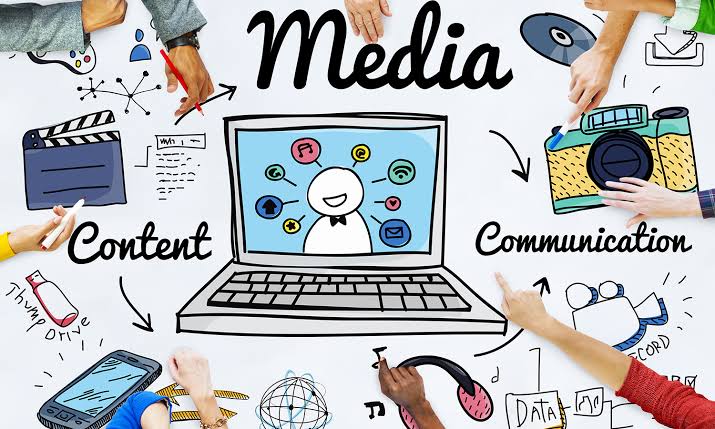
Media : A fundamental part of new era
SOME FAMOUS PEOPLE ON JOURNALISM’S IMPORTANCE IN LIFE
Without journalism, the world would be ignorant. Journalism is important because it gives current and relevant information and news to the public. Benjamin Franklin said, “Whoever would overthrow the liberty of a nation must begin by judging the freeness of speech.”
Coach Currie, an 8th grade social studies teacher and football coach at Dobie Jr. High, said, “Journalism is important because it spreads truth to people; they need to know things.”
Mrs. Preyor-Johnson, a journalism teacher at Dobie Jr. High, used to work as a full time journalist. She said, “Journalism is essential to our freedom.”
Communication is basic need
IMPORTANCE OF JOURNALISM IN SOCIETY
Journalism means the works of a journalist regarding news, views, reports, etc. It is an investigation and reporting of current world affairs which include fashion trends, political or general issue and events to a broad audience. It is apparent writing on any issue of an affair.
Though there are various purposes for it, the most important aspect is the freedom of expression. The root of journalism comes from people’s right to have an opinion.
Today people depend on the press on being informed of what’s happening. A modern newspaper is something very much more than a mere purveyor of the news; it is also a store-house of current information, an instrument of public criticism, a creator of public opinion. The media plays a vital role in a democratic society. Their influence on forming a public opinion is very great. They may be said to do political thoughts on behalf of the man in the street. Then there is the news-editor and his staff. They receive news from different agencies, staff reporters and correspondents. They edit, arrange, and display them. They can flash a headline and create a sensation. The staff-reporters interview people, elicit views by “scooping” news in advance.
Journalism is for the ‘voice of a voiceless’- expressing opinions of all those in our society. It’s like a bridge between the authorities and people. A modern newspaper must also have on its staff competent artists, cartoonists, photographers, etc. There must be advertisement managers and circulation managers. All these people who are on the staff of a newspaper are known by the general name of journalists, or newspapermen.
Wealthy and influential newspapers always maintain their own correspondents, home and abroad. The modern world could not exist without such an elaborate organization and agency of information gathered from various sources.
Therefore its primary purpose is to make sure all citizens are aware of their rights. Journalism is a difficult profession. “To write weekly”, says Virginia Woolf, “to write daily, to write shortly, to write for busy people catching trains in the morning, or for tired people coming home in the evening is a heartbreaking task for men who know good writing from bad. Oscar Wilde once stated, “By giving us the opinion of the uneducated, journalism keeps us in touch with the ignorance of the community”.
Journalism is important to the world because we are now a global economy and almost a global society. A good journalist creates his own peculiar style. He knows the art of creating the taste and demand for what he offers. The most important thing to understand about journalism is that its entire purpose is to serve the citizens. One aspires to literary excellence; another sets greater store by propaganda. Its coverage is very wide, and its scope for improvement is unlimited. But the journalist should guard against the present tendency for trivializing and fragmenting news items, imposing the editor’s opinions upon readers. Finally, journalism provides what Kovatch and Rosenstiel call “a public forum for criticism and comment.” This is an essential thing for a democratic society to have.
ROLE OF SOCIAL MEDIA IN DIFFERENT ASPECTS OF LIFE
Social Media plays a very important role in today’s life, social Media are web-based online tools that enable people discover and learn new information, share ideas, interact with new people and organizations. It has changed the way people live their life today, it has made communication much easier.
In students Life
Social media plays an important role in every student’s life. It is often easier and more convenient to access information, provide information and communicate via social media. Tutors and students can be connected to each other and can make good use of these platforms for the benefit of their learning and teaching
The entire universe is conspiring to give you everything you want!
Abraham Hicks
The new fast-moving world indeed changes with every passing second, but along with its fast pace, the craze to access and achieve everything within a blink of an eye has found its place in the new modern world. With the growing network of TikTok’s and YouTube videos, the idea of manifesting your goals has taken over the lives of people around the globe. ‘Manifesting’ out of its traditional Cambridge dictionary explanation of to show something clearly, through signs or actions has now gained this broad meaning of practising inspirational thoughts to make them real. As the pandemic trapped us in a literal digital bubble, confined to our homes, “achieving things’” had a newfound meaning: to achieve is to manifest. During the year 2020, the google search logs showed a record surge in keyword Manifest. Google searches for the same were more than 669 per cent that year. Manifesting was the new addition to the bandwagon of crystals, essential oils and meditation. While compared to its contemporaries, manifestation routines have gained widespread popularity due to the zero-cost investment and quick, miraculous effects.
Manifesting in simple terms is making something you want to happen by simply believing it will happen. What forms the base of manifestations is the law of attraction, which states that we attract what we focus on. There are several manifestation methods that you can find online, the vision board method, gratitude journal, two cup method etc. But the basic idea that it depends largely upon is the positive mindset a person has towards achieving a goal and a feeling of gratitude for all that he has already. One of the treading manifestation methods that were made famous by tiktokers was the 3,6,9 Method.
The 369 manifestation method is said to be inspired by Nikolas Tesla’s numerology obsession. He believed that the numbers 3, 6 and 9 had a unique connection to the universe. Numerology experts believe the numbers three, six and nine stands for positive energy nurturing and fulfilment. It is a method of manifesting your goals by writing them down in a journal or a paper three times in the morning, six times in the evening and nine times before you sleep. To manifest a goal using this method, you’ll have to pen down your intention throughout the day. You start by writing your affirmation (the vision you want to manifest) three times in the morning in your journal/paper. During this time, visualise what you would feel, what would you do once you achieve what you are manifesting. In the afternoon, write your affirmation six times and express gratitude for whatever you already have. At night, before you wind up for the day, write your affirmation nine times and visualise the whole scenario and imagine what you might feel when you achieve your goal.
This technique helps you visualise your goal and bring about a positive change in how you look at your desires. The major takeaways from manifestation techniques are the importance of expressing gratitude and a positive outlook. So trust the process and believe in it until it manifests for you, for you become what you attract!
Journalism and mass communication graduates work nationwide and worldwide at newspapers and magazines and in advertising, branding, broadcast news, social media, marketing, media research, photojournalism, publication design, public relations, radio, and other areas
Journalism:-
Journalism is the activity of gathering, assessing, creating, and presenting news and information. It is also the product of these activities.Journalism can be distinguished from other activities and products by certain identifiable characteristics and practices. These elements not only separate journalism from other forms of communication, they are what make it indispensable to democratic societies. History reveals that the more democratic a society, the more news and information it tends to have.
JOURNALISM ESSENTIALS
What is journalism?
What makes journalism different than other forms of communication?
What is the purpose of journalism?
The elements of journalism
What does a journalist do?
The journalist as a ‘committed observer’
The theory of the interlocking public
Bias and objectivity
The lost meaning of ‘objectivity’
Understanding bias
1.What is journalism?
Journalism is the activity of gathering, assessing, creating, and presenting news and information. … Journalism can be distinguished from other activities and products by certain identifiable characteristics and practices.
2. What makes journalism different than other forms of communication?
The vast majority of this communication, however, is not news and especially not journalism. Almost 70 percent of email traffic is spam, according to web security company Symantec. In 2012, there were an average of 175 million tweets each day. But almost all – 99% — consisted of “pointless babble,” according to researchers at Carnegie Mellon University.
3. What is the purpose of journalism?
“The purpose of journalism,” write Bill Kovach and Tom Rosenstiel in The Elements of Journalism, “is not defined by technology, nor by journalists or the techniques they employ.” Rather, “the principles and purpose of journalism are defined by something more basic: the function news plays in the lives of people.”
4. The elements of journalism?
In their book The Elements of Journalism, Bill Kovach and Tom Rosenstiel identify the essential principles and practices of journalism. Here are 10 elements common to good journalism, drawn from the book.
5. What does a journalist do?
Asking who is a journalist is the wrong question, because journalism can be produced by anyone.At the same time, merely engaging in journalistic-like activity – snapping a cell-phone picture at the scene of a fire or creating a blog site for news and comment – does not by itself produce a journalistic product. Though it can and sometimes does, there is a distinction between the act of journalism and the end result.
6. The journalist as a ‘committed observer’
Gil Thelen, the former publisher and president of The Tampa Tribune, believes the journalist has a very specific role in society. He calls it the “committed observer.” What he means by that, Thelen explains, is that the journalist is not removed from community, though at times may stand apart from others so as to view things from a different perspective.
7. The theory of the interlocking public
The splintering of mass media audiences and the migration of information consumers to tens of thousands of niche web sites is further evidence that everyone is interested, and expert, in something. The diversity and magnitude of the public, in fact, is its strength. A mix of publics is usually much wiser than a public comprised of just the elite or one segment of special interest.
8. Bias and objectivity
Journalism attempts to be fair and accurate. It does this through objective methods and managing bias. The guides in this section help you understand and navigate those processes.
9. The lost meaning of ‘objectivity’
One of the great confusions about journalism, write Bill Kovach and Tom Rosenstiel in The Elements of Journalism, is the concept of objectivity. When the concept originally evolved, it was not meant to imply that journalists were free of bias. Quite the contrary. The term began to appear as part of journalism after the turn of the 20th century, particularly in the 1920s, out of a growing recognition that journalists were full of bias, often unconsciously. Objectivity called for journalists to develop a consistent method of testing information – a transparent approach to evidence – precisely so that personal and cultural biases would not undermine the accuracy of their work.
10. Understanding bias
For a time, “bias” was the term of choice to describe anything people hated about journalism, whether the power and influence of corporate news organizations to the choices reporters made in writing individual stories. In 2001, in fact, a book about media unfairness entitled “Bias” was number one on the New York Times bestseller list. In recent years the public seems to have adopted a more nuanced view of bias. Perhaps this is because many critics have found their voice online – where studies confirm that half the blogs contain just the author’s opinion – or that one-sidedness has become a successful business model, as Fox News Channel and MSNBC have demonstrated.
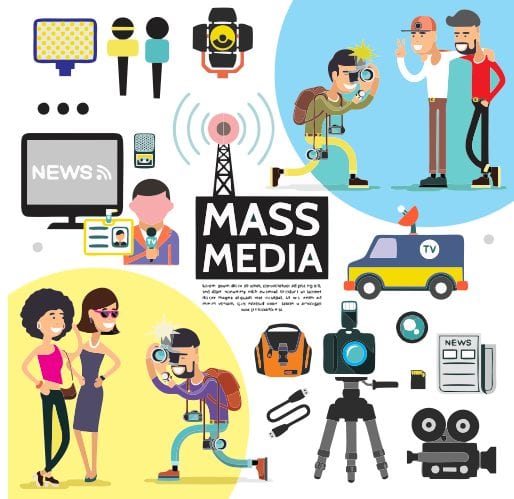
What Is Mass Media?
INTRODUCTION:-
Mass media is communication that is to a large group, or groups, of people in a short time (Mass Media, 2013, p. … This can be written, spoken or broadcast communication. Some of the most popular forms of mass media are newspapers, magazines, radio, advertisements, social media, television, Internet, and films/movies.
Mass Media:-
Think about this for a second: whenever you want to hear your favorite song, watch your favorite show, or see the latest current events, where do you go? You more than likely turn on your television, radio, or computer. The source that the majority of the general public uses to get their news and information from is considered mass media.Mass media means technology that is intended to reach a mass audience. It is the primary means of communication used to reach the vast majority of the general public. The most common platforms for mass media are newspapers, magazines, radio, television, and the Internet. The general public typically relies on the mass media to provide information regarding political issues, social issues, entertainment, and news in pop culture.
There are 6 main types of Mass Media:
Traditional Media
Print Media
Electronic/Broadcasting Media
Outdoor Media or Out of Home Media (OOH)
Transit Media
Digital Media/New Media/Internet
1. Traditional Media:-
People have developed different ways of communication depending upon their local language and culture. Traditional media is one of the oldest types of mass media to transfer traditions and culture over generations. The tools of communication have been developed from beliefs, customs, rituals, and practices of society. Traditional media imparts indigenous ways of communication for ages. Further, this type of mass media varied as per each culture and society as every culture has their own mediums to communicate to their mass audience. Thus, the traditional media can be folk songs, dances, folktales and folklore as well as paintings, sculptures, stupas, statues and fairs, festivals, rural or community radio and announcement mediums like nagada, etc.
Forms of Traditional Media
Folk Dances
Folk Songs and Music
Theatre, Drama, and Folktales
Painting, Sculptures, Inscriptions, Statues, and Stupas
Motifs and Symbols
Announcements made by beating drums or ‘nagada’
Shadow Puppetry and String Puppetry
Storytelling
Nautanki
Fairs and Festivals
Rural Radio
2. Print Media
In simple words, Print Media is all about the printed form of information and news. Before the invention of the printing press, printed materials had to be hand-written that made mass distribution almost impossible. Print media is one of the basic types of mass media tools making it very popular and convenient to reach a wider audience. Newspapers are considered as the oldest forms of mass media after the traditional mass media as for a long period of time, the general public relied on newspapers to know the latest happenings in their local areas as well as from around the world. Thus, print media originally refers to newspapers and then expanded towards magazines, tabloids, promotional brochures, journals, books, novels and comics.
Forms of Print Media
Newspapers (broadsheet and tabloid)
Periodicals, Newsletters, and Magazines (general or specific interest)
Brochures, Leaflets and Pamphlets
Journals
Books, Novels and Comics
3. Electronic/Broadcasting Media
Broadcasting is simply a distribution of audio and video content to a dispersed audience using the electronic broadcasting medium. Originally the term ‘broadcasting’ referred to the sowing of seeds on farms by scattering them over the large field. Broadcast media allows ease of news dissemination to even an illiterate person because it appeals to both the auditory and visual senses making it one of the most lucrative types of mass media. Centuries later after the newspapers were used as the original mass media, the advent of radio and television happened. Radio was the primary medium of news for the general public during wars as well as for sports and entertainment. When television was invented, it became the most effective type of mass media as it was primarily used for news dissemination and then for TV shows, live events and other entertainment purposes.
Forms of Broadcasting Media
Television
Radio (AM, FM, Pirate Radio, Terrestrial Radio, and Satellite)
Traditional Telephone
Film/Movie/Motion Picture
Video Games
Audio Recording and Reproduction
4. Outdoor Media or Out of Home Media (OOH)
This is also known as OOH or Out-of-Home Media and is focussed on transmitting information and news when the public is outside their home. Outdoor media gives importance to display advertising and attracting individuals towards new products, some social cause or any development or change in the society. These are prominent in brand promotion seen on buildings, streets, electric polls, roadside, vehicles, screens, kiosks, etc. This is one of the most prominent types of mass media used for commercial as well as public welfare advertising and mainly includes billboards, banners, posters, brochure distribution, ComPark Advertising, Wallscape, amongst others!
Forms of Outdoor Media
Billboards or Bulletins
Inflatable Billboards
Mobile Billboards
Banner
Lamppost Banners
Posters
Signs and Placards
Blimps, Skywriting
Brochure distribution
ComPark Advertising
Wallscape
5. Transit Media
Transit Media revolves around the concept of advertising and information dissemination when consumers are “on the go” in public places or in transit. These include display advertising on vehicles and transportation. With the aim “driving home a message” transit media is significantly used for massive brand promotion to millions of people who travel the country’s streets and highways every day.Some people might think that this type of mass media is outdated or ineffective, yet it is widely visible on the sides of buses, in subway cars, at transit stations where passengers enter or disembark from public transportation.
Forms of Transit Media
Bus Advertising
Railway Advertising
Taxi Advertising
Transit Shelter Advertising
6. Digital Media/New Media/Internet
Since the invention of the World Wide Web by English scientist Tim Berners-Lee in 1989, the Internet has drastically taken over all the types of mass media because of faster dissemination speed and higher digital technology. New Media is an interactive two-way communication with users being the active producers of content and information. The Internet is considered as a highly interactive mass medium and can be simply defined as the “network of networks”. It has quickly transformed as the centre of the mass media as it has marvellously integrated all the prominent types of mass media. Now, you can see news websites, broadcasted TV shows as well as listen to online radio using the internet and this is also called as the convergence of mass media!New Media is normally a re-conceptualization of the existing media. This is a rapidly growing mass media with the ease of accessibility with a computer and an Internet connection (broadband or WiFi). From Story Writing and Graphic Designing to Multimedia and Animation, pursuing a career in this field can be highly advantageous.




.jpg)








 Eduindex
You must be logged in to post a comment.