Sweets: A Delightful Journey into Culinary Bliss

 Sweets, also known as desserts or confections, hold a special place in culinary traditions worldwide. From a simple piece of chocolate to elaborate multi-layered cakes, sweets come in a dazzling array of flavors, textures, and forms, making them a universally beloved treat. The history of sweets is as diverse as the sweets themselves, often rooted in cultural and regional traditions, showcasing the creativity and craftsmanship of generations of confectioners.

Photo by Igor Ovsyannykov on Pexels.com

A History of Sweetness

The love for sweets is not a recent phenomenon. Sweets have been an integral part of human culinary history for centuries. Ancient civilizations such as the Egyptians, Greeks, and Romans were known to indulge in various forms of sweet treats made from ingredients like honey, dates, and nuts. These early desserts laid the foundation for the diverse range of sweets we enjoy today.

In the Indian subcontinent, sweets have an incredibly rich history, with a plethora of traditional sweets known as “mithai.” Sweets like Gulab Jamun, Jalebi, and Rasgulla have been enjoyed for generations and are an essential part of festivals, celebrations, and daily life.

Types of Sweets

The variety of sweets available around the world is astounding, but they can be broadly categorized into several types:

  1. Chocolate: Chocolate, made from cocoa beans, has a universal appeal. Whether in the form of creamy bars, truffles, or hot cocoa, chocolate satisfies cravings for both sweetness and a hint of bitterness.
  2. Baked Sweets: This category includes cakes, pastries, pies, and cookies. The world of baking offers an endless array of textures and flavors, from the buttery layers of a croissant to the fluffy tenderness of a sponge cake.
  3. Candies: Candies encompass everything from hard, fruit-flavored sweets to chewy caramels and gummies. They often come in a dazzling array of colors and shapes.
  4. Fruit-Based Sweets: Many sweets are made from fruits, either dried or fresh. Think of fruit jams, fruit preserves, or candied fruit peels.
  5. Ice Cream and Frozen Desserts: Cold, creamy, and available in countless flavors, ice cream is a go-to sweet treat. Frozen desserts also include sorbets, gelato, and frozen yogurt.
  6. Traditional Sweets: Every culture has its traditional sweets that are deeply rooted in their history and traditions. These sweets can be made from a wide variety of ingredients, including milk, grains, and spices.

The Art of Making Sweets

Crafting sweets is often an intricate and labor-intensive process. Skilled artisans, such as pastry chefs and confectioners, dedicate themselves to perfecting the art of sweet-making. The process can involve precision, patience, and an innate understanding of flavors and textures.

Sweets in Celebration and Culture

Sweets are an integral part of cultural celebrations and rituals around the world. In India, for example, sweets are exchanged during festivals and special occasions as a symbol of love and good fortune. Similarly, weddings often feature a grand display of elaborate sweets, showcasing the culinary traditions of the region.

Health Considerations

While sweets are a source of immense pleasure, it’s important to consume them in moderation. High sugar and calorie content can lead to health issues if consumed excessively. However, the enjoyment of sweets in moderation is a delightful aspect of life that connects people through the simple pleasure of sharing a sweet treat.

In conclusion, sweets are a testament to the diverse and creative world of culinary arts. Their history is a journey through time, their flavors a delight to the senses, and their cultural significance a bond that transcends borders. Whether you’re indulging in a simple piece of dark chocolate or savoring an intricately crafted dessert, sweets are a reminder of the sweetness of life itself.


Drive in the Rain

“When it rains, it pours.”

A statement that holds a lot of emotion during rainy season in India. You never know how much will it rain. Sometimes it pours, sometime it just gives a short peek and passes by for us to enjoy the rainbow. In India, power cuts, roads filled with water, unseen manholes are opened, people driving in hurry to reach their destination, couples in love sharing hot food to the sides of the road, people removing helmets to feel the strong connection to earth, some standing by for it to pass and many more.

As a bike rider, I enjoy driving during the time it rains. I don’t care if it pours or drizzles, there is something about that moment that holds me close to it. The smell of petrichor, the slow drive, the sound of rain hitting the skin, and music just makes this meal heavenly. The destination may not be fulfilling but it’s the journey that fills me with a sense of joy. 

As a person, I connect with mother earth on a deeper level during rain. It gives me a feeling of belonging to a deeper purpose. Mother Earth causes rain to hydrate herself and add water to it’s lovely citizens. As a student, it’s my best bet if the college would be cancelled. The sound of rain on a Monday morning always lifts my spirits because I knew school/college would be cancelled. Now, the same rain helps me find peace from the worldly pains.

Heritage trains in India that you must enjoy a ride on

Heritage rails are more than just tourist attractions. Not only they helps create a romantic feel, but also give us a glimpse of the history of the land. Although heritage railways have renovated most of their trains for technical advancements and safety purposes, they still carry the old-school charm. The views on these routes are just unparalleled. Here’s a list of heritage trains that you need to definitely enjoy a ride on.

Kalka-Shimla Railway

This narrow gauge railway chugs between Kalka and Shimla, and is famous for offering beautiful views of forests and hill regions. It was built in 1898 to connect Shimla, the summer capital of India, with the rest of the Indian rail system. It is 2 ft 6 inch (762 mm) narrow gauge railway in North-West India, and was built by HS Harington. It is now operated by the Northern Railway. UNESCO added the Kalka-Shimla railway to mountain railways of India World Heritage Site in 2008.

Darjeeling Himalayan Railway

The toy train, this train travels between New Jalpaiguri station and Darjeeling station. The Darjeeling Himalayan Railway started in the end of the 19th century, and covers six zigzag routes and five large loops to reach higher altitudes. In 1999, this route was declared as a World Heritage Site; it has also been one of the country’s most famous tourist attractions. The setting of the train journey also has a vintage charm to it, a ride on this train will definitely change your outlook toward train travel.

Nilgiri Mountain Railway

The Nilgiri Mountain Railway is in Tamil Nadu, and was built in 1908 by the British. The route runs from Mettupalayam to Udhagamandalam (Ooty), and takes around 4.8 hours to complete. Most times, just one train travels on this route each way; however, during the peak summer season, four trains run each way, everyday. In July 2005, UNESCO designated it as a World Heritage Site, and is now operated by the Salem railway division.

Matheran Hill Railway

This train is on the tentative list of UNESCO World Heritage Sites, yet a ride on this train will be one of the best rides ever!. This narrow gauge train runs between Neral and Matheran in Maharashtra. Interesting thing to note here is that it chugs along the well-known Western Ghats, so in terms of views, you are in for a ride. Further, this 21 km long route has been in operation since 1907. The train starts its journey in Neral, and then ascends the Matheran hill by going through two large zig-zags before completing its 140 hours’ journey.

Do You Know This Indian Professional ‘GOLFER’?

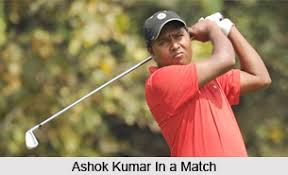
Ashok Kumar.

Rags- to- Riches story of Ashok kumar, who is a Professional Golfer of India.

Ashok Kumar, one of the country’s leading golfers who rose from the ranks of a caddie, remembers his very humble beginnings very distinctly. “The reason I am here in this swanky restaurant of the Oberoi, sipping coffee with you is because of golf. It has brought me name, fame and money and all that I could possibly ask for in life. Without golf, I am a zero ,” said the 27-year-old golfer with rare candour in a chat with Kalyan Ashok, a sports journalist working with Sportstar, one of India’s leading sports weeklies.

India’s No.3 golfer may not exactly be rolling in luxury at the moment, but he definitely leads a comfortable life-a far cry from the days when he used to sleep in a stable. “It’s destiny that brought me to this stage in life and I can’t sav that I deserve it, but it’s God’s gift to me through golf, sald Ashok. Not the one to forget his past, Ashok Kumar keeps reminding himself how he came up in life.

His story is stranger than fiction. Ashok was born into a poor family in Bihar that struggled to make both ends meet. (He has four brothers and two sisters.) In 1988, his parents sent him away with his elder brother to Delhi and he worked as an errand boy at the Jaipur Polo Club.

“I used to work in the day assisting my brother and sleep in the stable at night. The club also had the Air Force golf course and I wandered on to it one day and watched the players and caddies. I thought of becoming a caddie, but I was too young then. I did not get the job, but the club hired me a few years later,” recalls Ashok. It was then that he took to golf. He started practising in the club when no one was around. However, he was caught playing one day and was suspended from his job, as caddies were not allowed to practise golf.

“I was back to square one. Then I went away to help a lorry owner who was transporting sand. I remember the days when I had to pay five rupees to hire a blanket during winter and sleep in Connaught Place,” Ashok said wistfully.

Six months later, when things cooled down, he moved back to the Air Force golt course and became a caddie to Amit Luthra, who was India’s top golfer and an Asian Games gold medallist. “Luthra saab spoke to the club authorities and got me in,” Ashok said with gratitude writ large on his face.

Ashok learnt a lot from Luthra and one day he challenged his mentor to a play-of “I don’t know what got into my head and I told him that I will beat him, to which Luthraji said that if I did that he would waive a month’s caddie fee. We played on the road, but I lost,” Ashok smiled.

Luthra, however, was very impressed with the young man’s talent and got him enrolled at the Delhi Golf Club, which allowed caddies to play. Seizing this opportunity with both hands, Ashok went on to improve his game by leaps and bounds and in 1995, DGC selected him to play in the All India Junior tournament in Kolkata.

Image Source – google.

“I didn’t know where Kolkata was. I thought it was outside the country! I travelled in an unreserved compartment, spending most of the time sitting in the bathroom or just outside as there was no place elsewhere.” In Kolkata, he finished third and in the next two years he became the Junior Champion of the country. In 2000, he moved to the amateur ranks and two years later he became a pro, finishing his first season as India’s No.5 golf player. Riding a wave of success, Ashok held the No.1 spot in 2006 and 2008 and currently (2010) he is ranked No.3.

The moment he cherishes the most as a player is not the time when he won his first major title but when he finished 18th in the Hero Honda-DLF Tournament in 2002. It fetched him a cheque of Rs. 1 lakh. “I never looked back after that,”Ashok remarked.

In the early part of 2010, Ashok’s golfing career got a boost when the Bangalore- based business and software company, Kaseya India, run by golf enthusiast, Mr. Girish Krishnamurthy, decided to sponsor him. “I am a simple guy and with Kaseya around to take care of other things, I can concentrate better on my game now,” Ashok says with determination as well as gratitude. It is his ardent wish that all golf links in the country should support caddies, as he feels that many of them have a lot of inherent talent simply waiting to be tapped.

Ashok has modelled his game on his golfing idol, Tiger Woods. Incidentally, he had met Tiger when he was a caddie to Arjun Atwal in Bangkok a decade ago. “He hugged me when he was introduced by Atwal as a top amateur from India. I asked him for his advice, to which the legendary golfer simply said-‘don’t think of beating others, they should think of beating you,” Ashok’s eyes sparkled when he recalled his meeting with Tiger.

He faithfully follows that advice from the maestro and hopes to play with him one day. “For the moment, I eat, drink and sleep golf. There’s no distraction in my life. I relax with some music and watch CDs of Tiger Woods,” Ashok concluded.

World Tourism Day 2020: Embrace the journey

When the virus put a break on life, a new world of sensations opened up. Trips were not stopped even during the period of house arrest. Disturbed and hurt in the constant war with the virus, the mind is in no hurry to reach anywhere. 

Sometimes on foot, sometimes on a bicycle, sometimes in the car, this phase of meeting with loved ones is as if the car of life has gone too far in the ‘back gear’. The road has become a favourite companion, so it is relaxing to get in the lap of nature. This stagnation is good for the life journey ahead in the ‘new normal’, where people who have become spiritual amidst the fatigue of pandemic, are meeting themselves among nature …

‘Silent, quiet and mysterious. A deep blue-green lake, a sky with matching colours and an endless horizon with huge mountains. In such an environment, why not leave the mind towards a world where there is the only relaxation. After getting into such an environment, things start to clear and only we as our companion. The coronavirus abruptly changes the mood, it often becomes spiritual.

There is life at the moment and you are not there at the moment. Therefore, the lap of nature gives relief to them, who am I after all? What is the purpose of this life? Such questions prepare the mind to struggle with reality again. People travelled regularly, at which the pandemic suddenly put brakes. But after unlock, travel has got a new meaning or expansion. People want to eradicate the bad experiences of a pandemic from it. After all, the mind is an ardent traveller.

It also travelled the country and the world during the time when it was to follow the strict rules of lockdown. Internet support was there. Enjoying virtual travel, mind got comfort. The coronavirus has not only adversely affected the travel industry but has also seen major changes. After the unlock, that is, now after the lockdown, after the opening of the closed life, the new trend ‘Revenge Travel’ should be started. Revenge means, after being closed for several months, people not only started going out of the house in response to it, but they are also enjoying it a lot.

Almost everyone breathed a sigh of relief after unlocking. But it is a big relief for those strollers, for whom travel is like medicine in the running life. 

‘New normal’ has made safety and hygiene i.e. cleanliness a major part of life and travel. People make travel plans of their choice and enjoy it. Road trips are getting a lot of priority. It can be said that road trip has joined travel in a new form during the pandemic, in which safety regulations are taken care of and now this travel will also become an important part.

Getting out of the car with acquaintances and getting out in a nearby area is becoming a major trend of travel today. It has more number of people who are working and is giving preference to booking in the surrounding areas, especially in the hilly areas, but there are also safety rules taken care of. Full help of technology is also being taken like MakeMyTrip has created an app for this which helps to ensure the journey only after mask and social distancing.

Right now people are preferring short distance travel. It is within a distance of about 300 kilometres. However, during the pandemic, it was seen that people also made long-distance trips during road trips. These were the people who left for the family home states. Now people are mostly choosing the places for peace of mind that can give them relief from the fatigue and stress caused by the pandemic. People are opting for the places like Himachal Pradesh, Uttarakhand, Rajasthan as well as Goa.

Every year ‘Tourism Day’ has a different theme. The tourism theme of this time is (Tourism and Rural Development). This is to provide employment to youth and people in rural areas. Tourism provides employment to many people. The cultural heritage of any country is also encouraged by tourism.