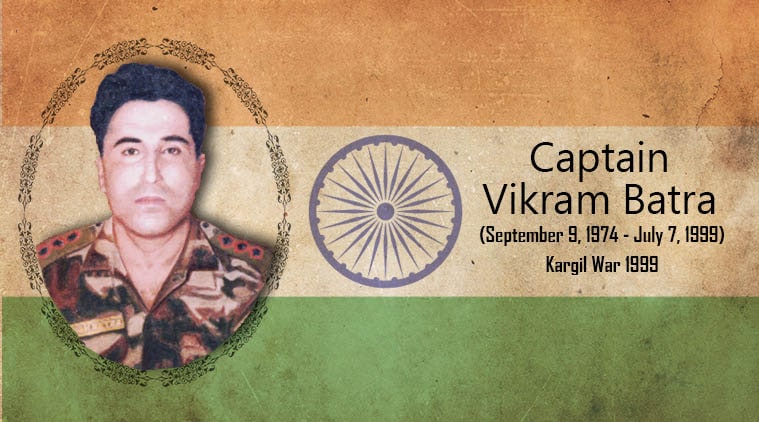
Kargil War – Why it happened? Real Story of Vikram Batra

Hello, friends! The year was 1999. Some Pakistani soldiers infiltrated Indian territory. And the Indian Defence Forces retaliated bravely. Soon, a full-fledged war ensued between India and Pakistan. The war is now known as the Kargil War. Kargil War of 1999. This place became the centre of much international intrigue and war. Between India and Pakistan. 22 years ago, India was betrayed by its neighbour Pakistan. Prime Minister Atal Bihari Vajpayee, made it clear that India would emerge victorious. The world has seen that we want peace now the world will see that to protect our peace we can use strength if we need to. One of the most famous war heroes of the Kargil War was Captain Vikram Batra. Recently, a film has been made about him. Shersaah. On Amazon Prime Video. 

What was the Kargil War? What were the reasons that led to it? And what happened exactly? The international geopolitics at play there is also very interesting. Come, let’s find the answers to these in today’s video on Kargil War. Our story begins on 3rd May 1999. In a small village in the Batalik region there was a local shepherd Tashi Namgyal. He had lost his yak. He went to look for his yak with a friend. While looking through the binoculars, he saw something strange. He saw that some armed men digging bunkers. He found it quite fishy. “There we saw around 6 men, they were in black outfits, so I continued looking for some time. They were breaking rocks. And digging.” He got suspicious that those people were from the other side of LoC. So he went to the nearest post of the Indian Army. 

To inform the Indian Army. Thankfully, the Indian Army checked this information. And found that the information was correct. But this wasn’t a minor intrusion. This was a well-planned attack by the Pakistani Army. Intrusions were reported in Dras Kaksar and Mushkoh sectors. Overall, they had occupied more than 130 posts. Their aim was to block the critically important national highway NH 1. By blocking it, they could’ve cut off Kashmir from Ladakh. The code name of this operation was Operation Badr. If we look at this action from the perspective of international relations, this was a direct breach of the 1972 Simla Agreement. That was signed by the former Indian Prime Minister Indira Gandhi and the former Pakistani President Zulfiqar Ali Bhutto. According to this agreement, both neighbouring countries had agreed to never violate the LoC. And in case of any issue between India and Pakistan a peaceful resolution would be worked out. Through bilateral approaches. 

The unfortunate thing was that, friends, only a few months before the intrusions, in February 1999, the former Indian Prime Minister Atal Bihari Vajpayee had made a journey to Lahore in a bus. Where he had recited a poem, “Hum Jung Na Hone Denge” (We Will Not Let War Break.) And signed the Lahore declaration as well. Along with the former Pakistani Prime Minister Nawaz Sharif. This was, in a way, a monumental effort by the former Prime Minister Atal Bihari Vajpayee. To establish peace between India and Pakistan. “We’ve been enemies for too long. Now, we should spend some time as friends.” Only 3 months after this, this large-scale intrusion by the Pakistani soldiers, showed very clearly how there was someone in Pakistan that didn’t want this peace to last. But anyway, to retaliate against this, the Indian Army launched a counterattack. That was given the code name Operation Vijay (Victory). 

Thousands of Army troops were mobilized and sent to the Kargil sector. Then the Chief of Army was General Ved Prakash Malik. The Indian Airforce played a very crucial role. On 26th May, they launched the Operation Safed Sagar (White Sea). That aimed at driving out the Pakistani troops from the Indian territory. Traditionally, whenever air-power is used in a conflict, It is considered that all-out war has been declared. It was the first time that India had deployed air-power in such an environment. The Indian Airforce had also planned that they’d cross the LoC into Pakistan and bomb a few targets. But as Air Chief Marshall Anil Yashwant Tipnis has later revealed Prime Minister Vajpayee was completely against it. He had firmly ordered that LoC should not be crossed. And there is a very interesting diplomatic reason for it. Friends, whenever any two countries go on a war against each other, looking at the war from the third perspective, it becomes quite difficult to judge who is right and who’s wrong. Because often, both sides commit mistakes and violations are from both sides. 
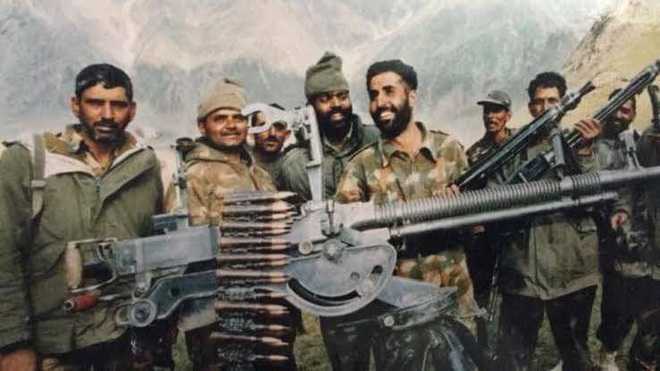
Take your example. When we as Indians watch the war between Israel and Palestine or the war between Azerbaijan and Armenia, it becomes difficult for us to know who is in the right and who is in the wrong because often, both sides have good arguments to justify themselves. Similarly, in the Kargil War of 1999 between India and Pakistan, it was difficult to judge from an international perspective who was right and who was wrong. Which country could be trusted? So India showed a lot of restraint. By not crossing the LoC. It showed the international public that it was a defensive war. “Pakistani soldiers had intruded in the Indian territory we want to push them out, and we are not interested in crossing the LoC and carrying out bombings in Pakistan.” “We simply want to protect our country.” Doing this was a major diplomatic victory for India. Within the next few weeks, the other countries European Union, ASEAN Regional Forum, the United States, G8 Countries, all of them supported India in this Kargil War. The then US President Bill Clinton pressured Nawaz Sharif to withdraw the Pakistani soldiers. The entire world could see that India was in the right and Pakistan was wrong. 

But talking about the ground situation, the Pakistani troops had an advantage. “Taking advantage of the geography of the region, which in many instances, favoured them, Pakistan Army regulars accompanied by fully armed and well-trained militants, sneaked into Indian territory.” The Pakistani soldiers were in an advantageous position in this war because they were on higher grounds in the mountains. Additionally, this region gets very cold. The Dras region is considered to be the coldest inhabited region in India. Often, temperatures fall to -40°C. So it was immensely difficult for the soldiers to fight in such conditions. But there is a popular saying in the Indian Army, ‘When the going gets tough, the tough get going.’ In the Kargil War, the Battle of Tololing is considered to be the turning point. When the war changed its course. To recapture the Tololing Hill, was a difficult task for the Indian Forces.

 At the height of 16,000 feet, temperature between -5°C to -11 °C, with blanket firing from above, because the enemies were placed higher in the hill. Because of all these reasons, for the Indian forces to move or try to climb that hill, was possible only in bad weather and moonless nights. The nights when the moon wasn’t visible in the sky. So that there isn’t much light and when they move, it doesn’t alert the enemies. Captain Ajit Singh was among the officers who attempted this. He recalled how to carry even 1 gram of extra weight meant carrying an extra load. Often the soldiers had to choose, between carrying food rations with them or carrying ammunition. Food packet weighing 2 kg, or 100 bullets. Captain Ajit chose bullets. And he survived for 3 days by smoking cigarettes. Without any food. Considering all these conditions it was estimated that till will take a fit soldier 11 hours to reach the top of the Tololing hill. Major Rajesh Adhikari led the company that tried to climb the mountain. 

And his company was successful to quite an extent. But when they were about 15 meters from the top, Intruders saw them and started firing. Major Adhikari and two other soldiers were martyred in hand-to-hand combat. Because of heavy firing from the enemy, the rest of his company had to retreat, and the company took three positions behind huge rocks. But as soon as the soldiers tried to move from behind the rocks, firing would start from the top. So they were trapped in between. 15,000 feet above the base, And approx 1,000 feet below the top. These soldiers were stuck in the middle. The situation was really bad. Because they did not have any more grenades with them. The Indian Army made it their current priority to recapture Tololing hill. Colonel Ravindranath handpicked 90 soldiers. To go help the soldiers stuck in between, and recapture the hill. Several washermen, cobblers and barbers in the battalion were also helping them because they had to carry the heavy ammunition to the top of the hill. 

So physical strength was needed. More people were needed. On 12th June they were successful at reaching the soldiers stuck in the middle. Around 8 pm. Only a thousand feet away from the enemy, Colonel Ravindranath gave a final pep talk to his soldiers. “I have given you what you wanted. Now you have to give me what I want.” The heavy firing lasted for 4 hours. More than 10,000 shells and more than 120 artillery guns were fired. There was so much firing that later this ridgeline was named Barbaad (Destroyed) Bunker. The plan was to divide the soldiers into 3 teams. Arjun, Bheem and Abhimanyu. (Characters from the Epic Mahabharata.) The first team would lead the frontal attacks. The second team would move to the other side of the cliff to a lower ridge, And the third team will cover fire. The enemies were attacked from the back by the platoon led by Major Vivek Gupta.

 A hand-to-hand battle took place and unfortunately, Major Vivek Gupta along with 6 other soldiers was martyred. But these soldiers were eventually successful in capturing Tololing. Thankfully, the intruders had left behind butter, tinned pineapple and honey, so there were no problems with getting food supplies. For the Indian soldiers who reached the top of this hill. About 1.6 km to the North of Tololing hill, was the Point 5140. It was the highest point in the same ridgeline. At the height of 17,000 feet. Thus, higher than the Tololing hill. Between Tololing and Point 5140, there were 10 high grounds known as Humps. From Hump 1 to Hump 10. 

These Humps were easily captured by the Indian Army. And then the Indian Army reached the base of Point 5140. Known as the Rocky Knob. The task of capturing Point 5140 was assigned to the Lieutenant Colonel Yogesh Kumar Joshi. After this, two groups of soldiers were formed to climb the hill in two different directions. One group was under the command of Lieutenant Sanjeev Singh Jamwal. And the second group was led by Lieutenant Vikram Batra. Whose code name was Shershaah. (Lion King) That’s why friends, the upcoming movie on Amazon Prime Video is named Shershaah. Both Lieutenants were told to choose a success signal. When they’d be successful in their mission, how will they signal the others? Lieutenant Sanjeev chose the signal “Oh! Yeah, Yeah, Yeah!” And Lieutenant Vikram Batra chose the signal “Yeh Dil Maange More.” (lyrics of a song; this heart desires for more) “The other company’s success signal, Oh, yeah, yeah which was passed to our Colonel Joshi on the radio set. 

After that, another bunker was captured. My company’s success signal was ‘Dil Maange More.’ The guys were so highly charged up that they’re wanting that some more bunkers should have been there and we would have got more chaps.” In the early hours of 20th June, Both groups started the climb. And both groups were successful. There were no casualties. And both sent their success signals to the command post. Lieutenant Vikram Batra was promoted because of the successful mission. To the rank of Captain. He called his father and told him, “Daddy, I have captured.” On capturing this point, India got its diplomatic victory. Because at this point, several Pakistani documents were recovered. “What you heard right behind you was the sound of Bofors guns directly targetting the top of Tiger hill. Prelude to the final assault.” 

Another major point was Tiger Hill. One side of Tiger Hill is a vertical cliff of 1,000 feet. And the Indian Army decided to surprise the enemy by climbing this cliff. By using mountaineering equipment. So between the nights of 3rd and 4th July, a group of 22 brave soldiers undertook this mission. One of the soldiers was 19-year-old grenadier Yogendra Singh Yadav. He had volunteered for this mission. They had reached halfway on this 1,000 feet high vertical cliff, when the enemy found out about them. Machine guns, as well as rockets, were fired on them from above. platoon commander along with 2 others were martyred then. But grenadier Yogendra Singh continued climbing despite the firing. He climbed 940 feet. He was only 60 feet away from the top. When three bullets hit him.

 In his legs and shoulder. But even after being hit by three bullets, he continued climbing. And he climbed to the top, threw a grenade and killed 4 enemies. He attacked another bunker with the soldiers. And the remaining soldiers of his platoon, were so motivated by his bravery, that they completed the climb to the top as well. And attacked Tiger Hill. And this mission was successful. Perhaps the most shocking part of this entire mission was despite being hit by multiple bullets, grenadier Yogendra Singh Yadav survived. He was admitted to the hospital And later he was given the title of Honorary Lieutenant. Do you remember Hrithik Roshan’s movie Lakshya? The vertical cliff that’s climbed at the end of the movie and the capture of the Hill, was inspired by the story of Yogendra Singh Yadav. On the other hand, more missions were being conducted to recapture the remaining hilltops.

 Capturing Point 4875 was one of them. For this mission too, Captain Vikram Batra was assigned. This time his battle companion was Captain Anuj Nayyar. On the morning of 8th July, he was successful at his mission of capturing this peak. The mission was almost completed. Captain Vikram Batra came out of his bunker, to rescue a Lieutenant. Who had lost his legs because of an explosion. No sooner than he had gone out to help the Lieutenant, the enemy that was retreating fired a bullet that hit him in the chest. And unfortunately, he was martyred. India won at Point 4875, but had to lose two heroes Captain Vikram Batra and Captain Anuj Nayyar. Today, this point is known as Batra Top. The Battle at Point 4875 was a major landmark of the Kargil War. That had almost sealed India’s victory. 

Two days later, on 11th July, the Pakistani Army started to withdraw. And India had captured the remaining major points of the Batalik. On 14th July, Prime Minister Vajpayee declared Operation Vijay to be a success. And on 26th July, the Kargil War officially ended when the Indian Army announced that all the intruders had been completely evicted from the Indian territory. Now, 26th July is celebrated as Kargil Vijay Diwas (Kargil Victory Day). Some months later, in October 1999, a bloodless coup takes place in Pakistan. Nawaz Sharif gets detained and Pakistan’s Army General Pervez Musharraf suspends the Constitution, declares an emergency in the country and takes over the control of the country. The internal politics of Pakistan becomes clearly evident here. Later it is revealed that Pervez Musharraf was actually the Chief Strategist of the Kargil plan. It was his idea to intrude into India dressed as Kashmiri militants. And do everything. 

All the peace talks between India and Pakistan, to end them all completely. On the other hand, Nawaz Sharif claims that he had no idea that the Pakistani Army had come up with the Kargil plan. In 2019, Pervez Musharraf was given a death sentence by a court in Pakistan. On the charges of treason. To act against his country. Although later, Lahore High Court overturns this. 

On the other hand, in India, India’s highest gallantry medal, that is the Param Vir Chakra, is awarded to 4 soldiers. Captain Vikram Batra, Lieutenant Manoj Kumar Pandey, Rifleman Sanjay Kumar, and Grenadier Yogendra Singh Yadav. Overall, it is estimated that around 527 Indian soldiers were martyred in the Kargil War. And around 1,300 were injured. Another unfortunate thing that happened was that all the efforts made by PM Vajpayee to maintain peace between India and Pakistan, all of it went in vain. 
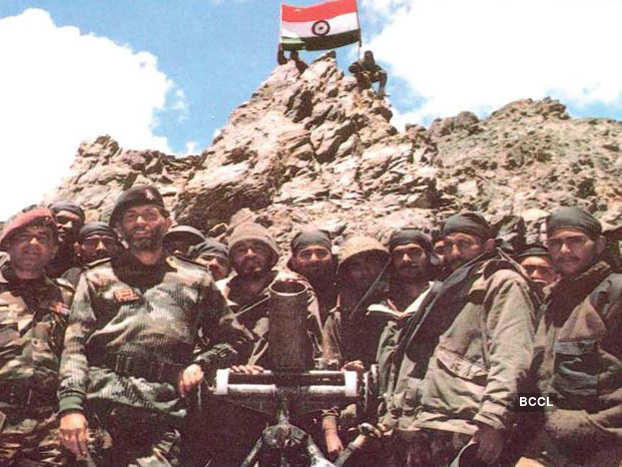
Kargil War: What did Pakistan gain from this war?

Many books have been written on the Kargil war between India and Pakistan, in which those aspects are mentioned, which are not known to the common people.

Pakistani journalist Naseem Zahra’s book “From Kargil to the Cop: Events that Shook Pakistan” is one of them. On 20 years of the war, BBC correspondent Shumaila Jaffrey spoke to Naseem Zahra about his book and some of the developments mentioned in it. Today, 22 years of Kargil war have been completed.

Naseem Zahra said that initially Pakistan’s plan was to capture some mountain peaks in Indian-administered Kashmir and then close the Srinagar-Leh highway. Closing this road was one of Pakistan’s major strategies as it was the only way India used to send military weapons to the soldiers stationed in Kashmir.

According to Naseem, Pakistani generals planning the Kargil attack believed that the situation would worsen and India would be forced to negotiate on the Kashmir dispute, but the way Pakistani soldiers were fighting, they were no less than the eighth wonder of the world.

She says that “the interesting thing about Kargil is that Pakistanis can be proud of it and sad too. The way the young soldiers were sent there (Kargil), the cold winter they reached there and The circumstances in which he fought valiantly is a reason for pride, but the question also arises that why was he sent there?”

Naseem Zahra says that “Pakistan Army initially inflicted heavy losses on Indian forces. Indian Army didn’t even know what happened. And Indian generals were saying that they would give them (Pakistani soldiers) a few hours or something.” Will throw you out of your area in days.”

According to Naseem Zahra, initially the Pakistani army and fighters had the advantage that they were sitting on the tops of the mountains and it was very easy to attack the Indian soldiers from above, but later the situation changed. However, there has been no response from Pakistani military officials on these claims of Naseem Zahra.

Big Mistake : 

Naseem Zahra says that when the Indian Army gradually realized what had happened, it called for Bofors artillery, which are not usually used in such operations. “If you ask what changed the Kargil war, it is the Bofors guns. Indian soldiers stationed them on the same Srinagar-Leh highway that Pakistan wanted to block. Broken into pieces and the Indian Air Force was continuously bombarding from above. This fact has been confirmed by both the countries.

Naseem Zahra said that even after coming down from the Kargil hills, Pakistan had to suffer heavy losses. “There were no roads or vehicular routes for them to return, nor were they returning in a friendly environment. It was very difficult to return from the altitude of 16 to 18 thousand feet of mountains. Many trenches had to be crossed and up It was very cold. When Indians got an opportunity, they took advantage of it and retaliated fiercely. The war was for a very short time but it was fought in a fierce manner.”

Naseem Zahra says that India used its air force well in Kargil, but Pakistani delayed it. She says that it is not yet clear how many people were killed in Kargil. “Some people say that three hundred were killed, some call it two thousand, but the number of soldiers in the number of two thousand probably did not go there. When I talked to the army people about this they said that such a big Not many people were killed. It was a big mistake.” 

Kargil – Siachen issue :

Naseem Zahra also says that the plan of Kargil was under consideration for many years, but it was completed in 1999. “This plan was presented by General Pervez Musharraf to Benazir Bhutto. He refused it. It was discussed earlier also during the time of General Ziaul Haq.” According to Naseem Zahra, the Kashmir issue was the main reason for the Kargil operation. Apart from this, the issue of Siachen was also one of the main reasons. 

Four generals executed the war :

Naseem Zahra says that the Kargil war was carried out by four generals of Pakistan. According to him, the four generals included the then Army Chief General Pervez Musharraf, Major General Javed Hasan, General Aziz Khan and General Mahmood Ahmed. The top leadership of the army was unaware of this operation.

According to Naseem Zahra, the four generals were stationed on the Line of Control. He was passionate about the Kashmir issue. They believe that for the Kargil war, these four generals had executed it without formal permission from the elected government. It was a kind of violation of the rules. In February 1999, an agreement was signed between Nawaz Sharif and Atal Bihari Vajpayee in Lahore, according to which both the countries had shown commitment to start a new relationship through talks.

‘Be the winner of Kashmir’ : 

According to Naseem Zahra, the then Prime Minister Nawaz Sharif learned about the Kargil operation during a briefing held on May 17, 1999, weeks after the troops crossed the Line of Control. Naseem Zahra says, “The then Foreign Minister Sartaj Aziz understood the situation that some soldiers of our army had crossed the Line of Control. He told the PM about this and said that Prime Minister we are talking to India. Were.”

She says, “These things were happening after the Lahore summit.” But according to Naseem Zahra, initially Nawaz Sharif really believed that the army could be successful in resolving the Kashmir issue with this operation. “Sartaj Aziz explained that international forces, especially the United Nations will not accept this and America will always support India. To which Nawaz Sharif said that no Sartaj sir, we can never achieve Kashmir by meeting and exchanging files. can do.”

“Then General Aziz Khan told Nawaz Sharif that Quaid-Azam Muhammad Ali Jinnah created Pakistan, now is your chance, you become the conqueror of Kashmir.”

Relations between the countries were getting better but….

Naseem Zahra says that relations between India and Pakistan were getting better, but at the same time General Pervez Musharraf carried out the Kargil war. “Vajpayee had come to Pakistan and Pakistan had given a warm welcome to the Prime Minister of India, he had come to hold talks and it was going on. Later, General Musharraf requested India several times for talks. To bring India to the negotiating table. For that he had to go to India on his knees.

Naseem considers them wrong, those who say that this war has benefited Pakistan in the matter of Kashmir.” Facts do not support this. According to the facts, it was such a wrong move that Pakistan had to go through the process of talks for years. Had to try to start again. Even though India did 1971 and Siachen but Pakistan’s decision of Kargil war was very irresponsible. It damaged the image of Pakistan.

However, Naseem Zahra believes that no loss or gain is permanent. Countries get an opportunity to review their policies. 

Kargil war

Kargil Vijay Diwas 2020: Brief Rundown of 1999 Kargil War And How India  Emerged Victorious | All You Need to Know

Kargil war was a very difficult time that our country went through. Furthermore, it was a crisis situation that ensued a feeling of nationalism, patriotism, and unity among every Indian. This essay on Kargil War will throw light on the various developments of the war and its after-effects.

Background of the War

Kashmir is a beautiful region that resides in an extremely mountainous area, containing some of the highest peaks in the world. Unfortunately, this amazing land has remained a constant battleground between the two countries of India and Pakistan.

The dispute began from the First Kargil War in 1947-1948 which led to the establishment of the LOC, line of control. The LOC still divides the land of Kashmir between India and Pakistan.

As part of the Simla Agreement in 1972, there was an agreement that neither India nor Pakistan would contest the border by making use of military means. Since the agreement, both countries began guarding the border heavily for the majority of the year. During the exceedingly cold winter months, both the Indian and Pakistani guards abandon their posts, only to return back in the spring.

All About Kargil War | When was Kargil Vijay Diwas? Who Win the Conflict?

However, during the winter of 1998-1999, a surprise attack took place from the Pakistan army and it became successful in crossing the LOC and into India’s portion of Kashmir. Moreover, slowly and gradually, they went on capturing one Indian outpost after another and held their position in Kargil.

In February 1999, at the same time as the winter invasion, the Lahore Declaration was being signed between India and Pakistan which was based on peace. After a few months, the Kargil war began between the two countries. Furthermore, a series of bloody battles were fought between the two nations of India and Pakistan.

The battles posed a huge challenge for the Indian forces as they had to fight on difficult mountainous terrain.  In spite of this challenge, the Indian soldiers showed amazing bravery. After a long struggle, the Indian army became successful in pushing back the Pakistani forces across the line of control.

Rise of Nationalism

By July 14, 1999, there were heavy causalities on both sides. However, the sacrifice of Indian soldiers was not in vain. This great struggle of the Indian army has carved a place in the heart of every Indian.

The entire Kargil war was a time of tension and nervousness for the Indian people. It infused the spirit of national pride in every Indian. Most noteworthy, it served as an opportunity of unifying all the Indians together irrespective of caste, colour, religion, language etc.

Kargil Diwas 2021: Here Are 20 Kargil War Heroes You Should Know About

Conclusion of the Kargil War 

The Kargil war has become an unforgettable event in the history of India. Nevertheless, this was an event that brought about feelings of patriotism in the hearts of every Indian like never before. The brave struggle of the Indian soldiers will continue to be an inspiration for all the citizens of this country.

Kargil Vijay Diwas 2021

Introduction

Kargil Vijay Diwas is celebrated every year on July 26th to remember the sacrifice of the Indian soldiers during the Kargil war of 1999 with Pakistan. The brave-hearted men of the Indian army had aided the Indian air force in defeating Pakistan on this very day 22 years ago.

Kargil War

The war was fought between India and Pakistan from May to July 1999 in the district of Kargil which is in Kashmir, along the Line of Control (LOC). It is also known as “Operation Vijay”. India launched “Operation Vijay” to clear the Pakistani infiltration in the Kargil sector. A huge part of this war was the Indian Air Force’s role in acting along with the Indian Army ground troops. Indian Air Force’s role was to flush out the regular and irregular troops of the Pakistan Army. This operation of flushing out the Pakistani troops was given the codename “Operation Safed Sagar” which means “White Sea”.

Cause of the War

This war was caused because the Pakistani troops infiltrated the Indian side of the Line of Control acting as Kashmiri militants. The Line of Control is the de facto border between India and Pakistan in Kashmir. In the starting stages of the war, Pakistan blamed Kashmiri militants for all the fighting but later they messed up and left some documents because of casualties which showed clear involvement of the Pakistani paramilitary forces. Adding to that, later a statement by the then Prime Minister of Pakistan, Nawaz Sharif, and the Chief of Army Staff, General Pervez Musharraf, confirmed the involvement of the Pakistani paramilitary which was being led by General Ashraf Rashid. With the help of Operation Vijay and Operation Safed Sagar, the Indian Army recaptured most of the area. Adding to that, Pakistan was facing international diplomatic opposition so they had to withdraw their forces as well.

This War is the most recent example of high-altitude warfare in mountainous terrain which for obvious reasons posed logistical challenges.

World’s Opinion

Pakistan was greatly criticized for instigating war. They claimed they did not start the war and that it was the Kashmiri militants but a lot of evidence contradicted their claim and nobody believed them, for one, the war was at heights where only trained soldiers could fight, and not some simple freedom fighters.

Pakistan’s Prime Minister, Nawaz Sharif had flown to the United Stated to ask the US President Bill Clinton for support, who showed his clear disapproval and asked him to withdraw his soldiers from the Indian territory.

The G8 nations at that time, Canada, France, Germany, Italy, Japan, Russia, United Kingdom, and the United States supported India. Even the European Union opposed Pakistan’s violation of the LoC. China who is known as a long-time ally of Pakistan also suggested retreating and settling the issue peacefully. Even ASEAN supported India.

Gallantry Awards

Four Param Vir Chakras were awarded to – Grenadier Yogendra Singh Yadav, Lieutenant Manoj Kumar Pandey, Captain Vikram Batra, and Rifleman Sanjay Kumar. And eleven Maha Vir Chakras were awarded.

Facts

  • The war was fought at a height of 8,780 feet. 
  • The soldiers had to fight at a temperature of minus 10 degrees Celsius. 
  • Operation Safed Sagar was the first time the Air Force conducted an operation at the height of 32,000 above sea level. 
  • The pilots and engineers of the Air Force were given just one week to train. 
  • As many as 527 Indian soldiers laid their lives and the Indian Army built a memorial wall with all the names of the soldiers who lost their lives. 

Conclusion

The victory of the success of Operation Vijay meant a lot to India and all the Indians. Till now, every year Indians remember July 26th as the day of victory and remember the sacrifice their fellow Indians paid for the safety of all.

References

Kargil Vijay Diwas

July 26 is celebrated as the Kargil Vijay Diwas to cerebrate the victory of Operation Vijay, the moment which was launched by Indian army to recapture Indian Territories from Pakistani Army and Pakistani militants .Since 1999,This day is celebrated to show respect and gratitude to our brave soldiers who laid down their life to recapture the seized position from Pakistani Army.

The Kargil war was fought in 1999 between India and Pakistan. Kargil war was fought for more than 60 days and ended on 26 July 1999. however Indian prime minister at that time declared operation successful on 14 July. This war started when Pakistani troops silently occupied some Indian posts. However, Pakistani army denied their involvement . But later their Prime minister and other big officials revealed about the involvement of Pakistani forces, that was led by general Ashraf rashid.to give a response Indian army launched operation Vijay to clear the Pakistani Forces and militants.

Atal Bihari Vajpayee was the prime minister of India at that time. This war was not an easy war to be a part of. because this war was in high attitude in mountaineous terrain. Initially Pakistan captured various important Indian posts and India very well responded with recapturing the posts and pushing Pakistani troops back to their country.

To respond back ,India sent 5 infantory divisions, 44 battalions of Paramilitary forces in Kashmir and 73000 Indian troops. and after that deployment of 60 frontline aircrafts was also done. But all these things were not so easy.it was a high altitude region and very few tracks were connected with main roads. and snow was also a factor. Pakistan had occupied those posts keeping these factors in mind. The Pakistani army was trying to take a strong position in Kashmir by doing this. They were divided into many groups of intruders in Kargil. There total strength was considered to be 1000. with heavily armed with guns like AK-47, mortars, artillery and many other weapons.(Source:https://m.jagranjosh.com/general-knowledge/kargil-war-history-1595672853-1)

But soon Indian army detected the intruders occupying , and without wasting much time Indian army operations were planned in may 1999,’ operation Vijay’ was launched by Indian army. Indian army was successful in clearing of Drass sector. and many of those were pushed back to Batalik sector. Indian army with the help of Indian Air force attacked those intruders. Thousands of guns, bombs artillery guns were used which created havoc in kargil. Indian troops destroyed their positions and forced them to leave .till July 1999, Tiger hill was recaptured.In July 7,mashkoh valley was also re-captured. Gradually many were recaptured by our army. Air force also made a huge rule in the kargil war , over 300 aircrafts were used.It was believed that 700 intruders were killed by aircrafts.

The war was concluded on July 26,1999. with Indian army regaining all occupied posts by Pakistani Forces, but India also had to sacrifice a lot in Kargil war. More than 500 soldiers laid down their life in Kargil war, and more than 1300 were injured. Today is 22 nd Anniversary of Kargil Vijay Diwas and today whole nation is remembering soldiers’ Sacrifice for the country.

.

An unforgettable saga of Bravery

A victory saga of ‘Operation Vijay’, no matter how many time we hear, it always makes us proud. It’s been 21 years of victory on Pakistani troops in Kargil.

The war started after Indian forces detected infiltration from Pakistan side into our territory. By the time Pakistani troops had positioned themselves in key locations and were in a better position than the Indian Army.

After a three month long battle, under the temperature of minus 10 degree Celsius, our brave soldiers fought and evicted the Pakistani troops. The Indian Army succeeded in recapturing the Tiger Hill and other posts as a part of Operation Vijay but in order to achieve this victory we lost nearly 490 officers and soldiers, who gave their supreme sacrifice in this battle.

Today on the 21st anniversary of the Kargil war, Prime Minister Narendra Modi paid his tribute to the brave heart martyrs. On his ‘Mann ki baat’ address he said that, “India can never forget the circumstances under which this war was fought. Pakistan undertook this misadventure with sinister plans to capture India’s land and to divert attention from its ongoing internal conflicts. India was then trying to have cordial relations with Pakistan but as it is said, it is the nature of the wicked to have enmity with everyone for no reason,”; “People of such nature think evil even of those who do good to them. That is why in response to India’s friendly endeavours, Pakistan tried to backstab. But the entire world witnessed the valour and strength of India’s brave forces.”

PM also appealed against the social media posts that, demoralises our soldiers who fight for the country. He added that, ‘these days wars are not only fought on borders but within the country too on multiple fronts simultaneously, and every countryman has to decide his or her role in it.

Some other important facts about the Kargil war:

* IAF’s launched its air operations under Operation Safed Sagar in support of the army on May 26. Indian MiG-21, MiG-27 and Mirage-2000 fighters fired rockets and missiles throughout the Kargil War at the “fortified enemy positions” from their side of LoC.

* IAF had planned to bomb targets in Pakistan during the Kargil War. But the then National Democratic Alliance or NDA government led by Atal Bihari Vajpayee instructed the then IAF chief air chief marshal AY Tipnis that his fighter jets must not cross LoC under any circumstances.

* IAF also wanted to cross the LoC slightly during the Kargil War but this request was also rejected by the government.

* Pakistan shot down two Indian fighter jets while another crashed during the operation.

* The Indian Navy also launched Operation Talwar to blockade Pakistani ports, especially the one in Karachi, during the Kargil War to stop the supply of oil and fuel.

* The Indian Navy’s western and eastern fleets patrolled the Arabian Sea and threatened to cut Pakistan’s trade routes.

* Pakistan asked the US to intervene but then American president Bill Clinton declined its request, saying Islamabad must withdraw its troops from LoC.

* Indian armed forces attacked the rest of the outposts as Pakistani troops withdrew and captured the last of them by July 26.

* The official death toll on the Indian side was 527 and that on the Pakistani side was between 357 and 453.

* Pakistan had initially denied it had any role in the conflict and said that India was facing off with “Kashmiri freedom fighters.” It, however, awarded its soldiers medals for the conflict later.

* After the Kargil War, India increased its defence spending in the budget.

* The complete overhaul of India’s intelligence set-up and the creation of a younger and fitter army are among the most significant changes made by the government on the basis of recommendations of the Kargil Review Committee (KRC).

* The creation of the post of a Chief of Defence Staff (CDS) was also among them. General Bipin Rawat took over as the first CDS on January 1 this year and will serve a full three-year term till December 2022.

* The creation of the Defence Intelligence Agency in 2002 and the technical intelligence gathering agency, National Technical Research Organisation (NTRO) in 2004, were some of the report’s key outcomes.

* The timespan for promotions was slashed up to the rank of commanding officers (COs) or colonels and their equivalent in the air force and navy.

(Courtesy – Hindustan Times)